1. Shardpunk
  2. News

Shardpunk News

Devlog #90: Don't panic!

The Rat Vermin has launched an unexpected underground assault on the Capitol - a city that was believed to have impregnable defenses. No one was prepared for that - especially as most of the Imperial forces were fighting with Vermin far away. Capitol was swarmed with Vermin relatively fast.

But what's done is done - and now it is time to make the best of this situation. I did describe Shardpunk's gameplay loop in more detail in the previous blog post. Now it's time to talk about Stress.

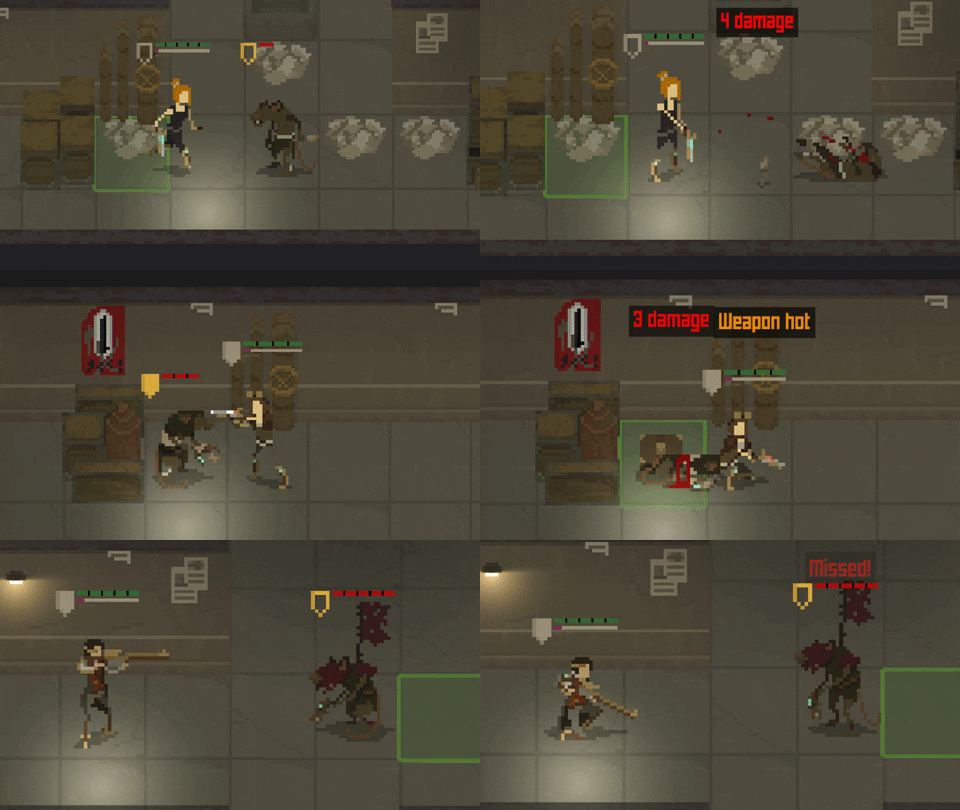
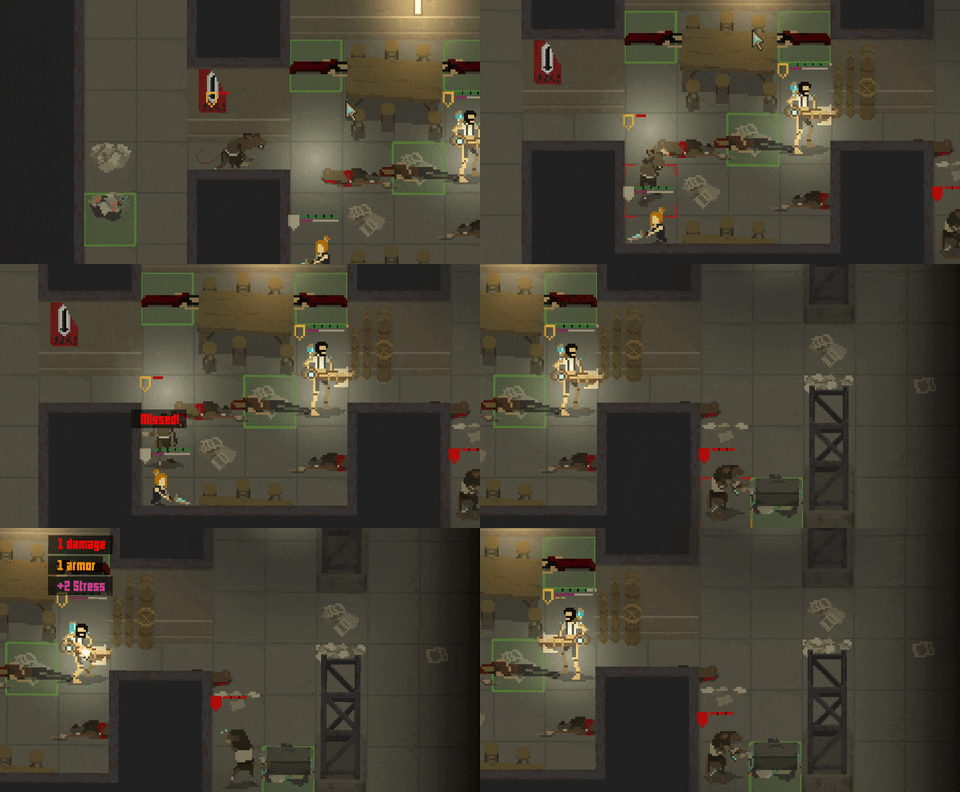
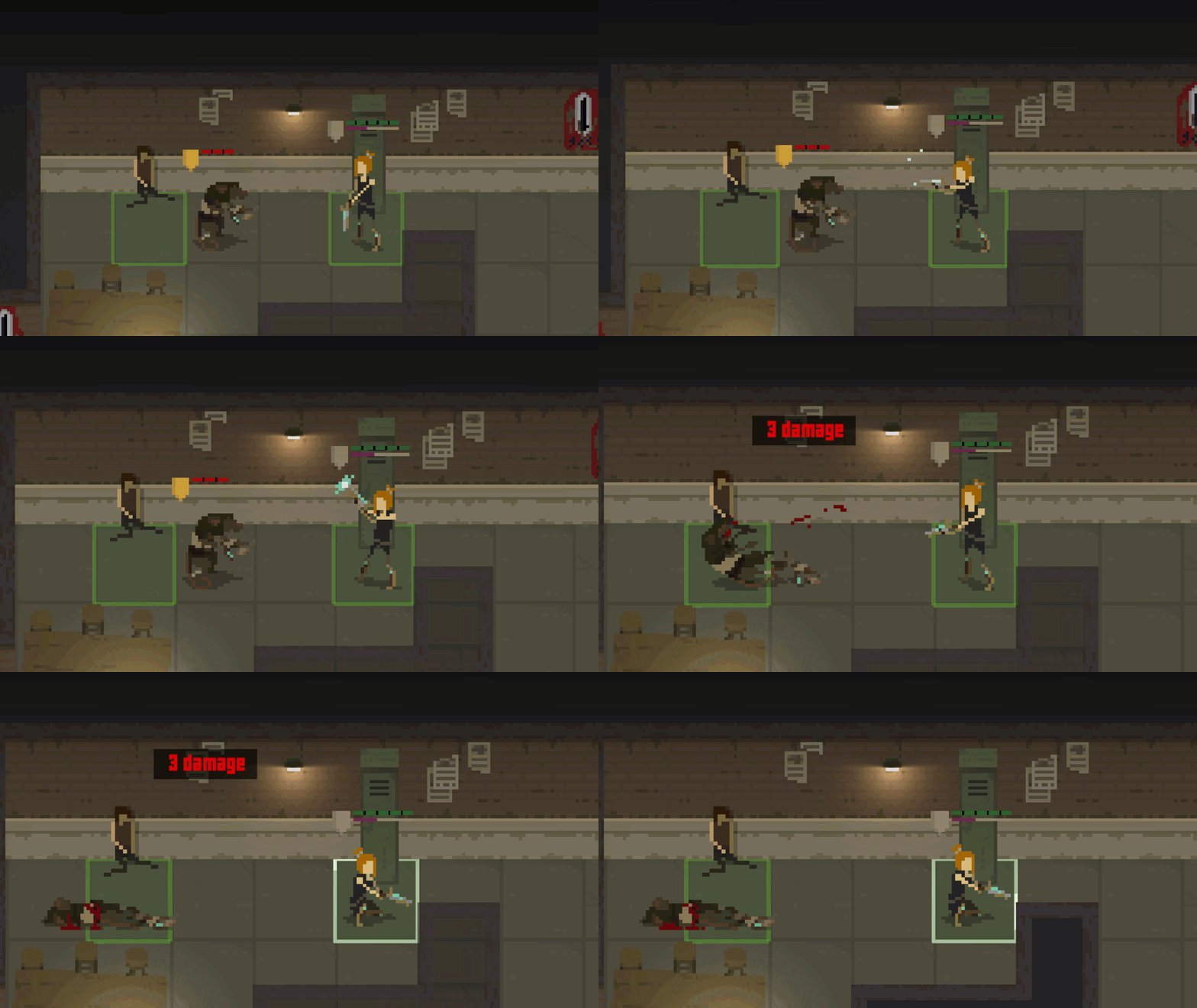
Every character has a Stress meter that goes up when they take damage. Also, using stimpaks increases your Stress level.
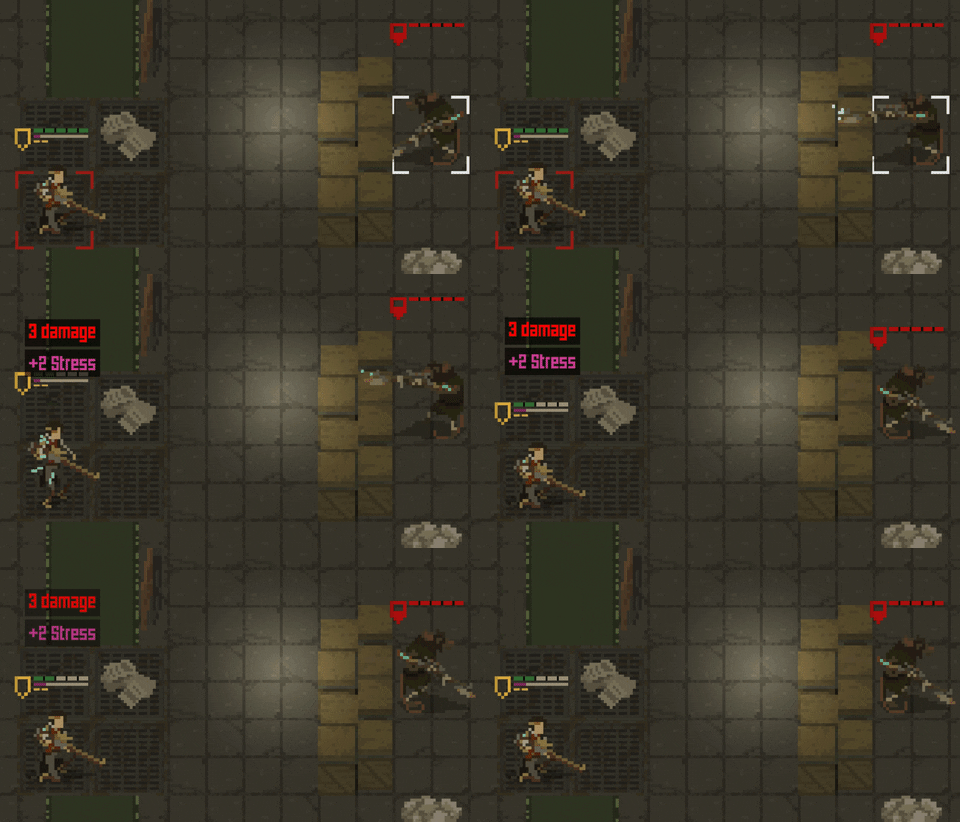


Initially, using stimpaks was not affecting Stress at all. The current approach however feels like a nice risk/reward thing.

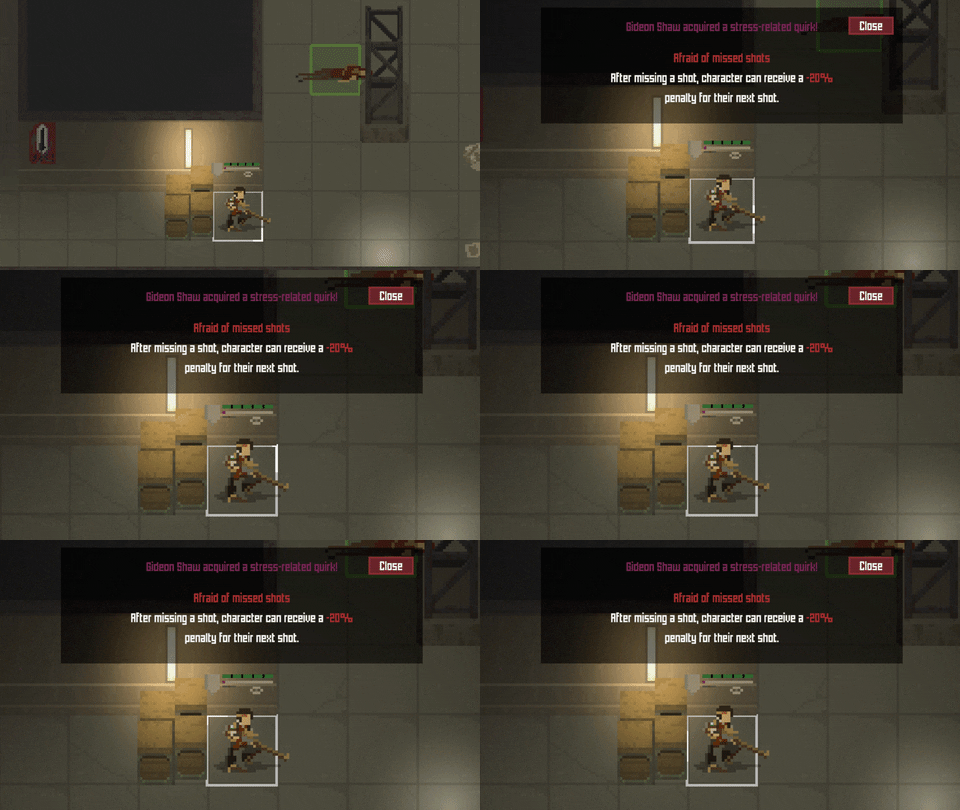
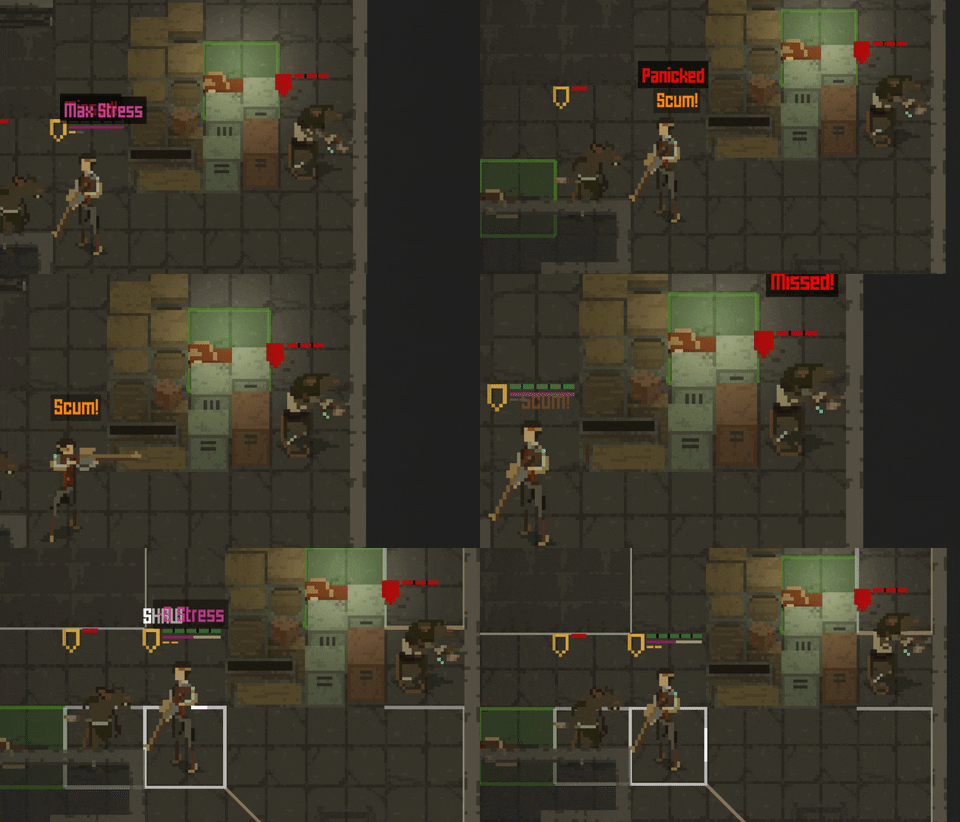
When Stress reaches the maximum level, there's a big chance a character will receive a new negative quirk and the Stress level will automatically drop.
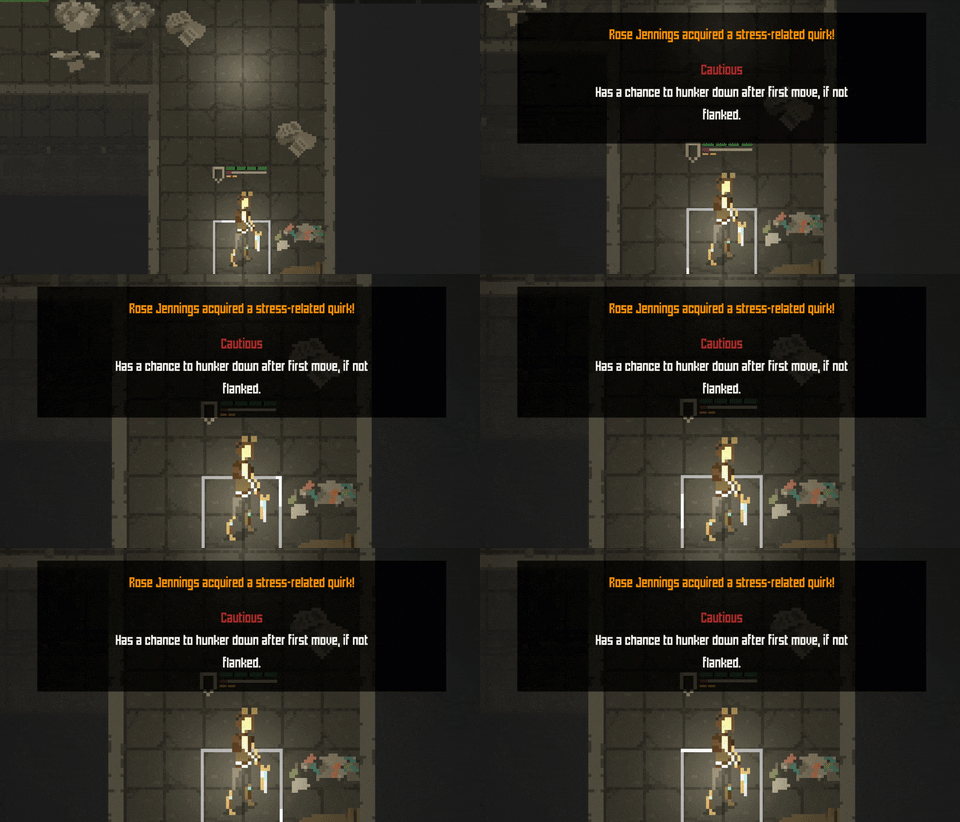


Only one quirk can be received per combat. If Stress reaches max value again, the player temporarily loses control over the character - they can panic and run away or start shooting at random enemies.


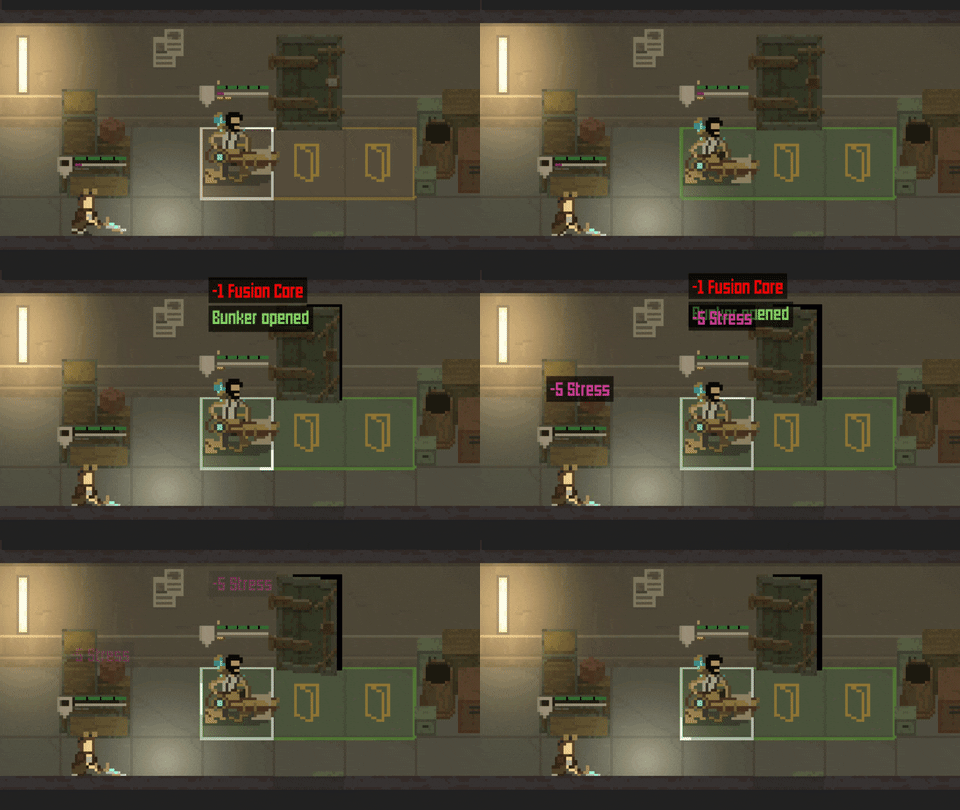
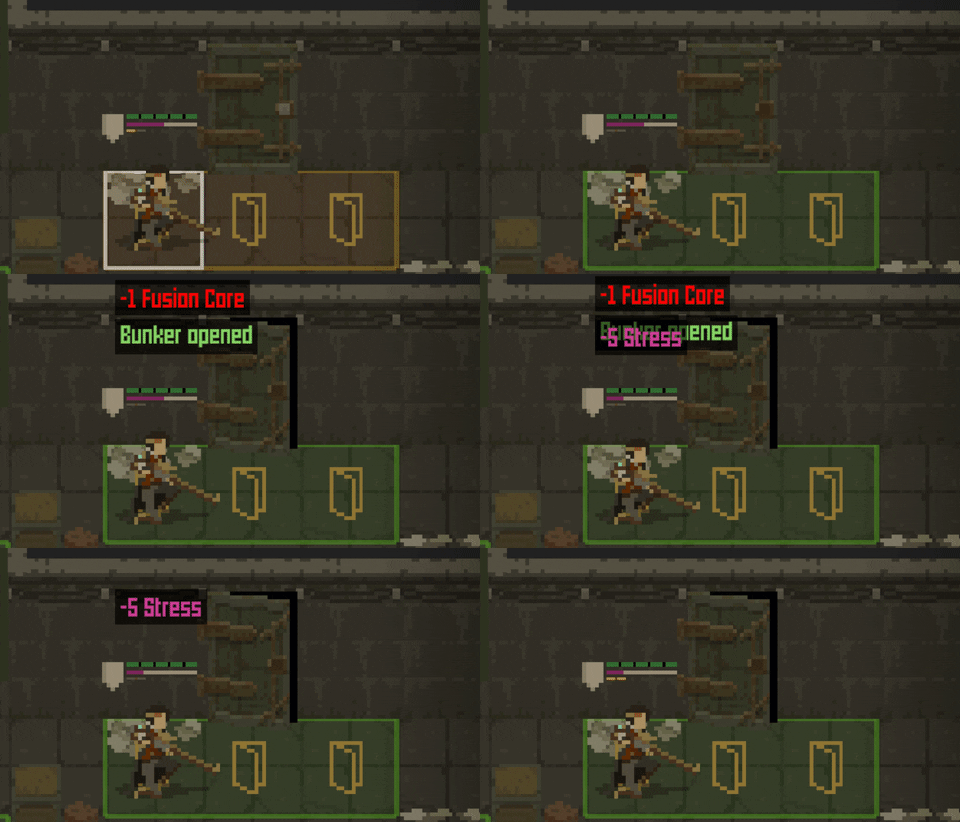
So how you prevent the Stress from going up? First of all, reaching a shelter does help - it gives you instant stress relief.


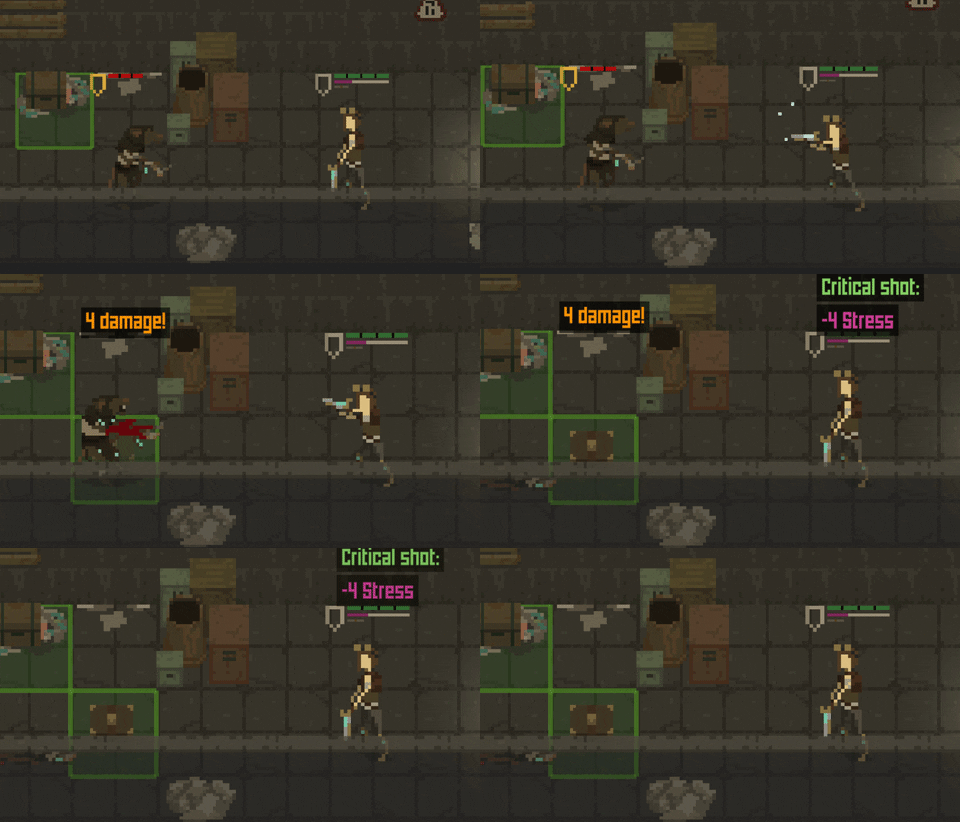
Additionally, Stress will auto-reduce after killing a certain number of enemies. What is more, scoring a critical hit has a chance of removing even more Stress.


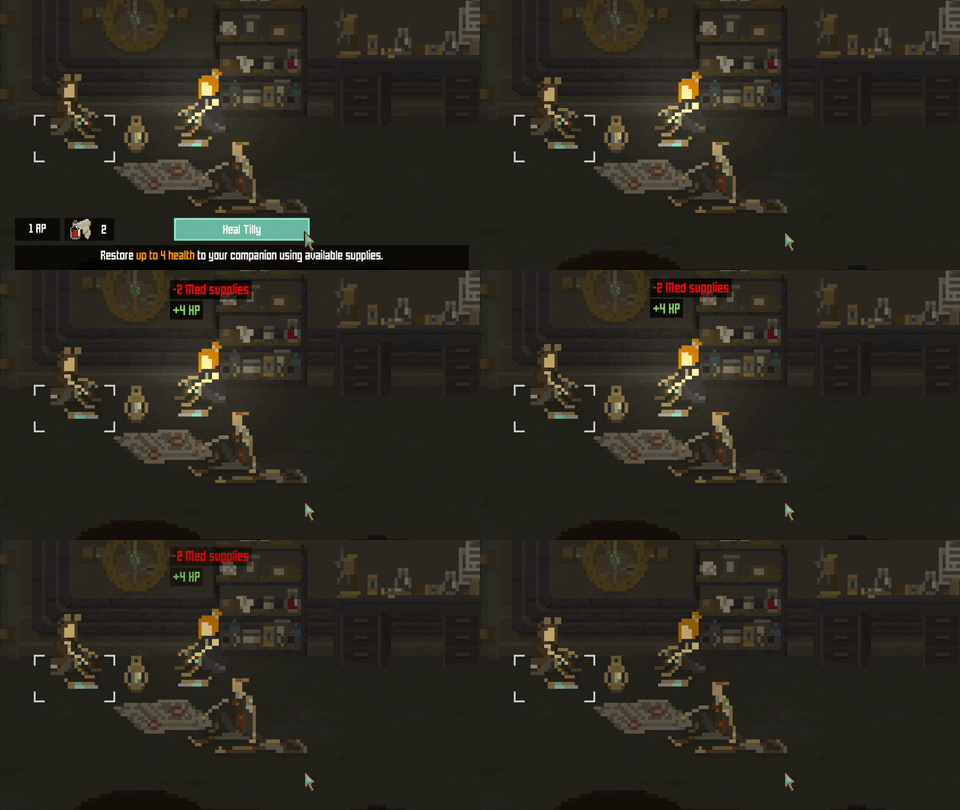
Some characters will also have actions (in both shelter and during combat) that can be used to reduce their Stress, or the Stress of their companions.


So there you have it! Managing Stress levels seems to be a fun layer on top of the combat/shelter phases. I am looking forward to letting you playtest it, along with all the other features I've added!

Take care!

Devlog #89: Hiding in the shelter

Let's talk about the shelter phase again, shall we?

First things first - let's introduce the first-time readers to the gameplay loop. Your job is to escape the Capitol that has been overrun by Rat Vermin.

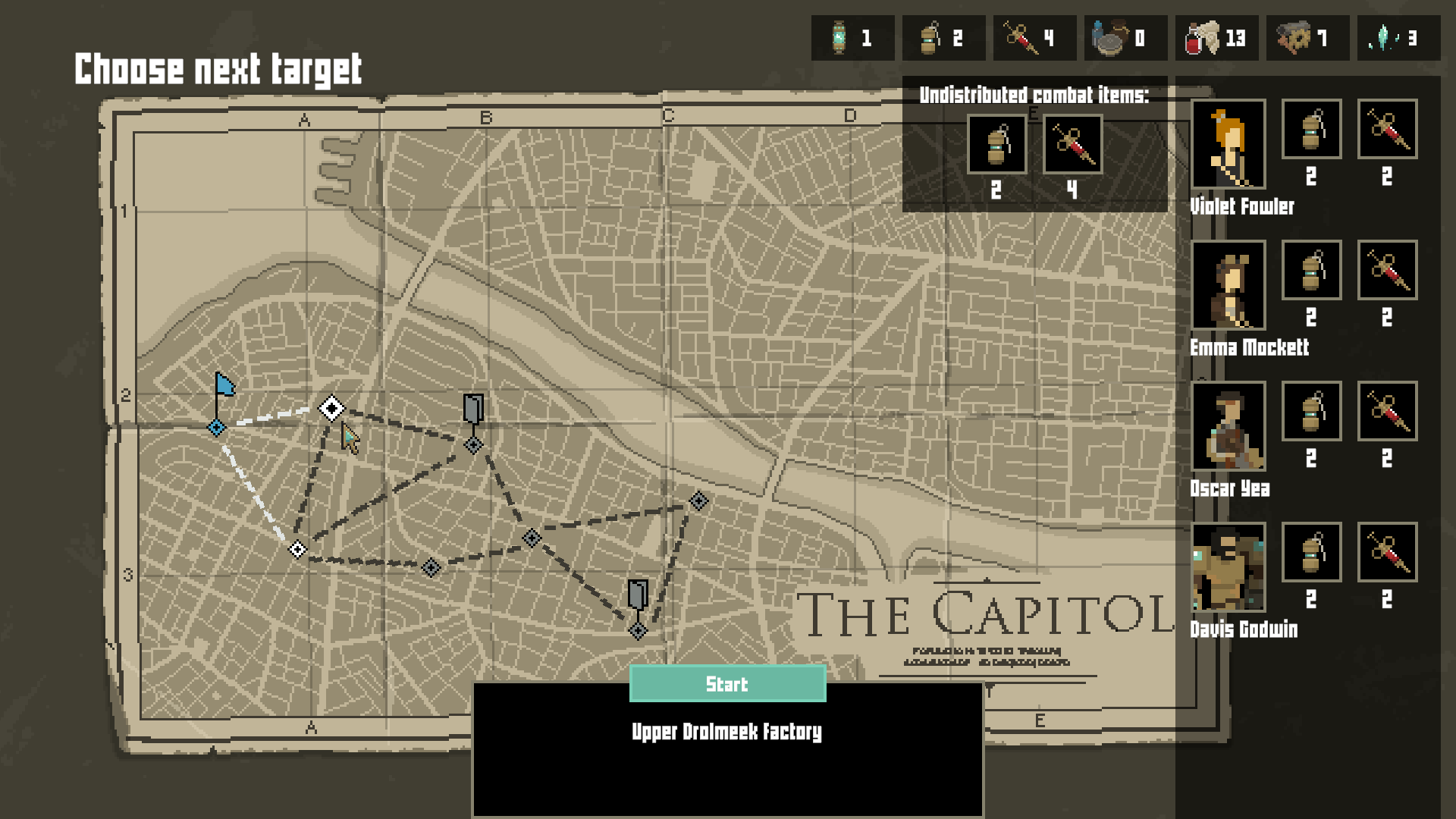
You control a party of four (initially, as it can be upgraded to five) characters. You select the next location you want to move to from a map:


Then you move to the next location. Combat - so the main part of the game, that I am not focusing on in this entry - happens. You kill rats, and you make sure they don't kill you.


When you reach a shelter, you unlock it with a Fusion Core - an item that can be found during combat. Think of it as "fuel" for your travels.


You enter the shelter phase. This immediately gives you a boost, as opening a shelter reduces the overall stress of your characters. Stress is bad, as it can mess up your characters by granting them negative traits:


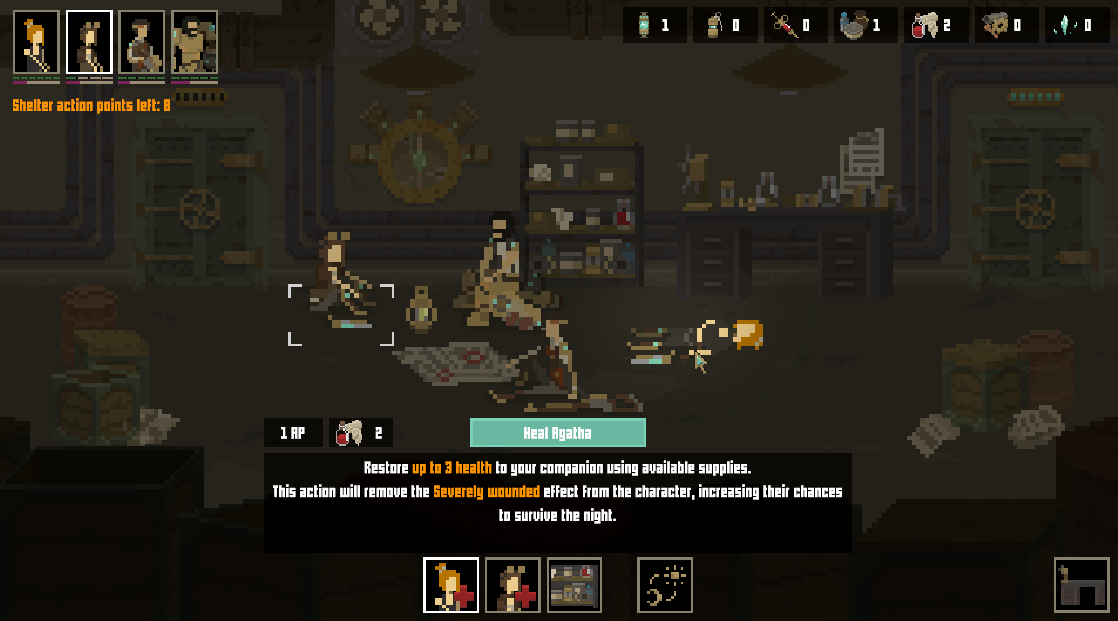
In the shelter itself, there is a bunch of activities that can be performed. Each of them costs an action point.

Now, previously every character had their own set of shelter action points. That was starting to become cumbersome (especially when I was designing the weapon modification phase that is yet to come), so I changed it to a common pool. Every character adds up to 3 action points to the pool (less if the character is heavily stressed or severely wounded).


Still, the player can select which character will be performing which action. Some characters are better at doing certain tasks. For instance, Rose (the "medic" girl, although she's wielding a shotgun as well) is able to heal more HPs, both in a shelter and during combat - so it's wise to use her for this action.


Some characters have unique actions. Tilly (the sword-wielding girl) can spend one action point to improve her melee skills in the next combat.


Gideon can practice, which will give him a nice accuracy boost.


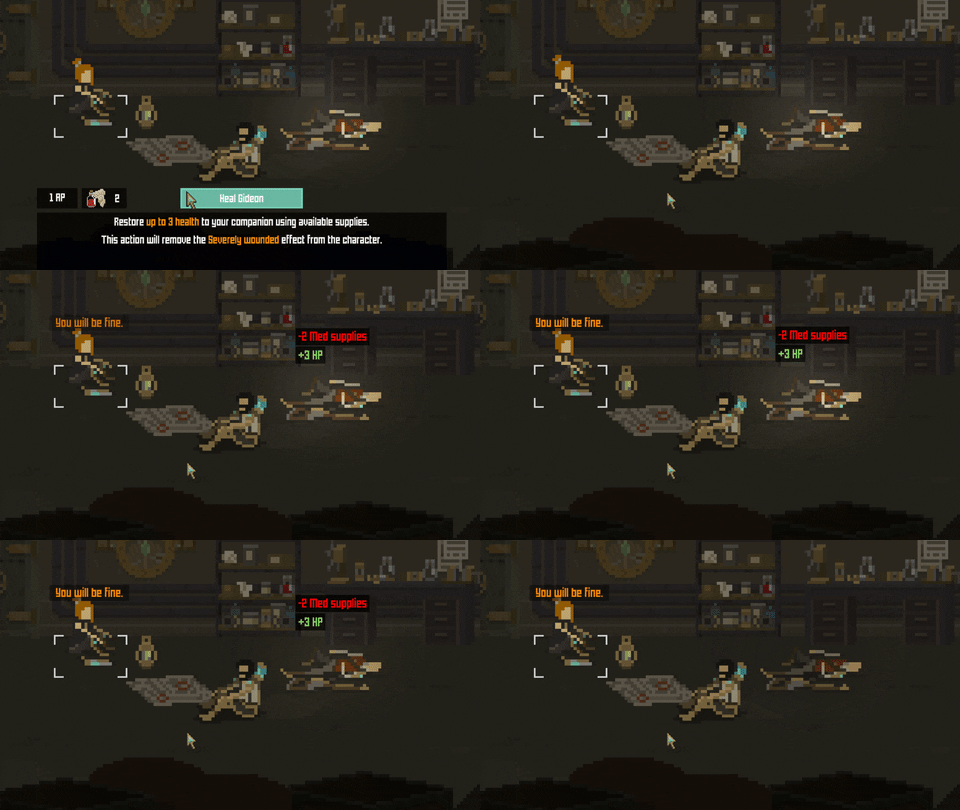
Also, only in shelters you can really heal your characters ("healing" made by stimpaks during combat is only temporary, and HPs healed that way fade away after combat) and remove the "severely wounded" trait that one can acquire during fights.


All of this makes shelters very useful. From the test playthroughs I did, it seems it is always a good idea to enter a shelter after combat. On the other hand, if you cannot - e.g. if you don't have a Fusion Core to spare - you can still proceed with the game. It will be more difficult, but it can be made.

This will allow me to add a nice risk/reward mechanic into the game: there can be locations with no shelters at the end, but with, let's say, more loot present. So the player can risk going there to find more loot, but the next mission they will face will not be preceded with shelter preparations, thus it will be more difficult.

Man, I could write about game design stuff all the time! Gotta go back to work and actually finishing the game, right?

Take care!


Devlog #88: new look of the soldier character

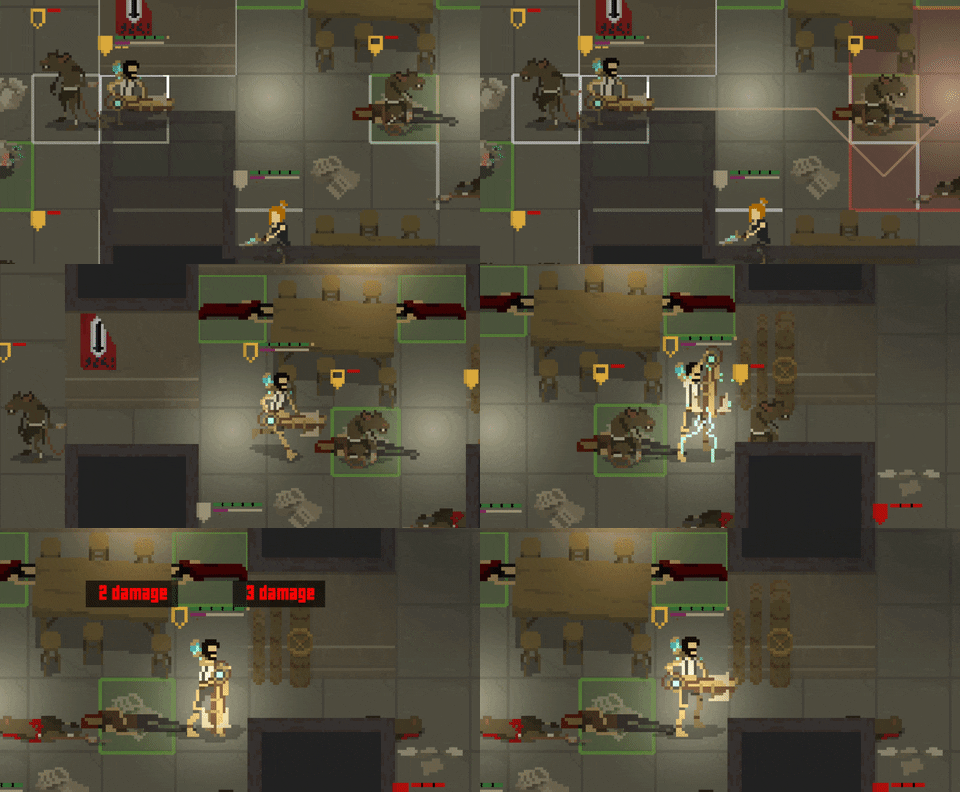
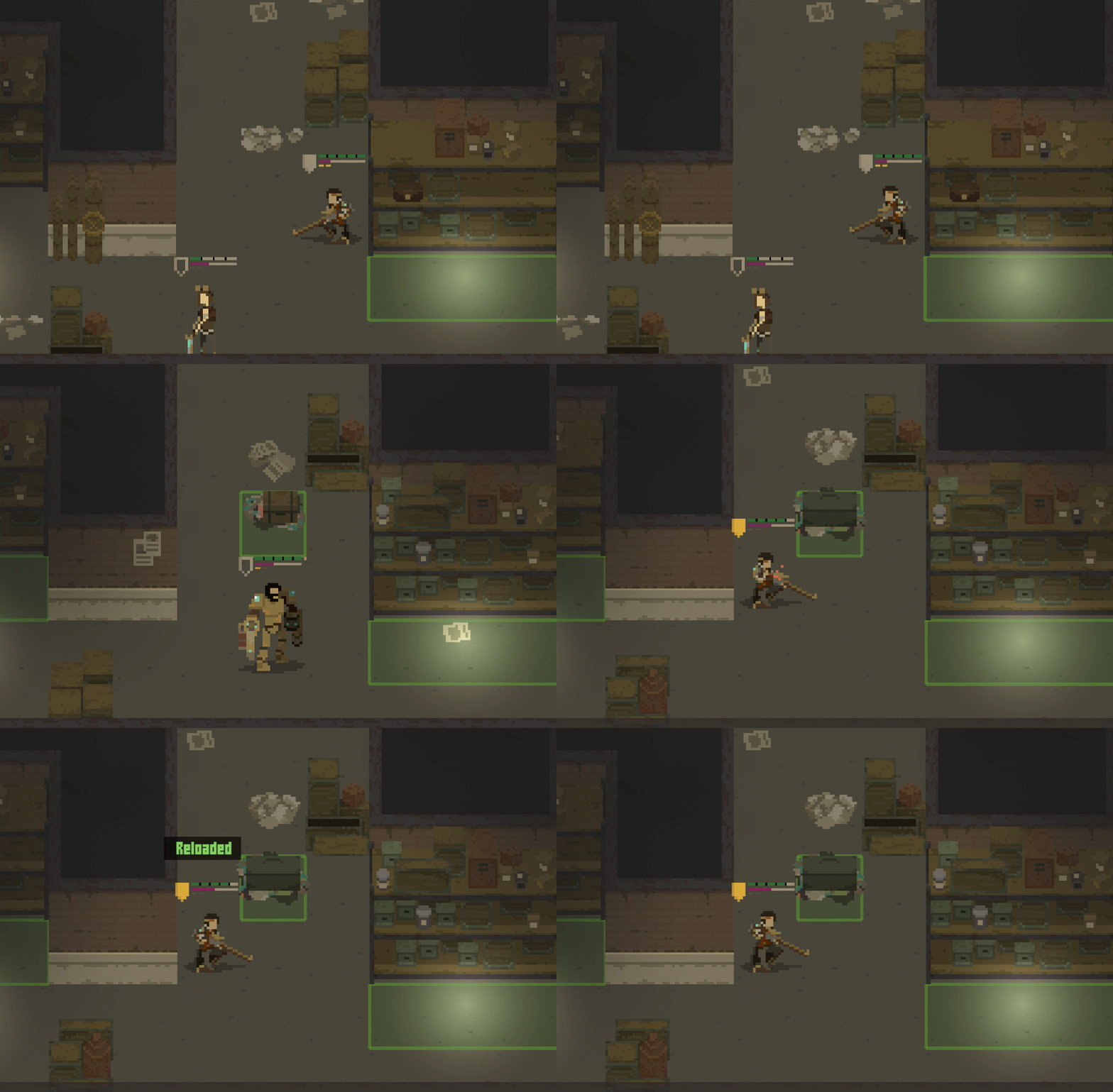
I am not sure whether I mentioned it before, but I had an issue with the "retired soldier" character type. I mean it looks badass and has that great combat suit. The problem was that he was moving too slow compared to other characters:


He obviously had no choice, as that combat armor - even if powered - was surely heavy.

Now, there was another issue present: the weapon. I am planning (well, already started part of it) on having modular weapons in the game - meaning that every weapon will have different parts that can be swapped (scope, barrel, energy core, etc.). Every character type will have a single weapon proficiency, and characters with the same proficiency will be able to swap certain weapon modules.

The problem appeared when I was planning my next "heavy" class character (the "retired soldier" character is a "heavy" class guy). I don't want to go into too many details, but that other character will be physically smaller - so their combat suit would have to be smaller as well. And because combat suits have their weapons embedded (it's basically an arm extension), weapons for different sizes of combat armors would've been incompatible.


Why on earth would the Empire create multi-size, incompatible heavy weapons anyway? That would be a huge inefficiency. Waging war against the Rat Vermin is expensive, one needs to optimize!

So the new soldier is using a lighter version of the combat suit:


And the combat suit allows him to carry a universal, one-size-fits-all heavy weapon:


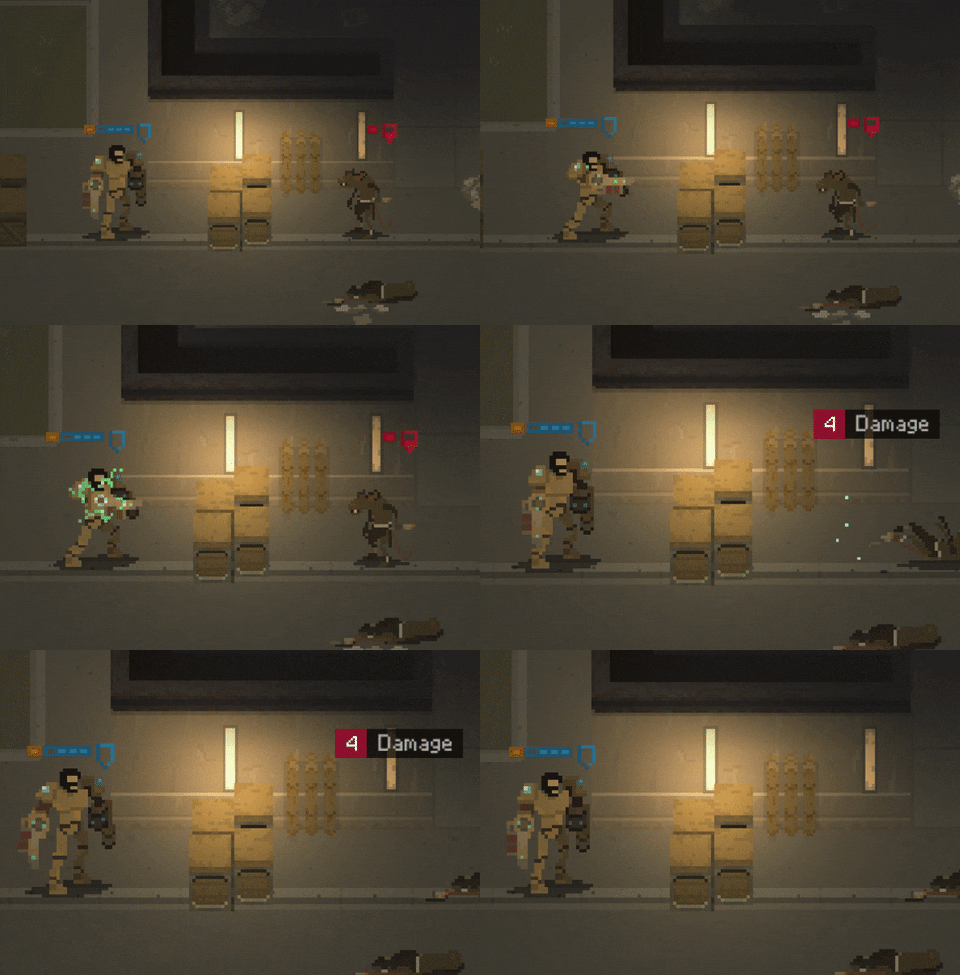
Heavy weapons still have the slam attack available, to satisfy all the player that like solid AOE attacks:


And you can see that - due to lighter armor - this character is able to move faster, which solves the first issue!

That's it for this entry! I hope that 2021 is going great for all of you!

Take care!

Devlog #87: 2020 wrap-up

We all agree that 2020 was special in one way or another. Nevertheless, I made some progress with Shardpunk throughout the year, and I'd like to review the ways game evolved during that time.

Quasi-dynamic levels

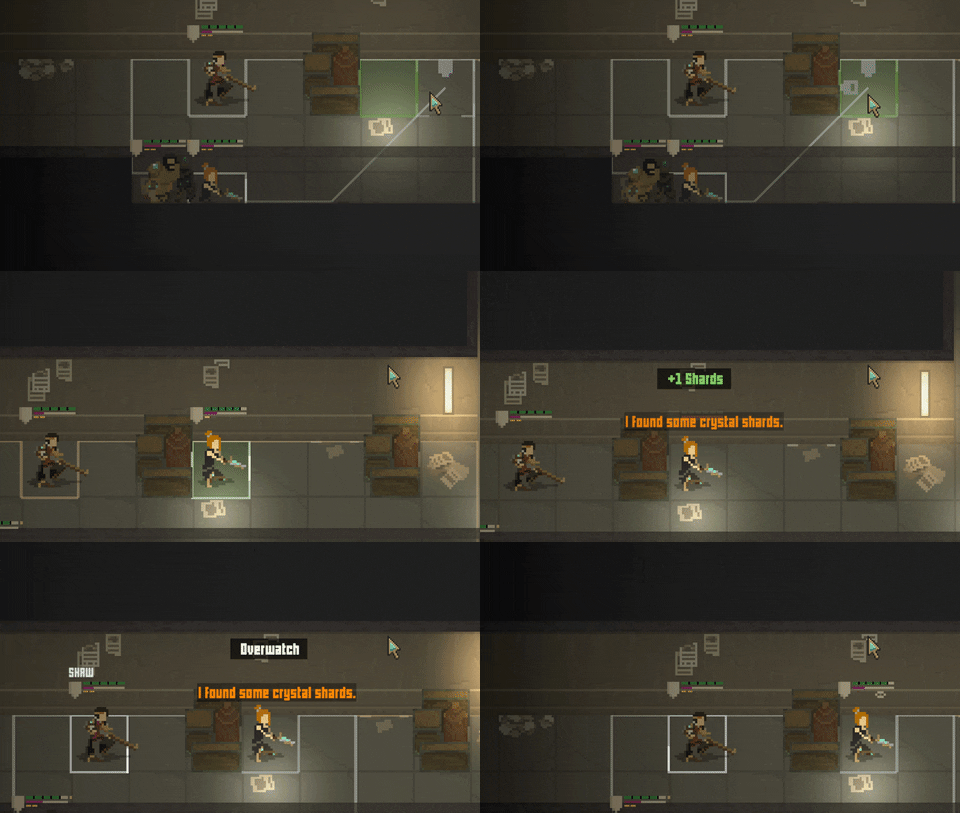
I first implemented that feature at the beginning of 2020. Every combat level is put together from predefined pieces to achieve a quasi-random nature.

Some of the level visuals are then randomly placed (lights, wall/floor decoration) to make it look even more unique:


Later on, I expanded this mechanism to handle closed locations (e.g. sewers) - I had to make sure that such levels are passable from start to the end, so proper level metadata had to be added.

The tactical layer

This went through a total overhaul during 2020. It started as an airship management thing (as back then the idea was that your team would be drifting above the destroyed Capitol in an airship), with production slots and other stuff:


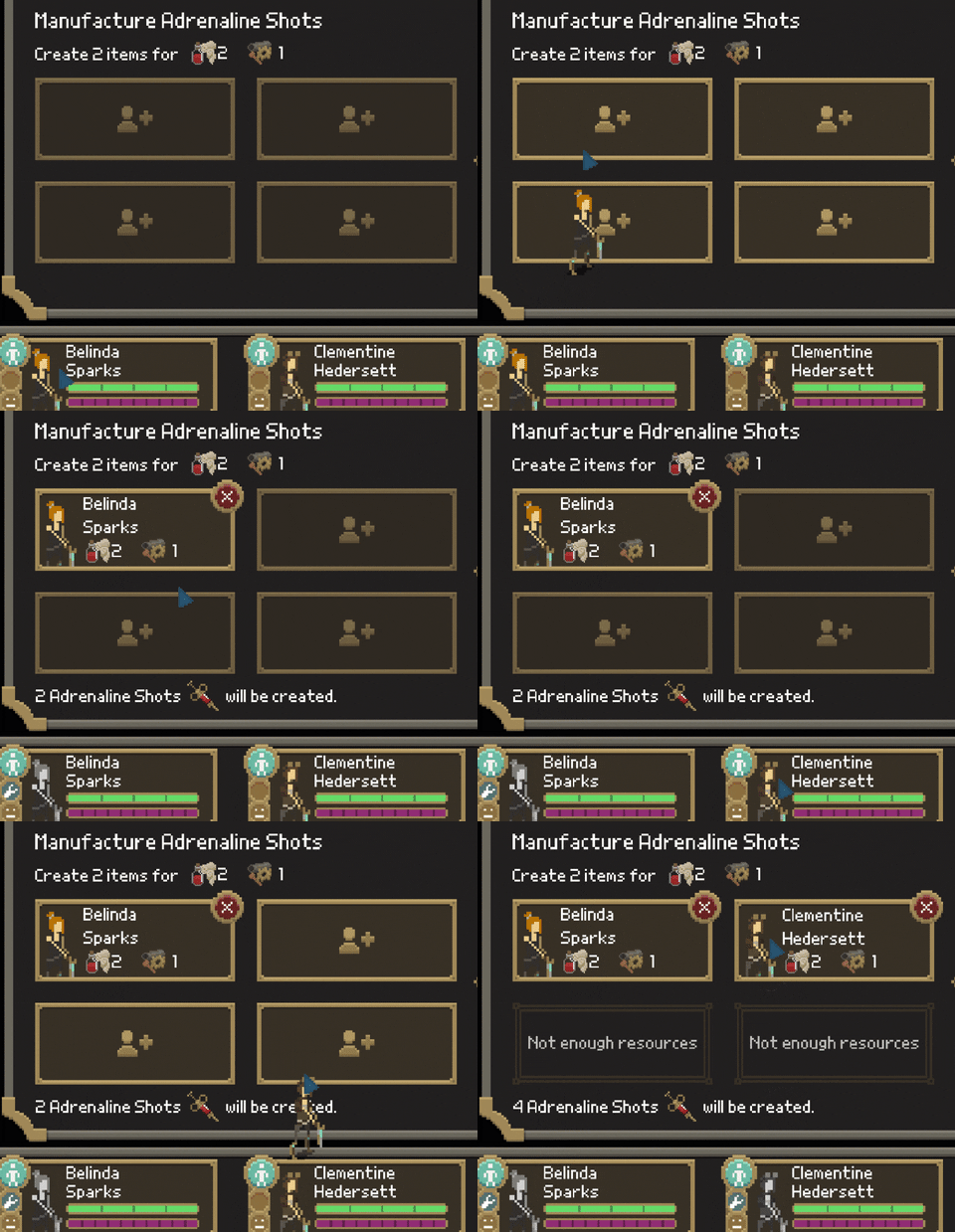
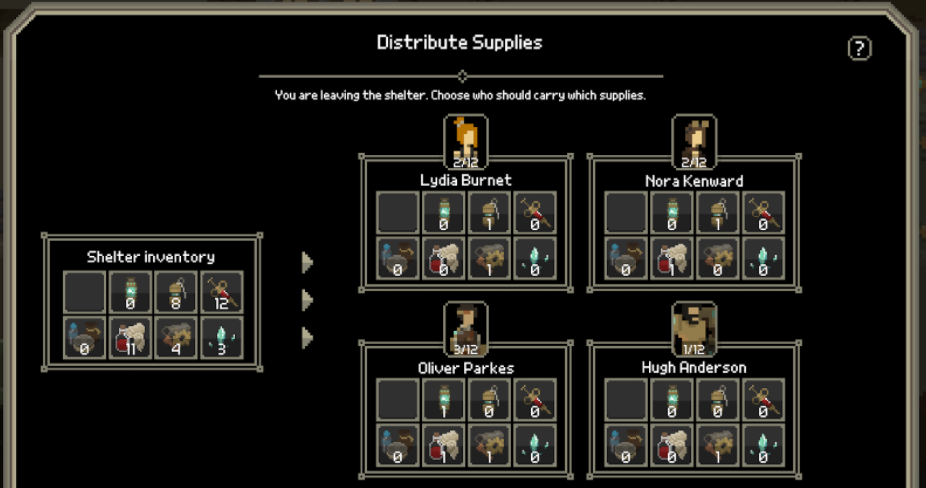
This approach had few major issues (too heavy UI, not supporting the "hopeless" vibe of the game) so I changed it to a shelter layer. Here's the latest shot:

Note that there is a common action points pool on this screenshot instead of individual ones. I am testing this approach right now.
Experience and leveling

This is strictly bound to available character types and I will surely write more about it in a separate entry. Long story short, I was experimenting with different approaches to leveling and I believe I will go with a similar approach that Pathway game had (number of unique characters, each having unique skills).

Handling loot

I'm fond of simplifying the inventory management phase and getting rid of the encumbrance mechanism that allowed me to reduce this bulky UI:


Into this one:


Map travel

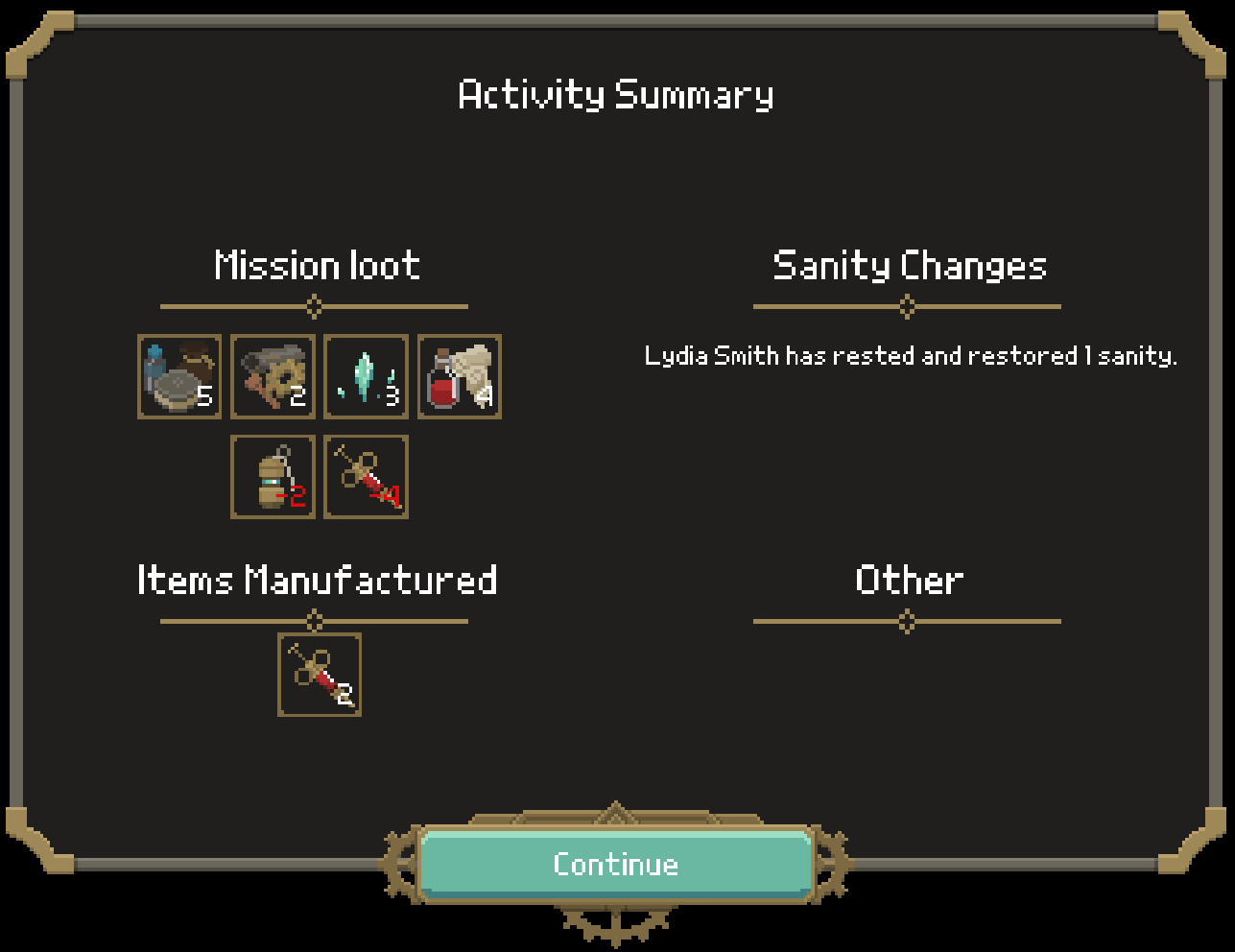
This is the thing that - when finished - will make the core gameplay loop complete. It is already possible to enter shelters, selecting the next mission, gathering resources and crafting some basic combat items (grenades, stimpaks). There's no final chapter mission present yet, but there is enough stuff available to test whether the gameplay loop is finished.

Summary

The development in 2020 progressed in a similar way to 2019 - using an iterative approach and trial-and-error way of choosing which feature is fun and which isn't. There were two demos released, both of which provided me with valuable feedback on the game.

The main thing that was different in 2020 was the development speed in November, as I temporarily made Shardpunk my full-time job during that month. This allowed me to do some significant progress AND helped me to create a development plan for the rest of the game.

Does it mean I have a clear roadmap for Shardpunk? Well, kind of. We all know that planning in software development can be difficult. Too many moving parts, too many situations in which you need to get back to the drawing board and rethink something.

Was the roadmap helpful in some way? I believe so! I made some nice progress with finding a publisher; nothing is official yet, but do give me a month or so and hopefully I'll be able to share some nice information with you.

I wish you all the best in this new year! Take care!

Devlog #86: do the characters have to eat?

Let's quickly discuss the core gameplay loop of Shardpunk, shall we?

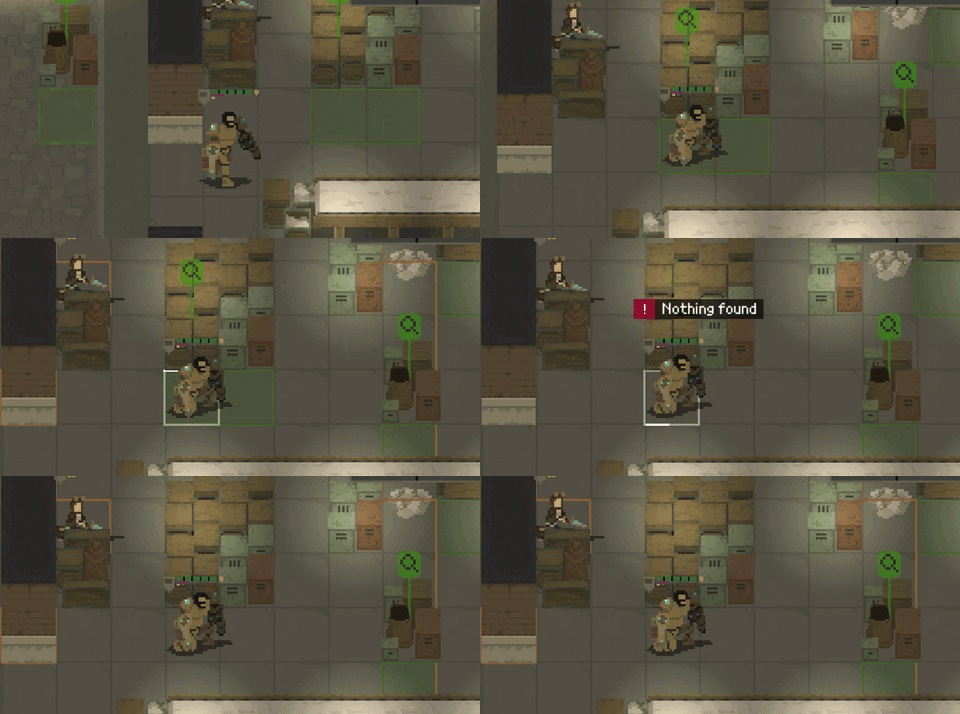
We start with the "combat" phase. Characters need to reach the end of the map, avoid getting killed and try to find stuff along the way. The "stuff" includes resources necessary to craft items that can help in combat and food supplies that are necessary to, well, survive.


After the exit is reached, characters enter a safe place (if they have a Fusion Core - I described it in my previous entry) or simply they quickly rest. Entering a safe place allows them to perform some extra stuff (like healing, recovering stress, possibly upgrading their weapons as well).


After a mission, characters need to select the next location, and the loop starts from the beginning.


However, there's still that food feature thing. The trick is that characters need to eat after each mission. If they don't, they suffer penalties.

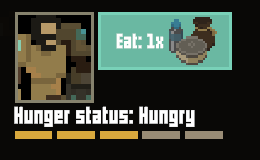
Now, in my previous entry I said I introduced a hunger bar.


The hunger bar was going down with every mission, and the player was suffering from penalties. It turned out however that this is not working well - or should I say, it was not really fun.

You see, I have introduced another stat to take care of (like HPs or Stress). What was more, there was no clear indication of where a character would start becoming hungry, then Starving. Sure, a nice UI design could take care of that - but I started to think that this stuff was too complex.

I considered dropping the food feature completely. Characters would not be gathering food and there wouldn't be any food-related penalties. This sounded tempting, but I wanted to give this one more try.

Right now I am busy changing this system into a simpler one. Food will still stay in the game. There will still be a food distribution phase after each mission. However, not eating would simply deal damage to characters.

As simple as that. No "hungry" statuses that reduce your aim (which can become very frustrated).

There is one issue with this approach: even if we assume that not eating deals you 1 HP of damage, there is a possibility that not eating will kill your character. This might become too punishing so I'll have to keep an eye on that feature.

Anyway, we will see how it goes.

Oh, and I need to find a different name for "missions". When you're travelling through the city overrun by vermin and trying to get from point A to point B, you don't really want to have a "mission completed" text displayed. It sounds too military-ish...? It's not an "expedition" nor a "quest" as well... I'll keep looking!

Take care, everyone! My next entry should be out on 1st of January, so I should prepare some yearly summary post, I guess.