1. Walk of Life
  2. News

Walk of Life News

Dev Blog: Meet the Pawn
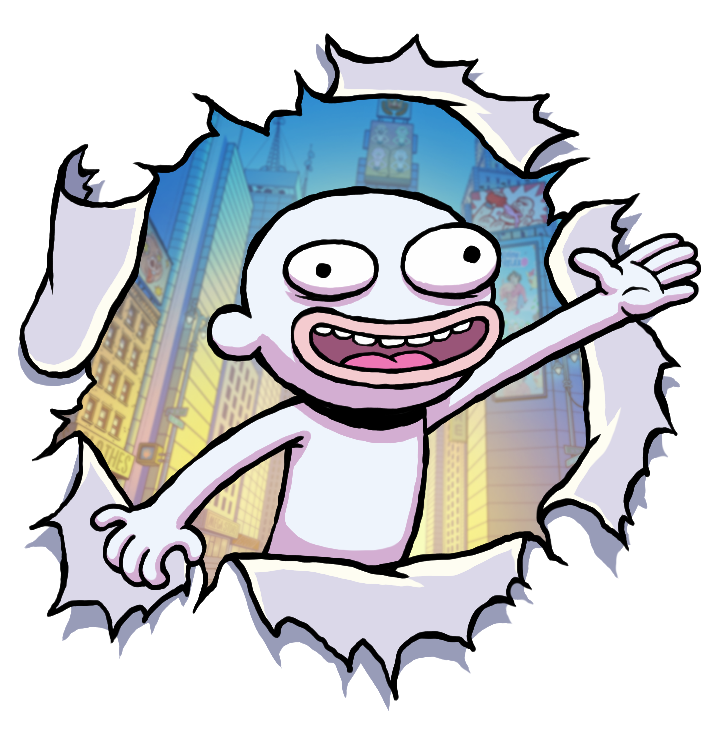


Say hello to the pawn—the figure that will represent the player as they navigate the world of Walk of Life.

Our previous game didn’t have a pawn in the traditional sense, but instead used floating disembodied heads to mark each player's movement. A bit ghastly in retrospect.


For a game that’s as board game inspired as Walk of Life, the importance of a good pawn cannot be overstated. A well-designed pawn makes it easier to follow movement, track actions, and understand what’s happening in the game. This might seem minor, but it can make a huge difference.

Since we want players to embody all sorts of characters in Walk of Life, the pawn needed to be versatile—a blank slate that could represent anyone. To achieve this, we once again looked to No Time to Relax for inspiration, this time drawing from our weekend event cards.
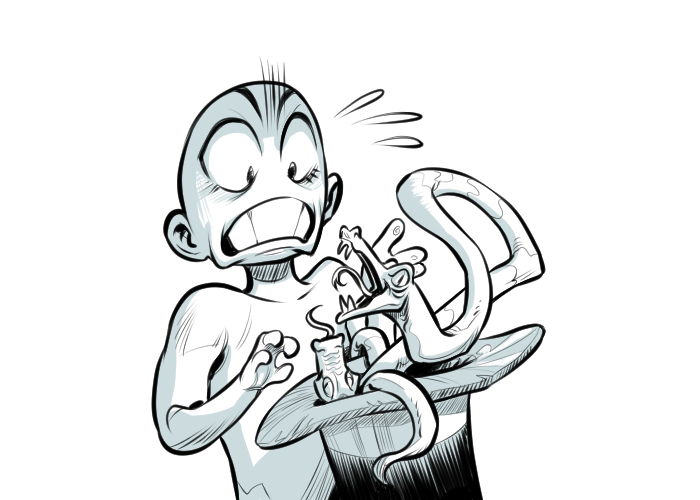


The cards in No Time to Relax featured highly expressive yet amorphous figures—perfect for delivering humor while remaining abstract enough to represent anyone.

Our first iteration for a pawn in Walk of Life was quite similar, but with some alterations to better fit our new art style.
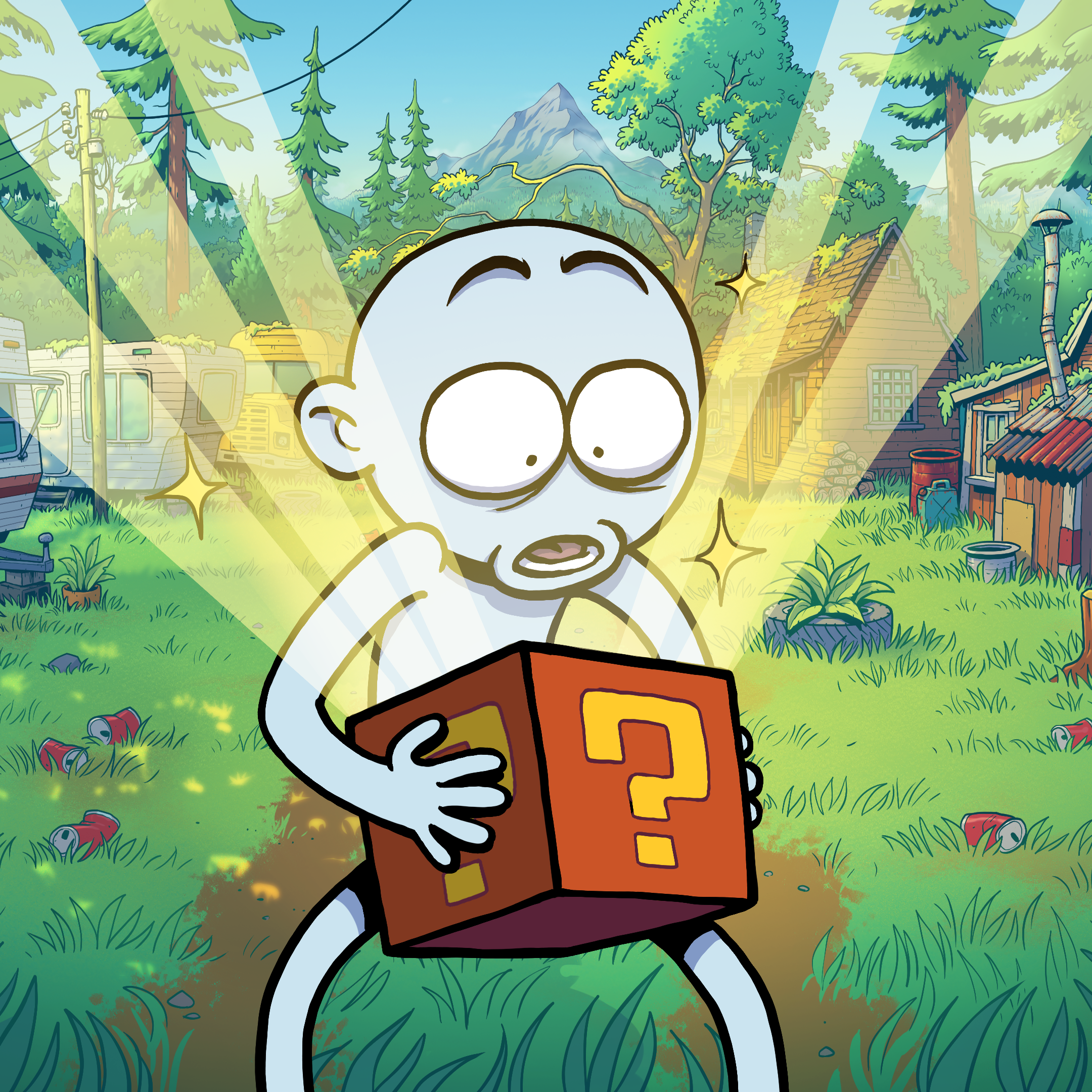


This new pawn was simpler than the one in No Time to Relax, but we felt the pawn needed to be even sillier and funnier so we could really crank the wackiness up to eleven.

In the end, we went for a design that was even simpler yet more expressive. We went with a cartoonier style with wobblier lines, maximizing potential hijinks.
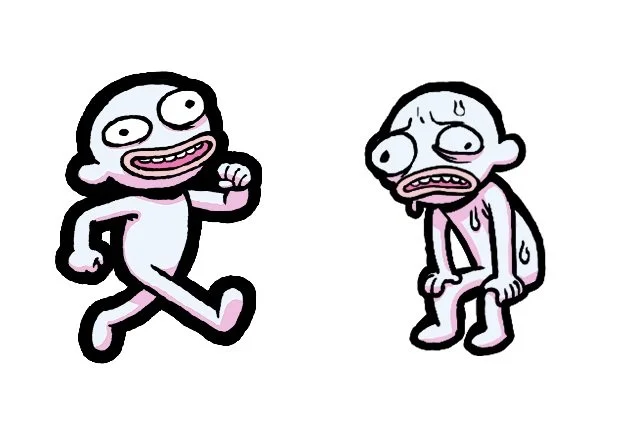


We really like where we landed here, so much so that we threw the pawn into the game’s logo, hoping for it to be an iconic part of the game’s image.

You can expect to see these little guys moving around the game board, as parts of event cards, and in the icons of various actions you’ll be performing in Walk of Life.


And here we have the pawn on the game map, ready to face whatever fresh hell life has to offer. In addition to being your token on the game board, the pawn will also be featured in the icons of various actions that players will take in Walk of Life.

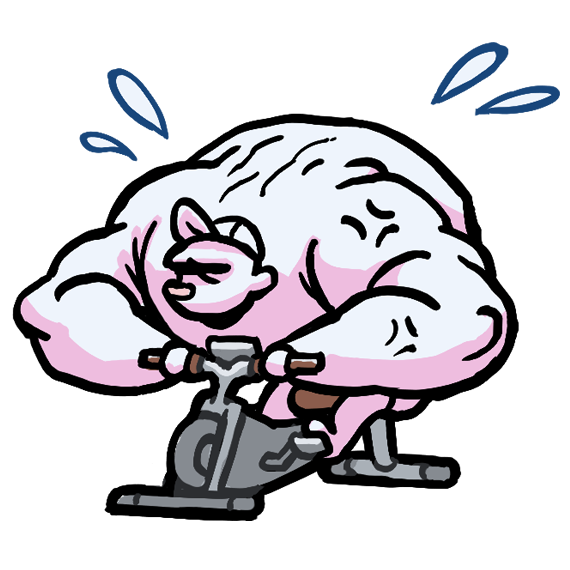
Here’s a couple of icons for actions you’ll be able to perform at the gym.


We can’t wait to show you more of the pawn - stay tuned!
Dev Blog: This is Just Attribute(s)

Health.

Happiness.

Hygiene.

Stress.

Long ago, the four attributes lived together in harmony. Then, everything changed when the Landlord Nation attacked.


Attributes! We all have them, and we all like to exaggerate them. (I should know—I scored an IQ of 190 on a very reputable online quiz.)

Attributes play a crucial role in life simulators. They give players a clear and relatable sense of how their character is doing in, well, life. They also unlock opportunities for interesting game mechanics and plenty of humorous content.

In No Time to Relax, attributes were directly tied to your final score. Higher health and happiness meant a higher score contribution. This led to an odd strategy: maximizing these attributes early in the game let players essentially ignore them afterward.

Conversely, letting your health or happiness drop to rock bottom wasn’t a big deal—you could just wait until the late game to pump them back up for maximum points. Stress functioned a bit differently, and only began affecting you once it got too high.


In hindsight, this didn’t work too well for a life simulator. In real life, you (unfortunately) can’t just stockpile health and happiness and then coast. Maintaining these parts of your life is a constant effort, not a one-time task.

From a gameplay perspective, it also led to linear strategies for players who wanted to optimize their score. Ignoring attributes for most of the game generally meant less decision-making.

We want this to change for Walk of Life. Our most recent experimental change was to disassociate scoring entirely from attributes and instead tie it to other achievements, such as the quests we talked about in our last blog.


Instead, players will now have to carefully maintain their attributes at the same time that they pursue objectives to maximize their endgame score. If your health, happiness, or the newly introduced hygiene, fall too low, dire consequences will follow, making quests and other achievements significantly harder to get.

This functions similarly to how accumulating too much stress did in No Time to Relax. And don’t worry, stress is still there!

Walk of Life is meant to be a hectic and hilarious life simulator, and we think having your attributes falling out of balance every so often will go a long way to emulate the hardships we all face in our day to day lives.

Then again, this is all experimental and might not make it to the game at launch. Everything you’ve just read is vapor. A flickering shadow. Sand sifting between your fingers. Tears in rain. Fleeting and meaningless.

See you again for our next blog!

Dev Blog: A Questing We Will Go!


Prithee, forsooth, verily, and yonder!

Now that we’ve exhausted our vocabulary of medieval sounding words, let’s talk about quests. As we teased in the previous blog, quests are one of the features we’re experimenting with for Walk of Life to increase the game’s replayability.

A recurring piece of feedback of No Time to Relax was that after a couple of playthroughs it was easy to figure out the optimal strategy of the game. The game could effectively be solved as players would follow the same strategy every game to get the maximum amount of points.


One way to prevent players from always following the same path is to present them with different choices every game, meaning that they can’t follow the same strategy every time but must instead adapt to what the game throws at them.

Quests are a new feature that are meant to serve as one of the main ways for players to earn points in Walk of Life. Each quest includes one or more objectives that players must complete within a specified timeframe to earn a score bonus.

A key aspect of quests is that they are random and players will not get the same quests every game. Some quests may line up with what you were going to do anyway, while others may force you to take a bit of a detour from your gameplan.


Quests are obviously not some revolutionary new design but a simple addition to the game that should feel intuitive to players while addressing what we felt was an issue with our game design. You don’t have to use nanobots in a situation where duct tape does the job.

So what kind of quests do you put into a life simulator?

Without slimes or dragons for our players to slay, quests will have players tackle mundane, everyday happenings. For example, “Lottoman Empire” will ask you to buy a bunch of lottery tickets, while “Suds all, folks” will require you to wash your hands at one of the game’s bathrooms.

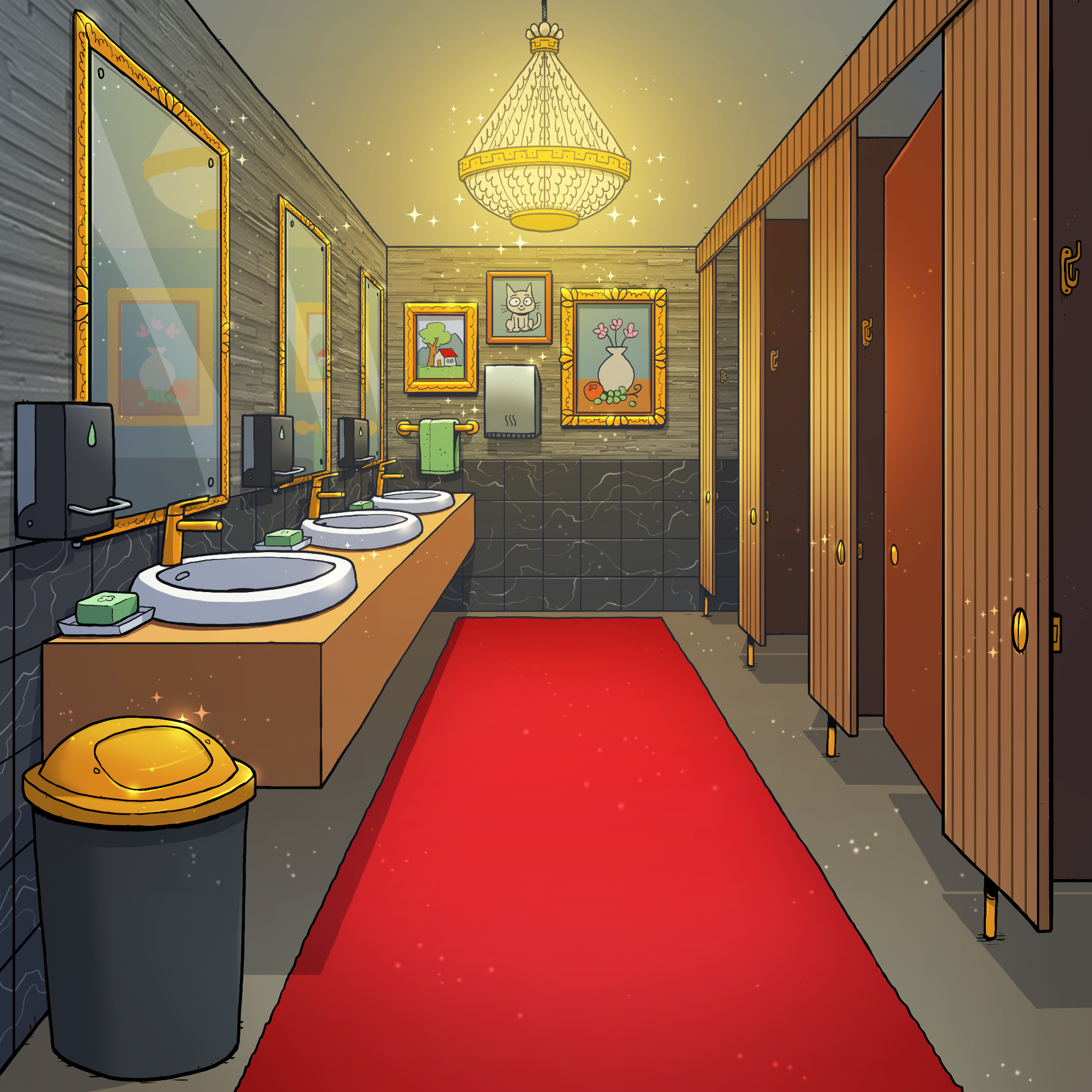
Wait, did we just reveal that our game has bathrooms? That was supposed to be a whole devblog in and of itself.

Fine. Take this sneak preview of one of the many bathrooms in Walk of Life. See if we care.

Dev Blog: Lessons Learned

Oh, hi!

You’ve caught us in the middle of work as we are currently neck-deep in elbow grease, viscera, and God only knows what other fluids to release the perfect game.

But, since it’s you, I guess we can make a little time for a devblog.


When we started scoping out Walk of Life, we began by looking back to its predecessor and the lessons we learned from it (if any).

Over the years since its release, the No Time to Relax community has provided us with a bunch of feedback through reviews, emails, and the in-game feedback button, with comments ranging from heartfelt praise to all-caps vitriol about us and our mothers.

No Time to Relax was well received, maintaining a "Very Positive" user review score on Steam—for a brief and beautiful period even reaching the coveted "Overwhelmingly Positive" rating.


So, these are all strong points of No Time to Relax that we must keep in mind not to lose when developing Walk of Life. Now let’s dive into the negative feedback.

A highly requested feature we couldn’t deliver was more content. Players wanted more of the world they inhabited in the game. Why can’t I visit the hospital or work at the harbour even though I see it? Unfortunately, adding more content to the game was tricky because the game’s code was hastily assembled in only six months and had a tendency to unravel when fiddled with.

Player interaction or lack thereof was another complaint that we did deliver on with the hex shop, although some players thought the system could have benefitted from more depth.


The most common complaint was that the game’s optimal strategy was relatively easy to figure out after a few playthroughs. Even if they initially liked the No Time to Relax, many players felt the game became repetitive after it had been “solved”.

All of this feedback is immensely useful to us and we think we’ve come up with a system that will go a long way with tackling the replayability issue: quests

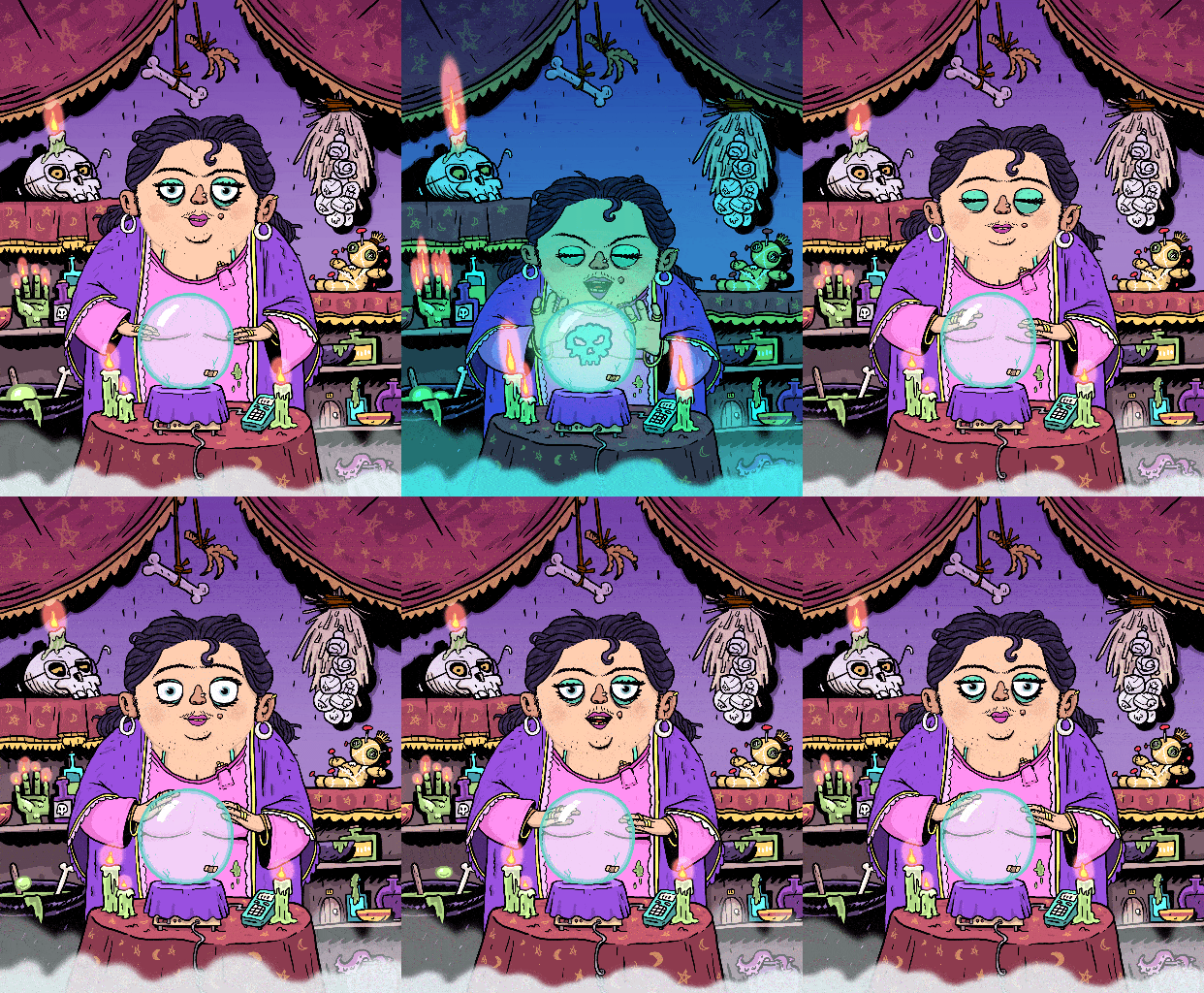
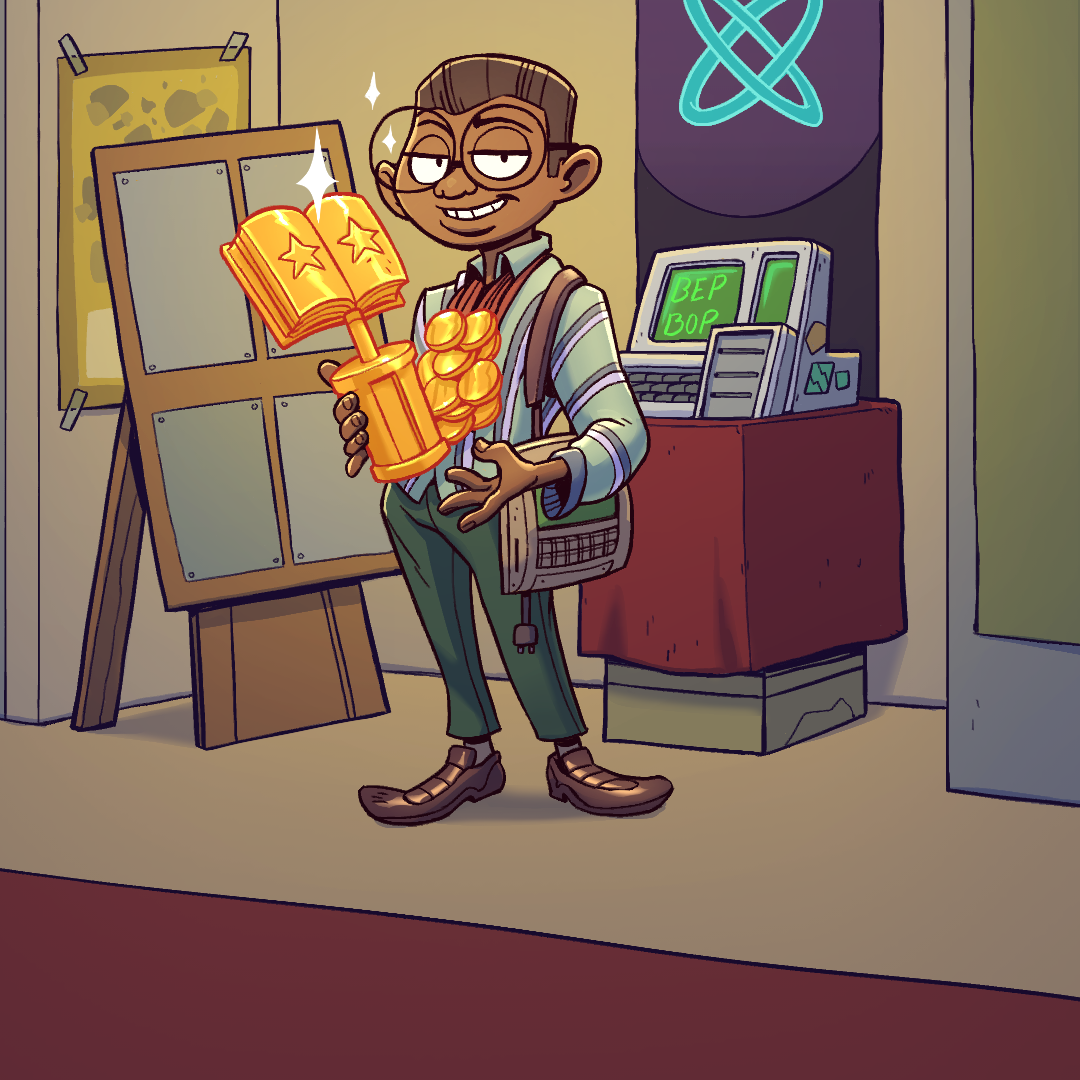
What are quests, you ask? Well, you can probably guess, but we’ll tell you more about them in our next devblog. Until then, enjoy this sneak preview of someone you might encounter in Walk of Life.


Did we gloss over some of the things you liked or disliked in No Time to Relax? What would you like to see in Walk of Life? Let us know in the comments!

Dev Blog: The Holiday Season & The Search for the Perfect Logo


The holidays are upon us, stuffed with their overindulgent merriment. At Porcelain Fortress, this is the season of jól, the Icelandic Christmas, when families come together during the darkest time of year to share a cozy, candlelit atmosphere (and perhaps tolerate each other’s company).

In Iceland, storytelling is a cherished holiday tradition, so we thought we’d gather you around the fireside and regale you with a tale—not about the holidays, but about how we arrived at our current logo for Walk of Life. How’s that for a segue?


Like many other products, a good logo is essential for a video game. We could toss around marketing buzzwords like "recognition" and "brand awareness," but at the end of the day, the goal is simple: to catch the eyes of people scrolling at breakneck speeds through oversaturated game catalogs.

When we first started working on Walk of Life, the successor to No Time to Relax, it felt natural to stick with the recognizable style of its predecessor. After all, why mess with something that works?

But as it turns out, we have bigger plans for Walk of Life. We want it to stand out as its own independent creation—related to its predecessor, but distinct. Think of it as a sibling rather than a conjoined twin.


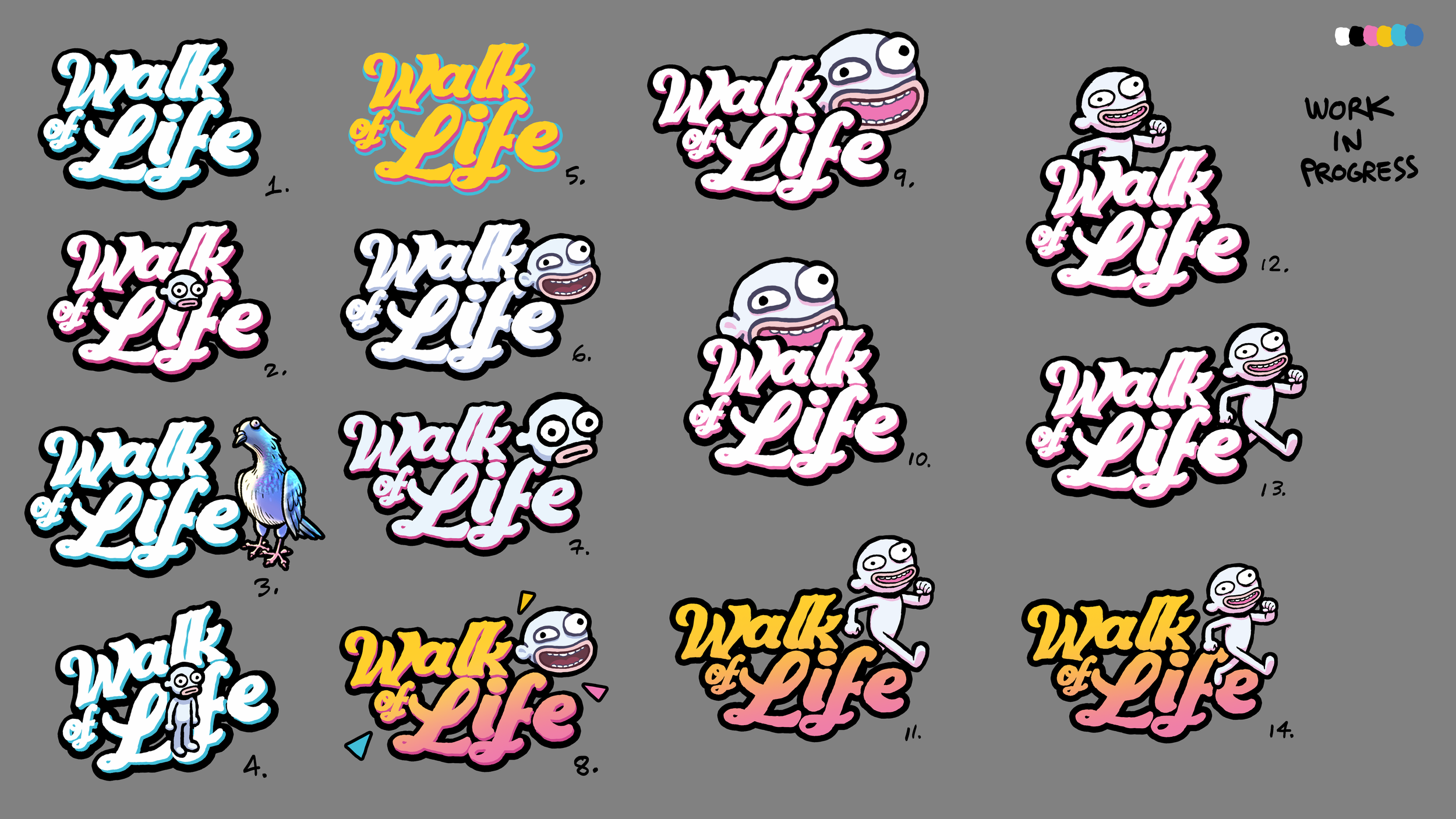
We stuck with this second logo for quite a while. It had a fun, cartoony vibe that would have been right at home in the mobile gaming world, where we originally planned to market the game.

But plans changed, and Walk of Life is now headed to the PC and console market. As a result, we had to change the logo again so people wouldn’t confuse it for a mobile game.


This was an interesting concept, but it didn’t quite get off the ground. It had a bit of a street art vibe—more fitting for a game like Jet Set Radio or Bomb Rush Cyberfunk than a wacky life simulator.

Who knows? Maybe we’ll revisit it someday if we release a DLC where players arm themselves with spray cans and rollerblades to take on a dystopian, fascist government.


At one point, we considered framing Walk of Life as a sort of sitcom, inspired by 80s classics like Full House and Cheers. While we didn’t fully commit to the sitcom idea, we did draw some inspiration from shows of that era, and the logo seemed to capture the vibe we were aiming for.

After a few weeks, though, the team felt the logo was missing something. So, we decided to have a sit-down and settle this logo business once and for all. We created a thread in Slack where we all posted some of our favourite logos to try and find what we needed to make ours better.

We realized two things were missing from our logo: a touch of colour and a visual element to complement the text. To address this, we decided to incorporate the in-game pawn—used by players to move around the map—as an iconic visual for our game.


Now we felt like we were getting somewhere. The addition of the pawn to the logo proposals really brought it to life, and the little strut its doing tied well into the titular walk.


After a few more iterations, the members of the team decided on the one they liked the best. Although the decision wasn’t unanimous, we ended up with the game’s current logo.


And there you have it, our end result (for now!) We’re very happy with the logo we decided to go with, but what do you think? Did we make the right call? Let us know if you disagree with our final decision!

Also, what were we talking about? Something about the holidays? Oh well. Merry whatever!