1. Battle Brothers
  2. News

Battle Brothers News

Dev Blog #135: Location Environments

We’ve previously announced that we’re going to portray any location that you’re fighting at, such as a graveyard or a brigand camp, also on the tactical combat map. If you haven’t done so already, it’s highly recommended that you read up on our explanation of why we’re doing this and how we’re addressing potential issues here. Since this feature is now more or less ready, it’s time to take a closer look at how it plays out!

[h3]Location Environments[/h3]
First off, location environments will be included for free with the upcoming 1.4 update - this includes graveyards, ruins, and various camps for humans, orcs and goblins. If you choose to get the ‘Blazing Deserts’ DLC, you’ll also have desert raider encampments and southern ruins in battle, and if you own the ‘Warriors of the North DLC’, you’ll get to see barbarian camps and villages. But you don’t need to own either to see most of the new environments.
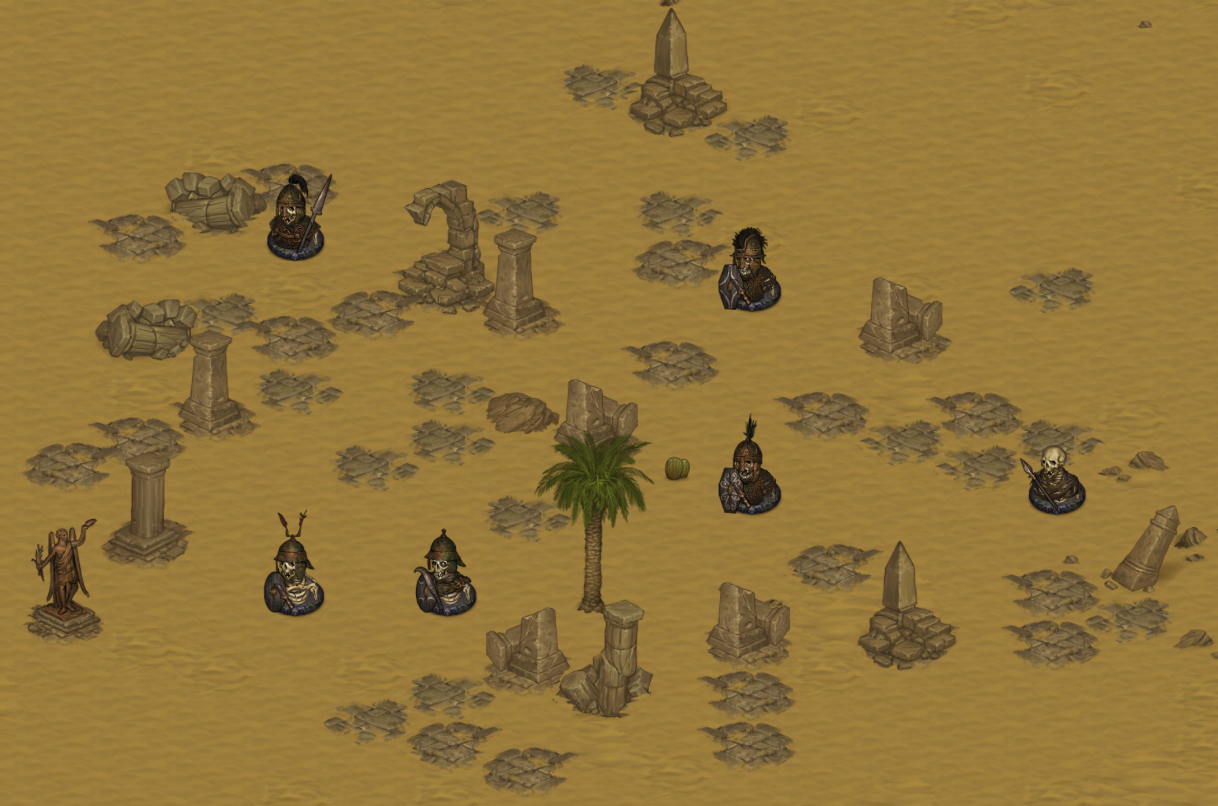


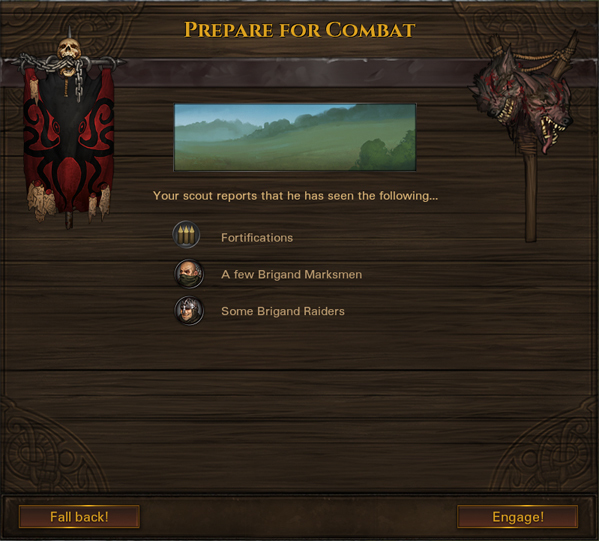
As we’ve said previously, we want fighting brigands in the open field to feel different from engaging them at their camp. Indeed, where their camp is located and what kind of camp those brigands have should also become more important. Smaller camps may be a loose collection of bedrolls around a campfire, providing a largely cosmetic backdrop for your battle, while larger camps may even have fortifications, like wooden palisades, that provide cover for the defenders. If a location does have fortifications, you’ll see it both in the location’s tooltip on the world map and in the engage screen before you start your assault.


A location with fortifications is harder to assault, but it doesn’t mean that you’ll have to bring siege equipment. Take a look at the barbarian camp below. It’s quite a defensible position, being the extreme example of a fortified camp built on a hill, but we’ve deliberately kept holes in the palisades. Those palisades are enough to limit your angles of attack, change up things and make you think twice on how to go about your assault, but never enough to bring the entire battle to a halt at a single chokepoint. Although the location environment doesn’t look like it makes the battle any easier, it does make it a lot more predictable where you and the enemy start, and more a question of good tactics and less of having luck with spawn positions.
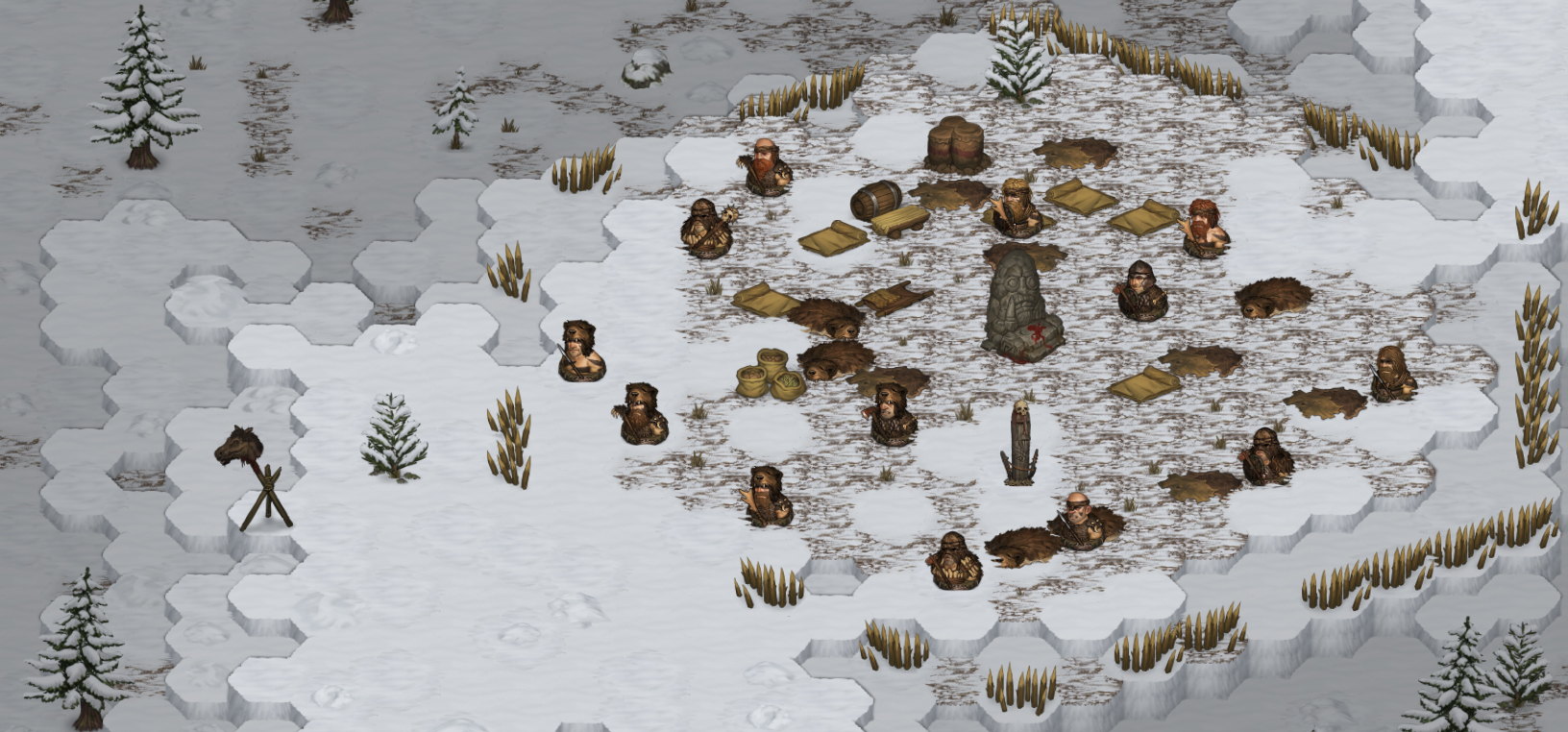


Unlike with field battles, which most of your battles are still going to be, your men don’t start in a battle line right in front of your opponents when assaulting locations. You’ll still start in formation, but further to the left, whereas the enemy starts in their camp to the right. There’s also going to be a couple of instances where the roles are reversed and you have to defend a location against attackers.
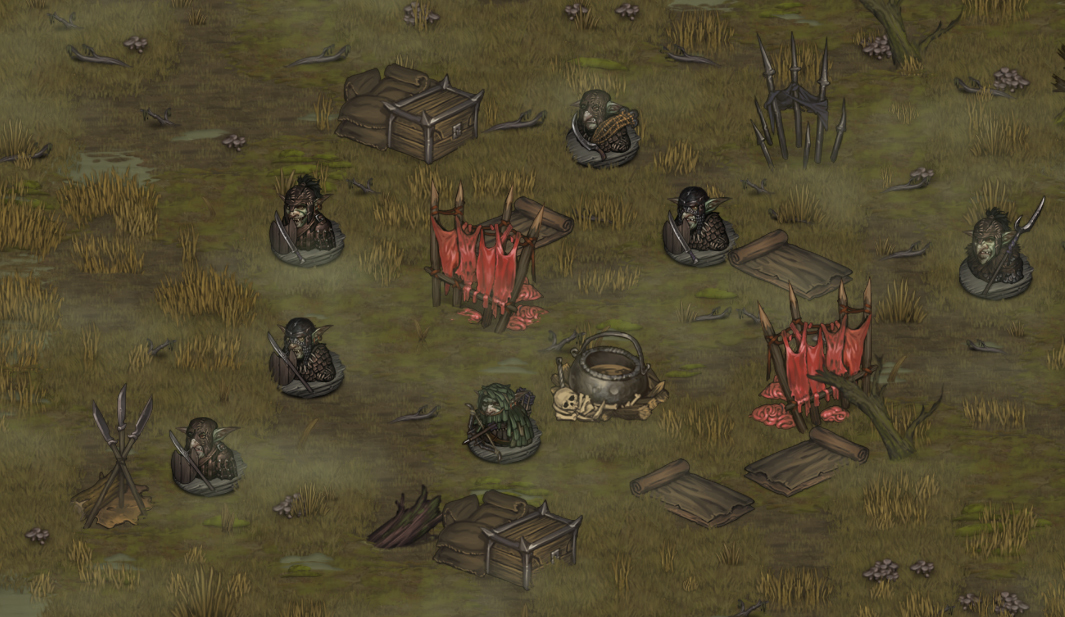


If you don't want to fight the enemy at their camp, you can attempt to lure out their garrison on the world map to fight them in the open and then return to easily sack the location afterwards. On the other hand, engaging the enemy at their camp may sometimes be advantageous over luring out their garrison onto difficult terrain. That's because your enemies naturally cut down trees at their camps, making for open spaces, and build their camps only on dry spots within swamps. So instead of having to fight goblins in murky marshlands where your heavily armored men get stuck, you can descend upon their camp and fight them on solid ground. Ultimately, location environments are about bringing more variety and atmosphere to combat in Battle Brothers, and about adding another strategic consideration to the world map.
Dev Blog #134: Soundtrack of the South

We’re back with an audible bang this week as we take a listen to the upcoming additions to the Battle Brothers soundtrack by Breakdown Epiphanies. Let’s hear in their own words what they’ve been up to!

[h3]Soundtrack of the South[/h3]
The ‘Blazing Deserts’ DLC is going to make the world of Battle Brothers feel more diverse and rich in culture, and this of course also goes for the game's soundtrack. Today we are going to share a sneak peek into the musical direction in the form of short snippets of four of the new pieces that await you once your company starts to explore the new content. These tracks are all still work in progress, but they should give a good impression of the atmosphere you are presented with battling the new enemies and visiting the opulent city states.

[previewyoutube][/previewyoutube]

Our montage starts out with a new town theme and opens up with one of the Middle-Eastern instruments that we incorporated for our latest addition to the Battle Brothers OST, the Oud, a type of Arabic, fretless lute that has been used in the Middle-East and North Africa for millennia. Musically, this piece ties together with the rest of the soundtrack by means of a motif you are probably familiar with: the Battle Brothers main theme that plays in the main menu, on the world map and in northern towns. This time, though, we gave it a new spin by moving it into a key typical for oriental music.

The most prominent instrument of the second snippet you hear is a Bağlama, which is a type of Saz, a long-necked lute used in traditional music from the Balkan over Turkey all the way to today's Iran and Afghanistan. It introduces us to one of the two battle tracks that are going to play when fighting the troops of the southern city states and the bandits in the surrounding deserts. Aside from the main motif on the Bağlama, this track features deep and heavy low string riffs that are reminiscent of the undead battle tracks (the city states are built upon the remnants of the old empire after all) as well as a more majestic brass section similar to the ones we came up with for the northern noble house battle music. The Bağlama also fills the role that the guitar did in those northern realms tracks.

The next transition brings us to a title that is going to play when fighting the new kinds of beasts introduced in the ‘Blazing Deserts’ DLC. As usual for our beast themes, the music is very heavy on percussion and the use of melodic elements is very sparse although we decided to let a flute play a bit of a more dominant role to convey that oriental atmosphere.

Finally, we have a piece that is not part of the southern deserts lore but expands the musical selection when travelling north since the new late game crisis might entail such ventures as well. This new world map track is like a more lush and open variant of the music we made for Warriors of the North, featuring the Nyckelharpa as well as deep and powerful northern choir.

This concludes today's presentation and we hope we managed to stir your appetite for the contracts and stories that await your company in the southern realms.

Situation Update

There should be a dev blog explaining the changes and additions coming with the ‘Blazing Deserts’ DLC right here. Instead, we have some unfortunate news to share this week about the Corona situation.

Overhype Studios is based in Hamburg, Germany. As with many other places around the world, Hamburg has closed all schools, kindergarten and daycare centers, and is asking everyone to self-quarantine as much as possible. As some of us have very young children at home, this has required us to do a balancing act between working and taking care of our children for several weeks now - and likely will continue to do so for some time into the future. As more and more people get sick, we now also have relatives and friends that require our support.

Unfortunately, all of this is impacting on our schedule. We often find ourselves unable to put in the hours of work on the game required, and consequently, we’re now behind schedule. This doesn’t mean that the future of Battle Brothers or the upcoming DLC are in any kind of jeopardy, but there are still some unfortunate implications of this very unique situation in our lives;

  • The ‘Blazing Deserts’ DLC will likely take longer to be finished and may come out later than initially planned for.

  • We can’t keep posting weekly dev blogs, because we can’t keep up pace with new features or changes to report on. As a consequence, we’ll now pause with our weekly dev blogs for a few weeks to gain more ground. We’ll resume our weekly dev blogs on the 1st of May.


It’s disappointing, but it’s just the situation that all of us currently live in. We look forward to when everything goes back to normal. In the meantime, we’ll soldier on as best as we can given the circumstances and look forward to show you more of the exciting things yet to come for a game that we all love. See you soon!

Dev Blog #133: City States, Part III

Last week we’ve learned about gunpowder weapons. In this conclusion of our dev blog series exploring the southern city states, we take a look at their remaining troop types that make use of these weapons. Onwards!

[h3]Gunners[/h3]
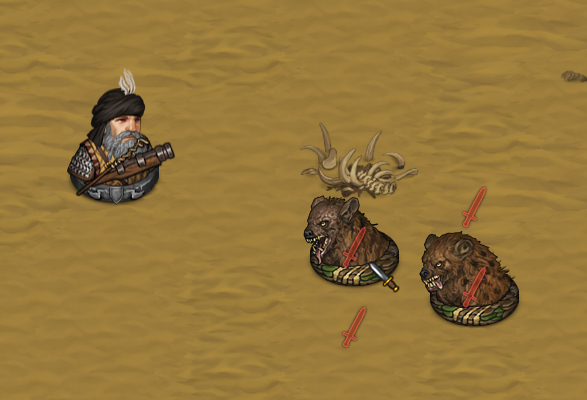
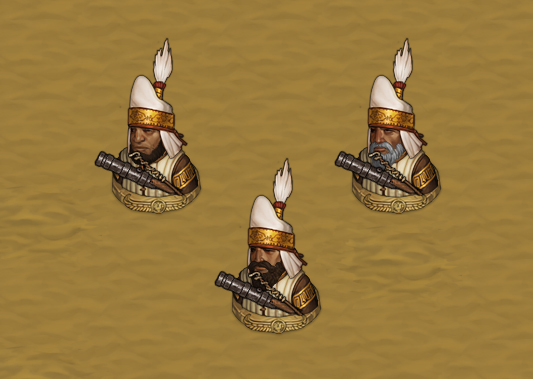
Armies of the city states train men in the use of the Handgonne, a metal barrel with a long wooden handle that uses gunpowder to propel shrapnel in a wide cone. Below you see Gunners armed with a Handgonne. Its visuals have been revised since last week to make it more readily apparent that this is an unreliable early firearm and not some kind of blunderbuss.


Because their weapons cover a cone, Gunners excel against tightly packed enemy formations. But because their weapons also have a very limited effective range, they often have to position themselves right behind their own frontline, leaving them vulnerable to polearms and firearms themselves. The city states do not make use of traditional ranged weapons like bows and crossbows, but desert raiders - essentially the southern equivalent of brigands - make use of a new composite bow with advantages and disadvantages over northern bows.

[h3]Engineers[/h3]
Malnutritioned slaves toil in the fields and quarries beneath a city of golden domes that reflect the glory of the Gilder. It’s a city of architectural marvels made possible by the application of mathematics and engineering. These sciences are taught in several colleges between the city states, and their graduates make for sought-after engineers. They devise intricate water pumps and fountains that create a private oasis in the gardens of wealthy citizens, and they produce mechanical toys that makes eyes go wide.

But where a child sees but a toy, a man with ambition sees what can become a weapon. And so it is that engineers of the city states also devise terrible weapons of war, and that they operate them on the battlefield to rain down destruction on the enemies of men with ambition.


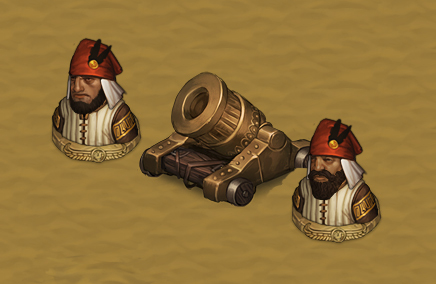
As you face engineers in battle, they don’t pose much of a threat by themselves. In fact, they try to stay as far away from the frontline as possible. Their role is not to engage the enemy in direct combat, but to operate the technical marvel that is the mortar. A bronze-cast muzzle-loaded piece of artillery, the mortar is able to fire every other round as long as it is operated by at least one engineer next to it.

The mortar has enough range to cover the whole battlefield, but it’s entirely immobile during combat. It fires explosive shells that cover a large area of effect, but it’s highly inaccurate. The howling sound of incoming mortar shells has as much a psychological impact on combatants as it has an explosive impact, or perhaps even more so. Characters in the blast zone lose morale and receive the new ‘Shellshocked’ status effect that lowers their efficiency in combat, but receive only moderate physical damage.

Luckily, because the mortar is heavy, relatively immobile and hard to operate, it’s an uncommon weapon used only with large armies, and one that you’ll most likely face only as part of the new ‘Holy War’ late game crisis.

Dev Blog #132: Gunpowder Weapons

As you’ve already learned here, the southern city states are places where medieval science flourishes. Advancements in medicine, astrology and alchemy are unlike anything found in the north. You’ve also learned a good deal about the alchemy part already, but now it’s time to look at their finest alchemical achievement: Gunpowder weapons. This requires a bit of an introduction, so let’s start!

[h3]Introduction[/h3]
Battle Brothers is set in an era spanning the early to high medieval ages as we move from Scramasax to Greatsword and across all the tiers of equipment. There’s a few outliers, such as the Fencing Sword, but by and large this dictates what kind of equipment may make its way into the game. It’s also the reason why there isn’t any full-blown plate armor available. Naturally, the same restrictions apply to any gunpowder weapons we’re going to introduce.

Until the ‘Blazing Deserts’ DLC, the setting was limited to draw inspiration from Europe. Gunpowder weapons weren’t much of a thing there at the time, but it doesn’t mean that other cultures weren’t employing them. The gunpowder weapons we’re going to introduce aren’t the muskets that many people may immediately think of, because these clearly would fall out of the era that Battle Brothers covers. Instead, they are very early firearms based on what eastern cultures actually had available at the time.


Gunpowder weapons work differently from any other ranged weapons in the game and fill their own niche. Their attacks don’t target individual opponents, but instead hit an area of effect covering multiple tiles and always hit both body and head. Also differently from any other weapons, the skill of a shooter and the defenses of a target don’t determine whether a target is hit at all, but rather for how much damage it is hit. The higher the skill of a shooter, the more damage a target receives. The higher the defenses of a target, the less damage it receives. For example, while you’ll have a hard time dodging a load of shrapnel being shot at you in its entirety, a shield offers good protection against it and will reduce any damage you might otherwise take.


Because it’s important to understand the area of effect an attack with a gunpowder weapon will cover, not least to avoid friendly fire, we’ve revised how these are displayed in the game. No matter if a tile is empty or not, you’ll now always see which tiles are in the line of fire. Naturally, this goes for any melee attacks already in the game as well. So with all that said, let’s take a closer look at the gunpowder weapons available for you to use.

[h3]The Firelance[/h3]
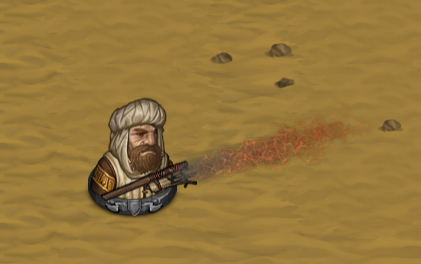
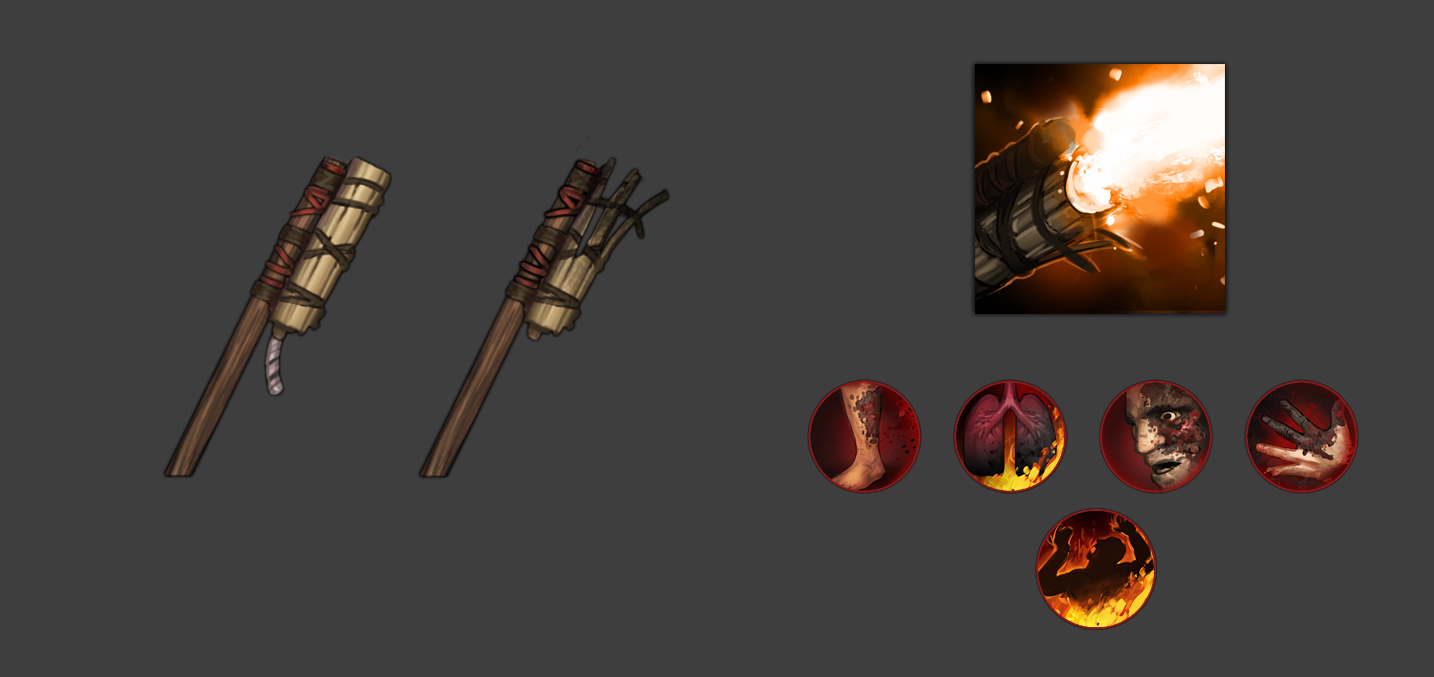
The Firelance is an explosive charge mounted on a wooden stick. Once ignited, it will spew fire in a straight line covering multiple tiles in front of the shooter. It has limited range, but can still be safely fired from the backline without hitting your own men. Victims caught in the jet of fire may suffer one of the new burning injuries.


The Firelance has a single use in combat, after which it is burned out and useless. Like throwing weapons, it is automatically refilled after each battle and can be used again in the next one. Firelances are particularly useful to soften enemy ranks in deep formation, as they are able to set ablaze opponents in their backline that are out of reach of most polearms or Greatswords and are guaranteed to hit. The conscripted armies of city states regularly make use of them before battle lines clash.

[h3]The Handgonne[/h3]
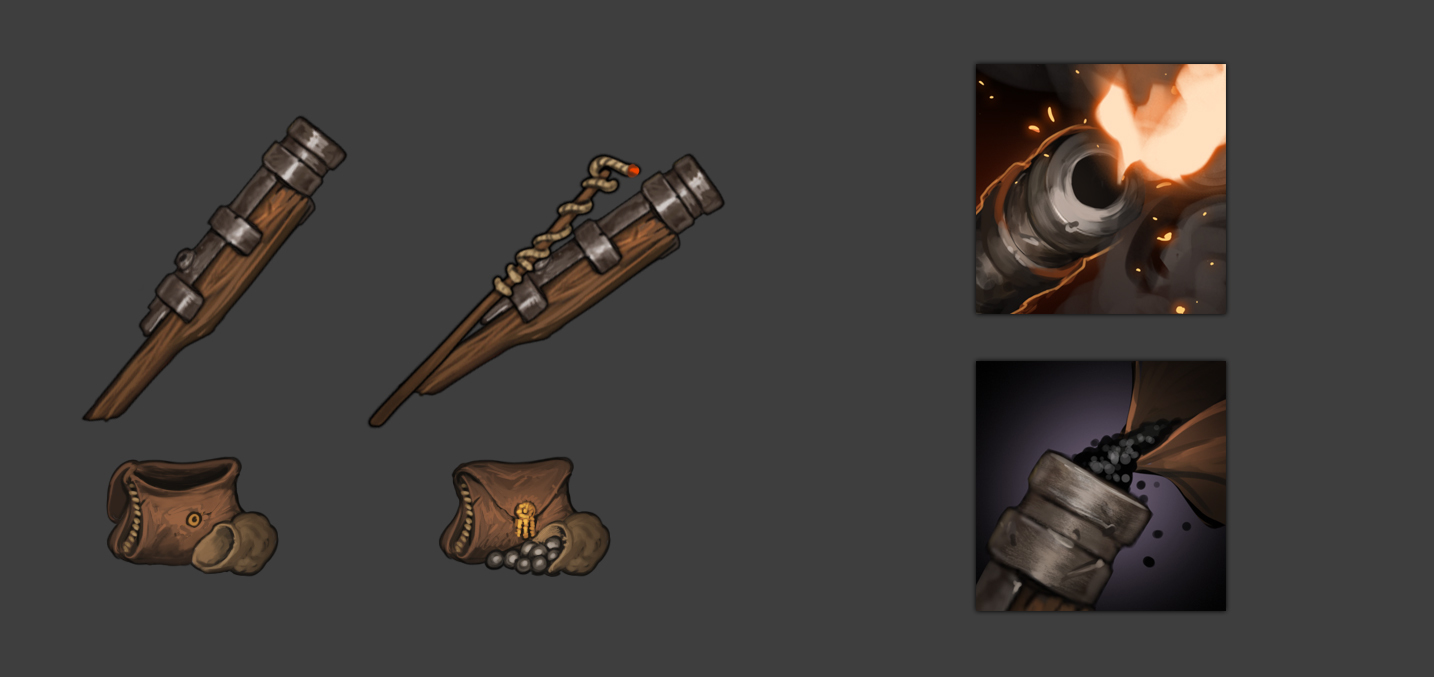
The Handgonne is a massive cast iron cannon with a wooden handle. It fires shrapnel in a cone and can hit multiple targets with one shot for devastating damage, but at less range than either bow or crossbow. Similar to a crossbow, it has to be reloaded after every shot with shrapnel and powder carried in the ammunition slot. As it is heavier and more cumbersome to reload than even a crossbow, a character carrying a Handgonne can not fire, reload and move in the same turn.


The Handgonne excels against multiple lightly armored targets, but can also be effectively employed for damaging several more heavily armored opponents at once. Because the Handgonne covers a wide cone, smart positioning and watching out for friendly fire is important. Used right, it can quickly even the odds if overwhelmed by superior enemy numbers - after all, the more enemies, the more targets to hit. And any target thus hit may suffer both piercing and burning injuries.