1. Eco
  2. News

Eco News

Developer Blog: Demographics and Wages

Hello Eco citizens, today I’m going to talk about the super-fun world of Demographics.

I bet you didn’t know that demographics are fun. It sounds like a really boring word, probably. One of my favorite things about Eco though is that it connects things you think are boring to a wider system you’re engaged in, and suddenly they become fun. Taxes, for example, probably one of the least fun things there is, is one of our most interesting features. I once saw a server even implement parking tickets, which to me sounds incredibly fun.

Here's an overview of the Eco 9.0 blogs so far:
  1. New Government system: Constitution
  2. New Government system: Elections and Elected Titles
  3. New Government system: Demographics and Wages (This blog)
  4. New Government system: Laws Part 1: Using the system
  5. New Government system: Laws Part 2: Taxes, Ownership, Property, and Wealth
  6. New Government system: Laws Part 3: Tour of different actions, and Executive Actions
  7. New Government system: Districts
  8. New Crafting: Work Parties
  9. New Crafting: Labor System
  10. New Crafting: Modules and Efficiency Redesign
  11. New Crafting: New Tech Tree
  12. New Building System: Hammer and new Building Styles
  13. New Mining System: Mineral Dispersion and Drill Usage
  14. New Mining System: New Processing Path and Pollution Info
  15. New Animal System: Attacking Animals
  16. New Ecopedia System
  17. New UI
  18. New Audio
  19. New Hosted Worlds System
[h2]Demographics and Wages[/h2]
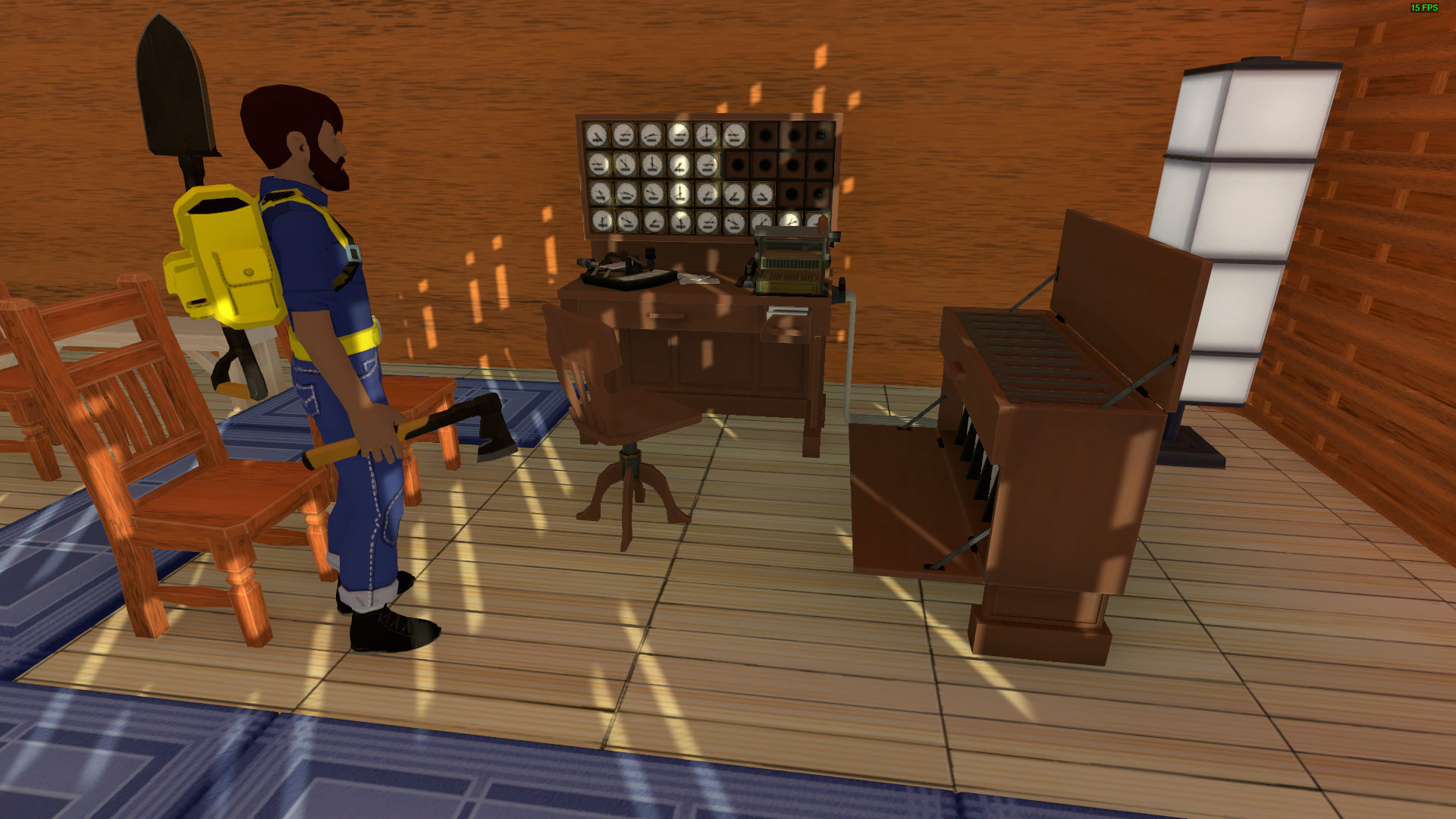
So what is a demographic anyway? It’s a division of people. IE, ‘People who have played more than 5 hours in the last week’, or ‘People who have more than 500 Eco Bucks currency’ or ‘People who have butchery skill greater than 5’. Turns out these ways of automatically dividing up a populace are really useful for organizing, and we’re expanding a lot on this feature for the 9.0 update. You can setup demographics at the new Census Bureau object:


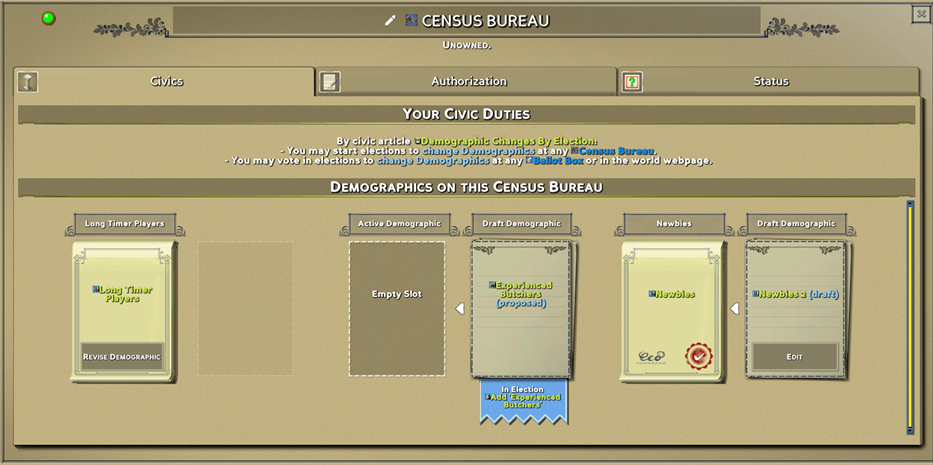
Each Census Bureau lets you create up to three demographics:


Like all new civics objects, your civic duties and abilities when it comes to demographics are determined by the constitution (see our Constitution blog). In this case, all changes to demographics must be passed via election (see Election blog), so changes are something that citizens must agree on (unless they install a dictatorship of some kind, of course).

Let’s take a look at some things you can do with demographics. Say we want to have a ‘new player bonus’ that goes to citizens just joining a world. First, we can define who is in that group with a demographic:
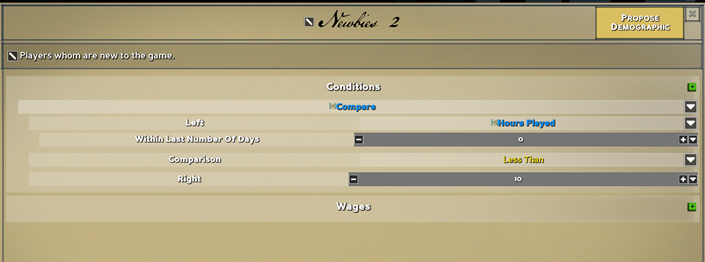


Here we’ve compared two values: the number of hours played (over the last 0 number of days, which means ALL days), and 10. If hours played is less than 10, they’re a newbie.

From there we can define wages, which is a new addition with 9.0 This will pay them out every civics tick with the value specified. We’ll keep it simple and pay out 10 per hour, counting online hours only:
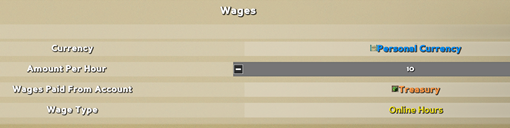


On a server that has been around for awhile and has a lot of rich players, this can be a good way to give new users a legup. You could do it in a more complex way, too; perhaps incentivizing certain skills that are needed on the world.

Here’s what the demographic looks like when you mouse over:
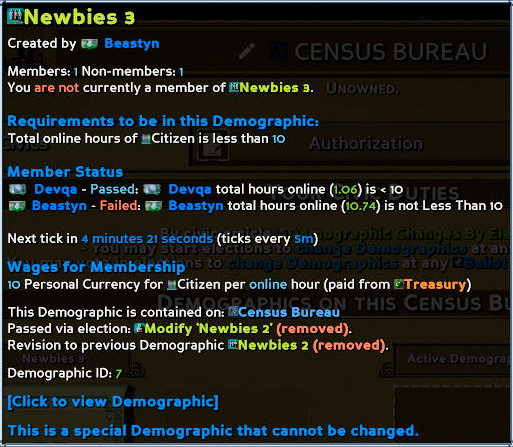


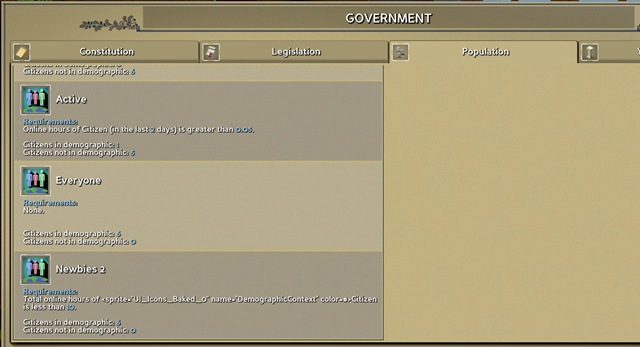
And you can see the list of active demographics in the government viewer under ‘Population’.


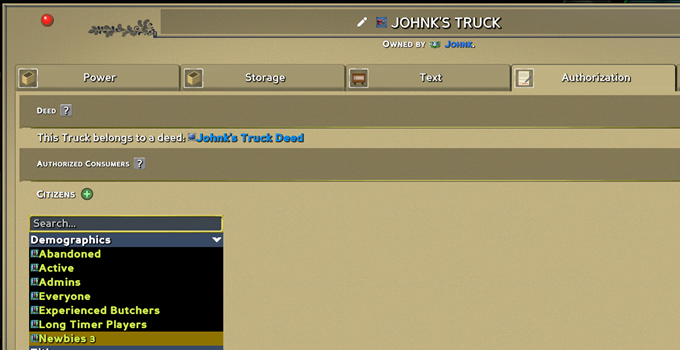
You can also use this demographic anywhere you specify a person, and it will take that group instead. You could set property rights on a truck to be shared among all newbies, for example, making a village vehicle that newbies can use for a period of time:


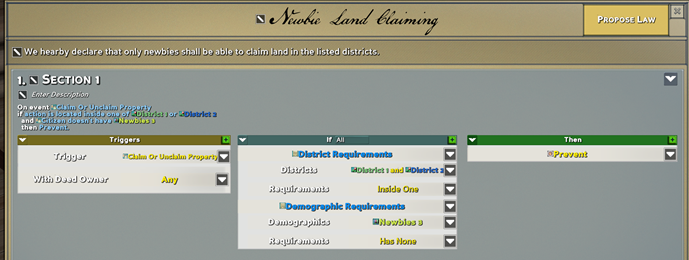
You can specify it in laws, perhaps designating a certain district to only allow newbies to claim land (see District blog).


You also may have noticed the auto-generated demographics that each world starts with, Active, Admins, and Abandoned. ‘Active’ is defined by server properties, defaulting to players who have played more than .05 hours (3 minutes) in the last two days. ‘Abandoned’ contains citizens who haven’t logged in for several days. These are great for dealing with the usual eb-and-flow of citizens coming in and out of your world, handling what happens to their property when they leave, and giving them special privileges when they’re active. In fact, you can detect via laws when a user enters or leaves a demographic. For example, we could make this law that reclaims all property when a user enters the ‘Abandoned’ demographic:
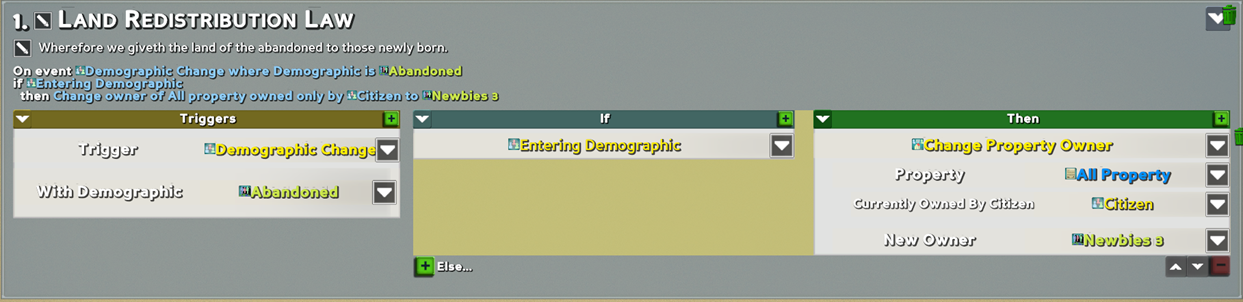


Here the law detects the demographic change event, and reassigns all the property of the abandoned citizen to be owned by ‘Newbies’, the demographic we specified earlier! That means that newbies will be able to get a legup by choosing property from abandoned players, which will be given special permission only to them during their first 10 hours of play. Recycling for the win.

This is of course just one example of how you can design your government in Eco 9, and since we have a dynamic programmable system with lots of connections to the game there are TONS of interesting things that can come out of this, plenty we have not anticipated I’m sure, that’s the fun of it. Will be really interesting to see the kinds of societies players create, and how well they allow them to organize labor and progress to stop the meteor without destroying the ecosystem.

Thanks for following us as always, I’ll do a live stream (John K) this weekend 11am Sunday PST where I’ll demo this for folks that would like to check it out and ask any questions. And as always ping us on discord or me on twitter if you have feedback. Thanks to the awesome community supporting the game as we build out this huge update!

- John K, Eco Designer, CEO Strange Loop Games
Eco: Unlearned Lessons

The russian website mmozg.net released an (extremely) long article where it shows off our game in much detail, trying to answer the following five major questions:
  1. What is Eco?
  2. What was done good?
  3. What was done bad?
  4. What will be improved?
  5. What won't be changed?
The authors did not only investigate and describe the game very in-depth, they also collected a lot of questions from the community and provided answers for them while also gathering and publishing opinions from several of our Eco developers.

In result they created an article that is a very recommendable read for new players, returning players and players actively playing right now that took lots of efforts to delve deep into our game.

Unfortunately we do not have a english translation at the moment, so the article is available in russian only for now.

Read on mmozg.net

(If you speak both languages and would like to help us with a translation, feel free to reach out to us, we'd love to make this article available for everyone!)

Developer Blog: New Tech Tree

Greetings all Eco citizens! This week’s blog will be presented by Eco dev Todd Glenn who works on game balance and helps with some of the design aspects of Eco. We will be focusing on updates to the technology tree, which is the progression of items in the game that players get through research and technology. We’ve added a ton of content with 9.0 with a few goals in mind: encourage more interaction between the professions, make advances in technological advancement feel more impactful, and expand on our end game content.

Here's an overview of the Eco 9.0 blogs so far:
  1. New Government system: Constitution
  2. New Government system: Elections and Elected Titles
  3. New Government system: Demographics and Wages
  4. New Government system: Laws Part 1: Using the system
  5. New Government system: Laws Part 2: Taxes, Ownership, Property, and Wealth
  6. New Government system: Laws Part 3: Tour of different actions, and Executive Actions
  7. New Government system: Districts
  8. New Crafting: Work Parties
  9. New Crafting: Labor System
  10. New Crafting: Modules and Efficiency Redesign
  11. New Crafting: New Tech Tree (This blog)
  12. New Building System: Hammer and new Building Styles
  13. New Mining System: Mineral Dispersion and Drill Usage
  14. New Mining System: New Processing Path and Pollution Info
  15. New Animal System: Attacking Animals
  16. New Ecopedia System
  17. New UI
  18. New Audio
  19. New Hosted Worlds System
[h2]New Craftable Items for Professions[/h2]
We have a huge collection of new craftable items for each profession, fleshing out the many professions in the game and adding depth and interesting choices to be made for each.

These include:
  • New food recipes for expert chefs
  • Fancy high-end furniture for carpenters and masons
  • End game Tier 4 building materials
  • Advanced tools to aid in large scale resource gathering
  • New crafting ingredients to promote more trade between professions

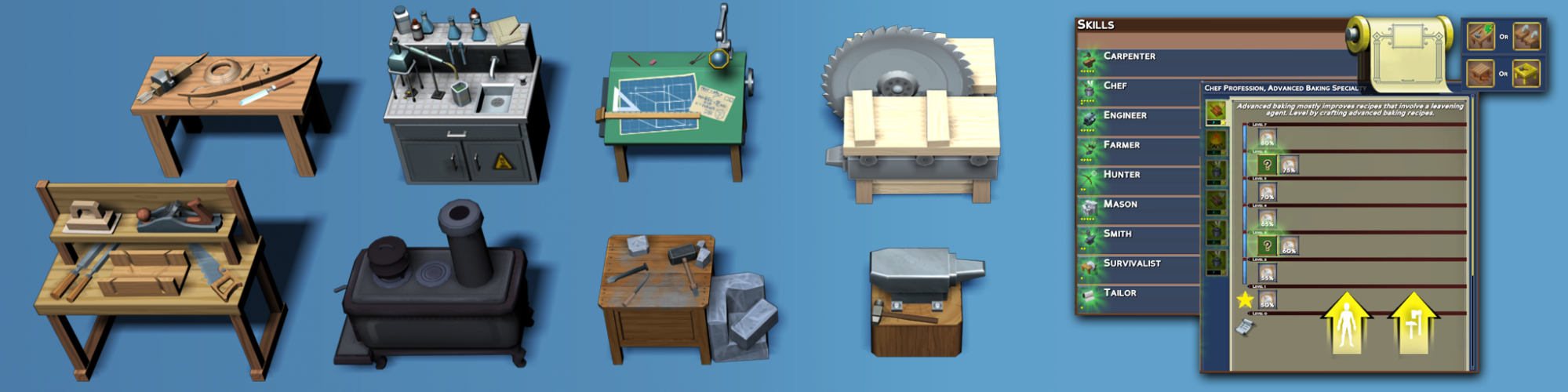
We will go over all of the new building materials and styles in a dedicated blog, but here is a quick peek at the new content:


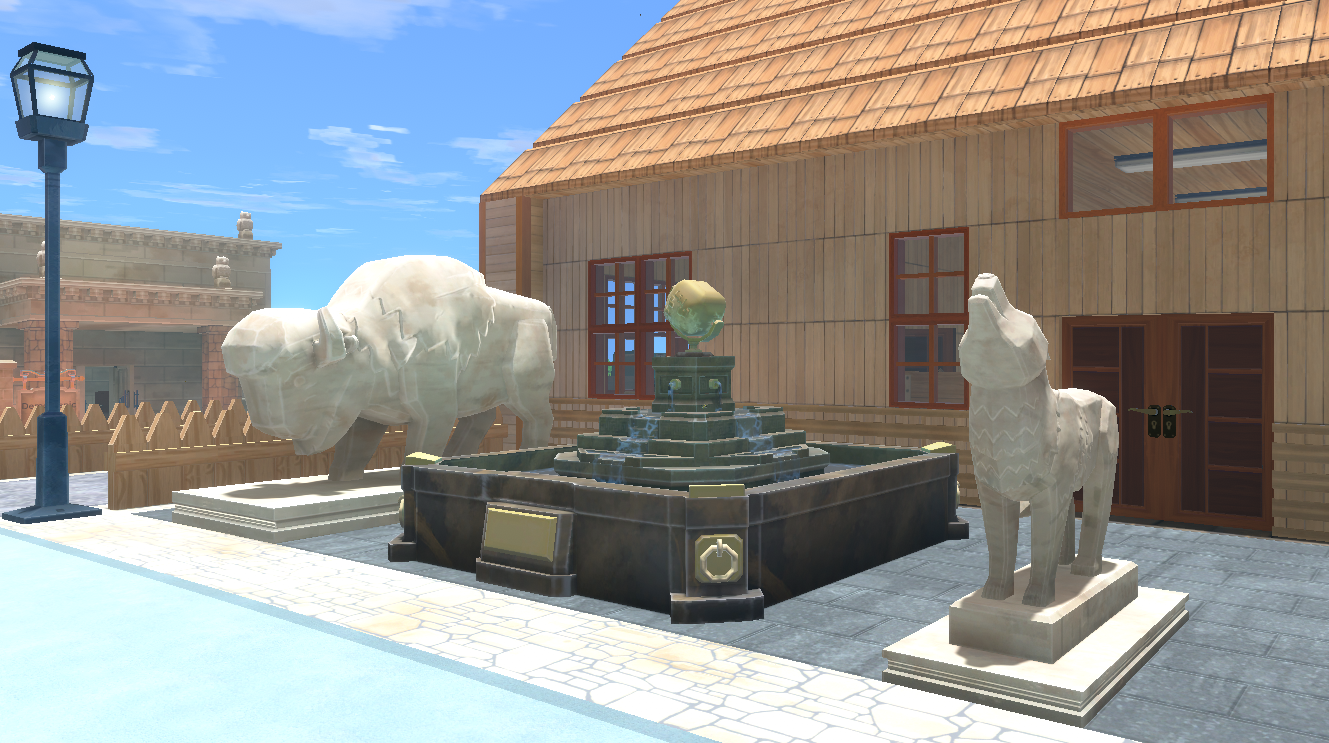
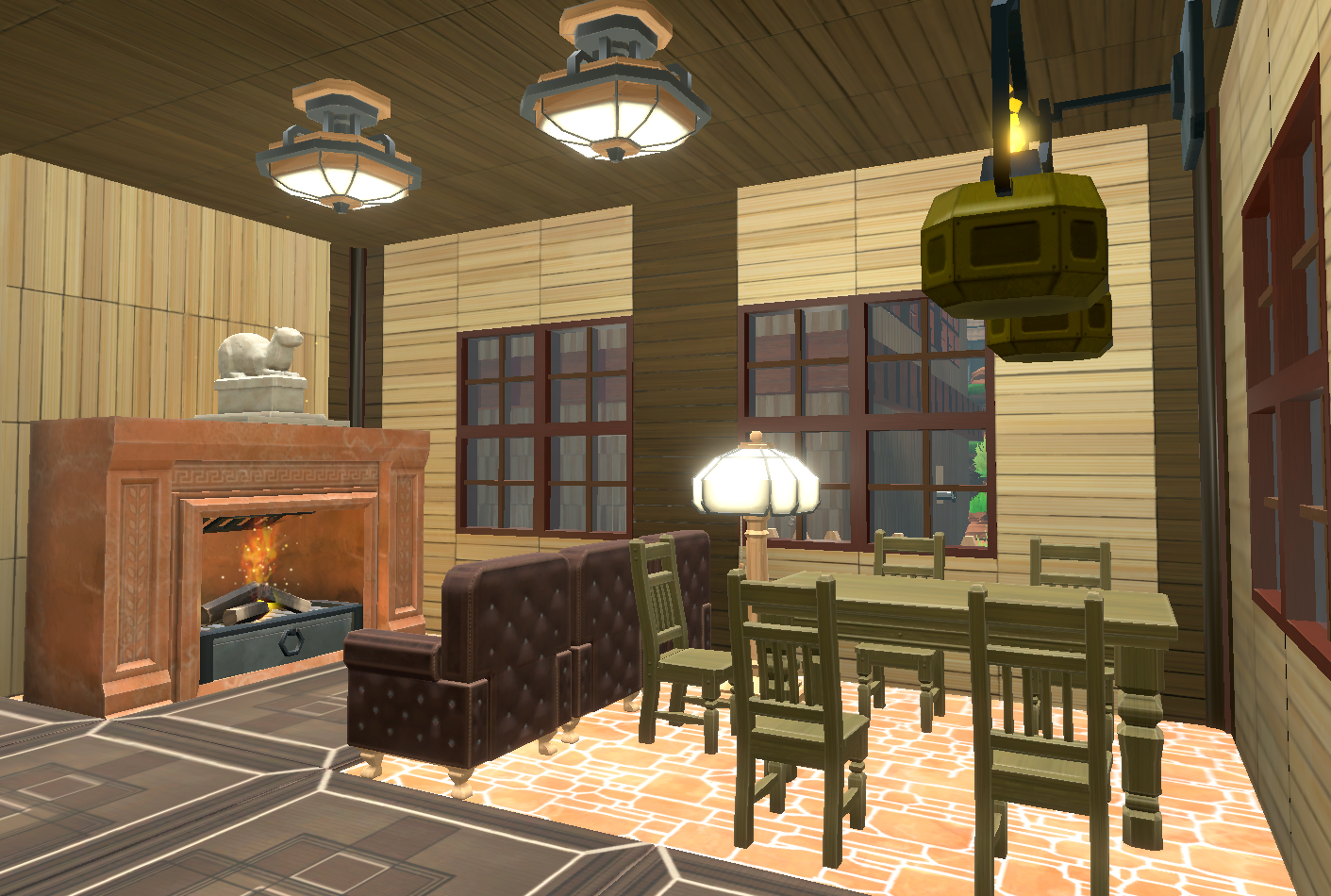
As technology progresses, we want players to continue to upgrade their homes with higher quality furniture to increase the experience bonus from having a high housing score. We will be adding new lighting objects, fireplaces, and a variety of household appliances. Part of this change will be lowering the experience bonus for more primitive housing objects. Instead there will be plenty of new ways to continue to improve homes at all stages of the game. We are also adding some outdoor features like fountains and statues, though these can be placed indoors as well.


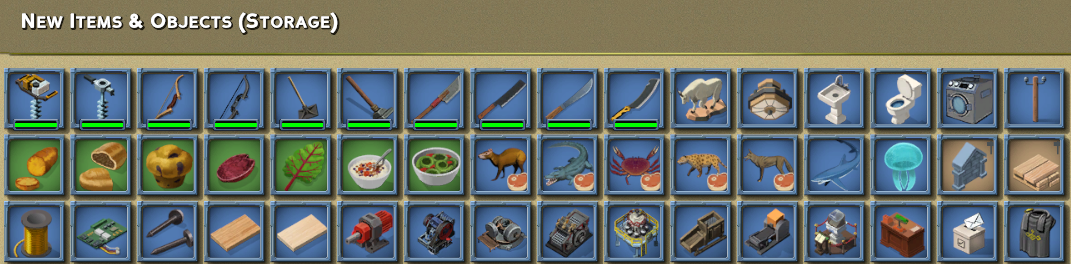
In addition to the items listed above, we will be adding new crafting tables, animals, and utility objects like the transmission pole. There are too many items to go over each individually, but here is a look at some of the new icons so you can get an idea of some of the new content being added.


[h2]Tool Improvements[/h2]
One of the focuses of Eco 9 is increasing your power-progression through the arc of the game. As your civilization gains in technology, your ability to amass large amounts of resources should increase in tandem, as will your environmental impact. To support that, we’ve added new area of effect tools, as well as some altogether new tools.

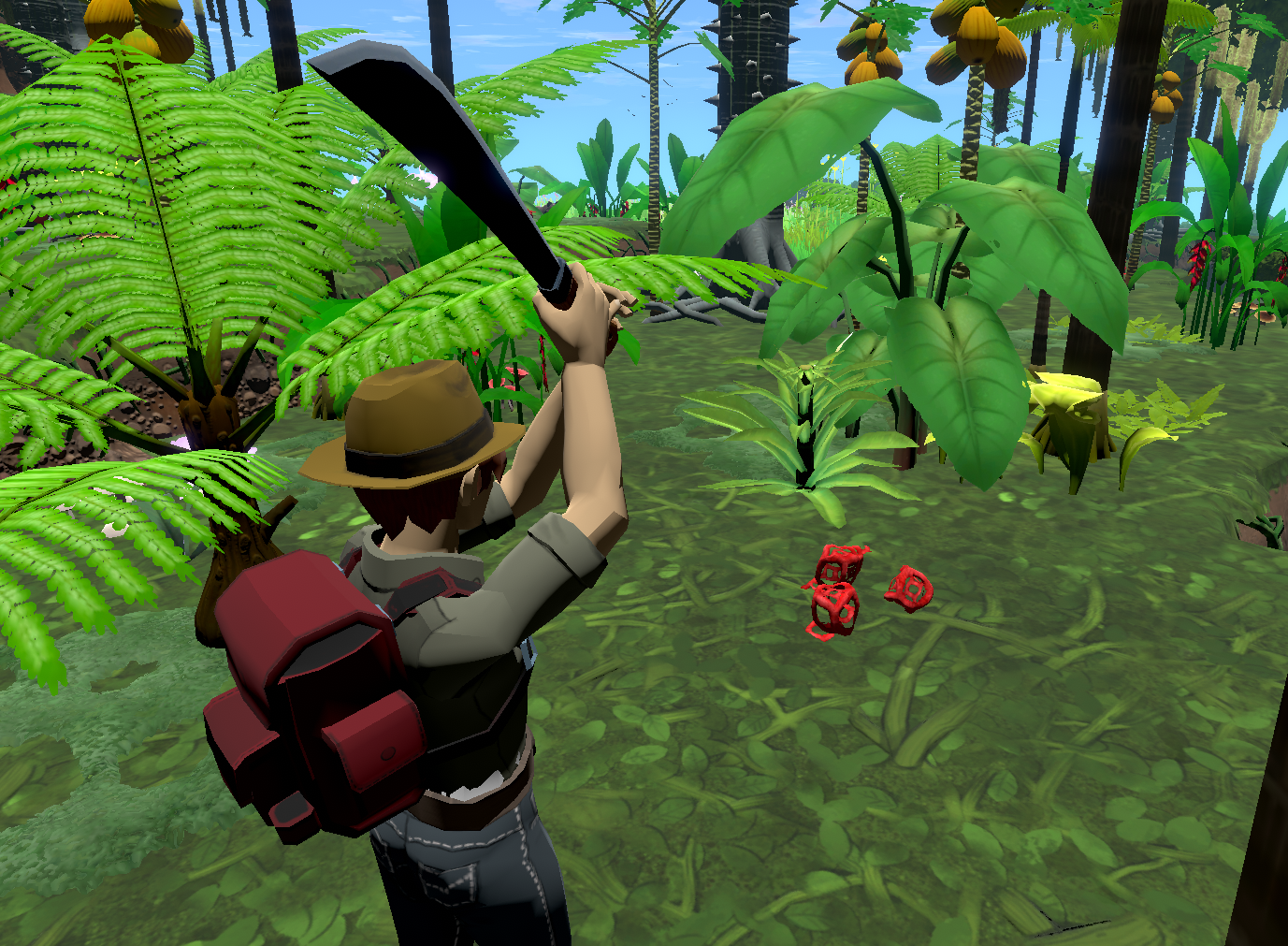
In our previous blog we showcased the prospecting drill, but another new tool is the machete.


The machete is used to quickly clear plants from an area, tearing a hole through the jungle that lets you move about much more easily, but at an environmental cost. Though wild plants provide numerous benefits to an ecosystem, their presence can sometimes be a burden when growing next to a developing town, either by hindering transportation or encroaching on agriculture. The machete allows players to quickly clear all plants with one tool, removing the need to switch between various tools or clearing plants by hand.


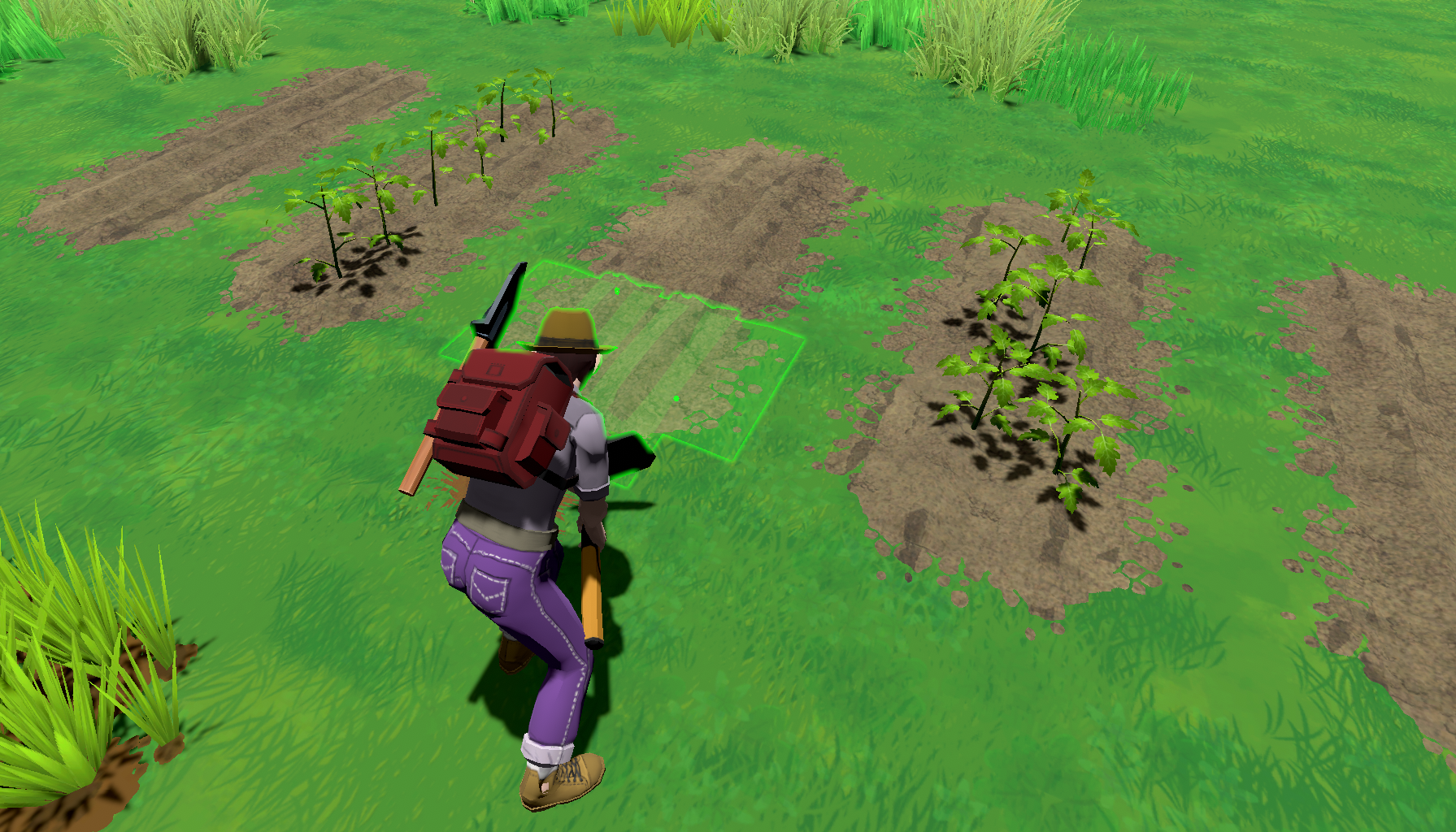
The modern hoe, pictured above, is one example of a tool with an area of effect. It tills large rows of fields at once with each swing. These crops can be quickly harvested using another area of effect tool, the modern scythe, which can harvest large sections of field at once. When combined, these tools enable farmers to more easily create the large scale farms needed to supply the extra food required for a well-established society to function.


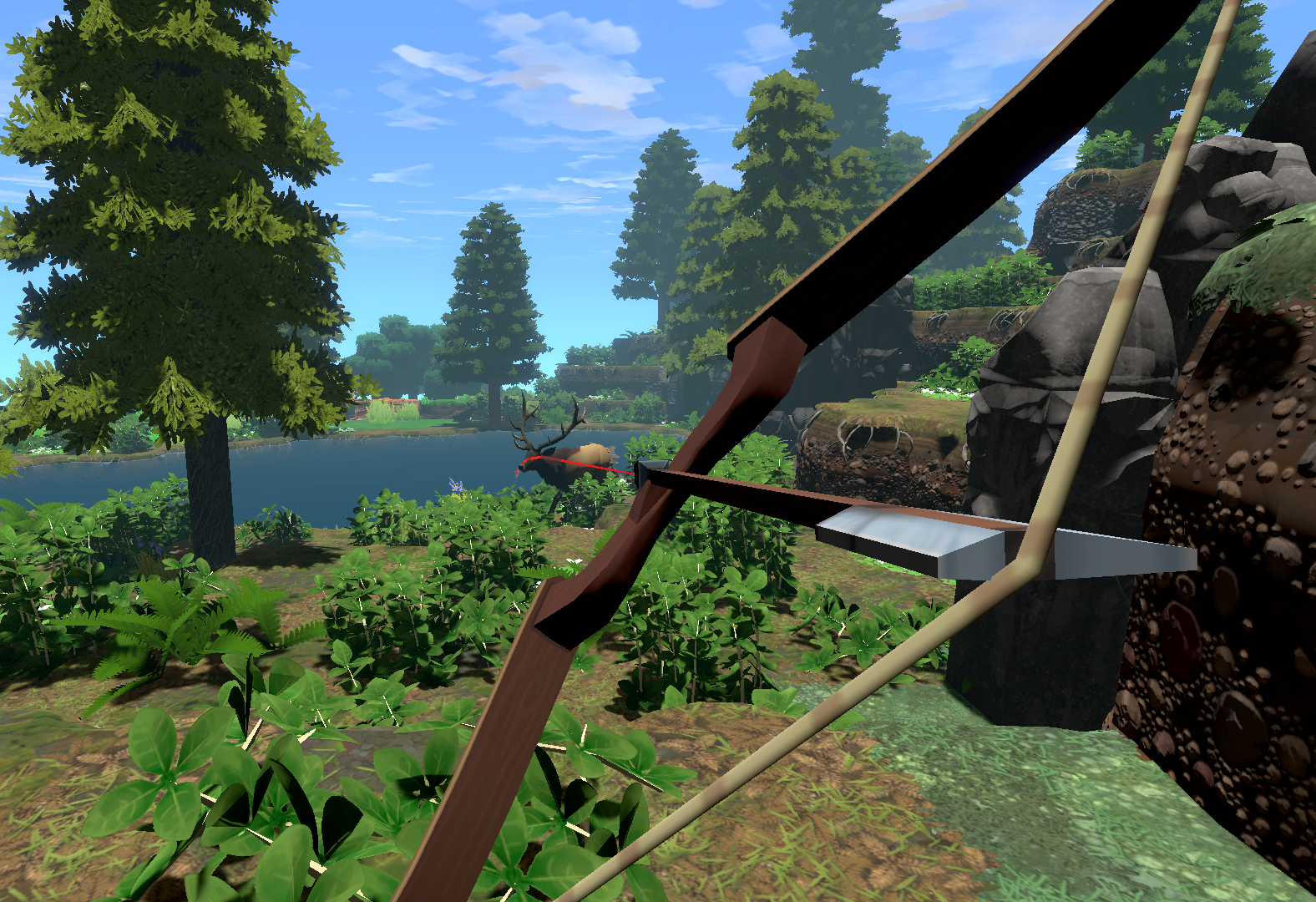
Advanced bows will be added that are more accurate, fire faster, and do more damage than a traditional wooden bow. The recurve bow, pictured above, has significantly less firing arc. To help accommodate these upgraded bows and to make the hunting specialty more useful, we have increased hunting difficulty when using a wooden bow without specialization.

[h2]Crafting Updates[/h2]
We have several quality of life improvements to our crafting system that allow for a smoother experience when dealing with similar groups of recipes. One of these changes is the option to have “tagged ingredients”:


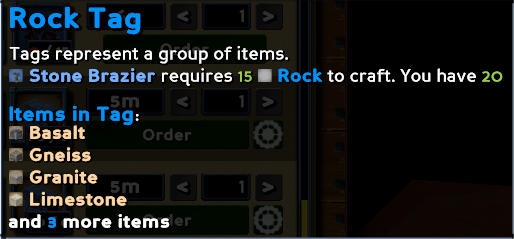
In 8.3, recipes that needed stone required the different types of stone to be processed into a generic stone type before they could be used as ingredients. In 9.0, these recipes will simply have a tagged ingredient “Rock” that accepts any type of stone without a need to create a separate work order for each type. Tagged ingredients will appear in a variety of recipes, for example a fruit muffin recipe that can use any type of fruit.


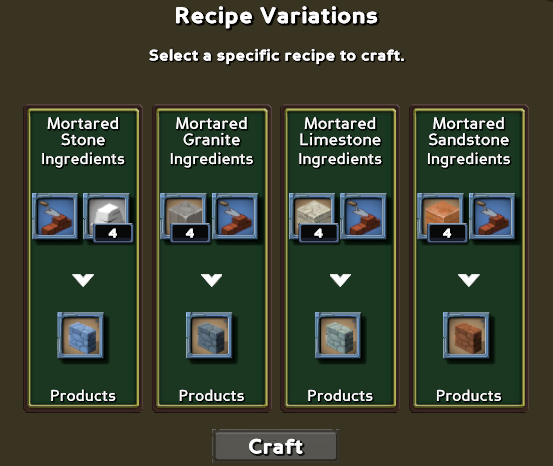
In addition, some recipes with tagged ingredients have multiple variations that use a specific ingredient to create a similar but distinct product. For example, when crafting Mortared Stone a generic type can quickly be crafted using the Rock tag, or a variation can be selected that accepts a specific type of stone. Previously players had to scroll through a list of all recipes to find the variations, but now they are all contained under one parent recipe.

[h2]Skill System Revamp[/h2]


With our new work party and labor features, players are encouraged to hire skilled laborers to help with large scale crafting projects (see our previous blog on Work Parties). We have updated our skill system with two goals in mind: allow players with the same specialty to collaborate on the same project and encourage more frequent interactions between different specialties.

One of the most significant changes is the introduction of the upgrade module system. Reductions to the amount of ingredients needed for recipes are now caused by having an upgraded crafting table. All work orders performed at an upgraded table will have the same cost reduction, regardless of skill. We will explain upgrades in more detail in the upcoming efficiency redesign blog.

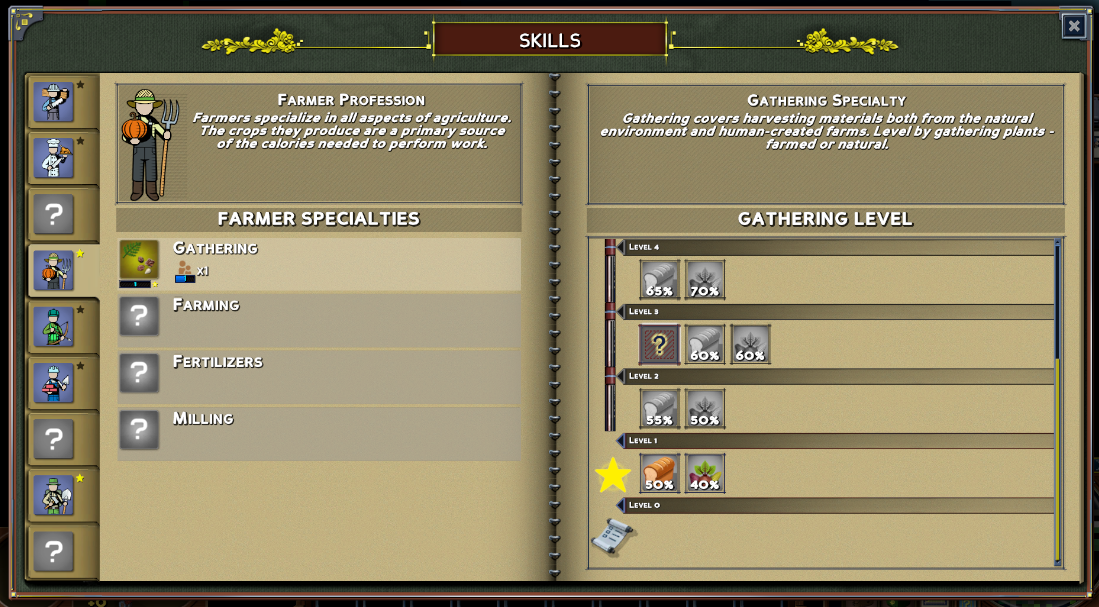
The new bonus for leveling up is that progressively less calories are required when contributing skilled labor. Players of various skill levels will be able to contribute to the same project without changing the amount of resources needed for the project. Almost all recipes will require skilled labor to be performed before they can be crafted, so it will no longer be as easy to be a jack-of-all trades.

[h2]Specialty Additions & Changes[/h2]


We will be adding two new endgame specialties capable of using wood or stone to produce the highest quality building material. These specialties, Advanced Masonry and Composites, will help carpenters and masons serve an essential role as society advances to the modern age.

A main function of the Basic Engineer in Eco has always been to help contribute to the transport infrastructure. We are expanding on this role by having them responsible for producing all the different types of roads. In addition, Basic Engineers will receive a calorie reduction when using road tools to allow them to fill the role as the early road builders.

In 8.3, the specialties Logging & Mining had nice benefits for gathering resources, but some players reported the specialties felt lackluster compared to other specialties with unique crafting recipes. Logging will now be responsible for producing hewn logs, which are an essential building material throughout the carpentry profession. Players with Mining will now need to crush and process ore before it can be smelted into metal bars by a smith.

[h2]Summary[/h2]
We hope you enjoyed this look at some of the upcoming updates to the tech tree. We have more updates than could be covered in this blog, but we are very excited for everyone to see and experience the upcoming changes for themselves.

Our next livestream will take place on Friday, noon (12:00) PST / 9pm CEST (21:00). Todd will be showing off all the content of this blog live on our Twitch and Youtube channels as well as on Facebook.

Developer Blog: Geology Generation and Rock Drill Tool

Hi folks, this week's Eco update will be presented by Eco artist and dev Keegan O'Rourke. We're going to get a close look at all the changes to mining and drilling, which is a way to let you prospect and find new places to mine.


Here's the Eco 9.0 hype-train of blogs so far:
  1. New Government system: Constitution
  2. New Government system: Elections and Elected Titles
  3. New Government system: Demographics and Wages
  4. New Government system: Laws Part 1: Using the system
  5. New Government system: Laws Part 2: Taxes, Ownership, Property, and Wealth
  6. New Government system: Laws Part 3: Tour of different actions, and Executive Actions
  7. New Government system: Districts
  8. New Crafting: Work Parties
  9. New Crafting: Labor System
  10. New Crafting: Modules and Efficiency Redesign
  11. New Crafting: New Tech Tree
  12. New Building System: Hammer and new Building Styles
  13. New Mining System: Mineral Dispersion and Drill Usage (This blog)
  14. New Mining System: New Processing Path and Pollution Info
  15. New Animal System: Attacking Animals
  16. New Ecopedia System
  17. New UI
  18. New Audio
  19. New Hosted Worlds System
[h2]Geology Generation[/h2]
In Eco as in real life, many of the most important resources for a civilization come from the ground. The largest efforts to extract resources from our planet center around what we can use that is locked underground in rock.

In our 9.0 update, we are improving and expanding our representation of these resources and their use in industry. We have also improved the procedural generation of the world in Eco to better control how and where these resources are located. We are laying the groundwork with 9.0 to keep evolving what mining is in Eco and how it impacts both players and the environment. I think our players will be excited by some of the changes, let's take a look:


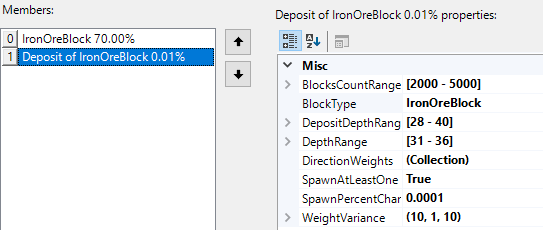
Prior to 9.0, we had in place a layer system that allowed us to generate different layers of rock in the environment, and assign these layers to different biomes. With this we could begin thematically creating a diverse world of different types of rock and ore located in different places. But biomes can be large, and ore deposits are not all shaped like layers. To combat that, we've created a new ore deposit module in our generation:


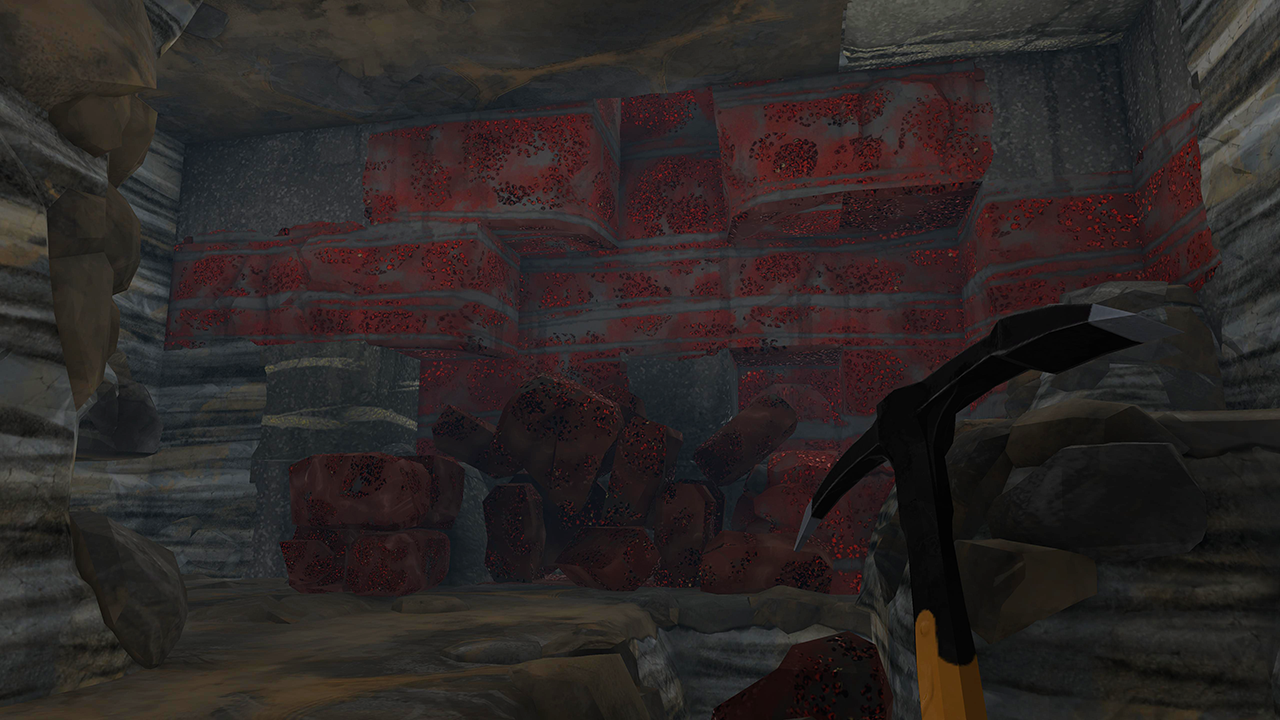
One of the biggest improvements to this is that in 9.0 we have an ‘ore deposit module’ in our world generation system that allows us to insert ore bodies into the layers which have their own definable shape and likelihood of appearing. We can also locate these at any level we want in the layers, and define size ranges for them. With this, we finally are generating a set of earth resources that works much more like the real world. These improvements will have a good impact on how mining feels. Players will likely get a bigger sense of reward for finding a deposit, and have much more to think about when it comes to efficient extraction and the shape of their mines.

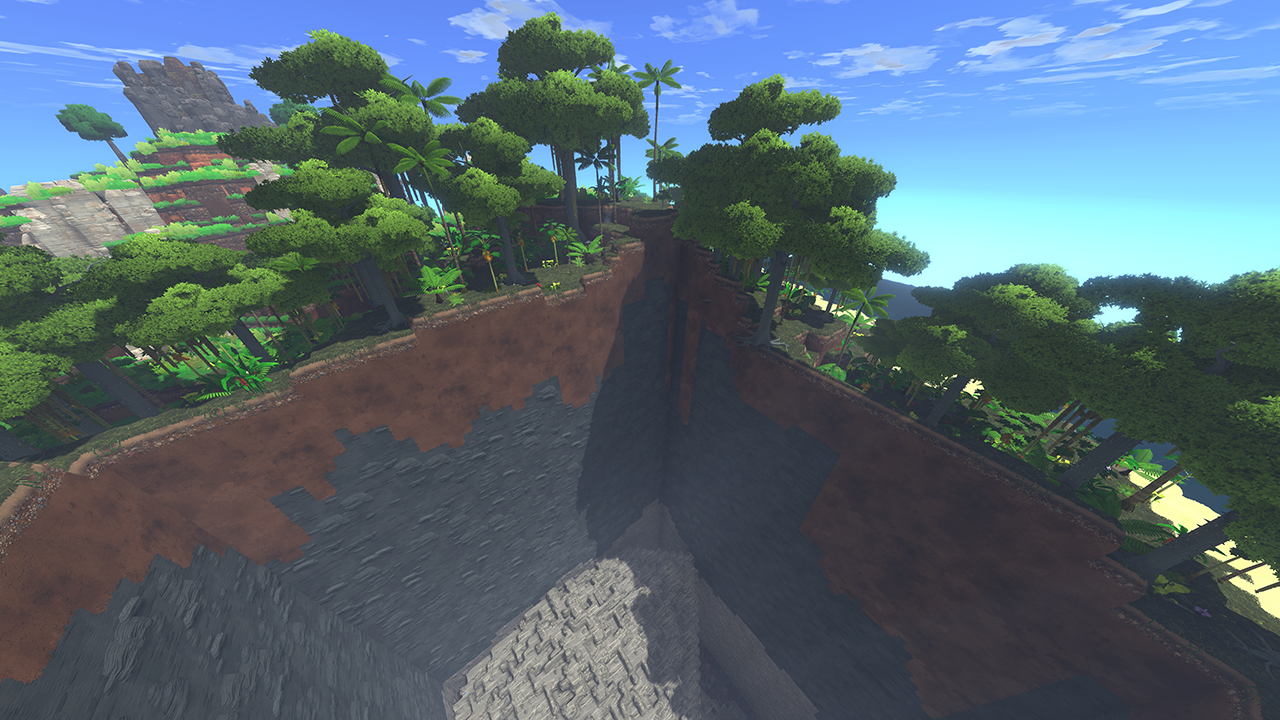
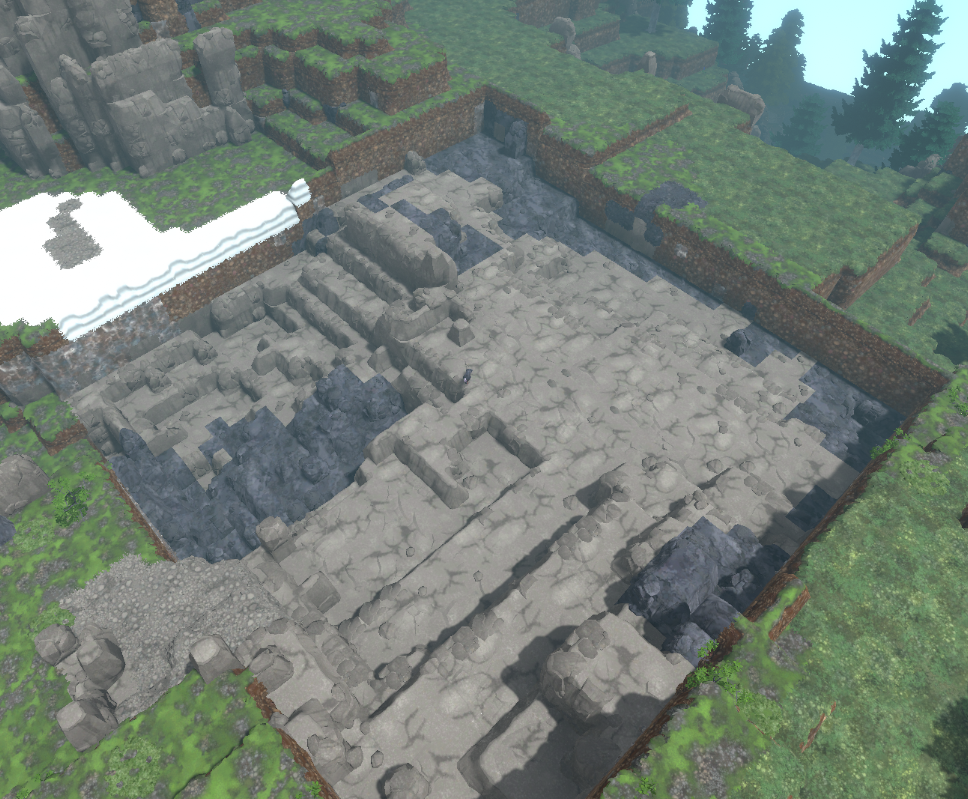
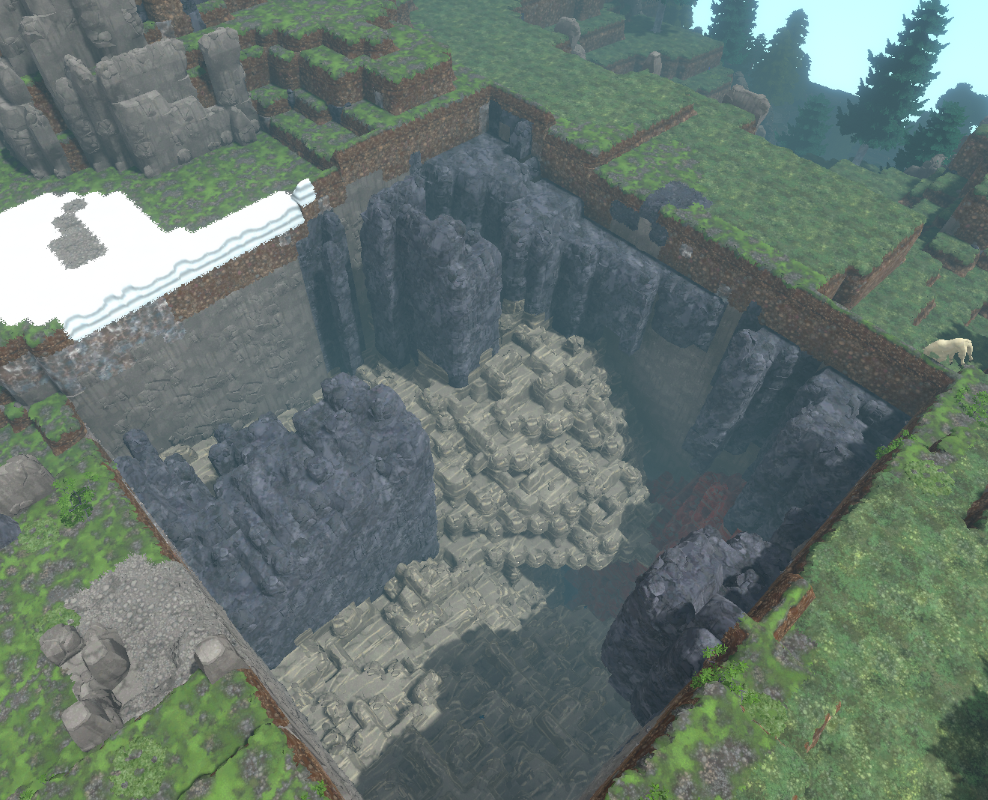
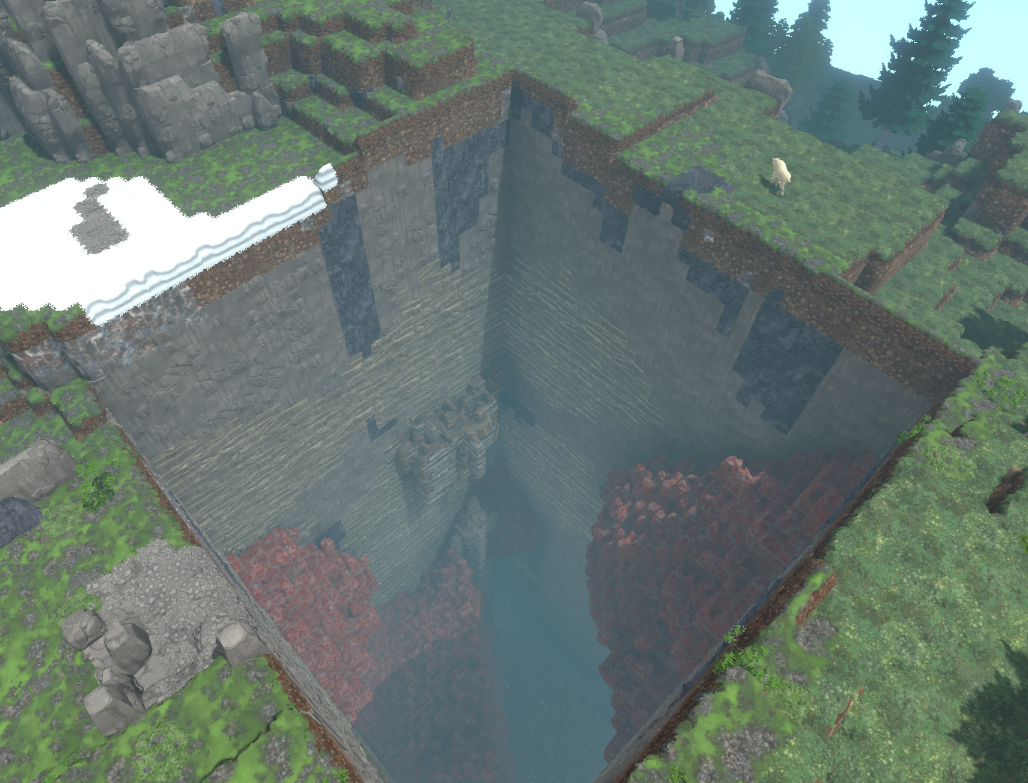
Here's a series of cutaways using a new admin command we added to debug ore generation. In the first shot, all the soil has been removed. In the second, the bedrock granite has been removed to reveal bedrock basalt and gold ore. In the third all rock and ore has been removed except copper ore


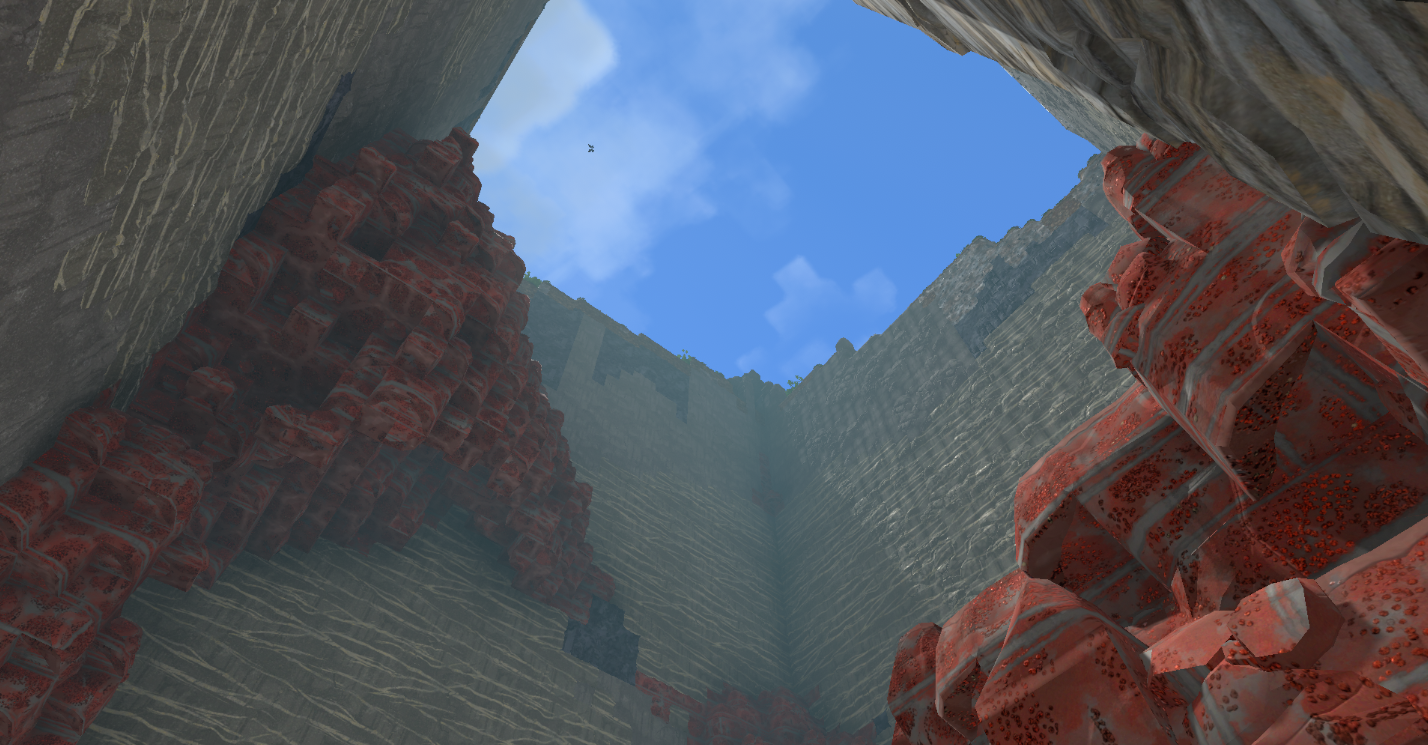
And here is a view from the bottom up, where you can see some of the copper ore deposits that have formed deep below the surface.


Since ore deposits have massively concentrated where resources like metal ore and coal are located, players will have more incentive to create efficient infrastructure to link a successful mine to other parts of their civilization. Mining towns will grow around these deposits, supplying miners with the tools and resources they need to extract the resources.  It also means that players will have to explore for earth resources much more, since where deposits are located in particular biomes will be different for every different world.

[h2]Introducing the Drill[/h2]
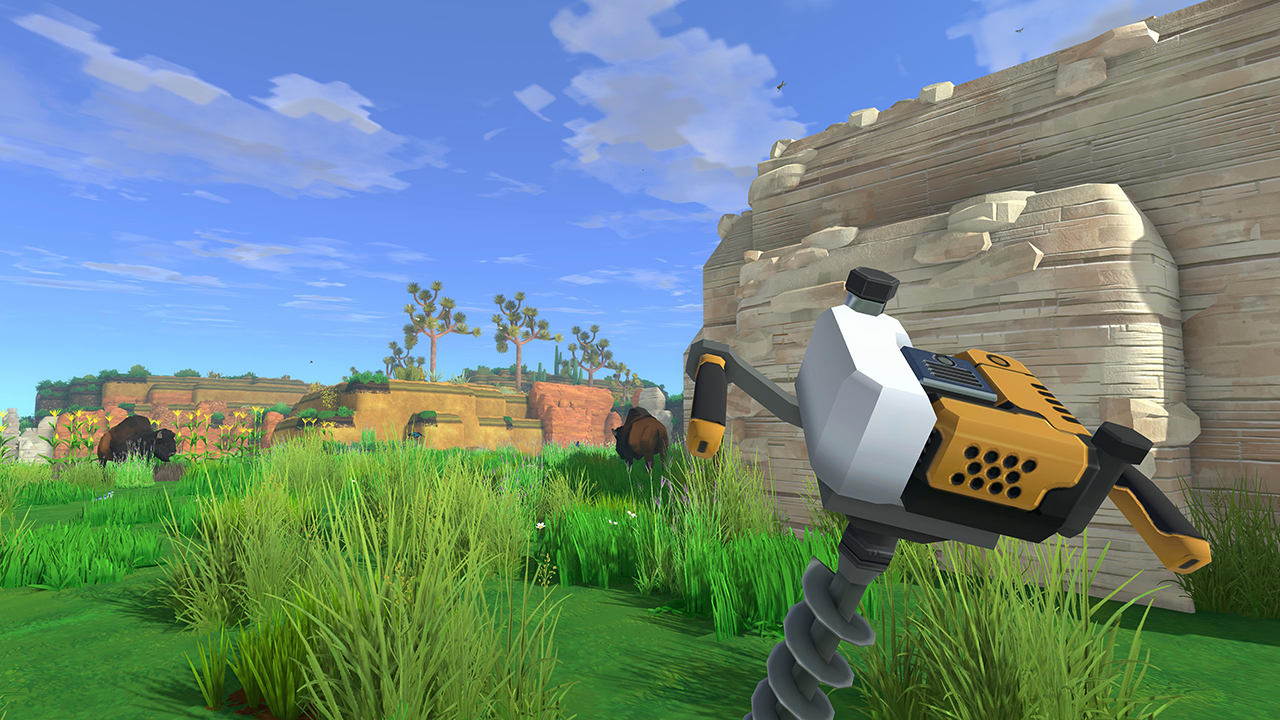
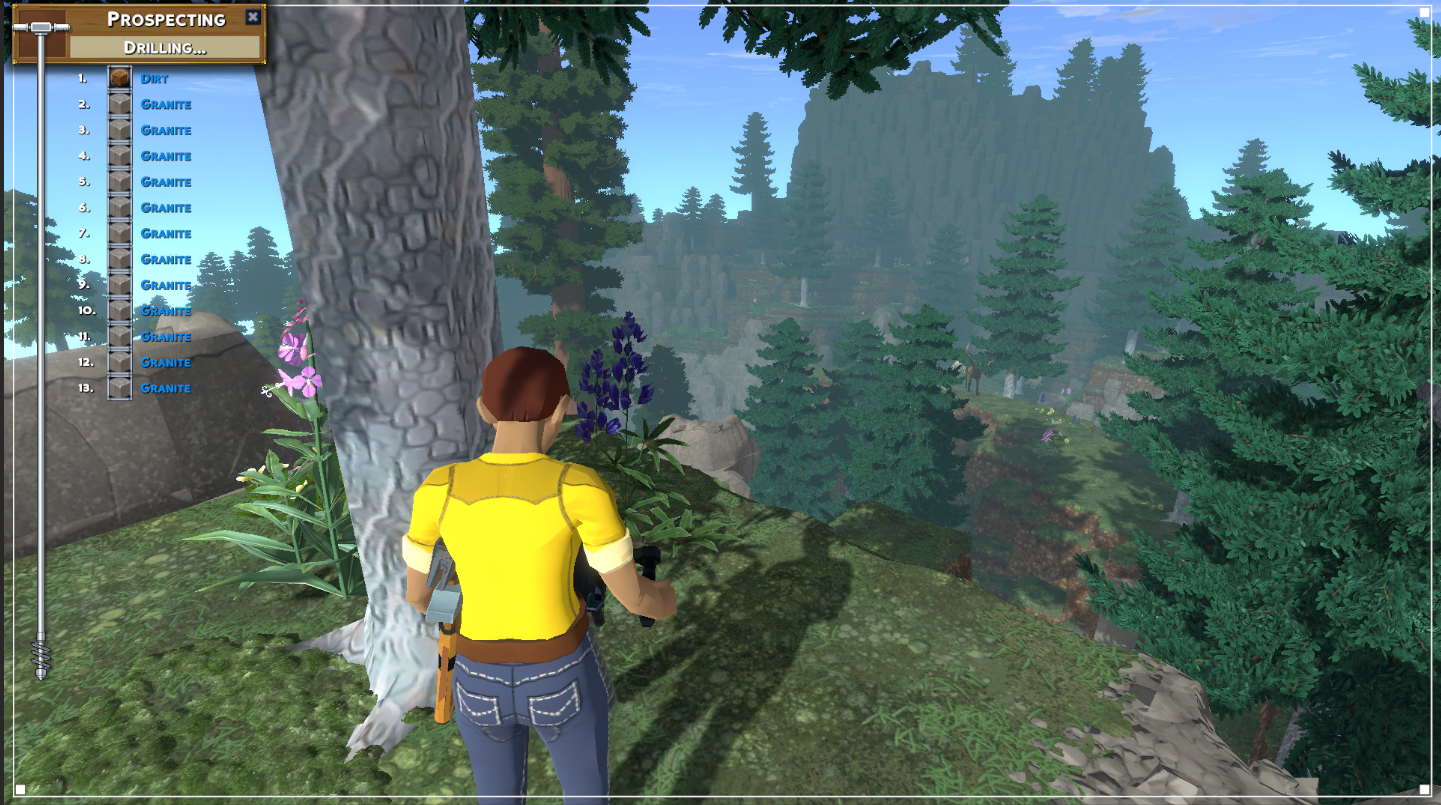
To aid in this process and to lay the groundwork for a powerful future mining tool in Eco, we have added a new Rock Drill tool to the game. This tool will let players find out what blocks are beneath them much more quickly than shoveling up all the earth in the way. As players get a feel for where deposits show up in the biomes, they will be able to learn to search intelligently for them using the drill.


To use the drill, you can aim it in any direction at a landmass and activate it. Based on the tier of the tool, it will inform you what is buried beneath the surface to a given depth. You'll be able to easily mark these positions in space with world markers.


With this addition, exploration and prospecting will become an important first step to every mining operation. 

[h2]Adding Crushed Ore and Rock[/h2]
One cool new addition is that because all rock and ore have crushed varieties that fit into other improvements to mineral processing in Eco 9.0, we are also able to use crushed rock and ore to begin to simulate natural erosion of rock and ore in the world.


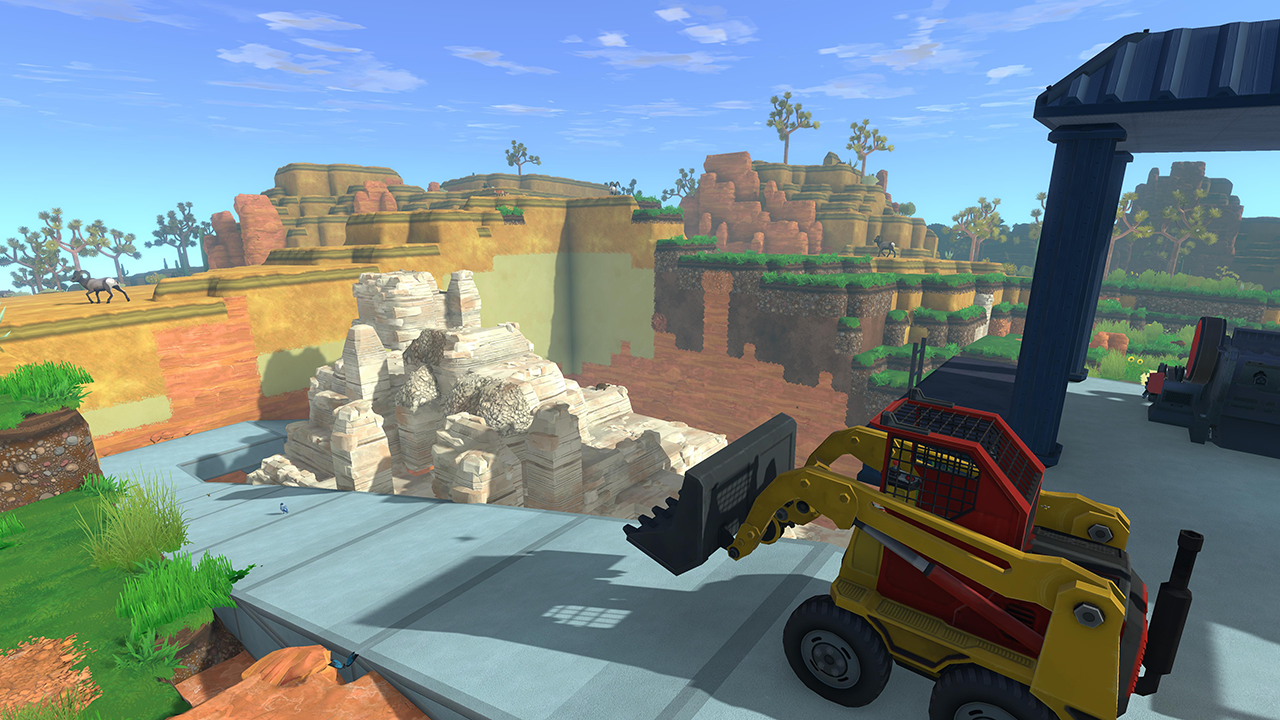
As part of this update, all of the layers which contain ore and other resources like clay and sand have been revamped and improved with an eye both towards balance and future improvements coming to mining and industry in Eco. Mineral processing has been deeply expanded in 9.0 to more realistically break down rock and ore and create the correct byproducts from the right processes, which will be detailed in another update!

We are in the process of big updates to the balance of different ores with regards to their byproducts, so with all these factors changing we are being generous with ore quantity to start. We are excited that as far as what’s waiting under their feet, players will have a brand new world to explore in 9.0.


Our next livestream will take place on Thursday, noon (12:00) PST / 9pm CEST (21:00). I will be showing off all the content of this blog live on our Twitch and Youtube channels as well as on Facebook.

- Keegan O'Rourke, Eco Lead Artist, Strange Loop Games
Developer Blog: Districts

Hello all, hope youre enjoying your quarantining around the world and getting lots of gaming time in, stay safe and get your socializing in virtually. Our update today is on the new Districts system we’ve added for Eco 9. Here’s the current lineup:
  1. New Government system: Constitution
  2. New Government system: Elections and Elected Titles
  3. New Government system: Demographics and Wages
  4. New Government system: Laws Part 1: Using the system
  5. New Government system: Laws Part 2: Taxes, Ownership, Property, and Wealth
  6. New Government system: Laws Part 3: Tour of different actions, and Executive Actions
  7. New Government system: Districts (This blog)
  8. New Crafting: Work Parties
  9. New Crafting: Labor System
  10. New Crafting: Modules and Efficiency Redesign
  11. New Crafting: New Tech Tree
  12. New Building System: Hammer and new Building Styles
  13. New Mining System: Mineral Dispersion and Drill Usage
  14. New Mining System: New Processing Path and Pollution Info
  15. New Animal System: Attacking Animals
  16. New Ecopedia System
  17. New UI
  18. New Audio
  19. New Hosted Worlds System
[h2]Districts[/h2]
The purpose of districts in Eco is to define specific rules for various areas of the map. We’ve had this for awhile, but with Eco 9 it’s getting a big upgrade. To start, districts are now set in-game and are contained in the new Zoning Office object.


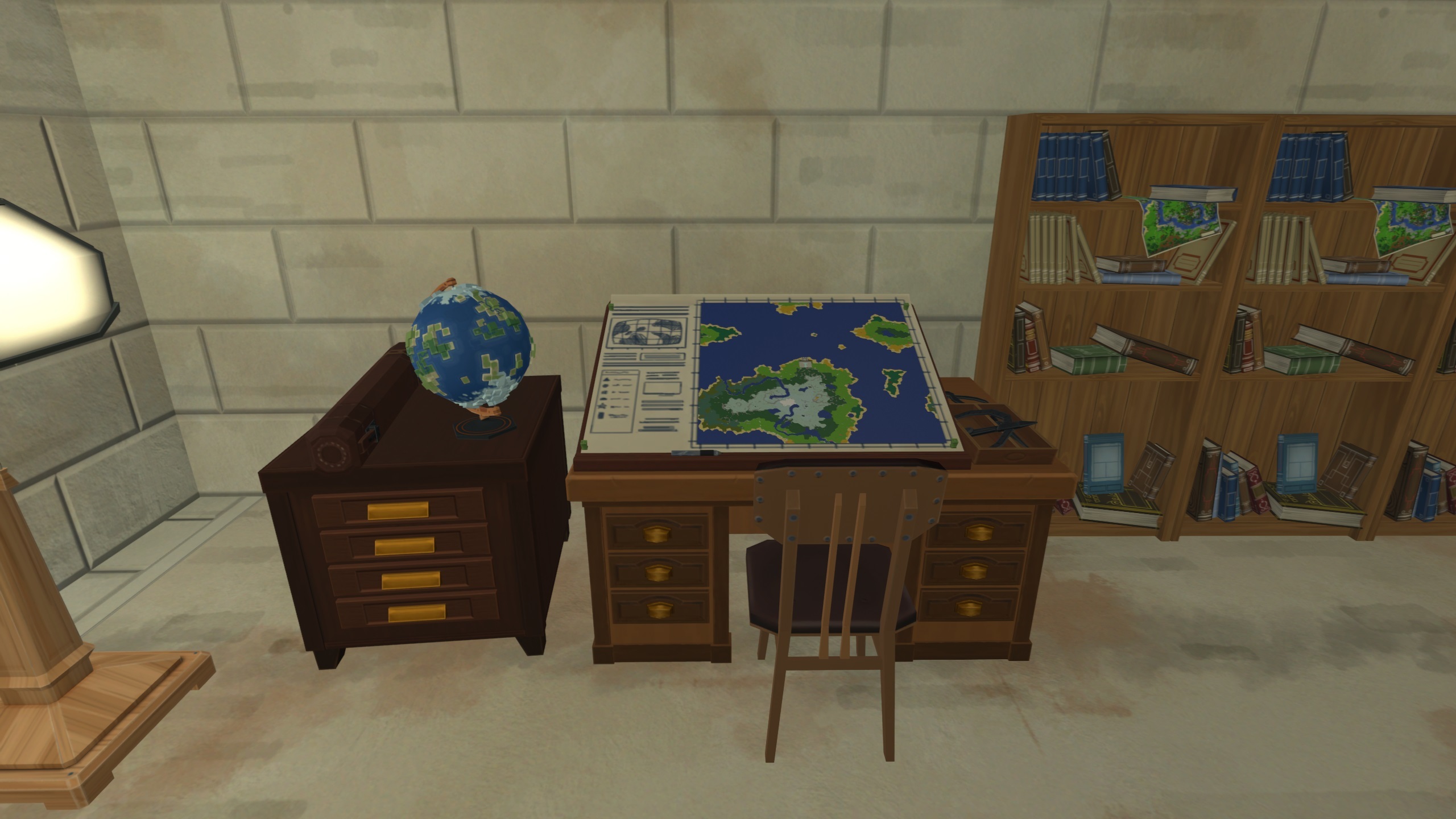
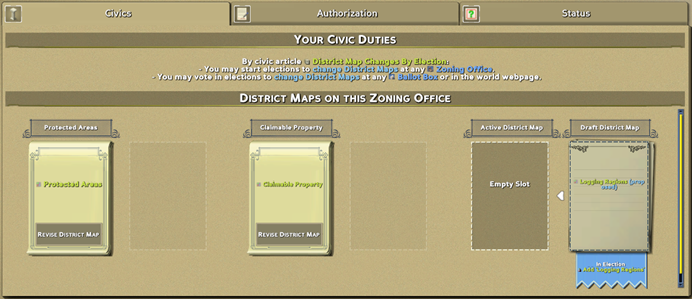
You can now have multiple District Maps, each containing a set of districts defining an area. Each map is totally independent, meaning maps can overlap other maps. In the Zoning Office is this UI:


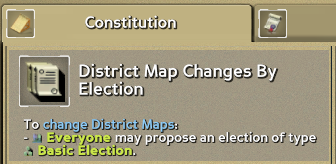
Each Zoning Office lets you define three maps, and as normal civic objects the Constitution defines who can modify them, what kind of election is required, etc. You can see on this map, the Constitution defines that districts can be changed only by election:


(Check out the Constitution blog for more info on how that works).

In this Zoning Office, there are two district maps active, Protected Areas and Claimable Property, and one under election, Logging Regions. Let’s revise the protected areas.


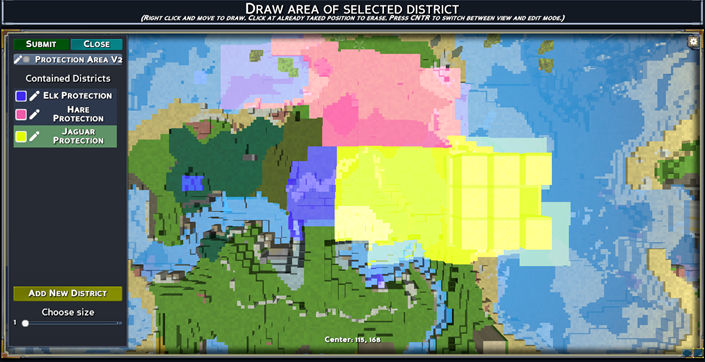
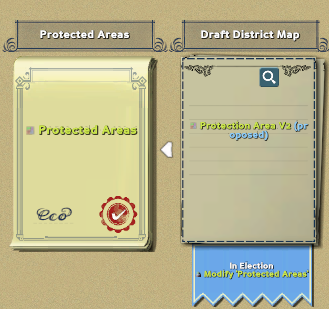
In the editor that appears, you can paint on the different areas of the map, revising any previous map that was already there. You can add and remove districts and make any changes you want. When you submit, it will go to election (if that’s what the constitution requires):


This election then occurs like any other election, defined by the election process (check out the Elections blog for details on how that works). Once the election passes, it will apply the changes.


Any law that referenced a previous district will be updated to the new district, automatically propagating the change to anything referencing these districts. You can start to see how all these systems work together; since district maps are a regular civics object (like laws, elected titles, demographics, etc), they automatically get all the features like revisions, error testing, reference updating (when they get modified), tracking of state (draft, proposed, active, removed).

So now lets make use of one of these districts, in a law.


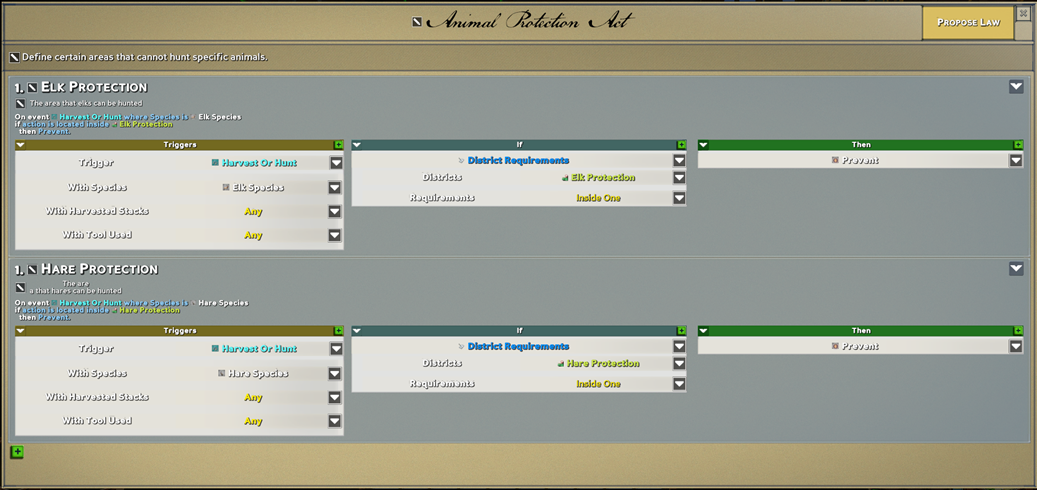
We’ll go over in detail how laws work in a later blog, but for now you can get an idea how it works. The trigger (hunting a specific species) with restriction (inside a given protection region) will be prevented.

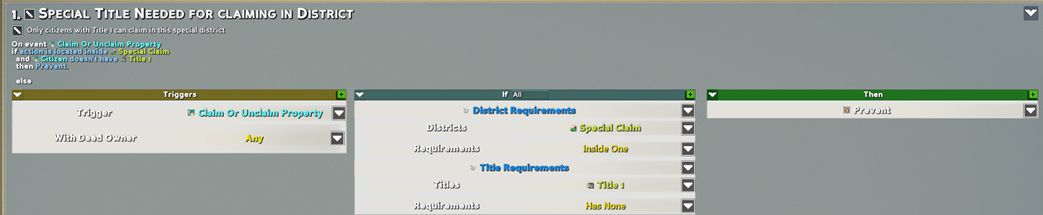
Tons of flexibility is allowed here, say we want to make a special area where only certain citizens can claim land:


Only citizens possessing ‘Title 1’ can claim land in this district now. Title 1 could be defined in many ways: it could be an elected position, it could be a title assigned by players, it could be a title gained by completing a work party (see Work Party blog).

[h2]Summary[/h2]
With this new districts feature, the ability for citizens to define the use of land becomes greatly expanded, connected to all the other parts of the civics system. In a game about ecosystems and the resources from land and the pollution put upon them, this can be extremely important for the success of your world. Defining how resources are used, and how citizens may use them, is a key element in finding a harmony with your environment and solving the tragedy of the commons.

Lots more to come, stay tuned for more Eco 9 updates and the release (on a date to be announced).

- John K, Eco Designer, CEO Strange Loop Games