Green Planet Dev Diary #5: Free Update - Armstrong Patch
Hello fellow survivors!
We’re back with another dev diary for Green Planet. Today we will be discussing the awesome free update, which is going to be released together with Green Planet and Project Laika DLCs. We’ve added a bunch of new content and Quality of Life improvements in this update, the most notable new feature being landscaping. All owners of Surviving Mars will get new Special Projects, events, research UI, multiselect, rover orders queue, and new buildings as well.
The Armstrong update is going to add a new section in your Build Menu: Landscaping. This new section contains the following new tools Flatten terrain, create Ramp, Change Surface texture and an option to construct Small Rock Formation or bigger Rock Formation.
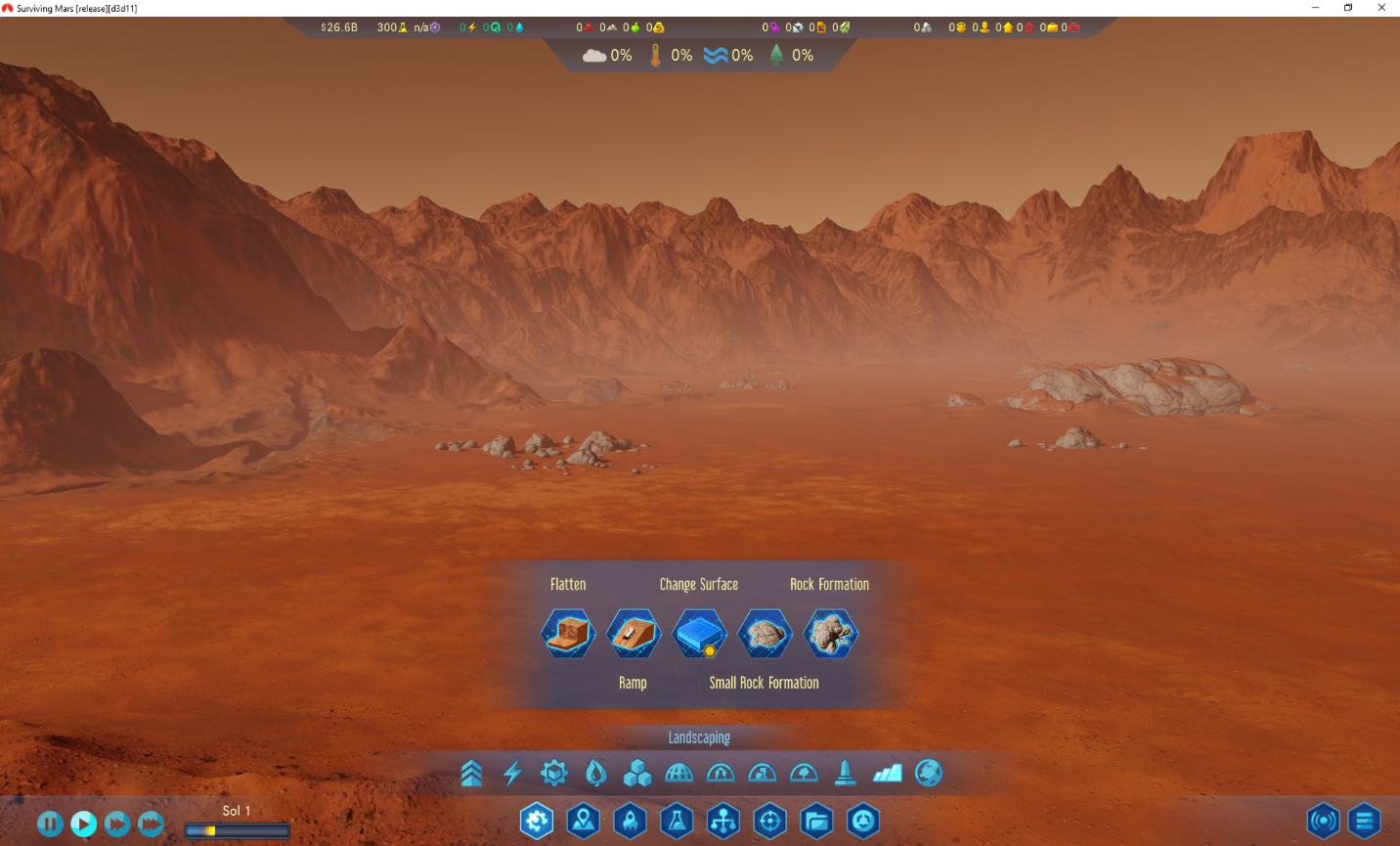
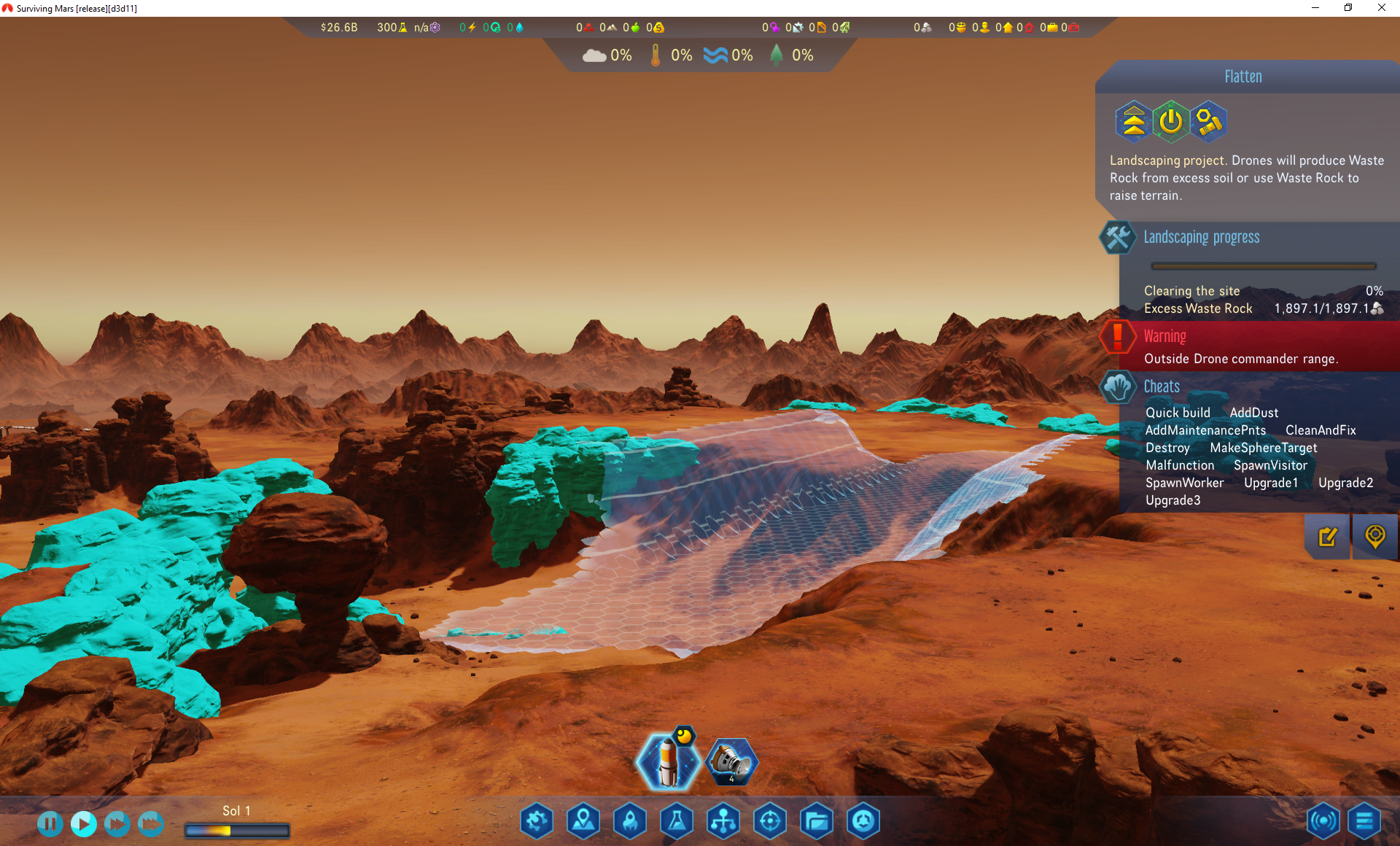
The Flatten terrain tool allows you to select a flat surface on Mars and protrude it, leveling the terrain where it passes. It allows you to fill craters, extend plateaus or clear rough terrain for construction. Once you select an area to flatten, the tool will create a new landscaping project which is visualized with a construction hologram on your display. Each landscaping project evaluates the underlying terrain and calculates how much soil is needed and if excess soil is present. Then your drones will deliver or remove the Waste Rock as needed to complete the project.
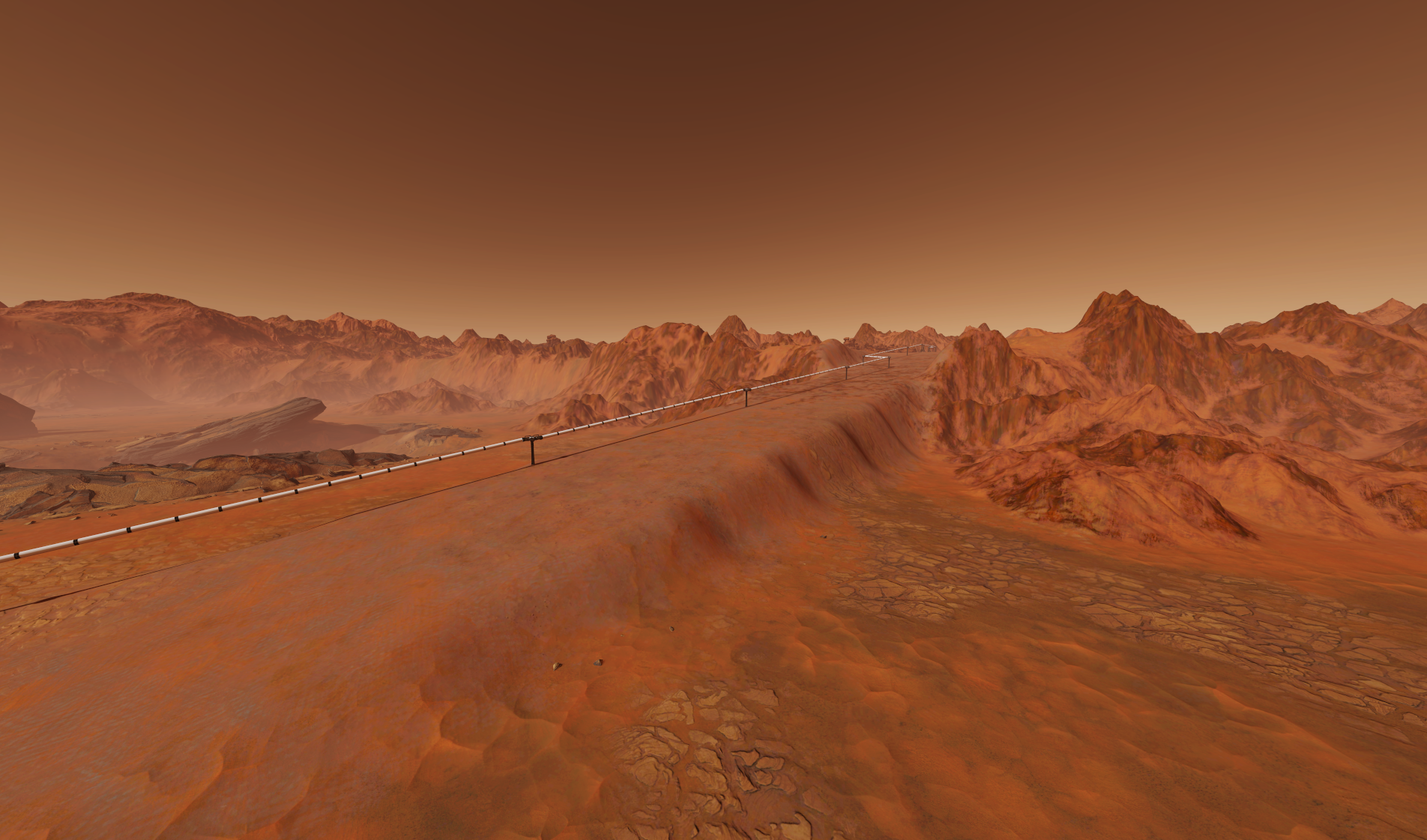
The Ramp tool works similar to the Flatten tool but it allows you to connect two flat surfaces with different elevations, creating walkable ground between them.
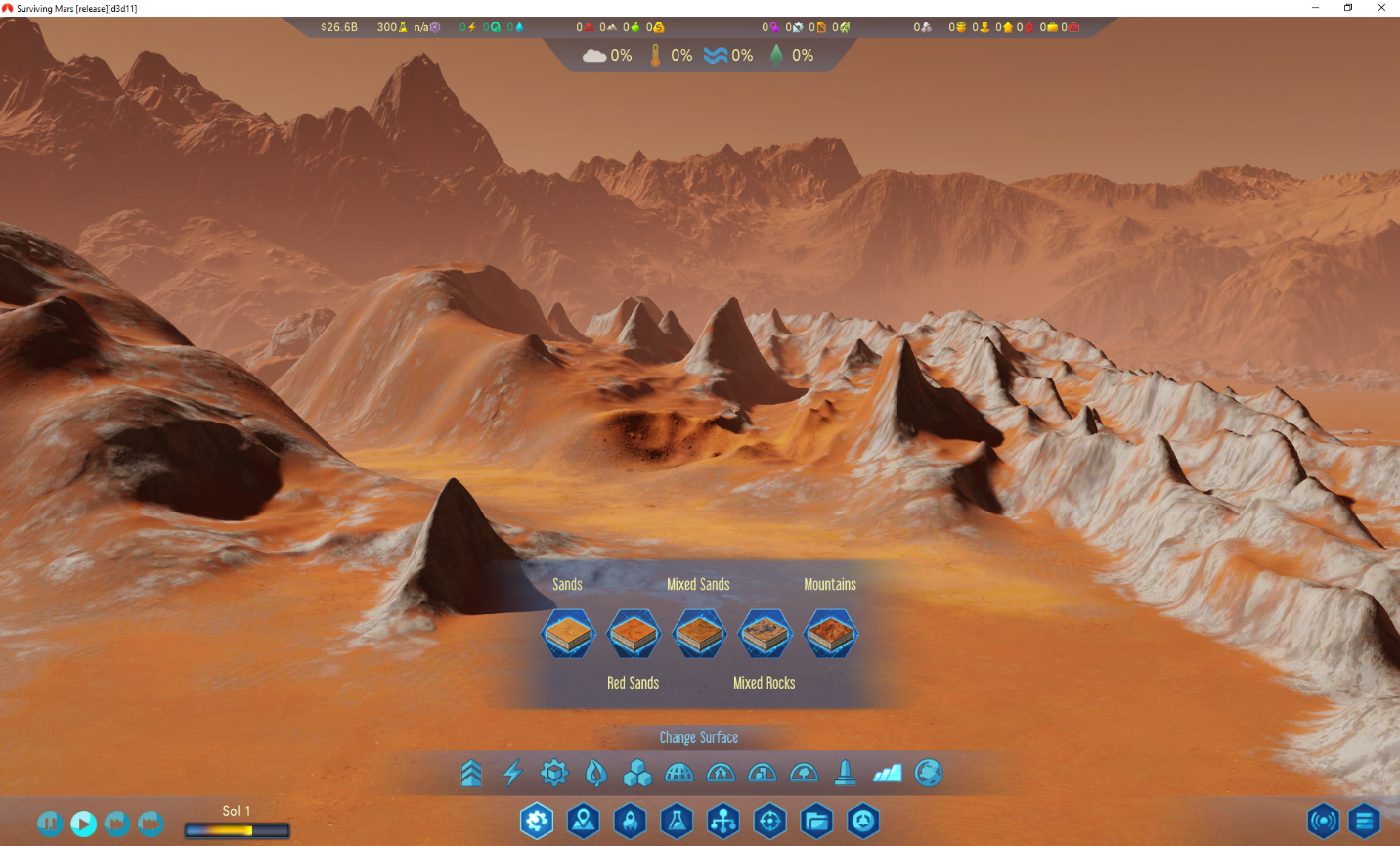
The Change Surface tool marks an area, which will be gradually reworked by your Drones. They will break the rocks to make sand, or replace sand with rocks.
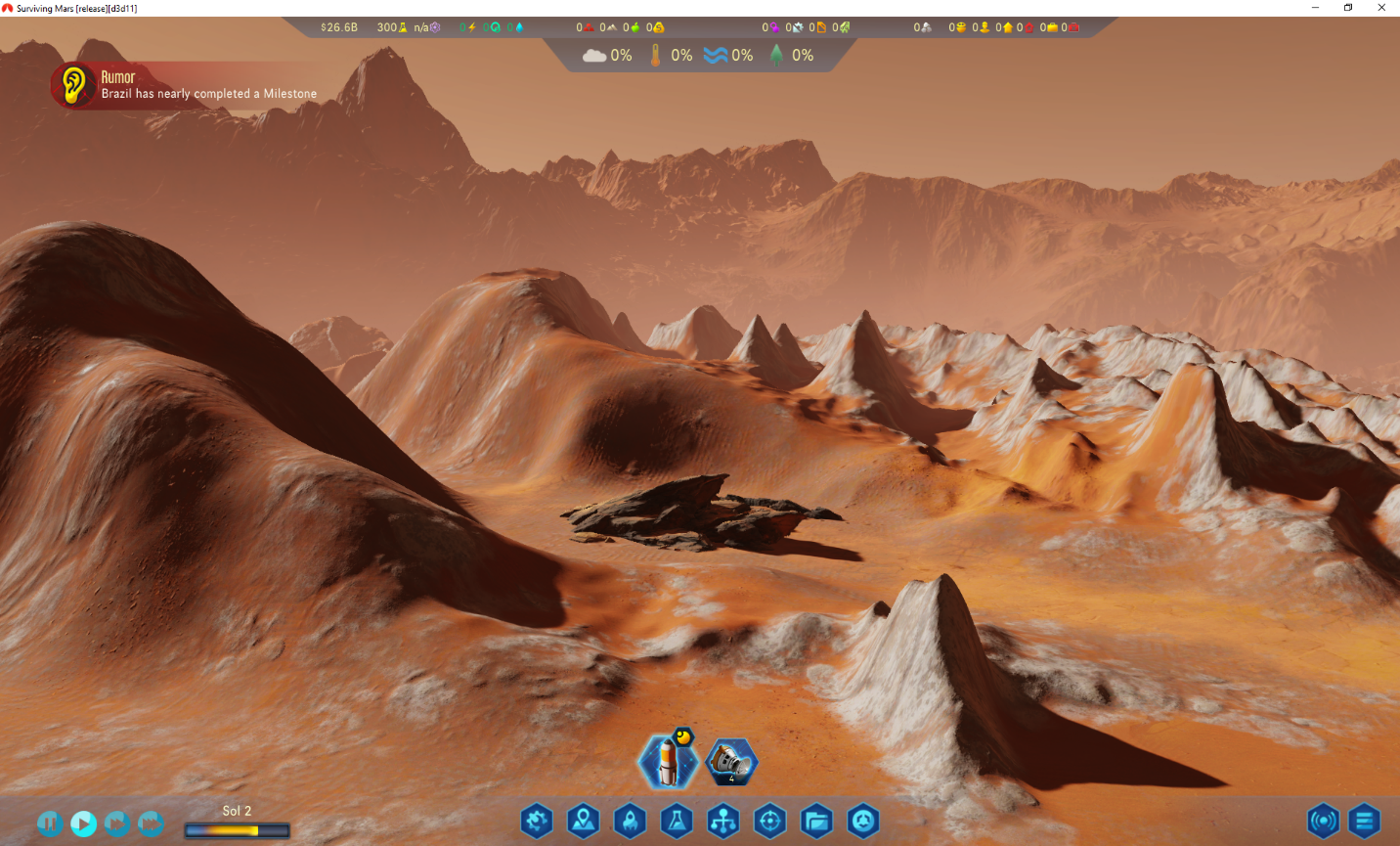
Additionally, you can use your excess Waste Rock to construct various Rock Formations. These are purely decorative combinations of rocks, which can be placed on flat surface. They were created for those moments when you have made Mars too Earth-like and want to bring back some natural Martian landscape.
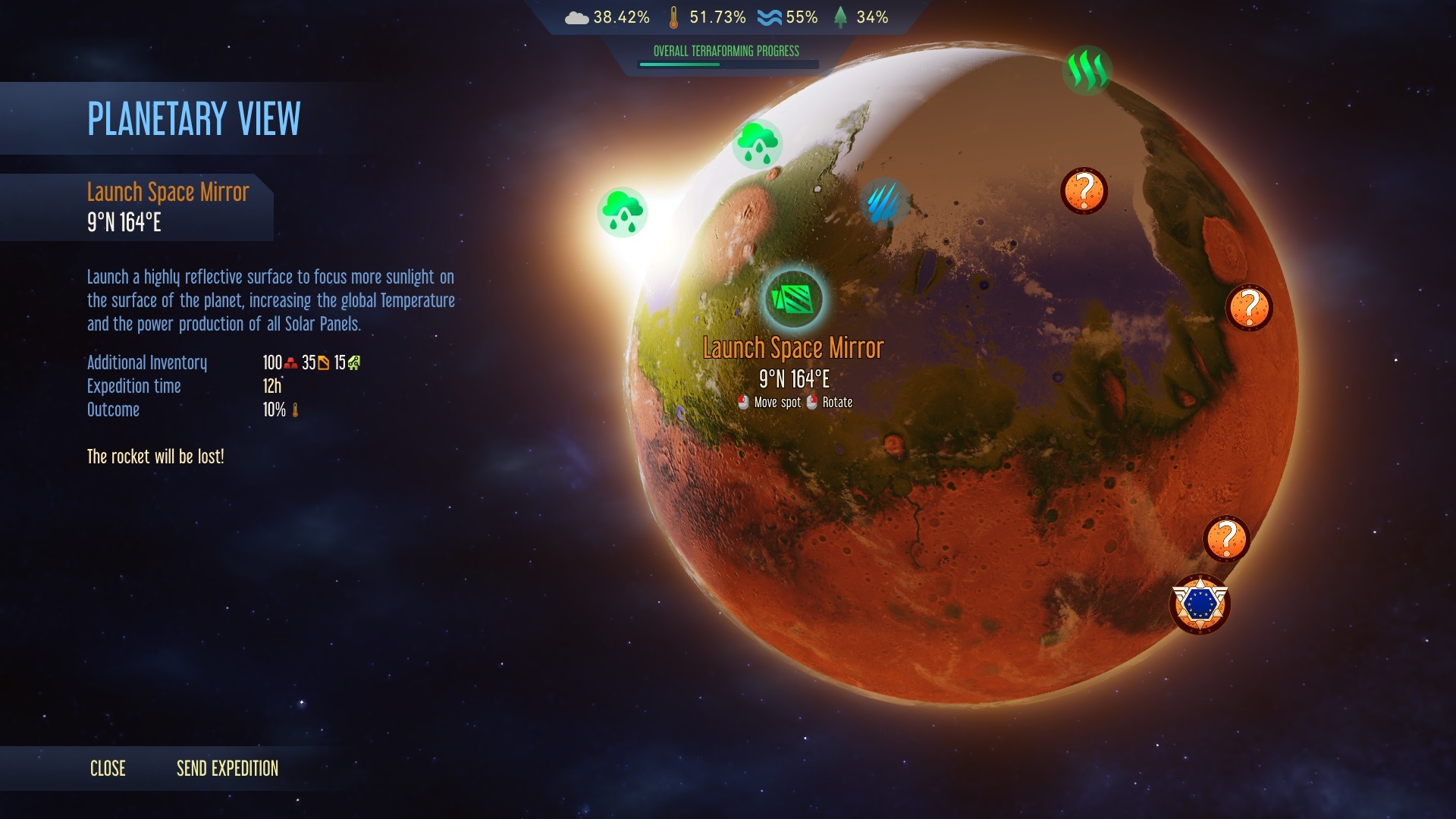
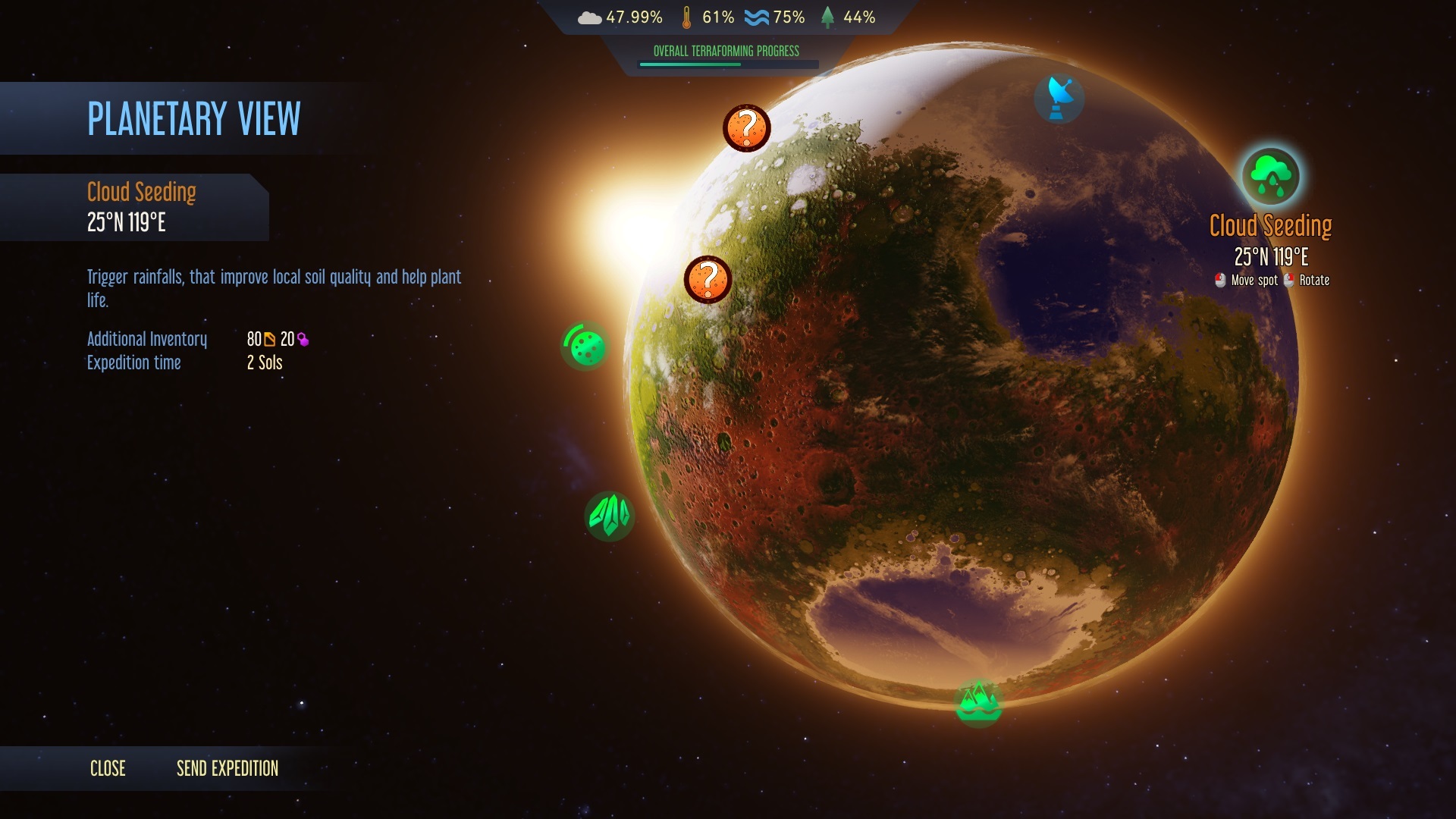
The Armstrong update comes with 3 free Special Projects: Capture Meteors, launch High-Speed Comm Satellite and Launch SETI Satellite. They’re marked on the Planetary View with blue icons and become available as soon as the first batch of Planetary Anomalies gets discovered. Usually, this happens at Sol 10-15.
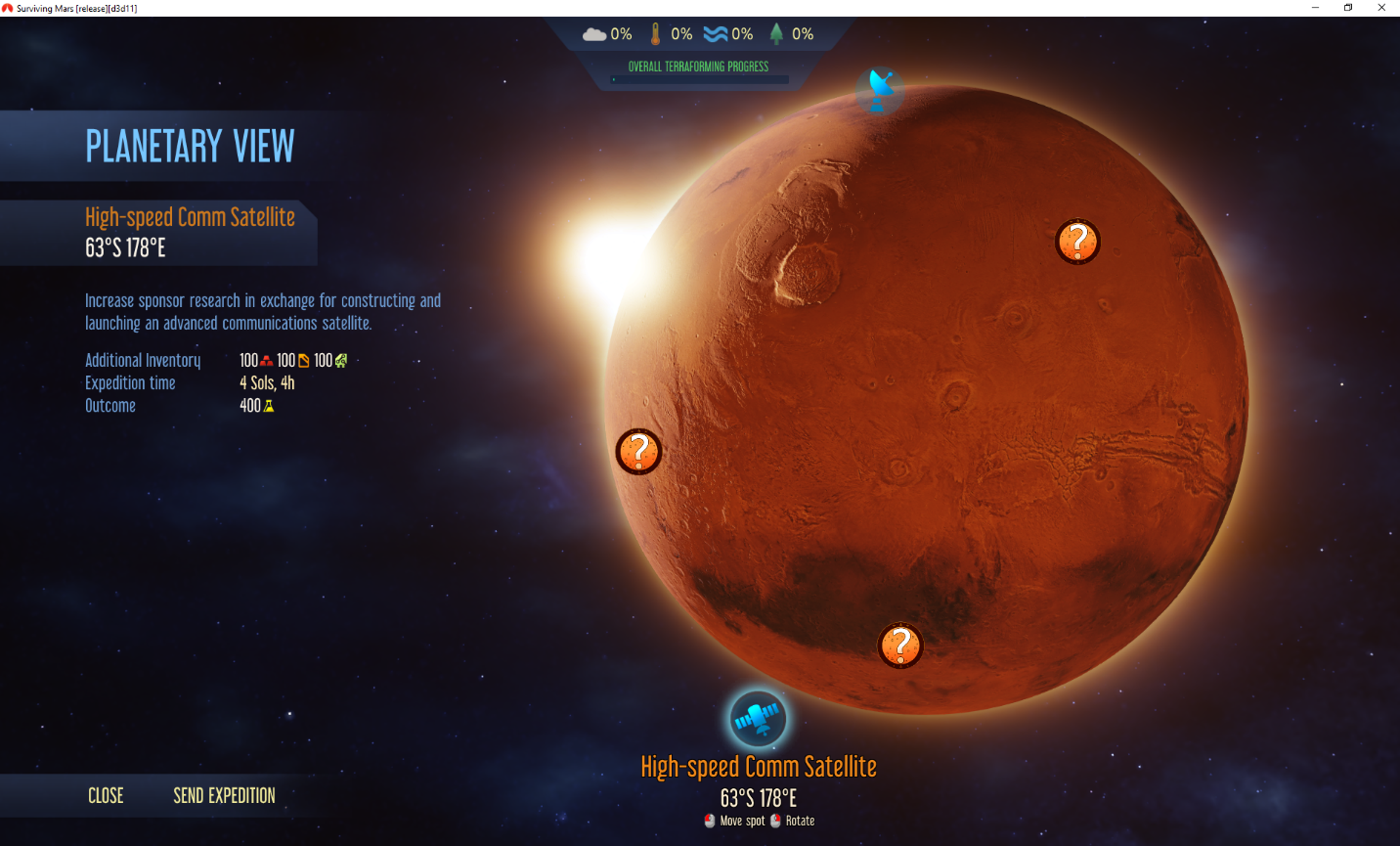
The Capture Meteors mission tasks one Rocket to go and divert meteors towards Mars. The Meteors then fall as Meteor Storm, leaving Metals and Polymers deposits. Just bear in mind that the storm may hit your colony.
You can construct orbitals by sending a rocket loaded with resources to deploy either a High-Speed Comm Satellite or SETI Satellite. HSC Satellites grant you daily sponsor research, while SETI Satellites grant additional funding.
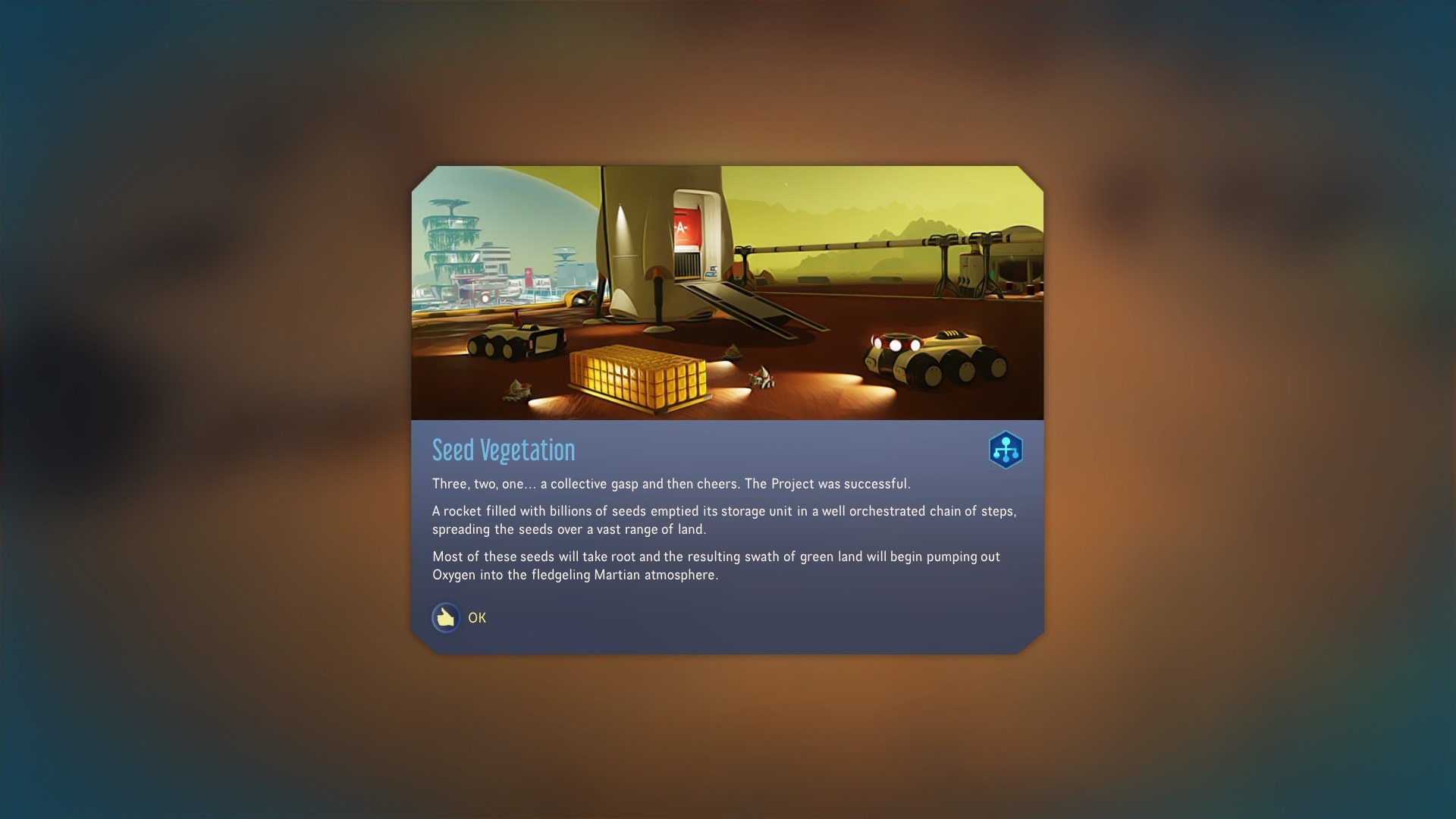
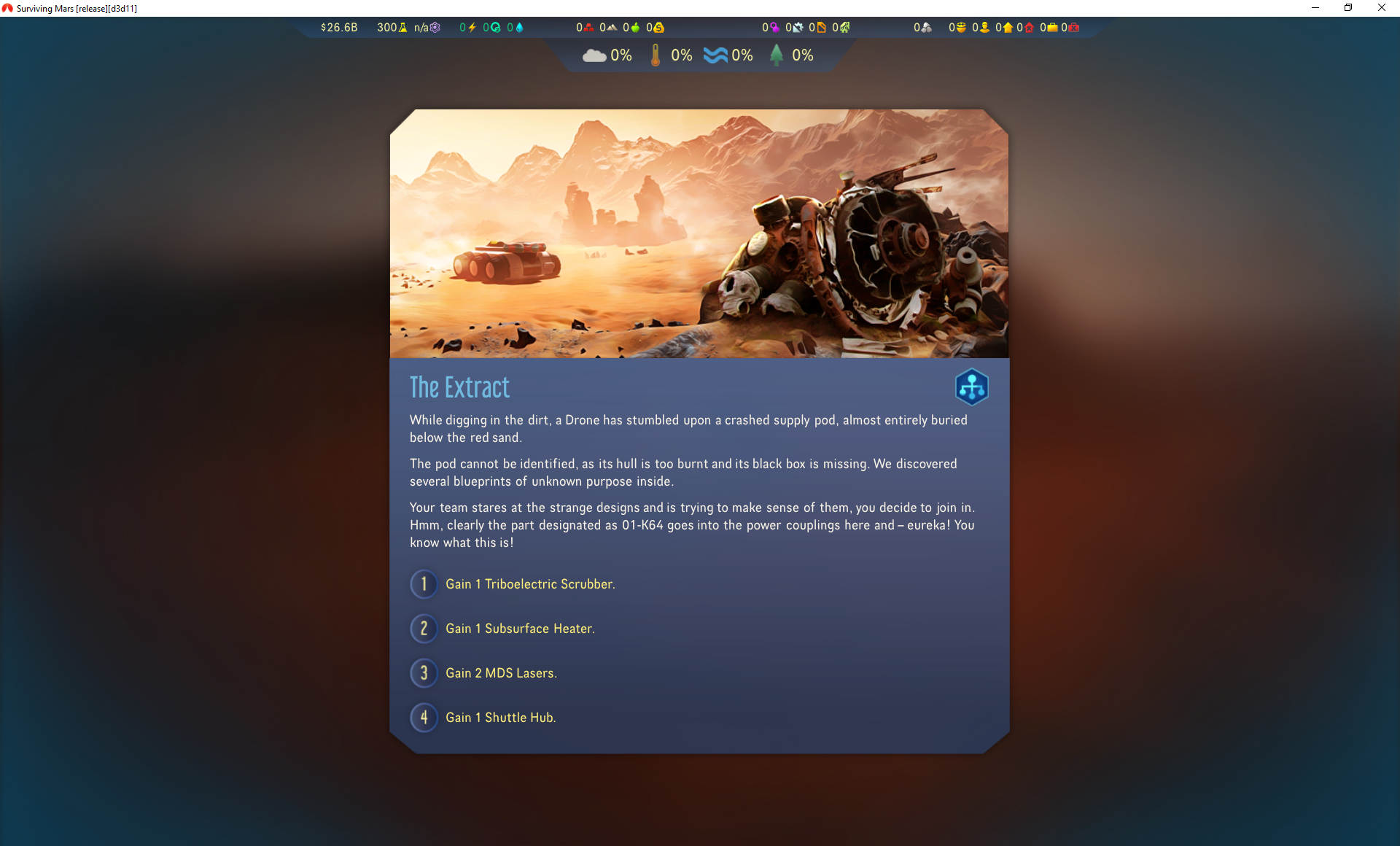
The Armstrong update comes with 20 new events, scripted specifically for the early days of your colony and will grant you various benefits that will boost your expansion early on.
We’ve added 2 new buildings in the Build Menu as well: Large Dumping Site and Rocket Construction Site. The Large Dumping Site allows you to store more Waste Rock in a tight area and you can now construct Rockets the same way you construct Rovers. But you’ll need to research Advanced Rocketry to construct Rockets.
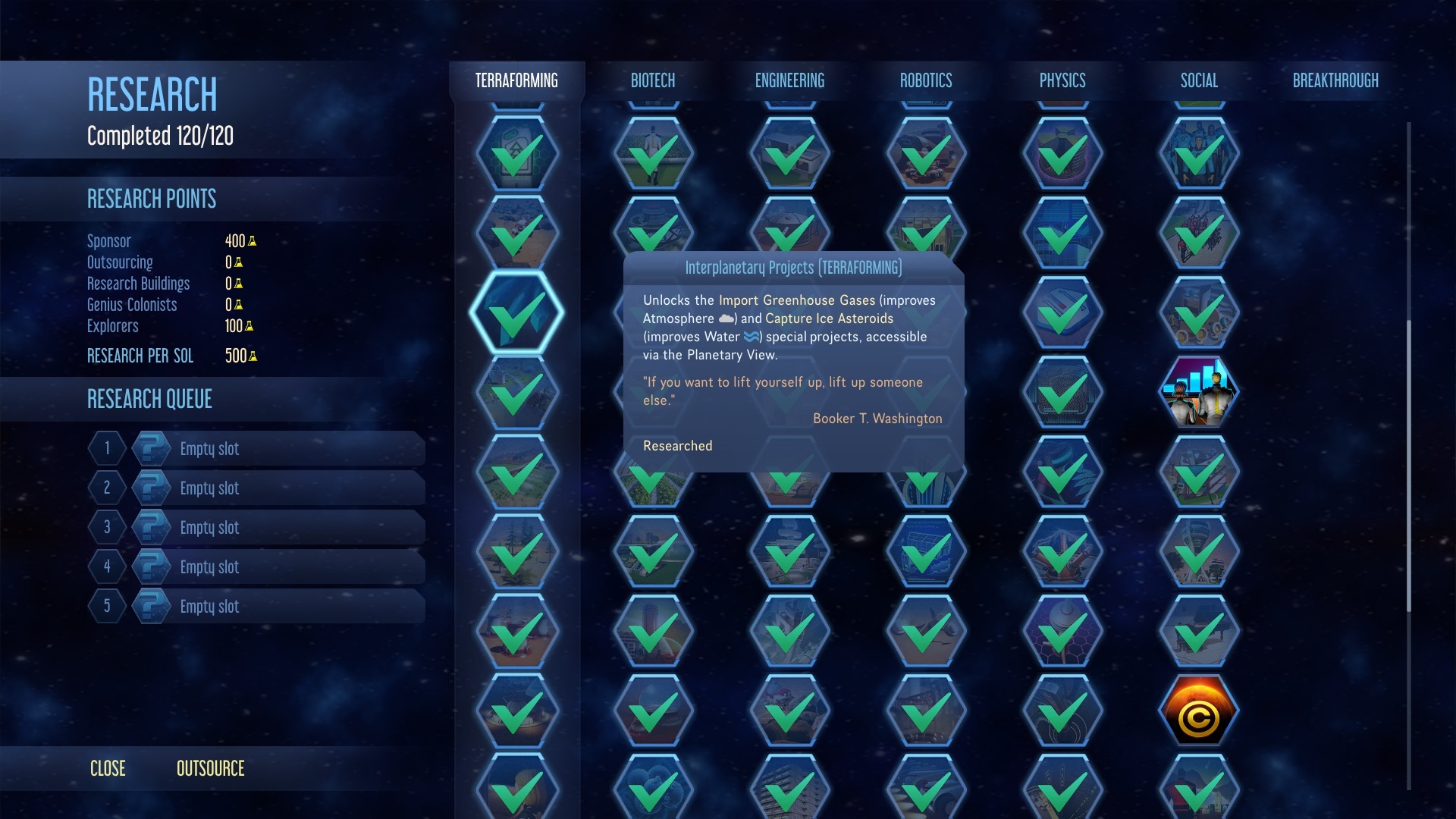
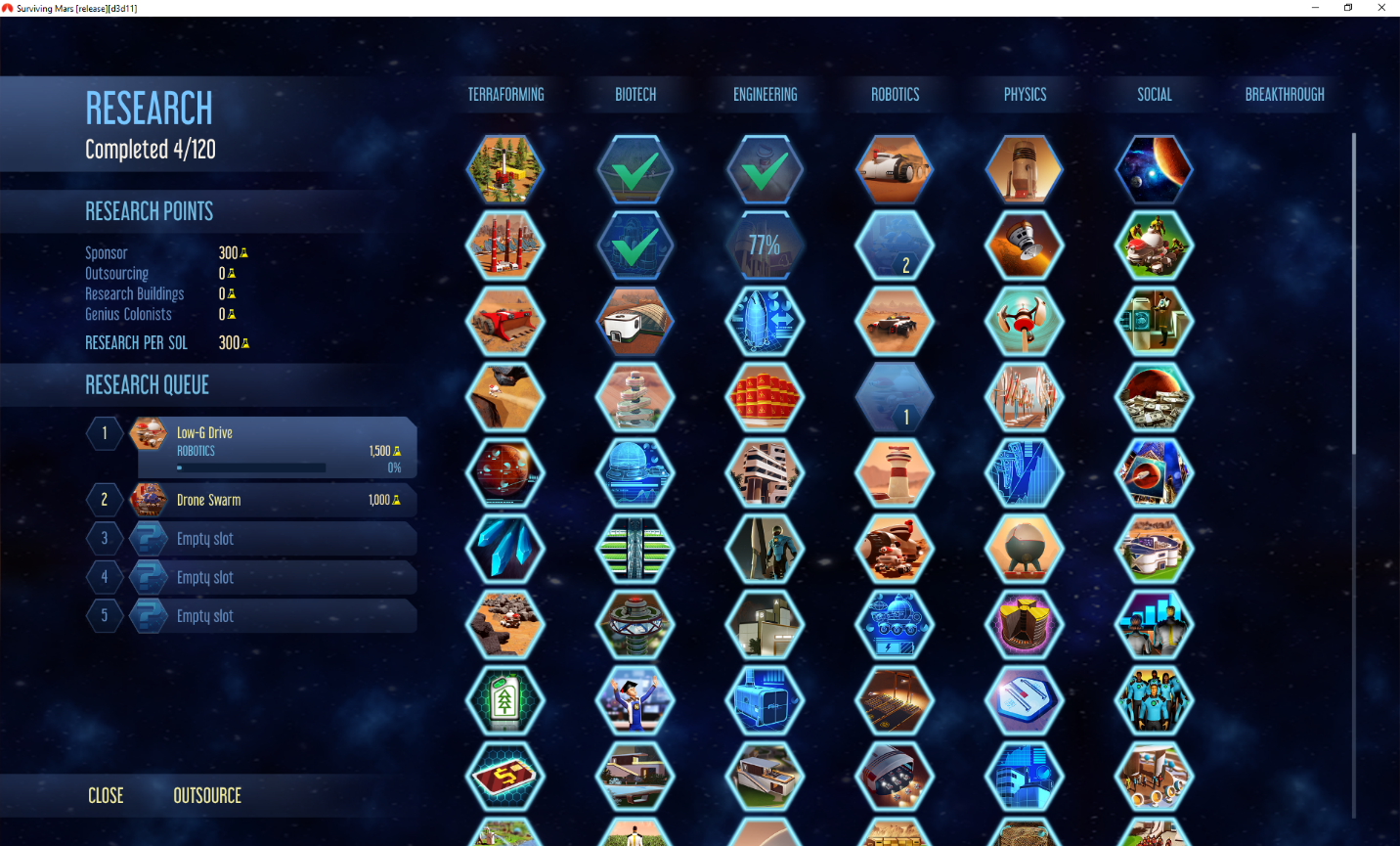
As part of our on-going efforts to redesign Surviving Mars’ UI, the Armstrong update comes with a flashy new Research UI, better suited for our everlasting modding community.
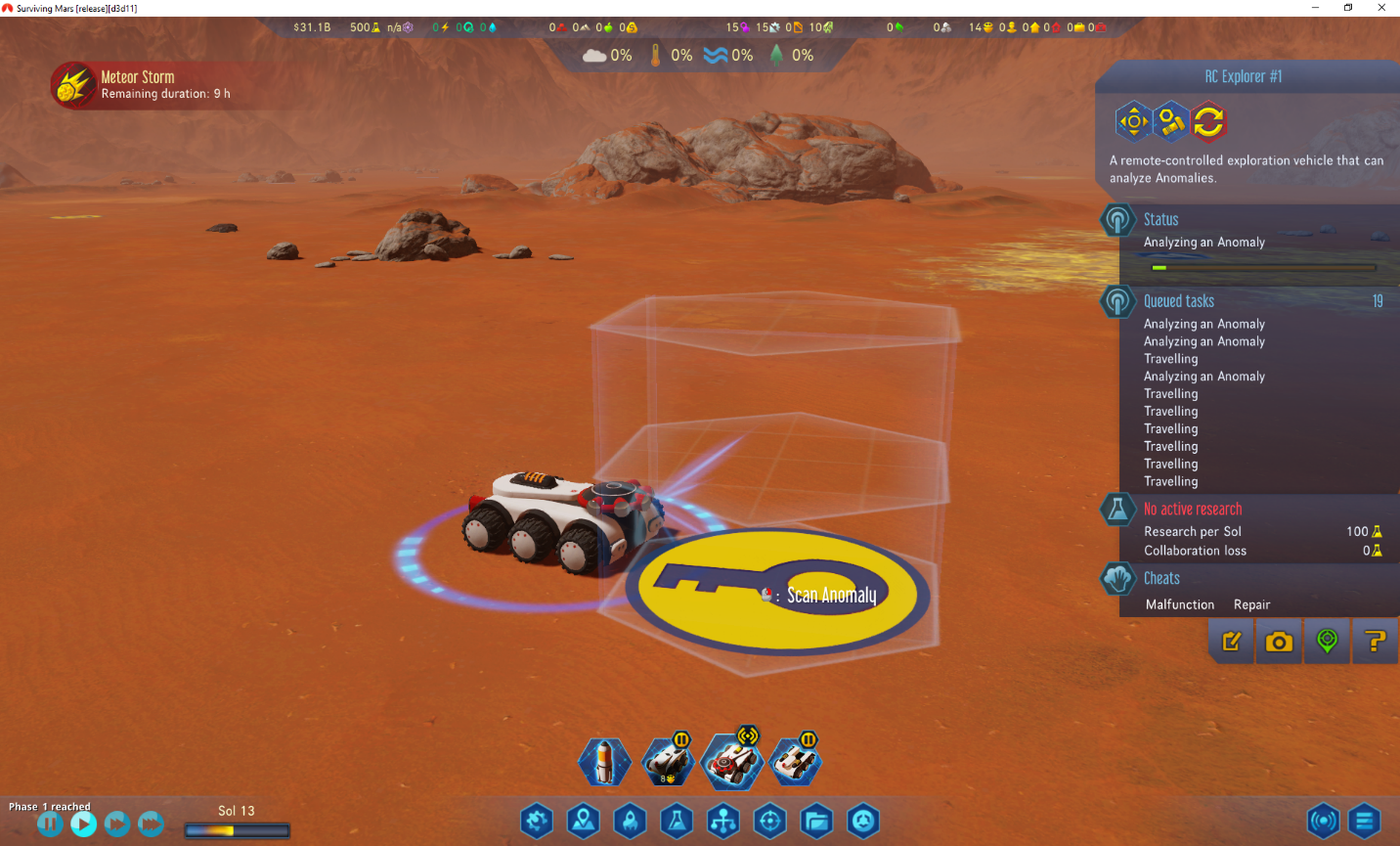
Last but not least, the Armstrong update is going to introduce 2 long-since wanted features: multi-selection and rover orders queue.
You can now drag select colonists, drones or rovers and then assign them the same task. Relocating all colonists of a Dome to another one has never been quicker!
To queue orders, select a Rover and then hold Shift while clicking on various points of interest. You can now task your Explorer to scan all anomalies on the map in a given order and then return back to the safety of the colony.
The Armstrong update is coming with a long list of QoL improvements, optimizations, balance changes and bug fixes. Stay tuned for our next dev diary, which is dedicated to the ultimate goal of the terraforming initiative, making Mars hospitable for life outside of the dome.
Ivan Grozev,
Lead Designer,
Green Planet
We’re back with another dev diary for Green Planet. Today we will be discussing the awesome free update, which is going to be released together with Green Planet and Project Laika DLCs. We’ve added a bunch of new content and Quality of Life improvements in this update, the most notable new feature being landscaping. All owners of Surviving Mars will get new Special Projects, events, research UI, multiselect, rover orders queue, and new buildings as well.
The Armstrong update is going to add a new section in your Build Menu: Landscaping. This new section contains the following new tools Flatten terrain, create Ramp, Change Surface texture and an option to construct Small Rock Formation or bigger Rock Formation.
The Flatten terrain tool allows you to select a flat surface on Mars and protrude it, leveling the terrain where it passes. It allows you to fill craters, extend plateaus or clear rough terrain for construction. Once you select an area to flatten, the tool will create a new landscaping project which is visualized with a construction hologram on your display. Each landscaping project evaluates the underlying terrain and calculates how much soil is needed and if excess soil is present. Then your drones will deliver or remove the Waste Rock as needed to complete the project.
The Ramp tool works similar to the Flatten tool but it allows you to connect two flat surfaces with different elevations, creating walkable ground between them.
The Change Surface tool marks an area, which will be gradually reworked by your Drones. They will break the rocks to make sand, or replace sand with rocks.
Additionally, you can use your excess Waste Rock to construct various Rock Formations. These are purely decorative combinations of rocks, which can be placed on flat surface. They were created for those moments when you have made Mars too Earth-like and want to bring back some natural Martian landscape.
The Armstrong update comes with 3 free Special Projects: Capture Meteors, launch High-Speed Comm Satellite and Launch SETI Satellite. They’re marked on the Planetary View with blue icons and become available as soon as the first batch of Planetary Anomalies gets discovered. Usually, this happens at Sol 10-15.
The Capture Meteors mission tasks one Rocket to go and divert meteors towards Mars. The Meteors then fall as Meteor Storm, leaving Metals and Polymers deposits. Just bear in mind that the storm may hit your colony.
You can construct orbitals by sending a rocket loaded with resources to deploy either a High-Speed Comm Satellite or SETI Satellite. HSC Satellites grant you daily sponsor research, while SETI Satellites grant additional funding.
The Armstrong update comes with 20 new events, scripted specifically for the early days of your colony and will grant you various benefits that will boost your expansion early on.
We’ve added 2 new buildings in the Build Menu as well: Large Dumping Site and Rocket Construction Site. The Large Dumping Site allows you to store more Waste Rock in a tight area and you can now construct Rockets the same way you construct Rovers. But you’ll need to research Advanced Rocketry to construct Rockets.
As part of our on-going efforts to redesign Surviving Mars’ UI, the Armstrong update comes with a flashy new Research UI, better suited for our everlasting modding community.
Last but not least, the Armstrong update is going to introduce 2 long-since wanted features: multi-selection and rover orders queue.
You can now drag select colonists, drones or rovers and then assign them the same task. Relocating all colonists of a Dome to another one has never been quicker!
To queue orders, select a Rover and then hold Shift while clicking on various points of interest. You can now task your Explorer to scan all anomalies on the map in a given order and then return back to the safety of the colony.
The Armstrong update is coming with a long list of QoL improvements, optimizations, balance changes and bug fixes. Stay tuned for our next dev diary, which is dedicated to the ultimate goal of the terraforming initiative, making Mars hospitable for life outside of the dome.
Ivan Grozev,
Lead Designer,
Green Planet