1. Tannenberg
  2. News

Tannenberg News

Armistice 2019 - Lest we forget!

After agreeing the terms of the armistice at the Forest of Compiègne.

One hundred and one years ago today, the Armistice was signed between the allied powers and Germany. At this point, the war on the Eastern Front had been effectively over for some time since the Russian Revolution and the Russian-German armistice of 1917, although there were still moments of fighting (see Operation Faustschlag). The Armistice of November 11th, 1918 finally ended all major fighting in WW1 for good. It would be extended three times before the Treaty of Versailles officially ended the war.

In Tannenberg (and our Western Front WW1 game Verdun) there is an optional two minute silence to commemorate this important day in history. Those who observe it will earn a medal in-game. For those of you on Facebook, we have created an overlay which you can apply to your profile picture. Just follow this link.

The lasting costs of war

Today we celebrate the end of World War One which lasted more than four years. But we also commemorate the 15-19 million who died, and the over 20 million wounded that survived the war - although with a cost. Wounds could be physical or mental; shell shock being perhaps the most well known mental effect of the war.

Shell shock encompassed a wide range of mental reactions to the horror of combat, which were poorly understood at the time. What soldiers in WW1 were experiencing would likely be classified as either combat stress reaction (for temporary effects), or if it was a longer term effect, posttraumatic stress disorder (PTSD).
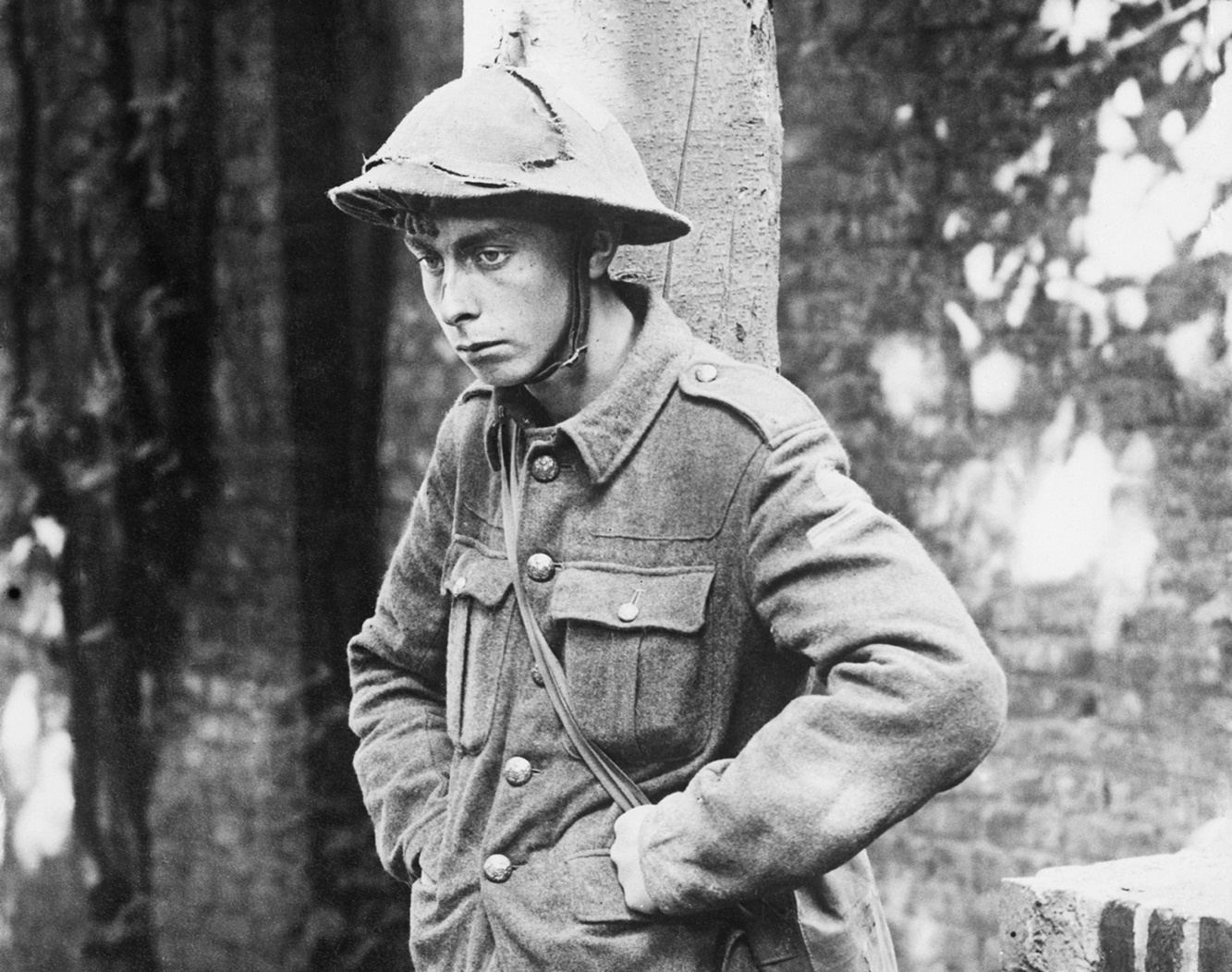
A soldier captured by the Germans in 1918, who was diagnosed with shell shock.

The term shell shock was coined because early analysis suggested that mental disorders might be caused by shockwaves from shells. Of course, this was not the case - physically uninjured soldiers could still suffer posttraumatic stress disorder. War correspondent Philip Gibbs wrote of soldiers suffering from ‘shell shock’:
Originally posted by Gibbs
Something was wrong. They put on civilian clothes again and looked to their mothers and wives very much like the young men who had gone to business in the peaceful days before August 1914. But they had not come back the same men. Something had altered in them. They were subject to sudden moods, and queer tempers, fits of profound depression alternating with a restless desire for pleasure. Many were easily moved to passion where they lost control of themselves, many were bitter in their speech, violent in opinion, frightening.

The breakdowns which could be caused by experience of war were often conflated with cowardice or a 'lack of bravery'. During the First World War, this was encouraged by some leaders due to an increasing shortage of manpower and also the unforeseen costs of disability payments to all those suffering mental injuries. After all, if a man was 'only suffering from a momentary loss of heart' he could be sent back into battle. A dismissive attitude towards shell shock could also be caused by simple ignorance. Royal Fusilier William Holbrook said:
Originally posted by Holbrook
I was reading some time ago where some general said, ‘There’s no such thing as shell shock.’ He ought to have, he should have been there. I mean it’s ridiculous to say things like that. You get a man, even if he was a strong man, you get a terrific burst from a shell within say three or four yards of you, you know. It does, it does upset them. Shell shock, oh my god yes.
Some doctors advocated the use of cruel 'treatments' like electric shocks to attempt to bring shell shock victims back to fighting condition.

The Cambridge History of the First World War estimates that 20% of soldiers may have
been affected by shell shock - but these numbers are uncertain, in part because the doctors at the frontlines may have avoided labelling injured men with psychological conditions that would not be considered worthy of a disability pension. One man who did receive a pension was Thomas Olive:
Originally posted by Olive
I used to have little breakdowns now and then and my wife used to be very frightened. It more or less used to happen at night, when I was in bed. I used to spring up off the bed, you know; it used to frighten her. My daughter, incidentally, is terribly nervous, she’s terribly nervous. My wife says it’s all my fault. Well I had shell shock, you see. I got blown up, you see, and it affected my whole system. I got a pension for about oh, what was it, about 9 shillings a week.

It’s worth noting that the 9 shillings a week was roughly equivalent to about 26 pounds / 30 euros / 33 dollars today. As mentioned before, many of those who suffered mental disorders as a result of their wartime experiences wouldn’t even get that.

When you pause to remember the Armistice today and think back of all those who fell during the war, also remember those who survived but were still scarred by their experiences, whether physically or mentally.

Lest we forget...

Tannenberg is 50% off for Halloween!

Halloween is creeping up on us like a serial killer, which means it's time for a sale! Don't question the logic, just go with it. Tannenberg is 50% off for a limited time - don't delay!

Here are some *haunting* screenshots by players. See what we did there?

A drunken vampire, by Cpt.DoeJohnson?

A letter never sent, by 42nd|LostPyro.

Death stalks this dark forest... but in the form of man or beast?

Our Western Front game Verdun is also on sale over Halloween! There's even a creepy conversion of the main menu... check it out:
https://store.steampowered.com/app/242860/Verdun/
Have a great Halloween!

Game Update: Updates and an easter egg

Do you recognize this trench?

Two Small Updates

We're happy to say that following the Ukraine update, on average users have been seeing a 9% improvement in FPS, and more stable framerates. This week we have released two more small updates for Tannenberg (and Verdun). This includes a fix for the issue where you could be removed from a game due to 'disconnected due to ServerLogic'. If it still happens to you even after updating, let us know!

We are still working on some issues, including grenades hanging around in the first person view, and medals sometimes not being awarded. We'll let you know when these are solved as well. Thanks to everyone who has reported stuff to us!

Read below for a summary of both updates, or check the changelog for the full list.
  • Fixed 'ServerLogic' issues
  • Firearms now correctly animate melee attacks whilst sprinting
  • Fixed esc sometimes not working.
  • Fixed some squad points not being awarded
  • Fixed running from crouch/prone sometimes not working
  • When using a controller, you can now go through custom match option by tapping A/X on it
  • Fixed a spot where players could go through undercarriage of locomotive in Galicia
  • Fixed shiny square blood decals
  • Added check to prevent duplicate maps in map-vote
  • Fixed footsteps sometimes being silent
  • Optimised bandwidth usage


Rifle Deathmatch community event

EDIT: EVENT CANCELLED
If you fancy a change of pace with your Tannenberg experience, you might want to join this all vs all battle organized by our community this Saturday! Event thread is here, but all you need to do to join is start up Tannenberg at 9pm CEST join the busiest Rifle Deathmatch game!

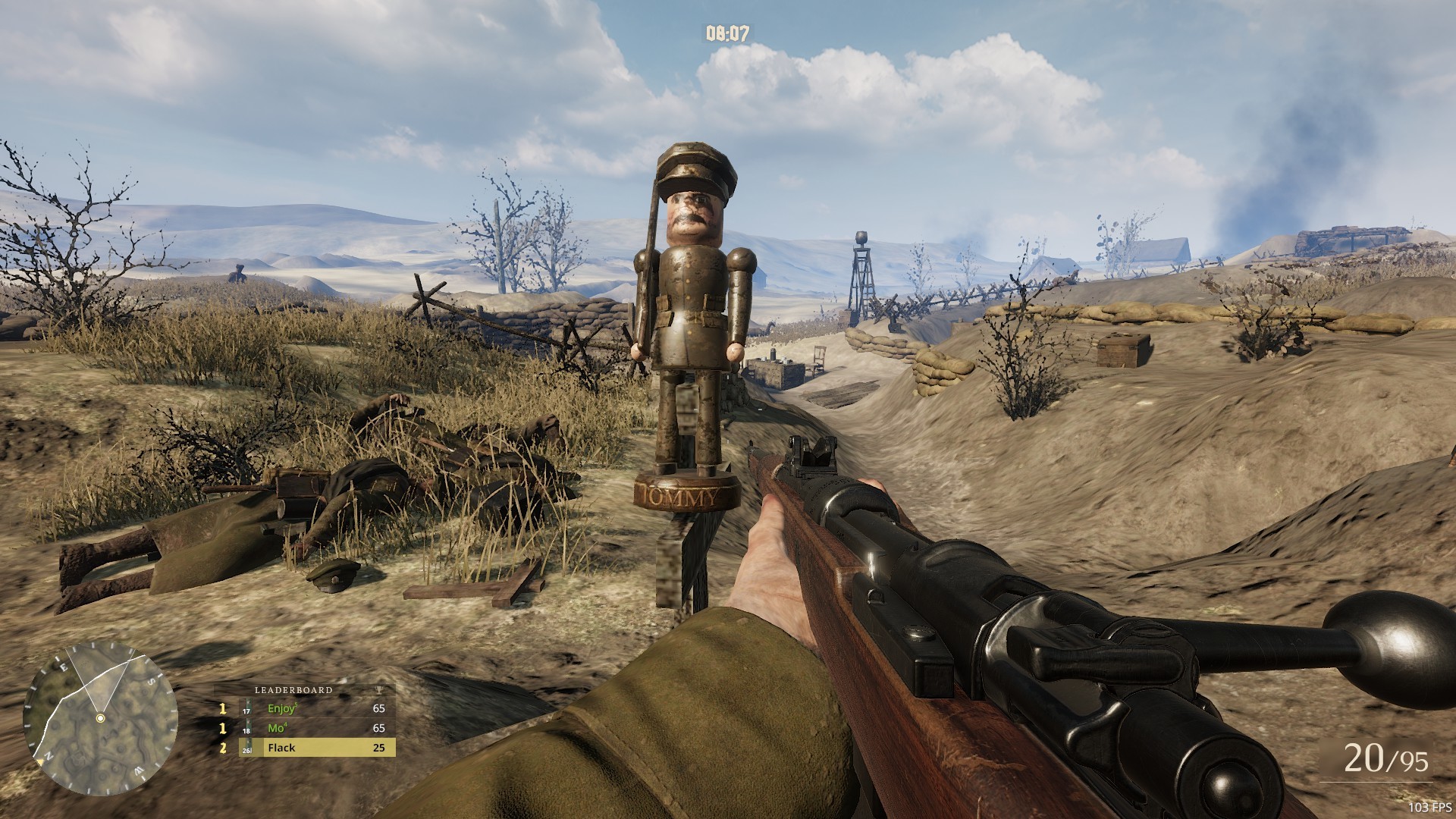
Player Flack found this sort of easter egg on the new map :)
Good luck out there!

Ukraine map released!

The new Ukraine map is out now!
[previewyoutube][/previewyoutube]

In short, it's relatively open ground with good sight lines for HMGs. Fortunately there are more extensive trench networks which will offer you some cover: smoke and trenches are your friends! If you want to read more about it, check out the 'making of' post we released yesterday:
https://steamcommunity.com/gid/103582791458421449/announcements/detail/3031411293978850698


Dev stream

Developer Leo will be streaming a battle on the Ukraine map tonight via Steam broadcast, bringing more details on the development of the map and perhaps answering other questions you might have about Tannenberg. Make sure to join us in battle or in the Steam broadcast chat around 9 PM CEST!

..and more!

Apart from the new map, we also released several fixes and improvement to the game. You can read the full changelog on the forum. A few highlights below:
  • Chemical Grenade M1917 and NebelBombe Type N now available in Attrition
  • Bots using HMGs will stop shooting when they can no longer see their target
  • Pre-load HMG assets so it no longer lag spikes when first entering a HMG
  • Fixed tree stump climbing in the Baltic map
  • Health regeneration adjustments:
    • Health no longer regenerates while sprinting
    • Health regeneration is spread out over time now
    • Medium and Heavier damage require additional time to fully heal
  • Various performance optimizations
  • Verdun and Tannenberg split into two separate .exes. This will enable separate updating and reduce update time, as well as resolving some issues including achievements and voice chat when switching fronts from in-game
  • Fixed a bug where you could unbalance the game by swapping squad to the opposite faction
  • Fixed a case where you were able to join larger team when joining a game
  • Game will add new squad to opposite faction rather than revert to imbalanced team where possible
  • The Voice Commands menu can now be navigated with the keyboard numbers like before
  • We now save XP when a disconnect kicks you
  • New settings and functionality for controllers (14 changes, complete list in full changelog)


If you can't make it to the battle right now, maybe these screenshots will ease your wait a little.

A quiet fortification, soon to be filled with the sounds of battle.
Ukraine in the snow - you can see some of the trenches and an abundance of shell craters.


We'll see you on the battlefield! Let's get stuck in.

Ukraine before it was a nation

Our latest free update to WW1 FPS Tannenberg adds a new Ukraine map to the game. As always it’s the result of extensive research and design, with the goal of establishing an authentic environment that also creates exciting gameplay. We focused specifically on the trench maps from the Battle of Zborov, with the goal of immersing players in the perspective of soldiers who fought on the vast plains and endless steppes on the edge of the continent. At first glance, those wide plains of Ukraine might seem like they lack distinctive details to build a map around, but once you dig a little deeper there’s a wealth of inspiring information.. Let’s start with a little history.


During the years of the First World War, Ukraine was not an independent nation - the term referred to territory Western Ukrainian land had been split between Austria and the Russian Empire since the 1700s. Known as the ‘breadbasket of the Empire’ the area had a troubled history, with uprisings, religious conflict between Ukrainian peasantry and Polish or Lithuainian land owners, and suppression of the Ukrainian language by Russia.

Ukrainians fought on both sides in the conflict, with 3,500,000 fighting for Russia and 250,000 for Austria-Hungary. A great cost was paid by the civilian population, who were distrusted by both Russia and Austria-Hungary. They often became victims of harsh reprisals for opposition real or imagined. There was heavy fighting in the Ukraine during the Brusilov and Kerensky offensives, and major counter-attacks by the Central Powers. Conflict in the area didn’t end with the collapse of the Russian Empire, either.


After the 1917 Russian Revolution several factions fought for control of Ukraine. A number of Ukrainian states were established, but most collapsed quickly. The Polish army invaded and captured much of Western Ukraine, but Bolshevik forces defeated a drive on Kiev. An anarchist group called the Black Army held the southern regions from 1918 against the tsarist White Army, but were defeated by the Red Army in 1921. In December 1922, Ukraine became a founding member of the Soviet Union.


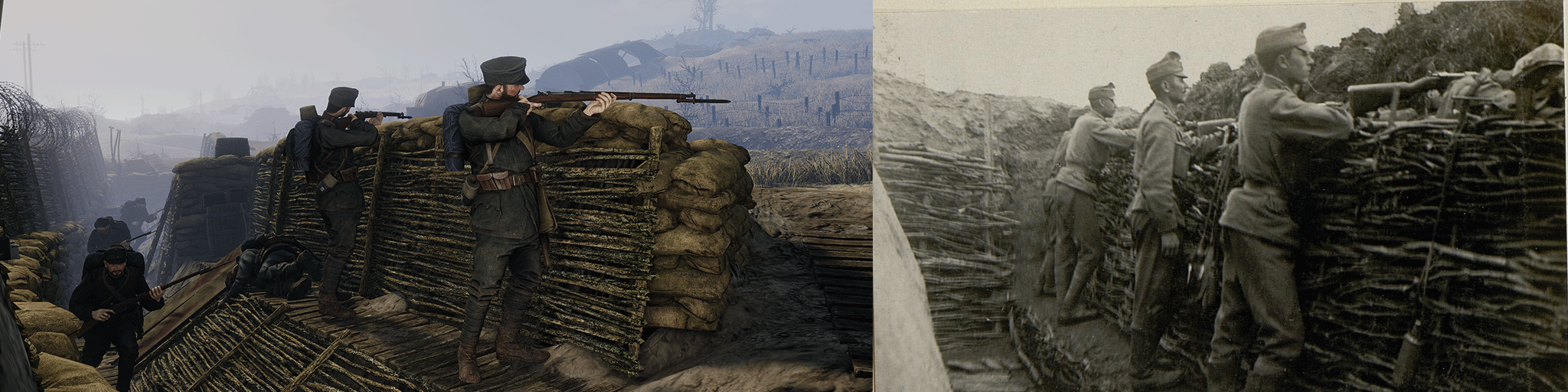
When building the Ukraine map for Tannenberg, one of the key elements was (surprise surprise) trenches! You might think that we would get bored of researching and modelling trenches, but in fact the variety of trenches used during the First World War is something most people don’t fully understand. You can see ‘typical’ trenches of the type most people would imagine in our Western Front game Verdun. On the Eastern Front though, there were several different styles of wooden trenches - in the Ukraine, these wattle trenches (seen in the images above and below) were common.


As you can see from the next comparison shot, the landscape is largely flat except for the trenches and dugouts prepared by the opposing armies. This gives heavy machine guns good sight lines across large areas of the map. Of course when it’s your boots on the ground you’ll be able to find small slopes and depressions to gain some cover while advancing, but it would be highly recommended to encourage your NCOs to make use of the smoke shell call-ins!


Representing artillery is essential to creating an authentic WW1 game. The artillery players use in combat (calling in barrages from field telephones) is a long way outside the battlefield - but that doesn’t mean that you won’t see any big guns up close. Gun pits like those shown in the next image illustrate the sort of defensive positions that might be established by artillery crews. In-game, the fighting has reached too close of a range for these guns to be fired. But the fortifications they are emplaced within provide invaluable cover, as can the guns themselves if it comes down to it.


We think the Ukraine map will offer players fresh challenges and the opportunity to develop new tactics as they battle across the trench lines and rolling plains. Don’t forget to make use of those smoke barrages!