1. Field of Glory II
  2. News

Field of Glory II News

Wolves at the Gate out next week


"A furore Normannorum libera nos, Domine" (From the fury of the Northmen deliver us, O Lord)

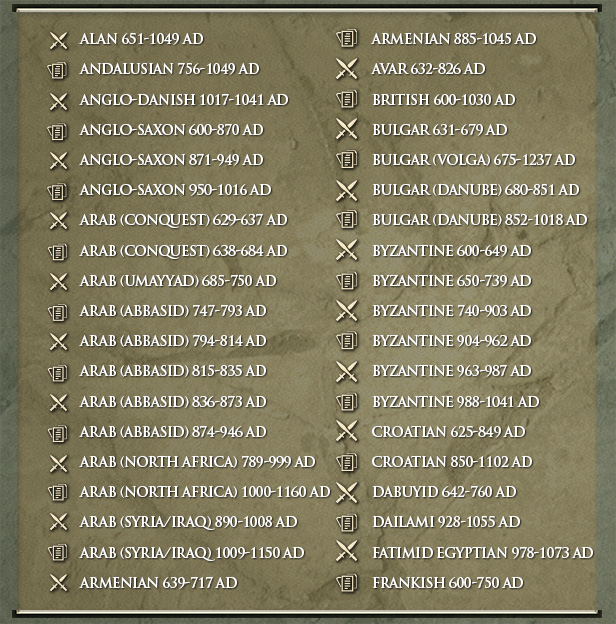
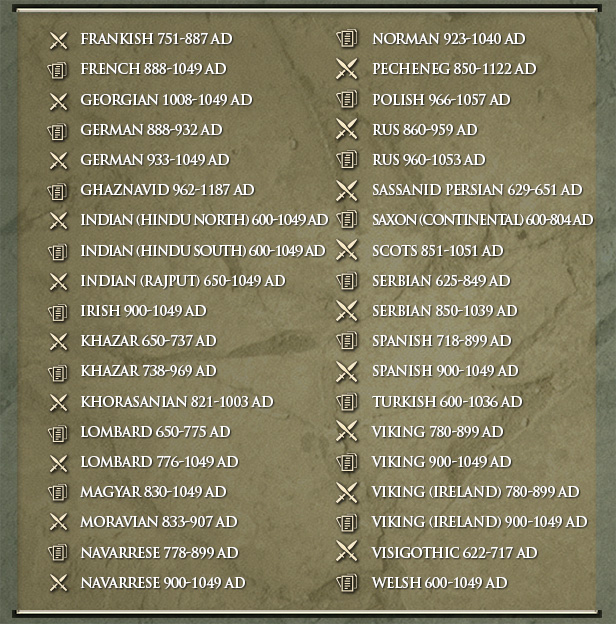
With 76 new Army Lists, 19 new Factions, 55 new Units, new historical-based campaigns and Epic Battles, Wolves at the Gate will be massive!

Are you eager to see the game in action? Than don't miss our preview on our official Twitch Channel on Friday 24th at 6Pm BST!

https://www.twitch.tv/slitherinegroup


https://store.steampowered.com/app/1004260/Field_of_Glory_II_Wolves_at_the_Gate/

Field of Glory 2 - New "Allies" Feature Explained

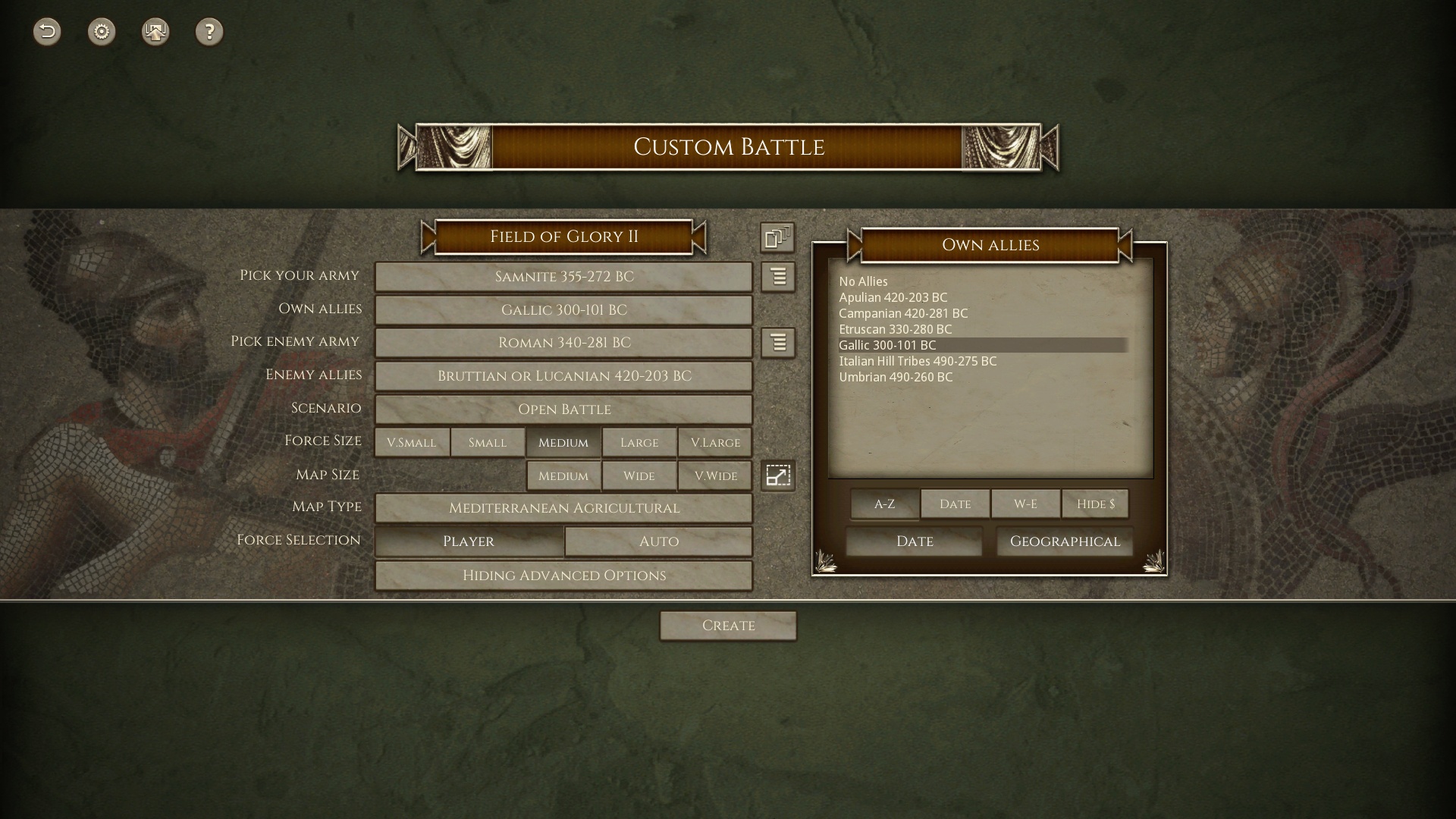
By popular demand, Update 1.5.12 adds a major new feature to the game – Allies.

It is now possible to choose to have allies from a different army list in SP and MP custom battle armies. The main army list provides the majority of the troops available for selection, the allies provide a smaller proportion.

The permitted allies for each list are based on known historical alliances. Hence some army lists can have as many as 12 possible allies, others may have none. Altogether, well over 400 allies are currently specified, which, together with the 281 single nation army lists, makes a total of more than 700 pure or mixed army lists in the game. This in turn means that, including “what if” games, the number of possible matchups is now over 500,000! And that is before unit selection.

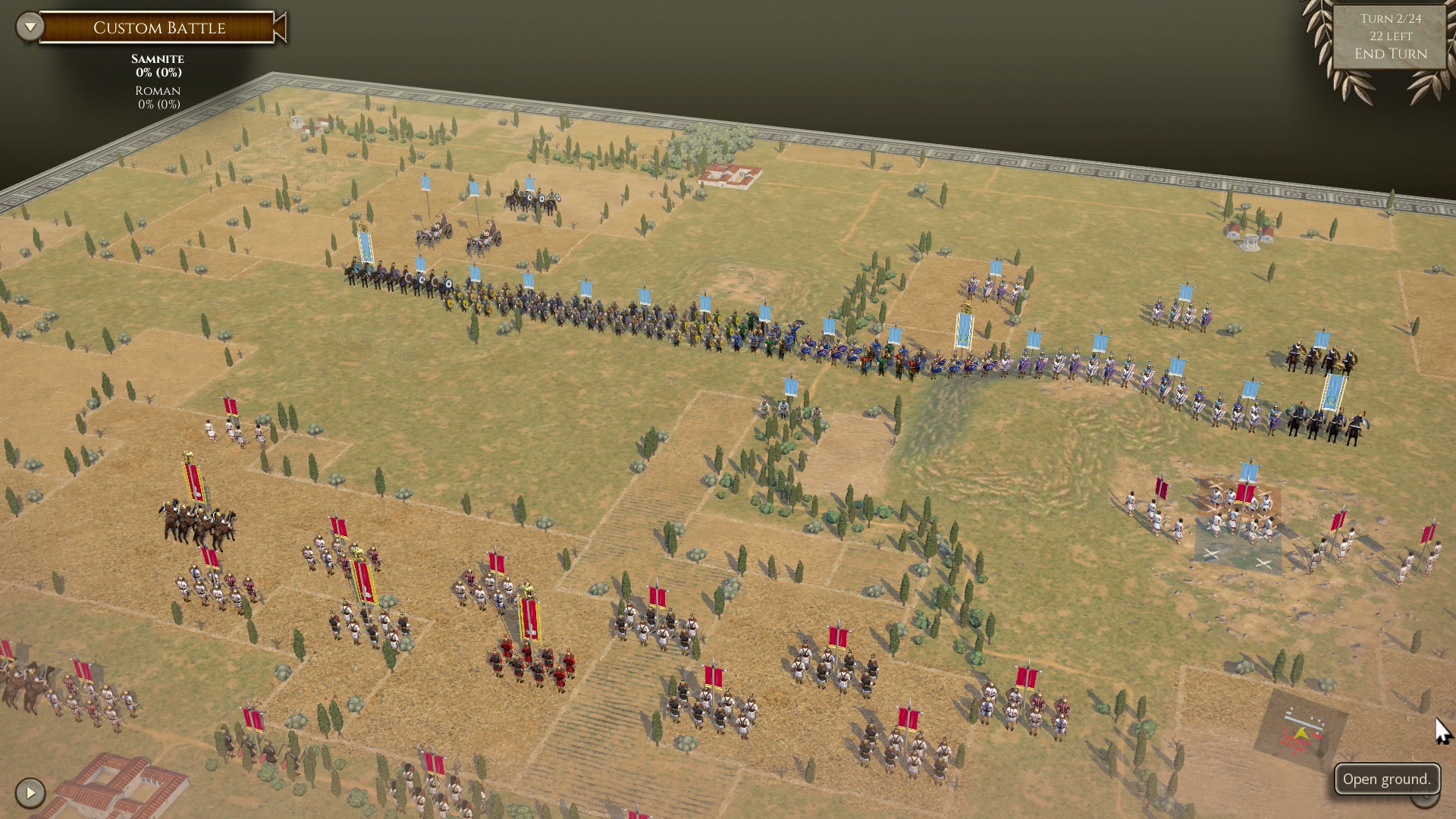
For example, here we are setting up a custom battle representing an episode from the Third Samnite War (298-290 BC) in which an army of allied Samnites and Gauls meets a Roman army with Lucanian allies.


The army list previews show an asterisk in front of the allied units.


The two armies arrayed for battle:


Here we can set up a situation similar to the battle of Clontarf in 1014 AD, in which an Irish army with Viking allies fights a Viking army with Irish allies:


Stay tuned for further information!

Field of Glory II - The Wolves have arrived


"Horses ramp high and rock and boil / And break their golden reins,

And slide on carnage clamorously, / Down where the bitter blood doth lie,

Where Ogier went on foot to die, / In the old way of the Danes.

"The high tide!" King Alfred cried. / "The high tide and the turn!

As a tide turns on the tall grey seas, / See how they waver in the trees,

How stray their spears, how knock their knees, / How wild their watchfires burn!"


G. K. Chesterton – The Ballad of the White Horse


A new installment for Field of Glory II is coming and it is “darker” than ever. Wolves at the Gate depicts the epic struggles that newly forged European kingdoms had to face for their survival during the “Dark Ages”, a long period of recurrent conflicts that eventually gave birth to Europe.

https://store.steampowered.com/app/1004260/Field_of_Glory_II_Wolves_at_the_Gate/

This age was marked by the volcanic expansion of the Umayyad Caliphate and its fights against the Byzantine Empire, the last bastion against the Islamic advance in the middle-east. In Europe, Charlemagne, King of the Franks, and then crowned Emperor of the Romans, built the foundations of the Carolingian Renaissance and the beginning of the Translatio Imperii in the West.

But no-one was prepared for the endless waves of ruthless and merciless raiders and warriors that from the end of the eight century onward ravaged almost the totality of the Continent and the Mediterranean. Christendom’s towns and holy places were in constant danger from the depredations of the Vikings and Magyars, as well as the on-going Saracen threat. The Vikings were to carve out colonies in Ireland, the Danelaw in England, Normandy in France and the Kievan Rus in Russia. The Magyars were eventually to cease their raids and become the Christian kingdom of Hungary.

The Wolves have arrived. Is this end of Christianity, or is it just the birth pangs of a new world order?

Summary of features:
  • 19 new factions
  • 55 new units
  • 76 new army lists
  • 6 new Epic Battles
  • 74 new Quick Battles
  • Expanded Custom Battles module.
  • Expanded Sandbox Campaign module.
  • 6 new historically-based campaigns.
  • New Allies feature added in accompanying game update.


Field of Glory II - Indian Spring Tournament

India. At the fringe of the Hellenistic World. In these lands, Alexander the Great fought his last main battle. Here the cultural heritage of Hellas and Persia met Buddhism. Here the blood of many courageous and daring soldiers was spilled along the centuries. This is not a land for the faint of heart.

It is your time to prove your valour now!

We are pleased to announce another Field of Glory 2 public tournament. This will be played using the normal Field of Glory 2 Multiplayer system and our automated tournament system.

Anyone who has Field of Glory II can enter. You do not need to own any DLCs to enter.


To enter, go to the tournament page here:

http://www.slitherine.com/tournaments/tournaments.asp

The general tournament rules can be found here:

http://www.slitherine.com/tournaments/rules.asp?aPage=1&filterStatus=

The first round will commence on Wednesday 3rd April 2019 at 10.00 am GMT. No further entries can be accepted after the tournament has begun.

Specific tournament rules:

This tournament will involve three rounds. The battles will be medium-sized custom battles.
Round 1: 327 BC. Macedonian invasion of India. Indian (500 BC-310 AD) vs Macedonian (328-321 BC). Tropical.
Round 2: 140 BC. Kingdom of Menander. Indian (500 BC-310 AD) vs Indo-Greek (175 BC-10 AD). Tropical.
Round 3: 500 AD. Sassanids in India. Indian (320-545 AD) vs Sassanid Persian (477-590 AD). Tropical.
Games are paired, so each matchup will be played both ways. Each player will be able to choose his forces using the normal force selection system. In each round, all players will be playing on the same randomly generated map for both games.
First round pairings will be selected randomly, subsequent rounds using the Swiss Chess system. Nobody will play the same opponent in more than one round.


The scoring system is as follows:

If a game runs to the turn limit, each side scores points equal to the enemy % routed at the turn limit. If the game times out, adjustments may be made, depending on how far the game has progressed and who took longer over their turns – see below.
If one army breaks, the victorious player scores 60 points plus the difference between the enemy % routed and his own % routed. The loser scores points equal to the winner's % routed.


Examples:

1) If Ben defeats Tamas's army, and has inflicted 45% routed on Tamas, and Tamas has inflicted 15% on Ben, Ben will score 60 + (45 – 15) = 90, Tamas will score 15.

2) However, if Ben defeated Tamas’s army by inflicting 62% routed on Tamas, and Tamas had inflicted 56% routed on Ben, Ben would get 60 + (62 – 56) = 66 points, and Tamas would get 56.

3) If the game is unfinished (or it reached the turn limit) with Ben inflicting 20% routed on Tamas, and Tamas inflicting 10% routed on Ben, Ben would score 20, and Tamas would score 10. (Provided that between them they have played at least 24 turns in all – see below).

Note that this system rewards aggressive play over desultory skirmishing. If you rout an enemy unit then hide for the rest of the game, both players will get extremely low scores - lower than if they played hard and lost.


Byes:

If an odd number of players sign up for the tournament, one player will get a bye in each round. In the first round this is random. In subsequent rounds it will be the player with the lowest score. The score for a BYE is 75 points for each game.

Round times and timing out:

Each round will last 14 days.

Any battles that are not completed by the end of the round will be timed out. The player who has had the game in his “My Turns” box the longest overall will be the one who is deemed to be timed out. This will not normally incur any penalties, unless insufficient turns have been played: If the timed-out player has played less than 12 turns, his score will be reduced proportionately, and his opponent will be granted the BYE score if it exceeds his current score. If the timed-out player has played less than 6 turns, he will not be included in the draw for the next round. This is to prevent someone else’s enjoyment being spoiled by being drawn against someone who has apparently dropped out of the tournament.

New Tournament - Will you be the ultimate Horse Lord?


If Infantry has often been called the “Queen of Battles”, Cavalry should have been declared “Infantry’s worst enemy”.

For centuries in Ancient Times, large cavalry formations constituted one of the most dangerous threats to professional and non-professional armies alike.

Ferocious and merciless, the semi-nomadic peoples of Ancient Times were led by powerful chiefs and kings, the most feared among them listed amongst the world’s greatest conquerors.

Will your destiny be “to crush your enemies, see them driven before you, and to hear the lamentations of their women”?

We are pleased to announce another Field of Glory 2 public tournament. This will be played using the normal Field of Glory 2 Multiplayer system and our automated tournament system.

IMPORTNAT!
Anyone who has Field of Glory II can enter. You do not need to own any DLCs to enter.

To enter, go to the tournament page here:

http://www.slitherine.com/tournaments/tournaments.asp

The general tournament rules can be found here:

http://www.slitherine.com/tournaments/rules.asp?aPage=1&filterStatus=

The first round will commence on Tuesday 12th February 2019 at 10.00 am GMT. No further entries can be accepted after the tournament has begun.

Specific tournament rules:

This tournament will involve three rounds. The battles will be medium-sized custom battles. Note that the Parthian, Sassanid and Kushan lists were all given a significant makeover in the v1.4.7 patch.

Round 1: 167 BC. Parthian invasion of Graeco-Bactrian Kingdom. Parthian (250 BC-225 AD) vs Graeco-Bactria (250-130 BC). Middle-Eastern Agricultural.

Round 2: 225 AD. Sassanid invasion of Kushan Empire. Sassanid Persian (224-349 AD) vs Kushan (130 BC-476 AD). Middle-Eastern Agricultural.

Round 3: 582 AD. Avar invasion of the Balkans. Avar (558-631 AD) vs Byzantine (579-599 AD). Mediterranean Agricultural.

Games are paired, so each matchup will be played both ways. Each player will be able to choose his forces using the normal force selection system. In each round, all players will be playing on the same randomly generated map for both games.

First round pairings will be selected randomly, subsequent rounds using the Swiss Chess system. Nobody will play the same opponent in more than one round.

The scoring system is as follows:

· If a game runs to the turn limit, each side scores points equal to the enemy % routed at the turn limit. If the game times out, adjustments may be made, depending on how far the game has progressed and who took longer over their turns – see below.

· If one army breaks, the victorious player scores 60 points plus the difference between the enemy % routed and his own % routed. The loser scores points equal to the winner's % routed.

Examples:

1) If Ben defeats Tamas's army, and has inflicted 45% routed on Tamas, and Tamas has inflicted 15% on Ben, Ben will score 60 + (45 – 15) = 90, Tamas will score 15.

2) However, if Ben defeated Tamas’s army by inflicting 62% routed on Tamas, and Tamas had inflicted 56% routed on Ben, Ben would get 60 + (62 – 56) = 66 points, and Tamas would get 56.

3) If the game is unfinished (or it reached the turn limit) with Ben inflicting 20% routed on Tamas, and Tamas inflicting 10% routed on Ben, Ben would score 20, and Tamas would score 10. (Provided that between them they have played at least 24 turns in all – see below).

Note that this system rewards aggressive play over desultory skirmishing. If you rout an enemy unit then hide for the rest of the game, both players will get extremely low scores - lower than if they played hard and lost.

Byes:

If an odd number of players sign up for the tournament, one player will get a bye in each round. In the first round this is random. In subsequent rounds it will be the player with the lowest score. The score for a BYE is 75 points for each game.

Round times and timing out:

Each round will last 14 days.

Any battles that are not completed by the end of the round will be timed out. The player who has had the game in his “My Turns” box the longest overall will be the one who is deemed to be timed out. This will not normally incur any penalties, unless insufficient turns have been played: If the timed-out player has played less than 12 turns, his score will be reduced proportionately, and his opponent will be granted the BYE score if it exceeds his current score. If the timed-out player has played less than 6 turns, he will not be included in the draw for the next round. This is to prevent someone else’s enjoyment being spoiled by being drawn against someone who has apparently dropped out of the tournament.