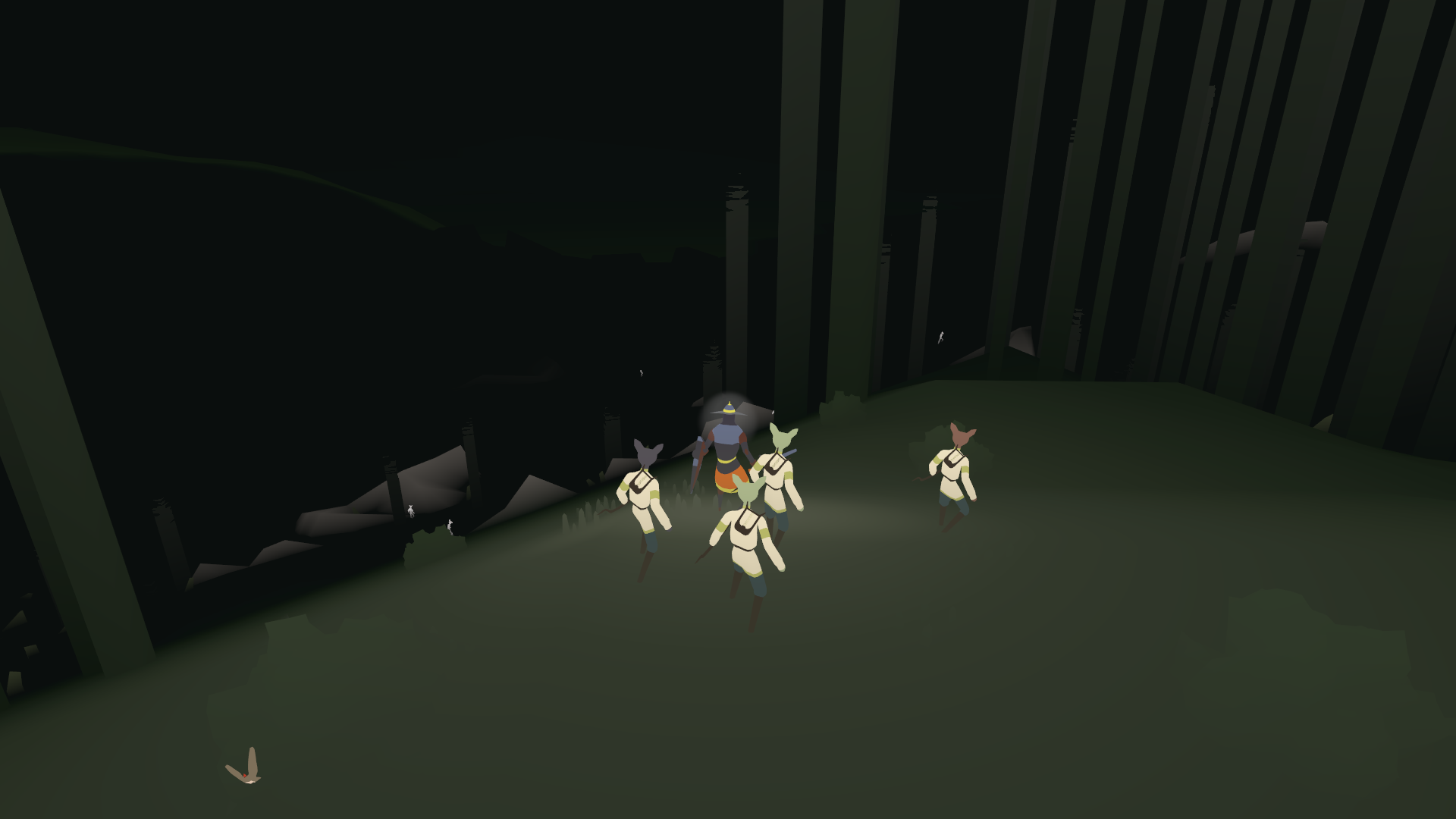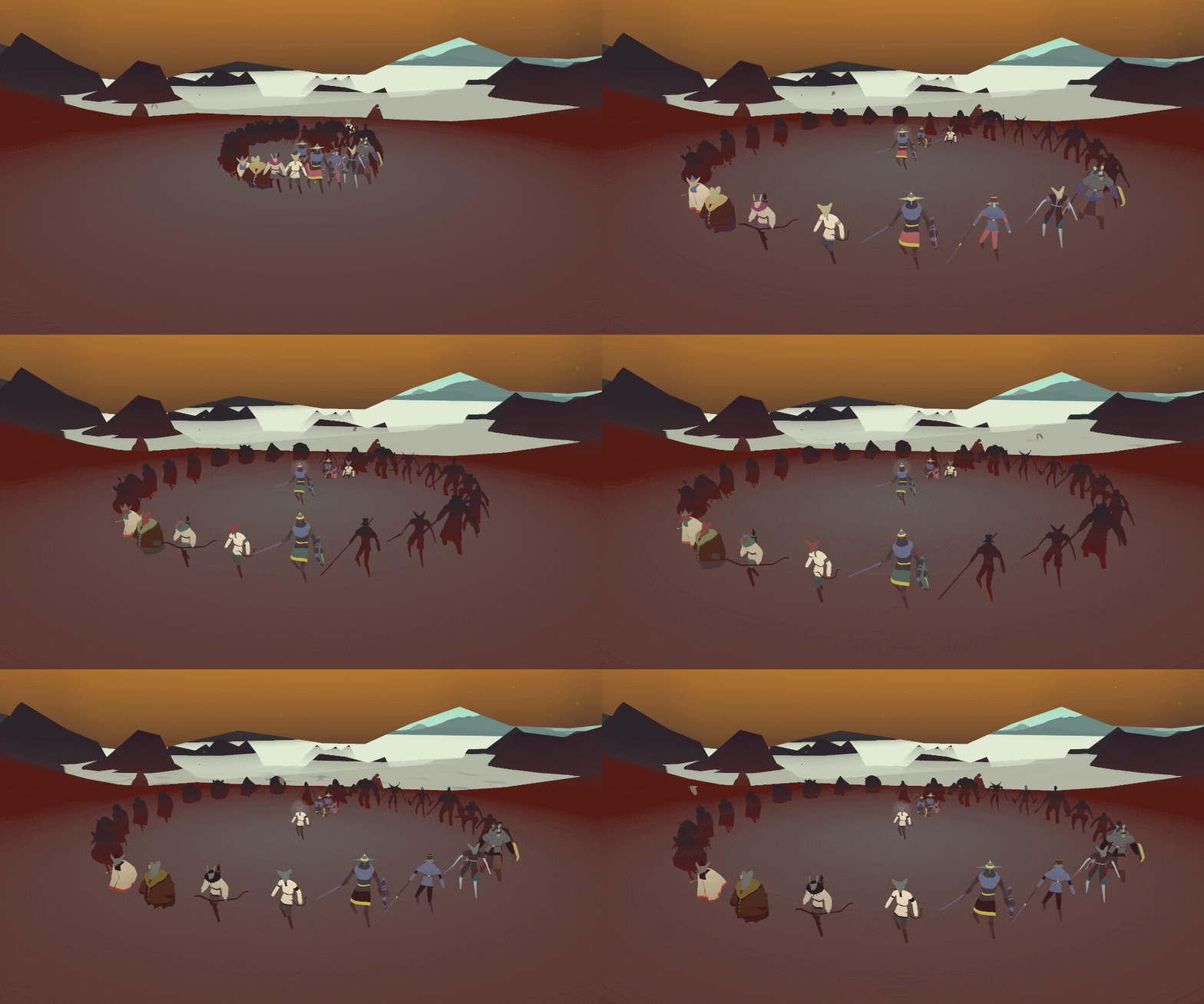
In the prologue, there's some difficult memory game required to keep straight which of your goblins is which. You can tell who's what evolution obviously, but then how to remember which of your scouts is a strangler vs a grenadier vs a singer? Obviously real important, just for basic gameplay purposes!
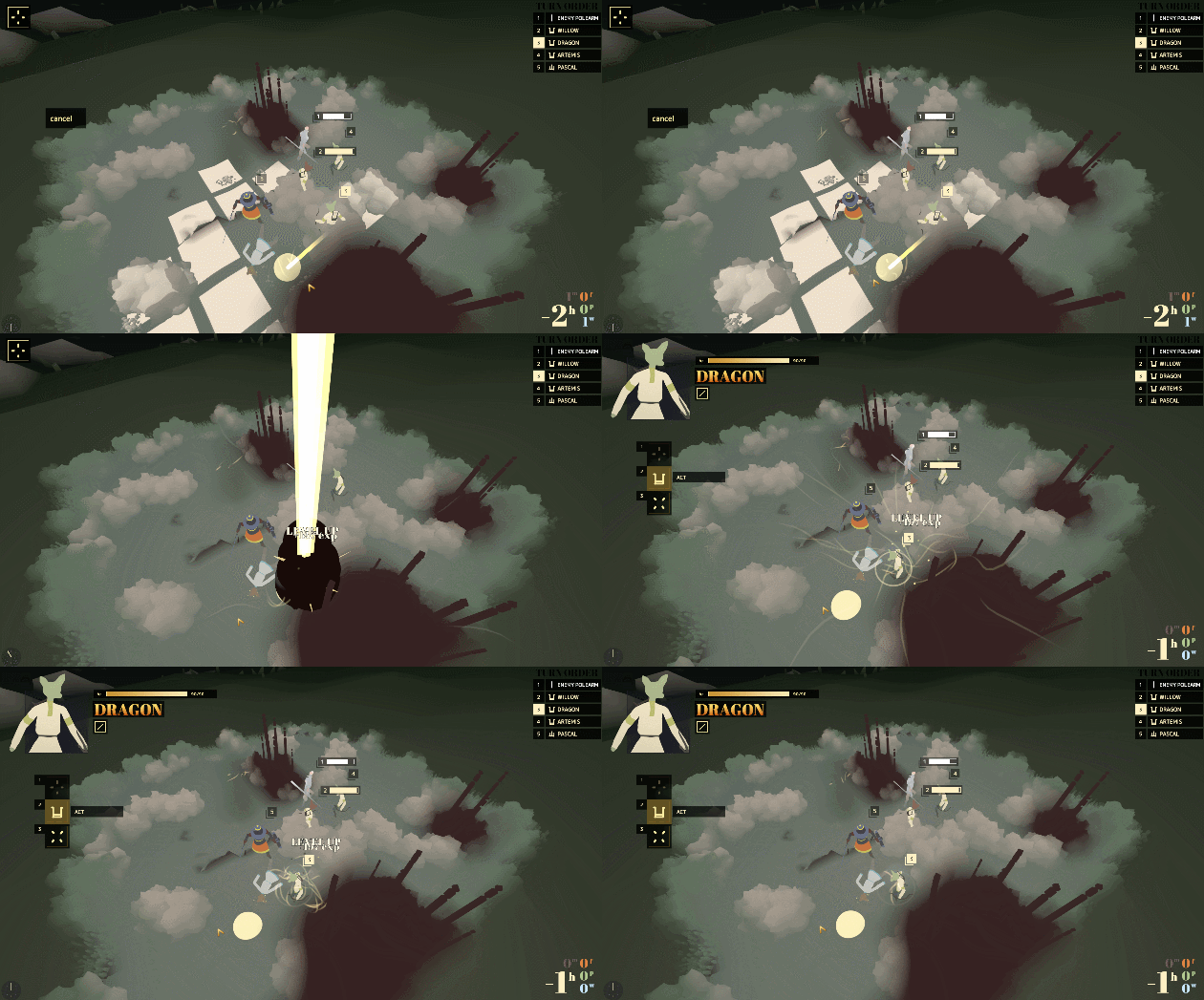
I also missed a feeling from early on in development, of playing dress-up with your little dolls. Back then, in the elden days of 2018, you used to be able to put different clothes on your little mans (not yet canonically little gobs), and there's something thematically really appropriate with that feeling.
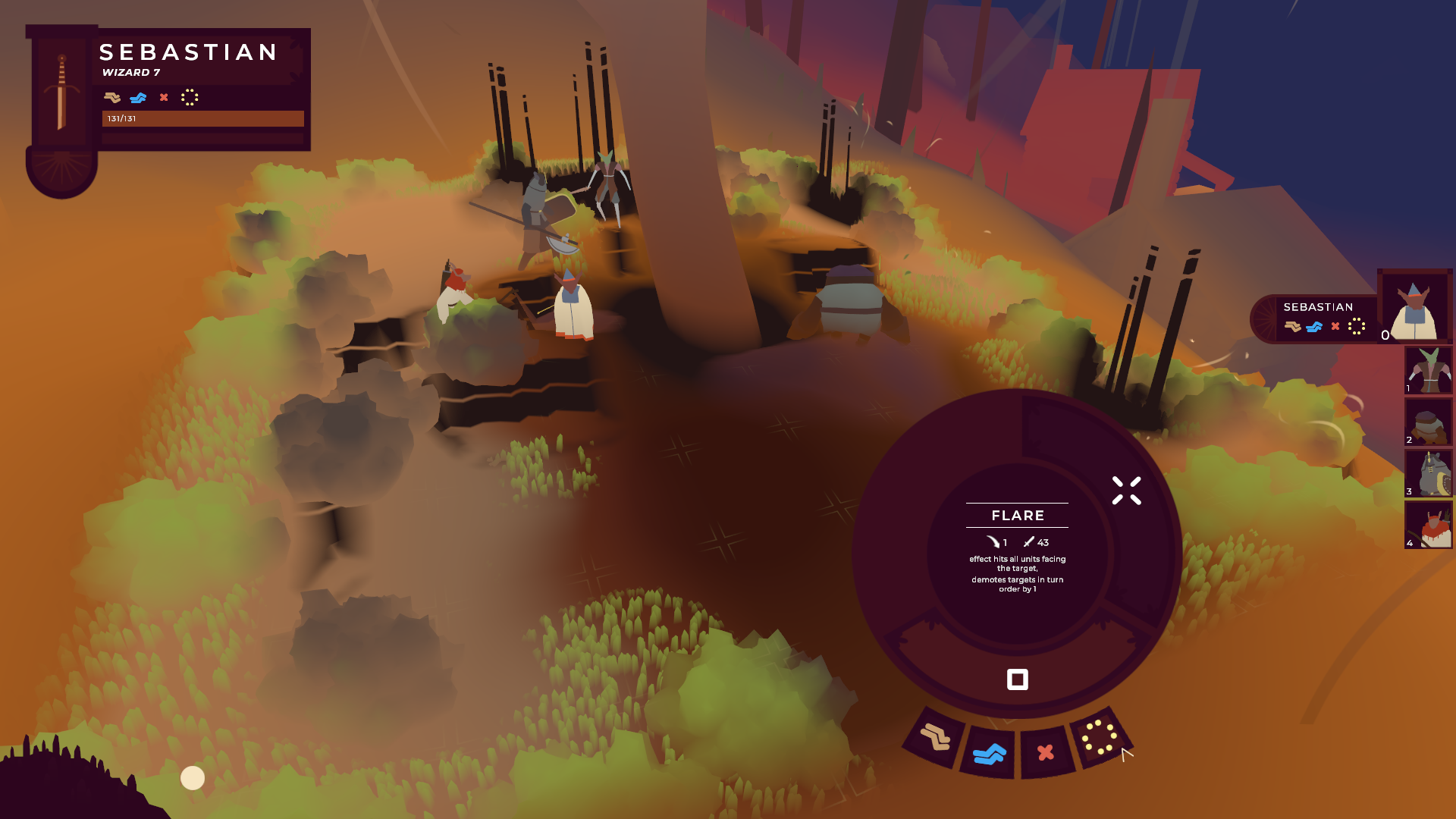
(If you're one of those people that sees early dev screenshots and gets too many ideas DON'T look below!! This image is from mid 2018!!)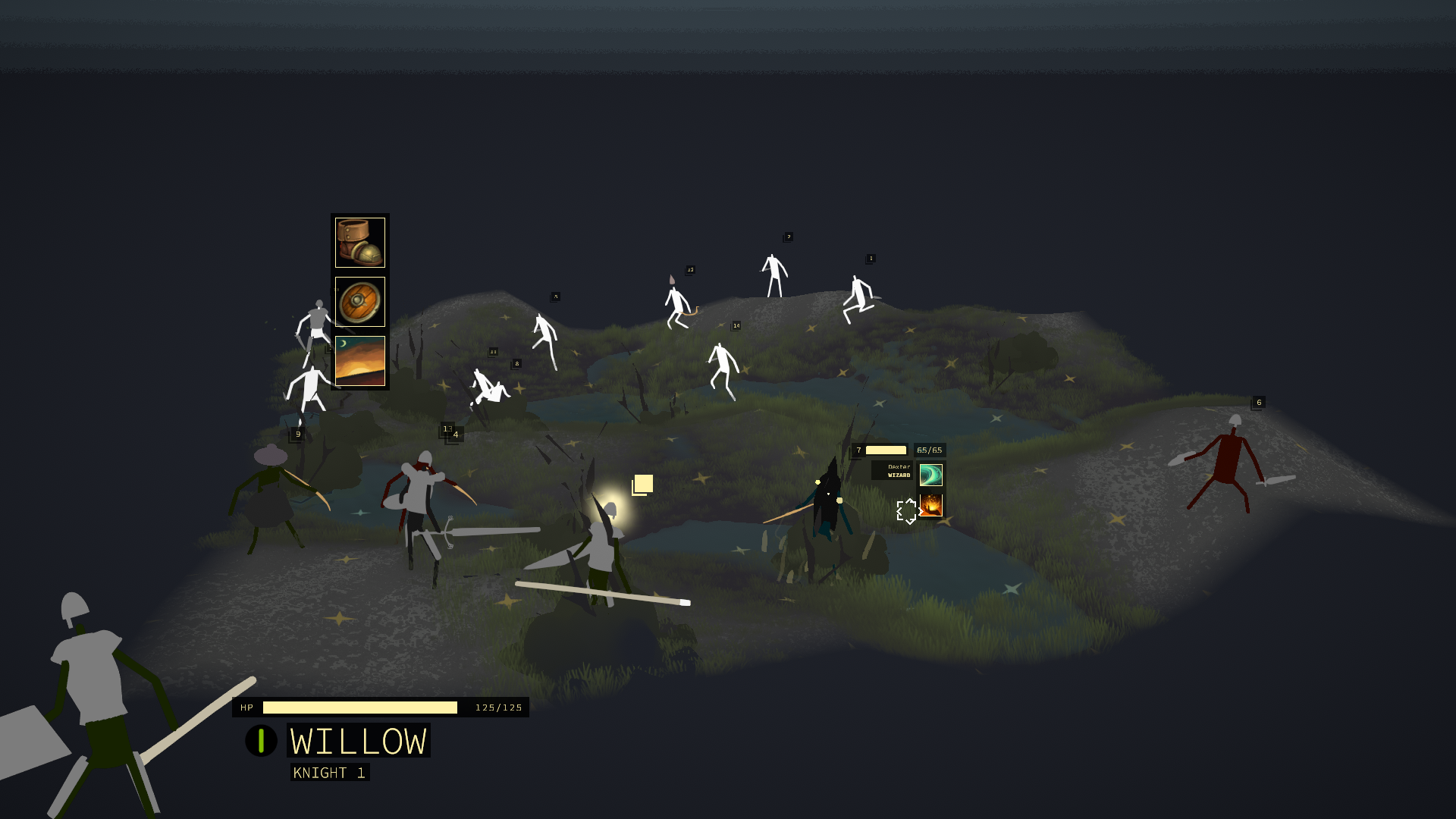
Here's a quote from early design documents about your relationship as a player/spirit to your gobilns:
Goblins are your soft, strange body. You think of them as a toy you can play with, and they are in some ways beneath you and your level of understanding the world, but simple and chaotic things have a sort of intelligence of their own.
Wild goblins might wear whatever they like, but claimed goblins wear just what you want them to. The clothing is an expression of dominance over them.We cut the dress-up functionality in order to instead have clear and descriptive silhouettes, which makes gameplay significantly more readable, and lets us do more interesting things with body shapes (complex body shapes * dress up with 3D meshes = a big mess). There's also a sense in which this highly descriptive fixed-look direction is appropriate for our narrative goals. Here's the end of that above snippet, from our current production document:
The clothing is an expression of dominance over them, and it’s important that the clothing simplifies them to functional archetypes.
For the game - claimed goblins should have clear outfits with clear origins that exemplify the functionality of the evolution to the spirit.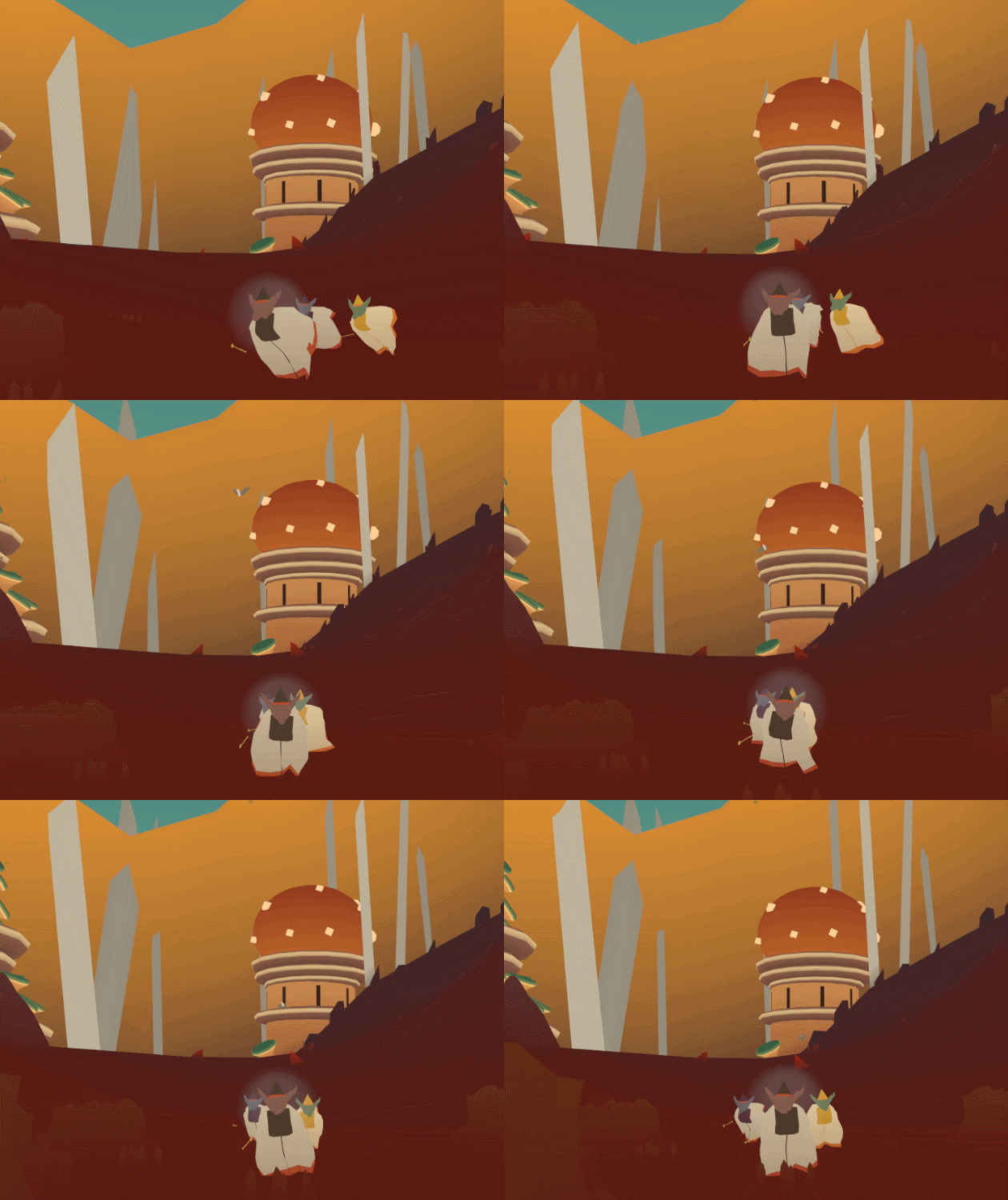
A wizard is a tool that serves a purpose, and as both the maker and user of that tool it makes sense you would shape it in a way descriptive of that purpose.
But still, it was kind of a regret to not get to try on different hats and skirts and swords and such. So when we talked about customizing your unit's look with color at least, it felt worth doing the work to make that viable.
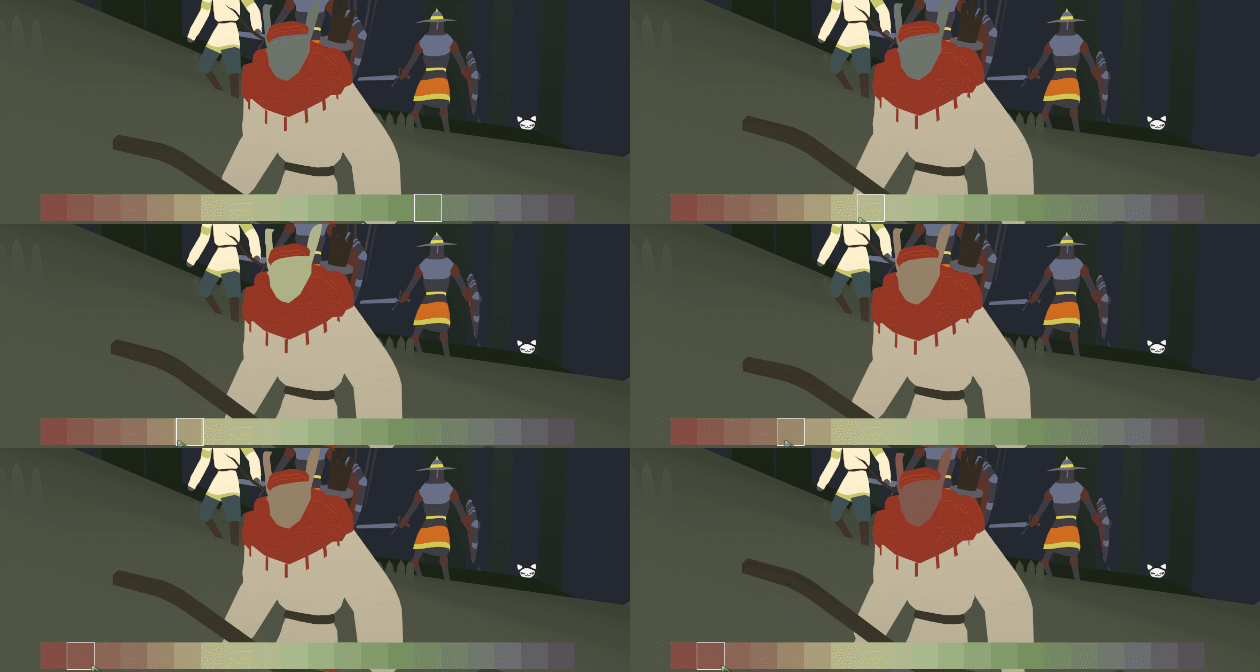
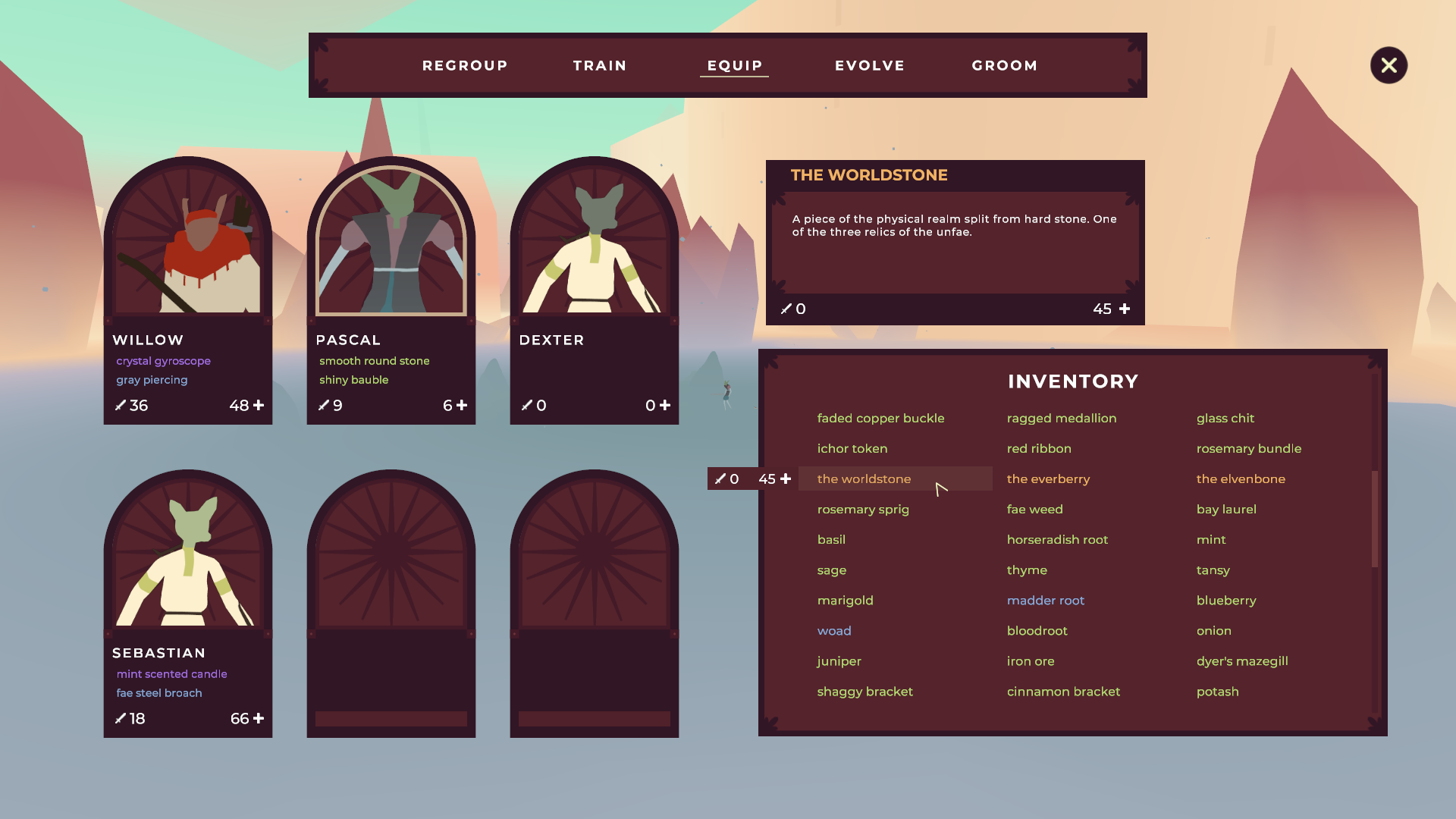
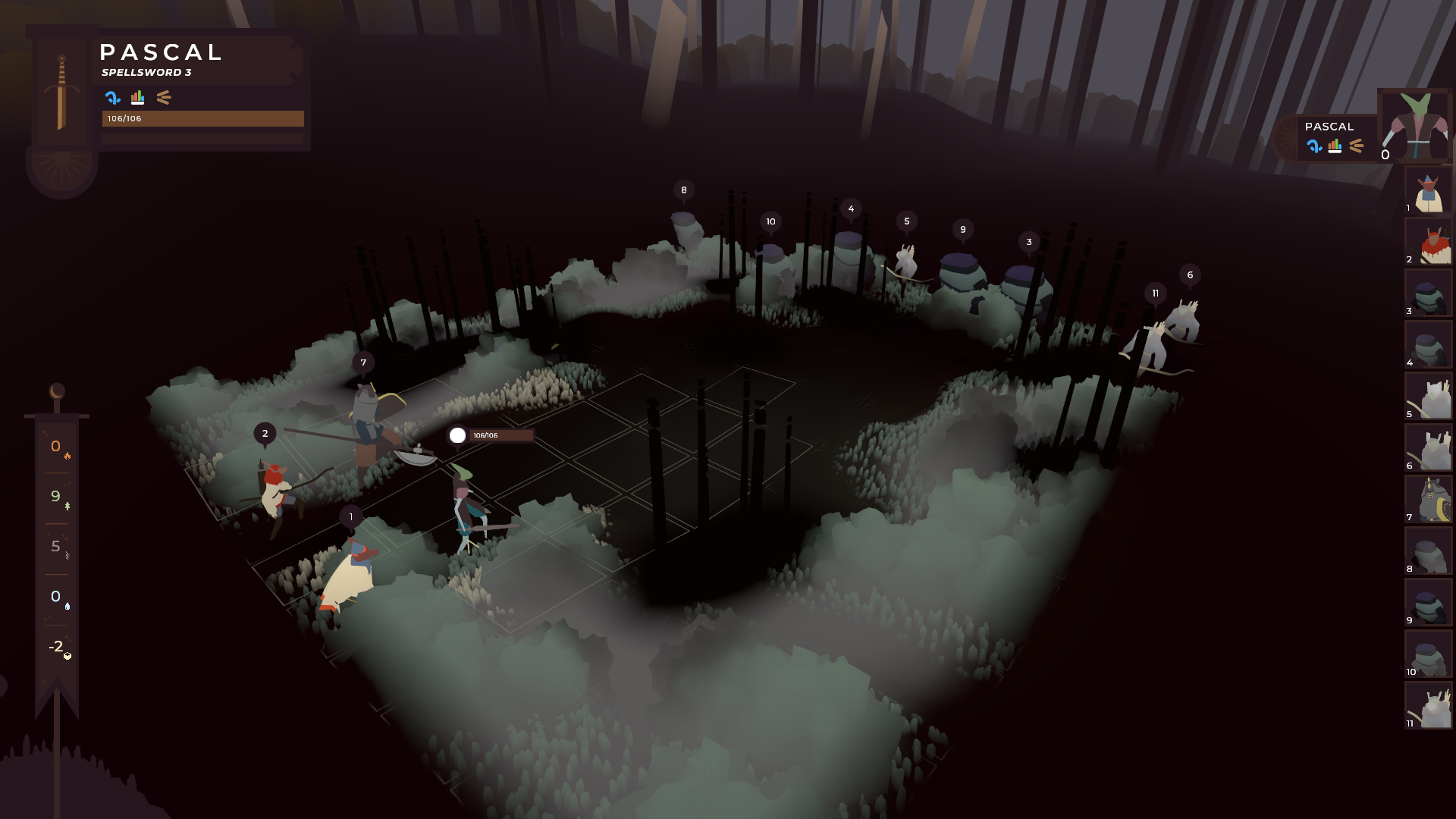
In the prologue, there's a 'rename' menu already. We've now expanded that to a broader 'groom' menu and added a variety of skin/fur colors to swap between freely. Goblins start with a random skin color but that can be reassigned. It makes it quite intuitive to remember - Pascal is my teal scout, the singer, my red scout Willow is the strangler, etc.
In addition, the herbs I've talked about before a bit (you can collect fae weed to forget skills) - well, when those plants grow in safe areas outside of the fog, they can become a variety of different herbs, fungi, and other foliage, depending on the region of the archipelago they grow in. Some of the plants in the game now: blueberry, juniper, madder root, dyer's mazegill, mint, horseradish root... there are about 20 of these so far. Many of them have properties that would be useful in natural dyeing. And while that's not the only way you can use them - they're also equipable, and some NPGs (non-player goblins) will trade you for them - it's certainly the most glamorous thing to do with a plant.
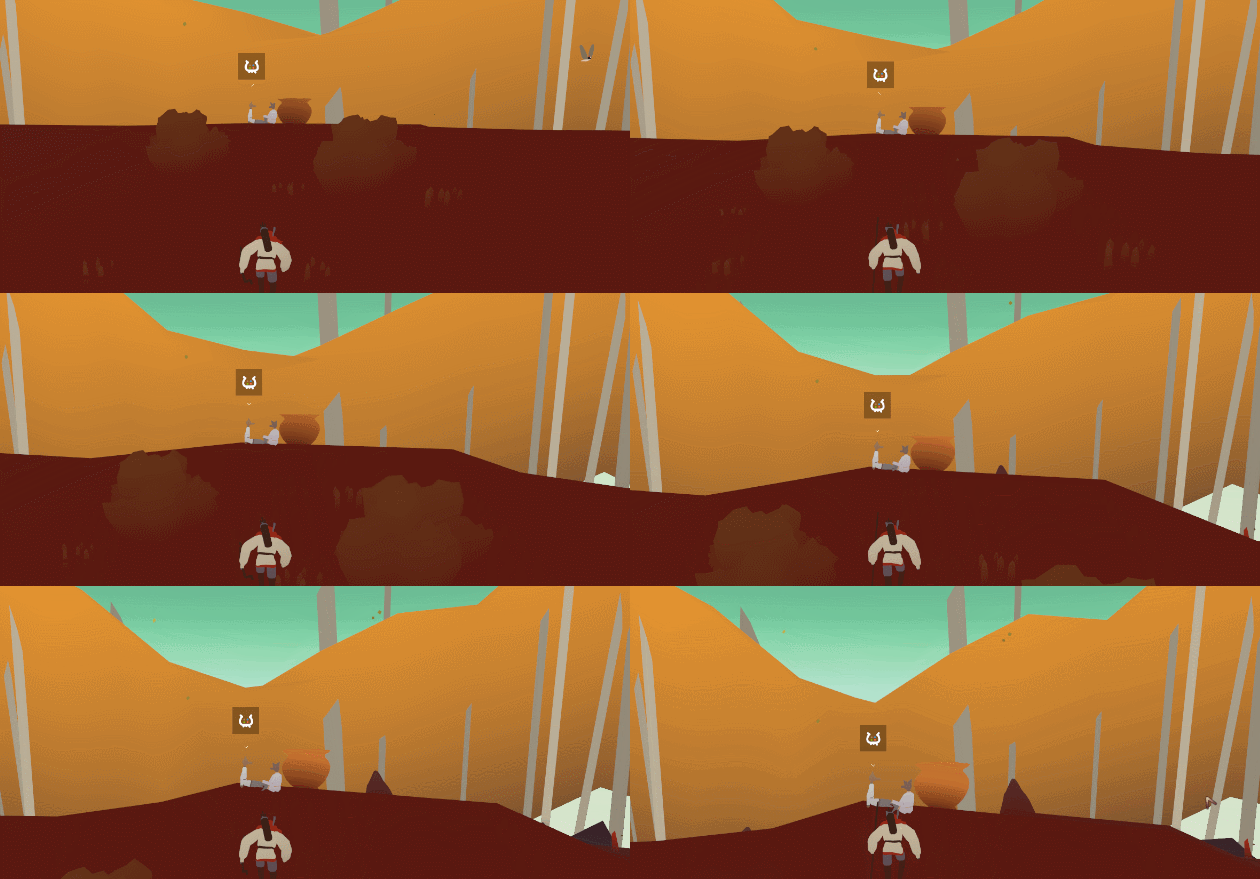
One of the features of goblin towns that makes them worth going out of your way to visit is their dyers. Dyeing is a complex process that benefits from skill and the proper setup, not something to be done willy-nilly on the road. But bring dyers some pigmentation and some binding mordant and they'll happily help you out. Some towns may even have some regional pigmentation or mordants in their town hoard, if they like you enough to let you use some, and some dyers may specialize in certain colors as a result of local fashion.
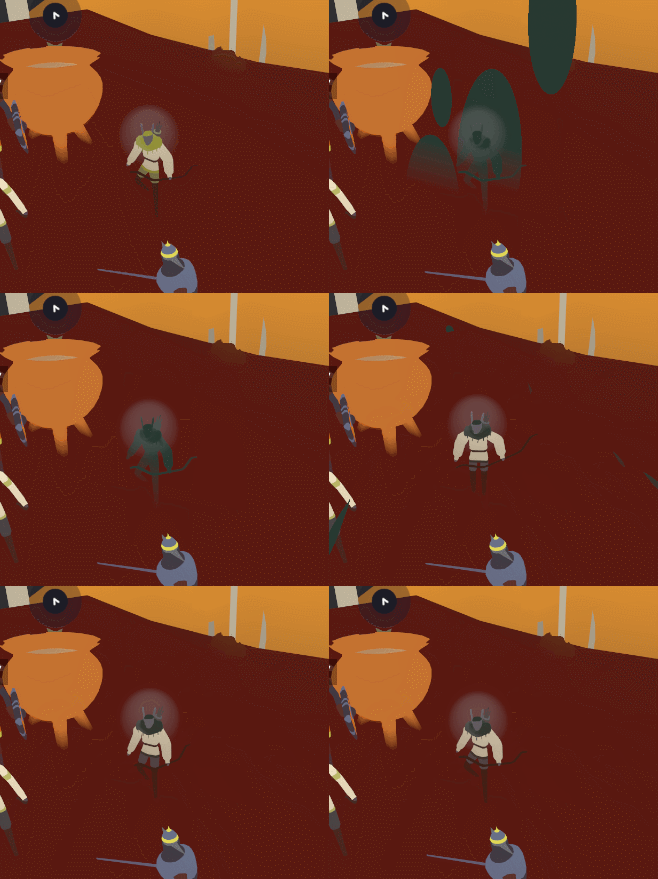
On the development end, dying was really fun to delve into. My background, before game programming, is in painting, with a special focus and interest in color. The granular details of color mixing with physical pigments is something you never really have to understand when working digitally. I'm going to explain it badly, but still probably more accurately than your high school art teacher did.
WARNING: Badly over-explaining light and pigment interactions for the rest of this post.Materials take in light, let it bounce around within them, absorb some parts of the color spectrum better than others, and then the light bounces back out of them and into your eye, and the remaining light, having changed in weight of spectrum, is assembled in the viewer to become a specific color. Shine a white light (a light with a high amount of a broad spectrum of colors represented equally appears white) on a red material and it'll absorb much of the non-red light, and reflect the remaining (red) light back into your eye. Your eye and brain together interpret the light and understand the color as red.
Imagine pigment like a liquid filled with little flecks of different colors. A red-fleck-filled pigment will absorb non-red parts of the light spectrum and reflect red parts. Mix that with a blue-fleck-filled pigment, and what you have isn't purple flecks, but actually a liquid with both blue and red flecks. The blue absorbs some non-blue light, and the red absorbs some non-red light, and the light that escapes, which has some weight in the blue part of the spectrum and some in the red, is understood by us as purple.
If it was the case that the blue flecks actually absorbed _all_ non-blue light, and the red flecks absorbed all non-red light, you can imagine that no light at all would remain to escape, and the object would appear black. But that's obviously not our experience! And the reason why is that these pigments aren't pure in their absorption, but are instead best understood as having a sort of 'reflectance curve' - maybe this blue pigment reflects only 15% of orange-yellow light, absorbing the other 85%, but reflects more like 50% of red light.
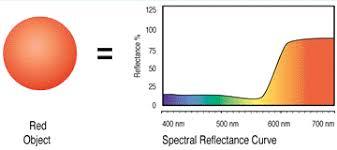
One way to simulate the mix of two pigments to rough out these reflectance curves for each pigment and then average them. The result is a good approximation of what a mixed pigment's reflectance curve would be, which then, when mixed with whatever light you're shining into the pigment, can be used to decode a local color: the thing we actually need to represent the object digitally.
In digital space, we just have red, green, and blue lights and we mix them to get a final color. The saved color has no information built in about how, were it real, its reflectance curve would function against light.
So I really hoped, at first, that I could fudge this. That I could somehow average colors hues and saturations and in so doing get an okay rough estimate. But it just doesn't work out that way. Everything I tried would end up with bizarre resultant hues that were just intuitively, obviously wrong, until I had such a dumb quilt of 'sorta' approximations that it just made no sense to continue that way.
My current implementation is still a hack, but it mimics reality enough to have satisfying results.
I have hand-authored reflectance curves for imaginary pure red, green, and blue pigments. When I add a dye to a mixture, I build an approximate reflectance curve for it by averaging these R, G, and B reflectance curves in the amounts indicated by that dye's RGB color. I then average these curves for all the dyes present (weighted per dye, as some natural dyes are more persistent than others, and also by amount added, as you can add say 7 blueberries and 1 acorn, for a different color than 3 blueberries and 6 acorns). Then I sample that averaged reflectance curve at a bunch of points along the light spectrum, essentially simulating shining a white light into it, summing up and averaging out those samples to get a final local color.
The results feel naturalistic and a bit chaotic, which is perfect for a gameplay simulation of natural dye mixing as performed by goblins. I'm quite happy with how special it feels to mix a unique color for a particular gob.

Okay well that's enough of that. Sorry for letting myself get into it so far, haha. Next time I think I'll talk more about towns and the reputation system? We'll see.
And soon enough, look for us to announce a release window, and... some other stuff.
Ok bye! Tell all your friends to wishlist our game! Thanks!
https://store.steampowered.com/app/1061610/Tenderfoot_Tactics/