Devlog 71 - Level 6–4, Even More Bonus Levels
Level 6-4 is sickkk.
[previewyoutube][/previewyoutube]
[h2]New Patterns[/h2]
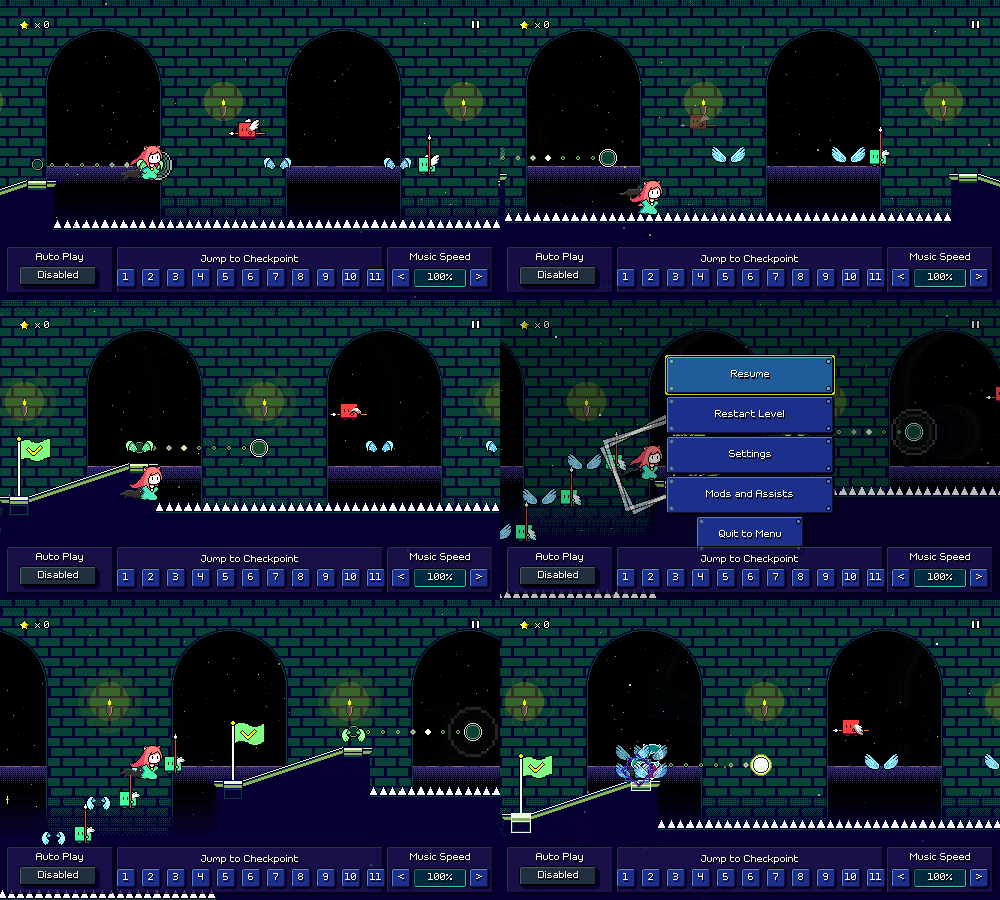
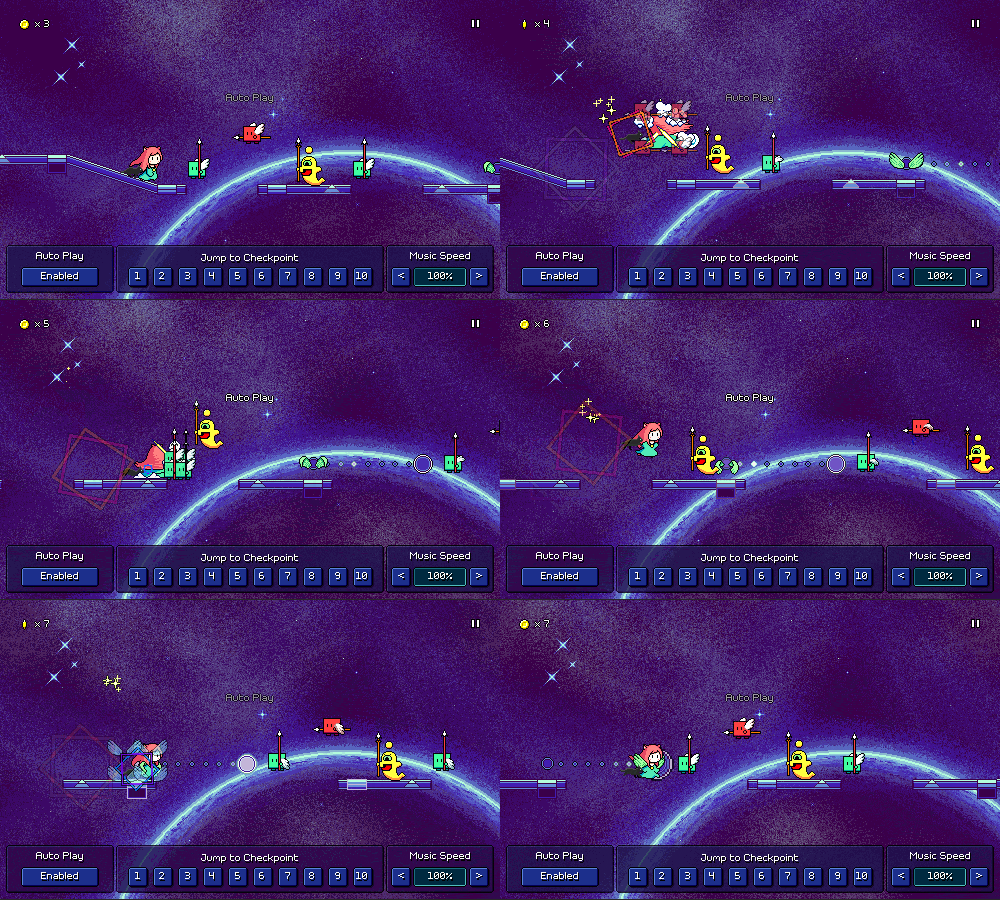
This is the second-to-last level of the 30 main ones, so I can't hold anything back now! Even this late in the game, I'm actually still managing to introduce a new curveball or two...starting off with combining speed zones with ghost enemies:
Since this isn't immediately obvious how it would work, I've provided the tutorial icons below to show where the ghost ends up. It's actually simpler than it looks, as the timing is just equivalent to regular eighth notes (like a normal double-hit enemy). But now I can use this triplet->eighth note rhythm as a satisfying way to cap off a phrase.
In a similar vein, I also combine speed zones with spike enemies:
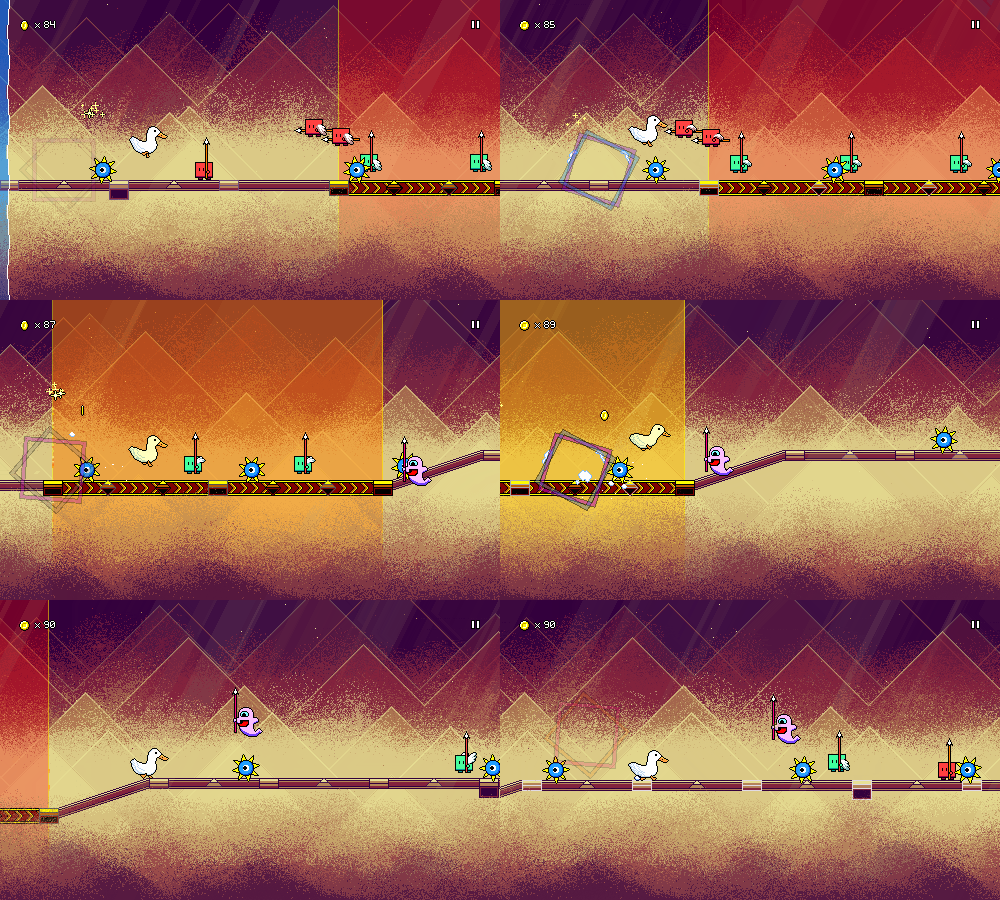
This is another instance where I'm secretly making the rhythm easier to parse by adding extra elements -- the green combo enemies allow you to have a more obvious indicator of when you need to jump.
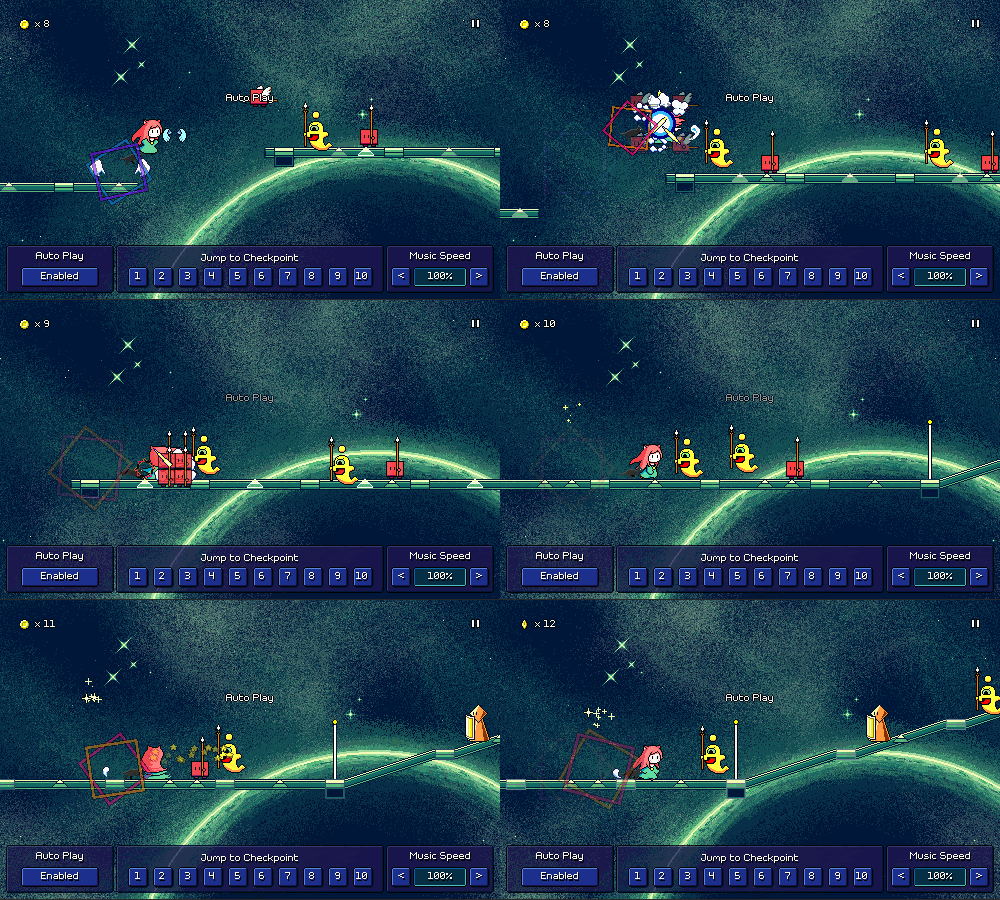
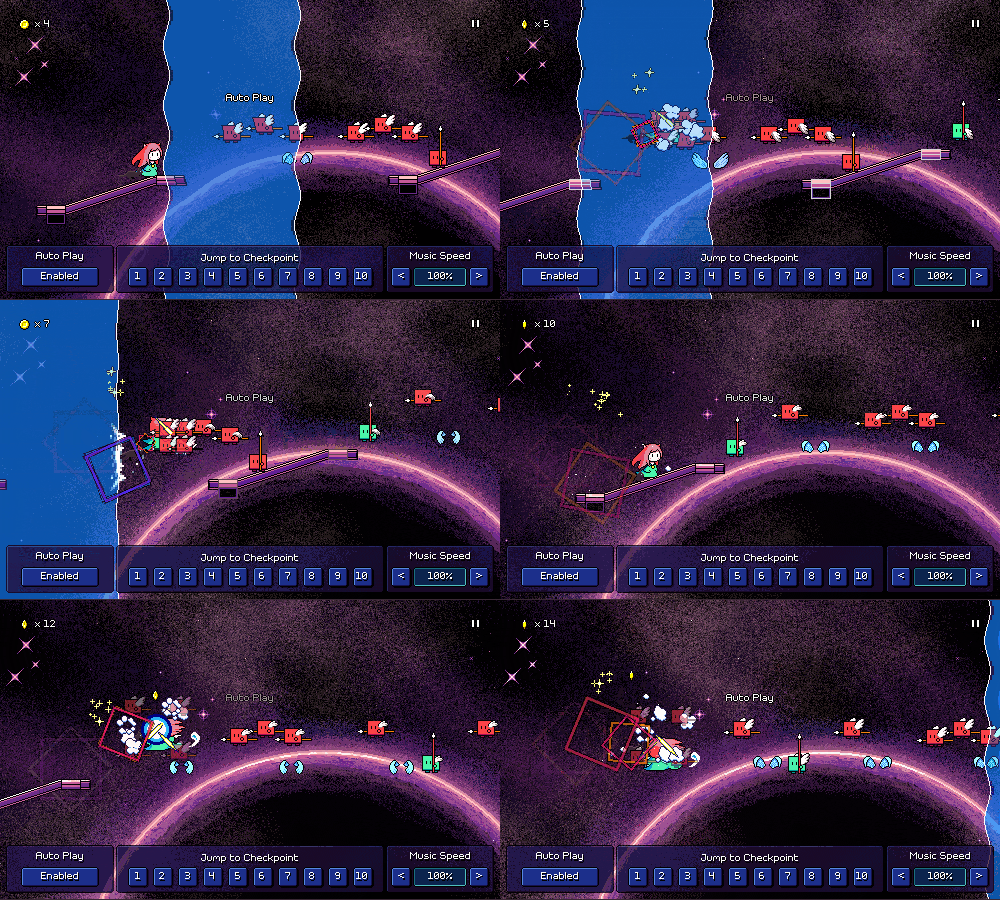
Besides that, I'm making full use of the 16th-note rhythms that I introduced in the previous level:
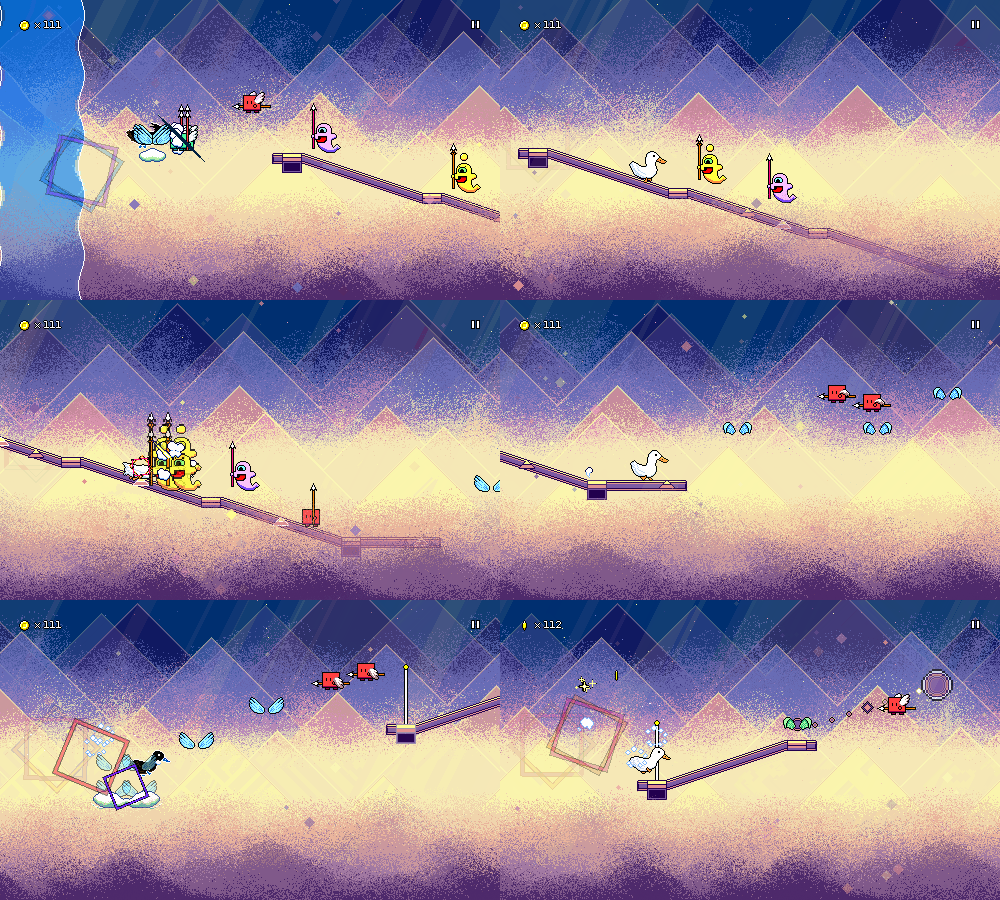
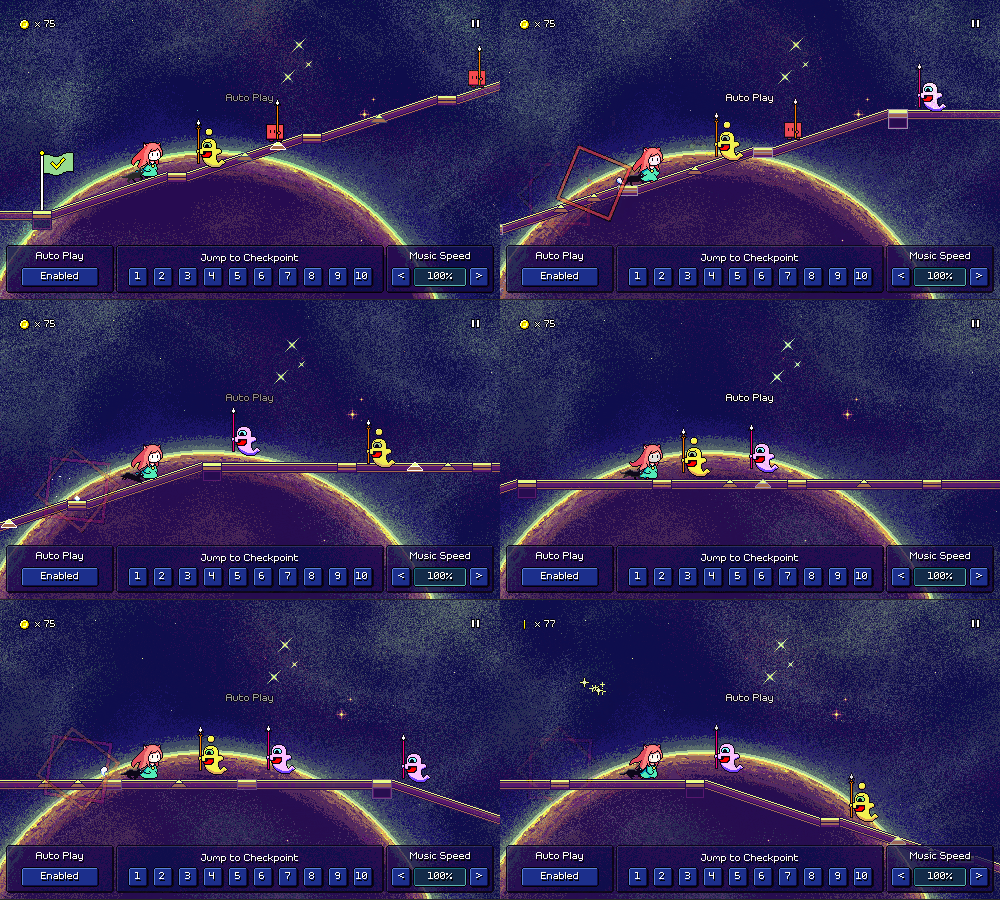
I feel okay using this tricky purple + yellow ghost combination as a "fixed pattern" since I already introduced it in level 6-3 at a slower tempo. As you can see, I'm also leaning more into variations on 16th-note flying enemy patterns as well.
Honestly, the new rhythms are a blast to play. It's crazy to think that over a year ago I thought that speed zones would be the last mechanic added to the game, until I was inspired to make the yellow ghost enemies (partly due to some custom level work I was doing!) which started to open up the opportunities for more variations.
[h2]Backdrop Design[/h2]
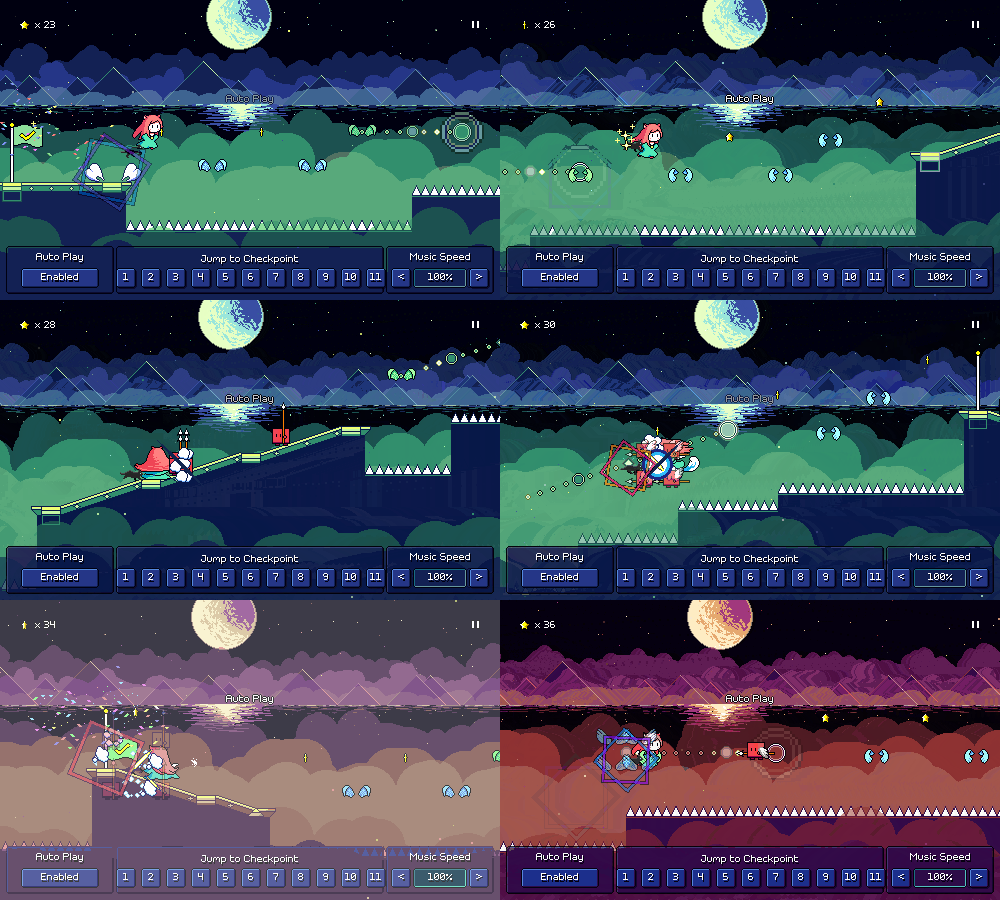
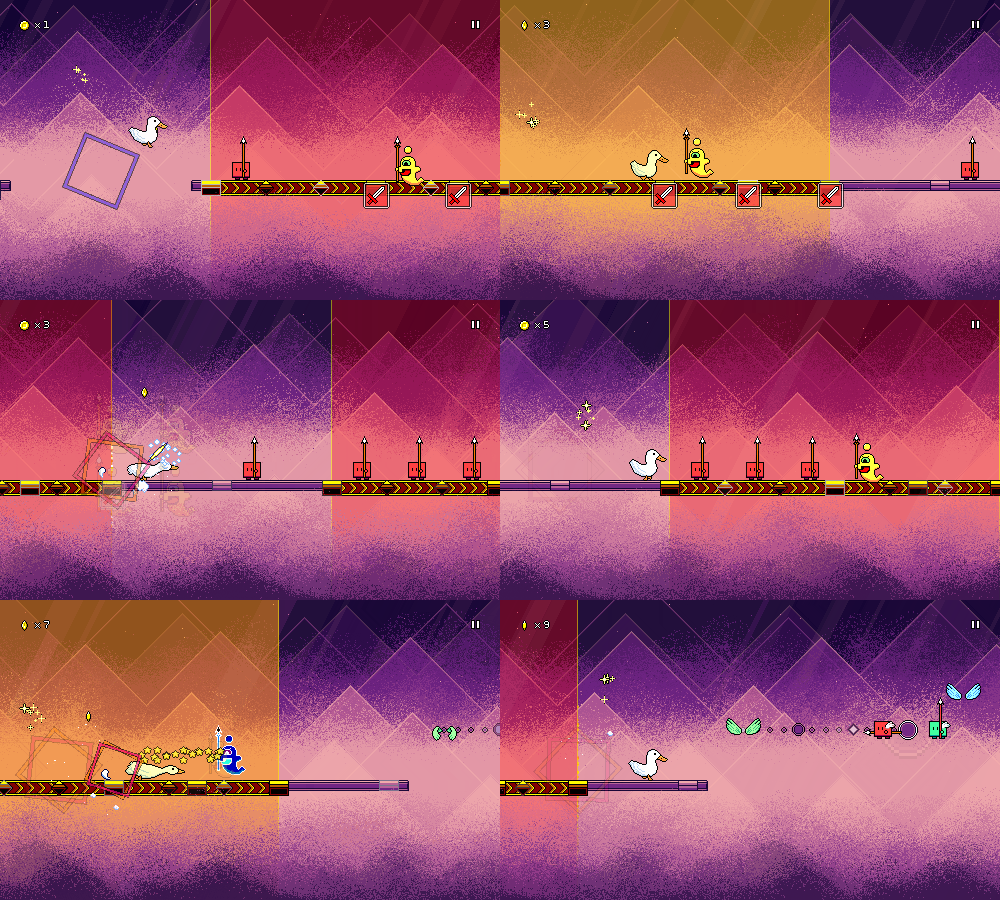
I'm quite pleased with the backdrops for this level, not just because they look great but because I managed to do something different than just a 4th version of "outer space with a bunch of stars, plus something extra". I started things off with these spraybrush layers, actually very similar to some of the cloud layers in previous worlds, just with a lot of dithering going on (that's the main stylistic thing going on in world 6):

I liked the way that looked, but wanted to add something more to it. My first attempt was just to do some mountains (clouds + mountains...just how many of my previous level backdrops are variations on this?):

It wasn't the worst (the dithering on the shading of the mountains was a nice touch), but I felt like it wasn't quite hitting right, plus it didn't really feel like it vibe with the whole space theme. I decided to try using translucent triangles instead, kind of like how I did in world 5, and that looked much better:

I'm scared at how this might perform on the switch (this is the kind of backdrop set that requires toggling off some layers when in low-quality graphics mode), but it looks beautiful when you see all of the translucent layers scrolling at different rates and blending together.
[h2]Audio Design[/h2]
The element that kicks of the track and plays through its entirety (and the one I wrote first) is this gated pad sound. I layered some different sustained synths and then applied a rhythmic volume automation to it:
https://rhythmquestgame.com/devlog/71-gatedpad.mp3
There's two different basslines going on in the first section of the song -- one main "plucked" bass synth, and then a simple pulse wave bass that's a bit higher in frequency:
https://rhythmquestgame.com/devlog/71-bass.mp3
The drums aren't anything too fancy, just a drum loop that I've chopped up and rearranged, plus some extra hi-hat layers:
https://rhythmquestgame.com/devlog/71-drums1.mp3
Here's all of that coming together in the first chorus along with the lead melody:
https://rhythmquestgame.com/devlog/71-chorus1.mp3
In the second second of the song where the big drop happens, I switch to a different main bass sound. This one is really thick, made by layering a handful of different synths -- some providing a really "meaty" low-end, and others providing a more middle-range detuned sound.
https://rhythmquestgame.com/devlog/71-bigbass.mp3
The drums get a little changeup too! Most notably, I switch to a halftime beat, but I also use a beefier kick drum, and there's an extra drum loop layer, which mostly adds extra strength to the snare hit.
https://rhythmquestgame.com/devlog/71-drums2.mp3
There's this heavily-reverbed chirp sound too. I featured this same sort of thing in the previous level too, but I guess I just can't get enough of it; it provides this sort of nice melodic "shimmer" in the top-end without getting in the way of the lead melody.
https://rhythmquestgame.com/devlog/71-echoarp.mp3
In the buildup I also turn on a "notch filter" (removes a narrow range of frequencies) and sweep it from high to low, for an almost phaser-like effect. Here's all of that coming together:
https://rhythmquestgame.com/devlog/71-chorus2.mp3
[h2]Other Bonus Songs[/h2]
I've also been working on adding some more classical music pieces to the game as bonus songs -- this time by composers other than Mozart!
[previewyoutube][/previewyoutube]
Starting off with a classic, "Flight of the Bumblebee". While this one isn't quite as well suited to Rhythm Quest as it is to some sort of 7+ key rhythm game where you can just chart out all of the 16th notes, it was still a fun one to do.
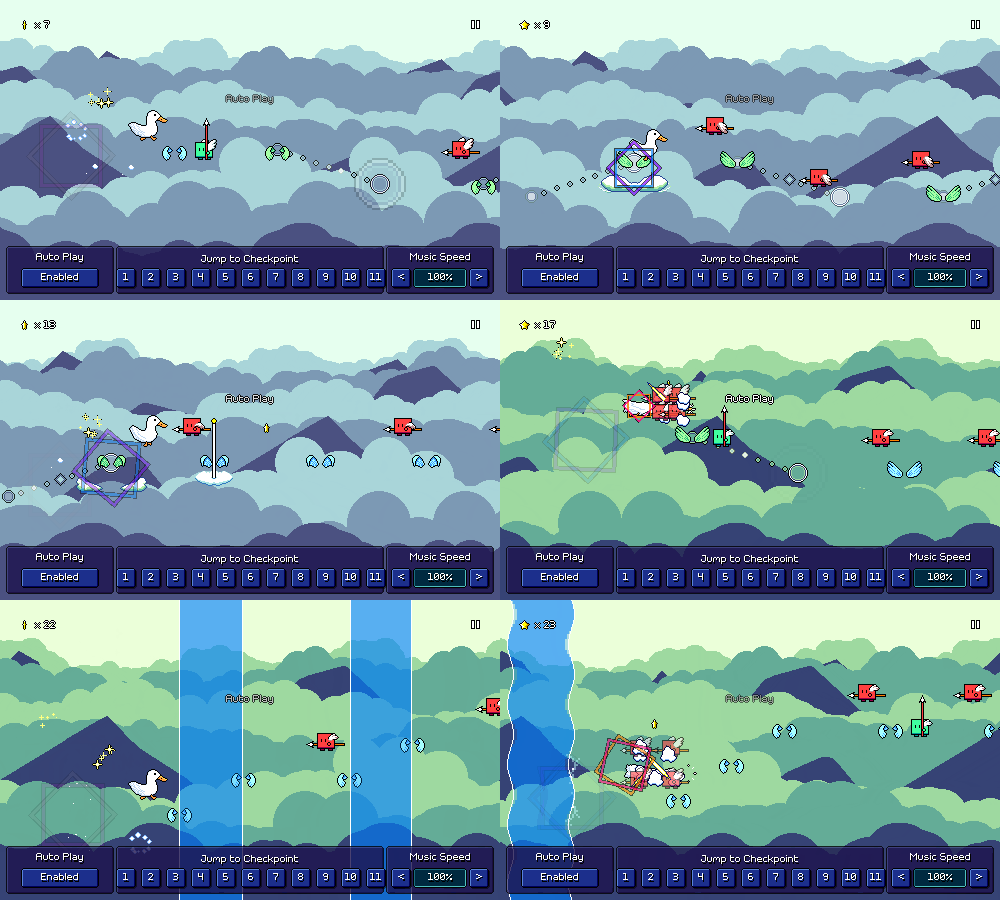
Past the very start of the song, you spend the entire time in the air through combinations of air jumps and flight patterns, as a nod to the theme of the song. The scrolling speed also increases bit by bit with every checkpoint, adding to the frenetic nature of the song. (PS: I spy mountains + clouds in the backdrops...)
Then we've got a song that I heard about a billion times at music recitals for young piano players, "Für Elise":
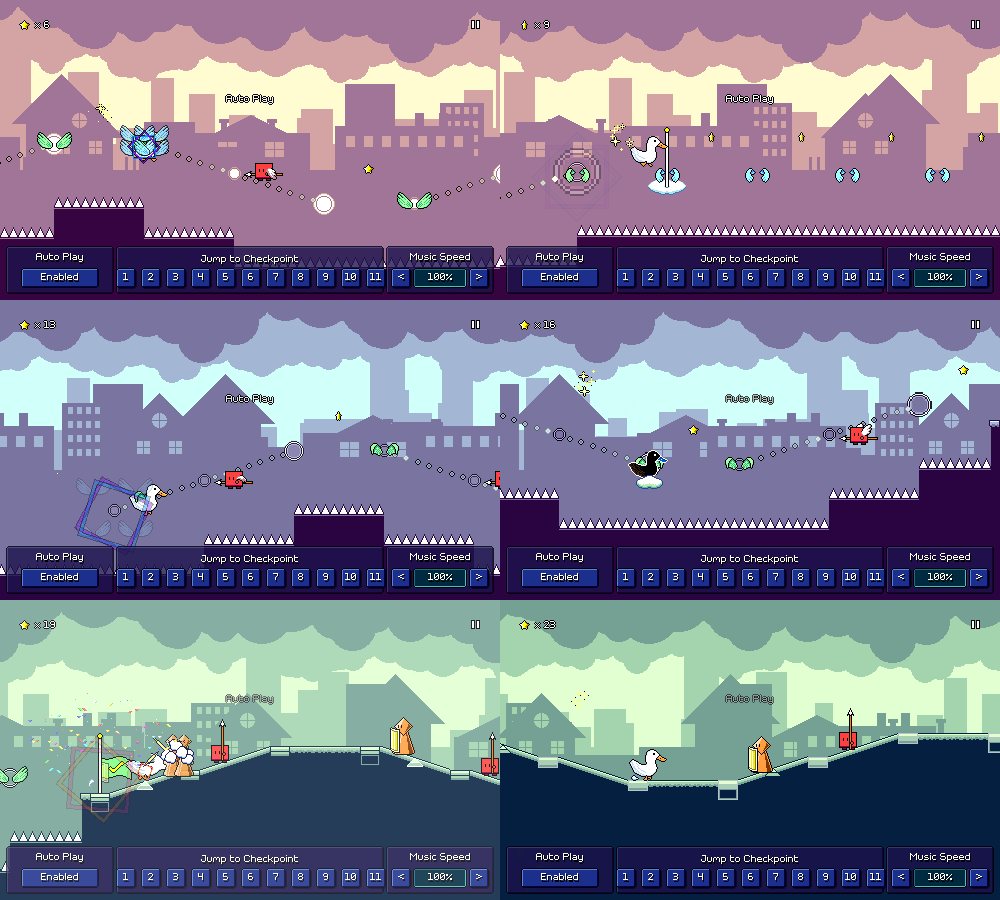
This one is more laidback -- kind of a repetitive song, to be honest, but I made sure to chart each repetition a little differently so that you don't end up falling asleep (like I did during those music recitals...). It's also notable for being the first song I've charted that makes use of a non-4/4 time signature. (Hm? Yes, that functionality totally worked the first time that I tried it, there were no bugs to speak of, nope, not at all. ...why are you looking at me like that?)
That's it for this month's update. Comparing level 6-4 to level 1-1 is wild; I can't believe how far I've come in these past 8 years and how deep I've gotten into Rhythm Quest charting and level design. I'm honestly almost glad that the journey to get here has taken this long, as it means I get to put the knowledge and skills that I've accumulated over the years into use. Well, it also means I probably need to revisit some of the older levels to touch them up, but I'm going to not think about that just yet...
Level 6-5 feels like it might be a little intimidating to work on, so I might try and work on a few other things next month to start with. Knowing how I work, though, I feel like it's going to be the sort of thing that I just decide to just sit down and knock out most of it in like a day or two. Just has to be the right time, I guess.
[previewyoutube][/previewyoutube]
[h2]New Patterns[/h2]
This is the second-to-last level of the 30 main ones, so I can't hold anything back now! Even this late in the game, I'm actually still managing to introduce a new curveball or two...starting off with combining speed zones with ghost enemies:
Since this isn't immediately obvious how it would work, I've provided the tutorial icons below to show where the ghost ends up. It's actually simpler than it looks, as the timing is just equivalent to regular eighth notes (like a normal double-hit enemy). But now I can use this triplet->eighth note rhythm as a satisfying way to cap off a phrase.
In a similar vein, I also combine speed zones with spike enemies:
This is another instance where I'm secretly making the rhythm easier to parse by adding extra elements -- the green combo enemies allow you to have a more obvious indicator of when you need to jump.
Besides that, I'm making full use of the 16th-note rhythms that I introduced in the previous level:
I feel okay using this tricky purple + yellow ghost combination as a "fixed pattern" since I already introduced it in level 6-3 at a slower tempo. As you can see, I'm also leaning more into variations on 16th-note flying enemy patterns as well.
Honestly, the new rhythms are a blast to play. It's crazy to think that over a year ago I thought that speed zones would be the last mechanic added to the game, until I was inspired to make the yellow ghost enemies (partly due to some custom level work I was doing!) which started to open up the opportunities for more variations.
[h2]Backdrop Design[/h2]
I'm quite pleased with the backdrops for this level, not just because they look great but because I managed to do something different than just a 4th version of "outer space with a bunch of stars, plus something extra". I started things off with these spraybrush layers, actually very similar to some of the cloud layers in previous worlds, just with a lot of dithering going on (that's the main stylistic thing going on in world 6):
I liked the way that looked, but wanted to add something more to it. My first attempt was just to do some mountains (clouds + mountains...just how many of my previous level backdrops are variations on this?):
It wasn't the worst (the dithering on the shading of the mountains was a nice touch), but I felt like it wasn't quite hitting right, plus it didn't really feel like it vibe with the whole space theme. I decided to try using translucent triangles instead, kind of like how I did in world 5, and that looked much better:
I'm scared at how this might perform on the switch (this is the kind of backdrop set that requires toggling off some layers when in low-quality graphics mode), but it looks beautiful when you see all of the translucent layers scrolling at different rates and blending together.
[h2]Audio Design[/h2]
The element that kicks of the track and plays through its entirety (and the one I wrote first) is this gated pad sound. I layered some different sustained synths and then applied a rhythmic volume automation to it:
https://rhythmquestgame.com/devlog/71-gatedpad.mp3
There's two different basslines going on in the first section of the song -- one main "plucked" bass synth, and then a simple pulse wave bass that's a bit higher in frequency:
https://rhythmquestgame.com/devlog/71-bass.mp3
The drums aren't anything too fancy, just a drum loop that I've chopped up and rearranged, plus some extra hi-hat layers:
https://rhythmquestgame.com/devlog/71-drums1.mp3
Here's all of that coming together in the first chorus along with the lead melody:
https://rhythmquestgame.com/devlog/71-chorus1.mp3
In the second second of the song where the big drop happens, I switch to a different main bass sound. This one is really thick, made by layering a handful of different synths -- some providing a really "meaty" low-end, and others providing a more middle-range detuned sound.
https://rhythmquestgame.com/devlog/71-bigbass.mp3
The drums get a little changeup too! Most notably, I switch to a halftime beat, but I also use a beefier kick drum, and there's an extra drum loop layer, which mostly adds extra strength to the snare hit.
https://rhythmquestgame.com/devlog/71-drums2.mp3
There's this heavily-reverbed chirp sound too. I featured this same sort of thing in the previous level too, but I guess I just can't get enough of it; it provides this sort of nice melodic "shimmer" in the top-end without getting in the way of the lead melody.
https://rhythmquestgame.com/devlog/71-echoarp.mp3
In the buildup I also turn on a "notch filter" (removes a narrow range of frequencies) and sweep it from high to low, for an almost phaser-like effect. Here's all of that coming together:
https://rhythmquestgame.com/devlog/71-chorus2.mp3
[h2]Other Bonus Songs[/h2]
I've also been working on adding some more classical music pieces to the game as bonus songs -- this time by composers other than Mozart!
[previewyoutube][/previewyoutube]
Starting off with a classic, "Flight of the Bumblebee". While this one isn't quite as well suited to Rhythm Quest as it is to some sort of 7+ key rhythm game where you can just chart out all of the 16th notes, it was still a fun one to do.
Past the very start of the song, you spend the entire time in the air through combinations of air jumps and flight patterns, as a nod to the theme of the song. The scrolling speed also increases bit by bit with every checkpoint, adding to the frenetic nature of the song. (PS: I spy mountains + clouds in the backdrops...)
Then we've got a song that I heard about a billion times at music recitals for young piano players, "Für Elise":
This one is more laidback -- kind of a repetitive song, to be honest, but I made sure to chart each repetition a little differently so that you don't end up falling asleep (like I did during those music recitals...). It's also notable for being the first song I've charted that makes use of a non-4/4 time signature. (Hm? Yes, that functionality totally worked the first time that I tried it, there were no bugs to speak of, nope, not at all. ...why are you looking at me like that?)
That's it for this month's update. Comparing level 6-4 to level 1-1 is wild; I can't believe how far I've come in these past 8 years and how deep I've gotten into Rhythm Quest charting and level design. I'm honestly almost glad that the journey to get here has taken this long, as it means I get to put the knowledge and skills that I've accumulated over the years into use. Well, it also means I probably need to revisit some of the older levels to touch them up, but I'm going to not think about that just yet...
Level 6-5 feels like it might be a little intimidating to work on, so I might try and work on a few other things next month to start with. Knowing how I work, though, I feel like it's going to be the sort of thing that I just decide to just sit down and knock out most of it in like a day or two. Just has to be the right time, I guess.