1. War Thunder
  2. News

War Thunder News

New packs are available!


Dear players!

In addition to the US Beginner’s Pack, we are introducing two new packs which are perfect for beginner tankers and pilots, helping you to comfortably start out in the game.

https://store.steampowered.com/app/1233370
https://store.steampowered.com/app/1233371

As well as two new helicopter and naval packs!

https://store.steampowered.com/app/1233372
https://store.steampowered.com/app/1233373

The Lunar New Year 2020


It’s Lunar New Year! East Asia is preparing for a great feast which we will also join by adding a new fighting beast to the army of the year’s symbols. Meet the “Catcatcher” catch discounts with him in the Gaijin.Net store plus premium Chinese ground vehicles!
[h3]From the 23rd of January at 11:00 GMT until the 27th of January at 11:00 GMT
Celebrating together: discounts, a cool decal and new Chinese premium vehicles![/h3]
[h2]Festive decal[/h2]

Win one battle with a game activity of 60% or higher in a vehicle from Chinese tech tree of rank III or higher to get the “Catcatcher” decal!
[h2]Sale: 50% off![/h2]
Hurry up! These packs below will be removed from the store after the sale:

https://store.steampowered.com/app/891300
https://store.steampowered.com/app/983440
https://store.steampowered.com/app/983442
https://store.steampowered.com/app/795731

[Event] World War: season ”Attack from the Sea"


We are pleased to announce the beginning of a new season of “World War” mode, with which naval forces will enter the battlefield with all their might!

New armies and game mechanics, changes in the award system including awards for squadron commanders, and many other quality improvements are waiting for you in this season.

From the 28th of January till the 11th of February - participate in the “Attack from the Sea” season of World War mode over a period of 8 days


[h3]SCHEDULE OF THE OPERATIONS[/h3]

Scenarios

Battle of Luzon
 (Japan - USA)
This new scenario involves naval forces. Occurring on the 22nd of December 1941, US troops in the Philippines pose a serious threat to the advancement of Japanese troops to the South, and that’s why the seizure of the Luzon island is important to the Japanese forces’ plans to gain dominance in South-East Asia.

Kerch–Eltigen operation
 (USSR - Germany)
This new scenario involves naval forces. Occurring on the 31st of October 1943, Soviet troops prepare for the largest landing operation of WWII to liberate the city, the port of Kerch, and the port of Kamysh Burun, and create a springboard for the further liberation of the Crimean peninsula from German invaders.

Battle for Caen
(Britain — Germany)
Occurring on the 26th of June 1944. One of the main targets for the allies in operation Overlord was the capture of the city of Caen as well as the nearby Karpik airfield.

Nordwind
 (USA — Germany)
Occurring on the 1st of January 1945. Despite significant losses in the Ardennes, German command expected to break through the allies’ defensive line via an unexpected counterattack in the Vosges and on the Alsace plain.

Awards for all players

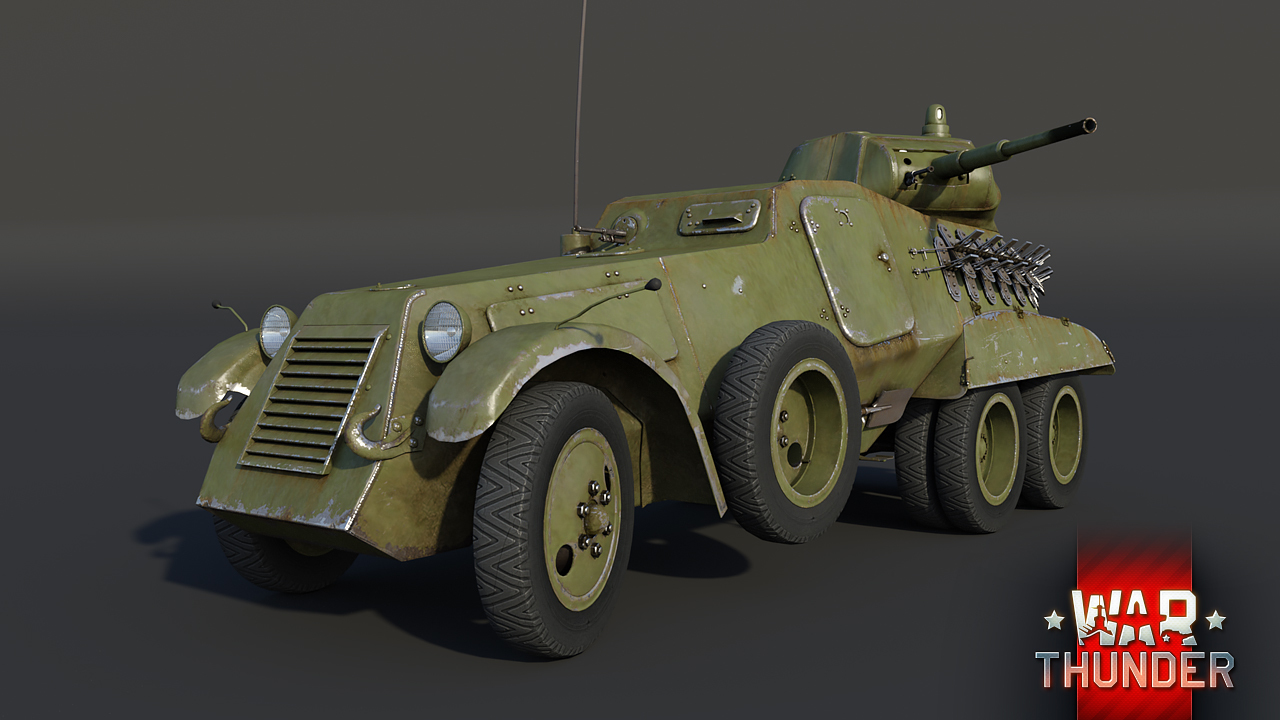
BA-11 (USSR, premium, rank I)


USS Phelps DD-360 (USA, premium, rank III)


Read Full article here!

[Development] BA-11: Tank on wheels


A Soviet premium BA-11 armoured vehicle on the chassis from a cross-country truck will be a prize for participants in the new “World War” season.

Armoured cars were one of the most popular world trends in the development of armoured vehicles in the pre-war period. The Soviet heavy armoured vehicle BA-11 was one of the typical examples of this type of vehicle. It was created on the basis of a shortened chassis from the military ZIS-6 - a three-axle off-road truck designed on a scheme of 6x4 (rear wheel drive). The new chassis designed by engineers of the Moscow Automobile Plant was supposed to provide the armoured car greater payload and a better cross-country ability which allows improvements in the armour and a better off-road performance in the vehicle.

Compared to the armoured vehicles of the B-6 and B-10 series which had been designed on the basis of the GAZ-AAA truck, the armour of the BA-11 has been increased by 1.5-2 times and in some places, the BA-11 was slightly better armoured than the T-26 and BT-7 tanks. With the increased weight up to 8 tons, the vehicle maintained good driving characteristics: a speed of up to 64 km/h on the highway and 26 km/h over terrain. As well as in the BA-10 the designers also provided overall tracks which were able to help the armoured car to overcome particularly difficult areas. The gun and the turret of the vehicle also receives a 45 mm 20-K cannon from the BA-10 in the turret.


The heavy BA-11 armoured vehicle was produced in limited edition in 1939 and participated in battles at the early stages of WWII. In 1942 it was withdrawn from service.

Check full article here!

[Development] Phelps: Anti-Air Symphony


The first American destroyer leader, the Phelps, with her enhanced anti-air armament will be a reward for participants in World War.

In the 1920’s, the USA acquired a pressing need to equip its fleet with so-called destroyer leaders, i.e. larger and better armed flagships for destroyer flotillas. At the time when the military was trying to convince the US government of the need for these vessels, and the government was arguing that the country already had sufficient numbers of standard destroyers, the London Naval Conference was held to discuss naval disarmament. The conference established an upper displacement limit of 1,850 tonnes for destroyer leaders, which prompted the development of a new ship that would conform to this new international military standard. A preliminary design for the new command ship was ready by November 1930. After almost 18 months of consultations and negotiations, the final design was approved. With a displacement of 1,850 tonnes, the ship carried eight 127mm guns, two quadruple 28mm guns (“Chicago pianos”), 2x4 torpedo launchers and light half-inch armour. All eight of the planned Porter-class destroyers were built and brought into service by 1937.

The realities of war revealed several defects in the new leaders, the most significant one was their extremely weak anti-air defence. The ship’s 127mm guns were not universal, and the power of the two “Chicago pianos” was woefully inadequate for defending the ship against aircraft attacks. The Porter-class ships underwent two major modernizations intended to enhance the leaders’ firepower. By 1944, the ships were markedly different. First of all, the outdated primary guns were replaced with all-purpose weapons, and their number was reduced to five in three turrets. The ship gained a formidable anti-air battery – one quadruple and two twinned 40mm Bofors guns, six 20mm Oerlikons, and high-calibre machine guns. Looking beyond armament, the ship’s decks were also transformed: the bridge was changed, the height of the rear superstructure was reduced, and reserve torpedoes were removed. Porter-class ships served in this form until they were decommissioned in the early post-war period.


We’re pleased to present one of these typical Porter-class ships – the Phelps. This destroyer leader will be given as a reward to participants in the new session of World War. The Phelps certainly looks surprisingly harmonious and complete among the rank III destroyers and shows no obvious shortcomings. The primary armament comprises five 127mm guns - one of the best guns of this calibre in the game at the moment.

Check out the full article here!