1. War Thunder
  2. News

War Thunder News

Fleet research changes and the first battleships!

In the War Thunder “New Power” update, we are dividing warships from all playable nations into two separate tech trees with traditional vertical research - blue-water(larger ships) and coastal fleets(smaller vessels).
Torpedo boats, gunboats, and frigates will be upgraded in their own tree, while enthusiasts of larger ship classes will be able to start research immediately from reserve destroyers to heavier ship classes. In this case, ships of all classes will still meet together in battles, the ships you have already researched will not need to be researched again, and the crews will be able to master any types of ships without restrictions.

[previewyoutube][/previewyoutube]

The division in the fleet tech trees requires changes in the cost of researching, buying and repairing ships from different classes. For details on these changes, see this table. Please note that the maximum reward multiplier in Silver Lions for the blue-water fleet has been increased from 150 to 280% in AB and to 360% in RB.


Due to the rearrangement for the majority of destroyers by ranks I and II, and the reduction of the multipliers of rewards for linear units to a level corresponding to their rank, we are forced to remove from sale all premium vehicles of this class, while maintaining their current economic parameters. In the next updates, we will be adding new premium destroyers and cruisers for ranks I-III, but with new, more relevant prices. These new vehicles will allow you to quickly reach the top battleships and cruisers, and in the New Power update we are already planning to add 6 initial premium rank I destroyers and two destroyers of rank II-III.

Destroyers that will be removed from sale:
  • Type 1939 (T31) - Germany, rank III, BR 3.7, 5040 GE, 284% RP
  • Z20 Karl Galster - Germany, Rank III, BR 4.3, 6090 GE, 308% RP
  • Project 7U Stroiny - USSR, III rank, BR 4.3, 6090 GE, 308% RP
  • Project 41 Nesstrashniy - USSR, Rank III, BR 4.7, 7080 GE, 332% RP
  • Geniere - Italy, Rank III, BR 4.3, as part of a pack, 332% RP
Destroyers that will be added for sale:
  • Clemson (DD-195) - USA, rank I, BR 3.3, 250 GE, 150% RP
  • Porter (DD-362) - USA, Rank III, BR 5.0, 1300 GE, 272% RP
  • 1924 Iltis class - Germany, rank I, BR 3.7, 250 GE, 150% RP
  • Kerch - USSR, rank I, 250 GE, 150% RP
  • Montgomery (G95) - Britain, I rank, BR 3.3, 250 GE, 150% RP
  • Class J (leader) - Britain, Rank II, BR 4.0, 1000 GE, 248% RP
  • IJN Satsuki - Japan, rank I, BR 3.3, 250 GE, 150% RP
  • Aquilone - Italy, rank I, BR 3.3, 250 GE, 150% RP

Premium destroyers available for purchase on the Market will be hidden in the research trees for players that haven’t purchased them. But you can still find them on the Market with a search.

The changes will also affect squadron vehicles: The Project 35 will be moved to rank V in the USSR coastal fleet tree with an increase in research cost to 520,000 squadron experience and a maximum purchase price of 5,600 GE; The IJN Shimakaze will remain at rank III with the same squadron RP and Golden Eagles cost.

In the War Thunder “New Power” update, we are presenting the first battleships and battlecruisers! These are giant, heavily armored ships with large-calibre guns. Most of those added currently were built at the very beginning of the 20th century; it was these war beasts that represented the main force at sea until the beginning of World War II. Read our devblogs, where we will tell you about some of the battleships from the upcoming update War Thunder: “New Power” very soon!
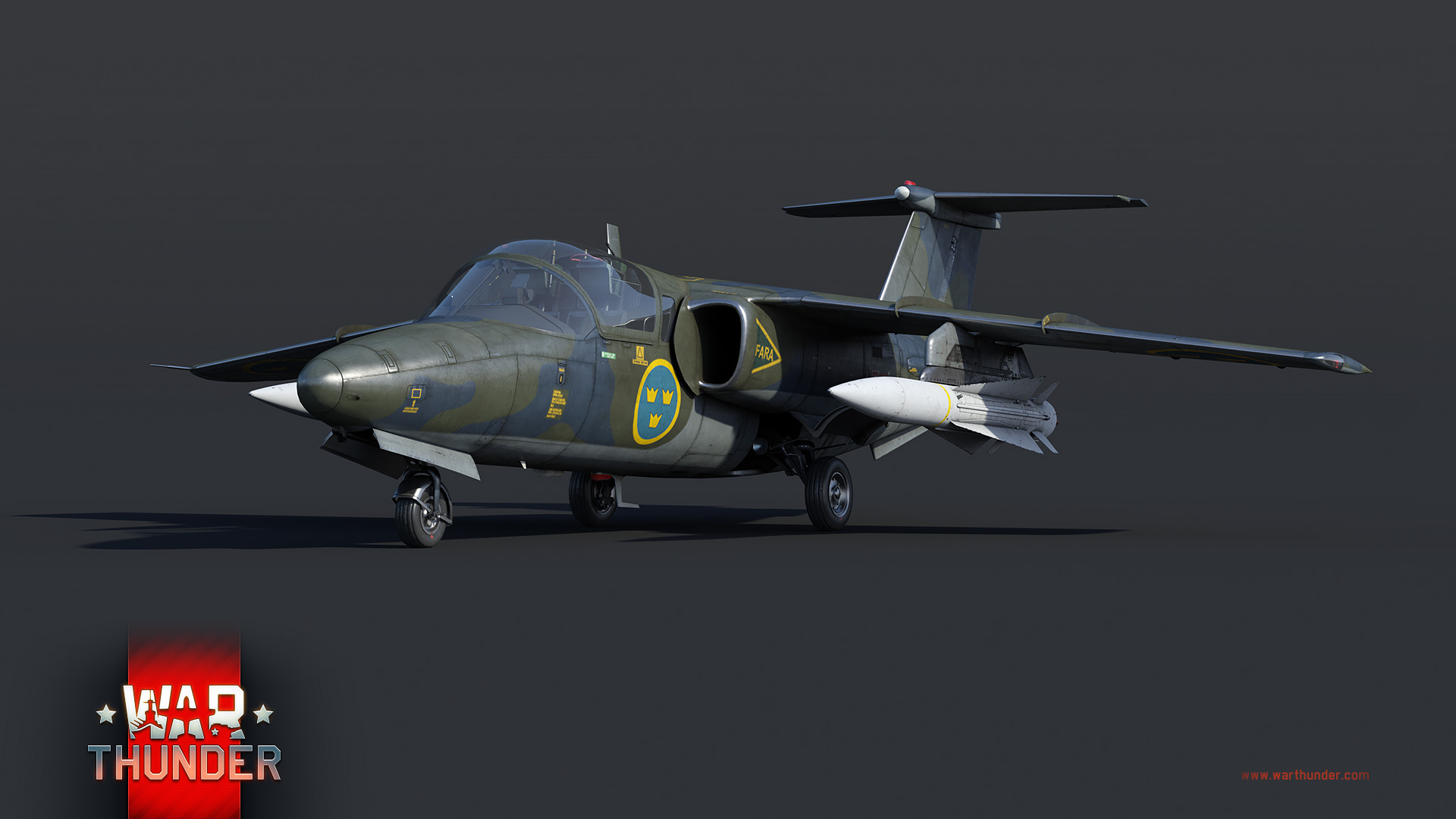
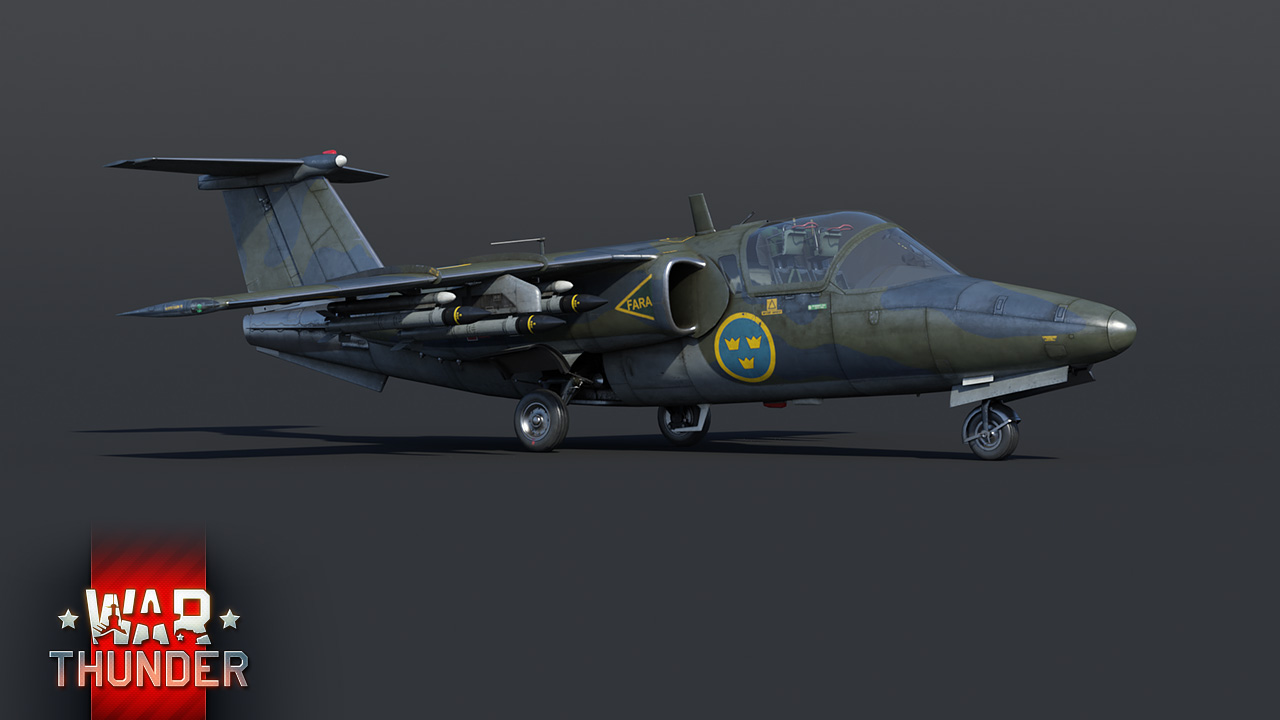
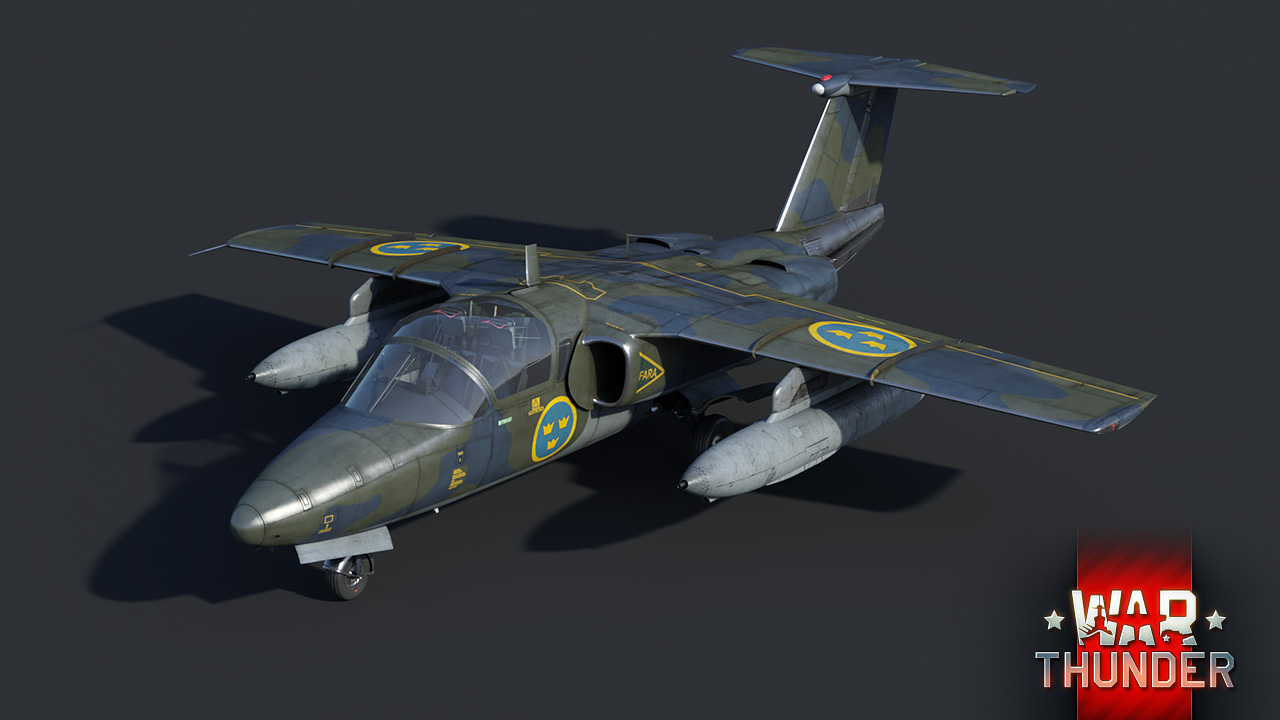
Saab Sk 60B


Developed as part of a private venture during the early 1960’s, the Saab Sk 60 was a versatile combat jet trainer aircraft currently employed by the Swedish and Austrian air forces. Soon, pilots in War Thunder will have the chance to take control of the nimble Saab Sk 60 upon its arrival at the higher ranks of the Swedish aviation tree in the upcoming update “New Power”!

Saab Sk 60B, jet attacker, Sweden, V rank.
➕ Good handling characteristics
➕ Deadly weapons
➕ Small silhouette
➖ Modest top speed


In War Thunder, the Sk 60B will be a new jet attacker coming to rank V of the Swedish aviation tree with the release of the upcoming major update “New Power”. With its arrival, Swedish pilots will gain access to a dedicated light ground attacker, ideally suited for supporting their allies on the ground in combined battles!

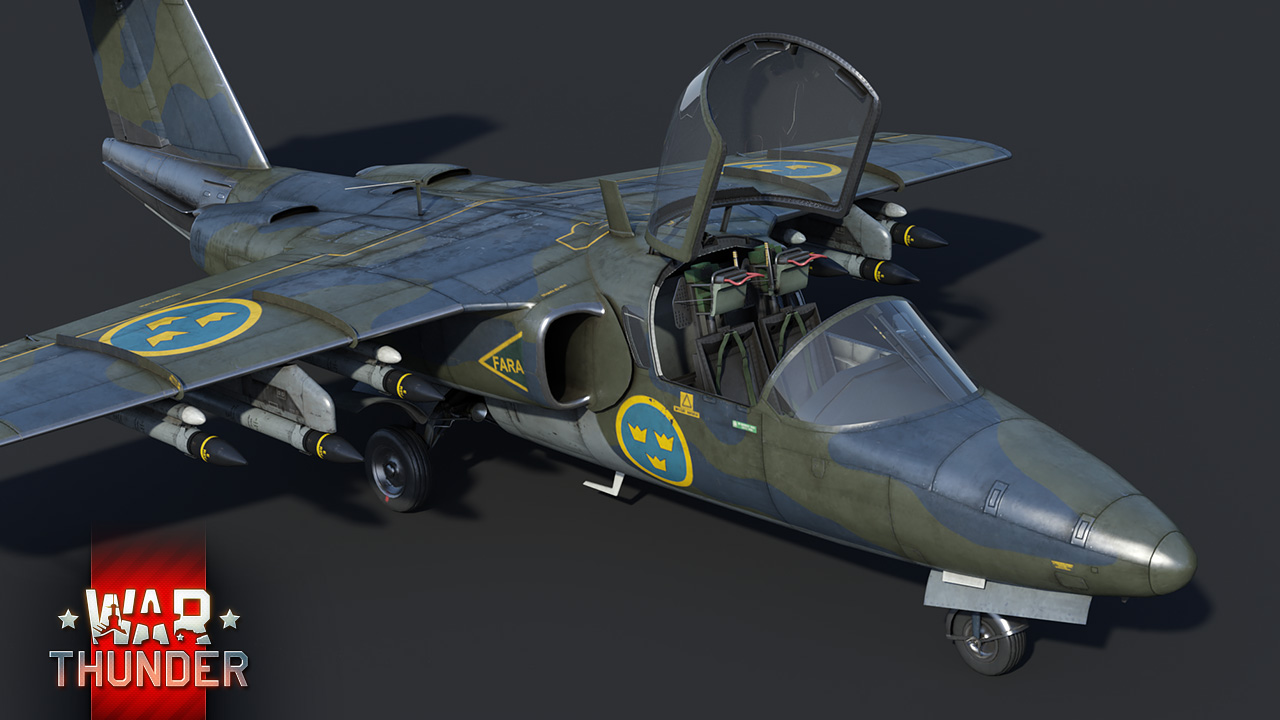
However, before we dive into the Sk 60B’s deadly weapons arsenal, let’s take a closer look at the aircraft itself. Being powered by two Svenska Flygmotor AB RM9 turbofan engines - a licence-built version of the Turbomeca Aubisque - the Sk 60B can reach a top speed of 765 km/h.


Although a fairly low top speed for a jet aircraft, it’s also worth pointing out that the Sk 60B has an incredibly low stall speed of just 170 km/h! This, combined with the aircraft’s overall good handling characteristics make it ideally suited to run precision air strikes against hostile ground targets, thus supporting its allies on the ground.

Speaking of supporting allies on the ground, aspiring pilots of the Sk 60B will have a number of different ordnance options with which they’ll be able to do so! First and foremost however, it’s worth noting that the Sk 60B doesn’t come with any integrated weapons on board. Instead, all of the aircrafts weapons are carried on ordnance pylons underneath the wings.

Possessing a total of six pylons under its wings, the Sk 60B can be loaded with a multitude of different ordnance options. These range from 30 mm cannon pods, rockets of various calibers and having a pair of guided air-to-surface missiles available.


Overall, the Sk 60B is the ideal aircraft for close air support missions. Being comparably small and nimble, but capable of carrying a deadly payload, the Sk 60B will prove itself as a highly potent strike aircraft in the hands of a skilled pilot and a more than welcome sight in the sky above allied forces on the ground!

The Sk 60B is coming soon to rank V of the Swedish aviation tree with the release of the upcoming major update “New Power” and will be available to all pilots for research. In the meantime, be sure to stay tuned to the news as we continue to reveal what other exciting new things the “New Power” update has in store for you. Until then, clear skies and happy hunting pilots!

New visual effects for aviation


In the release of the updated version of the Dagor graphics engine, major changes in the visual effects in aviation will come to War Thunder. New effects for shots and explosions, new physics of fire and the destruction of aircraft are coming in the next update of the game! Now for more details.

[previewyoutube][/previewyoutube]

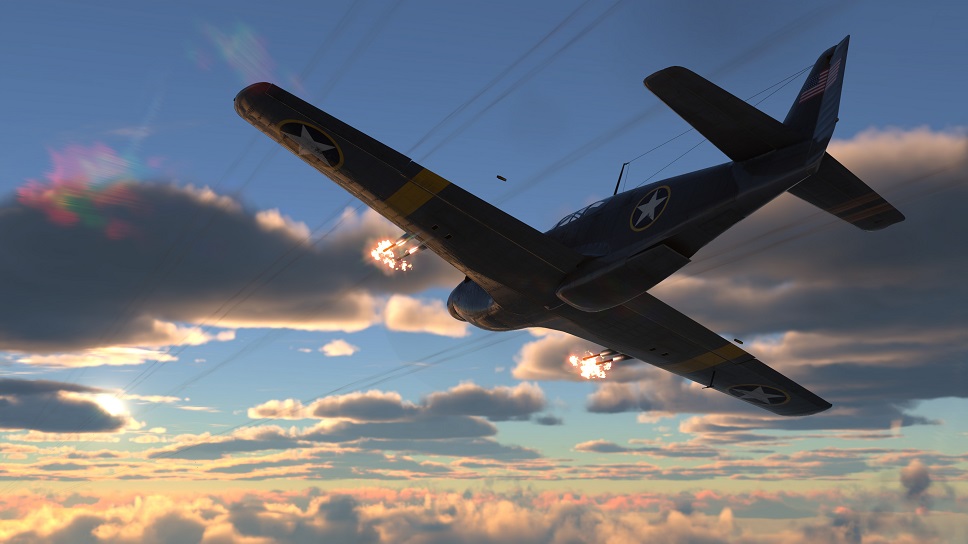
In previous versions of the game, flashes from aircraft shots were created by combining animated flats to create the illusion of volume. Such effects were not particularly realistic, the fire from the shots of guns for different calibers did not have its own correct reflection on the surfaces of aircraft, the bursts were similar to each other.

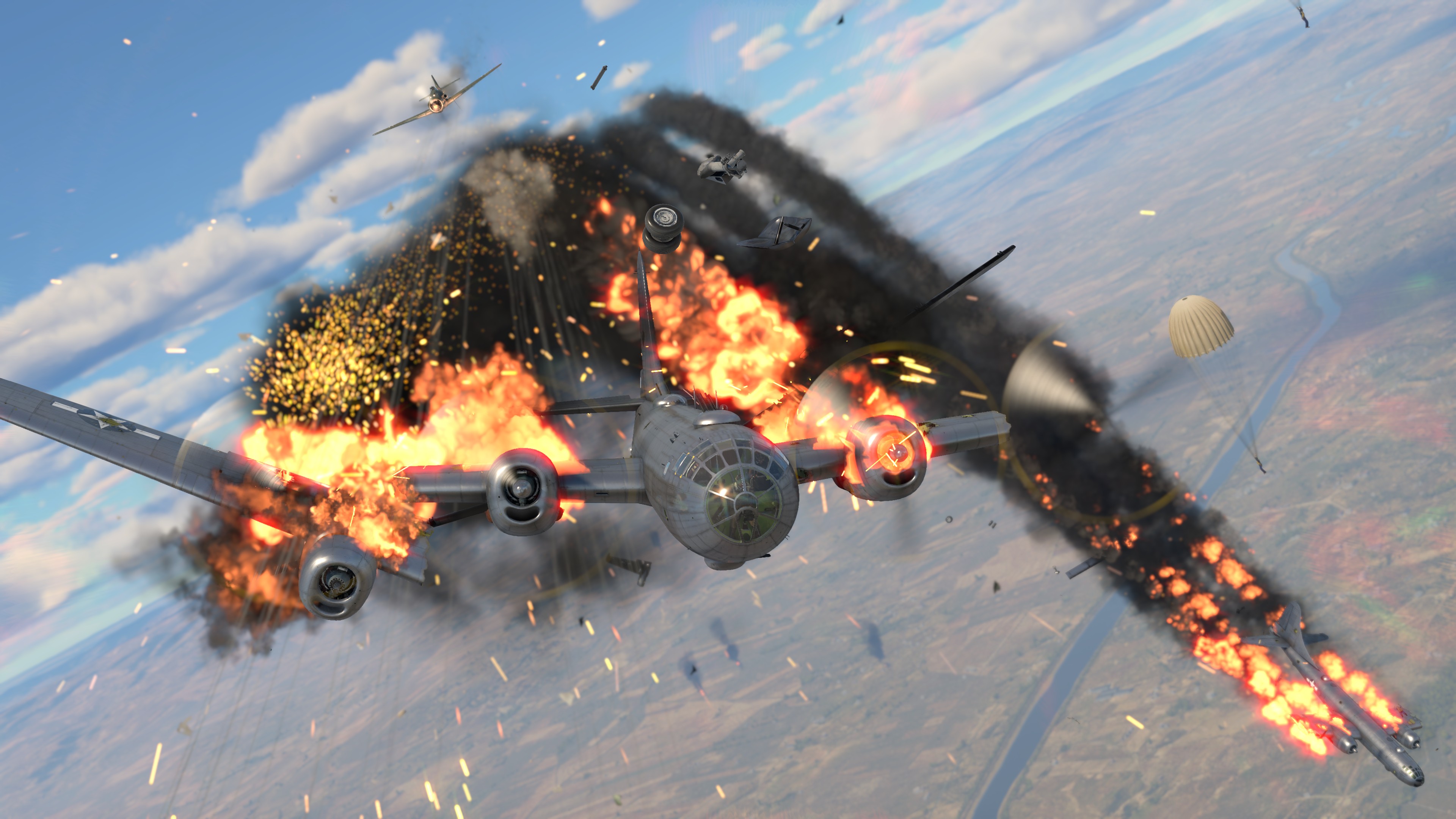
In War Thunder ‘New Power’, the muzzle flashes of cannons and machine guns are now modeled with particles, the muzzle fire effect has its own perspective correction and distortion, which makes it look more voluminous depending on the angle of view. The size of the shot flash depends on the caliber of the gun, and the muzzle flame itself has received the correct reflections on the surfaces of aircraft and gun barrels. In addition, the shell ejection effect has been updated, the bursts of shots are also reflected on the ejected casings. In the new version of the graphic effects, shot bursts, fires and explosions have received photometric brightness, making them look better in HDR and in the resulting post-processing.

New muzzle flames receive their own volume and reflections: https://coub.com/view/2kwrea

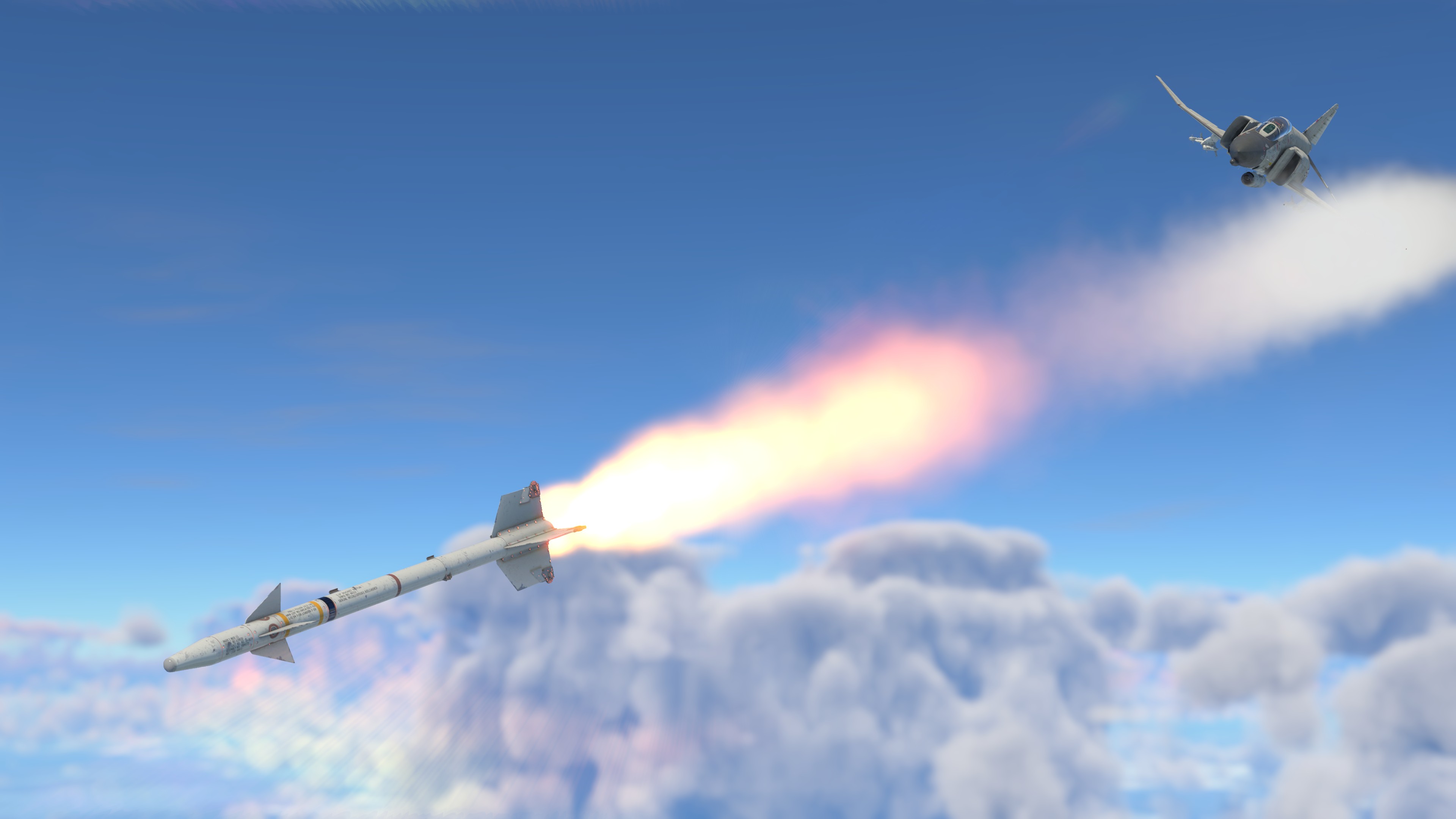
Aircraft rockets and missiles have received completely re-done visual effects: volumetric flame from a jet engine, new smoke trails and a jetstream effect.


Significant improvements have been made to the effects of aircraft shells and bombs hitting enemy aircraft and different surfaces. Depending on the caliber and type of projectile (bullet, missile), a flash with smoke and debris occurs at the point of impact. The appearance of the incoming hits now depends on the material of the elements receiving damage - metal or canvas hulls, wooden or metal structural elements are destroyed in different ways.

Shell hits on bomber’s wings and hull: https://coub.com/view/2kwrf1

When hitting the surface of the ground and objects in locations, different types of projectiles form different collision effects, depending on explosive weight in the projectile, and the type of surface (soil, snow, metal, wood, etc.). Now, the appearance of such collisions has been improved, with the addition of dynamic flash and smoke, sparks and blast effects. All fragments ripped off from aircraft and objects, soil particles, as well as ejected cases now have their own physical model.

3.000kg bomb explosion: https://coub.com/view/2kwrdn

We have transferred most of the damage effects in ground vehicles to aviation - blast effects, physical sparks, and correct lighting. The holes from bullets, shells and shrapnel have become voluminous, if a fire occurs inside an aircraft, flame is now visible through these holes. Aircraft fuel and service fluids now have new effects of leaking off when tanks and engines are damaged. The overall picture of a damaged aircraft has become noticeably more life-like, especially thanks to the new effects of fire and smoke.


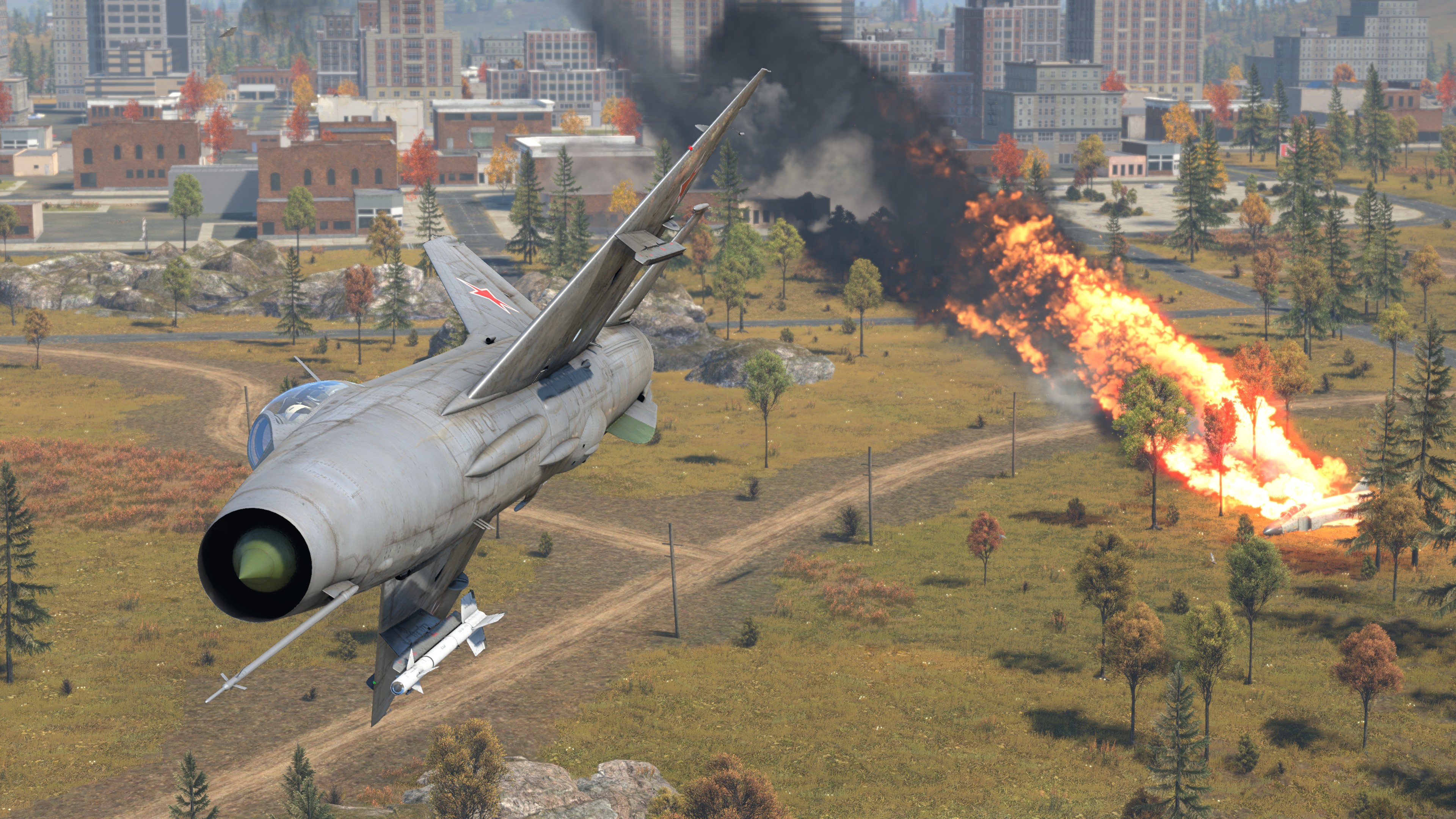
Fires and explosions in aircraft and the subsequent destruction of the aircraft structure has become more reliable, the nature of the destruction now depends on the type of critical damage. We have reworked the physical and visual effects of flame and smoke, the fire trails from fuel have become voluminous and bright, with a long smoky tail. When the fire spreads, destruction of the aircraft occurs - broken wings rotate in the air, the fuel from the tanks continues to burn both out and inside them. In case of critical fire damage, the aircraft hull catches fire and continues to burn after hitting the ground. If the aircraft's speed is high when it hits the ground, it continues to slide with inertia - this effect is especially noticeable when destroying jet aircraft at low altitudes. If the surface on which the destroyed aircraft glides is solid, sparks appear under the fuselage. The effects of fire and smoke continue after sliding, the plane burns out on the ground for an extended period of time.


So, in the upcoming War Thunder New Power update, air battles will noticeably change. We will continue to talk about the graphics improvements very soon. Stay tuned to find out more!

MiG-21bis: Ultimate Fishbed


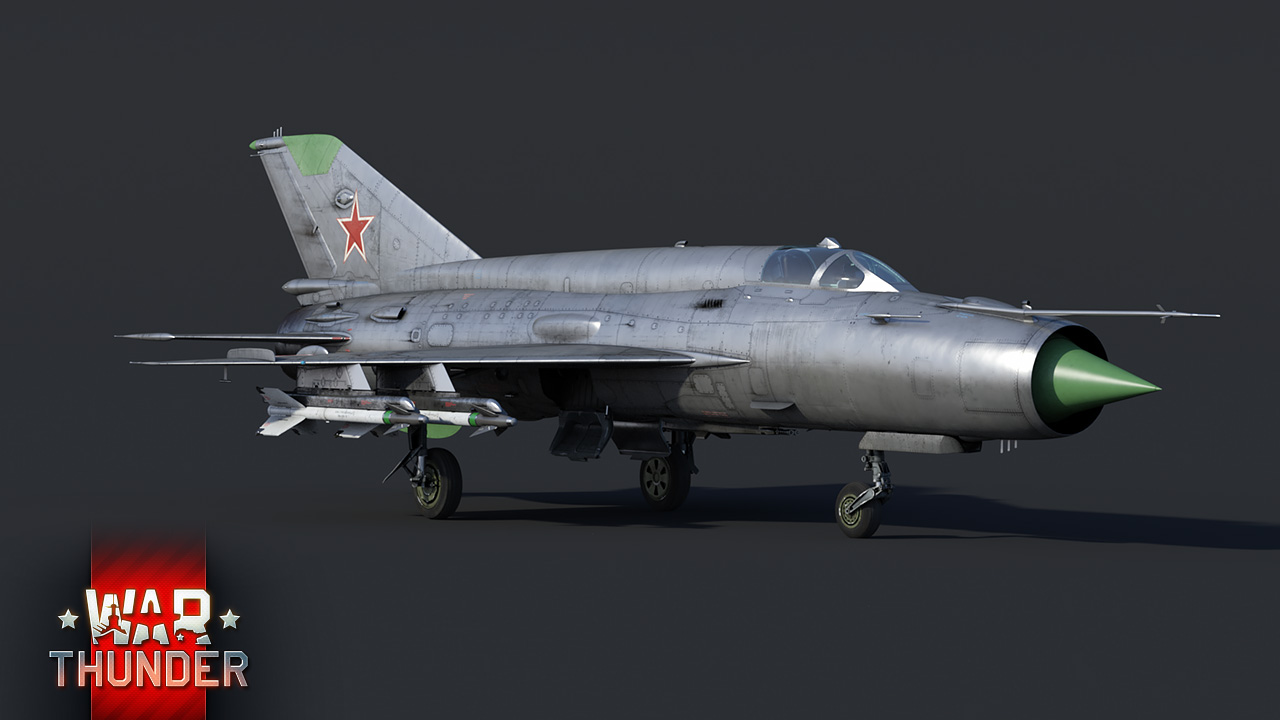
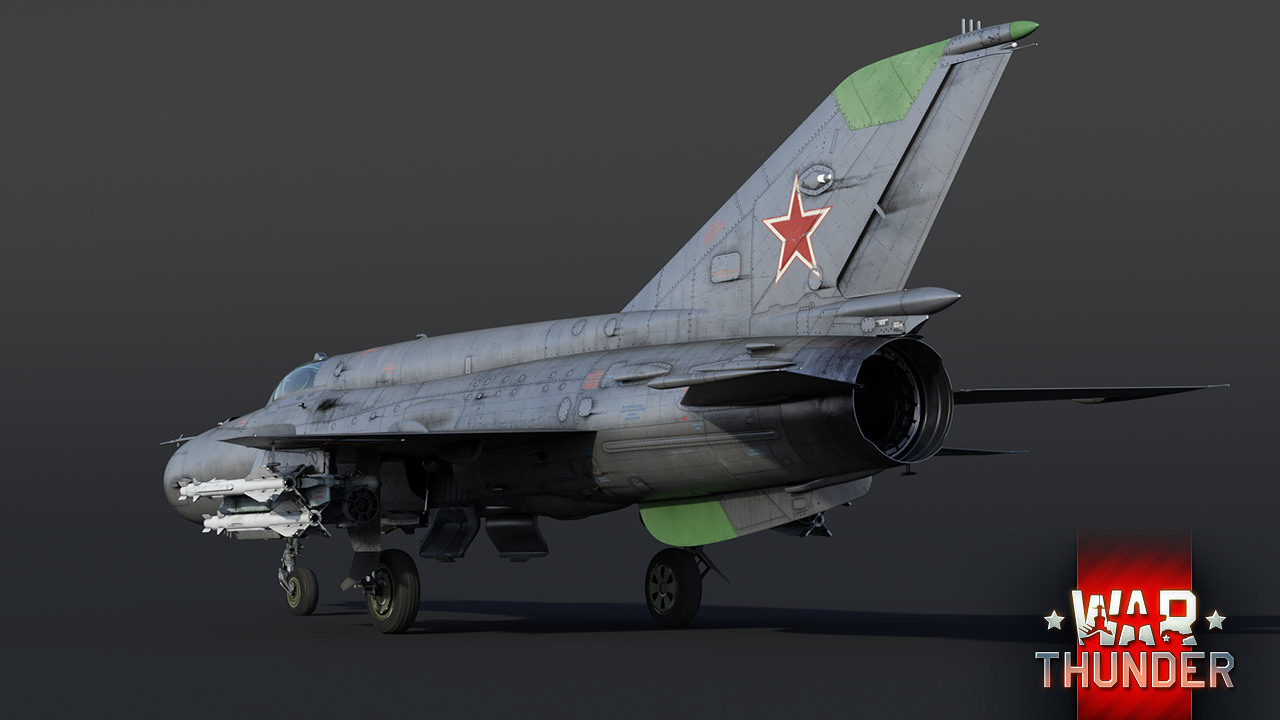
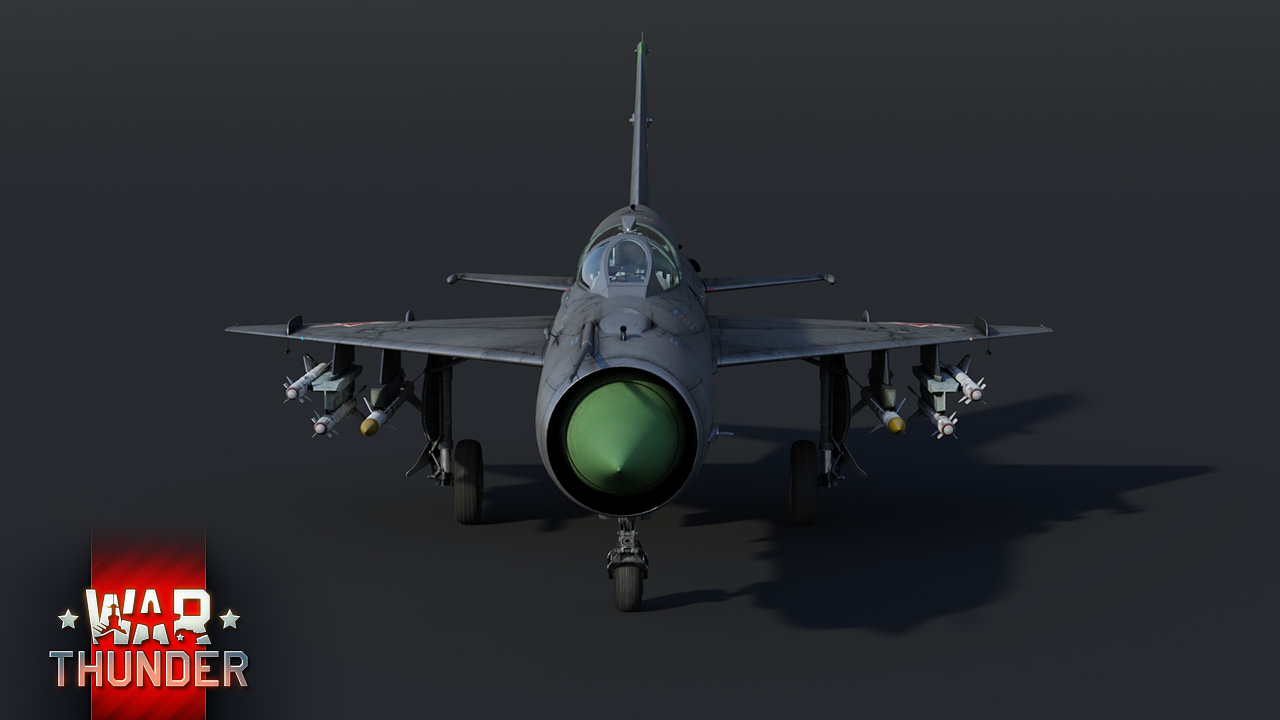
The MiG-21bis is the most advanced massively produced version of the renowned Soviet Cold War era jet fighter. Soon, this top performing and highly anticipated jet fighter will make its way into the aerial battlefields of War Thunder with the release of the upcoming update “New Power”!

MiG-21bis, jet fighter, USSR, VI rank.

➕ Climb rate 225 m/s!
➕ Increased flight performance
➕ Very capable both against aerial and ground targets
➖ No countermeasures

With its insanely powerful engine, improved flight characteristics and deadly missiles, the MiG-21bis will not only become the new crowning jewel of the Soviet aviation tree but will also quickly become the new fan-favorite among jet jockeys!


Starting off with the feature that truly makes the MiG-21bis stand out from all its predecessors - namely the engine. Being powered by the Tumansky R-25-300 turbojet engine, generating up to a mind-boggling 9,900 kgf of thrust while afterburning at sea level at Mach 0.9-1.0, the MiG-21bis can reach about the same top speeds as its predecessors (up to Mach 2.04 at high altitudes), but doing this much faster thanks to greater acceleration.

Subsequently, the aircraft’s climb rate has also seen a substantial increase up to 225 meters per second, while constructional changes to the aircraft’s airframe also allow it to sustain higher load factors. All these improvements will become most noticeable to pilots during low altitude dogfights, making the MiG-21bis a much more formidable dogfighter in this combat scenario than its preceding variants as a result.


However, the MiG-21bis didn’t only receive major upgrades to its flight performance; its firepower was also improved! While still carrying the twin-barrel Gsh-23 gun pod as its primary weapon, the MiG-21bis does carry an increased ammunition load of 250 rounds for this weapon. Furthermore, the total number of air-to-air missiles the aircraft can carry was also increased to a total of six, compared to four on the preceding MiG-21SMT.


Lastly, the MiG-21bis receives access to a brand new missile too. While still carrying the familiar R-3R, R-3S and R-60 missiles, the new R-13M missile now also joins the arsenal. Being in essence a further developed modification of the R-3S, the R-13M that possesses a longer range and better agility, allowing it to better track targets. The MiG-21bis also retains access to unguided munitions such as bombs and rockets of various calibers for all those passionate close air support pilots out there.

New skies in War Thunder

We continue to tell players what’s new in the upcoming update New Power. Today we will talk about the new War Thunder skies. It is the first in a series of devblogs about the updated version of the Dagor game engine.

In previous versions of the Dagor Engine, the sky, clouds and fog were created with separate algorithms and were not united into a system. Physically, the sky in War Thunder was quite authentic. However, to achieve a better visual resemblance with the real sky, it lacked the relationship between atmospheric phenomena. In the new version of the Dagor Engine, we have managed to model a realistic atmosphere with the correct distribution and scattering of sunlight, both in the sky and on the Earth's surface. We’ve also created new clouds of different types at different heights, and significantly improved the appearance of mist and fog.


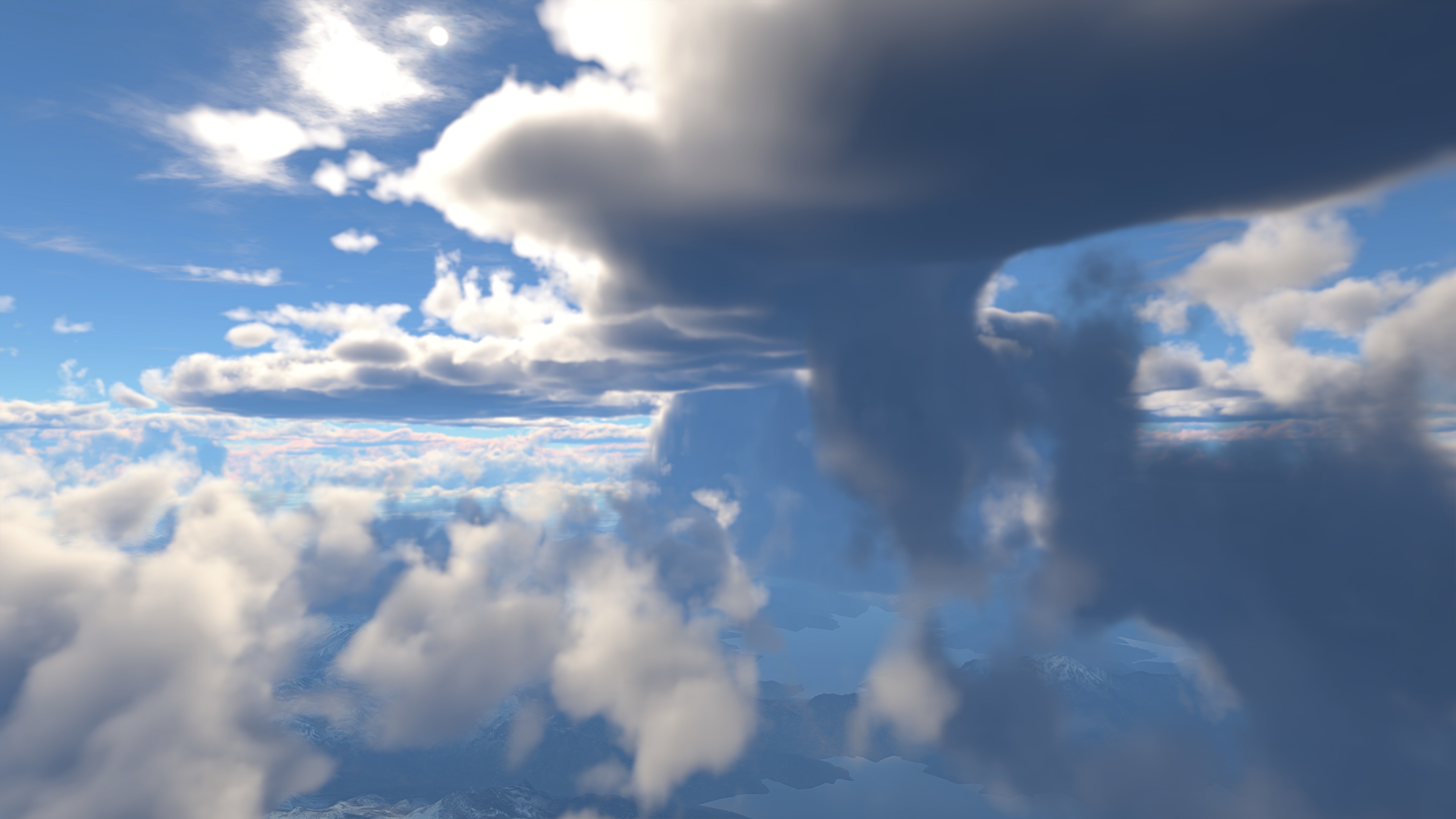
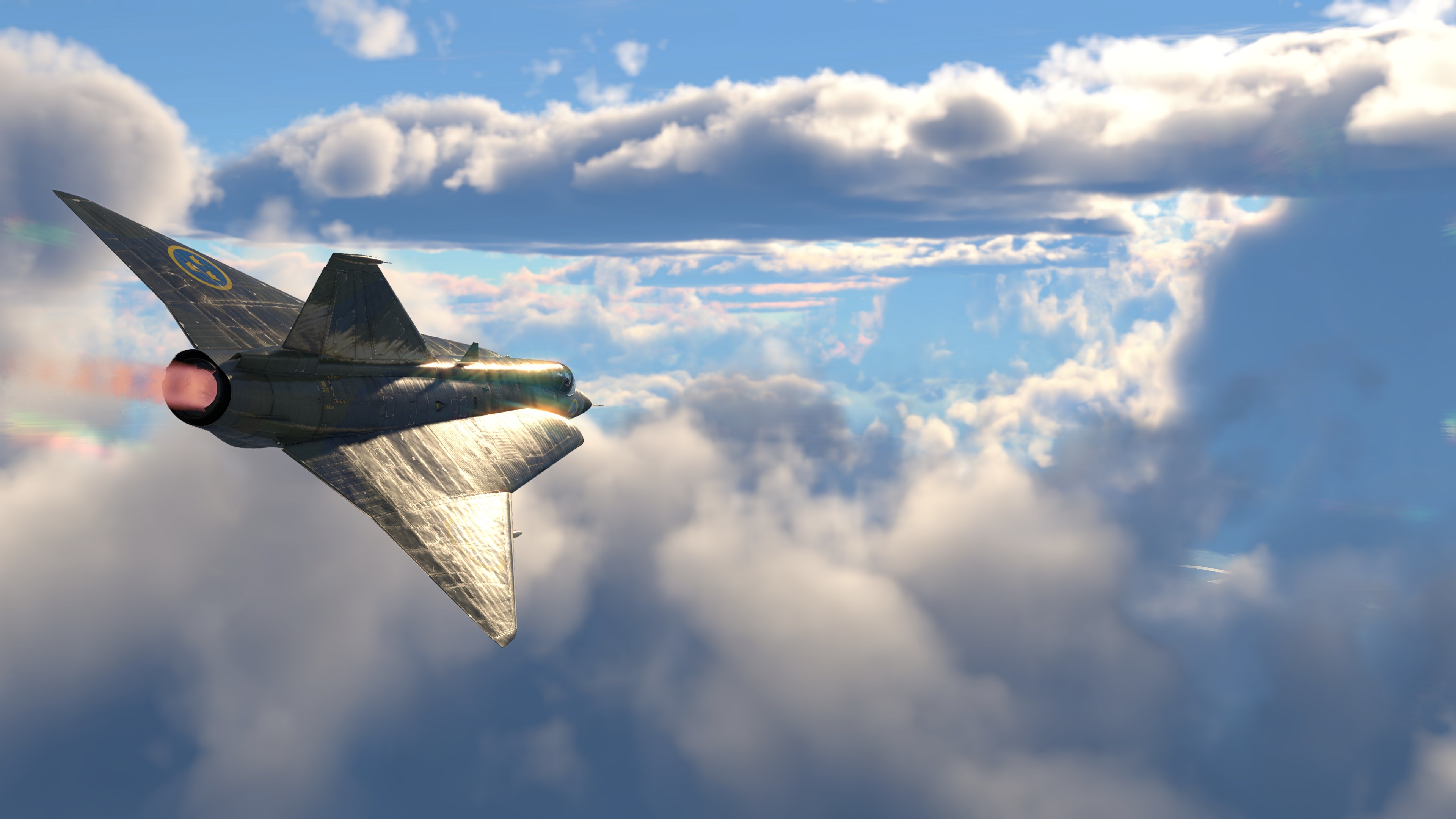
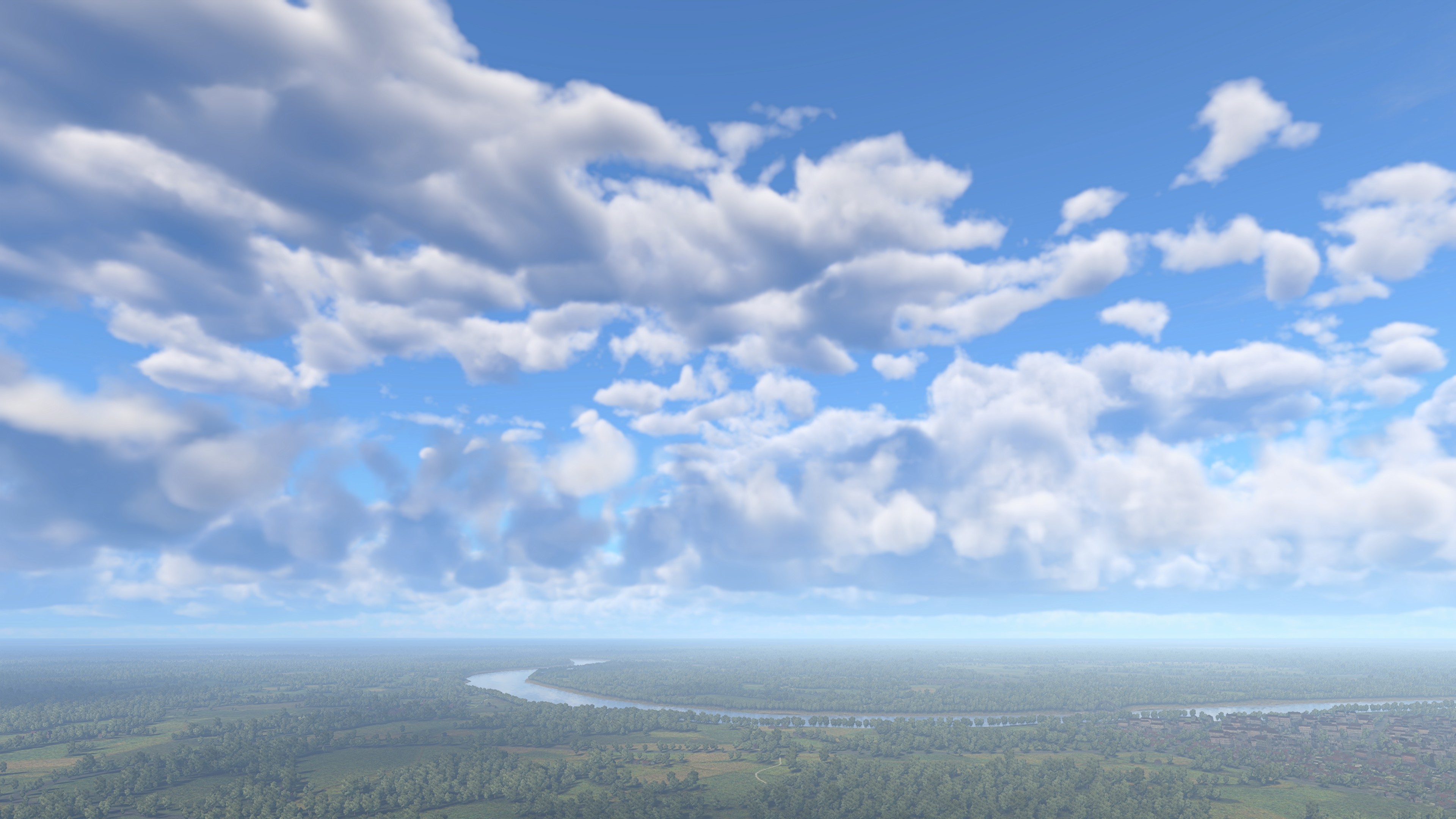
Noon, flight among cumulus and altostratus clouds in sunny weather.

The scattering and absorption model of sunlight has changed. First of all, we’ve improved the spectral model of light scattering. Previously, air scattered light taking into account Rayleigh and Mie scattering, but with a simplified model. The new version uses refined spectral modeling, which more accurately reproduces the shades of the sky under different conditions.

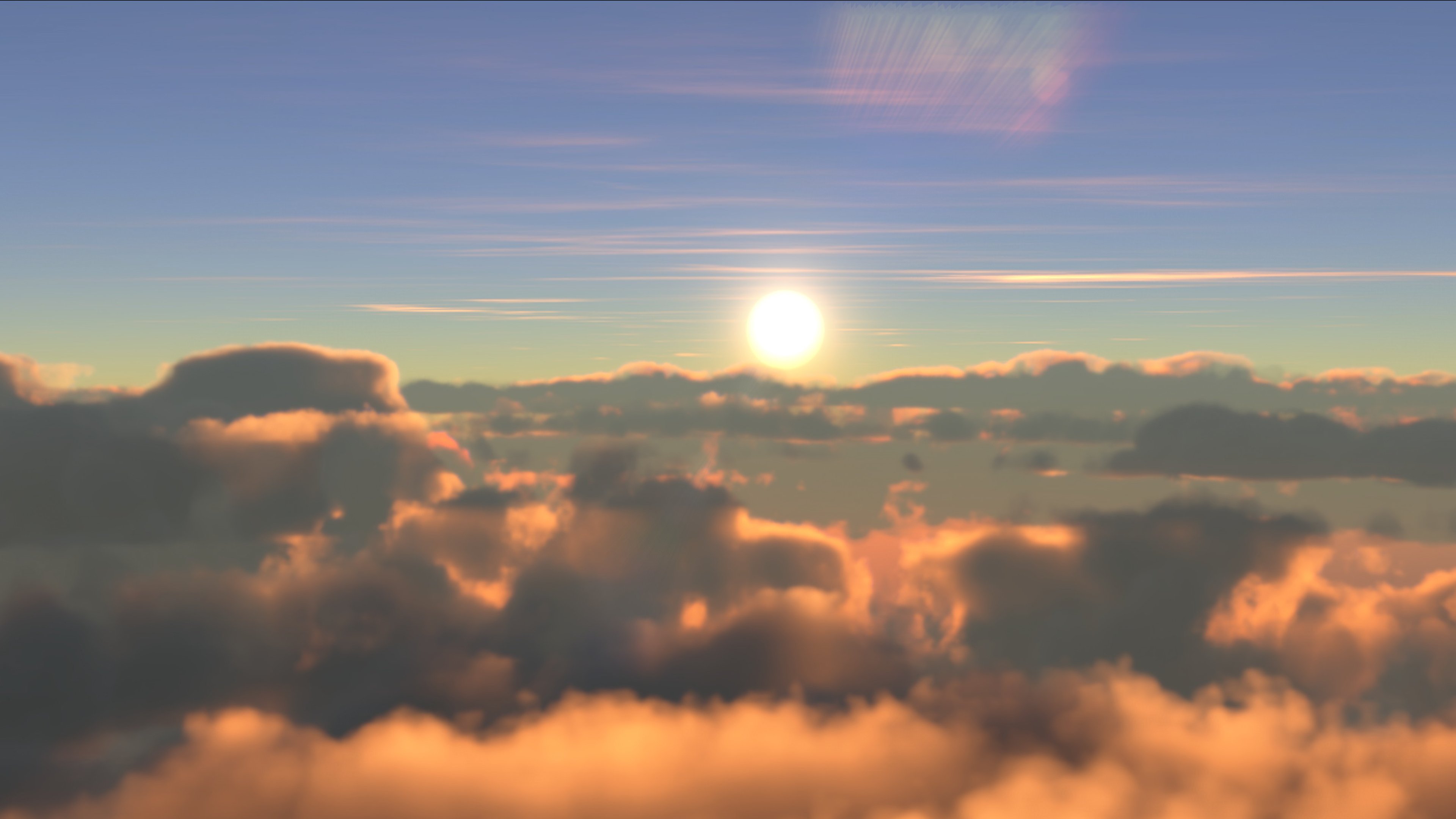
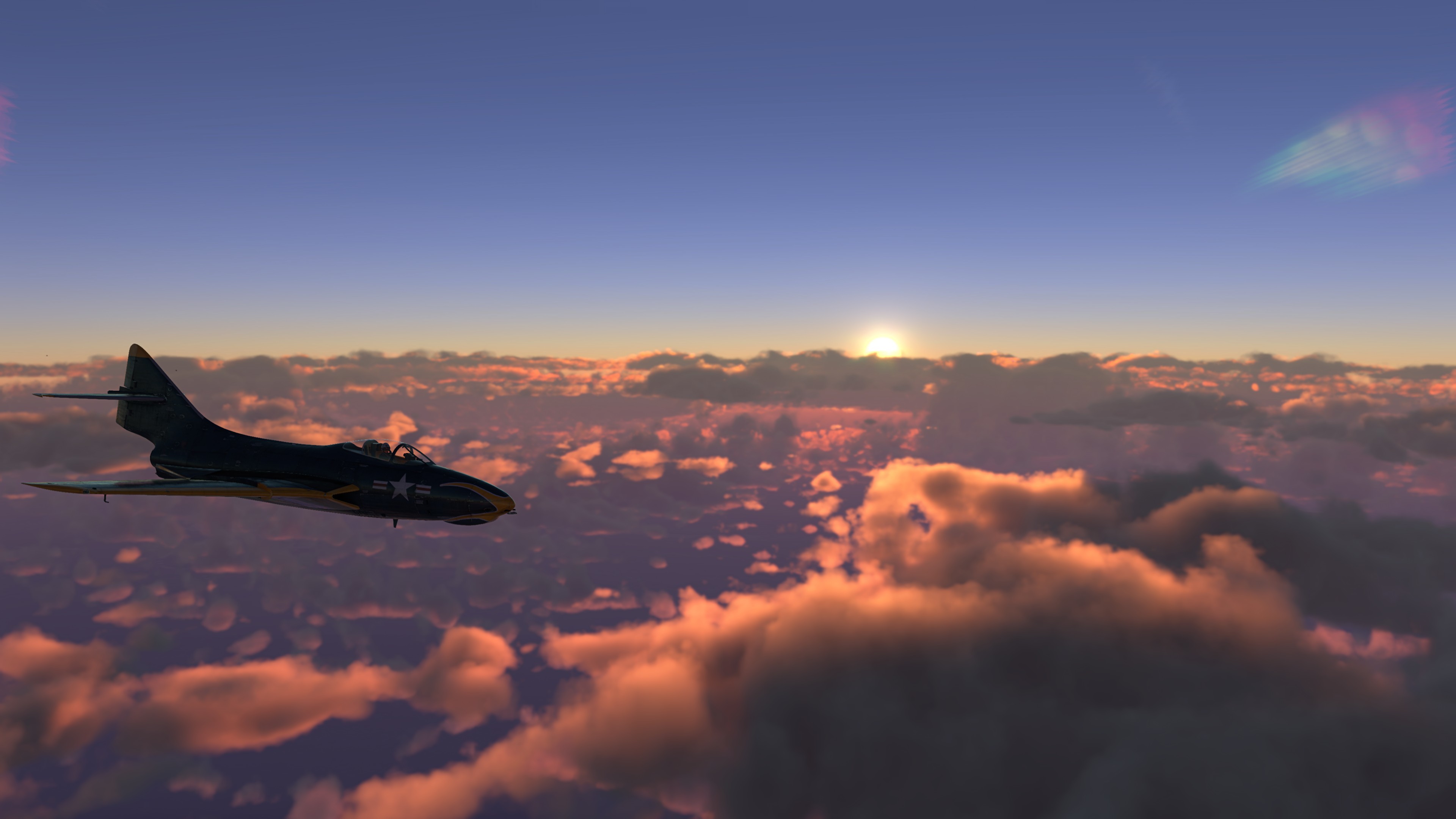
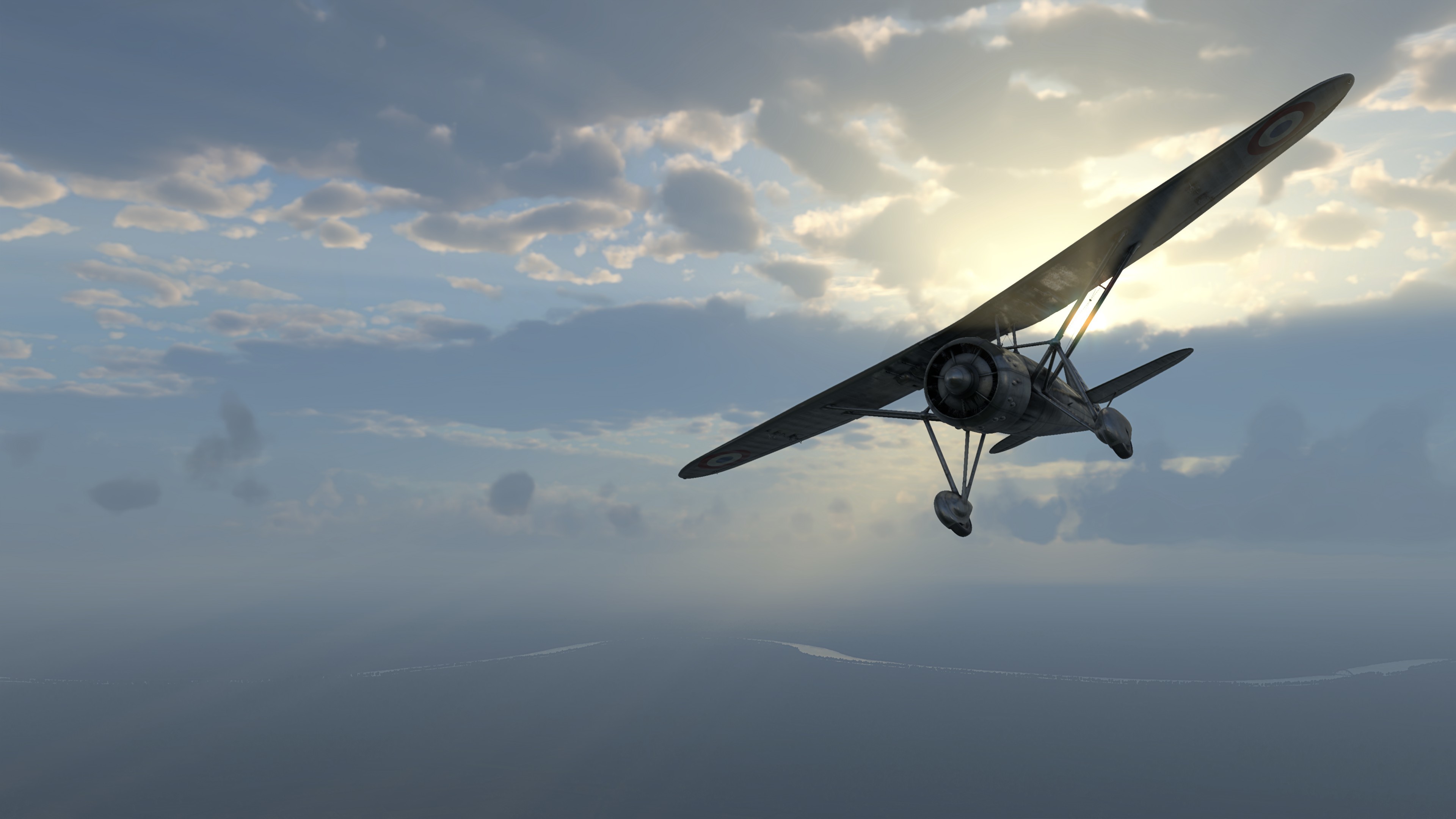
The game will now have an ozone layer. During the day, the sky on our planet is blue mainly due to Rayleigh scattering; at sunrise and sunset, the atmosphere remains blue because of the property of ozone to absorb a specific wavelength in the sunlight spectrum. Also, ozone absorption additionally paints the higher clouds in orange and pink at sunrise and sunset.


Sunlit clouds at sunset


Ozone paints the sky in deep blue at sunset and sunrise.

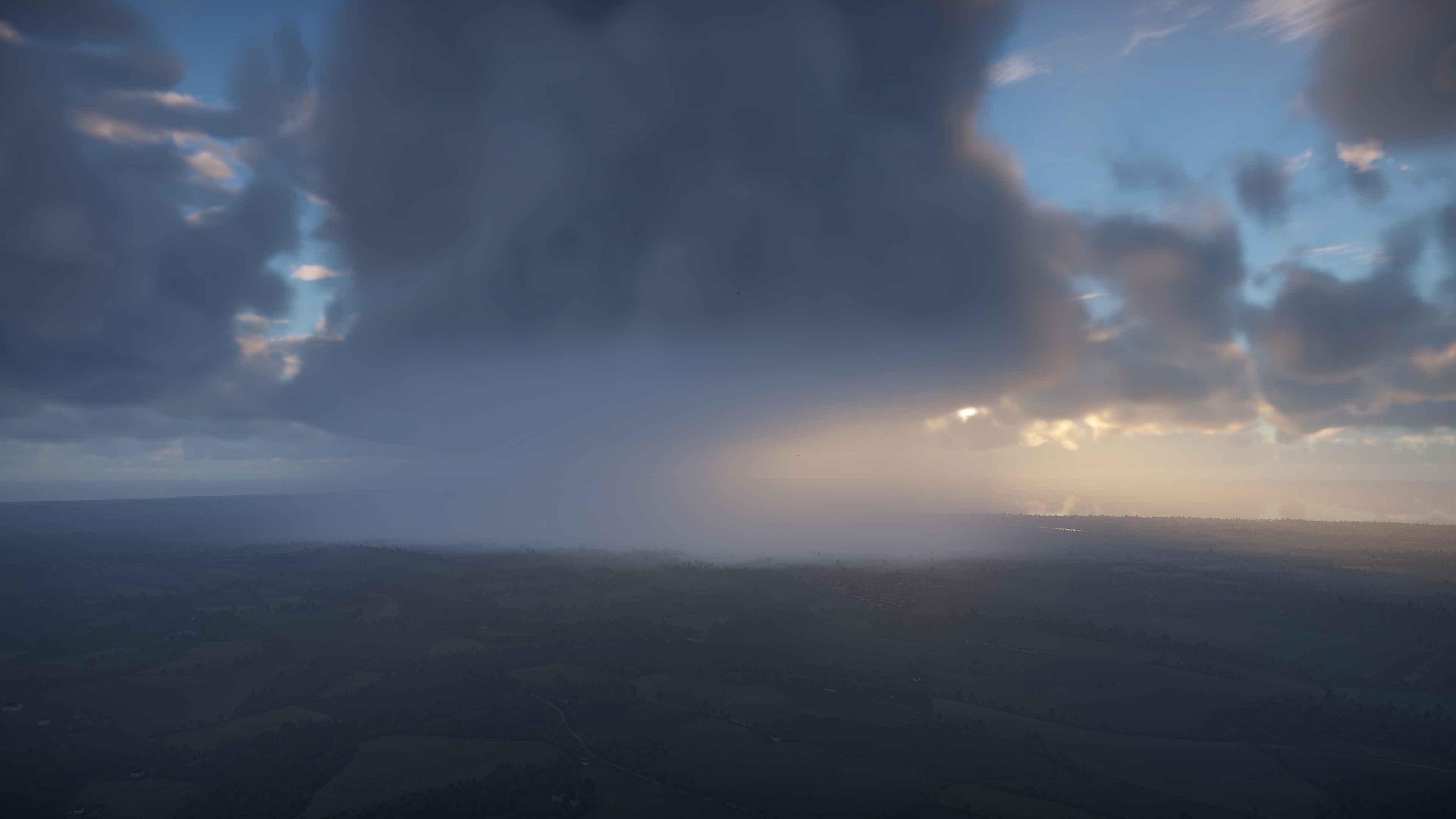
Changes to clouds are the most noticeable improvement. Previously we used only one relatively thin layer of clouds, and we had to choose where to place it in every battle. Now we are modeling tropospheric clouds at heights from hundreds of metres up to fifteen kilometres and higher, and different types of clouds can be in the game at the same time. Clouds differ in morphological type - we have implemented all types of clouds, except for the most exotic and rare ones. Cumulus, stratus, altocumulus, stratocumulus, altostratus, cumulonimbus and cirrus clouds are now presented in the game, and all types of clouds can occur simultaneously in the War Thunder sky, depending on the weather settings for each battle. If it is raining below a cloud, the pillar of droplets is clearly visible from afar due to the additional scattering of light on the raindrops.


A view of cumulus and altocumulus clouds at dawn.


Flight between cloud layers


Rain from a cloud, the boundaries of the pillar of raindrops is clearly visible

Sunlight, scattered and absorbed by the clouds and atmosphere, makes skies look beautiful and varied. Depending on the density of the cloud, the color of the illumination also changes in its different parts, from a light translucent white haze to a dark gray thundercloud. To illuminate the clouds, we approximate the internal multiple scattering of light from the sun and the sky inside the cloud. Each cloud actually becomes a source of light and the structure of the cloud itself becomes visible, the eye can clearly see the inhomogeneity of each type of cloud. All clouds illuminate and shade the neighboring ones, and this is how the picture of a deep, voluminous cloudy sky is formed.


Cumulus clouds with and without multiple scattering

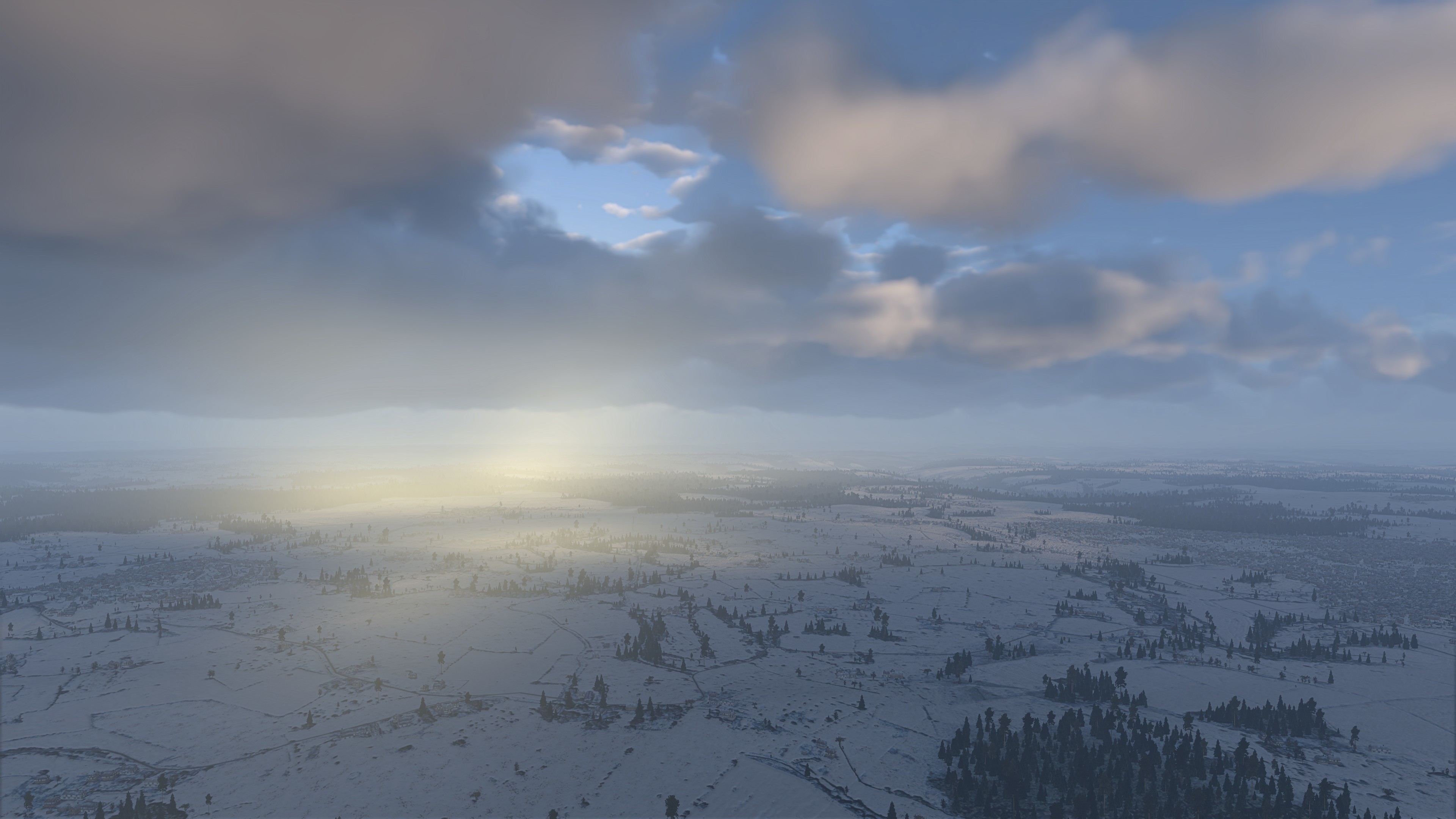
Picturesque pillars of light (“God rays”), or beams of sunlight clearly distinguishable against the shaded background of the clouds are called crepuscular rays. This effect is automatically obtained in Dagor Engine 6.0, since we model the lighting with a sufficient level of detail. Along with the crepuscular rays, the game also sees the anti-crepuscular rays, which are especially visible when flying at a height from the side of the sun in hazy weather. These effects will appear in the game due to the property of clouds to partially transmit sunlight, casting a shadow not only on the ground and themselves, but also on the air in the entire atmosphere.


Sunset, pillar of light shines through a gap in clouds


Afternoon, crepuscular rays, viewed from height on the ground’s surface.

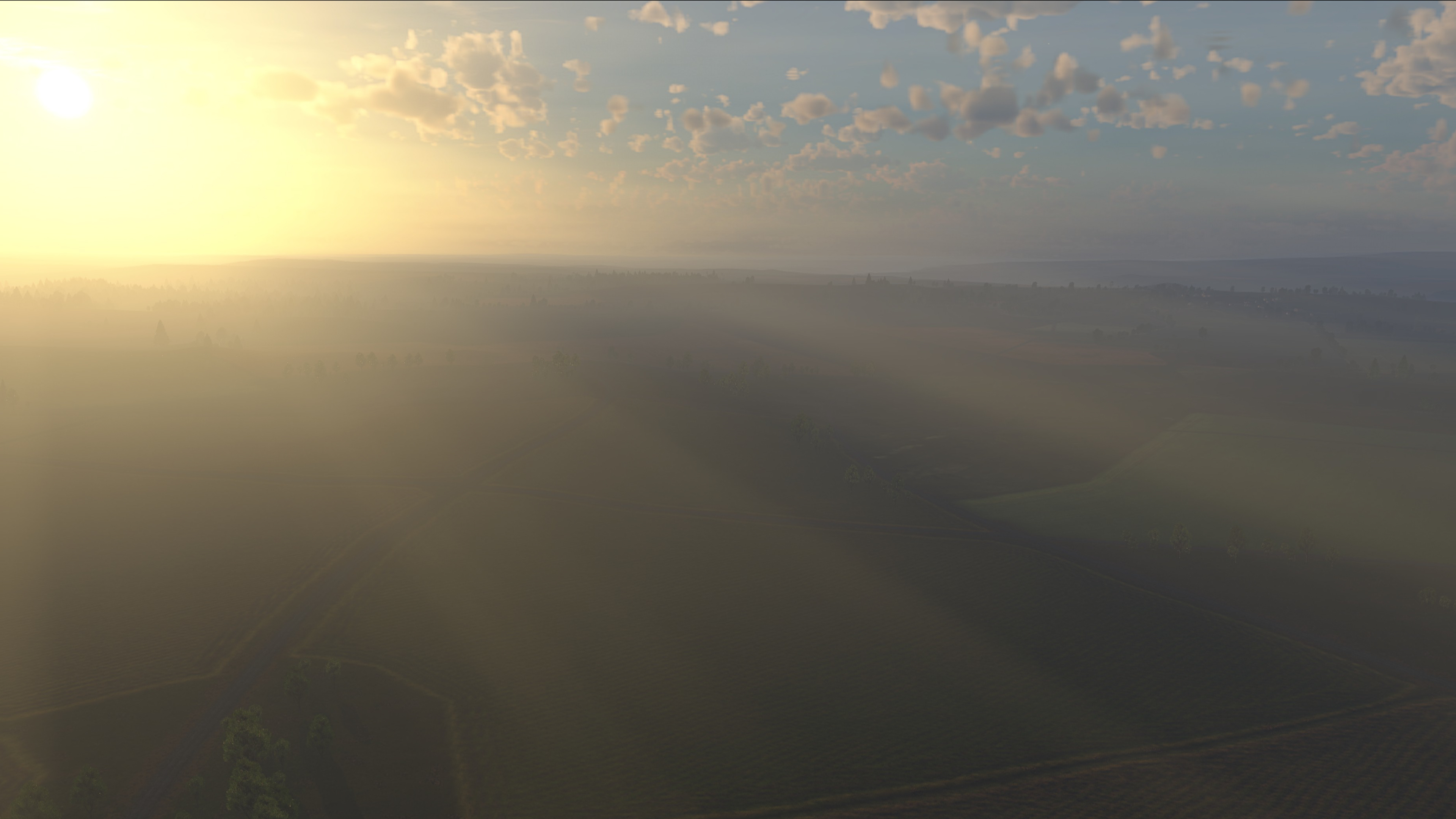
Fog and mist are now fully fledged parts of the atmosphere. In the new version of our graphics engine, fog is modeled with the same algorithms that create clouds and atmosphere. Due to this, the fog has become less homogeneous, and scatters light correctly.


Fog in the morning light.

In short, the game has its own atmosphere! This sophisticated mathematical model allows us to simulate visually accurate effects of the sky, clouds, scattering of sunlight at any height and at every point on our planet.


Earth’s atmosphere from Space, from low orbit at 200km (game engine).

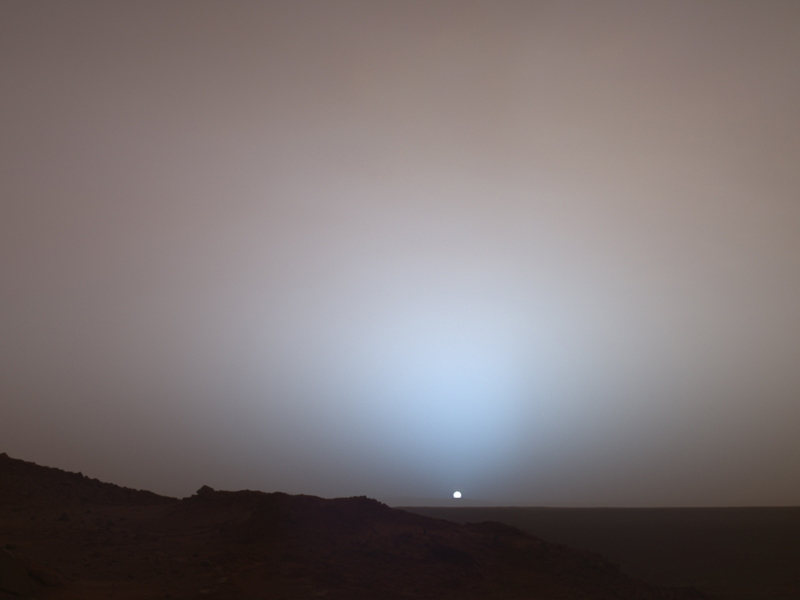
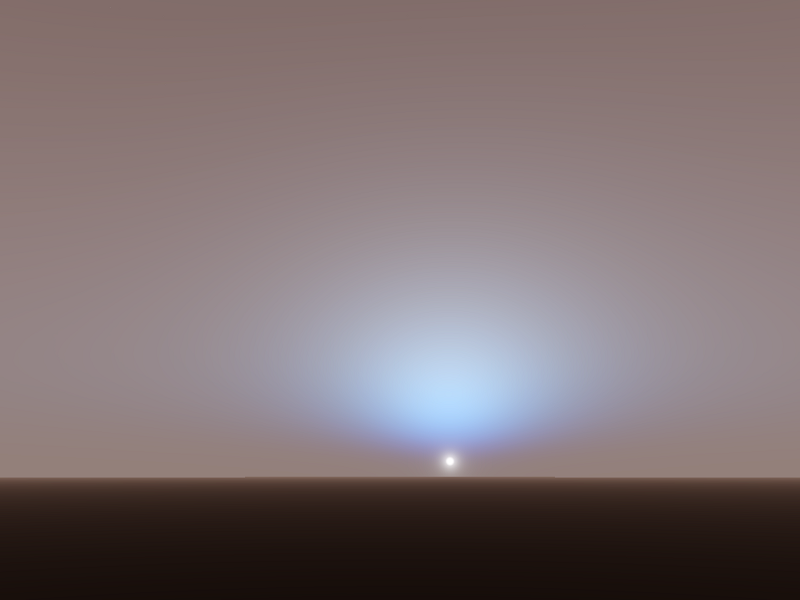
Not only our planet too! For example, we can simulate a dawn on Mars by simply setting parameters for the density and thickness of the atmosphere, the nature of the ozone layer, and the size of the planet. The atmosphere of Mars is very thin, and the sunset appears with a blue color as Rayleigh scattering simply does not have time to absorb the blue light; there is very little ozone and, due to the absence of a magnetic field, it is evenly distributed in the atmosphere of the red planet. In addition, there is no water vapor, instead dust storms constantly rage. Compare our modelling with the images from the ‘Curiosity rover’ - looks pretty much similar, doesn't it?


Dawn on Mars (NASA photo)

Dawn on Mars in the Dagor Engine 6.0 (the parameters of Mars atmosphere were taken from Atmosphere of Mars)