1. Battle Brothers
  2. News

Battle Brothers News

Dev Blog #131: City States, Part II

We’ve previously covered a good chunk of what the southern city states are about. Now it’s time to take a look at some of their troops that you may end up facing on the field of battle. Charge!

[h3]Slaves[/h3]
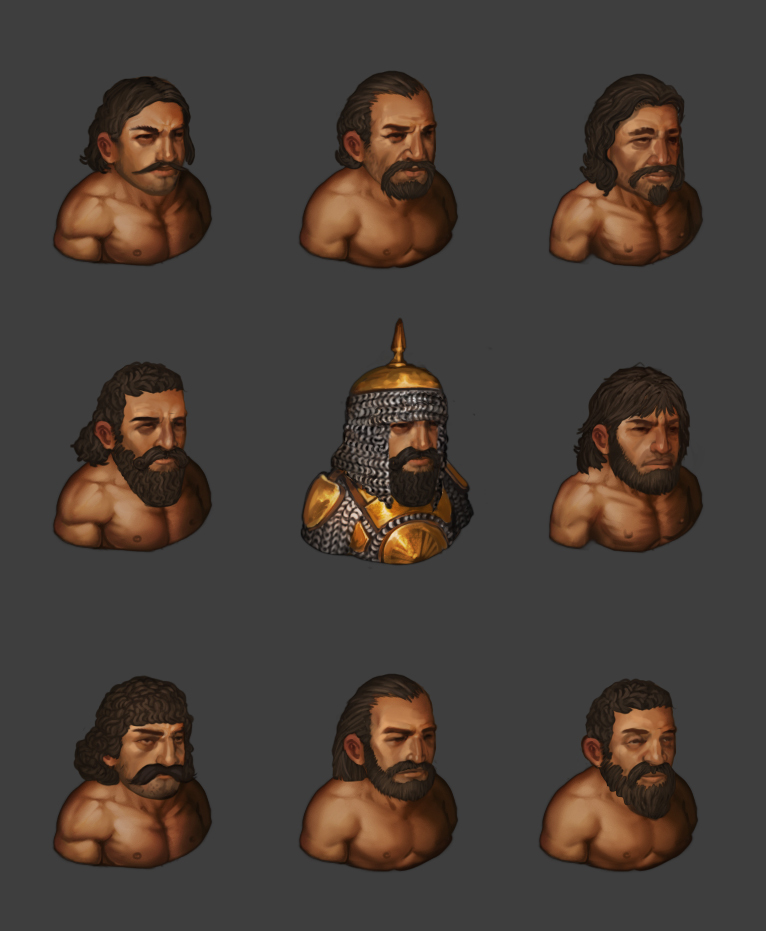
Whether born into slavery, made into a slave as punishment by law, or taken on a raid into foreign territory and sold to the highest bidder on a slave auction, it’s on the back of slaves like these that much of the economy of the city states is built. But slaves are not just cheap labor in peacetime, they’re also used as expendable troops in war.
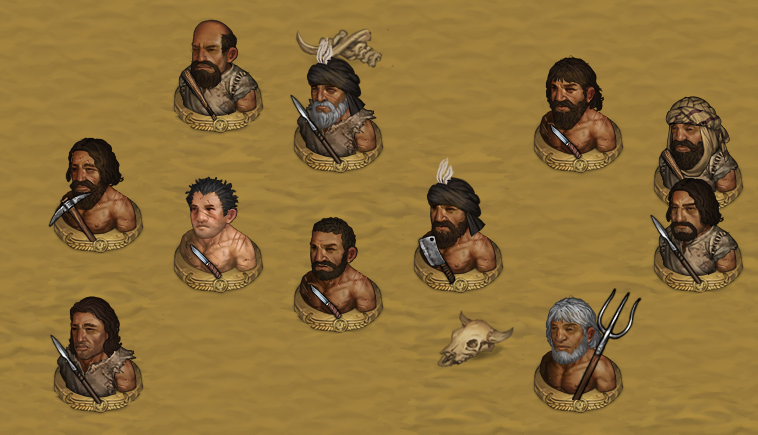


Life is cheap in the south, as the saying goes, and nothing makes this harsh reality sink in better than how the city states treat their slaves. In battle, they’re usually send first against the enemy to tire out their lines before the real battle begins. They’re poorly armed, many just carrying tools used as improvised weapons, and rely on swarming, flanking and overwhelming the enemy. They have poor morale and flee easily, but killing or breaking them does not affect the morale of any city state troops that aren’t slaves themselves. In fact, the city state troops have no qualms about friendly fire when it comes to slaves, and they may seize the opportunity that slaves provide by locking down the enemy and fire their ranged weapons into the thick of battle.

[h3]Conscripts[/h3]
Citizens of the great city states enjoy privileges that neither slaves nor outsiders do. For example, they have the opportunity to conduct business with the legal certainty of a codified law and can even hire legal council. In turn, they also have certain obligations to their state. Having to pay taxes is one such obligation, but another one for every adult male citizen is either mandatory military service or paying a hefty sum into the state’s coffers to be exempt. The council of Viziers may decide to conscript the citizens for the defense of the city state or for otherwise protecting and furthering the interests of the state. In practise, this can mean anything between border skirmishes with other states, doomed punitive expeditions deep into the deserts to hunt down raiders, and crushing slave rebellions.
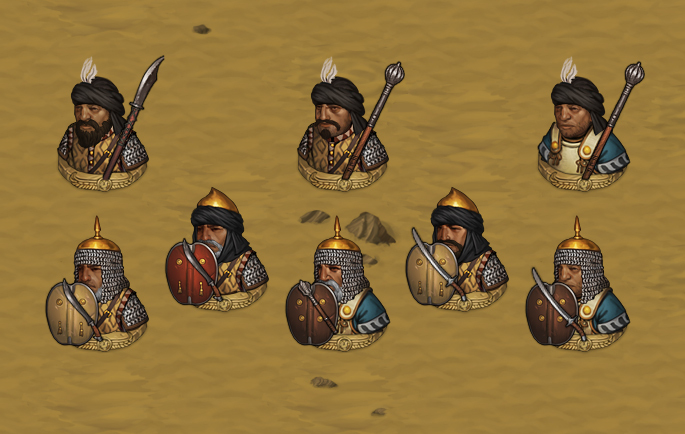


Conscripts make up the bulk of the military force of the city states. They have received some military drill and are most often dressed in a distinct southern armor made of several layers of linen, called a Linothorax, that is relatively cheap to produce. If they don’t have access to helmets, they choose to wrap cloth around their heads to protect against the sun. The color and patterns of these head wraps are often linked to a particular region of the south, and one familiar would know what place a southern conscript calls home by his headwear alone. Just before battle lines clash, Conscripts employ a unique weapon of the city states. It’s one reason why they are a military power to be reckoned with, and you’ll learn about next week in detail!

[h3]Officers[/h3]
Officers of the city states are mostly made up of the wealthy who would have enough funds to buy themselves free of conscription, but seek a career commanding troops in the military by their own volition. A victorious commander will accrue influence and gravitas, and some Officers may consider the army but a stepping stone in a fledgling political career.
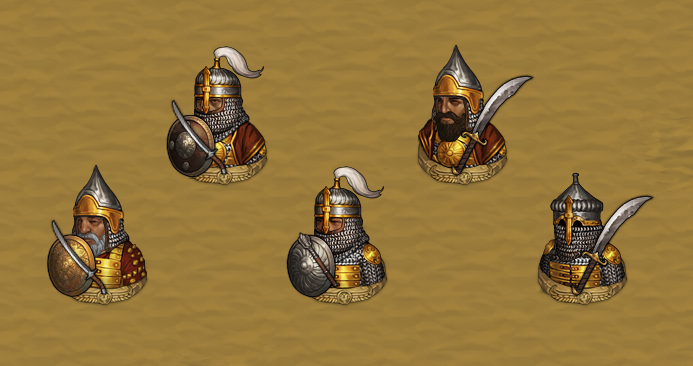


Considerably better armed than Conscripts, Officers carry finely crafted mail and lamellar armor with intricate southern ornaments into battle. Naturally, all armors can also be bought, looted and worn by your own men in the game!

[h3]Assassins[/h3]
Members of a secretive ritualistic cult, Assassins deal in death and provide murder as a service. They have no political ambition beyond the continued survival of their cult and that of their warped philosophy, and so act only in service to other parties, like individual city states. They’re not encountered roaming on the world map, but exclusively as part of contracts and events.
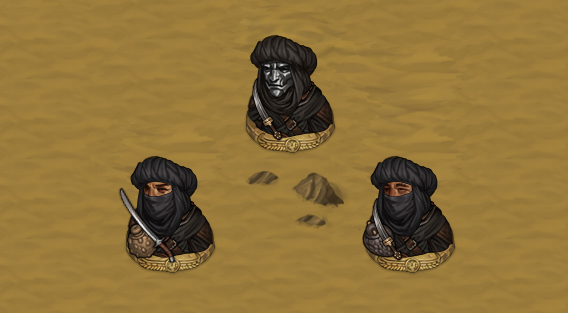


In battle, Assassins wear traditional black robes over finely crafted mail. Many also choose to exchange their own face for that of their master and founder of their cult, the old man on the mountain, by wearing metal face masks. Assassins have a nimble combat style and employ a variety of alchemical contraptions like Flash Pots and Smoke Pots to daze their opponents and move freely between them, only to then use a Qatal Dagger for greater impact on their debilitated victims.
Dev Blog #130: Southern Arms

Naturally, the southern city states of the ‘Blazing Deserts’ DLC also have their own arsenal of weapons. Some are southern variants of weapons you already know, while others are entirely new and come with unique skills. You’ll be able to buy them in the city states and loot them from southern opponents. Let’s take a look at a selection of them!

[h3]The Saif[/h3]
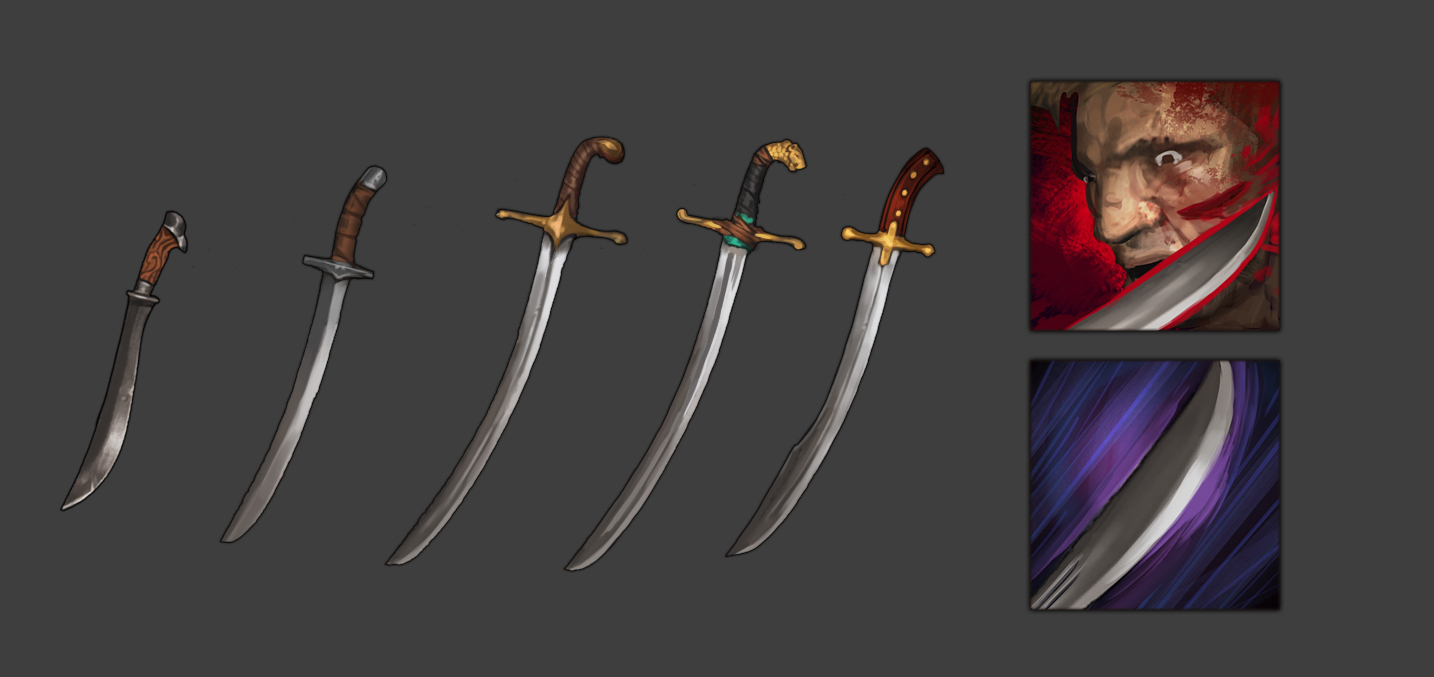
If you’ve been playing Battle Brothers for a while, you may already know of the Scimitar and the Shamshir, both introduced with the ‘Warriors of the North’ DLC. They were a teaser of a southern culture with their own arms to come - which now is about to arrive. As we’re adding the Saif, we’re also doing some work on the existing Scimitar and Shamshir.


A curved sword, the Saif is excellent for cutting deep wounds. It’s less suited for thrusting than straight swords, however, and therefore has a harder time penetrating armor. The Saif is a southern variant of the northern shortsword and at the lowest tier in the line of curved swords. The Scimitar has been buffed to be a middle tier weapon now, while the Shamshir remains the highest tier. All of those weapons share the ‘Slash’ skill with northern swords, but also have the unique ‘Gash’ Skill, which is much more likely to inflict serious injuries with adverse secondary effects than regular attacks are.

Not all injuries are equally useful against opponents, and many of the cutting injuries inflicted by the ‘Gash’ skill were previously among the weaker ones. We’ve combed through all cutting injuries to rectify this. Inflicting a ‘Deep Chest Cut’, for example, will now always reduce an opponent’s hitpoints by a percentage of their maximum hitpoints in addition to any damage your attack caused. It may not make much of a difference against Brigand Thugs who don’t have a lot of hitpoints to begin with, but it can mean a lot against barbarians, orcs and many beasts. As cutting injuries become more worthwhile to inflict, the 'Crippling Strikes' perk also becomes a more worthwhile pick - particularly if used together with the Saif, Scimitar or Shamshir to basically guarantee an injury.

[h3]The Shields[/h3]
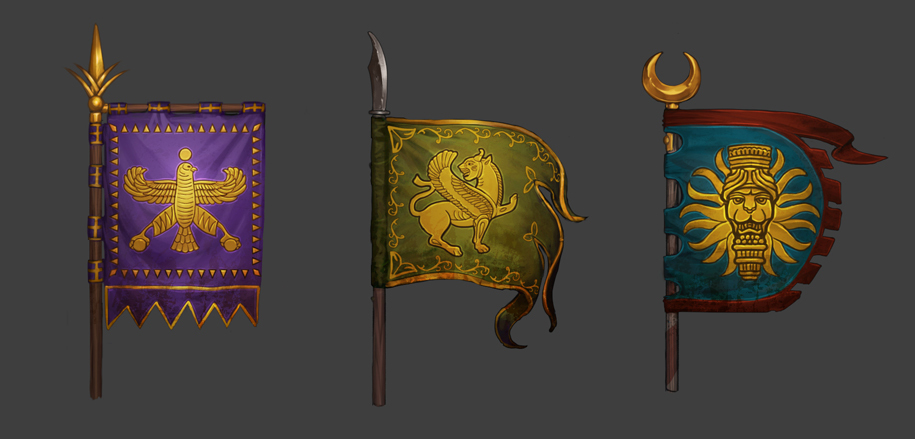
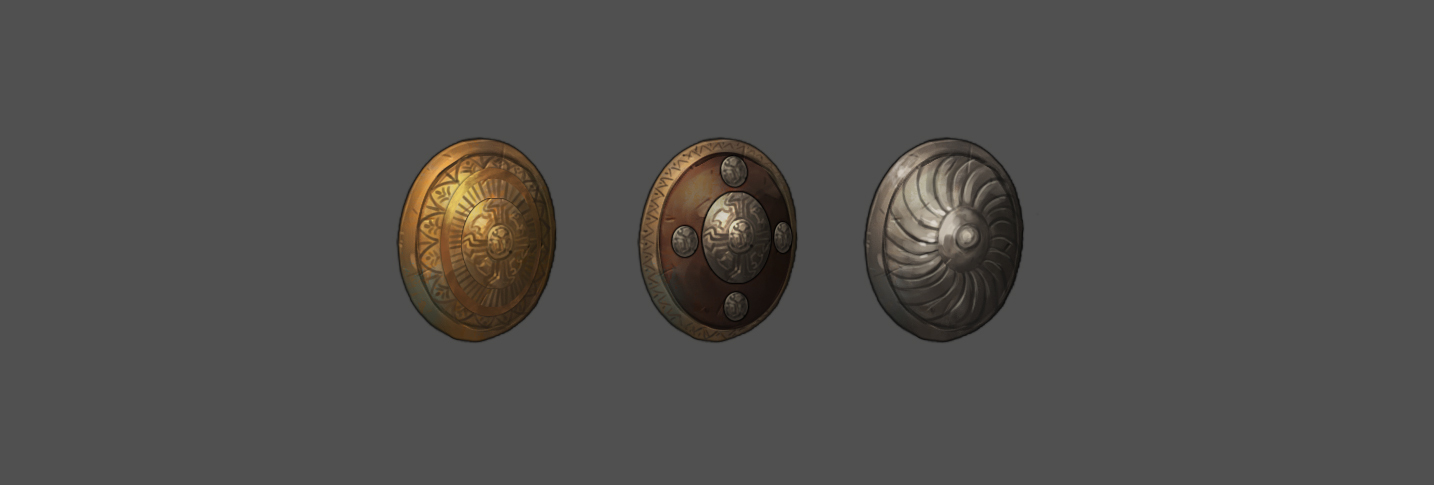
Identical in function to other shields already in the game, but with somewhat different stats, southerners also have their own shield designs that show well how their arms are inspired by those of historical Arabian and Persian cultures.


[h3]The Polemace[/h3]
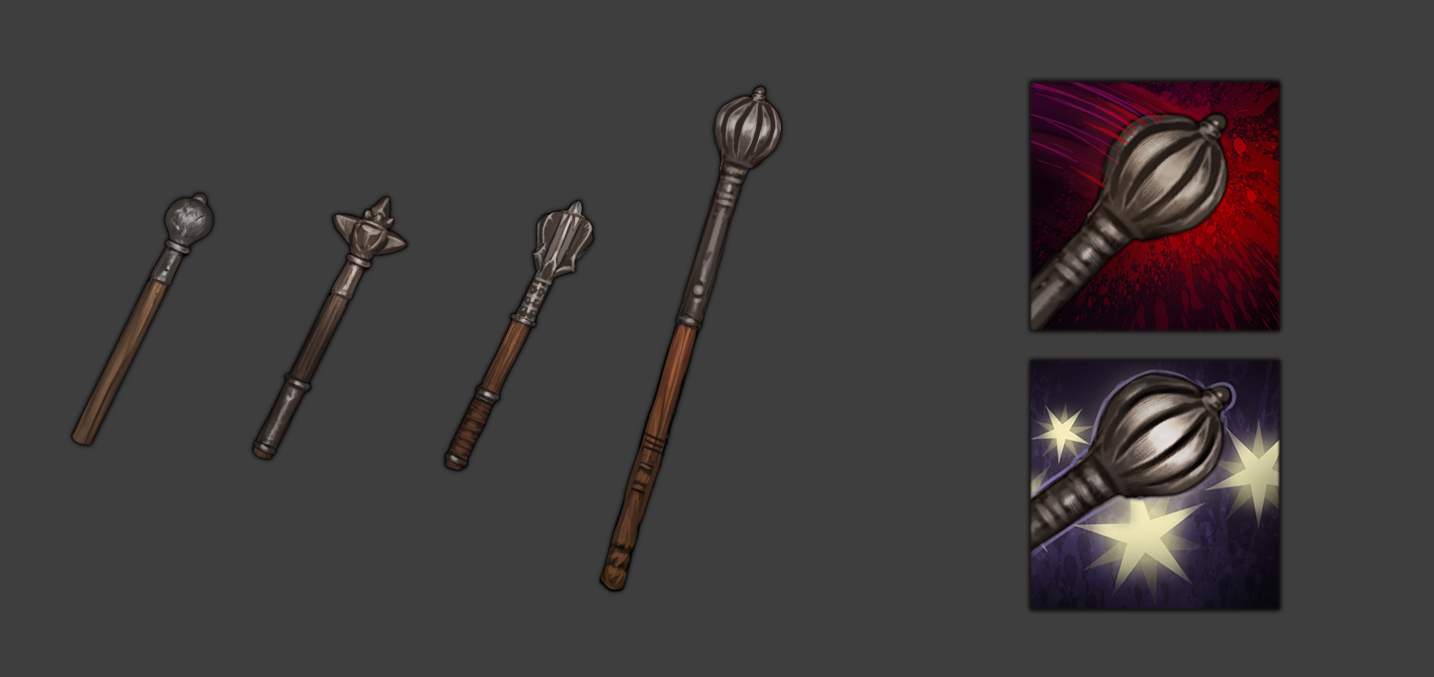
Southern armies are rather fond of maces, and so you’ll find a variety of southern maces with stats slightly different from their northern cousins while in the city states. In fact, they also mounted a mace on a long pole and aptly called it a Polemace. It offers the advantages of a regular mace combined with the range of a polearm.


The Polemace inflicts additional damage to fatigue with every blow. Using its secondary skill, a target can be stunned for one turn over a distance of two tiles.

[h3]The Nomad Sling[/h3]
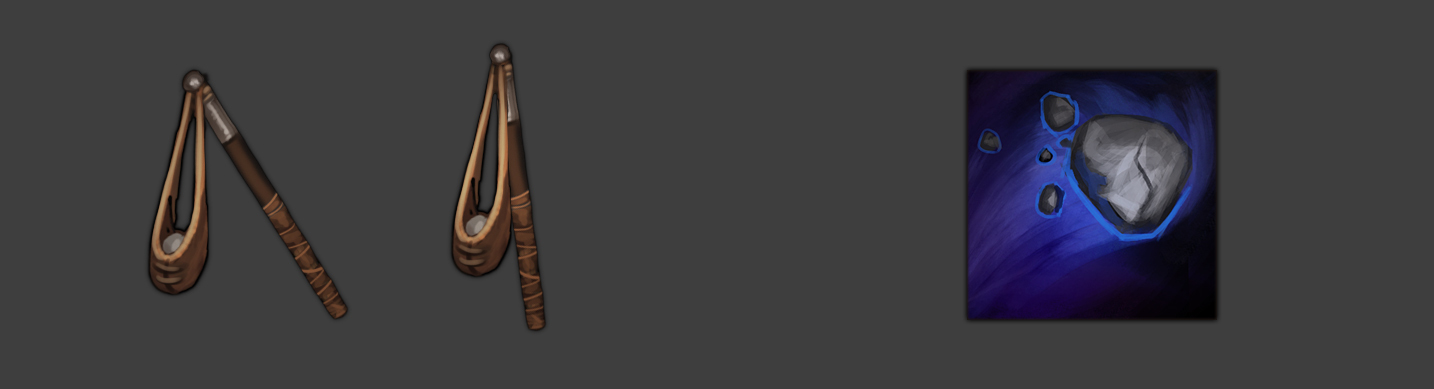
The south is no less plagued by banditry and pillaging than the north is. While the north has brigands lying in ambush along the road, the south has desert raiders descending upon trade caravans. These desert raiders - or nomads, as they’re sometimes called - have some equipment not otherwise available, including one particular weapon: the Nomad Sling.


A simple weapon used since ancient times, and the favorite of many a shepherd, a sling is used to hurl stones towards the enemy. The Nomad Sling is a higher tier variant of the existing Staff Sling with similar strengths and weaknesses, but better suited for the later parts of a campaign. It’s not particularly accurate or damaging, but with stones abundant everywhere, it will never run out of ammunition. Two stones can be hurled each turn, and on hitting a target in the head it will inflict the ‘Dazed’ status effect.

[h3]The Qatal Dagger[/h3]
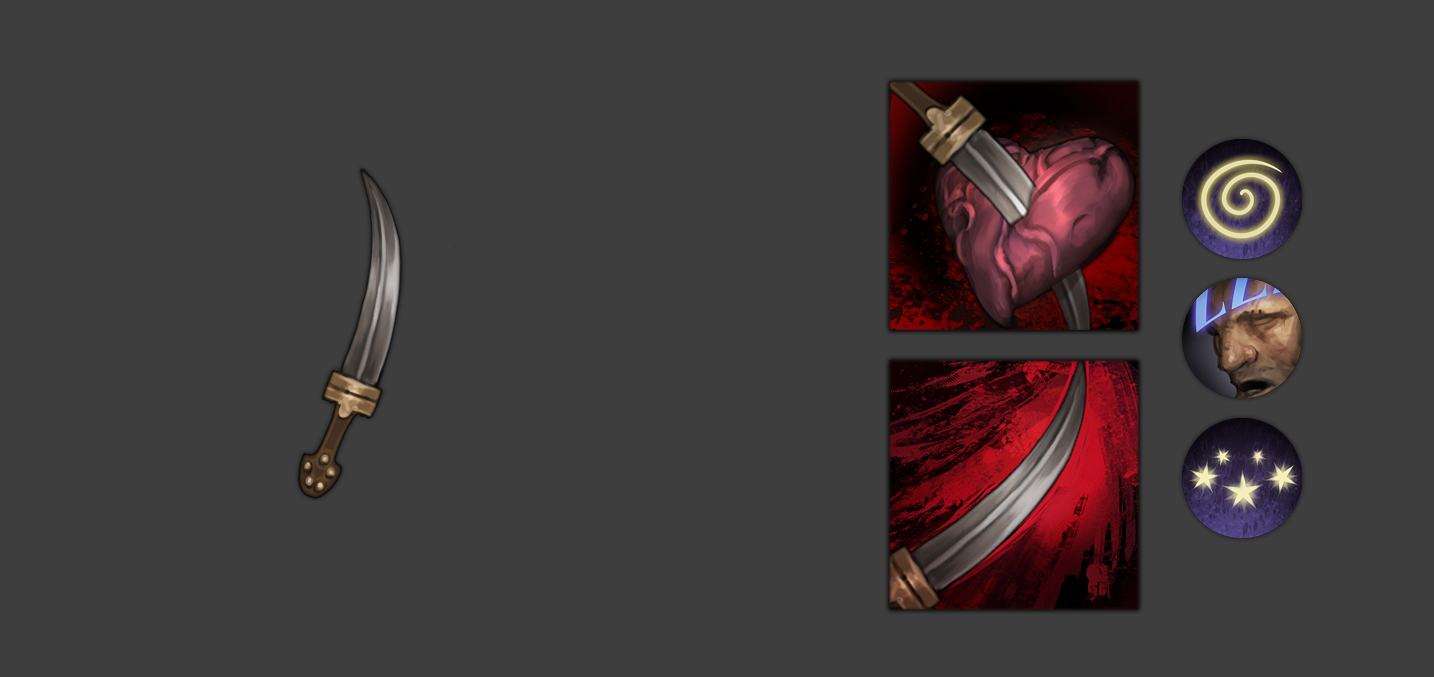
The Qatal Dagger is a short curved blade notoriously used by assassins of the southern deserts. Like northern daggers, it’s intended for quick attacks. Unlike northern daggers, it’s not meant to puncture weak points of armor, but to cut throats of debilitated opponents.


Using its ‘Deathblow’ skill, this dagger inflicts significantly increased damage to targets which have the Dazed, Stunned or Sleeping status effects. It’s much less fatiguing to use than the ‘Puncture’ skill of other daggers, and it can be used three times a turn with the ‘Dagger Mastery’ perk. It works best, of course, in a combo with other equipment used to debilitate opponents - such as the new Flash Pot available from alchemists, or that Nomad Sling shown above.

[h3]The Swordlance[/h3]
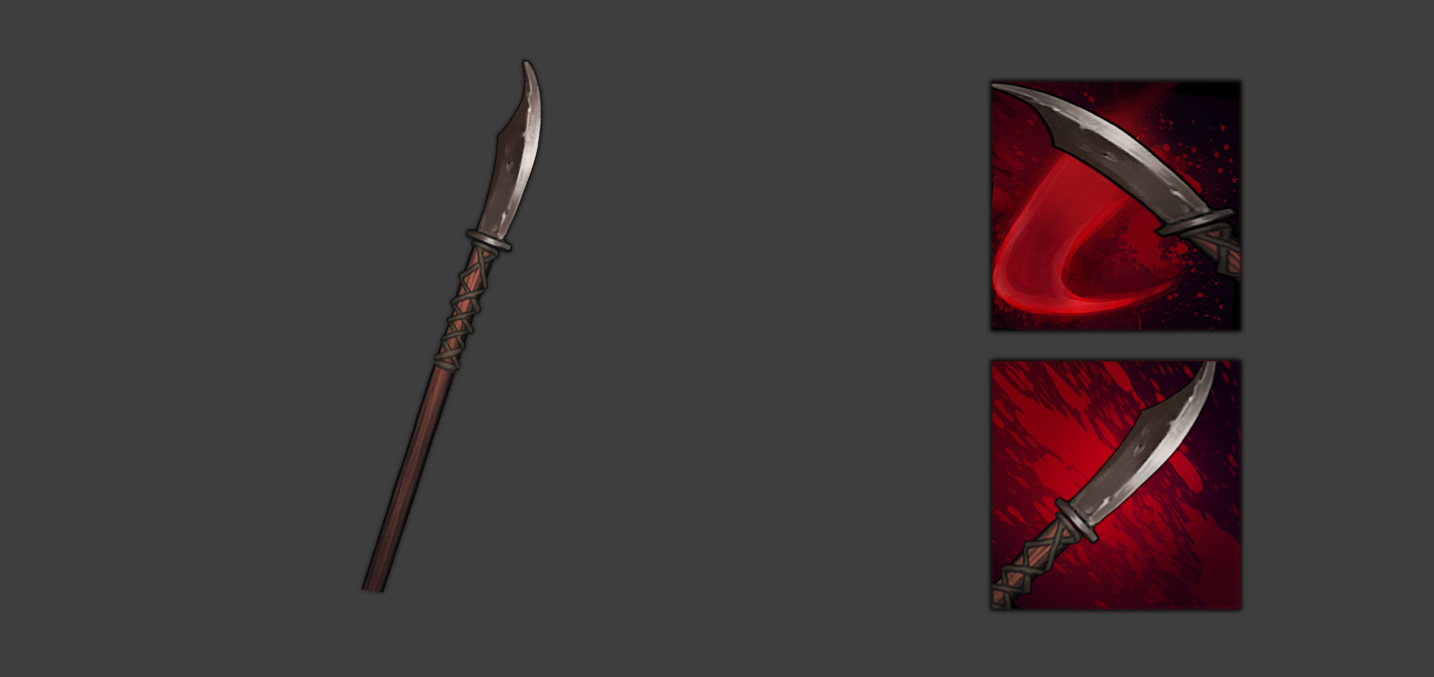
As you’ve already learned, the city states were built atop the ruins of the Ancient Empire. It’s no surprise, then, that they also inherited some of their weapons. The Swordlance is a sharp curved blade attached to a long pole and used to deliver deep sweeping strikes over a distance of two tiles. It’s effectively a Warscythe that performs slightly worse against armor, but is much more durable because it wasn’t lying in some sealed crypt for hundreds of years.


Like all polearms, the Swordlance can be used to strike a single target over a distance of two tiles. Its unique feature is the ability to perform sweeping strikes in a wide arc that hit three adjacent tiles in counter-clockwise order over some distance, which can cause mayhem in the opponent’s backline.

There’s more new weapons coming with unique mechanics, and we’ll take a look at those as well over the coming weeks!

Dev Blog #129: City States, Part I

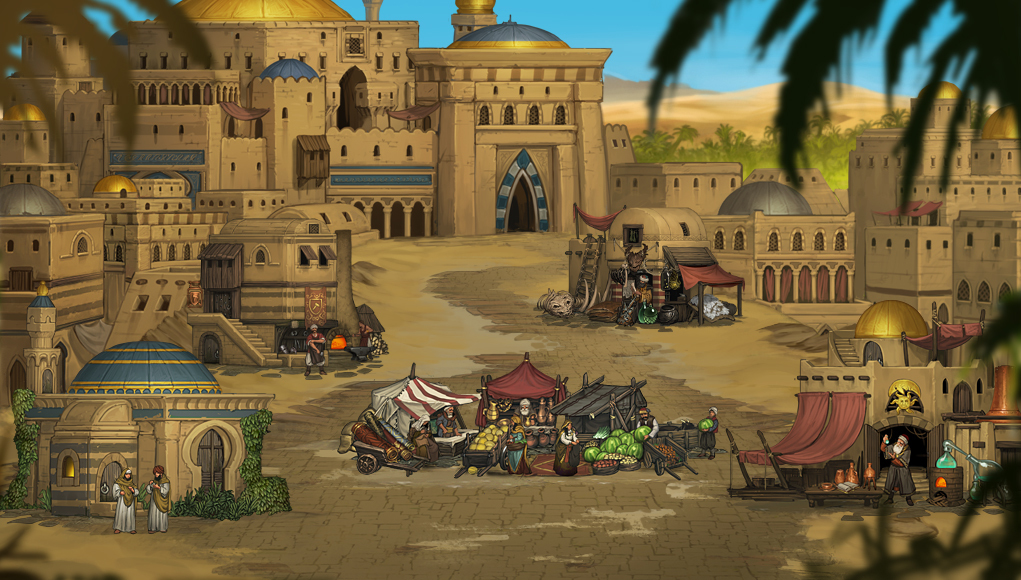
A major feature of the upcoming ‘Blazing Deserts’ DLC is an expanded south with several city states that have their own distinct culture, looks, services, contracts, and more, based loosely on medieval-era Arabian and Persian culture. Time to talk about it in detail!

[h3]The City States[/h3]
The southern deserts. What is a barren wasteland now once was green and fruitful. An ancient empire ruled these lands long ago, but a cataclysmic event purged it from the face of the world along with their god-emperor, leaving but ruins and ashes. And from the ashes the belief in a new god arose, a powerful god manifest in the sun, the Gilder. And from the ruins new cities arose, the southern city states.

“Are these wastes? You see nothing but sand, air so hot it burns the lungs, ferine creatures malforming just to survive, and what of the man who strides here? Distilled to his essence. The north finds nobility between the empty chatter of their artifices. Here, nature is nobility, and under such auspices it is the strongest who rise, basking beneath the shine of the Gilder, and the weak who are burned beneath His sublimity. It is a measurement most peculiar, and one not often understood by interlopers.”


The southern city states are magnificent cities now, easily as large as the largest cities found in the north. They dot the southern deserts where water is to be found, reigning over a precious resource in the otherwise dry and blazingly hot lands. Their streets are abuzz with traders offering their wares on busy bazaars. Trade with exotic spices and fabrics has made them rich, and their wealthy elite are patrons of the arts and sciences. Advancements in medicine, astrology and alchemy are unlike anything found in the north. But much of their economy was built on the back of slaves, and life is cheap here.


The city states are not ruled by nobility, but by wealth. Ruling councils consist of Viziers, ministers each responsible for a different aspect of governing the state, elected from the rich bourgeois. So decadent and removed are they from the plight of the common man, that they regard everyone as tools used for their amusement. A mercenary captain could find plenty of work here - whether hunting down desert raiders or crushing slave rebellions - but they would also find disdain from their employers, who regard a mercenary as but a ‘Crownling’, a slave of a different kind, a slave to the coin.


The southerners, who call themselves Gilded for their belief in their single god in whose shine they bask day in and out, are of darker complexion than northern folks. You’ll find many of the same professions here as in the north, but also some unique to their culture. For example, slaves can be bought on slave auctions and put to use even in a mercenary company. You pay for a slave once, but never pay them any wages, and the morale of southern backgrounds will not suffer should the slaves perish on the field of battle, for they are considered very much expendable here.

[h3]The Arena[/h3]
You’ve already learned about the Alchemist, a trader that offers unique alchemical contraptions only found in the city states. Another building entirely unique to the south is the Arena.

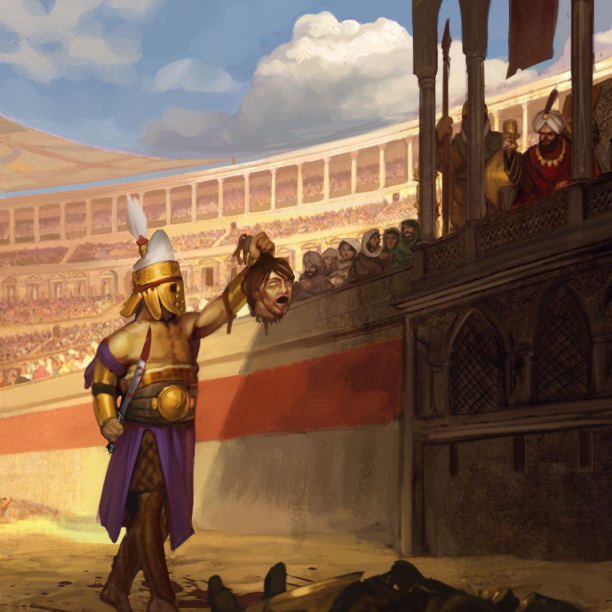
While northerners will duel for honor, southerners do so for the entertainment of the masses, and not always willingly. Arena fights are to the death and in front of crowds that cheer for the most gruesome manner in which lives are dispatched. It is a different way to earn money with advantages and disadvantages over mercenary contracts.


Unlike with mercenary contracts, in arena fights you’re limited to fight with but a few men of your choice against various opponents. Also unlike mercenary contracts, you’ll know exactly which and how many opponents you’re about to face - a certain number of beasts, slaves, captured desert raiders or professional gladiators, for example. There’s no lengthy travelling involved, nor ambushes along the road, and you’re paid well for victory in front of cheering spectators. However, you can’t retreat once a battle has started and you won’t be able to loot after the battle has ended. If your men survive long enough, fighting in the arena will earn them unique traits as they climb the ranks from pit fighter to champion of the arena. Naturally, there’s also a new Gladiator background to be hired in the city states.

Dev Blog #128: The Retinue, Part II

Last week we introduced a new gameplay mechanic with a retinue of non-combat followers coming with the ‘Blazing Deserts’ DLC. This week we’re taking a closer look at a selection of three more of these non-combat followers in order to give you a better idea on how all this is going to work.

There’s a total of five slots available for you to fill, but several times as many followers available to choose from. Choosing the right set of followers for your company is another way to customize it to your playstyle and to make each company and playthrough feel more unique. Do keep in mind that everything you’re about to learn is still under development and therefore subject to change depending on how testing goes. This is doubly true for numbers, which is why we’re not showing any of them this week. Onwards, then!

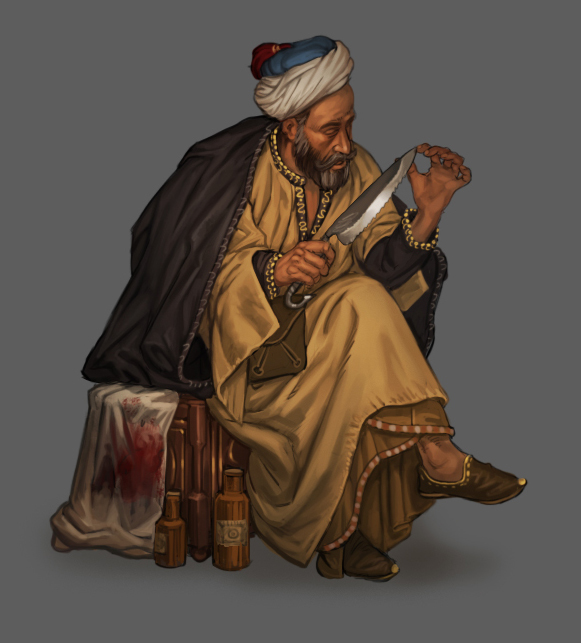
[h3]The Surgeon[/h3]
A studied man from the south, the Surgeon is a walking tome of anatomical knowledge. A mercenary company seems the perfect place both to apply that knowledge in healing, but also to learn more about how the insides of men are made up.


With the Surgeon in your retinue, characters that fall in battle have a significantly improved chance to survive with a permanent injury instead of dying outright. A permanent injury can still end a career, of course, but it can just as well end up being but a reminder of a particularly hard-fought battle. The important point is that now it’s up to you and no one else to decide whether to let go of a character or keep them on the roster - which can be particularly helpful in the late game and with experienced and key characters. In addition, the Surgeon also looks after injuries of the non-permanent kind, and helps your men to recover from them faster, which reduces downtime.

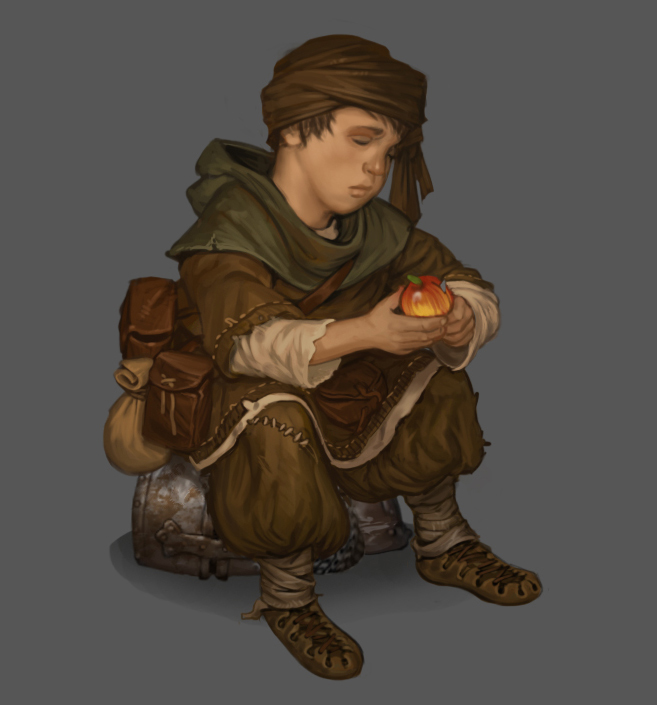
[h3]The Scavenger[/h3]
Whether the son of one of your men or an urchin you took pity on, the Scavenger pulls his weight by collecting bits and pieces from every battlefield.


With the Scavenger around, each armor destroyed will grant you a certain amount of tools and supplies after battle, the exact amount depending on what kind of armor it was. This makes the Scavenger a useful choice for heavily armored compositions that need a lot of tools and supplies for upkeep, but also for companies that destroy most enemy armors with hammers and so can’t loot those, but in this way still receive some loot anyway, and when fighting lots of Greenskins. The Scavenger also returns a part of all ammunition you spend during a battle, making ranged-heavy companies more self-sufficient, and the use of throwing weapons less expensive.

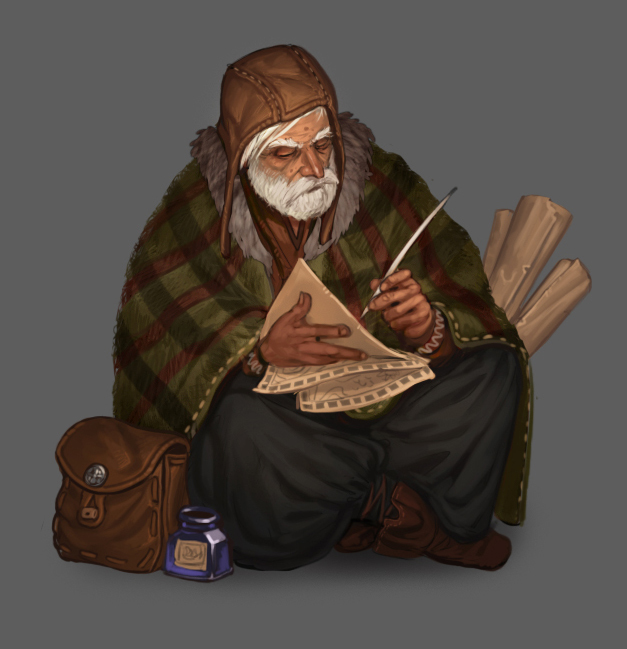
[h3]The Cartographer[/h3]
The Cartographer is a man of culture and knowledge, but he also realizes that traveling in the company of well-armed mercenaries is one of the best ways to safely see the world and explore places that few visited before.


Available once you’ve found at least one legendary location, the Cartographer will pay you for each location that you discover out in the world on your own. The further away from civilization a location is, the more he’ll arrange for you to be paid. And legendary locations pay extra. The Cartographer is one example of several followers that further support specialized playstyles - if you’re more interested in heading out on your own terms, explore the world and raid locations rather than doing contracts, he’ll make this a more profitable venture. In a similar vein, there are other followers available that support playstyles like banditry, trade and hunting enemy champions for bounties and loot!

Dev Blog #127: The Retinue, Part I

And now for something completely different. Formerly announced as company feats, the ‘Blazing Deserts’ DLC will introduce a new gameplay mechanic to Battle Brothers, called the Retinue. Read all about it!

[h3]The Retinue[/h3]
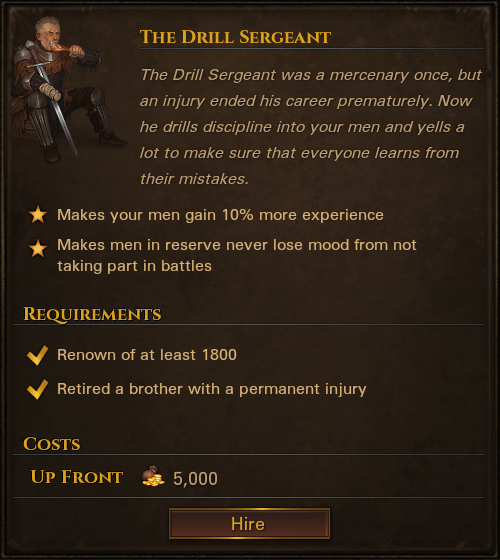
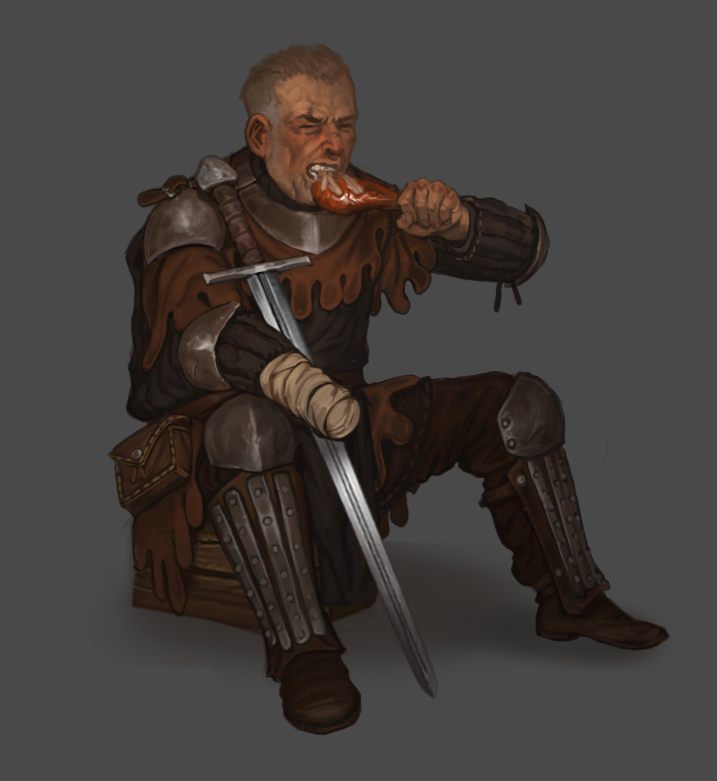
A big reason why suffering heavy losses late in a campaign is devastating, and also why coming back from those losses is difficult, is because most progress that you attain throughout a campaign is in the growing strength of your men - which is the very thing that you stand to lose in every battle. While you can and should save some crowns for hard times, all too often you’ll have to start near the bottom again and hire fresh recruits all over. But what if you’d have a drill sergeant that whips these recruits into shape more quickly? And what if having that drill sergeant would be an advantage that you couldn’t lose again? In other words, permanent progress not erased by battles lost.

Some of you will recall the concept of having ‘non-combat followers’ - non-fighting specialists like blacksmiths, surgeons or that drill sergeant mentioned above. A retinue of people that would support your company of fighting men outside of battle. It’s an idea that we’ve been toying with since before Battle Brothers even went into Early Access, and it’s what we’re now introducing to the game.


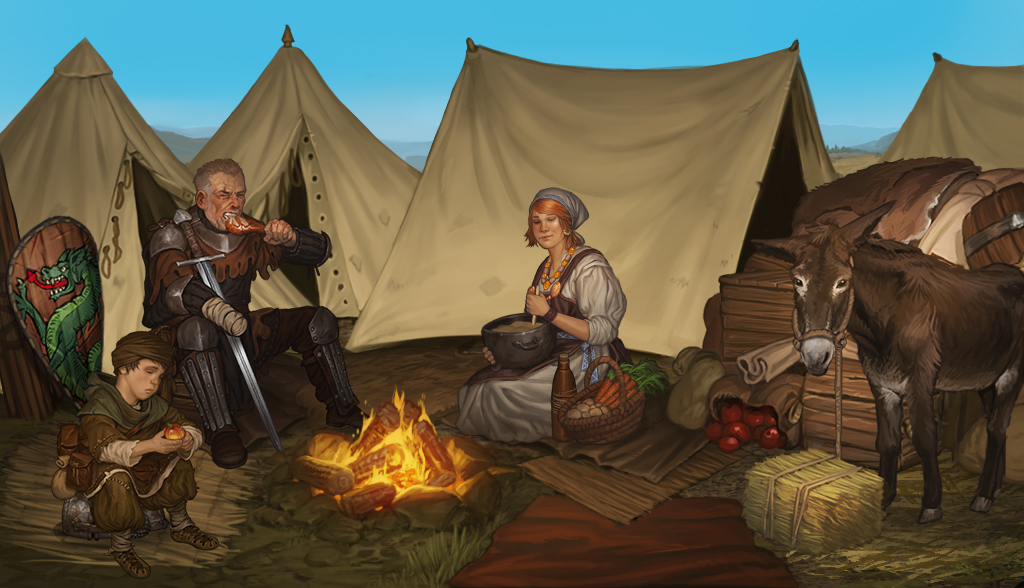
Your retinue of non-combat followers can be found in a new screen accessible from the world map. Here, you’ll find the men, women and children that travel along with your company sitting around a homely campfire. There’s five slots in total for you to fill, and several times that many followers available to choose from. Each follower pulls their weight by granting you one or more beneficial effects on the world map. Let’s take a closer look at the drill sergeant.


The drill sergeant makes your men gain more experience from combat and never lose mood when being stuck in reserve, by keeping discipline and enforcing a hard training regime. In order to hire a follower like him, you’ll first have to unlock them. At the most basic level, followers require you to have a certain level of renown, but many also require other conditions to be met. For example, in order to unlock the drill sergeant you’ll first have to retire a brother with a permanent injury. That’s not hard to achieve, but other requirements can be more involved, giving new goals to pursue. Each follower costs a certain amount of money to hire, and you can replace a follower at any time with a different one for a cost.

There’ll be followers available that have an impact on various aspects of strategic gameplay that any mercenary company has to deal with, like the drill sergeant, but also a couple that further support more specialized playstyles. For example, if you’re particularly interested in banditry, exploration, trade or named item hunting, we’ve got you covered. Choosing the right set of followers for your company is another way to customize it to your playstyle and to make each company and playthrough feel more unique.


In addition to your entourage of followers, you’ll also find a donkey around the campfire which you can upgrade first to a cart, then to a wagon, and then to an even bigger wagon, each time to increase the capacity of your inventory. Indeed, you no longer have to wait until the right ambition comes along in order to unlock more slots for your stash, but you can at any time just buy more inventory slots for money here. Easy!

Join us again next week when we take a closer look at some of the followers available for your retinue in part two of this dev blog.