Commanders!
Today, we’d like to tell you more about the upcoming
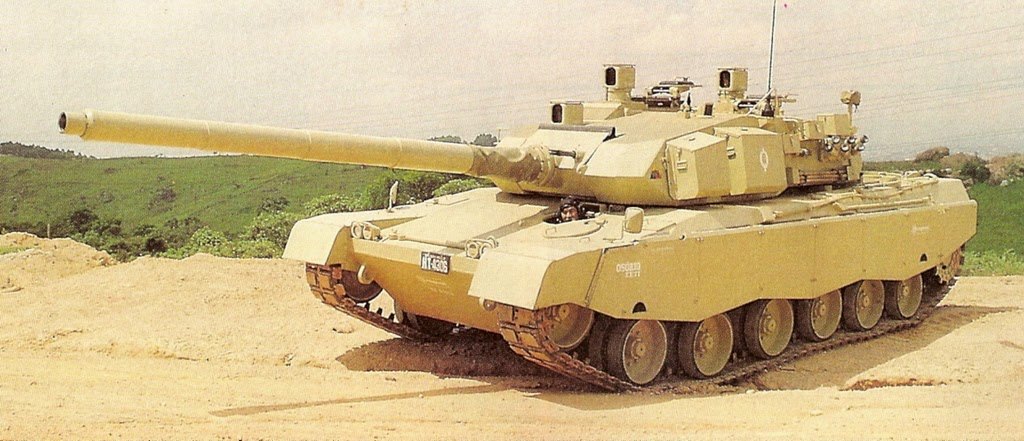
Osório Premium Main Battle Tank that will be available during the upcoming Beneath the Southern Cross event.
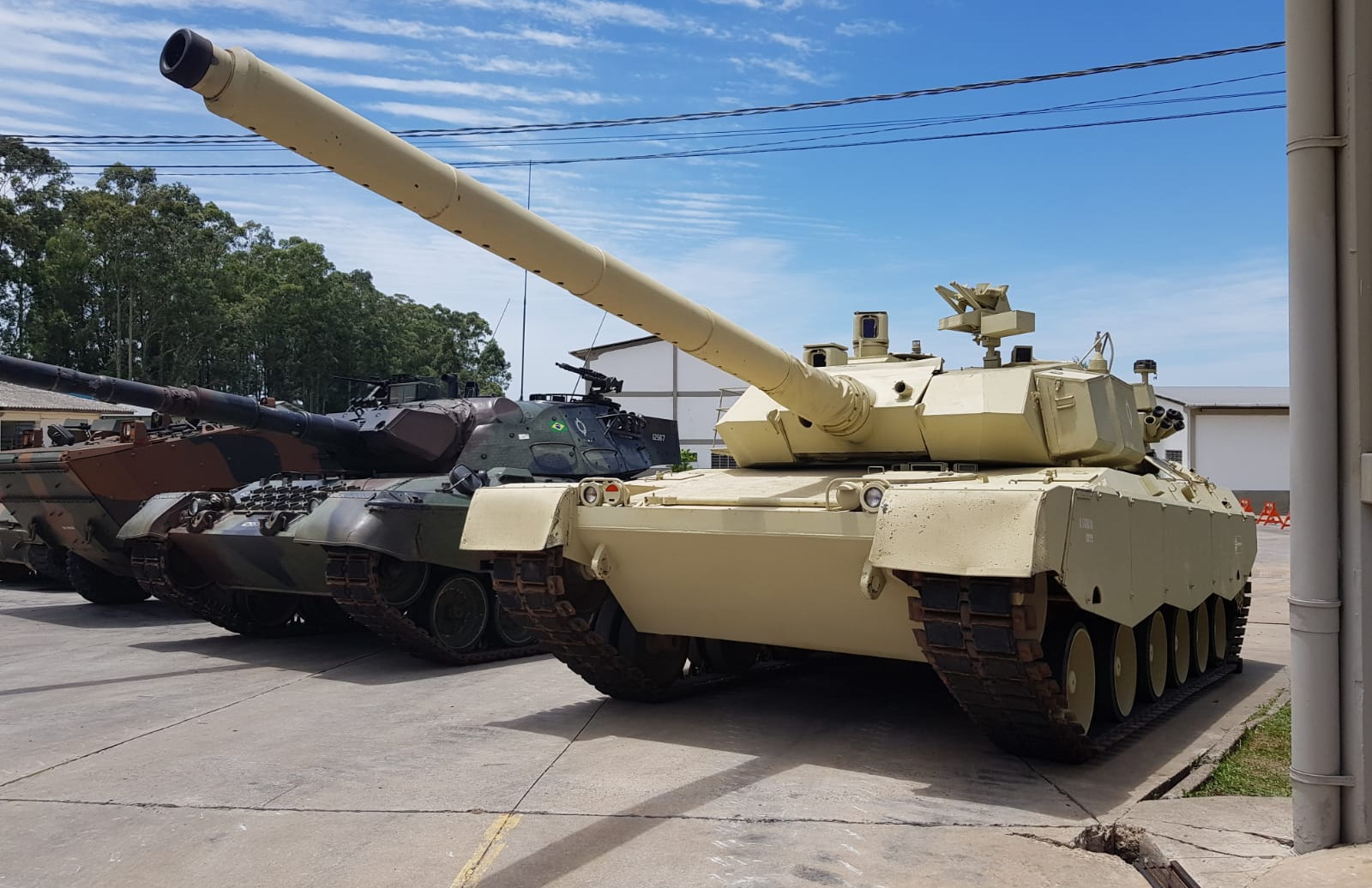
You probably know the name Osório as it was mentioned in
another article about the rise and fall of the company that created it, Engesa. In this one, we’ll focus on the MBT itself.
But, as usual, a bit of history first.
The 1970s and 1980s were an interesting time for many third world nations and Brazil was not an exception, but the military status of the massive country was perhaps even worse than the rest of the world. While it had a military industry of its own, most of its armored vehicles and principal armor designs were imported – such was the case for the entire South America. Where other third world countries could rely on their endless oil riches (Persian Gulf) or its strategic location (Asia), most of South America was living off American military surplus ever since the end of the Second World War.
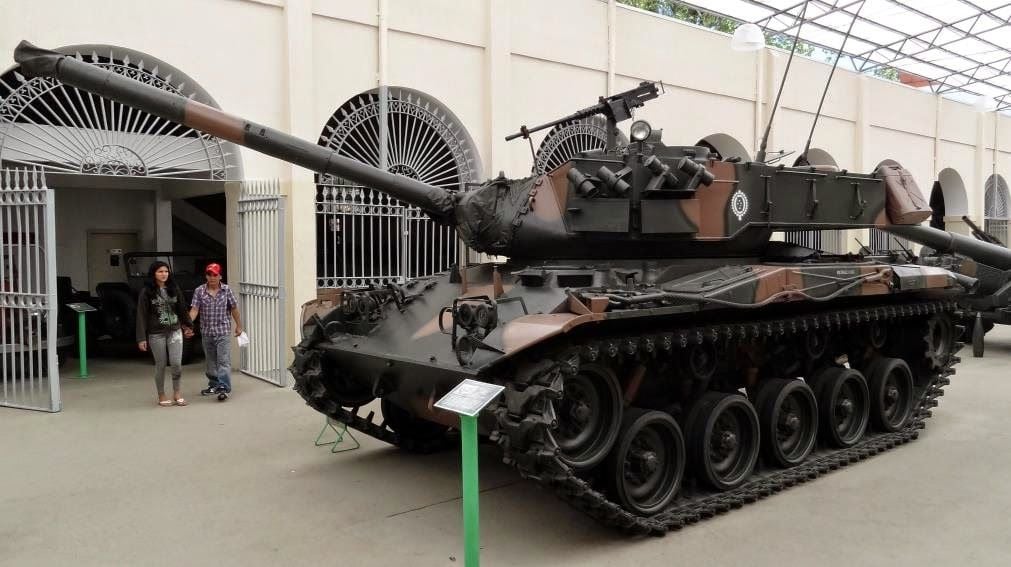
That is not to say no South American country ever produced its own weapons – they did and sometimes pretty good ones, Brazilian light armor was amongst the most popular items of its kind for multiple reasons, but mainly for their affordability. Especially North Africa became a major market for these with hundreds sold to Tunisia, Libya and Iraq. But one way or the other, Brazil was still stuck with older surplus vehicles whose time was just running out. To remedy the situation, a Brazilian company called Bernardini was tasked to develop an affordable Main Battle Tank to replace the aging fleet of Walker Bulldogs, old Light Tanks from the 1950s still in service in Brazil.
Bernardini had a fair bit of experience upgrading obsolete vehicles but designing a tank from scratch was new for them. Furthermore, Brazilian budgetary and weight constraints did not allow for anything fancy or advanced. The result was a second generation MBT called Tamoyo that was, however, fairly rudimentary. In other words, it was obsolete by the time the first prototype was built.
Engesa, on the other hand, had plenty of experience, just not the right kind. In 1982, around the same time as the construction of the first Tamoyo prototype began, it began working on an MBT of its own, although the reason was fairly different. Instead of a basic, cheap tank for the Brazilians, Engesa was aiming at foreign markets, especially the Middle East where the bulk of its foreign sales came from. And if some customers were happy with Engesa’s other products, why not buy an MBT from them?
It was a reasonable assumption – most fiascos begin with one as in the early 1980s, Saudi Arabia was looking to replace its aging fleet of M60 Patton and AMX-30 tanks, which represented a hefty contract for no fewer than 300 tanks. Other countries such as Greece and Turkey were doing the same thing at the time, although Engesa’s expertise and contact didn’t go that far. Still, a certain level of ambition is always good for business and Engesa’s president José Luiz Whitaker Ribeiro approved the project.
Despite knowing the outcome of the story, it would be foolish to assume that the management of Engesa didn’t know what they were doing. Instead of envisaging something cheap, they went straight for the third generation to create a competition for the Abrams, Challenger and Leopard 2 Main Battle Tanks.
Such an undertaking was (and is to this day) extremely complex and they were also fully aware that they couldn’t do it alone. Engesa’s representatives therefore sought aid abroad. They had several options – South Africa (with its advanced armor development), Germany (multiple companies) and Britain.
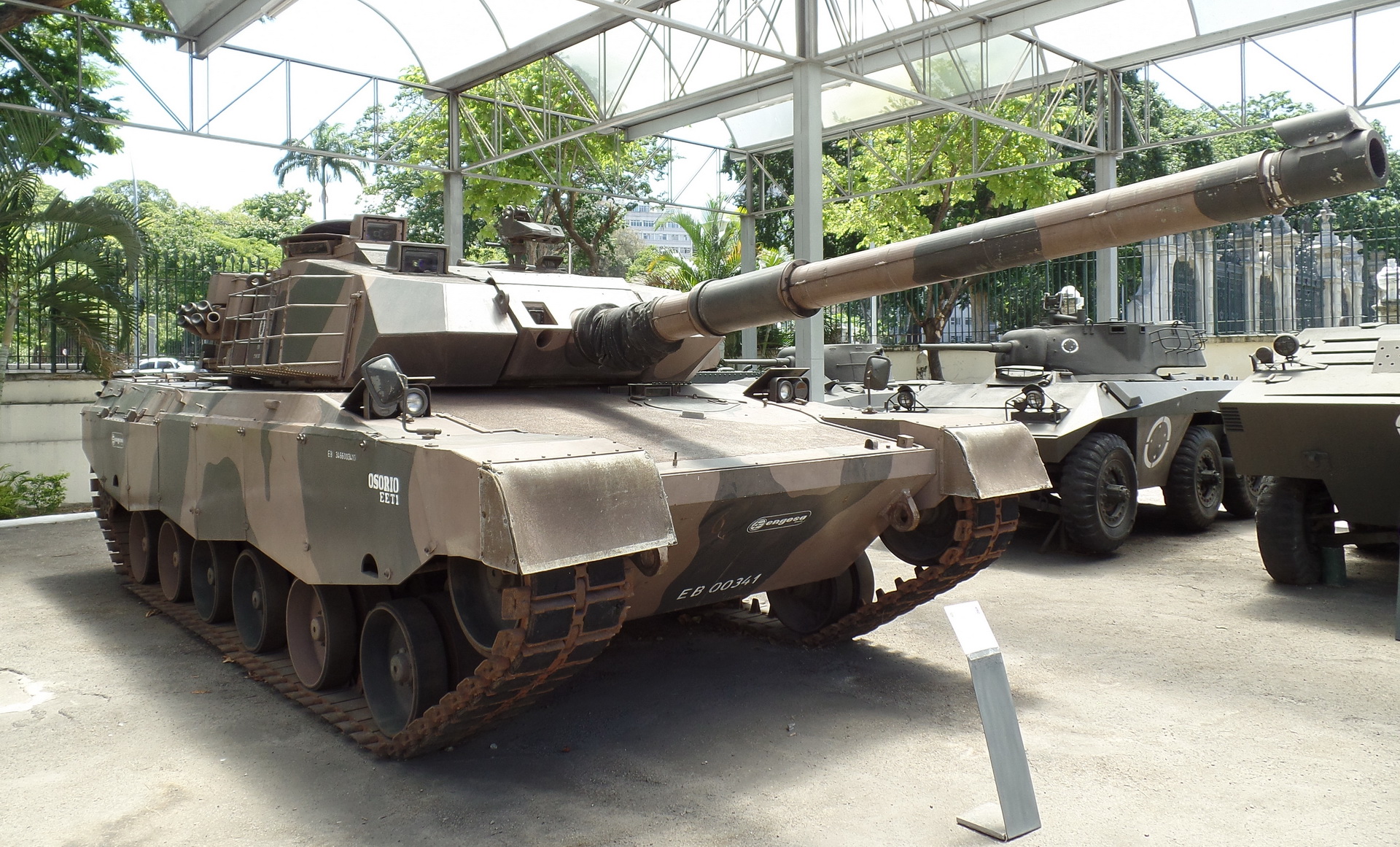
In the end, an agreement was reached with British Vickers to develop a turret for the new MBT (this is why the turret has a lot in common with the Vickers Mk.7 MBT) – West German involvement was vetoed by its government and South Africa was not viable as a partner due to its apartheid-related isolation. Additionally, Ribeiro hired some of the world’s foremost armor experts for consultations, including two legendary names – Richard Ogorkiewicz and Christopher Foss.
Unfortunately, such endeavors never take place in a vacuum. When you’re scouring the market of available experts, others tend to notice – in this case, once again, the Germans. Especially Krauss-Maffei and Mercedes were active in this regard, convincing their sub-contractors and partners not to work with the Brazilians and over-paying many key engineers Engesa was in negotiations with. In the end, Engesa failed to acquire the access to numerous advanced technologies and the design of the tank itself was left to its in-house team.
Despite such setbacks, the project continued quickly thanks to the very high amounts of money Engesa invested into it. And it wasn’t just for export anymore – Engesa sought to compete with the Tamoyo as well for Brazil’s next MBT. In the end, two versions of the project were envisaged:
- A cheaper one with a 105mm rifled gun and not-as-advanced optics for Brazil
- A more expensive one with a 120mm smoothbore gun and all the bells and whistles a third generation tank could feature – for export
The Brazilian version was called Osório after Manuel Luís Osório, Brazil’s 19th century legendary general and a hero of the war with Paraguay. The export version was referred to as Al Fahd in honor of Fahd bin Abdulaziz Al Saud, the king of Saudi Arabia at the time. The naming of the tank is a bit complicated but we’ll get to that later.
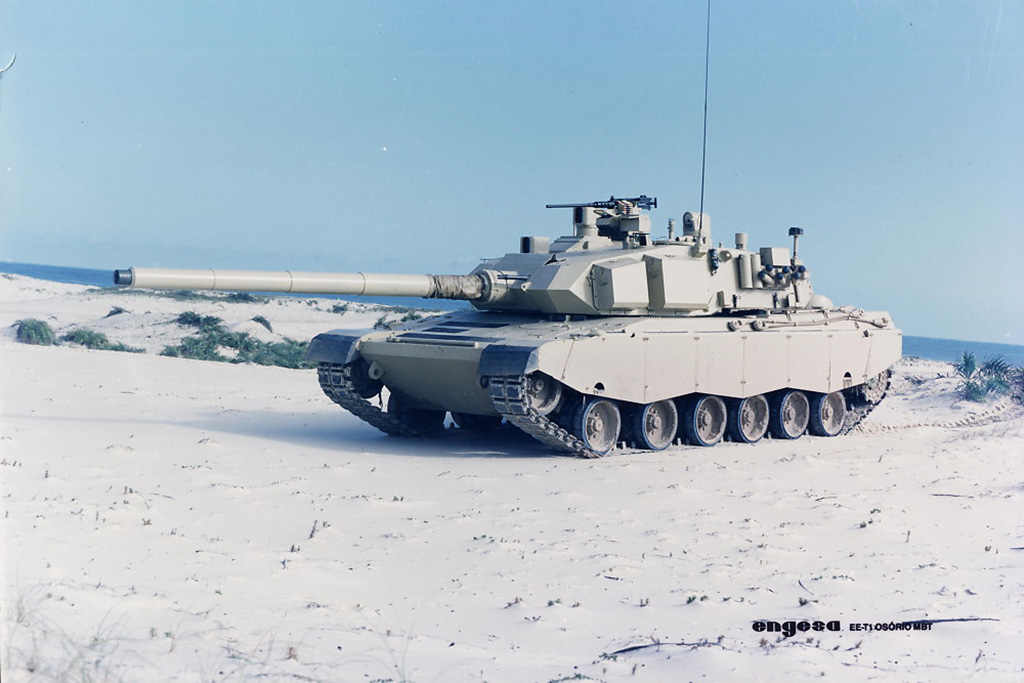
Five prototypes (three of them functional) were built between 1984 and 1986-1987. The first one was a mild steel factory prototype that stayed in the factory. The second and third one were the prototypes intended for Brazil with a 105mm rifled gun, one survives in a museum. The fourth and fifth were the Saudi Arabian prototypes – only the fourth was finished and is currently also located in Brazil, the final one was scrapped.
Things were still looking up until 1986 to 1987. The development attracted some positive attention and multiple countries showed interest – Peru and Panama were shown the Brazilian version while Iran and Iraq (at the time still locked in a bitter conflict) were introduced to the project as well (neither was interested).
But what was the tank at that point?
All things considered, the tank was (with some exceptions) on par with the competition for the Saudi contract. It had a crew of four, weighed between 41 and 44 tons (depending on the version) and, unlike Bernardini’s Tamoyo, offered solid protection thanks to the use of proprietary composite armor with ceramic inlays that was, allegedly, roughly equal to the famous Chobham armor. The rest of the tank was made of steel. The frontal protection level was, however, somewhat inferior to the Abrams and the Challenger to keep the weight low – it was capable of withstanding 105mm APFSDS rounds of the time, but not 120mm and 125mm APFSDS. The tank was also fitted with NBC protection.
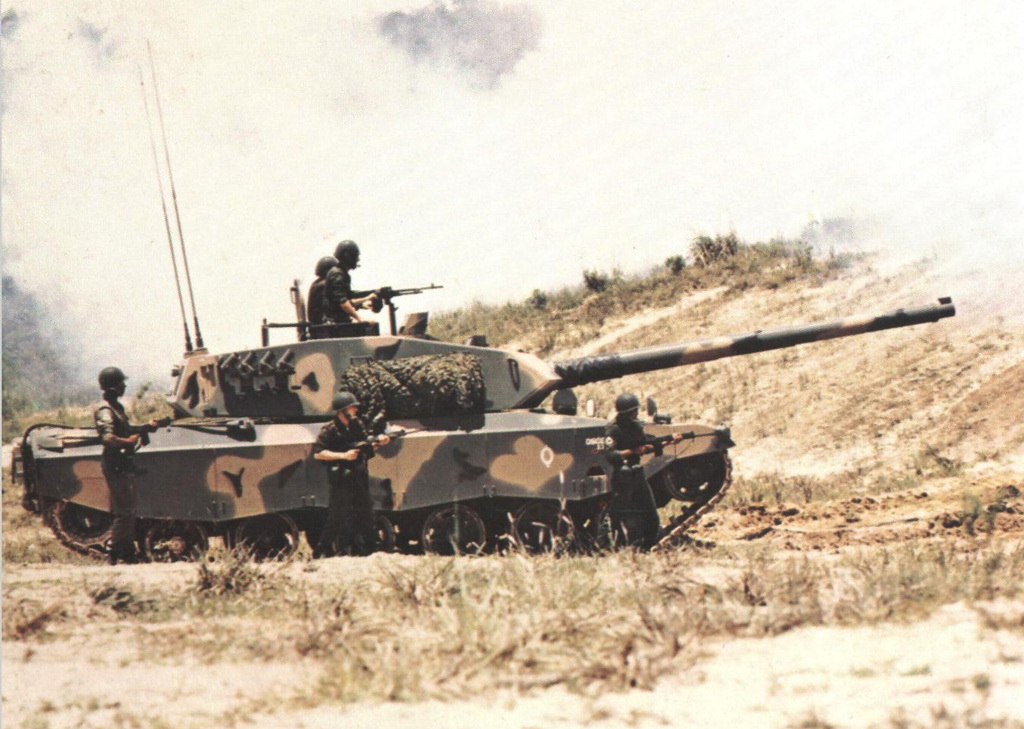
An additional armor kit was considered but never implemented. Some other protective measures and other systems were, however, offered as available options, including:
- British soft-kill APS system called Saviour, consisting of a laser warning received connected to 66mm smoke grenades
- Fire suppression system
- Air conditioning
- Heater
- Inertial navigation
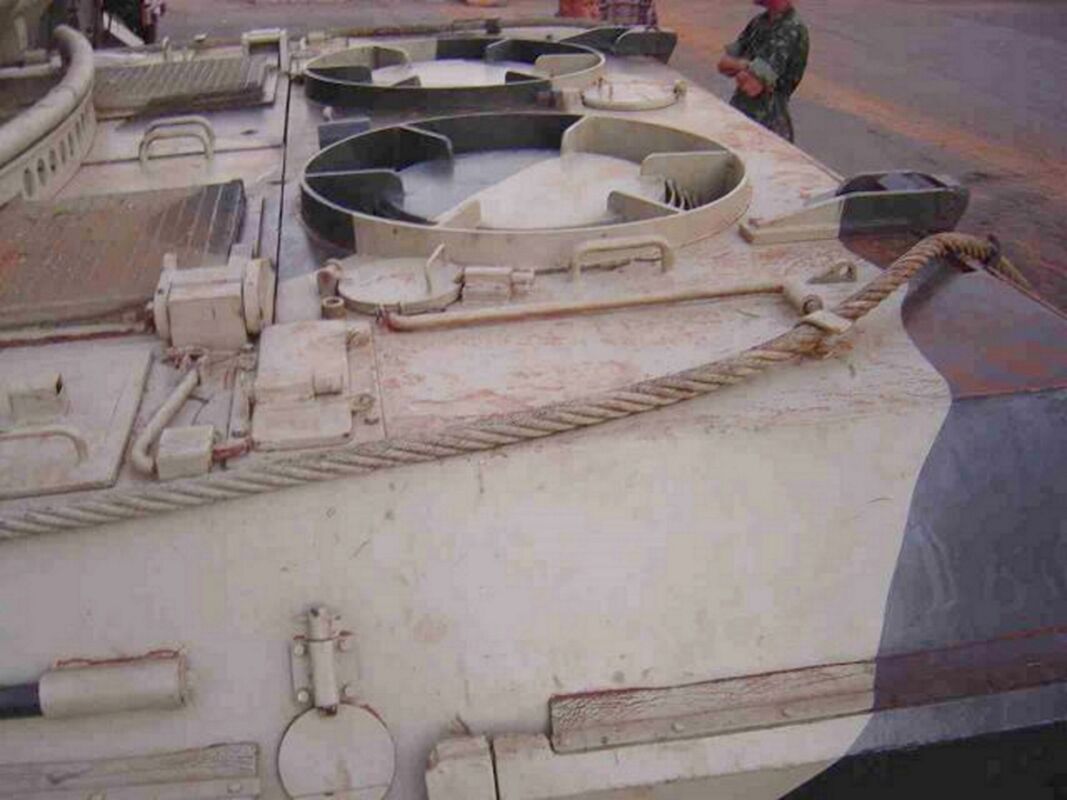
The tank was powered by a Motorenwerk Mannheim MWM 834 supercharged V12 21.63 liter diesel engine producing 1014hp. Sometimes you see a different engine name (TBD 234) in Osório descriptions – that’s the same engine, only with a different name. MTU and Rolls-Royce also offered their engines for the tank but Engesa was convinced by MWM representatives of their engine’s reliability. The engine was paired with a ZF transmission, which won over Renk HSWL 234 thanks to the fact that ZF had facilities in Brazil and Renk did not. The engine and transmission were installed in a power pack form that allowed for a fast swap of both together – it took mere 20 minutes to do so.
The tank could go as fast as 70 km/h (some sources claim 77 km/h) on hardened surfaces and 50 km/h off-road – it was very mobile thanks to its solid power-to-weight ratio and rugged Dunlop hydropneumatic suspension (similar to that used on Challenger 1).
As for its firepower, the tank was offered with a wide variety of main weapons. The gun of choice for the Brazilian model was the classic 105mm L7 rifled gun due its relative affordability and ease of procurement compared to the 120mm NATO caliber. For the export version, however, numerous choices were supposed to be available. The original idea was the Rheinmetall 120mm L/44 but the Germans wouldn’t sell it abroad, which left the Brazilians with several other options:
- French 120mm GIAT smoothbore gun
- British 120mm L11 rifled gun
- Soviet 125mm 2A46 smoothbore gun (unclear where that would come from)
In the end, the only viable option turned out to be the French 120mm GIAT as the Soviet gun was just a bit too outlandish for the Saudis and the British gun produced too much recoil – more than the turret would handle.
The gun was manually loaded – 12 rounds were stored in the turret bustle and additional 28 rounds in the hull (33 for the 105mm version). It could elevate to +20 degrees and depress to -10 degrees – excellent values by any standard. It was also fully stabilized. The ammunition fired was as such:
- 105mm: APDS, APFSDS, HEAT, HESH (NATO universal)
- 120mm: French APFSDS, French HEAT
Two different fire control systems were used, one for each version:
- The Brazilian version used the Belgian LRS-5 DNSC system
- The export version used the British Marconi Centaur system
Both of these featured a laser rangefinder but the British system was more advanced and offered a significantly higher accuracy on the move as well as day/night panoramic sights.
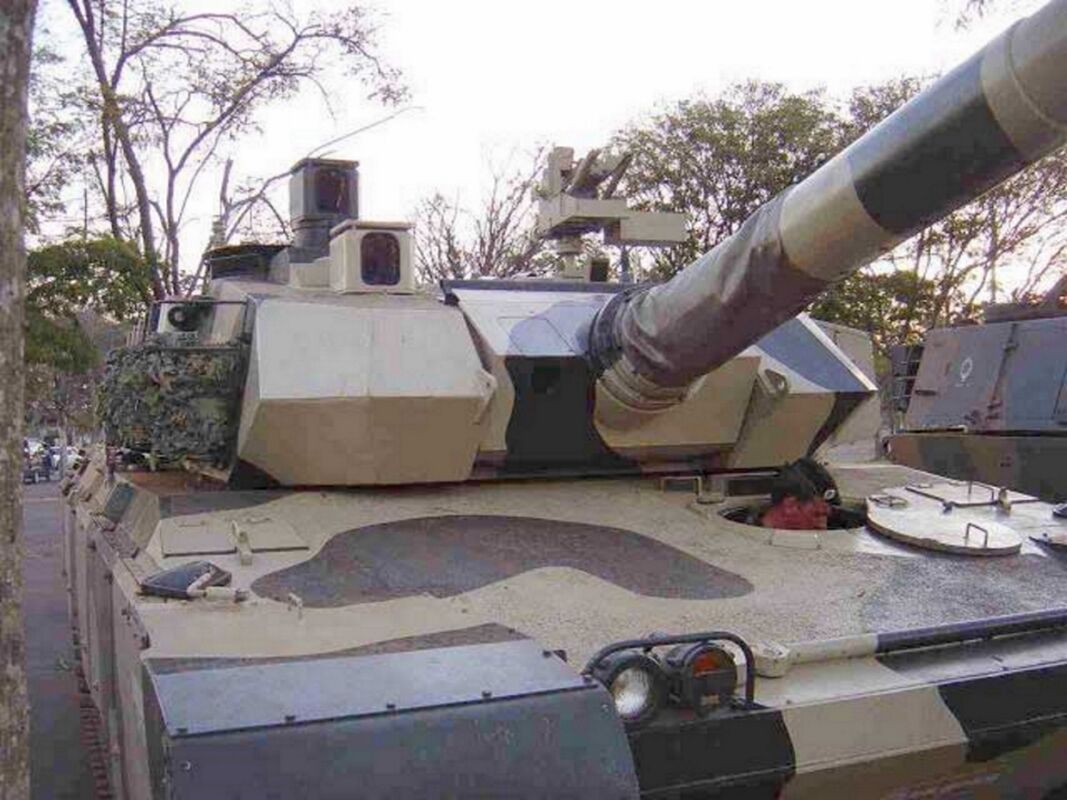
Overall, there was nothing groundbreaking about the Osório, except for one thing. It was built in Brazil, where few expected such a potent vehicle to originate. The export version could go toe to toe with pretty much any export competition – and it did.
It was the year 1987 when things started getting interesting – and not always in a good way. By then, Engesa had basically all its capital invested into the project. So much so that loans had to be taken and, eventually, the Brazilian government had to step in and provide additional assistance. But the testing was already under way – not only in Brazil (where the military tested the 105mm version), but also in Saudi Arabia. It effectively there, in the deserts of the Arabian Peninsula, where the fate of Osório was decided.
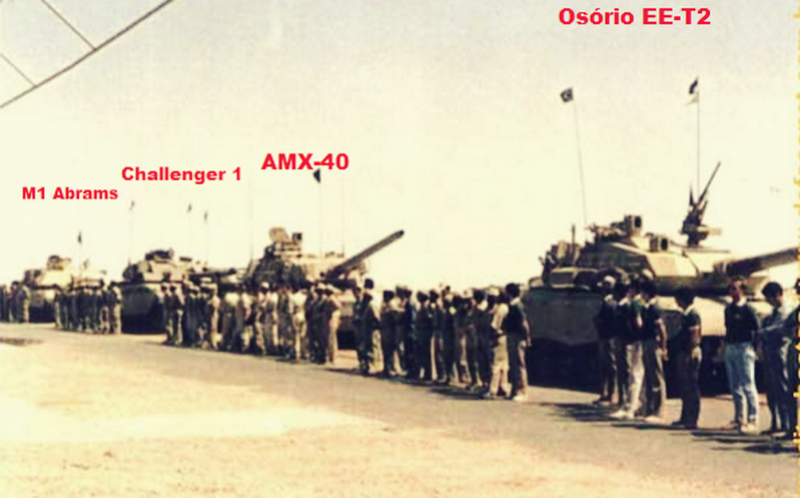
During the trials, the Osório MBT competed against M1A1 Abrams, AMX-40 and Challenger 1 for the contract. The tests were quite brutal. They included over 2000 kilometers of driving (most of it in the desert), reverse driving and towing another tank, overcoming trenches and thorough cooling tests (leaving the tank idling in the sun). There were of course thorough firing exercises there as well, including firing on the move.
The tests didn’t go that well for Osório’s competition. The AMX-40 could run for 600km and the Challenger’s engine overheated pretty quickly as well. Both were rejected, which left only the Abrams and the Osório in play. During the gunnery exercises, the Osório even surpassed the American MBT by a considerable margin, arguably making it the winner. A similar test took place in the United Arab Emirates the following year and, once again, the Osório performed admirably. It looked like the Brazilian investments would pay off.
But, as we now know, that never happened. What did happen was the usual – politics. The Saudis spent another two years negotiating the contract in bad faith, as it turned out. The popular version is to this day that it was the Gulf War and the excellent performance of the Abrams MBTs that sealed Osório’s fate, but the truth is that the decision was made long before it, in September 1989 – only the Saudis forgot to tell the Brazilians and used their offer as a pressure instrument to make the Americans lower the Abrams costs. In a similar fashion, the UAE decided to purchase the
Leclerc MBTs in 1993, also mostly for geo-political reasons.
Despite being an exporter of several strategic materials, Brazil simply couldn’t compete with the diplomatic might of the United States of America or France. Another issue raised by all potential customers was Engesa’s ability to deliver large quantities of the said tank (Saudi Arabia alone wanted to purchase over 800 vehicles). One thing’s to build a successful prototype, but delivering hundreds of them is
another beast entirely.This represented a serious blow for Engesa and it wouldn’t be the last one. By 1988, the company was already in serious trouble with Iraq owing over 200 million USD for delivered goods already – with the Gulf War ending in a resounding defeat for the Iraqis, this debt would never be paid. The 1991 collapse of the Soviet Union sealed the deal as all markets were flooded with surplus vehicles often sold for scrap value. The company went bankrupt in 1993 and the remaining two functional prototypes were seized by the Brazilian military. Both are on display since 2014 – one is in Rio de Janeiro and one is in Santa Maria.
As we stated before,
in Armored Warfare, the Osório will be a Tier 6 Premium Main Battle Tank, available as a reward for the Beneath the Southern Cross event.
But first things first, let us discuss the name for a bit. As you already know from the article above, there were two versions of the Osório – one for Brazil and one for export. The domestic one was referred to as EE-T1 Osório while the other version was referred to as Al Fahd. There are some reports of the name EE-T2 for the second version, but only anecdotal ones and only internally.

And herein lies the problem. For Armored Warfare, we definitely wanted to make the 120mm export version as it is suitable for a higher Tier than the Brazilian one and Tier 6 is fairly popular. At the same time, we wanted to keep the name Osório as it is quite iconic and well-known. That’s why we’re referring to the vehicle as Osório even though it was technically called Al Fahd in real life.

As for the vehicle itself, it’ll feature only relatively light armor, similar to the Leopard 2AV. The front is composite, the rest of it just steel without additional protection measures such as ERA or APS.
The firepower, on the other hand, will be fairly decent – Its 120mm gun will be similar to that of the Leclerc Prototype MBT with APFSDS (680mm penetration), HE and HEAT (750mm penetration) shells available along with decent depression and elevation values. No Ready Rack – classic loading as usual with some 4900 points of damage per minute.

The tank will also handle pretty well, roughly the same as the Leclerc Prototype:
- Acceleration 0-32 km/h: 4.9s
- Hull traverse: 37.6 deg/s
- Maximum speed: 70 km/h
These values (as all other) might, however, change during the testing phase. The rest is quite plain – just a comfortable, easy to use tank that you can enjoy in both PvP and PvE, although its damage dealing ability makes it a bit more suitable for the latter, as long as you stay away from the front line.

We hope you will enjoy it and, as always:
See you on the battlefield!