Celebrating Canada Day
Commanders!
Today, we are celebrating Canada Day, which marks the unification of the three separate colonies of Canada, Nova Scotia and New Brunswick into modern-day Canada.
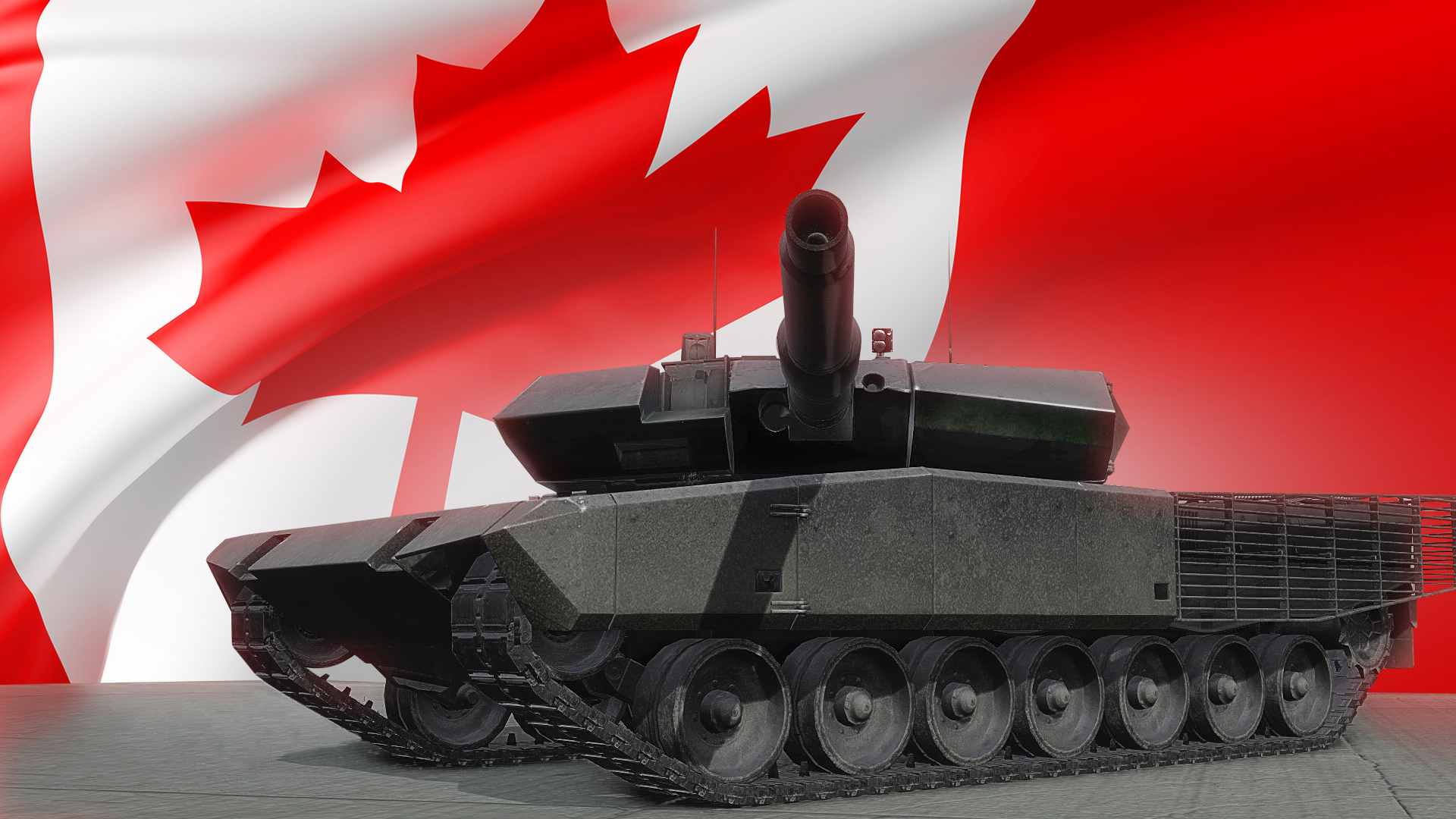
For the occasion, we've prepared 20% bonus to Crew Experience income for the following 24 hours as well as the opportunity to obtain Canadian historical camouflages.
[h2]Canadian Camouflages[/h2]
We’ve prepared three historical Canadian camouflages for you that are based on real life patterns. You can read more about them in our dedicated article.
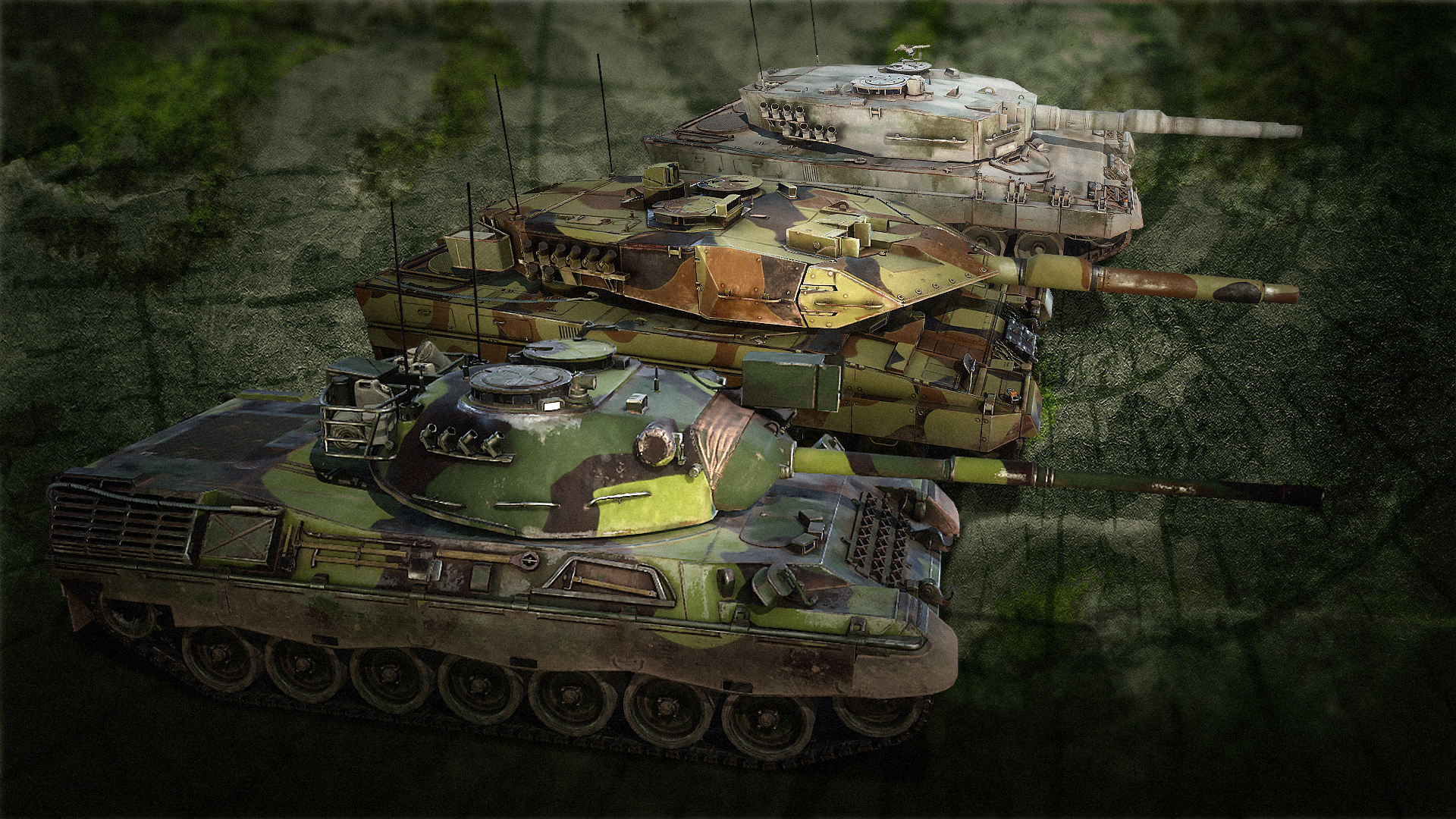
Please note that each of these camouflages can be installed on any vehicle that has the camouflage customization feature available (any vehicle with the exception of vehicles with permanent skins) and that each of these camouflages can be used in all three environments.

[h2]Wartime Canada[/h2]
While often overshadowed in historical publications by its southern neighbor, the military history of Canada is by no means less proud. During the two seminal conflicts of the twentieth century – the First and Second World Wars – Canada lost over a hundred thousand soldiers with many more wounded and also participated in fighting on all major fronts.
Perhaps the most famous action on the European front that involved Canadian troops was the ill-fated Dieppe raid, during which the relatively inexperienced Canadians from the 2nd Canadian Division fought a heroic battle against the Nazi occupants of France, suffering over a thousand casualties.
While the exploits of Canadian troops during the major conflict are well-known, the same cannot be said of indigenous Canadian armor development. Two tanks were developed in Canada during the Second World War, both based on American designs. Before the war, Canada had been largely dependent on British arms and many of its weapons were either imported or modified British designs. This trend continued well into the wartime years – for example the Valentine Mk.VI variant of the famous British infantry tank by Vickers was built exclusively in Canada.

However, with the destruction of the United Kingdom's armored forces in France, Britain was busy rebuilding and was in no position to supply Canada with weapons – in fact, they asked Canada for help in this and Canada obliged. That left them with a gap that needed to be filled.
Modern armor in the early Second World War was hard to come by and with Britain busy fighting for its life, the Canadians had to turn to the United States to provide them with – amongst other things – armored vehicles. They were not very happy with the M3 Medium (known as Grant or Lee) and opted for the development of a medium (or, rather, cruiser) tank of their own.
The result was the vehicle known as Tank, Cruiser, Ram. With over 2000 built, it never fired a shot in anger, but it was extensively used as a training vehicle for Commonwealth troops and some even made it to Britain (although they were never deployed to Europe). While it wasn't the best tank of its class, it represented a solid example of Canadian ingenuity. Another successful Canadian vehicle, the Sexton SPG, was built on the Ram chassis.

There was also the Grizzly, a modified M4A1 Sherman produced in Canada. The reason for this Canadian Sherman production batch was mostly the fear of the United States not being able to produce enough Shermans for their allies as well as themselves. However, once the American war machine picked up steam and thousands of Shermans started rolling from the assembly lines, the need for local Canadian production of the Sherman passed and only two hundred or so Grizzlies were produced. With so few built, the Grizzly didn't have a significant impact on the war effort, but it spawned two interesting designs:
After the war, a number of remaining Grizzlies was sold to Portugal, where they served until the 1980s.
Canadian forces were very active, especially during the later stages of the war – the Italian and Normandy campaign. There were many exceptional soldiers amongst the Canadians deployed during the Second World War, but one name warrants a mention - Sydney Valpy Radley-Walters. Radley-Walters was a Canadian tanker, who claimed 18 tank kills during his wartime service, making him one of the most successful allied tankers of the Second World War.
[h2]Post-War Armor[/h2]
With the war over, Canada found itself in a rather strange situation. The Canadian vehicles manufactured during the war were mostly left in Europe (which was cheaper than shipping them back overseas) and the forces back home were re-armed by mostly American equipment (including several hundred 76mm M4A2 Sherman tanks).
In the post-war world, separated into two sides by the Iron Curtain, it was clear that the Shermans were quickly becoming obsolete. The Korean War was instrumental in this realization. A replacement had to be found and the Canadians – instead of adopting the American Patton tanks – once again reached out to the British and opted for the Centurion tank.

This decision did not come out of the blue. The obsolescence of the Sherman, as demonstrated by the Korean War, was obvious, but the American Patton tank was not deemed suitable. For one, it didn't fare all that well in Korea, suffering from rushed production that caused a number of teething problems. Secondly, there were doubts about the production capacity of the tank itself. And finally, the Centurion proved itself well in combat.
The first Centurions (Mk.3 variant) were delivered to Canada in 1952 and through a number of upgrades, the Centurion survived in Canadian service until 1979 (they were officially phased out by 1977, but a few were kept as training vehicles for a while after that). The Centurions were well-liked by the Canadians and were considered effective fighting vehicles, but, by the late 1970s, a replacement was needed.
[h2]The Leopard 1 Era[/h2]
Once again, several options were on the table and the Canadians chose a modified German Leopard 1A3 (fitted with a different fire control system). The Leopard 1A3 had a new, sturdier turret, compared to the earlier Leopard 1s, and was quite a formidable vehicle, but, as usual, the reasons behind this decision were (at least partially) political. For one, Canada was trying to gain better access to the west-European market via a treaty and a massive contract for the new Canadian MBT was a useful tool.
Secondly, there was a general reluctance to being bound to the US military industry. In addition, Patton tanks did not fare very well in the 1973 Yom Kippur War, something few potential buyers failed to notice. The vulnerability of these vehicles to Soviet-supplied ATGMs and a tendency to easily catch fire when hit from a frontal angle (caused by flammable hydraulic fluid) resulted in high casualties amongst Israeli tankers and while these issues were eventually fixed, the impact had been made.

Canada ordered 127 of the vehicles (designated Leopard C1) in 1979. Most of them were actually stationed in Europe, where they remained until the withdrawal from Germany. By the 1990s, the Leopard C1 was somewhat obsolete, leading to the eventual upgrade of the C1s to the C2 standard (a total of 66 vehicles were upgraded to C2). This basically included replacing the turret with the more modern Leopard 1A5 variant, additional armor and improved FCS.
Several Canadian Leopard 1s were also improved with the MEXAS (Modular Expandable Armor System) armor kit, developed in the 1990s by IBD Deisenroth (the same German company responsible for the ESPACE kit), creating the Leopard C1 MEXAS variant. Leopard C1s served during the peacekeeping missions in Kosovo and Bosnia, while the MEXAS-uparmored Leopard C2s were sent to Afghanistan.
[h2]Leopard 2 and Beyond[/h2]
By 2006 (the initial deployment to Afghanistan), the Leopard 1 design had been in Canadian service for nearly three decades and it was once again starting to show. Despite the improved protection levels of the C2, the vehicle was not very suitable for urban combat and a replacement was deemed necessary once again.
The German Leopard 2 tanks were the obvious first choice. There were several reasons for this. For one, ties between the Canadian military and the German manufacturers were now well-established with Krauss-Maffei (from 1999 Krauss-Maffei Wegmann) being responsible for the previous Canadian Leopard upgrades. The German Leopard 2s were also quite readily available, affordable and came with full support. They were also not inherently downgraded (something the Americans did and continue doing with Abrams export variants).

Initially, the Germans loaned 20 Leopard 2A6M tanks to Canadian forces in Afghanistan. The 2A6M variant was a 2A6 (120mm L/55) with improved anti-mine protection that consisted of thick armor plate protecting the bottom of the tank as well as some internal adjustments.
The Canadians – happy with the Leopard 2s – eventually decided to purchase a number of these vehicles from the Netherlands. These were Leopard 2A4s, upgraded to 2A4M CAN. Much like the 2A6M, the 2A4M variant features improved anti-mine protection, an essential upgrade for asymmetric warfare. Canada decided to keep the German Leopard 2A6Ms in its stock as well.
Canada is currently operating approximately 80 Leopard 2s and the 66 remaining Leopard C2s. While there are no official plans to replace the C2s just yet, they are generally considered obsolete and are unlikely to be deployed anywhere ever again.
Today, we are celebrating Canada Day, which marks the unification of the three separate colonies of Canada, Nova Scotia and New Brunswick into modern-day Canada.
For the occasion, we've prepared 20% bonus to Crew Experience income for the following 24 hours as well as the opportunity to obtain Canadian historical camouflages.
[h2]Canadian Camouflages[/h2]
We’ve prepared three historical Canadian camouflages for you that are based on real life patterns. You can read more about them in our dedicated article.
Please note that each of these camouflages can be installed on any vehicle that has the camouflage customization feature available (any vehicle with the exception of vehicles with permanent skins) and that each of these camouflages can be used in all three environments.
[h2]Wartime Canada[/h2]
While often overshadowed in historical publications by its southern neighbor, the military history of Canada is by no means less proud. During the two seminal conflicts of the twentieth century – the First and Second World Wars – Canada lost over a hundred thousand soldiers with many more wounded and also participated in fighting on all major fronts.
Perhaps the most famous action on the European front that involved Canadian troops was the ill-fated Dieppe raid, during which the relatively inexperienced Canadians from the 2nd Canadian Division fought a heroic battle against the Nazi occupants of France, suffering over a thousand casualties.
While the exploits of Canadian troops during the major conflict are well-known, the same cannot be said of indigenous Canadian armor development. Two tanks were developed in Canada during the Second World War, both based on American designs. Before the war, Canada had been largely dependent on British arms and many of its weapons were either imported or modified British designs. This trend continued well into the wartime years – for example the Valentine Mk.VI variant of the famous British infantry tank by Vickers was built exclusively in Canada.
However, with the destruction of the United Kingdom's armored forces in France, Britain was busy rebuilding and was in no position to supply Canada with weapons – in fact, they asked Canada for help in this and Canada obliged. That left them with a gap that needed to be filled.
Modern armor in the early Second World War was hard to come by and with Britain busy fighting for its life, the Canadians had to turn to the United States to provide them with – amongst other things – armored vehicles. They were not very happy with the M3 Medium (known as Grant or Lee) and opted for the development of a medium (or, rather, cruiser) tank of their own.
The result was the vehicle known as Tank, Cruiser, Ram. With over 2000 built, it never fired a shot in anger, but it was extensively used as a training vehicle for Commonwealth troops and some even made it to Britain (although they were never deployed to Europe). While it wasn't the best tank of its class, it represented a solid example of Canadian ingenuity. Another successful Canadian vehicle, the Sexton SPG, was built on the Ram chassis.
There was also the Grizzly, a modified M4A1 Sherman produced in Canada. The reason for this Canadian Sherman production batch was mostly the fear of the United States not being able to produce enough Shermans for their allies as well as themselves. However, once the American war machine picked up steam and thousands of Shermans started rolling from the assembly lines, the need for local Canadian production of the Sherman passed and only two hundred or so Grizzlies were produced. With so few built, the Grizzly didn't have a significant impact on the war effort, but it spawned two interesting designs:
- Sexton Mk.II (25pdr SPG based on the Grizzly chassis)
- Skink (quad 20mm AA tank, absolutely murderous when used against infantry)
After the war, a number of remaining Grizzlies was sold to Portugal, where they served until the 1980s.
Canadian forces were very active, especially during the later stages of the war – the Italian and Normandy campaign. There were many exceptional soldiers amongst the Canadians deployed during the Second World War, but one name warrants a mention - Sydney Valpy Radley-Walters. Radley-Walters was a Canadian tanker, who claimed 18 tank kills during his wartime service, making him one of the most successful allied tankers of the Second World War.
[h2]Post-War Armor[/h2]
With the war over, Canada found itself in a rather strange situation. The Canadian vehicles manufactured during the war were mostly left in Europe (which was cheaper than shipping them back overseas) and the forces back home were re-armed by mostly American equipment (including several hundred 76mm M4A2 Sherman tanks).
In the post-war world, separated into two sides by the Iron Curtain, it was clear that the Shermans were quickly becoming obsolete. The Korean War was instrumental in this realization. A replacement had to be found and the Canadians – instead of adopting the American Patton tanks – once again reached out to the British and opted for the Centurion tank.
This decision did not come out of the blue. The obsolescence of the Sherman, as demonstrated by the Korean War, was obvious, but the American Patton tank was not deemed suitable. For one, it didn't fare all that well in Korea, suffering from rushed production that caused a number of teething problems. Secondly, there were doubts about the production capacity of the tank itself. And finally, the Centurion proved itself well in combat.
The first Centurions (Mk.3 variant) were delivered to Canada in 1952 and through a number of upgrades, the Centurion survived in Canadian service until 1979 (they were officially phased out by 1977, but a few were kept as training vehicles for a while after that). The Centurions were well-liked by the Canadians and were considered effective fighting vehicles, but, by the late 1970s, a replacement was needed.
[h2]The Leopard 1 Era[/h2]
Once again, several options were on the table and the Canadians chose a modified German Leopard 1A3 (fitted with a different fire control system). The Leopard 1A3 had a new, sturdier turret, compared to the earlier Leopard 1s, and was quite a formidable vehicle, but, as usual, the reasons behind this decision were (at least partially) political. For one, Canada was trying to gain better access to the west-European market via a treaty and a massive contract for the new Canadian MBT was a useful tool.
Secondly, there was a general reluctance to being bound to the US military industry. In addition, Patton tanks did not fare very well in the 1973 Yom Kippur War, something few potential buyers failed to notice. The vulnerability of these vehicles to Soviet-supplied ATGMs and a tendency to easily catch fire when hit from a frontal angle (caused by flammable hydraulic fluid) resulted in high casualties amongst Israeli tankers and while these issues were eventually fixed, the impact had been made.
Canada ordered 127 of the vehicles (designated Leopard C1) in 1979. Most of them were actually stationed in Europe, where they remained until the withdrawal from Germany. By the 1990s, the Leopard C1 was somewhat obsolete, leading to the eventual upgrade of the C1s to the C2 standard (a total of 66 vehicles were upgraded to C2). This basically included replacing the turret with the more modern Leopard 1A5 variant, additional armor and improved FCS.
Several Canadian Leopard 1s were also improved with the MEXAS (Modular Expandable Armor System) armor kit, developed in the 1990s by IBD Deisenroth (the same German company responsible for the ESPACE kit), creating the Leopard C1 MEXAS variant. Leopard C1s served during the peacekeeping missions in Kosovo and Bosnia, while the MEXAS-uparmored Leopard C2s were sent to Afghanistan.
[h2]Leopard 2 and Beyond[/h2]
By 2006 (the initial deployment to Afghanistan), the Leopard 1 design had been in Canadian service for nearly three decades and it was once again starting to show. Despite the improved protection levels of the C2, the vehicle was not very suitable for urban combat and a replacement was deemed necessary once again.
The German Leopard 2 tanks were the obvious first choice. There were several reasons for this. For one, ties between the Canadian military and the German manufacturers were now well-established with Krauss-Maffei (from 1999 Krauss-Maffei Wegmann) being responsible for the previous Canadian Leopard upgrades. The German Leopard 2s were also quite readily available, affordable and came with full support. They were also not inherently downgraded (something the Americans did and continue doing with Abrams export variants).
Initially, the Germans loaned 20 Leopard 2A6M tanks to Canadian forces in Afghanistan. The 2A6M variant was a 2A6 (120mm L/55) with improved anti-mine protection that consisted of thick armor plate protecting the bottom of the tank as well as some internal adjustments.
The Canadians – happy with the Leopard 2s – eventually decided to purchase a number of these vehicles from the Netherlands. These were Leopard 2A4s, upgraded to 2A4M CAN. Much like the 2A6M, the 2A4M variant features improved anti-mine protection, an essential upgrade for asymmetric warfare. Canada decided to keep the German Leopard 2A6Ms in its stock as well.
Canada is currently operating approximately 80 Leopard 2s and the 66 remaining Leopard C2s. While there are no official plans to replace the C2s just yet, they are generally considered obsolete and are unlikely to be deployed anywhere ever again.