Singapore’s Sling
Commanders!
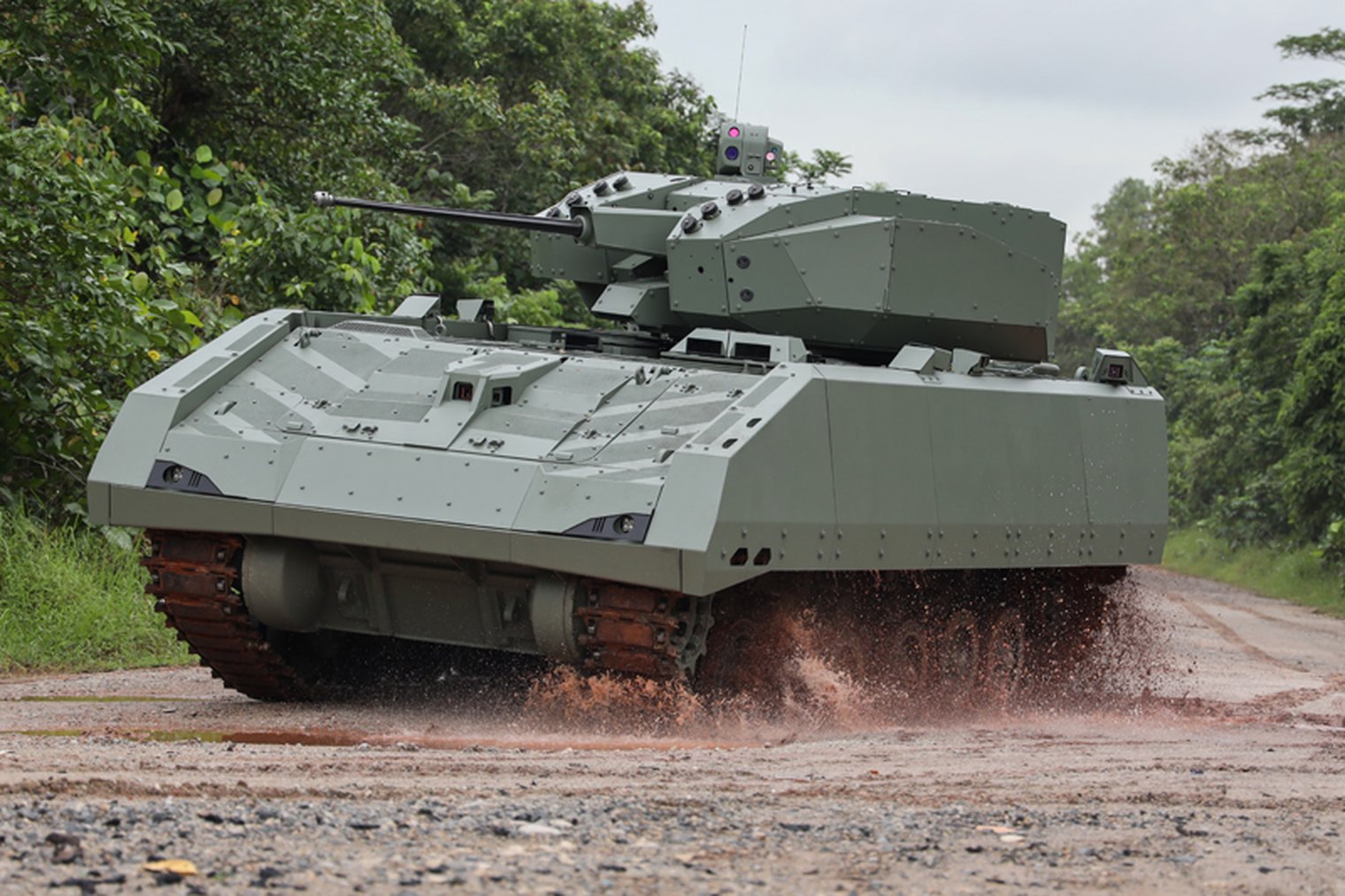
One of the upcoming Battle Path vehicles will be the cutting edge Hunter AFV from Singapore and in this article, we’ll tell you more about its history and why the city-state of Singapore would even need a heavy armored IFV, let alone an indigenous one.
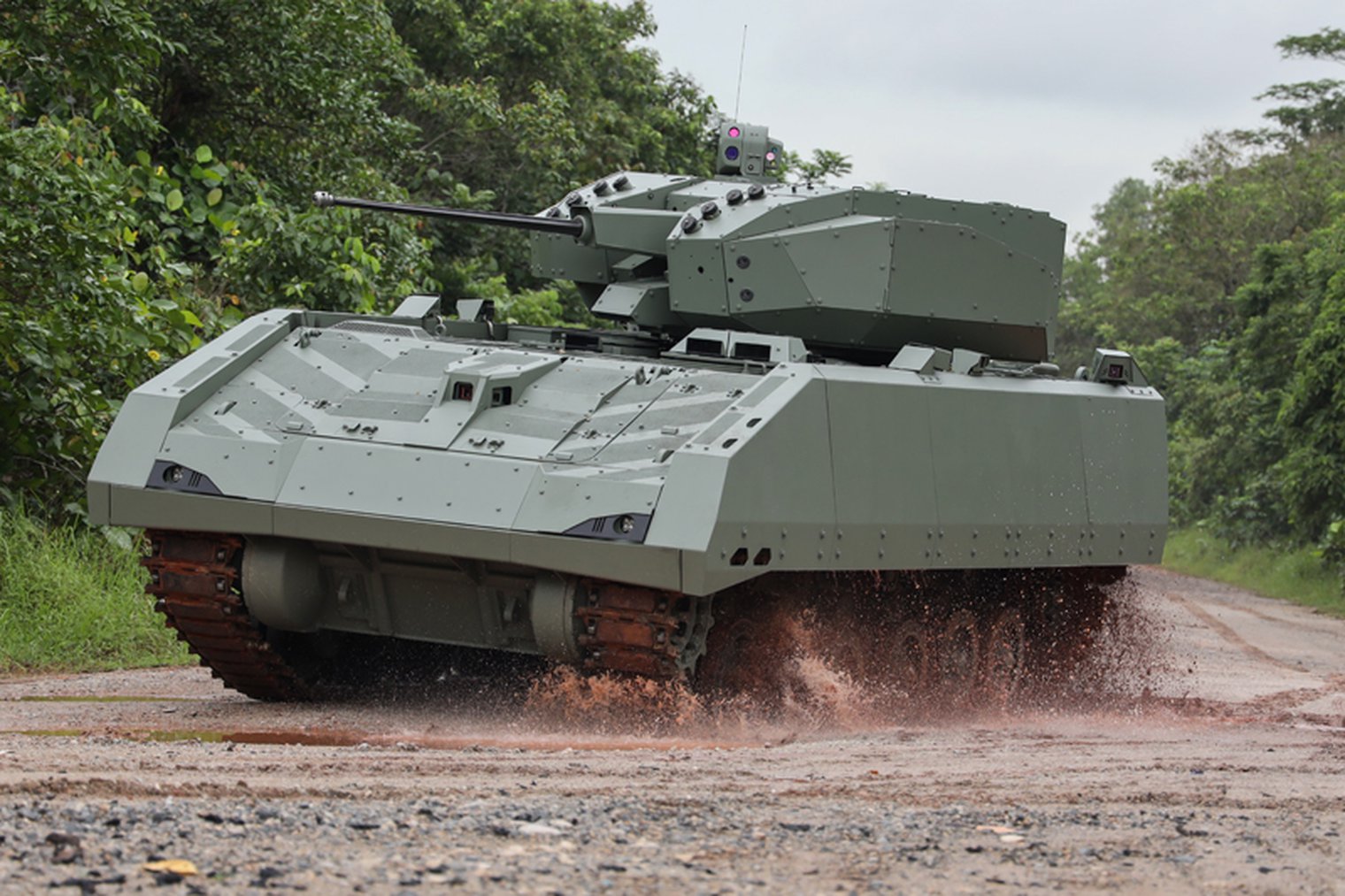
Hunter AFV
Covering roughly the same are as New York City, the Republic of Singapore is located at the tip of the Malay Peninsula. It entered the 20th century as a British colony before being occupied by the Japanese, with the three-year reign of terror only ending with Japan’s surrender. The city was left with thousands of civilians executed by the occupants and a bitter resolve never to let something like that happen again.
After the war, Britain underwent rapid de-colonization and this included Singapore as well as the rest of the British holdings in Asia. Singapore obtained full independence in 1963 and, despite the expectations of many, it did not only survive, but thrive on the wealth brought by its trade hub status. It now stands as the wealthiest country in Asia (per-capita at least) as well as the most modern military in the region by a wide margin. Technological superiority is the name of the game for Singapore and they are very, very good at it.
With the lack of any real deep defense option, what they focus on instead is the use of force multipliers. The Singaporean military is based on a core of 72 thousand hardened veterans but also includes conscription – roughly 40 thousand conscripts are in active service in any given year. There was an increase in the number of professional forces (two decades ago, the military was 50 thousand strong). Additionally, in the time of need, Singapore can muster up to one million troops (the total population of Singapore is mere 5.5 million) with practically every able bodied man between 18 and 49 years old being able to serve as a reservist.
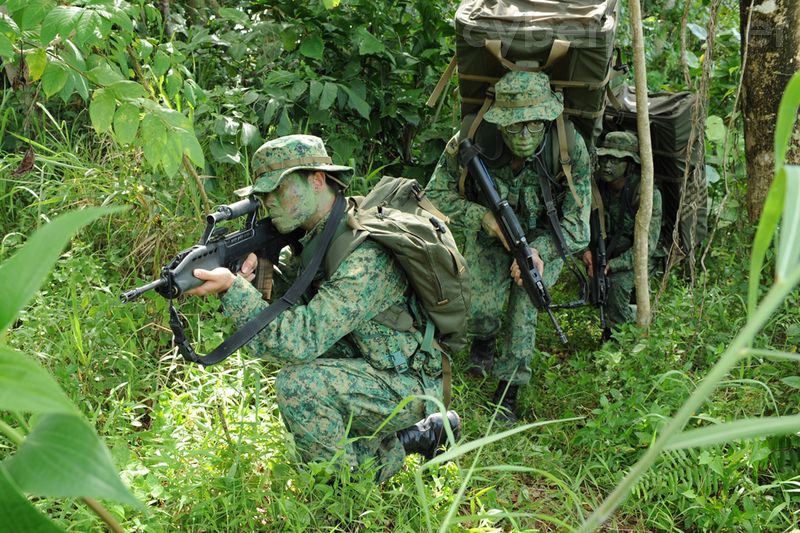
Singaporean infantry
The troops are well-trained, but Singapore’s armored vehicles are the real powerhouses. With only a limited number of troops available, the life of every soldier has to count, which is why Singapore spares no expense on the quality of its tech – with roughly 3 percent of its GDP invested into its military, from tanks to its air-force, everything is of the best quality Singapore can buy, even though the military budget has been somewhat declining as of late despite Singapore’s GDP growth. Between 2004 and 2020, the budget increased from 8 to 10 billion USD but, if we also include inflation, it stayed roughly the same.
Granted, two decades ago, the share actually was more around 6 percent but with the GDP growth, the yearly budget has actually increased from approximately 8 to 10.77 billion USD between 2004 and 2020, although, if we count in the effects of inflation, it remains roughly the same. And it is a sizeable sum indeed – to put things in perspective:
In other words, very roughly speaking, the tiny state of Singapore spends more on its military than both of its considerably larger neighbors combined and it really shows. The Singaporean Air Force is no joke with its 40 modernized F-15SG fighter jets complemented by 60 F-16s with negotiations about the acquisition of F-35 Lightning II underway. Once again, to compare with its neighbors:
The Singaporean Navy is equally impressive, albeit on the lighter side. Its primary task is not to clash on the sea with larger navies, but to disrupt smuggling and pirate operations. To that end, Singapore has, amongst other things, six absolutely cutting edge Formidable class stealth frigates at its disposal. These were built in France especially for Singapore.
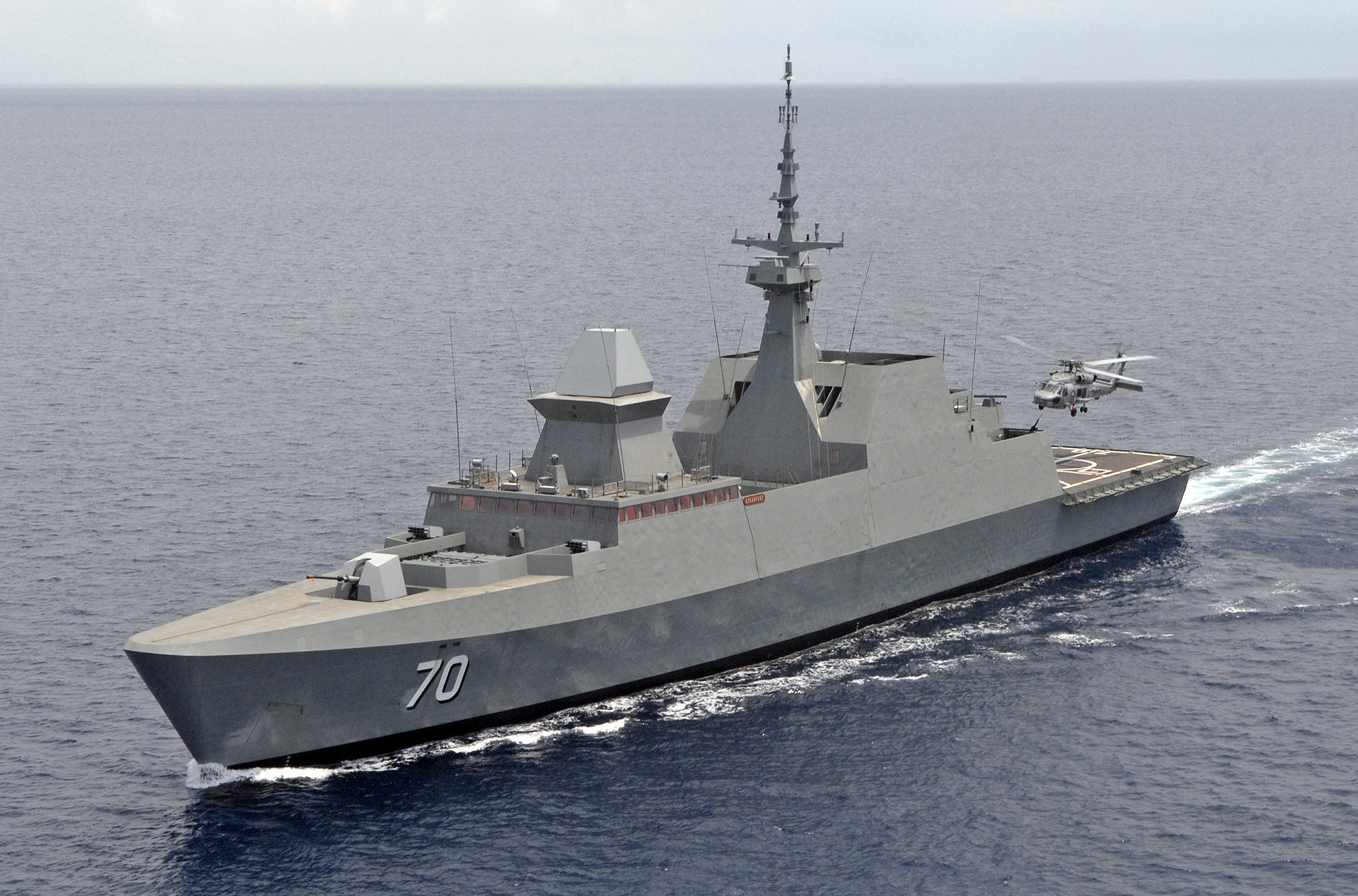
RSS Steadfast, a Formidable-class frigate
But as impressive as all this may be, there’s no way around the fact that should an invasion occur, Singapore would be in real trouble simply because it has no ground to give in exchange for time. That is why, for many decades, the Singaporean military has been using a tactic sometimes known under the name “poisonous shrimp” (named after a turn of phrase used by Lee Kuan Yew, the first prime minister and the founder of independent Singapore).
Simply put, it’s a tactic of deterrence where the defender, while accepting that a determined onslaught would succeed, makes sure that any potential attackers pay an incredibly steep price for any such attempts to take over the city and its wealth (by 2017, Singapore had somewhat higher GDP than the entire Malaysia). This fact must be signaled and made known to the enemy, much like venomous animals often show their bright colors.
With its limited population, Singapore cannot realistically afford any war of attrition, but fosters instead a wide net of military alliances – should such an attack occur, the goal of the Singaporean military is not to slug it out with much larger militaries, but to delay the attacked until help arrives from abroad. The attacker would, of course, be one of Singapore’s two neighbors – Indonesia and Malaysia. The relationship between the two countries was at times quite problematic, ranging from diplomatic incidents to the open hostility of the 1960s that were but a small step away from a real war. Even though their relations have improved since then, territorial disputes between them still exist and Singapore is stuck in the middle of this balance of power. Singapore itself was even a part of Malaysia for several years before being expelled from the country and even though it has held its own ever since, things have been remarkably fragile and complicated in the entire region.
For example, in the 1990s, the personal animosity between the leaders of Singapore and Malaysia led to a deterioration of the relationship between the two countries – a proof that, just like in ancient times, all it takes is two angry men to bring down an empire.

Lee Kuan Yew, the founder of independent Singapore
In order not to provoke its neighbors too much, Singapore has a portion of its armed forces permanently stationed abroad, especially the warplanes, mostly on Australian and American air bases. A portion of its ground troops is also often training elsewhere due to the lack of space to do so in Singapore itself – in Australia, Taiwan, Thailand and New Zealand. Much of the yearly military costs go to the transportation of Singaporean forces in and out. On the upside, Singapore’s troops get to train with the best of Asian and western militaries, are patriotic and generally top notch. Should the worst occur, all these forces will fall back to Singapore and defend the city – hence the need for an extremely powerful air force; to protect the incoming troops.
In the 2000s and 2010s, Singapore’s military considered an outright attack unlikely and partially amended the “poisonous shrimp” defense strategy with more proactive elements. The region is rife with pirates while both neighboring countries have had their trouble with armed Islamic terror groups. Despite not being a mostly Muslim country, Singapore’s forces do lend a hand on occasion and participate in join anti-terror operations. However, with the rise of China’s influence in the region, the Singaporeans – normally having a good relationship with the PRC – started becoming wary due to Singapore’s own relations with Taiwan.
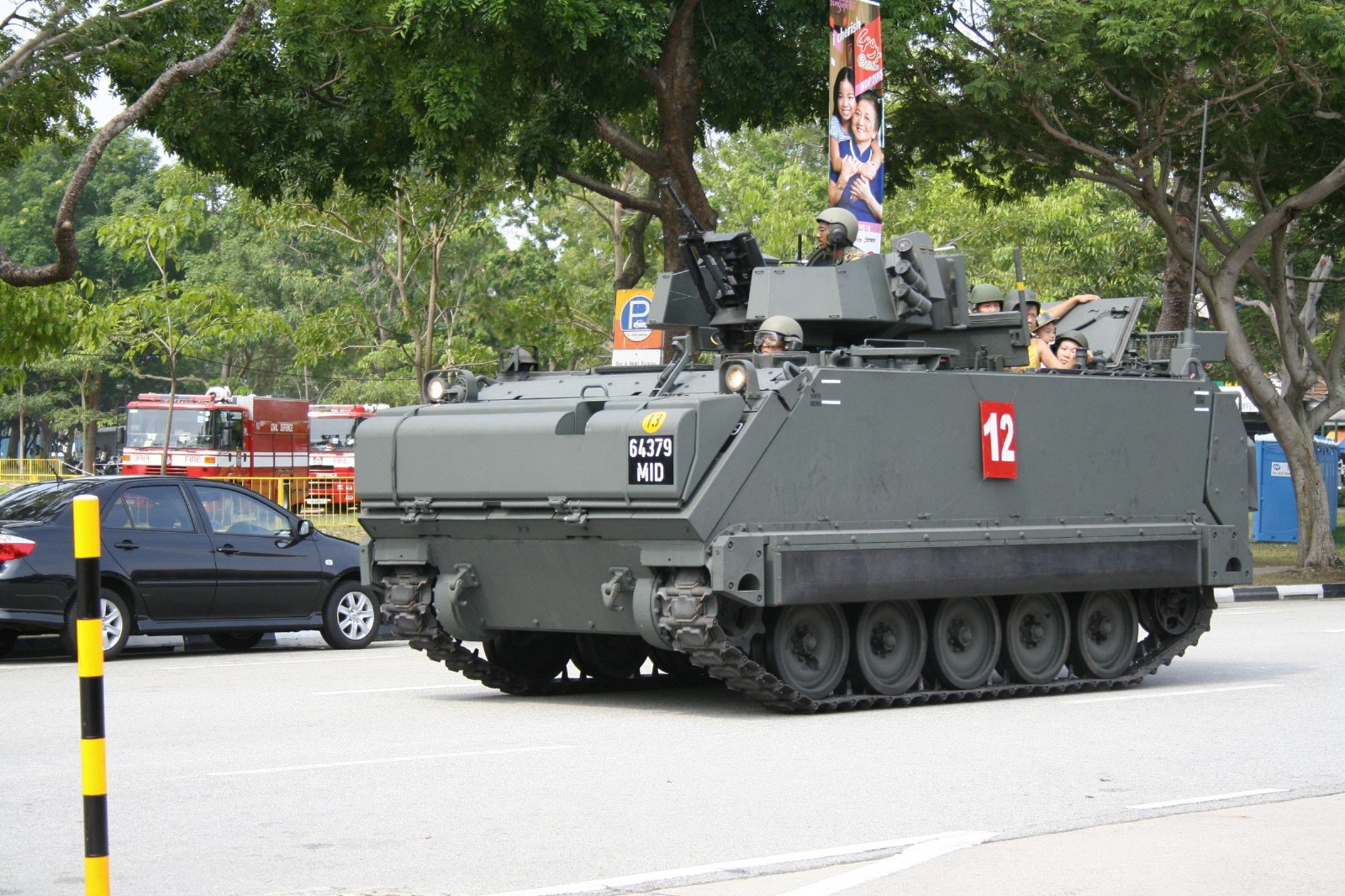
Singaporean M113 Ultra 40/50
However, one country that Singapore enjoys the best relations with is the United States of America. Indeed, Singapore uses a lot of American equipment, especially when it comes to warplanes. It used to be so when it comes to Infantry Fighting Vehicles as well. Same for some Cadillac Gage Commando APCs from the late 1960s and the early 1970s, Singapore ordered approximately 1000 (!!!) M113 APCs, as such:
If you’re interested in the history of the M113 itself, we have a dedicated article available but, suffice to say, the M113A1 variant was the first M113 upgrade from 1964 with a diesel engine, while the M113A2 variant from 1979 had some further partial improvements. It was still, however, the same old obsolete “battle taxi“ of old with its thin aluminum skin offering very little protection – by 1989, it certainly was quite obsolete.
That is why, in the 1990s, the military had Singapore’s largest (and only major) military tech producer, ST Engineering (or, rather, its subsidiary, then known as ST Kinetics) modernize these with upgraded armor (applique armor plates with ceramic inlays, resistant to HEAT and HESH rounds) and a sturdier power pack. Sources differ regarding the nature of this upgrade. Some claim the new power pack is producing 400hp instead of the original 275hp while others claim the horsepower remained unchanged with an upgrade to 300hp being merely available as an option.
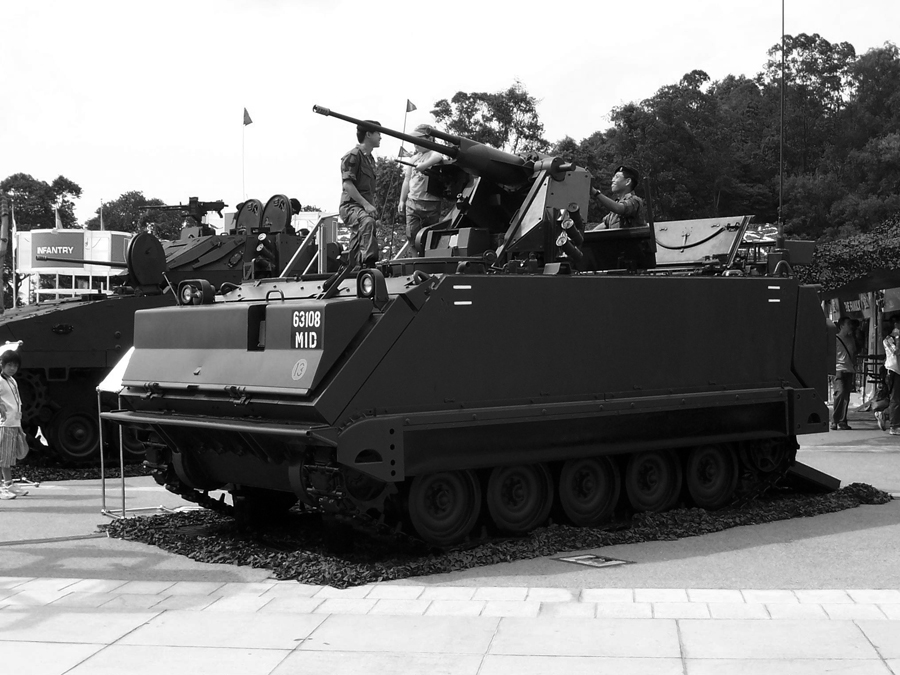
Singaporean M113 Ultra OWS
A portion of them got upgraded with a new turret featuring a 40mm grenade launcher and a heavy machinegun (these are referred to as M113 Ultra 40/50), a portion of them got a weapons station by Israel’s Rafael with a 25mm M242 chain gun (these are referred to as M113 Ultra OWS). And, finally, a certain number was converted into short-range air-defense vehicles and rearmed with six Soviet-era Igla SAMs from the 1980s. Of the original 1000 M113s acquired, roughly 700 are still in service today. However, as IFVs, they are obsolete even in the most upgraded form.
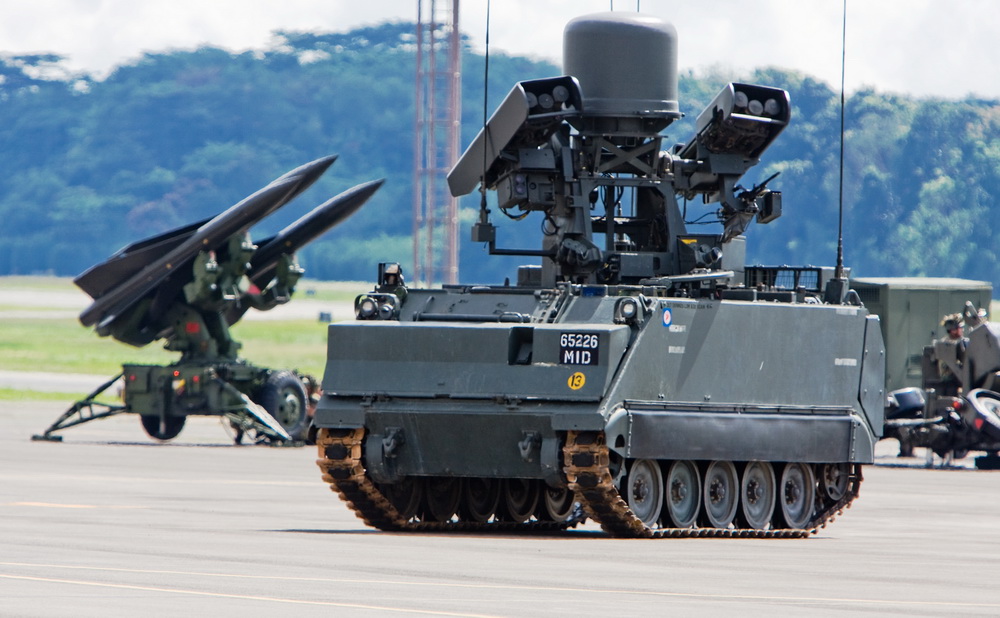
Singaporean M113 Ultra Mechanized Igla
The Singaporean Army was naturally aware of M113’s obsolescence even back in the 1980s and tasked ST Engineering in the late 1980s with designing its replacement. The answer was the first generation of truly Singaporean IFVs called Bionix.
But first, they looked at various existing western IFVs and found that none matched their specific requirements.
In order to work under the specific conditions of Singapore, the IFVs had to be light – or, specifically, both air-transportable and amphibious. After all, Singapore is an island – the ability to swim was definitely seen as a must. Due to Singapore’s unique troop rotation system, the vehicle had to be easy to transport abroad. At the same time, in order to work as a force multiplier, the vehicle had to offer solid protection and excellent firepower.
The Singaporeans examined the Bradley and the Warrior, but these were just too large and heavy while the German Marder can’t swim (neither can the Warrior, for that matter. Neither of the commercially available IFVs would do.
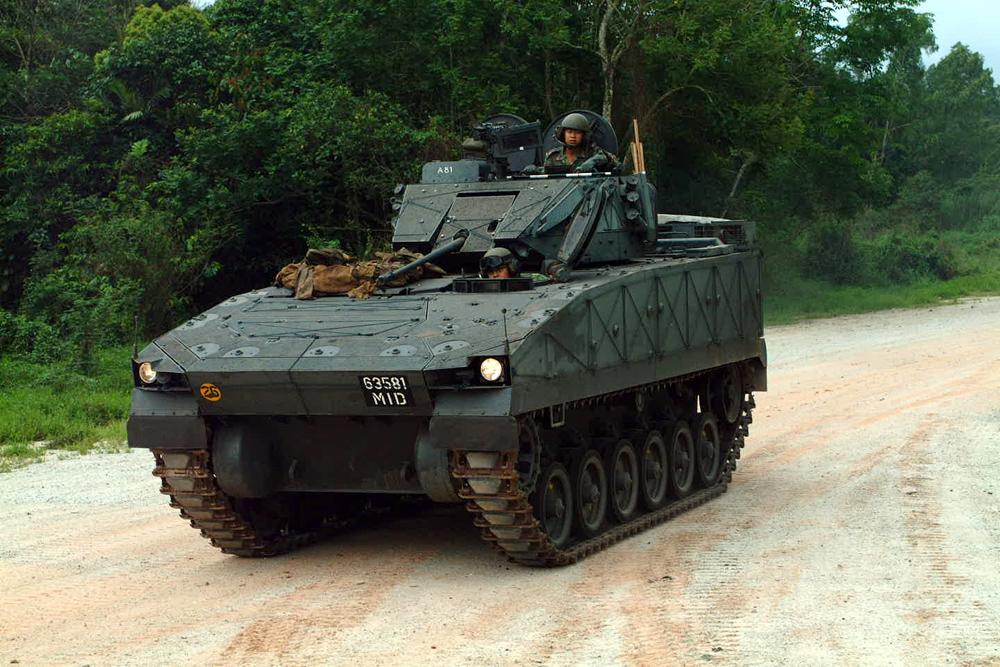
Bionix 25
The development of the indigenous Bionix IFV started between 1988 and 1991 (sources differ) with the first prototypes ready between 1995 and 1997. The trials that took place in Australia and Singapore itself were successful and, in March 1997, a contract was signed between Singapore and ST Kinetics for a production run of 500 of these vehicles.
The initial main production version (1997-2001) was referred to as Bionix 25. It consisted of an all-steel hull that was upgradable with the same applique armor system the improved M113s were using. The second part was a steel two-man indigenous turret by ST Kinetics, which meant that the vehicle had to have a crew of 3 men. In addition to them, it also carried 7 troops in the back. This model weighed 23 tons, which was a remarkably low number, all things considered.
The vehicle was powered by a 475hp Detroit Diesel 6V-92TA engine paired with a General Dynamics Defense Systems HMPT-500-3EC automatic transmission (same as the one used on the Bradley Fighting Vehicle). This allowed the vehicle to go as fast as 70 km/h, although its average off-road speed was around 25 km/h. The suspension was of the hydropneumatic type. The turret was armed with a 25mm M242 autocannon and a coaxial machinegun.
In parallel, another (APC) variant of the same vehicle was also conceived under the designation Bionix 40/50. The hull was mostly the same, but the turret got replaced by the one used on the upgraded M113s, which carried a heavy 12.7mm (.50cal) machinegun and a 40mm grenade launcher (hence the name). This turret was somewhat lighter, smaller and one-man only, bringing the total weight of the vehicle down to 21.5 tons and the vehicle’s crew to 2 men. The troop carrying capacity, however, increased from 7 to 9 men.
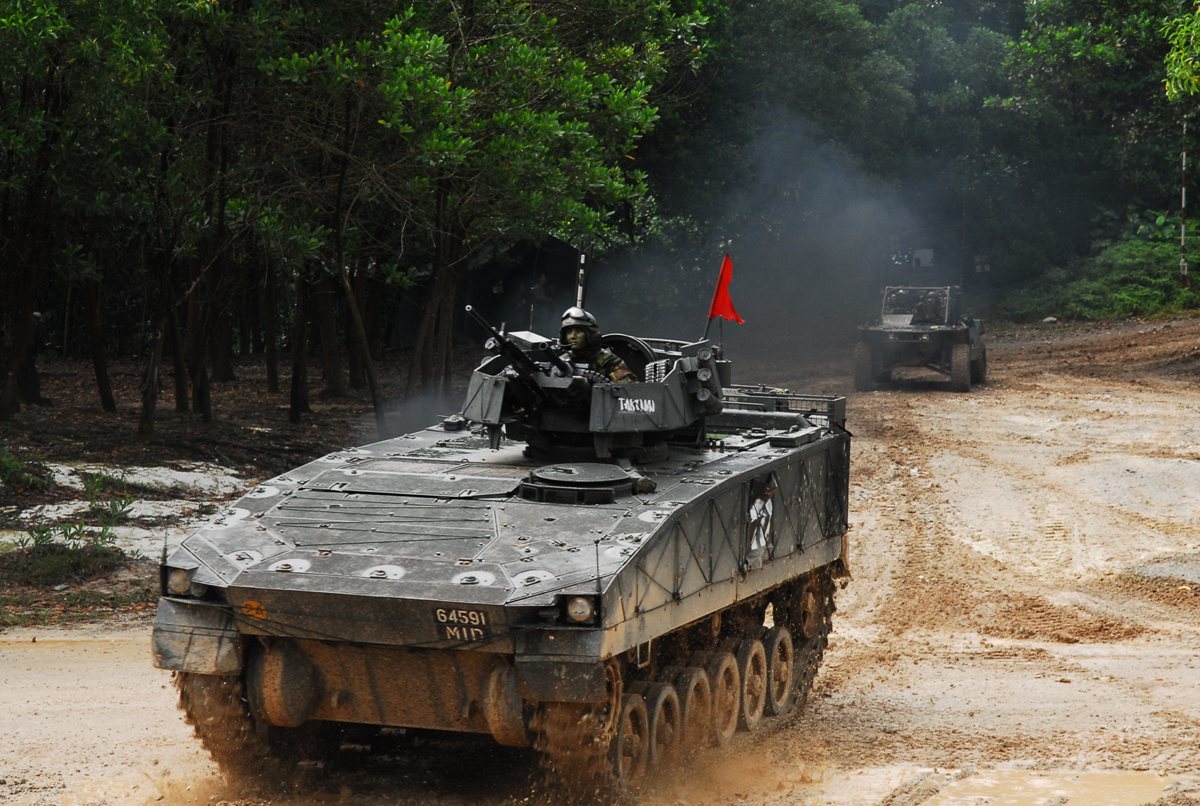
Bionix 40/50
In the end, several hundred vehicles of this type were built and a modified version (known as Infantry Carrier Vehicle) was even offered to the Americans in 2001 for their then-new Interim Brigade Combat Teams. This version had the turret replaced by a remote-controlled weapons station and weighed only 17 tons. It was an interesting project, but it lost to the Stryker.
But even as the Bionix IFVs were entering service, ST Kinetics was already working on an improved version, which would become known as Bionix II.
Bionix II was heavier and larger, but also sturdier than its predecessor and one of the biggest points of Bionix criticism – its firepower – was addressed as well. The vehicle received a new 30mm Bushmaster Mk.44 autocannon instead of the older 25mm M242 version. The gun also came with more advanced stabilized sights (including a thermal imager and a laser rangefinder) and the vehicle was connected to the new Singaporean Battlefield Management System, significantly increasing its value as a force multiplier.
The armor was still modular (based on the MEXAS system), allegedly offering 50 percent more protection compared to its predecessor. The Bionix II IFV had a crew of 3 men with 10 troops carried in the back. The engine remained the same, but additional turbocharging was added to increase its output to approximately 550hp.
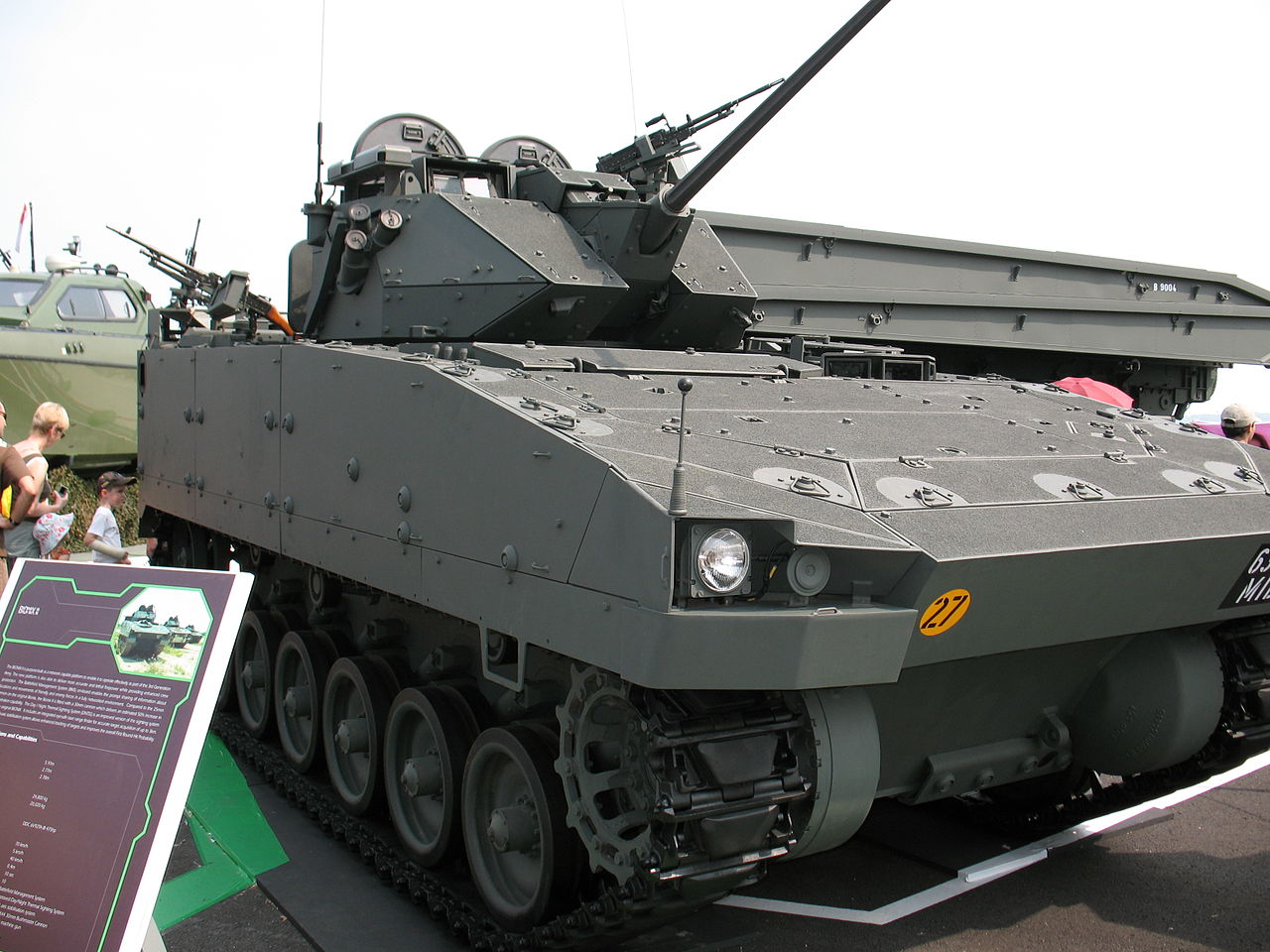
Bionix II
The Bionix II IFV entered the service around 2006, complementing the already existing older Bionix models. At this moment, Singapore has roughly 800 Bionix series vehicles of all types in service alongside the remaining M113s and many other cutting edge or at least modernized armored vehicles, including:
As you can see, the armored forces of Singapore are considerable. Most armor is concentrated in the hands of the Singapore Armoured Regiment, established in 1968 and consisting of one battalion of tanks and three battalions of mechanized infantry.
The whole story could end here – Singapore has excellent and fairly new IFVs at its disposal. But it does not. Always seeking an edge over its opponents, Singapore already ordered a new AFV built in order to complement the Bionix IFVs in service. This program is known under the name Next Generation Armored Fighting Vehicle (NGAFV).
Hunter AFV prototype, 2017
The work on it began roughly in 2006 (it started about the same time as the Bionix II IFV production was launched) and was actually finished only recently. The goal was to develop a replacement for the – by now really old – M113 APCs that, even with the many upgrades the Singaporeans have made over the years, is utterly obsolete. This notion was likely confirmed from Israel (which has strong natural ties to Singapore, both being small countries surrounded by potential enemies). Simply put, the M113s have to disappear from front-line service due to the insufficient protection levels they offer.
The prototype that came from this program in 2017-2018 received the designation “Hunter.” The term Hunter AFV refers specifically to the Infantry Fighting Vehicle model, while the name Hunter is used for the entire family of vehicles based on this platform (for example, Hunter ARV).
The vehicle weighs nearly 30 tons, has a crew of 3 men and can carry 8 troops in the back. It is considerably larger and better armored (STANAG 4569 Level 4 thanks to the bulky NERA armor) than its predecessor. It carries an unmanned Israeli Samson 30 turret by Rafael, armed with a 30mm Bushmaster Mk.44 autocannon and two internal Spike-LR or Spike-LR2 ATGM launchers that are usually hidden in the turret and only appear when the vehicle is ready to fire. Spike-LR is the long range version of the Spike family of ATGMs with the LR2 model being significantly upgraded over the original version:
The LR2 version is cutting edge, only ordered by Israel itself in 2017. The integration of this system to the Singaporean AFVs is the result of dealing with the new armor purchases by its neighbors from the last two decades. With every Hunter AFV armed so, even relatively modern enemy tanks will have a hard time.
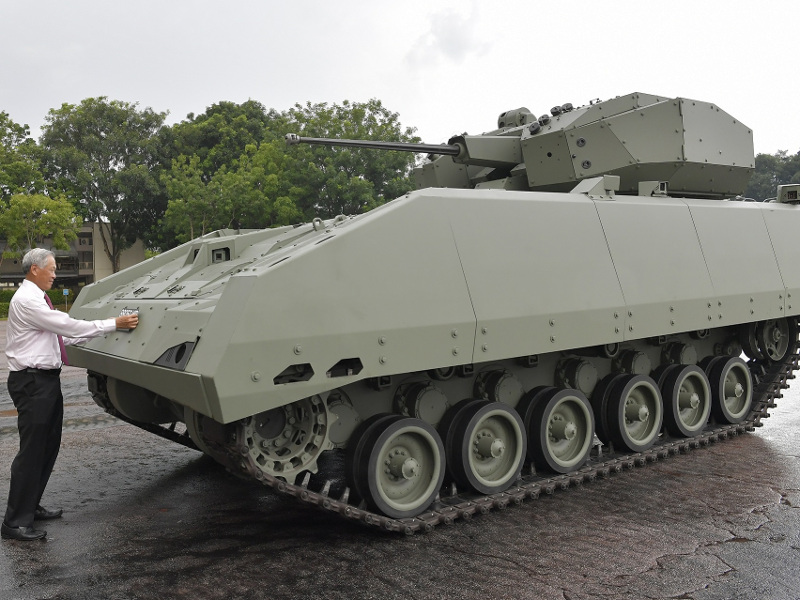
Hunter AFV
Since the turret is unmanned, the crew is sitting in the hull in an armored compartment and control the vehicle using a drive-by-wire system along with a 360 degree set of cameras, providing it with excellent situational awareness. This allows various the 3 crewmembers to perform each other’s function if necessary. For example, the commander can easily drive the vehicle without moving an inch – he simply pushes a few buttons and takes over from the driver. The vehicle also has the “hunter-killer” capability where the commander searches for new targets using his independent sights while the gunner is occupied with taking care of the previously designated ones.
As for further defensive measures, the vehicle is equipped with 76mm smoke grenade launchers along with a laser warning system. According to Rafael, the Samson 30 turret can also be easily equipped with a Trophy hard-kill APS, but the production Hunter vehicles do not carry this option. The vehicle does, however, allegedly use a new type of coating on its surface, making it harder to detect using thermal imagers. It is powered by a German 711hp MTU 8V-199 TE20 diesel engine, allowing it to go as fast as 70 km/h.
Interestingly enough, the requirement for any Singaporean AFV to be amphibious was dropped. This is no longer a “battle taxi” like the Terrex APC, which is supposed to carry troops to combat and then bail out. No – the Hunter is supposed to stay around and fight alongside the infantry it carries; hence the improved protection levels.
But the most important aspect of this vehicle isn’t its firepower or protection. It’s the fact that it can operate in sync with the other troops thanks to its integration into a modern Battlefield Management System called ARTEMIS (“Army Tactical Engagement and Information System” – okay, someone clearly wanted it to spell ARTEMIS, no doubt about it). It’s a C4 system that includes everything – the vehicle can transmit and receive its status, actions, the location and status of other units and so on.
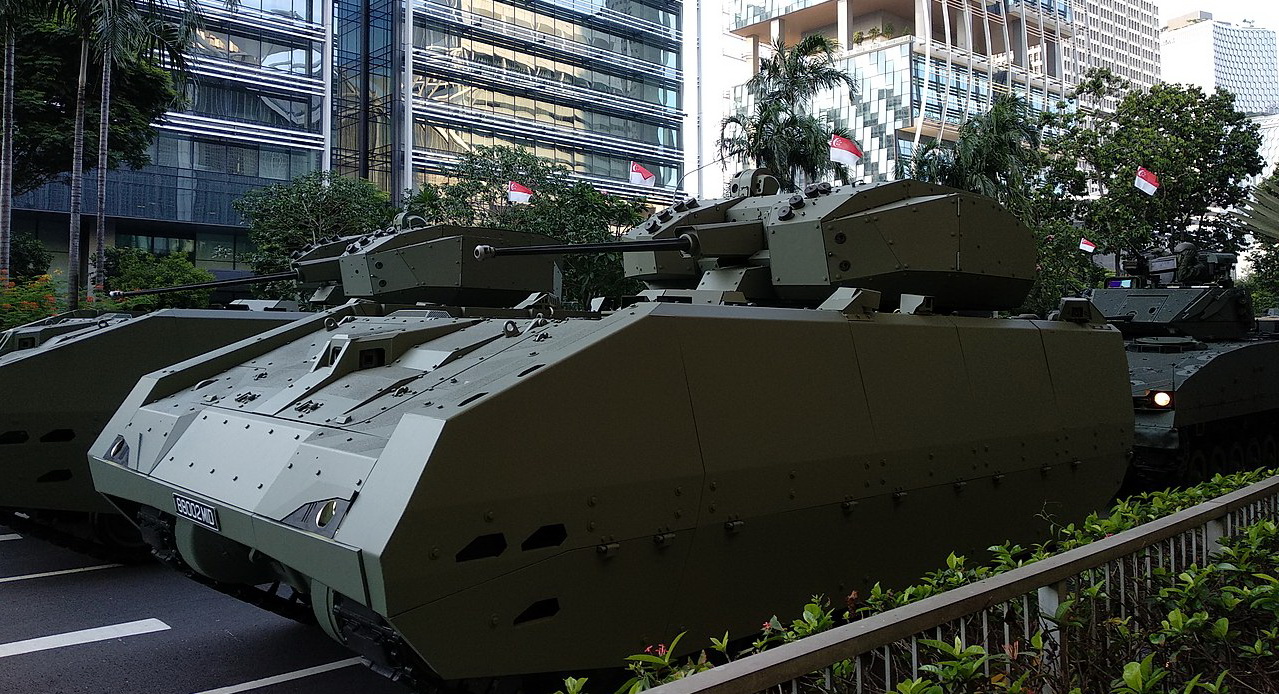
Hunter AFV
This ability makes the Hunter the perfect force multiplier on the battlefield and the Singaporean military clearly recognizes its value, since it commissioned the production of the vehicle in 2017 and the vehicle entered service officially in June 2019 – with some changes, such as the abovementioned Samson turret. The prototype was equipped with an indigenous Adder turret carrying 30mm autocannon only. Whether it was replaced by an off-shelf solution for that very reason is unclear. Other versions were developed as well, including a fire support one with a Cockerill 90mm or 105mm turret, intended to participate in the U.S. Army Mobile Protected Firepower program, but that really didn’t go anywhere.
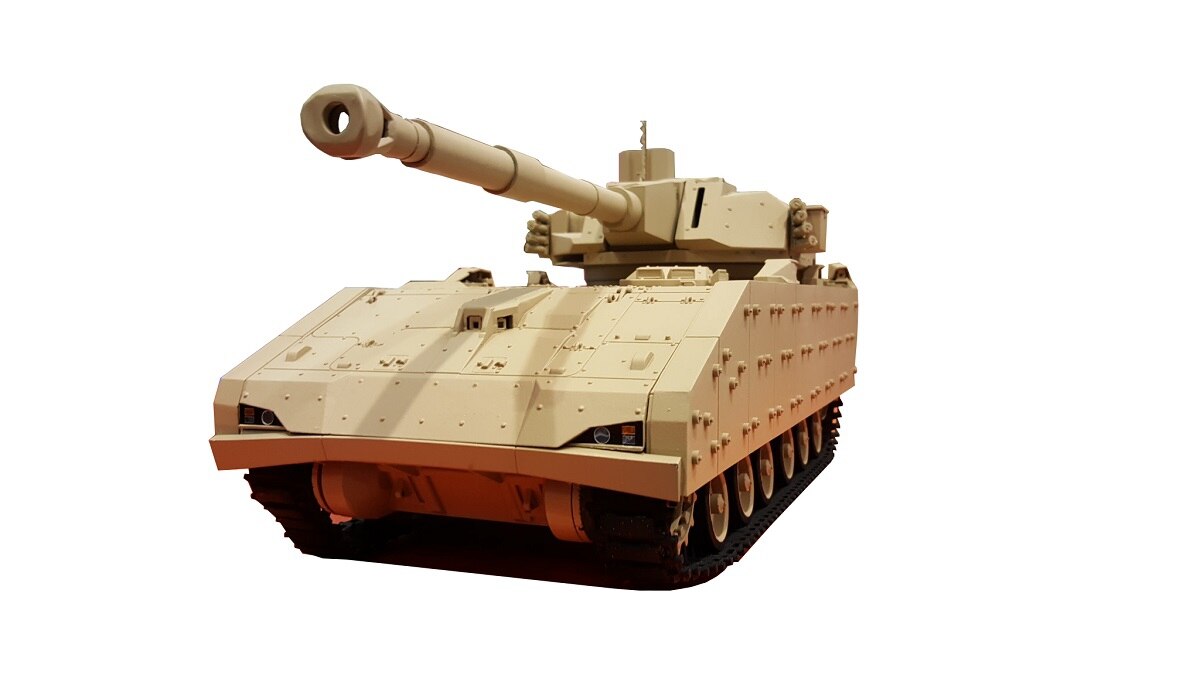
Hunter platform with a Cockerill turret
At this point, Singapore likely only has three of these vehicles in service (those officially transferred to the army during the June 2019 ceremony) with the 42nd Battalion, Singapore Armoured Regiment. A few days ago (April 2020), ST Kinetics announced a major contract for the mass-production of the Hunter AFV. The exact planned numbers are not known but will likely be substantial.
And so the tradition of Singapore being armed with some of the most modern armored vehicles in the world will continue. Hopefully they will never really need them but should the worst occur, Singapore will stand ready to make the enemy choke on the mailed fist that is the Singapore Armoured Regiment.
One of the upcoming Battle Path vehicles will be the cutting edge Hunter AFV from Singapore and in this article, we’ll tell you more about its history and why the city-state of Singapore would even need a heavy armored IFV, let alone an indigenous one.
Hunter AFV
Covering roughly the same are as New York City, the Republic of Singapore is located at the tip of the Malay Peninsula. It entered the 20th century as a British colony before being occupied by the Japanese, with the three-year reign of terror only ending with Japan’s surrender. The city was left with thousands of civilians executed by the occupants and a bitter resolve never to let something like that happen again.
After the war, Britain underwent rapid de-colonization and this included Singapore as well as the rest of the British holdings in Asia. Singapore obtained full independence in 1963 and, despite the expectations of many, it did not only survive, but thrive on the wealth brought by its trade hub status. It now stands as the wealthiest country in Asia (per-capita at least) as well as the most modern military in the region by a wide margin. Technological superiority is the name of the game for Singapore and they are very, very good at it.
With the lack of any real deep defense option, what they focus on instead is the use of force multipliers. The Singaporean military is based on a core of 72 thousand hardened veterans but also includes conscription – roughly 40 thousand conscripts are in active service in any given year. There was an increase in the number of professional forces (two decades ago, the military was 50 thousand strong). Additionally, in the time of need, Singapore can muster up to one million troops (the total population of Singapore is mere 5.5 million) with practically every able bodied man between 18 and 49 years old being able to serve as a reservist.
Singaporean infantry
The troops are well-trained, but Singapore’s armored vehicles are the real powerhouses. With only a limited number of troops available, the life of every soldier has to count, which is why Singapore spares no expense on the quality of its tech – with roughly 3 percent of its GDP invested into its military, from tanks to its air-force, everything is of the best quality Singapore can buy, even though the military budget has been somewhat declining as of late despite Singapore’s GDP growth. Between 2004 and 2020, the budget increased from 8 to 10 billion USD but, if we also include inflation, it stayed roughly the same.
Granted, two decades ago, the share actually was more around 6 percent but with the GDP growth, the yearly budget has actually increased from approximately 8 to 10.77 billion USD between 2004 and 2020, although, if we count in the effects of inflation, it remains roughly the same. And it is a sizeable sum indeed – to put things in perspective:
- Malaysia’s military expenditure is around one third that much (3.5 billion USD) for its 30 million citizens
- Indonesia’s military expenditure is around 8 billion USD for its 268 million citizens (!!!)
In other words, very roughly speaking, the tiny state of Singapore spends more on its military than both of its considerably larger neighbors combined and it really shows. The Singaporean Air Force is no joke with its 40 modernized F-15SG fighter jets complemented by 60 F-16s with negotiations about the acquisition of F-35 Lightning II underway. Once again, to compare with its neighbors:
- Malaysia operates 18 Su-30MKM fighters (comparable to the Singaporean F-15 version) and 8 F/A-18D Hornets plus a few BAE Hawk light attack aircraft
- Indonesia operates some 200 BAE Hawk light attack aircraft (which are no real match for dedicated fighter jets) but only 16 Su-27 and Su-30 fighters and 33 older F-16s
The Singaporean Navy is equally impressive, albeit on the lighter side. Its primary task is not to clash on the sea with larger navies, but to disrupt smuggling and pirate operations. To that end, Singapore has, amongst other things, six absolutely cutting edge Formidable class stealth frigates at its disposal. These were built in France especially for Singapore.
RSS Steadfast, a Formidable-class frigate
But as impressive as all this may be, there’s no way around the fact that should an invasion occur, Singapore would be in real trouble simply because it has no ground to give in exchange for time. That is why, for many decades, the Singaporean military has been using a tactic sometimes known under the name “poisonous shrimp” (named after a turn of phrase used by Lee Kuan Yew, the first prime minister and the founder of independent Singapore).
Simply put, it’s a tactic of deterrence where the defender, while accepting that a determined onslaught would succeed, makes sure that any potential attackers pay an incredibly steep price for any such attempts to take over the city and its wealth (by 2017, Singapore had somewhat higher GDP than the entire Malaysia). This fact must be signaled and made known to the enemy, much like venomous animals often show their bright colors.
With its limited population, Singapore cannot realistically afford any war of attrition, but fosters instead a wide net of military alliances – should such an attack occur, the goal of the Singaporean military is not to slug it out with much larger militaries, but to delay the attacked until help arrives from abroad. The attacker would, of course, be one of Singapore’s two neighbors – Indonesia and Malaysia. The relationship between the two countries was at times quite problematic, ranging from diplomatic incidents to the open hostility of the 1960s that were but a small step away from a real war. Even though their relations have improved since then, territorial disputes between them still exist and Singapore is stuck in the middle of this balance of power. Singapore itself was even a part of Malaysia for several years before being expelled from the country and even though it has held its own ever since, things have been remarkably fragile and complicated in the entire region.
For example, in the 1990s, the personal animosity between the leaders of Singapore and Malaysia led to a deterioration of the relationship between the two countries – a proof that, just like in ancient times, all it takes is two angry men to bring down an empire.
Lee Kuan Yew, the founder of independent Singapore
In order not to provoke its neighbors too much, Singapore has a portion of its armed forces permanently stationed abroad, especially the warplanes, mostly on Australian and American air bases. A portion of its ground troops is also often training elsewhere due to the lack of space to do so in Singapore itself – in Australia, Taiwan, Thailand and New Zealand. Much of the yearly military costs go to the transportation of Singaporean forces in and out. On the upside, Singapore’s troops get to train with the best of Asian and western militaries, are patriotic and generally top notch. Should the worst occur, all these forces will fall back to Singapore and defend the city – hence the need for an extremely powerful air force; to protect the incoming troops.
In the 2000s and 2010s, Singapore’s military considered an outright attack unlikely and partially amended the “poisonous shrimp” defense strategy with more proactive elements. The region is rife with pirates while both neighboring countries have had their trouble with armed Islamic terror groups. Despite not being a mostly Muslim country, Singapore’s forces do lend a hand on occasion and participate in join anti-terror operations. However, with the rise of China’s influence in the region, the Singaporeans – normally having a good relationship with the PRC – started becoming wary due to Singapore’s own relations with Taiwan.
Singaporean M113 Ultra 40/50
However, one country that Singapore enjoys the best relations with is the United States of America. Indeed, Singapore uses a lot of American equipment, especially when it comes to warplanes. It used to be so when it comes to Infantry Fighting Vehicles as well. Same for some Cadillac Gage Commando APCs from the late 1960s and the early 1970s, Singapore ordered approximately 1000 (!!!) M113 APCs, as such:
- 300 M113A1 APCs delivered between 1973 and 1974
- 500 M113A1 APCs delivered between 1978 and 1980
- 200 M113A2 APCs delivered between 1988 and 1989
If you’re interested in the history of the M113 itself, we have a dedicated article available but, suffice to say, the M113A1 variant was the first M113 upgrade from 1964 with a diesel engine, while the M113A2 variant from 1979 had some further partial improvements. It was still, however, the same old obsolete “battle taxi“ of old with its thin aluminum skin offering very little protection – by 1989, it certainly was quite obsolete.
That is why, in the 1990s, the military had Singapore’s largest (and only major) military tech producer, ST Engineering (or, rather, its subsidiary, then known as ST Kinetics) modernize these with upgraded armor (applique armor plates with ceramic inlays, resistant to HEAT and HESH rounds) and a sturdier power pack. Sources differ regarding the nature of this upgrade. Some claim the new power pack is producing 400hp instead of the original 275hp while others claim the horsepower remained unchanged with an upgrade to 300hp being merely available as an option.
Singaporean M113 Ultra OWS
A portion of them got upgraded with a new turret featuring a 40mm grenade launcher and a heavy machinegun (these are referred to as M113 Ultra 40/50), a portion of them got a weapons station by Israel’s Rafael with a 25mm M242 chain gun (these are referred to as M113 Ultra OWS). And, finally, a certain number was converted into short-range air-defense vehicles and rearmed with six Soviet-era Igla SAMs from the 1980s. Of the original 1000 M113s acquired, roughly 700 are still in service today. However, as IFVs, they are obsolete even in the most upgraded form.
Singaporean M113 Ultra Mechanized Igla
The Singaporean Army was naturally aware of M113’s obsolescence even back in the 1980s and tasked ST Engineering in the late 1980s with designing its replacement. The answer was the first generation of truly Singaporean IFVs called Bionix.
But first, they looked at various existing western IFVs and found that none matched their specific requirements.
In order to work under the specific conditions of Singapore, the IFVs had to be light – or, specifically, both air-transportable and amphibious. After all, Singapore is an island – the ability to swim was definitely seen as a must. Due to Singapore’s unique troop rotation system, the vehicle had to be easy to transport abroad. At the same time, in order to work as a force multiplier, the vehicle had to offer solid protection and excellent firepower.
The Singaporeans examined the Bradley and the Warrior, but these were just too large and heavy while the German Marder can’t swim (neither can the Warrior, for that matter. Neither of the commercially available IFVs would do.
Bionix 25
The development of the indigenous Bionix IFV started between 1988 and 1991 (sources differ) with the first prototypes ready between 1995 and 1997. The trials that took place in Australia and Singapore itself were successful and, in March 1997, a contract was signed between Singapore and ST Kinetics for a production run of 500 of these vehicles.
The initial main production version (1997-2001) was referred to as Bionix 25. It consisted of an all-steel hull that was upgradable with the same applique armor system the improved M113s were using. The second part was a steel two-man indigenous turret by ST Kinetics, which meant that the vehicle had to have a crew of 3 men. In addition to them, it also carried 7 troops in the back. This model weighed 23 tons, which was a remarkably low number, all things considered.
The vehicle was powered by a 475hp Detroit Diesel 6V-92TA engine paired with a General Dynamics Defense Systems HMPT-500-3EC automatic transmission (same as the one used on the Bradley Fighting Vehicle). This allowed the vehicle to go as fast as 70 km/h, although its average off-road speed was around 25 km/h. The suspension was of the hydropneumatic type. The turret was armed with a 25mm M242 autocannon and a coaxial machinegun.
In parallel, another (APC) variant of the same vehicle was also conceived under the designation Bionix 40/50. The hull was mostly the same, but the turret got replaced by the one used on the upgraded M113s, which carried a heavy 12.7mm (.50cal) machinegun and a 40mm grenade launcher (hence the name). This turret was somewhat lighter, smaller and one-man only, bringing the total weight of the vehicle down to 21.5 tons and the vehicle’s crew to 2 men. The troop carrying capacity, however, increased from 7 to 9 men.
Bionix 40/50
In the end, several hundred vehicles of this type were built and a modified version (known as Infantry Carrier Vehicle) was even offered to the Americans in 2001 for their then-new Interim Brigade Combat Teams. This version had the turret replaced by a remote-controlled weapons station and weighed only 17 tons. It was an interesting project, but it lost to the Stryker.
But even as the Bionix IFVs were entering service, ST Kinetics was already working on an improved version, which would become known as Bionix II.
Bionix II was heavier and larger, but also sturdier than its predecessor and one of the biggest points of Bionix criticism – its firepower – was addressed as well. The vehicle received a new 30mm Bushmaster Mk.44 autocannon instead of the older 25mm M242 version. The gun also came with more advanced stabilized sights (including a thermal imager and a laser rangefinder) and the vehicle was connected to the new Singaporean Battlefield Management System, significantly increasing its value as a force multiplier.
The armor was still modular (based on the MEXAS system), allegedly offering 50 percent more protection compared to its predecessor. The Bionix II IFV had a crew of 3 men with 10 troops carried in the back. The engine remained the same, but additional turbocharging was added to increase its output to approximately 550hp.
Bionix II
The Bionix II IFV entered the service around 2006, complementing the already existing older Bionix models. At this moment, Singapore has roughly 800 Bionix series vehicles of all types in service alongside the remaining M113s and many other cutting edge or at least modernized armored vehicles, including:
- Around 100 Leopard 2SG Main Battle Tanks (96 upgraded delivered between 2006 and 2009), replacing the long-obsolete AMX-13SM1 Light Tanks
- Around 100 older Leopard 2A4 tanks (some were or are upgraded to the 2SG standard so the exact number of 2SG tanks in service is unknown)
- 435 Terrex APCs (modern wheeled indigenous APCs)
- 400-600 Bronco tracked carriers
- 40 or so Primus SPGs (a modified M109 hull with a ST Kinetics turret featuring a 155mm L/39 howitzer)
As you can see, the armored forces of Singapore are considerable. Most armor is concentrated in the hands of the Singapore Armoured Regiment, established in 1968 and consisting of one battalion of tanks and three battalions of mechanized infantry.
The whole story could end here – Singapore has excellent and fairly new IFVs at its disposal. But it does not. Always seeking an edge over its opponents, Singapore already ordered a new AFV built in order to complement the Bionix IFVs in service. This program is known under the name Next Generation Armored Fighting Vehicle (NGAFV).
Hunter AFV prototype, 2017
The work on it began roughly in 2006 (it started about the same time as the Bionix II IFV production was launched) and was actually finished only recently. The goal was to develop a replacement for the – by now really old – M113 APCs that, even with the many upgrades the Singaporeans have made over the years, is utterly obsolete. This notion was likely confirmed from Israel (which has strong natural ties to Singapore, both being small countries surrounded by potential enemies). Simply put, the M113s have to disappear from front-line service due to the insufficient protection levels they offer.
The prototype that came from this program in 2017-2018 received the designation “Hunter.” The term Hunter AFV refers specifically to the Infantry Fighting Vehicle model, while the name Hunter is used for the entire family of vehicles based on this platform (for example, Hunter ARV).
The vehicle weighs nearly 30 tons, has a crew of 3 men and can carry 8 troops in the back. It is considerably larger and better armored (STANAG 4569 Level 4 thanks to the bulky NERA armor) than its predecessor. It carries an unmanned Israeli Samson 30 turret by Rafael, armed with a 30mm Bushmaster Mk.44 autocannon and two internal Spike-LR or Spike-LR2 ATGM launchers that are usually hidden in the turret and only appear when the vehicle is ready to fire. Spike-LR is the long range version of the Spike family of ATGMs with the LR2 model being significantly upgraded over the original version:
- Weight: 12.7kg per missile
- Caliber: 130mm
- Range: 5.5km (previously 4km)
- Warhead: Tandem HEAT or HEAT-MP
- Penetration: Approximately 900mm after defeating ERA (previously 700mm)
The LR2 version is cutting edge, only ordered by Israel itself in 2017. The integration of this system to the Singaporean AFVs is the result of dealing with the new armor purchases by its neighbors from the last two decades. With every Hunter AFV armed so, even relatively modern enemy tanks will have a hard time.
Hunter AFV
Since the turret is unmanned, the crew is sitting in the hull in an armored compartment and control the vehicle using a drive-by-wire system along with a 360 degree set of cameras, providing it with excellent situational awareness. This allows various the 3 crewmembers to perform each other’s function if necessary. For example, the commander can easily drive the vehicle without moving an inch – he simply pushes a few buttons and takes over from the driver. The vehicle also has the “hunter-killer” capability where the commander searches for new targets using his independent sights while the gunner is occupied with taking care of the previously designated ones.
As for further defensive measures, the vehicle is equipped with 76mm smoke grenade launchers along with a laser warning system. According to Rafael, the Samson 30 turret can also be easily equipped with a Trophy hard-kill APS, but the production Hunter vehicles do not carry this option. The vehicle does, however, allegedly use a new type of coating on its surface, making it harder to detect using thermal imagers. It is powered by a German 711hp MTU 8V-199 TE20 diesel engine, allowing it to go as fast as 70 km/h.
Interestingly enough, the requirement for any Singaporean AFV to be amphibious was dropped. This is no longer a “battle taxi” like the Terrex APC, which is supposed to carry troops to combat and then bail out. No – the Hunter is supposed to stay around and fight alongside the infantry it carries; hence the improved protection levels.
But the most important aspect of this vehicle isn’t its firepower or protection. It’s the fact that it can operate in sync with the other troops thanks to its integration into a modern Battlefield Management System called ARTEMIS (“Army Tactical Engagement and Information System” – okay, someone clearly wanted it to spell ARTEMIS, no doubt about it). It’s a C4 system that includes everything – the vehicle can transmit and receive its status, actions, the location and status of other units and so on.
Hunter AFV
This ability makes the Hunter the perfect force multiplier on the battlefield and the Singaporean military clearly recognizes its value, since it commissioned the production of the vehicle in 2017 and the vehicle entered service officially in June 2019 – with some changes, such as the abovementioned Samson turret. The prototype was equipped with an indigenous Adder turret carrying 30mm autocannon only. Whether it was replaced by an off-shelf solution for that very reason is unclear. Other versions were developed as well, including a fire support one with a Cockerill 90mm or 105mm turret, intended to participate in the U.S. Army Mobile Protected Firepower program, but that really didn’t go anywhere.
Hunter platform with a Cockerill turret
At this point, Singapore likely only has three of these vehicles in service (those officially transferred to the army during the June 2019 ceremony) with the 42nd Battalion, Singapore Armoured Regiment. A few days ago (April 2020), ST Kinetics announced a major contract for the mass-production of the Hunter AFV. The exact planned numbers are not known but will likely be substantial.
And so the tradition of Singapore being armed with some of the most modern armored vehicles in the world will continue. Hopefully they will never really need them but should the worst occur, Singapore will stand ready to make the enemy choke on the mailed fist that is the Singapore Armoured Regiment.