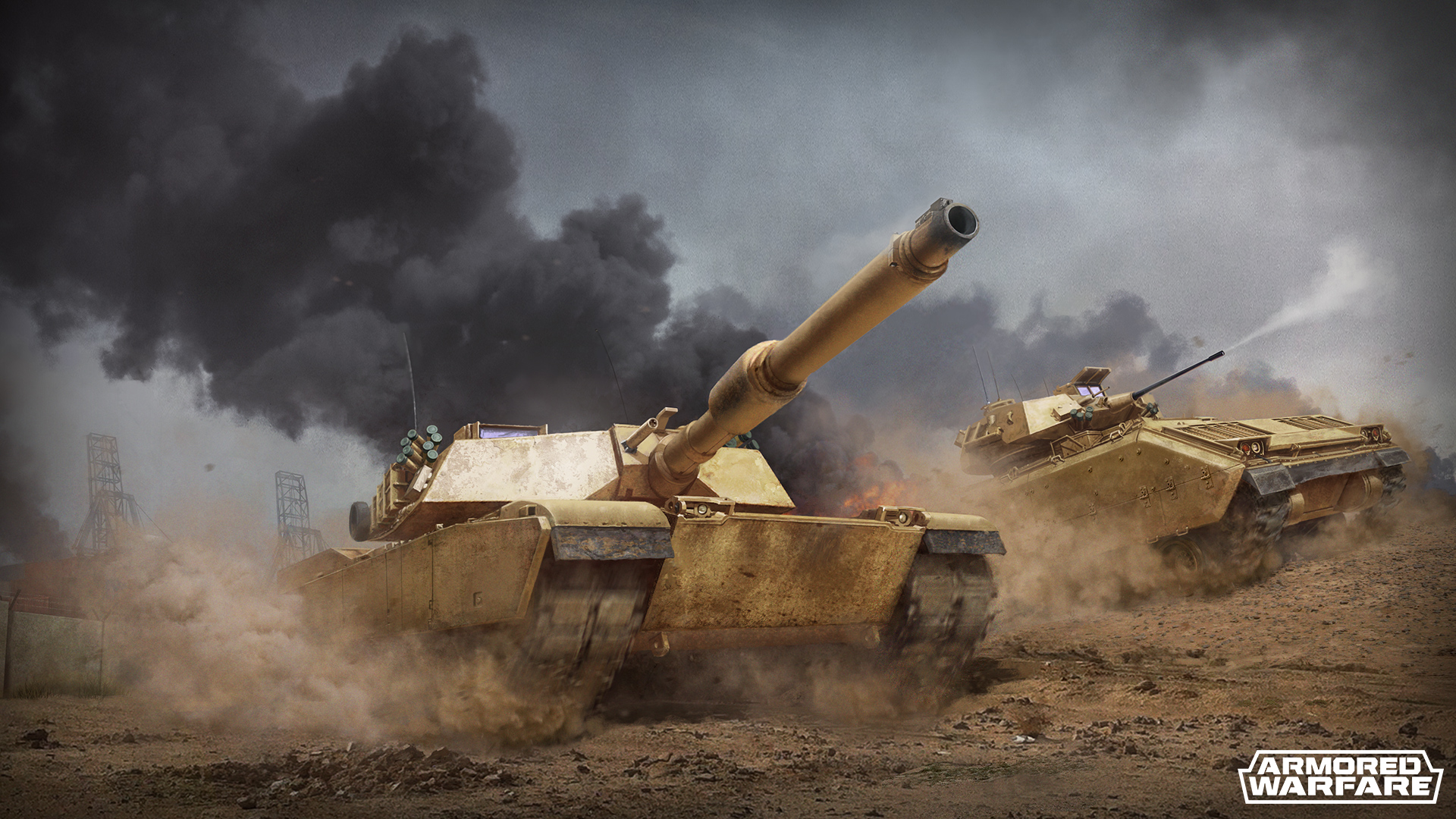
Offer: Desert Storm
Commanders!
Today we’ve prepared the following items for you:
[h2]CATTB[/h2]
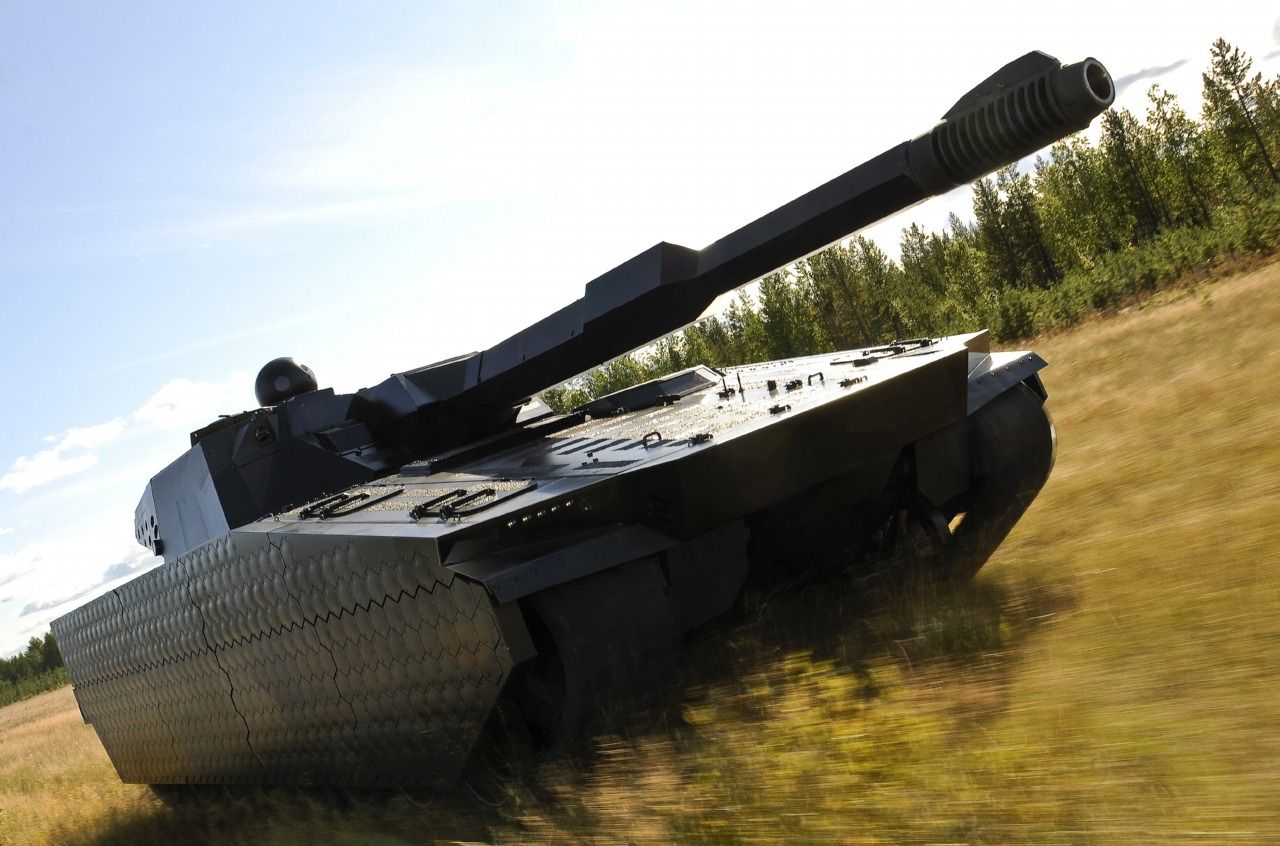
The CATTB Main Battle Tank was an experimental platform, developed as one of the early steps in the creation of a next generation Abrams Main Battle Tank, also referred to as the Block III Abrams, or M1A3. It was created in the 1980s as a response to the perceived threat of future Soviet super tanks and featured some truly advanced components, such as the XM291 dual caliber cannon that could switch between 120mm and 140mm calibers. With the collapse of the Soviet Union, the development of this tank became unnecessary and the program was canceled in the 1990s. You can read more about it in our dedicated article.
In Armored Warfare, the CATTB is a Tier 10 Premium Main Battle Tank and one of the most powerful and versatile MBTs around, devastating its opponents with its signature double-tap feature, allowing it to fire its cannon twice in short order. This allows it to drive around a corner, deal very high amounts of damage and then retreat back into cover, leaving the enemy reeling from the massive blow.
This vehicle is available via Loot Crates, which drop CATTB parts. Collect 100 CATTB parts from these Loot Crates to assemble the whole vehicle.

[h2]Battle-Hardened Bundles[/h2]
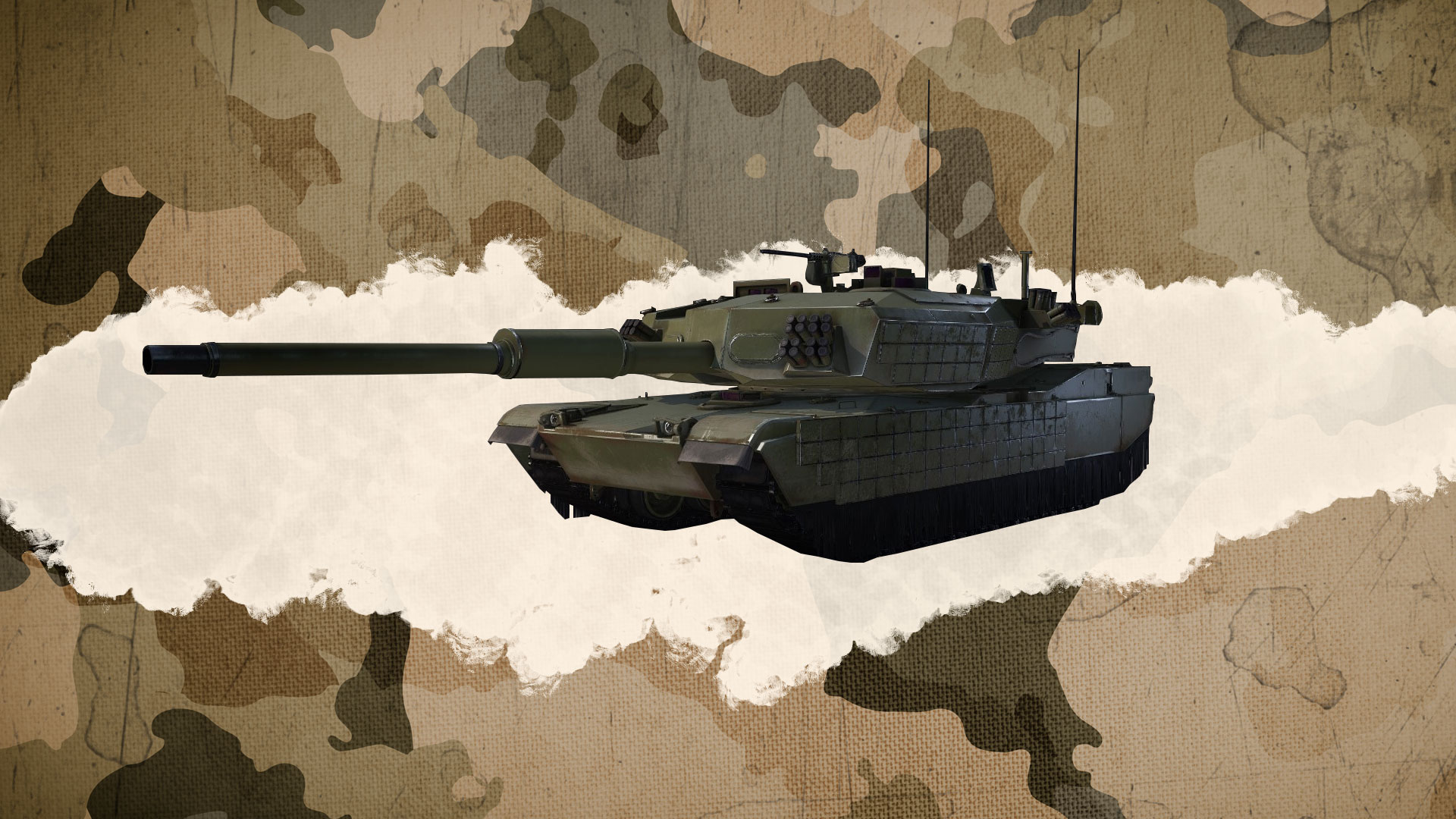
For today’s offer, we’ve prepared a series of Battle-Hardened bundles for several American Progression vehicles. These discounted bundles contain, amongst other things, the Battle-Hardened status, which will turn your Progression vehicle into a semi-Premium one by increasing its Credit income, Experience income, and by improving its matchmaking quality so that you meet lower Tier opponents in battle than usual, much like Premium vehicles do.
The discounted Battle-Hardened bundles are available for the following vehicles:

[h2]M1A1 Storm with Desert Storm bundle[/h2]
In 1985, the Abrams was upgraded with, amongst other things, the 120mm M256 smoothbore cannon. Over 5000 M1A1 tanks were produced until 1992. This tank participated in Operation Desert Storm, which forged its legendary reputation.
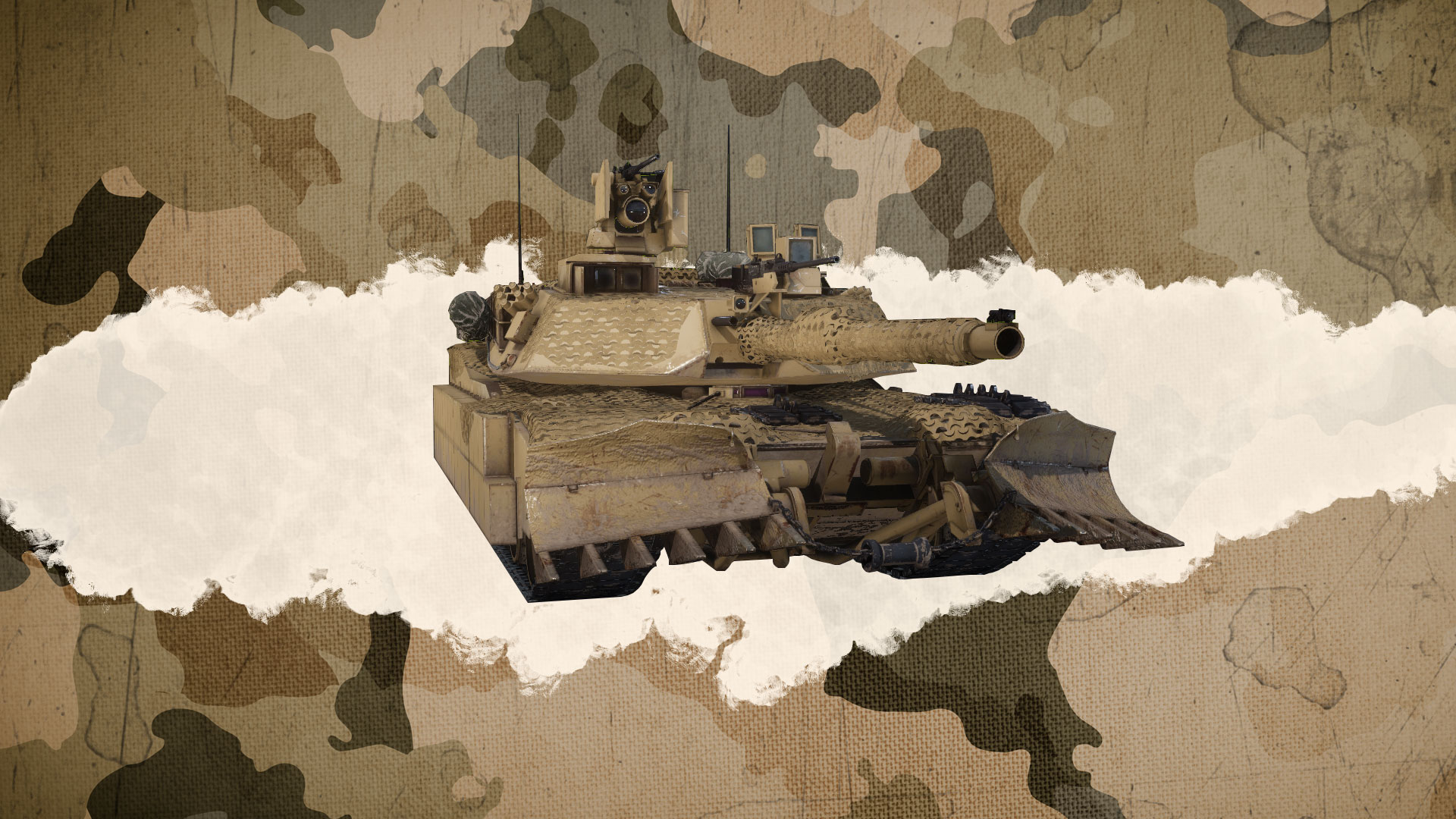
In Armored Warfare, the M1A1 Storm is a Tier 7 Premium Main Battle Tank. The M1A1 Storm look was inspired by Operation Desert Storm, including a gorgeous camouflage net model. But, more importantly, this tank is equipped with a massive frontal dozer blade, adding extra armor and ramming damage to the long list of its advantages.
This vehicle is also available in the Desert Storm Bundle. As its name suggests, the bundle contains several Operation Desert Storm and War in Iraq-related items, including:
[h2]Warhammer Skin for M1A2[/h2]
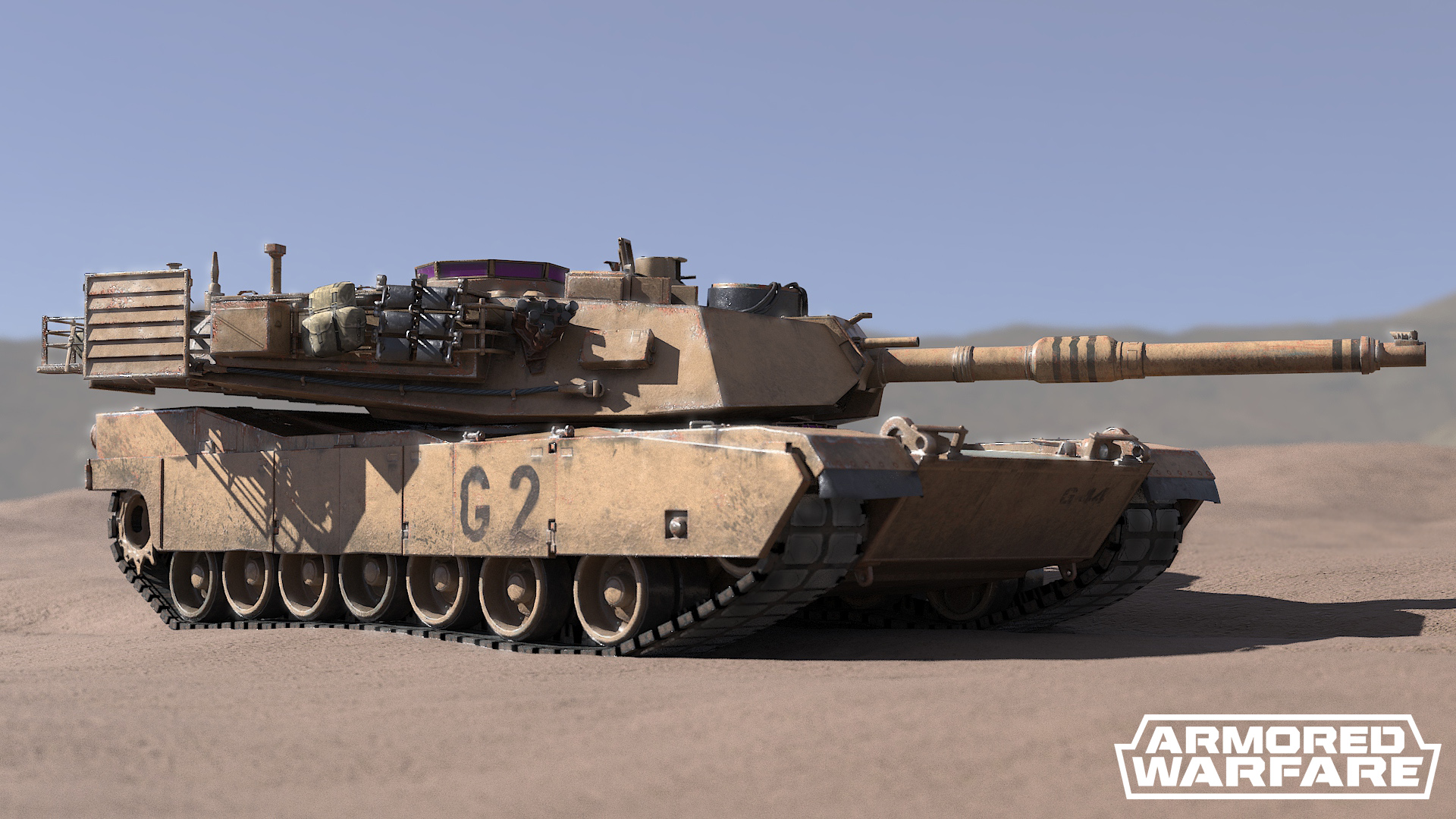
This skin for the M1A2 Tier 8 progression Main Battle Tank is based on the real American Abrams tanks, which were seen and photographed during the Iraq War. You can read more about it in our dedicated article.
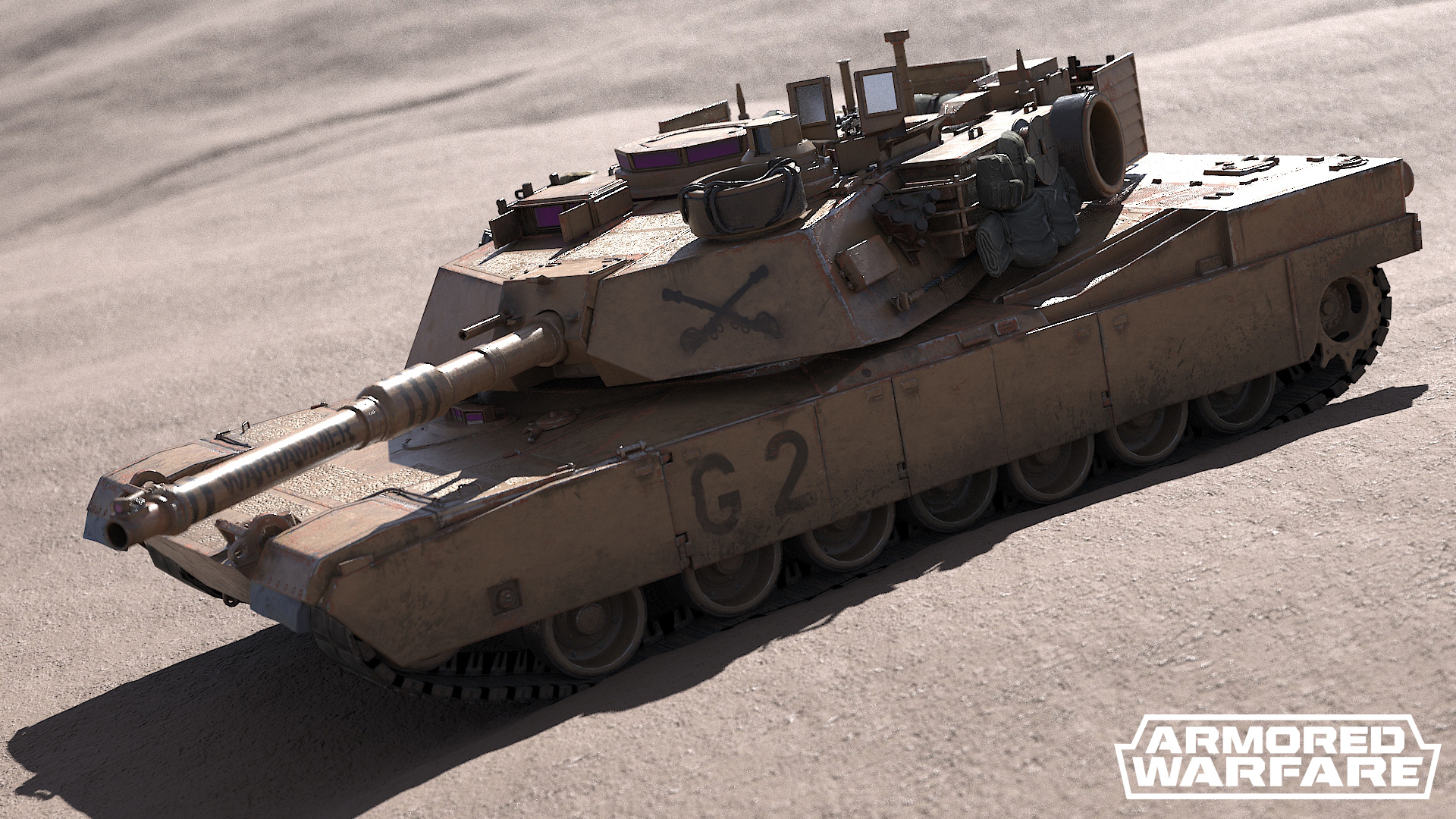
This skin is available in a bundle along with the following items:
Please note that the bundle includes the skin but not the M1A2 MBT itself. This tank needs to be obtained via progression directly in the game.
[h2]MERDC Camouflages[/h2]
The MERDC camouflages are based on the patterns from the 1970s, when the U.S. Mobility Equipment Research & Design Command (MERDC) developed a system for camouflaging armored vehicles. You can read more about these patterns in our dedicated article.
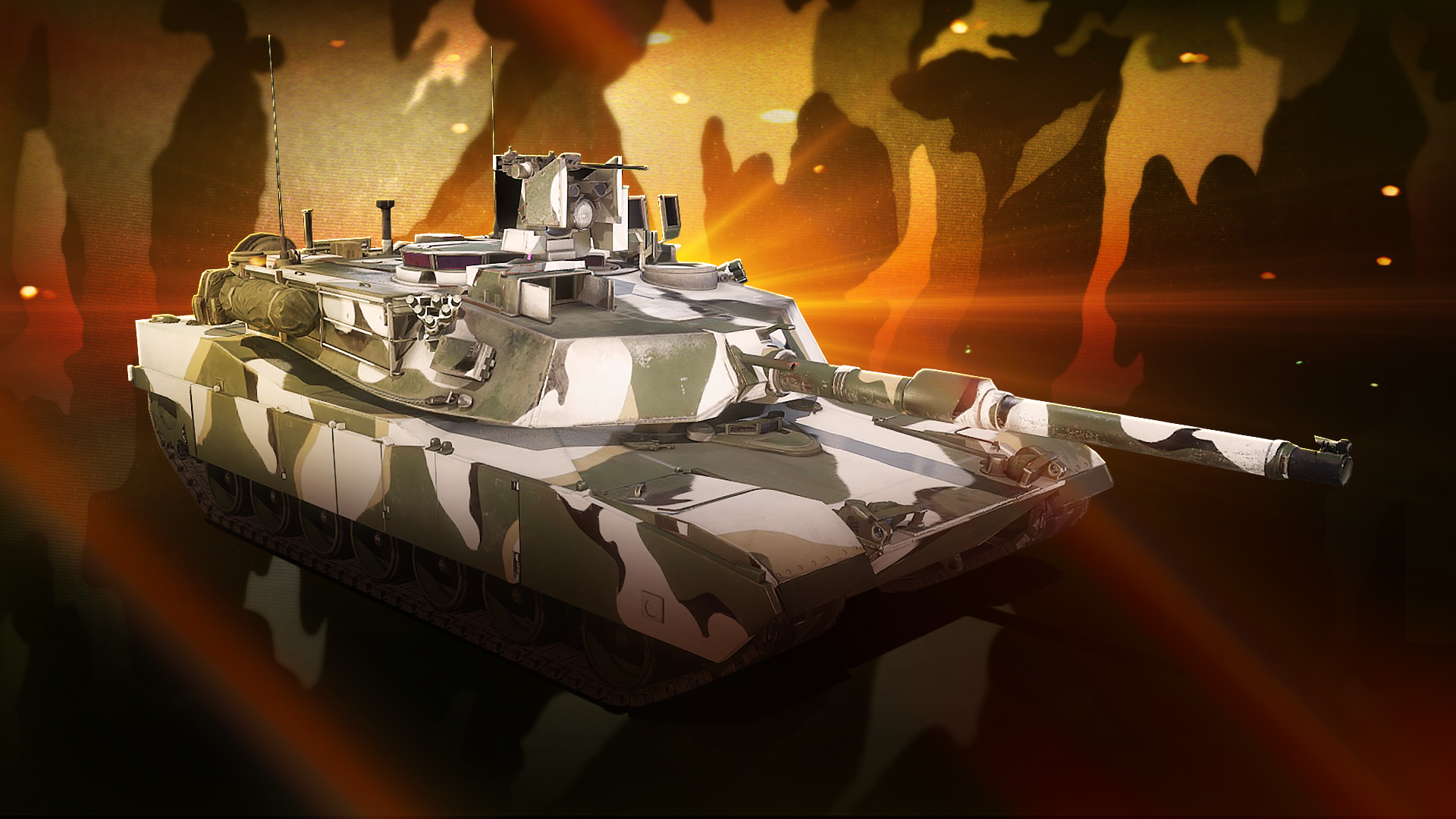
There are seven patterns available:
All seven are available in a discounted bundle. Each of these camouflages can be installed on any vehicle that has the camouflage customization feature available. These camouflages can be used in all three environments.
[h2]Bradley AAWS-H[/h2]
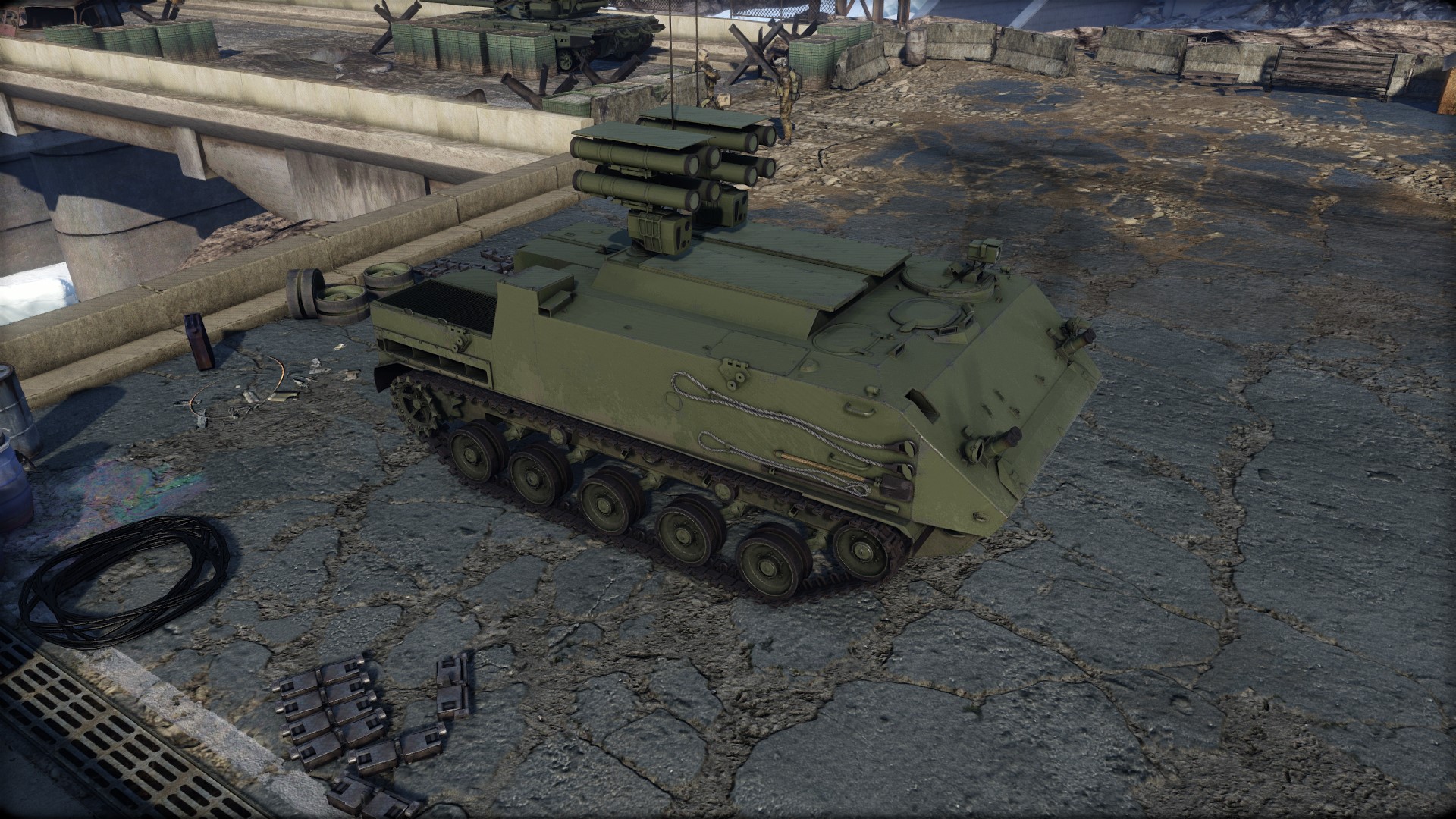
The Bradley AAWS-H Tank Destroyer was an attempt by Loral Vought to mount four kinetic guided missiles on an extendable arm while using the Bradley IFV chassis as a platform. Kinetic missiles were cutting edge tech back in the 1980s – unlike standard ATGMs, they destroyed the target by their kinetic energy instead of a HEAT warhead, accelerating to several times the speed of sound. There was little to no defense against them, although they did have some drawbacks, which was why they were never adopted in real life. You can read more about the vehicle in our dedicated article.
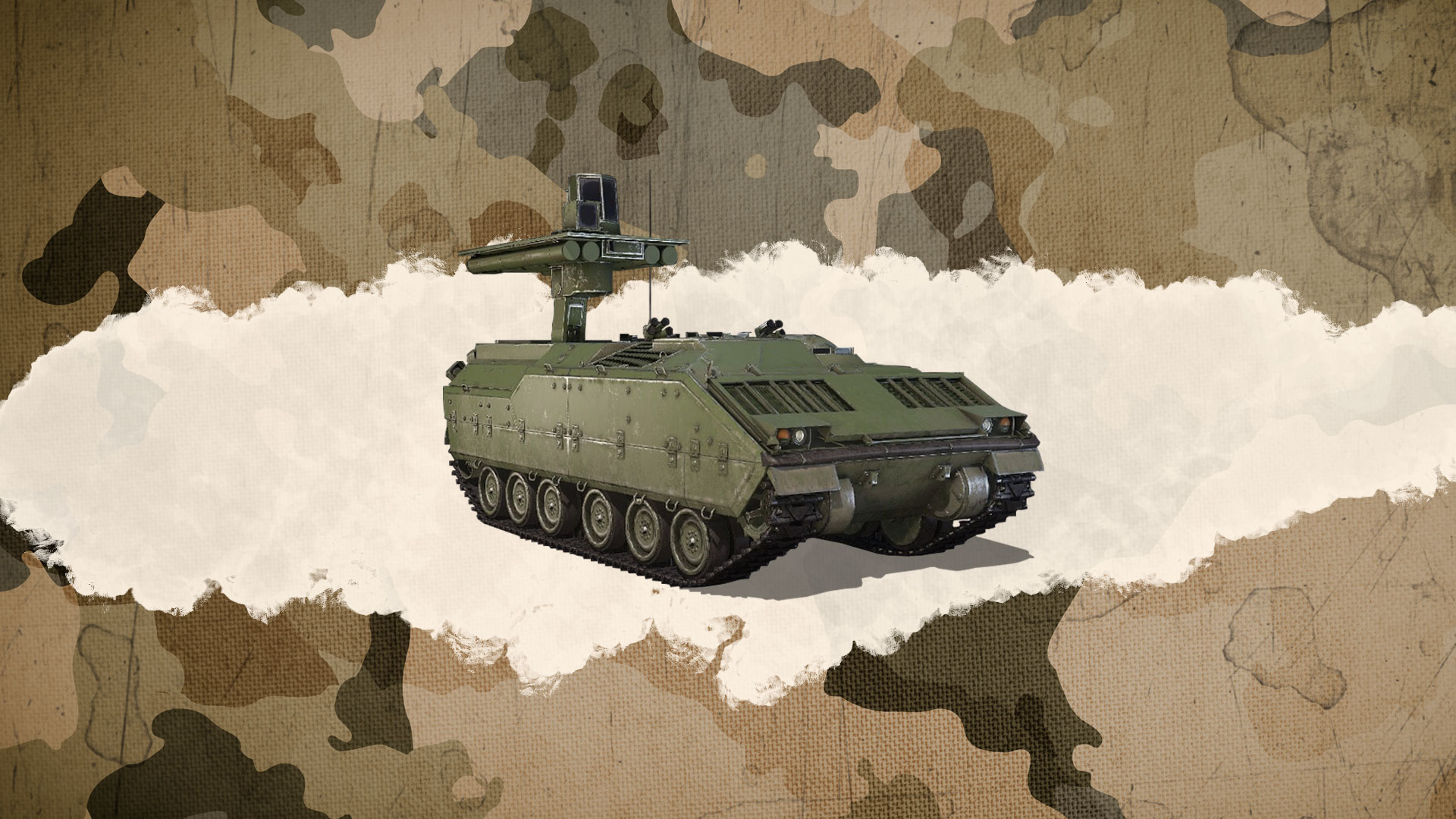
In Armored Warfare, the Bradley AAWS-H is a Tier 8 Premium Tank Destroyer. It’s an ATGM-based TD, carrying special kinetic missiles that actually become more effective with increasing distance to your target. It is the embodiment of a long-range missile carrier and is perfect for players who prefer sniping to close combat.
[h2]Griffin 120mm[/h2]
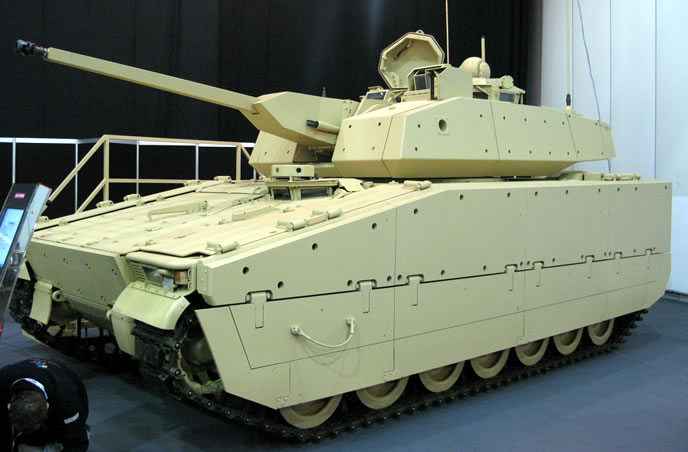
The Armored Warfare version of the Griffin Light Tank is based on an early 2016 tech demonstrator, intended to show the U.S. military during the AUSA 2016 conference that General Dynamics meant business. It was built as a private venture; effectively a scaled-up example of General Dynamics was capable of providing when it came to highly mobile vehicles with a lot of firepower for the U.S. airborne forces. The U.S. Army was impressed and the design has since evolved into what is generally referred to as the MPF Light Tank. You can read more about this vehicle in our dedicated article.
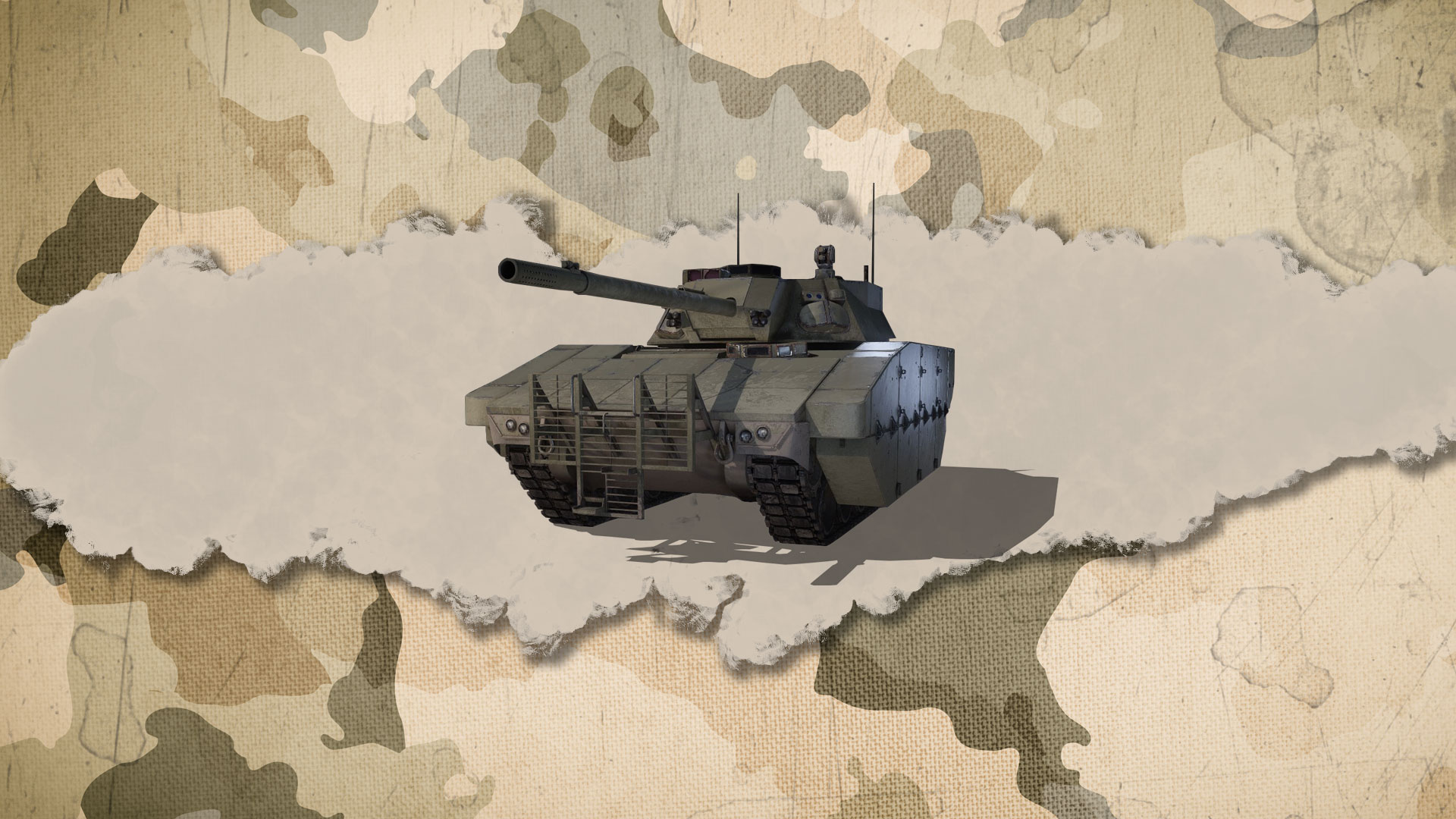
In Armored Warfare, the Griffin 120mm is a Tier 8 Premium Light Tank and a powerful, fast machine, armed not only with its 120mm cannon, but also with special ammunition types, making it deadly at any distance. Few Tier 9 vehicles can match its sheer ferocity on the battlefield.
[h2]Stryker ADATS[/h2]
ADATS stands for “Air Defense Anti-Tank System,” describing its purpose very well. The system is intended to engage both air and ground armored targets. It was developed in the 1980s by a Swiss company called Oerlikon-Contraves and was offered as an interesting hybrid that would be able to deal with both Soviet tanks and helicopters or attack planes. Unfortunately for it, it came too late – only Canada would actually accept it in service and the end of the Cold War meant the end to all attempts at its large-scale introduction. The ADATS missiles were quite large but, more importantly, extremely fast and were certain to be extremely destructive to any Soviet armored targets, even though this thankfully never had to be tested in real combat. The ADATS turret was offered for a wide variety of platforms and was actively installed on a vehicle that is kind of like a cousin to the Stryker, the Canadian LAV-III. In this configuration, the vehicle was called MMEV.
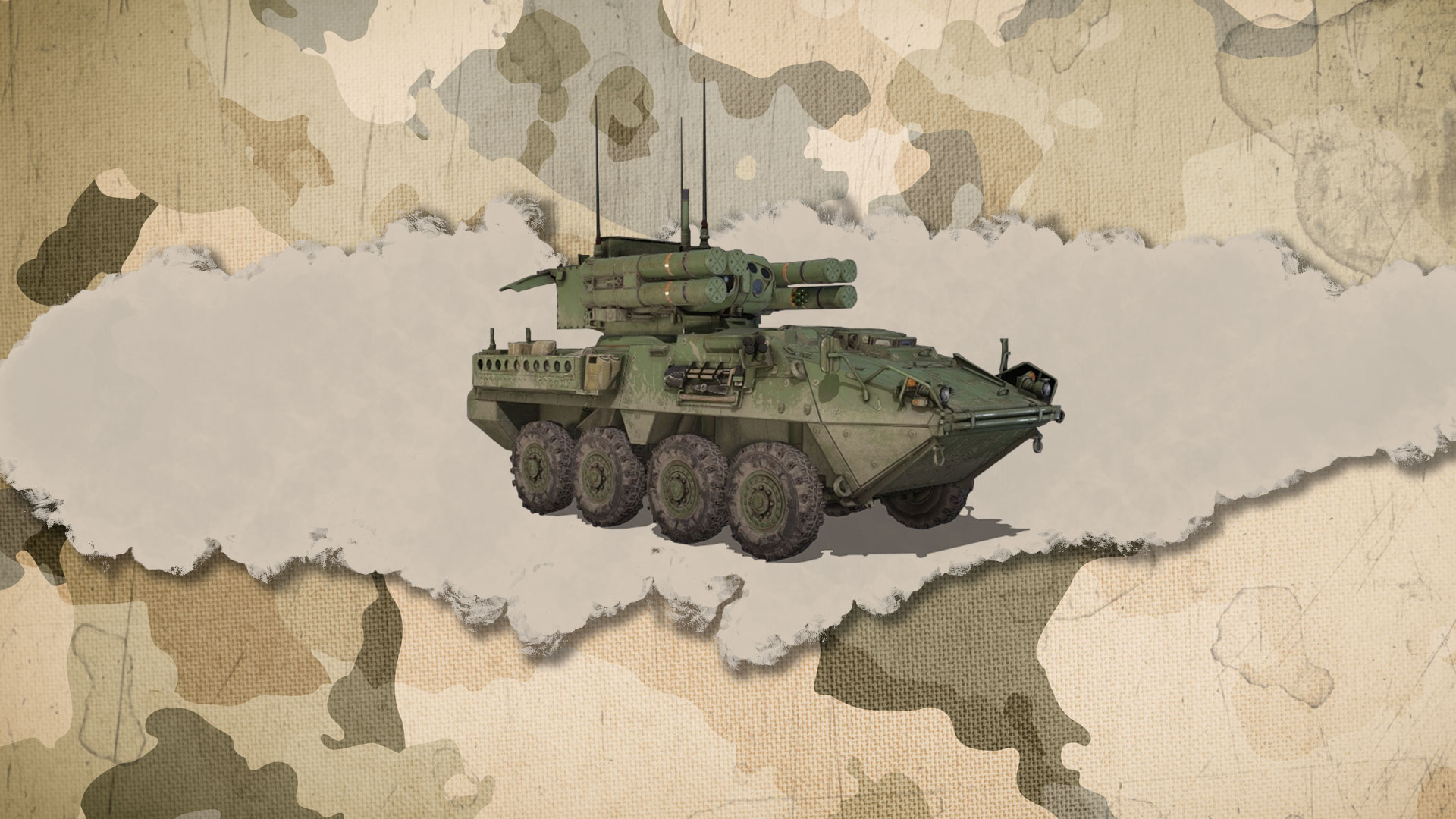
In Armored Warfare, Stryker ADATS is a Tier 9 Premium Tank Destroyer. It is a wheeled vehicle armed with two weapon systems – powerful long-range guided missiles and short-range unguided rockets, offering it some survivability in short range combat as well as the ability to deal tremendous damage if left to its devices.
[h2]Commander Loot Crate[/h2]
This week, we’ve prepared another special offer for you in the form of a brand new Commander Loot Crate, featuring, amongst other things, some of the rarest commanders in the game!
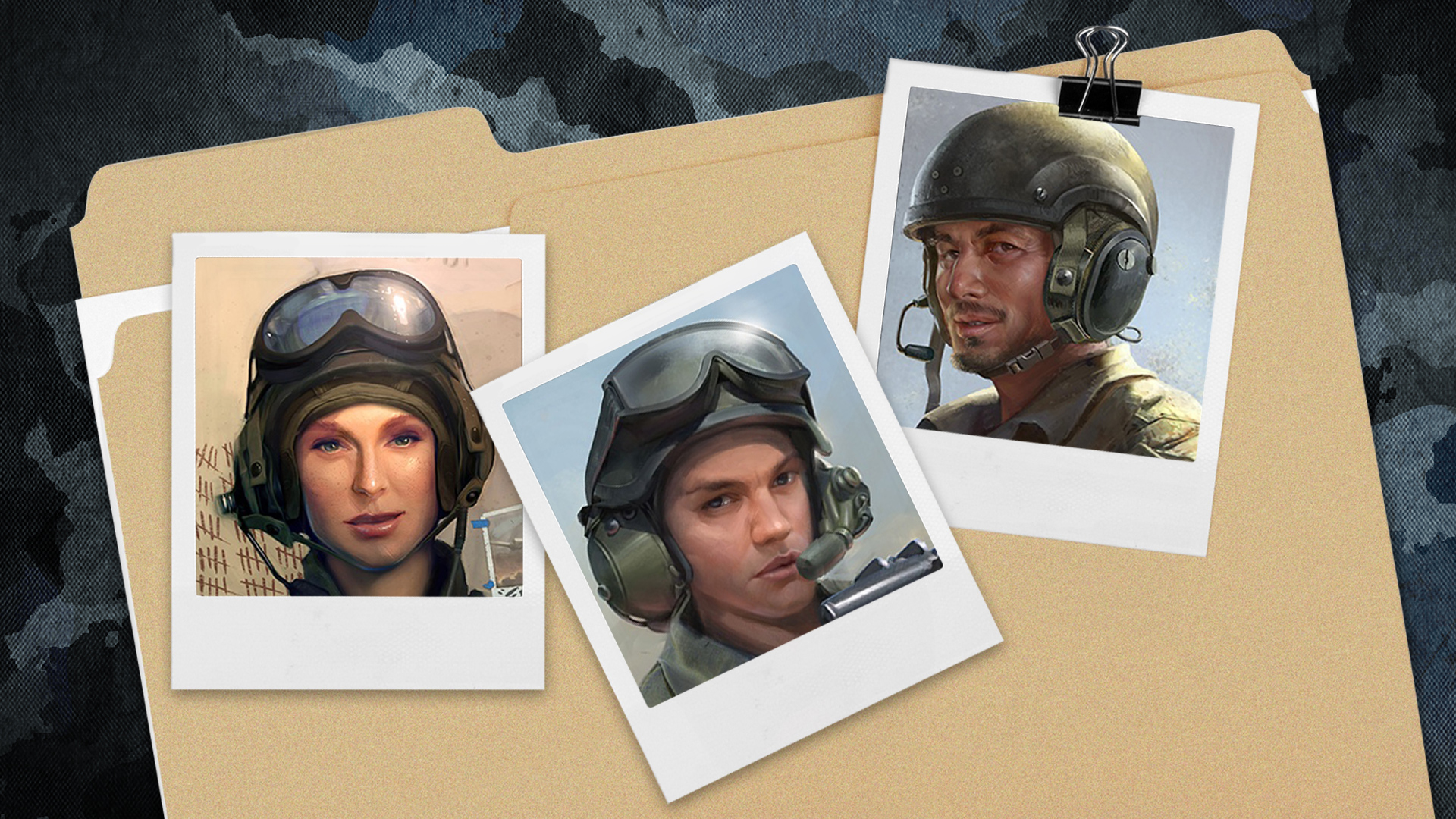
This Loot Crate gives you the opportunity to obtain the following items:
The mechanics are very simple. Each crate allows you to win one of the listed items (or its value in Gold if you have it already, in this case 1.000 Gold per commander).
To learn more about what's in a chest simply click on it, this will launch a small pop up window to show you what’s inside!
Please note:
After opening the crate, you will immediately roll on one of the items that are inside this Loot Crate and will see what you receive before you have to actually pay anything. No more random chances – you immediately see what you get and what you don’t. You can then opt to purchase the item you rolled on for the Loot Crate’s price. Until you do so, you will be unable to buy any other Loot Crate of the same type.
We hope that you will enjoy the offer and, as always:
See you on the battlefield!
Today we’ve prepared the following items for you:
- CATTB Tier 10 Premium Main Battle Tank
- Battle-Hardened Discounted Bundles
- M1A1 Storm Tier 7 Premium Main Battle Tank (with Desert Storm bundle)
- Warhammer skin for the M1A2 Tier 8 Main Battle Tank
- MERDC camouflages
- Bradley AAWS-H Tier 8 Premium Tank Destroyer
- Stryker ADATS Tier 9 Premium Tank Destroyer
- Griffin 120mm Tier 8 Premium Light Tank
- Commander Loot Crate
[h2]CATTB[/h2]
The CATTB Main Battle Tank was an experimental platform, developed as one of the early steps in the creation of a next generation Abrams Main Battle Tank, also referred to as the Block III Abrams, or M1A3. It was created in the 1980s as a response to the perceived threat of future Soviet super tanks and featured some truly advanced components, such as the XM291 dual caliber cannon that could switch between 120mm and 140mm calibers. With the collapse of the Soviet Union, the development of this tank became unnecessary and the program was canceled in the 1990s. You can read more about it in our dedicated article.
In Armored Warfare, the CATTB is a Tier 10 Premium Main Battle Tank and one of the most powerful and versatile MBTs around, devastating its opponents with its signature double-tap feature, allowing it to fire its cannon twice in short order. This allows it to drive around a corner, deal very high amounts of damage and then retreat back into cover, leaving the enemy reeling from the massive blow.
This vehicle is available via Loot Crates, which drop CATTB parts. Collect 100 CATTB parts from these Loot Crates to assemble the whole vehicle.
[h2]Battle-Hardened Bundles[/h2]
For today’s offer, we’ve prepared a series of Battle-Hardened bundles for several American Progression vehicles. These discounted bundles contain, amongst other things, the Battle-Hardened status, which will turn your Progression vehicle into a semi-Premium one by increasing its Credit income, Experience income, and by improving its matchmaking quality so that you meet lower Tier opponents in battle than usual, much like Premium vehicles do.
The discounted Battle-Hardened bundles are available for the following vehicles:
- XM1A3 Tier 10 MBT (50% discount)
- TTB Tier 9 MBT (45% discount)
- M1A2C Tier 9 MBT (45% discount)
- M1A2 Tier 8 MBT (35% discount)
- Bradley Fighting Vehicle Tier 8 AFV (35% discount)
[h2]M1A1 Storm with Desert Storm bundle[/h2]
In 1985, the Abrams was upgraded with, amongst other things, the 120mm M256 smoothbore cannon. Over 5000 M1A1 tanks were produced until 1992. This tank participated in Operation Desert Storm, which forged its legendary reputation.
In Armored Warfare, the M1A1 Storm is a Tier 7 Premium Main Battle Tank. The M1A1 Storm look was inspired by Operation Desert Storm, including a gorgeous camouflage net model. But, more importantly, this tank is equipped with a massive frontal dozer blade, adding extra armor and ramming damage to the long list of its advantages.
This vehicle is also available in the Desert Storm Bundle. As its name suggests, the bundle contains several Operation Desert Storm and War in Iraq-related items, including:
- M1A1 Storm Tier 7 Premium MBT
- Warhammer skin for the M1A2 Tier 8 MBT
- Iraq War ochre base paint (used by the U.S. Army)
- American Red Desert MERDC camouflage
- American Grey Desert MERDC camouflage
- U.S. Flag decal
- U.S. Flag banner
[h2]Warhammer Skin for M1A2[/h2]
This skin for the M1A2 Tier 8 progression Main Battle Tank is based on the real American Abrams tanks, which were seen and photographed during the Iraq War. You can read more about it in our dedicated article.
This skin is available in a bundle along with the following items:
- Iraq War ochre base paint (used by the U.S. Army)
- U.S. Cavalry decal
- U.S. Company decal
- Thunderbolt decal (this historical decal appeared on a real early Abrams in honor of General Creighton Abrams’ personal Sherman tank during the Second World War)
Please note that the bundle includes the skin but not the M1A2 MBT itself. This tank needs to be obtained via progression directly in the game.
[h2]MERDC Camouflages[/h2]
The MERDC camouflages are based on the patterns from the 1970s, when the U.S. Mobility Equipment Research & Design Command (MERDC) developed a system for camouflaging armored vehicles. You can read more about these patterns in our dedicated article.
There are seven patterns available:
- Grey Desert
- Red Desert
- Snow Temperate, Open Terrain
- Snow Temperate, Trees
- Europe Summer
- Europe Winter
- Tropics
All seven are available in a discounted bundle. Each of these camouflages can be installed on any vehicle that has the camouflage customization feature available. These camouflages can be used in all three environments.
[h2]Bradley AAWS-H[/h2]
The Bradley AAWS-H Tank Destroyer was an attempt by Loral Vought to mount four kinetic guided missiles on an extendable arm while using the Bradley IFV chassis as a platform. Kinetic missiles were cutting edge tech back in the 1980s – unlike standard ATGMs, they destroyed the target by their kinetic energy instead of a HEAT warhead, accelerating to several times the speed of sound. There was little to no defense against them, although they did have some drawbacks, which was why they were never adopted in real life. You can read more about the vehicle in our dedicated article.
In Armored Warfare, the Bradley AAWS-H is a Tier 8 Premium Tank Destroyer. It’s an ATGM-based TD, carrying special kinetic missiles that actually become more effective with increasing distance to your target. It is the embodiment of a long-range missile carrier and is perfect for players who prefer sniping to close combat.
[h2]Griffin 120mm[/h2]
The Armored Warfare version of the Griffin Light Tank is based on an early 2016 tech demonstrator, intended to show the U.S. military during the AUSA 2016 conference that General Dynamics meant business. It was built as a private venture; effectively a scaled-up example of General Dynamics was capable of providing when it came to highly mobile vehicles with a lot of firepower for the U.S. airborne forces. The U.S. Army was impressed and the design has since evolved into what is generally referred to as the MPF Light Tank. You can read more about this vehicle in our dedicated article.
In Armored Warfare, the Griffin 120mm is a Tier 8 Premium Light Tank and a powerful, fast machine, armed not only with its 120mm cannon, but also with special ammunition types, making it deadly at any distance. Few Tier 9 vehicles can match its sheer ferocity on the battlefield.
[h2]Stryker ADATS[/h2]
ADATS stands for “Air Defense Anti-Tank System,” describing its purpose very well. The system is intended to engage both air and ground armored targets. It was developed in the 1980s by a Swiss company called Oerlikon-Contraves and was offered as an interesting hybrid that would be able to deal with both Soviet tanks and helicopters or attack planes. Unfortunately for it, it came too late – only Canada would actually accept it in service and the end of the Cold War meant the end to all attempts at its large-scale introduction. The ADATS missiles were quite large but, more importantly, extremely fast and were certain to be extremely destructive to any Soviet armored targets, even though this thankfully never had to be tested in real combat. The ADATS turret was offered for a wide variety of platforms and was actively installed on a vehicle that is kind of like a cousin to the Stryker, the Canadian LAV-III. In this configuration, the vehicle was called MMEV.
In Armored Warfare, Stryker ADATS is a Tier 9 Premium Tank Destroyer. It is a wheeled vehicle armed with two weapon systems – powerful long-range guided missiles and short-range unguided rockets, offering it some survivability in short range combat as well as the ability to deal tremendous damage if left to its devices.
[h2]Commander Loot Crate[/h2]
This week, we’ve prepared another special offer for you in the form of a brand new Commander Loot Crate, featuring, amongst other things, some of the rarest commanders in the game!
This Loot Crate gives you the opportunity to obtain the following items:
- Commander Ofelia Kitescu
- Commander Austin Harper
- Commander Alexander Cortez
- Commander Alisa Korhonen
- Commander Erin O’Connell
- Commander Jorge Alvarez
- Commander Joshua Seagrove
- Commander Fyodor Sokolov
- Platinum Commander XP Insignia tokens
- Gold Commander XP Insignia tokens
The mechanics are very simple. Each crate allows you to win one of the listed items (or its value in Gold if you have it already, in this case 1.000 Gold per commander).
To learn more about what's in a chest simply click on it, this will launch a small pop up window to show you what’s inside!
Please note:
After opening the crate, you will immediately roll on one of the items that are inside this Loot Crate and will see what you receive before you have to actually pay anything. No more random chances – you immediately see what you get and what you don’t. You can then opt to purchase the item you rolled on for the Loot Crate’s price. Until you do so, you will be unable to buy any other Loot Crate of the same type.
We hope that you will enjoy the offer and, as always:
See you on the battlefield!