Commanders!
In the near future, we’re going to be launching the
Spirithaven Raid event we unveiled recently, which will run for a month and during which you’ll have the opportunity to get your hands on various goodies, including four Japanese-themed Samurai skins.
But, at the same time, we are working on the next major update to the game, which will bring – amongst other things – a new
Asian-themed Battle Path. Today, we’d like to tell you more about the first Premium vehicle that will be available as a part of it – the
Japanese Type 74 Tier 5 Premium Main Battle Tank.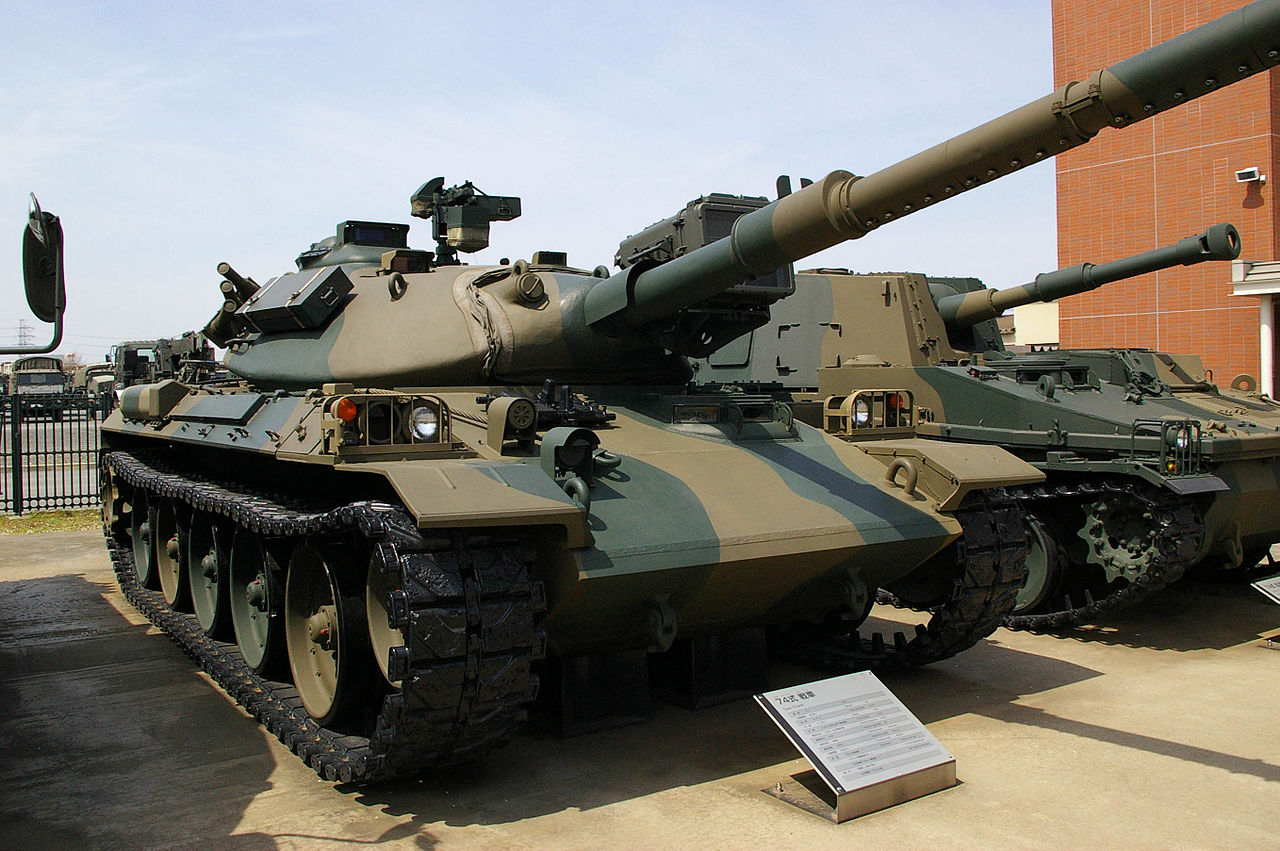
After the Second World War, Japan was left devastated and, for all intents and purposes, under American control with a sizeable garrison of U.S. troops stationed all around the country. It only gradually regained its political sovereignty starting from the early 1950s, a process that included the re-formation of the formal Japanese army with tanks and everything.
Japan started its post-war military armored corps history with several hundred Chaffee light tanks and around 250 Sherman tank of the Easy Eight variant (M4A3E8) – naturally, these came from American wartime surplus, which was a logical choice given the circumstances. However, these vehicles did have some notable issues.
As we’ve stated in several of our previous articles, Japan is a country with a lot of difficult terrain, especially in the mountain areas. This is a fact that dictates the Japanese defensive strategies (and, of course, armored vehicle design)
to this day. This has proven to be a problem for the abovementioned initial batch of tanks. The Shermans in particular had difficulties traversing the rough terrain of the Hokkaido island where a Soviet invasion was (based on the American doctrine practiced by the Japanese as well as other intelligence) the most likely to take place. The Chaffee tanks didn’t suffer from this problem and were generally well-liked by the Japanese, but they had other issues.
Specifically, the Korean War experience has shown that the gun of the Chaffee had issues when dealing with the Soviet-designed T-34/85 medium tank. The Japanese therefore surmised that they would need something within the Light Tank weight category, but armed heavily enough to take on the Soviet medium (or even heavy) tanks. Another consideration was similar to the rationale behind the Leopard 1 and AMX-30 design – the 1950s were the era of rapidly emerging technologies, including anti-tank guided missiles. It was believed that such missiles would make any armor obsolete anyway, so why not shed it almost completely in favor of high mobility. And so the rather unique Japanese doctrine was born, combining light armor, solid firepower and, most importantly, the ability to traverse rough terrain.
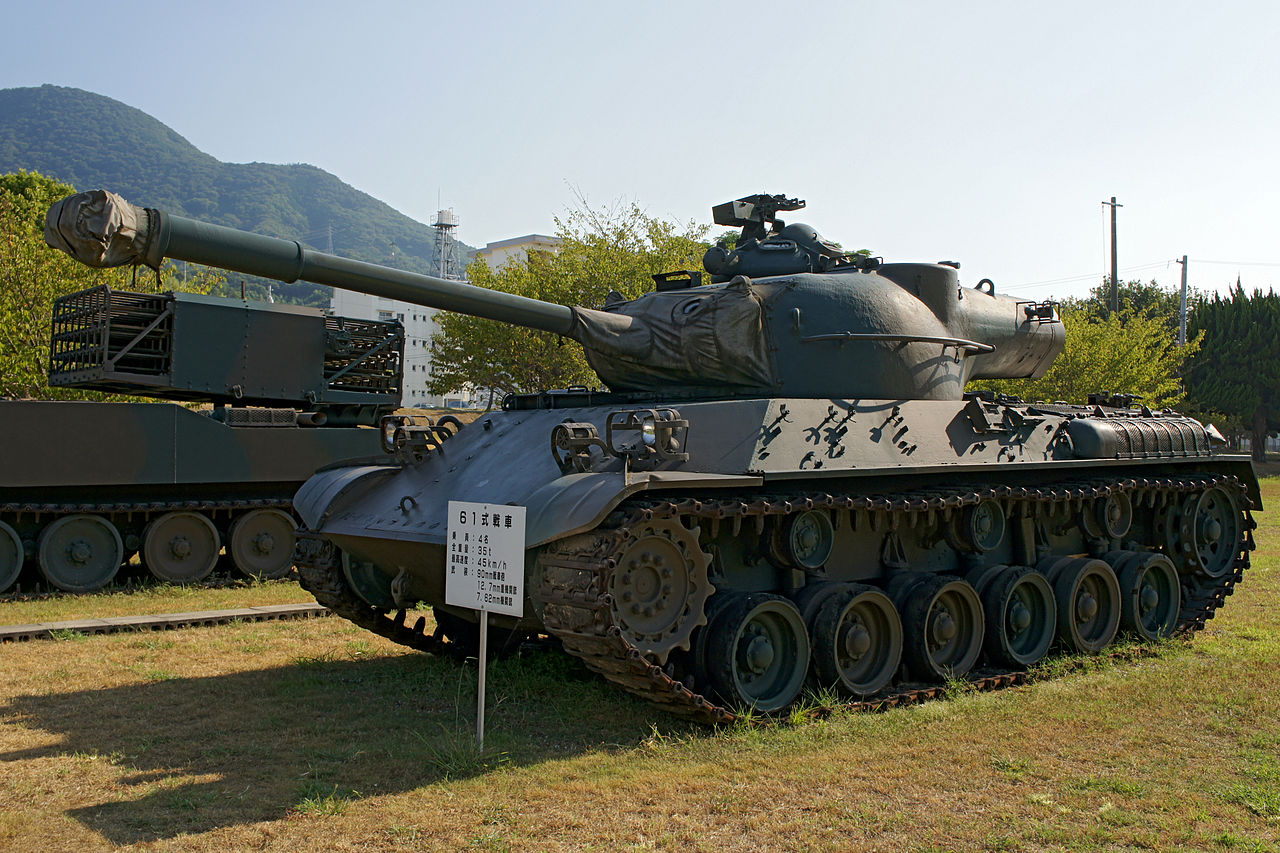
The first post-war Japanese tank built around the idea was the Type 61 MBT. Combining low weight with the 90mm gun that was thought capable of defeating the Soviet tanks of the 1950s, it was not a bad machine – for the 1950s, that is. However, it entered service in 1961 and remained in production until 1975. By that time, it was completely obsolete.
Or, rather, it was obsolete even as it entered service. After all, in the 1960s, the Soviets already had the T-55 and T-62 medium tanks while the British were deploying the Centurion. The Japanese were aware of the inadequacy of the Type 61 MBT and lively discussions were held regarding the future of the Japanese tank design. The first idea was to upgrade the Type 61 with a 105mm rifled gun, but, in 1965, it was scrapped in favor of developing an entirely new vehicle.
The new program was called STB, where the ST designation meant that it was to be a tank and the letter B meant the second tank development program (the Type 61 development program was called STA). It’s also sometimes written as ST-A or ST-B, but the hyphen got removed at some point during the development, even though specific prototypes are referred to as STB-1 to STB-6.
Through the 1960s (even before the 1965 decision), the development of specific components for the upcoming MBT took place:
- Hydraulic suspension (since 1961)
- Stronger 700hp engine (ready by March 1965)
- 105mm rifled cannon (ready and tested between 1966 and 1967)
The hydraulic suspension was a solution to the rough terrain issue, but was mechanically quite complex and took some time to develop. It was tested quite early on using a Type 60 APC, but it would take years before it was ready for the next MBT. The gun, on the other hand, was based on the Royal Ordnance L7 series and shared the barrel with it, but the breech, recoil management system and other elements of the gun were indigenous. It was therefore not a L7 copy, as many sources claim – in fact, it resembled the American M68 105mm rifled gun. By 1966, the gun was inserted into a newly developed narrow turret and firing tests were carried out.
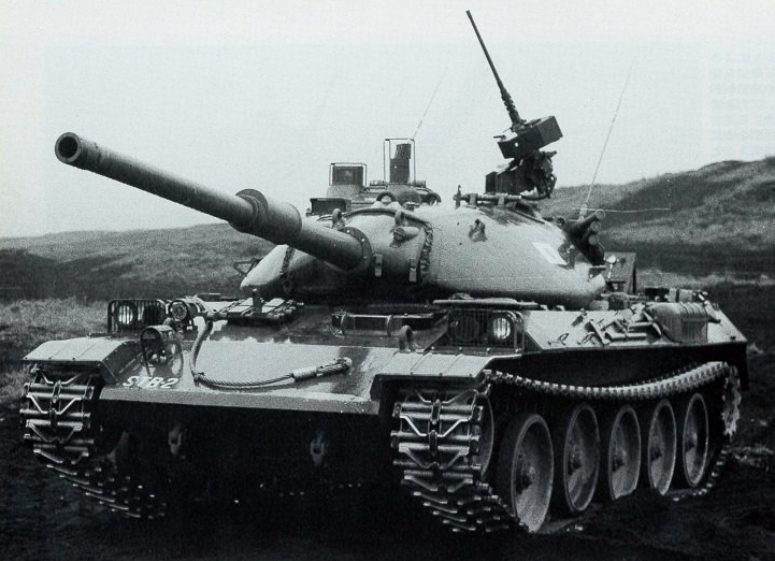
During the years that followed, the Japanese built first a 35 ton test bed (designated ST-T) that served them well during the suspension and engine trials. After that, two prototypes (STB-1 and STB-2) were designed and built and largely successfully tested. The early STB prototype characteristics were as follows. The tank weighed 38 tons, had a crew of four and was made entirely of steel due to the abovementioned philosophy of armor obsolescence. That does not mean the steel was thin, though. The armor was roughly as follows:
- Mantlet: 195mm
- Turret front: 120mm
- Turret side: 110mm
- Turret rear: 60mm
- Turret top: 40mm
- Hull upper frontal plate: 40mm at 75 degrees
- Hull mid frontal plate: 80mm at 65 degrees
- Hull lower frontal plate: 80mm at 55 degrees
- Hull side: 35mm
- Hull rear: 25mm
The tank was powered by the Mitsubishi 10ZF-21WT 750hp engine paired with the Mitsubishi MT-57T transmission, allowing for the maximum speed of 53 km/h. The suspension was hydraulic with variable clearance (400mm +/- 200mm), the tracks were 550mm wide and the ground pressure was 0.86 kg/cm2.
The STB prototypes were armed by the “Japanized” version of the Royal Ordnance L7 105mm rifled gun. The L/51 gun was manually loaded and would fire the following shells:
- L28A1 APDS (imported from Britain, 240mm penetration at 1km)
- Type 91 HEAT
- Type 75 HEP-T (license-produced M393 HEP)
The vehicle carried 50 rounds of ammunition (28 in the front, 7 below the turret floor, 9 in the rear and 6 near a special loading assist device). The loading assist device was basically a mechanical assistant with four-round capacity, basically an improved ready rack that allowed the gunner and loader to fire one round each 4 seconds (after that, the rate of fire dropped).
The gun could elevate to +9 degrees and depress to -6 degrees, but these values were further enhanced by the suspension since the vehicle could both tilt to the front and back and to the sides. With this tilting, the gun elevation and depression reached +15 and -12 degrees.
Additionally, the gun was very accurate thanks to (at the time) cutting-edge technologies (such as a ballistics computer or laser rangefinder) being integrate into its FCS.
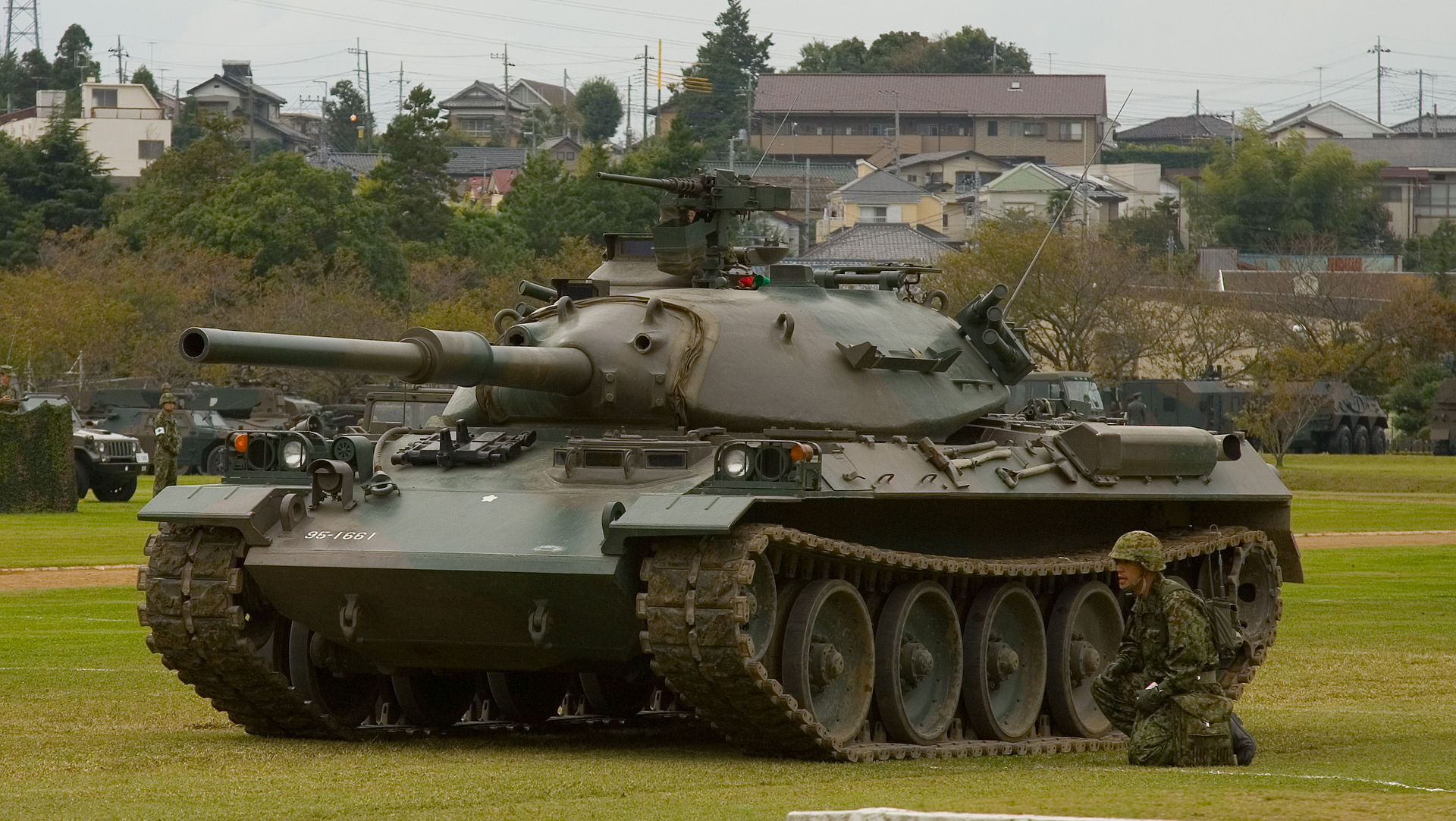
Overall, the Japanese were satisfied with the design and the next four STB prototype iterations (1970 to 1971) were more about making the tank affordable than further major improvements:
- The engine was a source of reliability issues and, for the production version, it would be detuned to 720hp (this variant was called 10ZF-22WT, a 21.5 liter air-cooled V10 turbocharged 2-stroke diesel)
- The loading assist device was also dropped as it was very expensive
- The vehicle had a remote-controlled turret machinegun that was also dropped
- The design of the turret changed somewhat, but not much
- The transmission was simplified and only featured one reverse gear
One of the STB prototypes was shown to public in 1972 and immediately caught public attention thanks to its rather beautiful, sleek lines. In November 1973, the STB design was reviewed (based on the final STB-6 prototype) and approved for mass-production under the designation
Type 74.Success was expected of this tank, so much that Sanadori Yamanaka, Japanese minister of defense at the time, tried to have it named after him (despite not being connected to it in any way) as the “Yamanaka tank”. This notion failed.
The tank was produced by Mitsubishi Heavy Industries between 1975 and 1988 with 893 vehicles built. With some smaller exceptions (like the engine detuning), the prototype data listed above applied to the production vehicle as well, especially regarding its armor.
The problem was that by the time it entered service, the tank was, once again, fairly obsolete. This may sound strange considering the fact that Japan is generally regarded as a technological superpower, but with so much effort focused on post-war rebuilding and what is generally known as the Japanese economic miracle, Japan wasn’t really in a position to invest extreme sums into tank development.
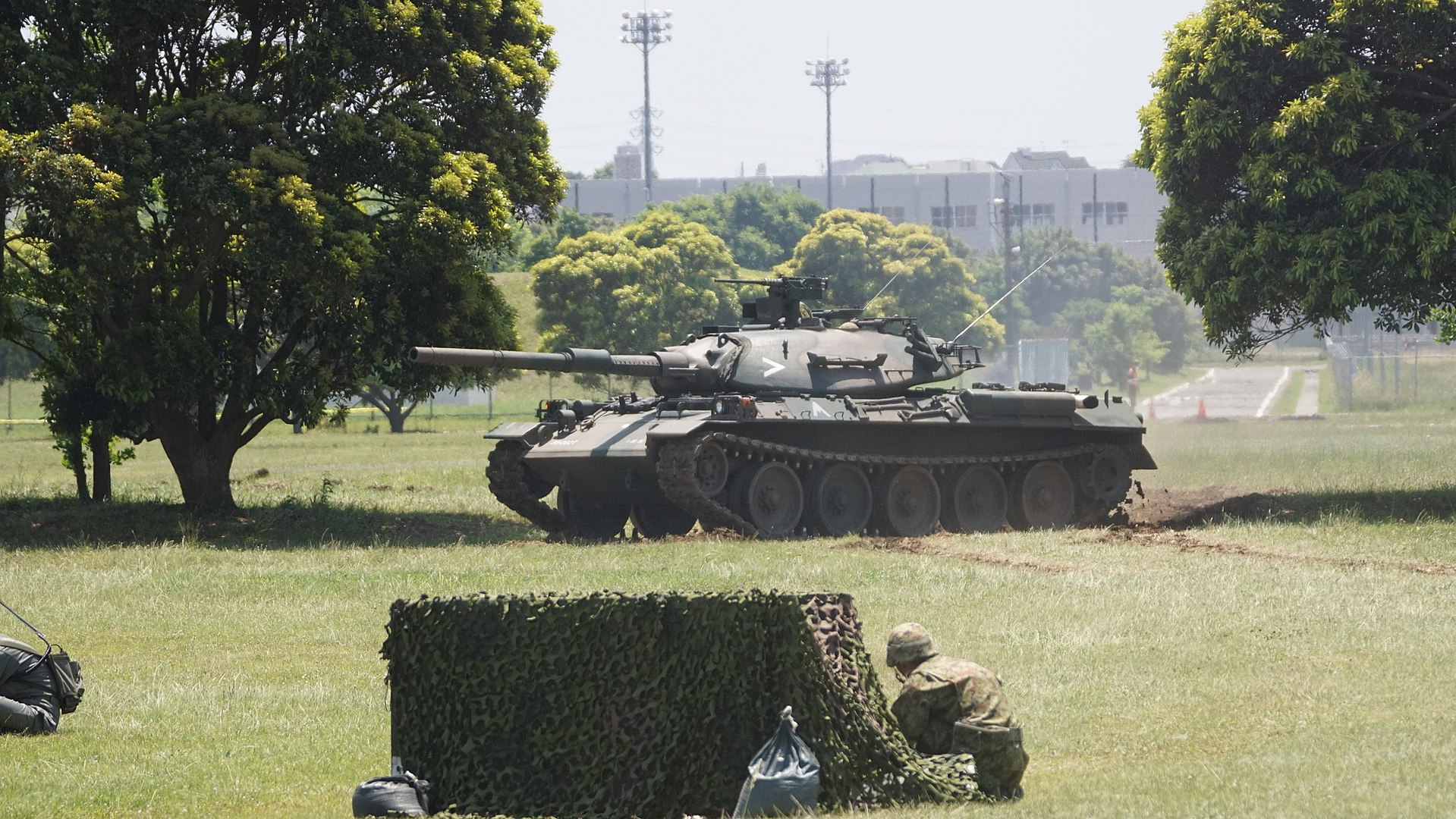
Another aspect was the fact that Japan did not export its military items at all and had little in terms of co-development with other western nations. Some technologies were purchased, but much of the research was completely indigenous and therefore took excessive amounts of time.
As a result, Japanese armored vehicles were produced in low numbers and were invariably incredibly expensive (in order to split the development costs into the production run). This in turn made them a popular target of public criticism and the budget cuts that would follow in a vicious circle.
The Japanese were, of course, aware of the fact that, once again, they were in a possession of an obsolete MBT that was inferior to the Soviet T-72 series, which is why a development program for its replacement (called TK-X) was launched as early as in 1977. That program resulted in the Type 90 MBT, which was only available starting from 1990. The Soviet Union fell apart one year later and you already know the rest of the story.
It’s worth noting that several “patterns” of this tank were produced over the years:
- Type 74 initial production model (roughly 400 were built)
- Type 74 Mod B with an improved FCS and the ability to fire APFSDS rounds (all initial production models were upgraded to this pattern)
- Type 74 Mod C is basically Mod B, but with actual camouflage instead of the standard khaki color
- Type 74 Mod D features a thermal sleeve for the gun (everything older was gradually upgraded to Mod D)
- Type 74 Mod E features another upgrade to its FCS and the ability to fire Type 91 HEAT-MP rounds instead of the older Type 75 HEP loadout, this is the last major pattern and most of the older vehicles were gradually upgraded to Mod E
There were two more patterns developed:
- Type 74 Mod F with a mine-clearing device (around 10 vehicles built)
- Type 74 Mod G, also known as Type 74 Kai (or Type 74 Improved) with improved night-fighting equipment and protection, consisting of additional spaced armor and a rudimentary soft-kill APS (laser warning receiver connected to its smoke grenade launchers, deploying smoke automatically as soon as the vehicle is targeted by a laser)
Of the Type 74 Mod G only four vehicles built as prototypes before it was decided this program was not economically feasible.
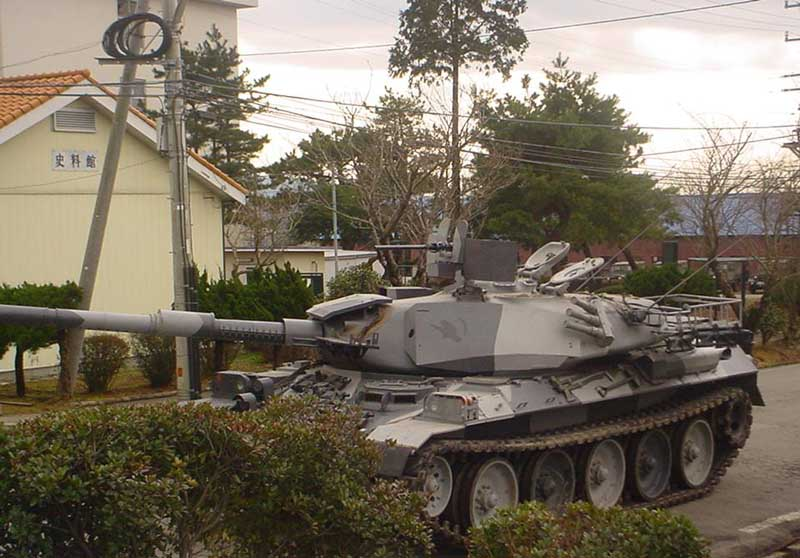
The Type 74 MBT soldiered on, was produced until the end of the Cold War and still remains in Japanese service, at least partially –it’s being decommissioned piece by piece and replaced by other vehicles, such as the Type 10 MBT or the Type 16 MCV. It has never fired a shot in anger and only ever fought such enemies as the world-famous Godzilla – in the movies, that is.
Like was stated above,
in Armored Warfare, the Type 74 will be a Tier 5 Premium Main Battle Tank and the first on five new Battle Path reward vehicles.
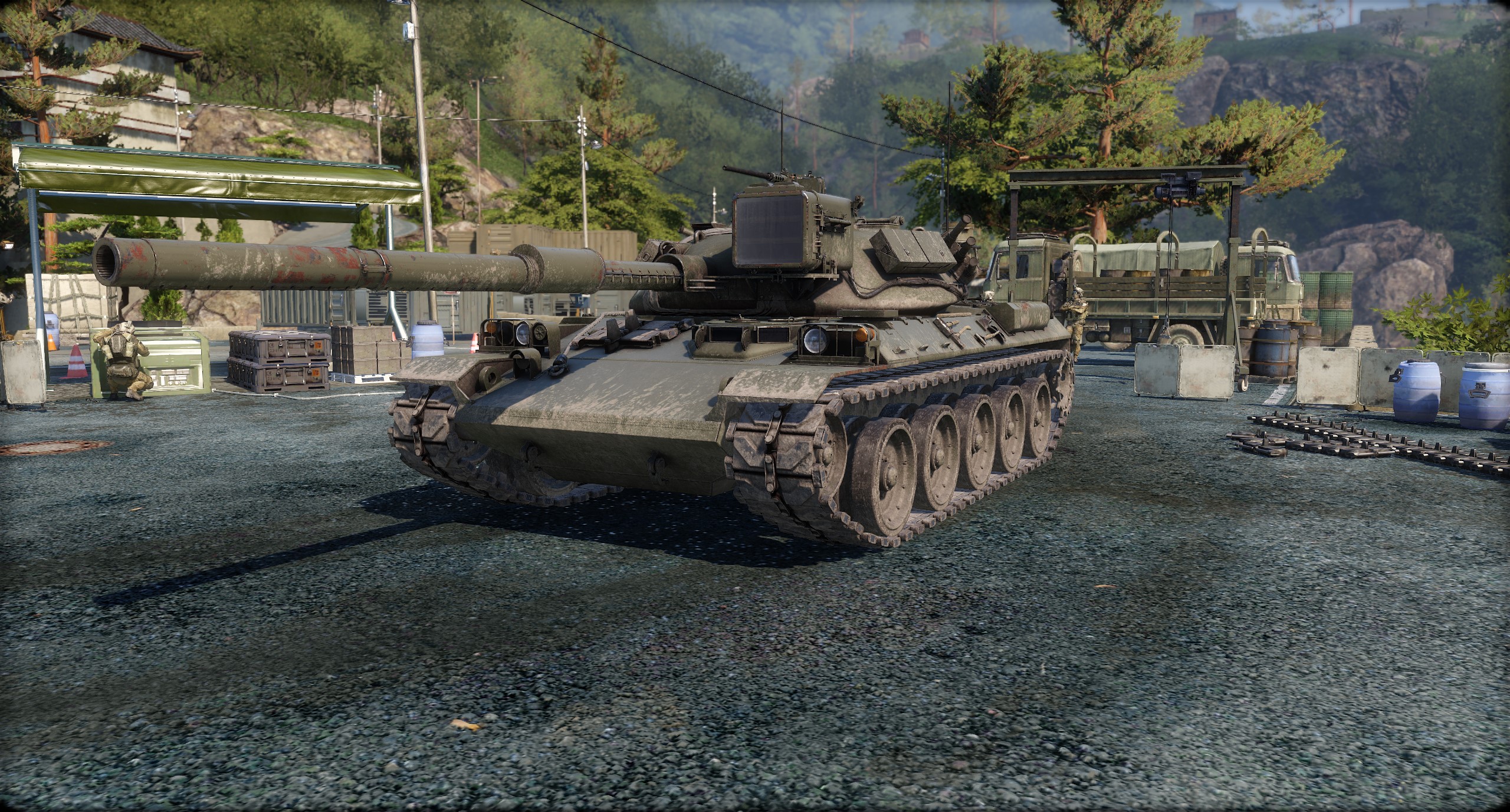
Gameplay-wise, it will be a rather standard MBT with good firepower (roughly comparable to the fully researched M60A3), enhanced further by the presence of fully adjustable active suspension, which tilts both to the front and back, but also to the sides as the lowest Tier vehicle with this feature.
But before we get into any details, the usual disclaimer:
The numbers below are very preliminary as the vehicle has not been properly tested. They are sure to change and should only be discussed as an indicator of how we’d like to set the vehicle up.
With that being said, let’s start with protection – both the turret and the hull are made of steel only and will be somewhat thicker than those of the Leopard 1 MBT, which means rather thin. At best, the front of the vehicle will be able to withstand Tier 5 kinetic rounds, but most of the plates will be thinner than that and therefore more vulnerable. But this MBT won’t be that much about armor anyway, it will be about firepower and mobility.
Speaking of mobility – its 38 tons will be moved around by its 750hp Mitsubishi engine, giving it the maximum speed of 60 km/h and the 0 to 32 km/h acceleration time of 5.5 seconds. Its hull traverse rate will be roughly 35 degrees per second.

The firepower will be provided by a rather standard Japanese copy of the British Royal Ordnance L7 105mm rifled gun that fires APFSDS shells (400mm penetration), HESH shells (250mm penetration) and, of course, HE. The gun will be roughly on par with other vehicles of its Tier (roughly 6.3s reload time, 0.11 accuracy) but will feature excellent depression and elevation (-8/+9 degrees without the adjustable suspension, -14/+15 degrees with it) as well as great damage per minute value (amongst the best of its Tier and class).
Apart from tilting, there will of course be the option to make the vehicle crouch in order to increase its camouflage (19 to 23 percent) at the cost of view range (410m to 405m) and agility.

We hope that you will enjoy this upcoming Main Battle Tank and, as always:
See you on the battlefield!