Dev blog : LKA & HORROR
Martha is Dead is our second project. It has many more horror overtones than its predecessor, The Town of Light, even though that game also presented some very disturbing situations.
The use of disturbing images and situations is a topic often discussed in the media.
"Why do you use these kinds of images?" This is one of the questions that I have to answer most frequently.
Before I go any further, changing my point of view for once, I will answer this question once again:
The use we make of disturbed situations and images is functional to the narrative of the game. They are not images used for the sake of creating a shock, but to accompany the narrative. The protagonist is going through terrible experiences and in order to communicate her emotions we create these situations and images in an attempt to convey to the player some of the discomfort that the protagonist is experiencing at that moment.
This is nothing new. Cinema has been using this language for years and has given birth to true masterpieces through it. But video games are something else, there is less tolerance and more attention.
Is this fair? Is it not fair? I can't say exactly. I personally believe that asking and understanding why violence and disturbing scenes are used is never wrong. If the author can't give an answer, maybe something is wrong!

Having said that, however, no one ever asks what the people who make these scenes suffer.
Perhaps people think that those who work on this kind of production are a bit sadistic and are inclined to enjoy seeing, or rather, to make, the most horrendous and disgusting things.
Nothing could be further from the truth, at least in our case!
Personally, I'm fond of horror language that is aimed at describing inner suffering... and it's quite obvious since I'm the one writing the script. But the others? The ones who create the mangled, amputated models, who create the bloody, putrescent and disgusting textures, who animate the whole thing giving it life, who create the mechanics to interact with this disgusting material? Are they all fans of this genre? Do they seek out the latest and greatest horror film in their private lives?
Obviously not.

They are modellers, animators and programmers first and foremost. Within LKA, apart from me, only a couple of guys are used to following the horror genre and they are the ones who least work on the "horrors" of Martha is Dead.
And the others? The others don't watch horror movies because... yeah, because they're scary.
Imagine having to work all day on horror!
Actually, it's very different to see a finished scene once in its context than to see it born and grow for weeks, months. Somehow you lose sensitivity.
And here comes one of the great difficulties in developing a video game. Maintaining sensitivity and judgement towards what we see every day, for years. Sometimes it's necessary for me to step away from the game for a while. I continue to work on the game of course, but without playing it! Maybe I make a trailer, or go on a live shoot, or maybe I write a blog! After a few days there is a reset, even if only partial, and you can have a clearer view of what you see.
Finding the balance is difficult.
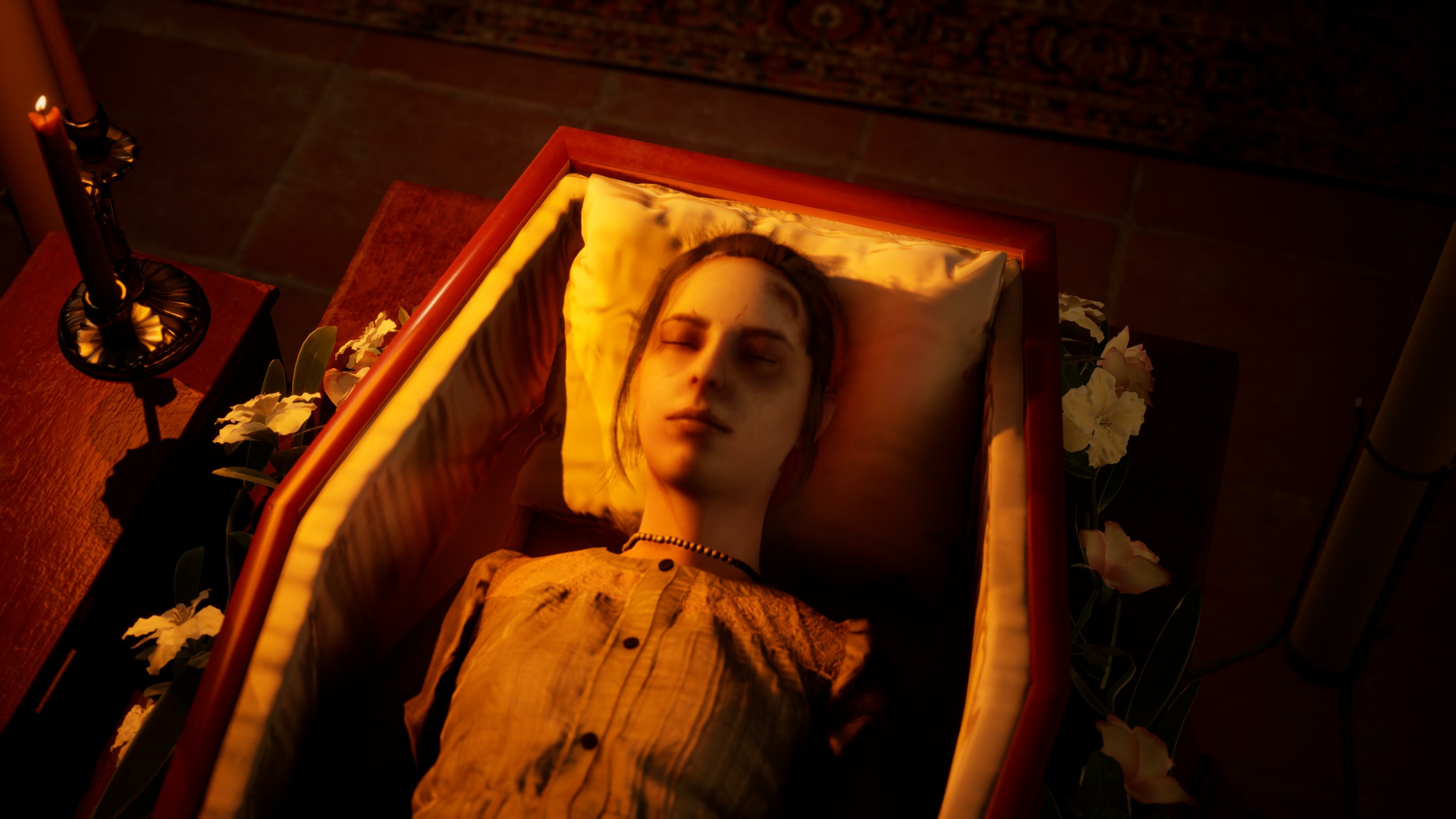
One must not become a victim of what the team is doing, perhaps noticing every little thing that only we will ever notice (who said 3D artists?) while perhaps losing sensitivity to the whole.
This is one of the most challenging roles of art direction, and it is something you cannot expect from someone who is immersed full time in the creation of assets, animations and effects.
You need a bit of detachment from the technical and production issues in order to maintain an objective overview. Critical, but not hyper-critical, careful, but not unnecessarily maniacal, and above all not linked to the specific problem of the moment, but to how everything works as a whole.
The use of disturbing images and situations is a topic often discussed in the media.
"Why do you use these kinds of images?" This is one of the questions that I have to answer most frequently.
Before I go any further, changing my point of view for once, I will answer this question once again:
The use we make of disturbed situations and images is functional to the narrative of the game. They are not images used for the sake of creating a shock, but to accompany the narrative. The protagonist is going through terrible experiences and in order to communicate her emotions we create these situations and images in an attempt to convey to the player some of the discomfort that the protagonist is experiencing at that moment.
This is nothing new. Cinema has been using this language for years and has given birth to true masterpieces through it. But video games are something else, there is less tolerance and more attention.
Is this fair? Is it not fair? I can't say exactly. I personally believe that asking and understanding why violence and disturbing scenes are used is never wrong. If the author can't give an answer, maybe something is wrong!
Having said that, however, no one ever asks what the people who make these scenes suffer.
Perhaps people think that those who work on this kind of production are a bit sadistic and are inclined to enjoy seeing, or rather, to make, the most horrendous and disgusting things.
Nothing could be further from the truth, at least in our case!
Personally, I'm fond of horror language that is aimed at describing inner suffering... and it's quite obvious since I'm the one writing the script. But the others? The ones who create the mangled, amputated models, who create the bloody, putrescent and disgusting textures, who animate the whole thing giving it life, who create the mechanics to interact with this disgusting material? Are they all fans of this genre? Do they seek out the latest and greatest horror film in their private lives?
Obviously not.
They are modellers, animators and programmers first and foremost. Within LKA, apart from me, only a couple of guys are used to following the horror genre and they are the ones who least work on the "horrors" of Martha is Dead.
And the others? The others don't watch horror movies because... yeah, because they're scary.
Imagine having to work all day on horror!
Actually, it's very different to see a finished scene once in its context than to see it born and grow for weeks, months. Somehow you lose sensitivity.
And here comes one of the great difficulties in developing a video game. Maintaining sensitivity and judgement towards what we see every day, for years. Sometimes it's necessary for me to step away from the game for a while. I continue to work on the game of course, but without playing it! Maybe I make a trailer, or go on a live shoot, or maybe I write a blog! After a few days there is a reset, even if only partial, and you can have a clearer view of what you see.
Finding the balance is difficult.
One must not become a victim of what the team is doing, perhaps noticing every little thing that only we will ever notice (who said 3D artists?) while perhaps losing sensitivity to the whole.
This is one of the most challenging roles of art direction, and it is something you cannot expect from someone who is immersed full time in the creation of assets, animations and effects.
You need a bit of detachment from the technical and production issues in order to maintain an objective overview. Critical, but not hyper-critical, careful, but not unnecessarily maniacal, and above all not linked to the specific problem of the moment, but to how everything works as a whole.