1. Go Home Annie: An SCP Game
  2. News

Go Home Annie: An SCP Game News

Go Home Annie—Meet the Team at Misfit Village

Meet the Team at Misfit Village!


For this devlog, we’re going to do something a little bit different. I want to tell you about all the beautiful people working on Go Home Annie, so I’ve taken it upon myself to highlight the various accomplishments of my teammates and me. At the end of the devlog, I’ll also talk a bit about our collaborators, without whom the game wouldn’t be nearly as good as it’s turning out to be.

The Core Team


Petar, Josip, Mateja, Matthew, and Mladen at an abandoned military air base built into a mountain (our twisted idea of the perfect team building location).


[h2]Mladen Bošnjak[/h2]
Role: Creative Director

I’ll start things off by introducing myself. Video games are my passion in life! The very first time I saw a video game, I knew I wanted to make these things. The mix of visual art, music, and interactivity had me completely captivated. Game development was my only hobby until I took up the drums. I find hitting things with sticks a good complement to game development, which can be high-stress. I made an FPS, a VR game, and a mobile game and went to a bunch of game jams before making games became a full-time job for me. I’m a big fan of creepy stuff and going down internet rabbit holes, so naturally, I stumbled upon the SCP Foundation, fell in love with it, and decided I needed to make a game set in that world. Go Home Annie is by far my most ambitious project to date, and one I’m laser-focused on. Every project I ever started was brought to completion thanks to the people I worked with, so let me tell you a little bit about the team working on Go Home Annie.


[h2]Matthew Sight[/h2]
Role: Lead Programmer

Every good team needs a thrill-seeking lead programmer. In his free time, Matthew does martial arts, drives around on a motorcycle, and jumps out of planes (with a parachute, I think). He also helped write two books and publishes asset packs (bits of code other people can use to develop their games faster) on the Unity Asset Store. I have no idea how he finds the time to do all this alongside working on Go Home Annie, but there you go.


[h2]Mateja Olujić[/h2]
Role: 3D Artist, Environment Artist

In her past life, Mateja worked as a dental technician, but then she saw me making 3D models and thought, “I can do that better than him,” so she signed up for a 3D modelling course. She joined the team not long after, while Go Home Annie was still in the concept phase. Along with 3D modelling, Mateja has taken on environment art and lighting tasks too. She can’t decide if she likes nature or technology more. In no particular order, she loves yoga, metal, punk, her black cat Toro, plants (they all die on her, unfortunately), spelunking, and Japan.

Toro the Cat.


[h2]Petar Agejev[/h2]
Role: Composer, Audio Designer

Petar’s day job is creating VR and AR apps at a company in Zagreb where he, Matthew, and I originally met (shoutout to Delta Reality). He moonlights as the composer and audio designer for Go Home Annie. When playing in a band environment, his instrument of choice is the double bass. I think he’s in a fight club, but he told me I can’t talk about the fight club.


[h2]Lovro Golac[/h2]
Role: Narrative Lead

Lovro came on board while we were finishing up the demo for Go Home Annie. We needed someone to find voice actors and direct them, and Lovro was the perfect fit. Since then, he’s worked with me on the game’s story and written most of the dialogue. The cast of characters in Go Home Annie has grown considerably since the demo, so he’s had a lot more casting and directing to do. He plays guitar in Mokugin, a four-piece instrumental band. Recently, he became a presenter on Croatia’s national radio and TV channels, operated by HRT. I hear him on the radio sometimes while I’m driving around, which is pretty surreal.


[h2]Josip Balić[/h2]
Role: 3D Artist, Animator

Josip came to Misfit Village as an intern while attending a 3D art course here in Novska and instantly clicked with the team, so we took him on board. He loves Pokémon and is an avid collector of Dylan Dog comics—Dylan Dog being the Italian horror comic series we all grew up with and a big inspiration for Go Home Annie.

This is actually a photo of my collection, but imagine this times 10,000.


[h2]Stefan Vedrina[/h2]
Role: Programmer

As programmers are wont to do, Stefan spends his free time riding around on a motorcycle. He has two beautiful dogs and loves hiking. When he’s not working on horror games, he makes the polar opposite: educational games for kids.

Kiko and Hiro.


Our Collaborators


In addition to the main team, Go Home Annie would be nothing without our collaborators and past employees.

Franjo Badurina was the lead programmer on our demo—the demo that kickstarted everything, from finding our fanbase to finding a publisher who’s supporting us the whole way.
Antonia Klarić created the concept art for Annie, which inspired a lot of the character development and story.
Filip Harm created various in-game drawings and 2D art and tested the game countless times.
Eni Talić helped us clean up motion capture data and improve handmade animations.

Our voice actors, who we’ll highlight individually closer to release, went above and beyond the usual video game-quality voice acting. We can’t wait for you to hear them and get teary-eyed during the game’s emotional scenes 😭

And last but not least, our biggest collaborators are the SCP authors, whose universe of stories deeply enriched Annie’s journey.

I think we’ll be able to squeeze in at least one more devlog before Go Home Annie’s release. Until then, take care!


Mladen Bošnjak
Creative Director at Misfit Village

Go Home Annie—Devlog 5

Talking bathtubs and steampunk vending machines for Go Home Annie—all kinds of stuff brewing at Misfit Village!

[h3]Part 1: The Asset Pack Conundrum
[/h3]

When I first started working on Go Home Annie, the scope of the game was much smaller. I still have a file named Grand Plan from 2019 that says, “Make a weird horror camera game in six months, put it on Steam.” (That didn’t quite go to plan...)

Since the game’s scope was limited, I decided to use asset packs for some of the rooms in the Facility chapter. Asset packs are pre-made packs of models, levels, scripts, or anything else required to make a video game.

By using them, you’re running the risk of the game looking like other games that use the same pack, not having a distinct art style, and so on. As my ambition grew and the scope of the game grew with it, I decided to replace most asset-pack objects with completely custom models, but there were still some left. The moment my team got wind of us still having a few rooms based entirely on asset packs, they jumped at the chance to completely rework them.

This project became something really special to everyone involved. After all, it would have been a shame not to have created everything by hand, with love, exclusively for Go Home Annie.

We have a distinct visual style for the Facility, part steampunk (pipes, cogs), part 70s technology (tape recorders, CRT TVs). You won’t find that particular mix in an asset pack.

Modern-looking security room—straight from an asset pack.

Security room—completely reworked. Now with 100% more CRT TVs.

Modern asset-pack elevators.

New elevators, now 100% more Art Deco.

Basic modern vending machine.

New vending machine, now 80% more steampunk. Some of the drinks in it might even be references to SCPs...

For some rooms, the rework gave us the chance to introduce more worldbuilding and lore teases. Like the Archives, which just had a bunch of boxes in it before.

The Archives, with hundreds of files on SCPs and documentation regarding their replication viability.


[h3]Part 2: A Talking Bathtub
[/h3]

As soon as I read about SCP-1974, I knew I had to put my take on it in Go Home Annie. A bathtub with two personalities! It seemed crazy. Crazy good! We just had to put it in the game.

You’ll spend some time talking to SCP-R-1974. The voice actors make the bathtub dialogue feel like you’re in a stage play. It’s awesome. But we needed interesting visuals to accompany them. We realized that looking at a static bathtub for a few minutes at a time could get kind of boring. So, inspired by the Pixar Lamp, we decided to breathe life into the Bathtub.

Here’s a sneak preview of the way SCP-R-1974 shows its emotions.


That’s it for this devlog. I’ll see you in the next one. Until then, take care!


Mladen Bošnjak
Creative Director at Misfit Village


Go Home Annie—Devlog 4

Hi everyone. This is Mladen, Creative Director at Misfit Village, coming at you with our fourth devlog. As promised in the last devlog, I’ll be talking about how we go about creating cutscenes and character animations for Go Home Annie.

[h3]Storyboarding[/h3]
We create the levels, gameplay, and story at the same time, so these three elements often inform one another, giving us a sense of when a cutscene should start in the game and what it should tell the player. All cutscenes push the story and the player’s goals forward, but some are there to give the player a break from puzzles and exploration. After we have a rough idea of what should happen in a cutscene, we make an ugly, rough version of it with static characters and basic camera movement.

A screenshot from a rough version of a cutscene. Don’t judge.

All our cutscenes are seamlessly transitioned into from gameplay and are experienced from the player’s point of view. We never cut to a different camera. In that sense, Go Home Annie is one long take with no cuts, which makes the game flow beautifully.

[h3]Motion Capture [/h3]To breathe life into our characters, we use motion capture. You’ve probably seen footage of your favorite actors in spandex suits with little balls on them. Here’s us doing the same thing.

Our 3D Artist, Mateja, doubling as a motion capture performer.

We take advantage of the facilities and technology available to us at our incubator. Shout-out to PISMO, Novska, Croatia!

Mocap data is never perfect, so it requires a lot of manual cleanup. Also, recording finger movements from mocap never turns out well, so we do those by hand.

An example of a work-in-progress cutscene with raw motion-captured animations, no cleanup.

[h3]Camera Movement [/h3]
We often record Annie’s point of view during motion capture by having one of our actors act out her movements.

But for all the short cutscenes where Annie just jumps through a window or opens a door, it’s not worth spending 3 hours putting on the mocap suit and calibrating everything.

That’s where Unity’s Live Capture system comes in. By using an iPhone with the Unity Virtual Camera app, we can transmit the phone’s movement directly into the engine. So I strap the phone to my head and start acting!

Here’s me with a phone strapped to my head, acting out a scene. And that same scene inside the game.

[h3]Facial Movement [/h3]
We experimented with lots of systems for facial capture. We tried Unity’s Face Capture app and various other automated systems, but it turned out the best option for our project was to do it manually with Lip Sync Pro, using the audio file created by the voice actor and a transcript of the words they’re saying. We can’t show you any facial animations yet, as they’re very much a work in progress (and would also spoil the story a bit).

[h3]Additional Animation [/h3]
To make characters hold their weapons perfectly and look at the player dynamically, we use Unity’s Animation Rigging package.

Some secondary animation in the game is completely procedural, like the flappy skin on our deer friend here.


In giving all this attention to cutscenes and animation, we’re trying to go beyond what indie horror games usually do, hopefully making the end product a richer experience for you.

That’s it for this devlog. I’ll see you in the next one. Until then, take care!

Mladen Bošnjak
Creative Director at Misfit Village

Go Home Annie—Devlog 3

Hi, Mladen here, the creative director at Misfit Village. Time for Devlog 3!

This time I'd like to focus on the technical aspects of Go Home Annie.

Annie is being developed in Unity with the HDRP render pipeline. We decided to go with Unity for a few key reasons:

  1. We like to have all our files directly in the project. For instance, we put .psd (Photoshop images) and .blend (Blender 3D models) directly into the Unity project. This allows us to edit parts of the game rapidly from right inside the engine.
  2. We worked with Unity for more than a decade before starting Annie so we're familiar with all the upsides and downsides.
  3. It allows us to access crazy modern stuff like no loading screens, awesome volumetric lighting, beautiful volumetric clouds, Nvidia's DLSS, Temporal Upscaling, complex skin shaders, crazy awesome particle effects, and so on.


Check out these clouds. I can swap them with one click in Unity. They move beautifully, the light penetrates them realistically.

Oh, yeah, if we really wanted, we could fly up into them.


The demo for Annie was created with the help of a package called Horror FPS Kit. This allowed me (while I was creating the game by myself) to focus on the gameplay and visuals while the Horror FPS Kit handled inventory, movement, and other stuff. The Kit helped us to create the demo and get the word out about our project. As the number of people working on the project and the scale and ambition grew, we quickly realized we would need a custom solution. We envisioned no loading screens, seamless transitions from cutscenes to gameplay, complex dialogue systems, easy patching and updating, etc. So our lead programmer Matthew created all these systems for the game from scratch. It took him the bigger part of a year but it was well worth it. We now have a completely custom, solid foundation upon which we're building the game.

We're leveraging Unity's Shader Graph and VFX Graph to create custom shaders and effects. I can't show you most of them for fear of spoilers, but here are a few to give you a taste:

A fishy animated through shaders!


Some red goo stuff pulsating freely, causing all kinds of mischief.

I love real-time 3d tech so I could write about this all day, but I'll end it here for now. In the next devlog, I'll be sharing how we create our cutscenes, motion capture, and animation secrets. It's pretty wild guerilla stuff. Until then, take care!

Mladen Bošnjak
Creative Director at Misfit Village

Go Home Annie—Devlog 2

Hi, Mladen here, the creative director at Misfit Village. Back with another dev log about the making of our horror adventure game Go Home Annie. This time we'll delve deeper into the game's world and lore.

If you're like me and are curious about the deep lore of a game you're playing, look no further cause we've got you covered. The environment of Go Home Annie is filled with optional snippets of history and backstories for you to find and piece together. And if you prefer faster-paced gameplay, without reading every little note, log, and document, playing through the main storyline will be more than enough to enjoy the game and get a great experience!

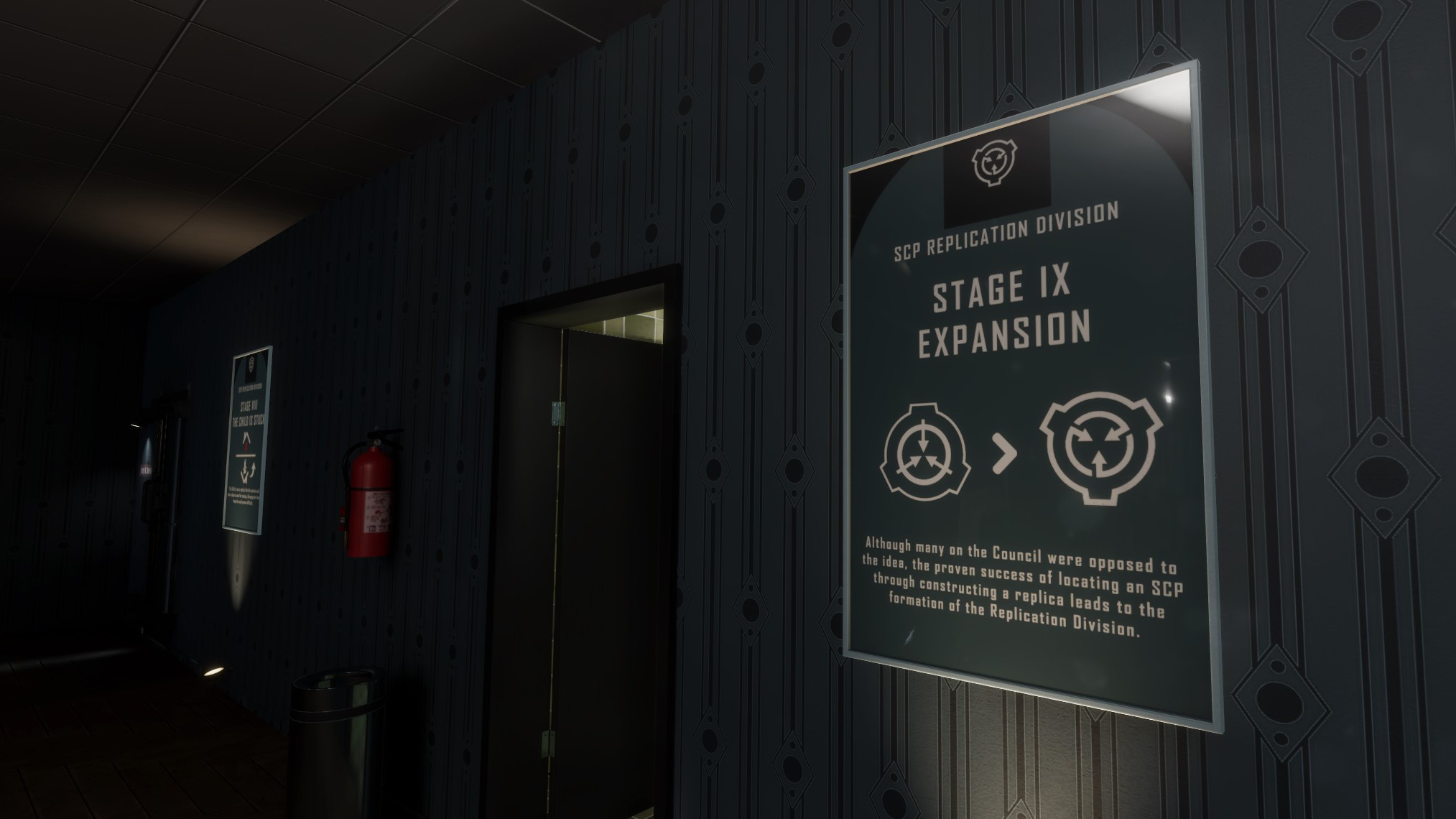
One of the many snippets of the game's backstory you can discover while exploring Go Home Annie's environments.
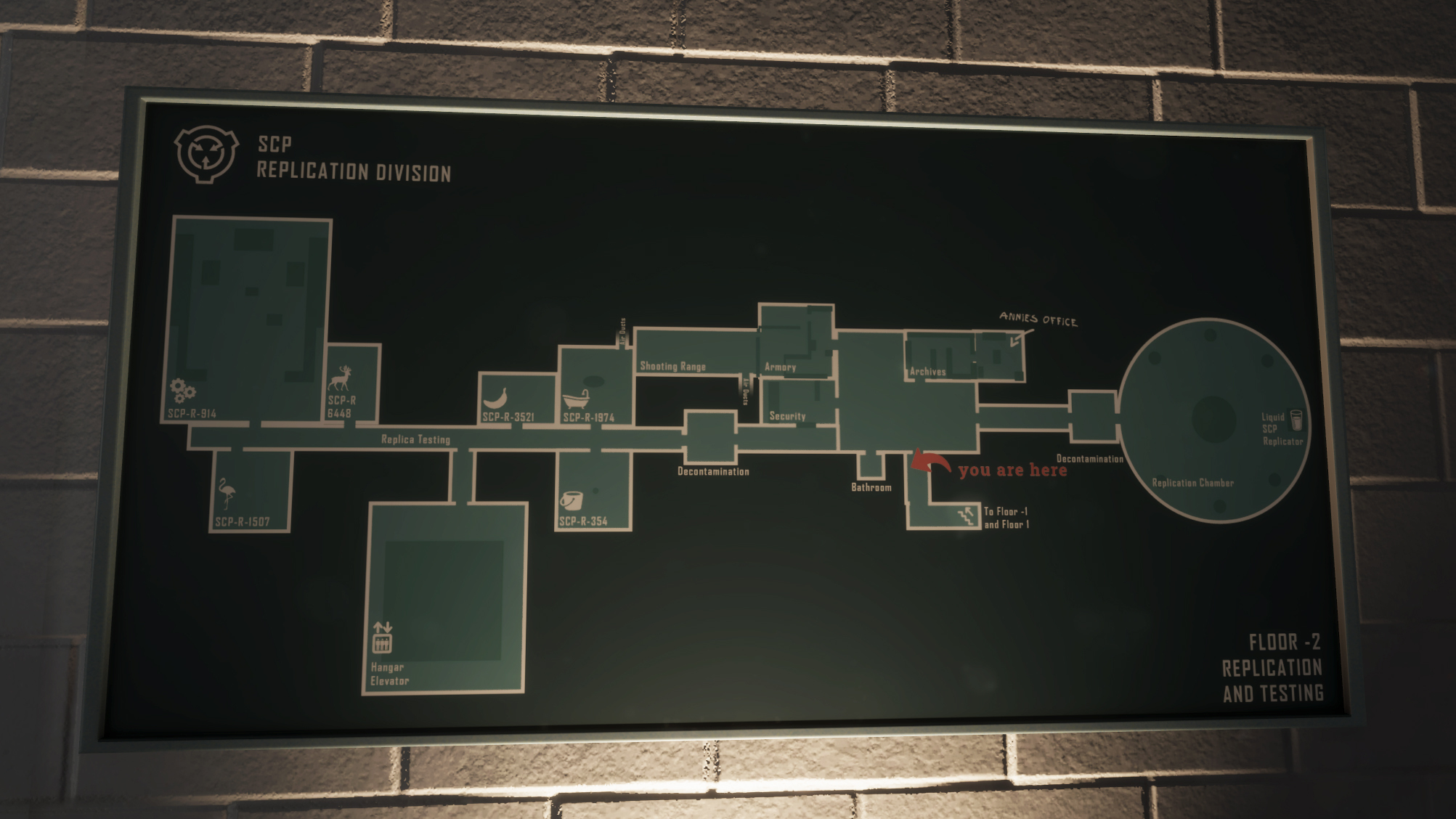
Go Home Annie is part of the SCP Foundation universe - a fictional secret agency that secures and contains anomalous objects and entities and protects the general public from them. Each object is given a number. For instance, SCP-1974 is a conscious bathtub with two personalities. We took our own spin on the SCP lore by creating the SCP Replication Division. You'll meet various replicas of SCPs and they'll all have unique traits compared to their original counterparts.

We were inspired by the many stories on the SCP Wiki and wanted to highlight and bring to the forefront some less-known SCPs through our game. Some of which you might have already seen in trailers and screenshots, but there are still some big surprises that we're keeping under wraps for you to experience when you dive into the game yourself.

A map of one of the floors of the SCP Replication Division, depicting some of the SCPs you'll be dealing with throughout the game.
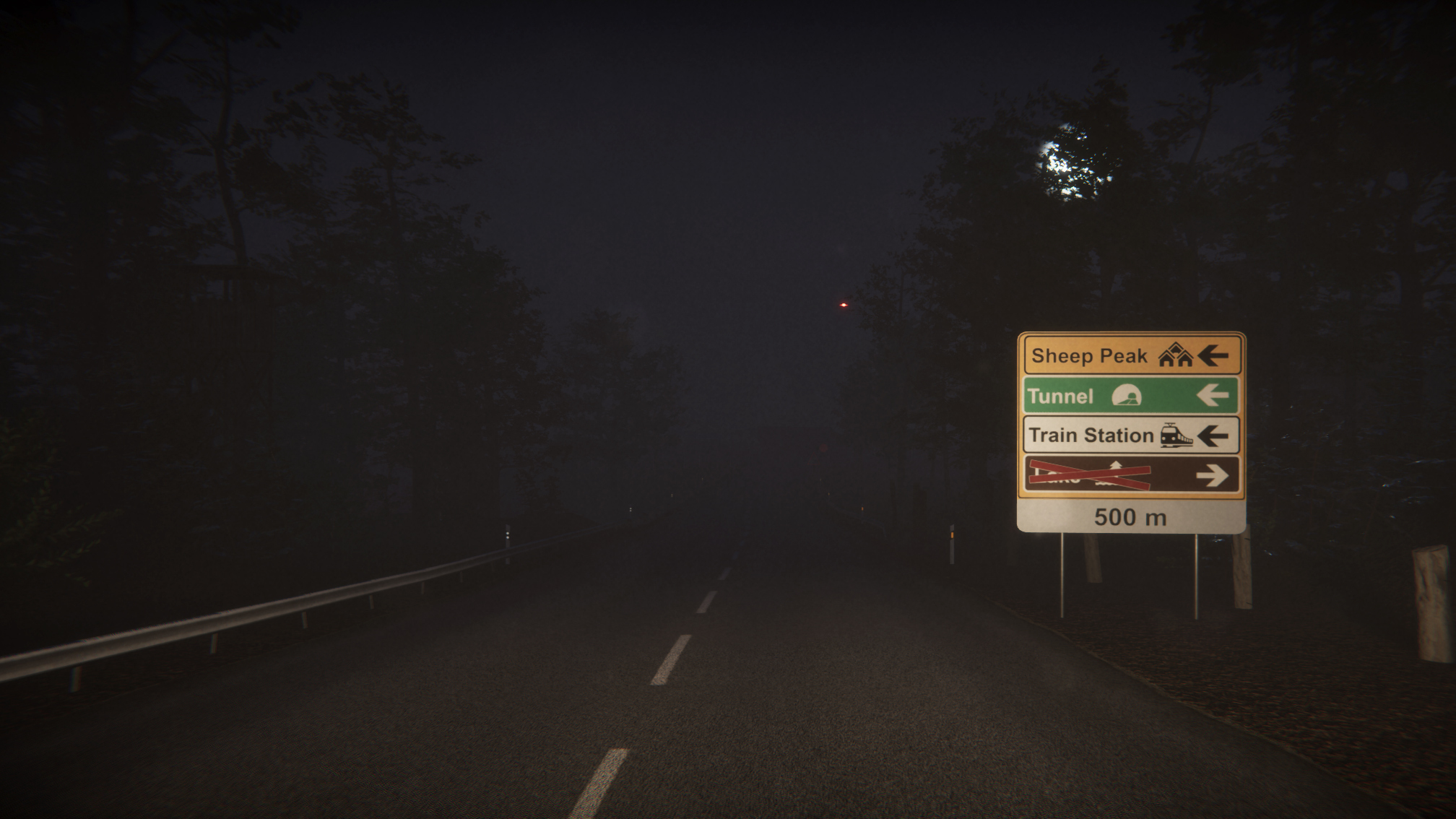
The Replication Division is stationed in a remote location in rural Croatia. We don't share specifics about the exact location in order to keep an air of mystery around the game's setting. To the outside world, the Replication Division is presented under the guise of a military base. The local inhabitants of the nearby village don't buy the story and come up with various conspiracy theories about what might be happening on the mysterious hill with the military base on top. Strange sounds coming from the depths of the nearby forests and alleged sightings of paranormal beings are commonplace.

The inspiration for this scenery was drawn from one of my rides through the rural countryside in the dead of night while a thick fog was covering all the eye could see. Seeing all the weird shapes and silhouettes strewn throughout the countryside made me think to myself "This would be the perfect setting for a horror game".

Work-in-progress screenshot showing authentic Croatian-style road signs.

We hope a little glimpse of the lore and setting of Go Home Annie got you excited to try out the game yourself. We've all gotten into the holiday spirit here at Misfit Village and hope you're enjoying these winter days as much as we are. Until the next devlog, happy holidays and see ya!

Mladen Bošnjak
Creative Director at Misfit Village