Armored Failures – Part 1: Arjun (1)
Commanders!
Everybody knows about the successful armored vehicles of history; Sherman, T-34, Abrams... you name it. But, for every such an excellent design, you have dozens, if not hundreds of other vehicles that did not make it or, worse yet, ended up being really terrible. In this series of articles, we’re going to take a look at the most infamous examples, albeit often for different reasons and we are going to be starting with a great (or, not so great, depending how you look at it) example – the Indian Arjun MBT.
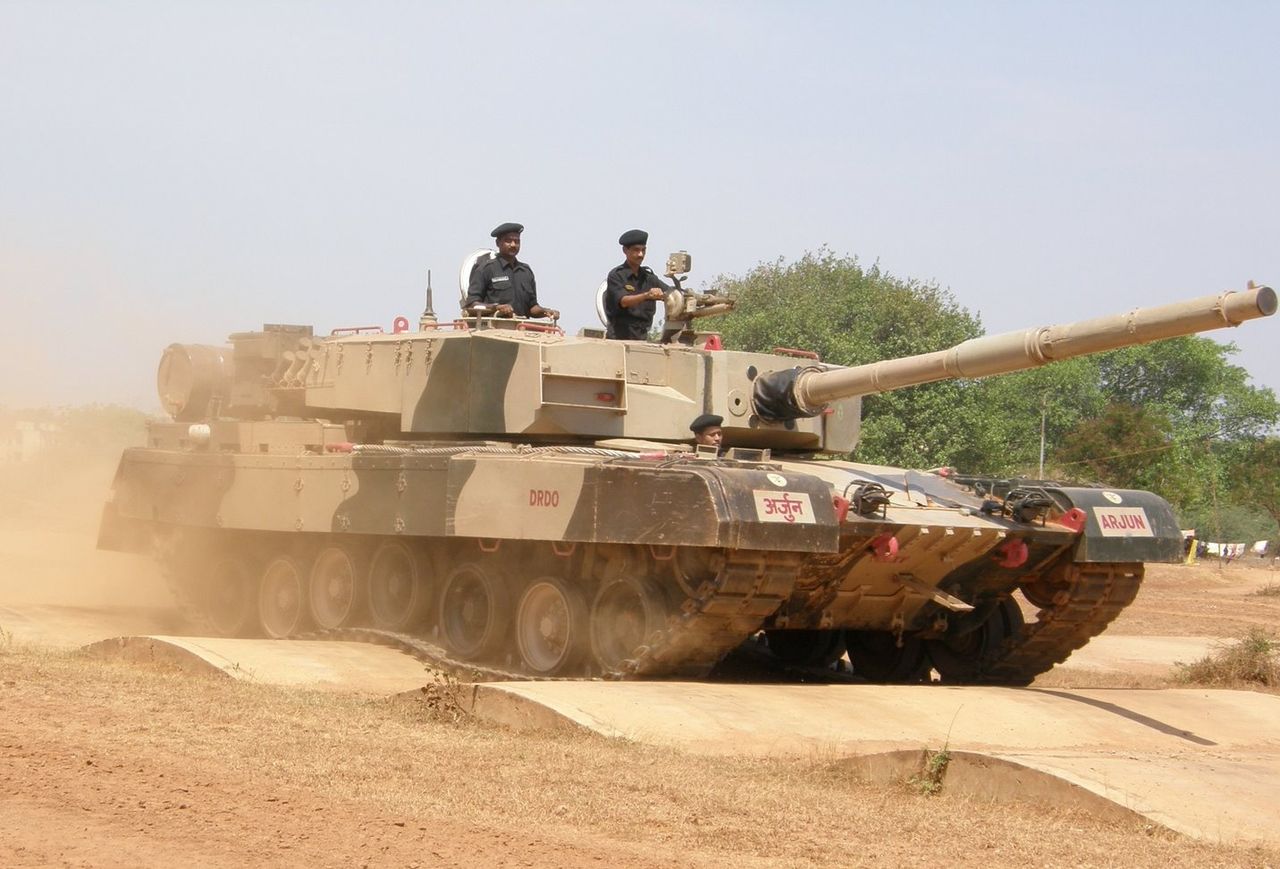
Arjun MBT
When looking at the history of failed projects – and not just armored vehicle ones, it’s usually easy to see with the benefit of hindsight where things went wrong and why did they. However, to assess matters correctly, you have to keep one thing in mind – all the decisions that led to a failure were, at the time of their making, usually very logical and justifiable. Let’s take a look at what preceded the entire ordeal.
Even though the development of Arjun started around 1971, we have to start at the beginning – in 1947, when India gained independence from the British Empire. That year marked the beginning of India’s rather interesting approach to international politics and arms. India, just free from the yoke of British domination, became fiercely anti-colonialist, and for obvious reasons. India’s first Prime Minister, Jawaharlal Nehru, also looked somewhat favorably at socialism, aligning India’s interest with the Soviet Union (that ostentatiously boasted anti-colonialism). But only to a degree – he saw full well the fate of the Central and Eastern Europe and had no desire for his country to exchange one master for another.
Another aspect was the war India was immediately forced to fight against another country that emerged from the dissolution of British India – mostly Muslim Pakistan – over the region of Kashmir, which was predominantly Muslim but its ruler was a hereditary Indian (Hindu) Maharaja. The partitioning of India left the fate of Kashmir undecided as it was such a hot potato that it threatened the entire process of peaceful parting of the two major countries. As they often do, this indecisiveness resulted in bloodshed and it is estimated that the split caused the death of roughly half a million people. In the end, India effectively won that war, but many quickly realized that the area was never far from a conflict.
And thus begun several decades of independent Indian politics where India tried to stay as neutral as possible in any conflicts between the United States of America and the Soviet Union, while, at the same time, having to invest heavily into its own military due to the fact that its main rival, Pakistan, begun to receive, starting from 1954-1955, massive amounts of American military aid due to its strategic position and the American notion that it could be a valuable ally in containing communism (unlike openly neutral India).
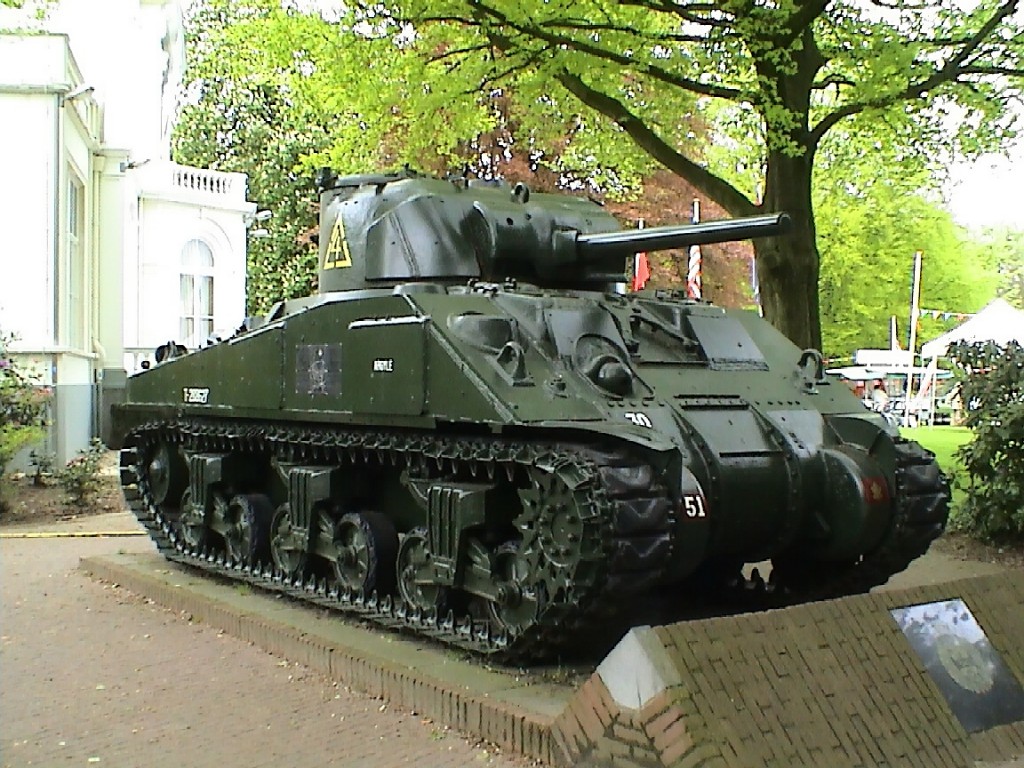
Sherman Mk.V
This led to an incredibly interesting assortment of weapon systems in Indian service, ranging from British and French tech to India being the single largest buyer of Soviet (and later Russian) arms since the 1980s to this day.
However, being independent during the Cold War came with a price tag. If you’re not a close ally, nobody is selling you the latest weapons technology available, even though private companies are more than happy to offer you off-the-shelf solutions or even develop tech just for you. Just not the really cutting edge. This, of course, was the case for armor acquisitions as well.
After the First Indo-Pakistani War of 1947, the Indian military was left with some aging Sherman and Stuart tanks left there at the end of the Second World War, which wasn’t really all that much and the decision to adopt a new tank, designed specifically for the terrain and weather conditions of India, was taken as early as in the 1950s. The conditions weren’t all that different from other countries, mind you, but there was one special thing an Indian tank had to do, and that was to fight in high altitudes. After all, the region of Kashmir, where a war was the likeliest, is quite mountainous. That is why the tank had to be relatively light and rugged.
During the 1950s, the Indians made several attempts to purchase modern tanks, either by buying existing stock, or to have a new tank designed for them. One of these was the Indien-Panzer, one of the first, if not the first, post-war West German tank designs by Porsche. The project was eventually unsuccessfully closed in 1955.
In the meanwhile, India kept buying:
Together with the older Mk.V (75mm) Shermans, these types would form the backbone of the Indian armored forces well into the 1960s until the arrival of the Vijayanta tank. The older 75mm Shermans would later be upgraded with different guns such as the American 76mm M1A2, the Soviet 76mm D-56T from the PT-76 Light Tank or the French SA50 guns from the AMX-13. It’s worth noting that the numbers differ wildly between sources (for example, L. Kavic in his 1967 book states that India purchased as many as 150 AMX-13 tanks but as little as 30 Shermans), which is why we will be sticking to the publically available SIPRI numbers.
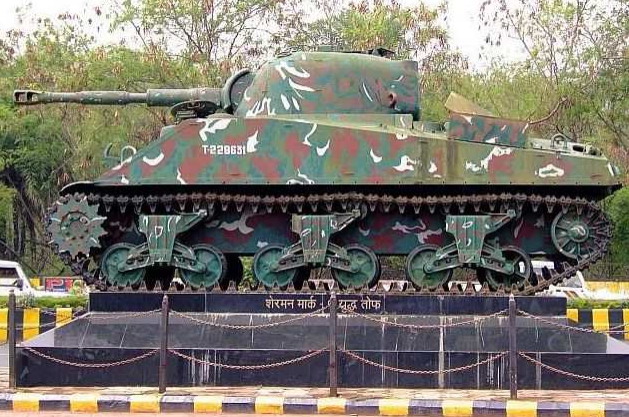
Indian Sherman re-armed with Soviet D-56T gun
These tanks would face some 460 M47 and M48 series Patton tanks, given to Pakistan by the USA between 1955 and 1965. It’s not that the USA did actively hinder India’s attempts to obtain modern military vehicles, but, for the Americans, Pakistan was far more valuable as an ally because, unlike India, it didn’t proclaim to be neutral and was, as a “bonus”, quite weak and unstable politically, which meant that the Americans were able to project their influence there much better than they would be in proud and independent India.
The reasons for this interesting assortment of vehicles can be traced, once again, to 1947, or, more specifically, to the Blackett Report. P.M.S. Blackett was a notable British scientist, who assembled a list of recommendations for India to become more self-sufficient. Despite correctly identifying Pakistan and China as the biggest threat to India as well as the need for security, Blackett actually suggested that India’s resources (little as they were) should not be depleted on major military purchases and should instead be invested into general industry improvement. Otherwise, India would become completely dependent on arms imports, which would eventually become really, really costly.
Instead, he did split the weapon systems into two categories (for a full scale war and for fighting in regional conflicts) and suggested that only obsolete, low quality weapons from military surplus sales would be used for the latter. That way, India would be able to save its resources to gradually build its underdeveloped industry. The second category affected especially the Indian Army, whereas the Indian Air Force would have access to the latest equipment. A rifle is a rifle, he argued, but there is a world of difference between a piston-powered fighter and a fighter jet.
As it often happens with good plans, the Blackett Report was widely applauded, accepted almost in entirety and then its implementation was completely botched. Some of the abovementioned principles and ideas did stick around but, simply put, the Indian military as a whole was a mess between 1947 and 1962.
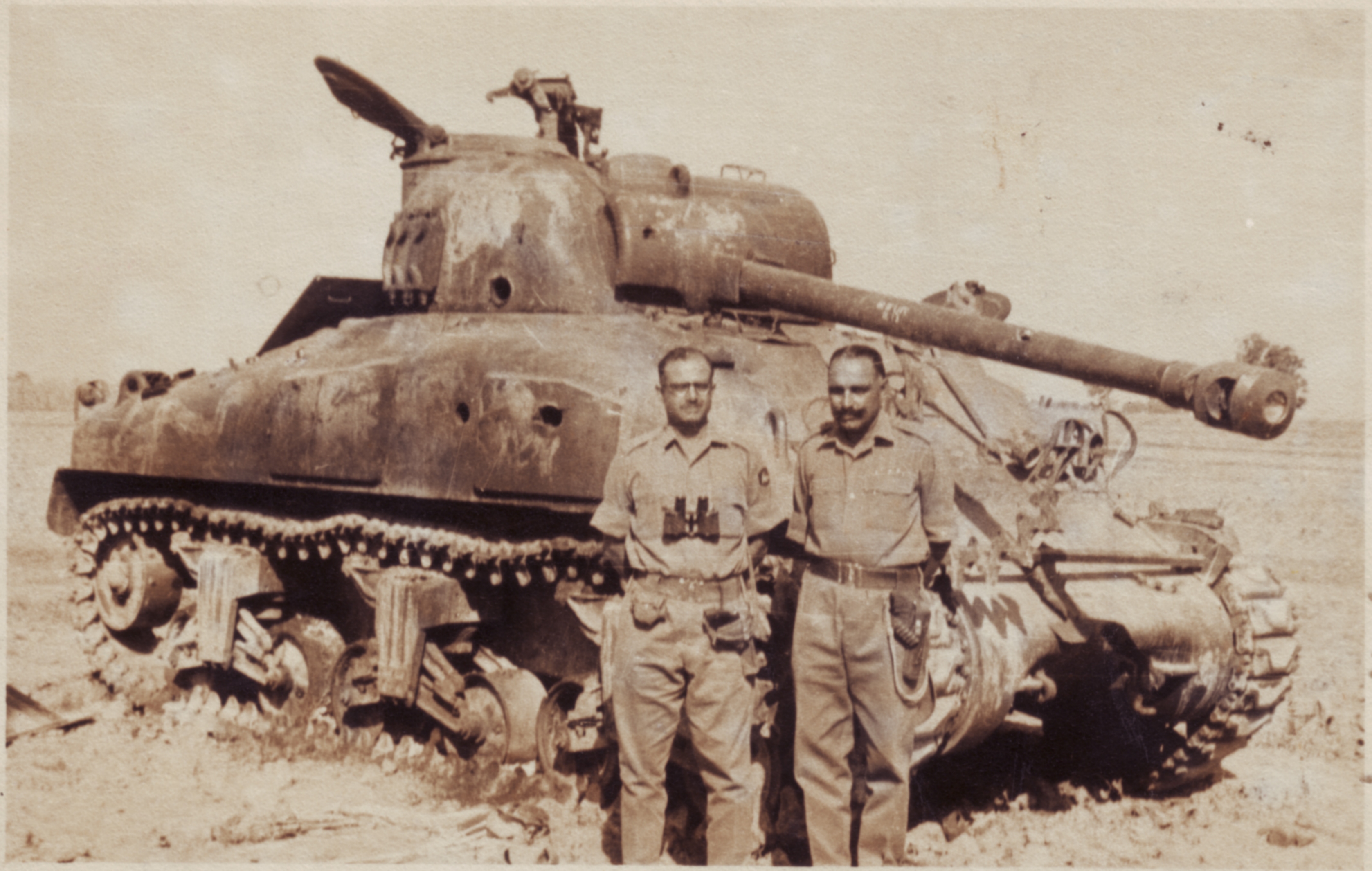
Pakistani M4A1E6 Sherman, knocked out during the 1965 war
In the 1960s, things started to heat up. The Sino-Indian war of 1962 came first and ended badly for India largely due to the fact that Nehru believed the Chinese to be peaceful as fellow members of the non-aligned movement that came from the 1955 Bandung conference. Unfortunately for him, nobody told the Chinese and, after all, what was another thousand dead soldiers next to the Great Leap Forward death toll of 20 to 40 million people. Pakistan took notice and launched another war over Kashmir in 1965, which India, who also had learned its lesson, won, but it was more of a stalemate than either side would like to admit. As for armored combat, the Indian Centurions fared pretty well against the Pakistani American-made M47s and even the old M4s took their toll on the enemy.
But, in the grand scheme of things, it was a strategic victory of India. The “independence first” approach of its military procurement was well-justified when the United States of America embargoed both sides in 1965 in order to de-escalate the conflict. India was left inconvenienced military-wise, but Pakistan, operating mostly American equipment, was effectively crippled for several years and its military expenditures reached the Indian levels only in 1968-1969, simply because there was nothing for them to buy. As for India, extremely favorable trade conditions with Britain allowed it to purchase British goods rather cheaply (in rupees), which allowed it to invest its reserves into other fields.
The history of the 1960s armor is relatively convoluted with a lot of things happening at once, but the idea of arms independence permeated the entire ordeal. It can be separated into two chapters, important for the later development of the Arjun MBT. The first and the obvious one was the adoption of the Vijayanta MBT. The Vijayanta was a modified Vickers Mk.1 export tank, which in turn was basically a discount Centurion. Despite India’s savings while trading with the British, constantly purchasing modern British equipment was not really an affordable strategy for the Indian military due to the country’s meager foreign exchange reserves and, with the lessons of independence on their mind, the Indians sought one thing that became the foundation of the trades that would follow – technology transfer.
In other words, India was looking at local license production of a modern tank. To that end, the Heavy Vehicle Factory was established in Avadi in 1961 with the goal of building the Vickers export tanks under the name Vijayanta (“Victorious”). The British agreed and even though the first 90 Vijayanta tanks were built in 1963-1964 in Britain, the rest of them were built already in India (the first tanks rolled off the assembly line in 1965) and the production took place until 1986 with roughly 2200 tanks built in total.
The Vijayanta wasn’t the world’s most cutting edge tank, but it was nothing to scoff at. While its armor was quite basic, it had a potent weapon in the form of the famous British 105mm Royal Ordnance L7 cannon that outperformed pretty much anything on the battlefield, including the earlier Pakistani Patton tanks. It was the first major success of the Indian armored vehicle industry – a truly Indian tank the country could be proud of. The tank would serve for decades until finally being retired around 2008.
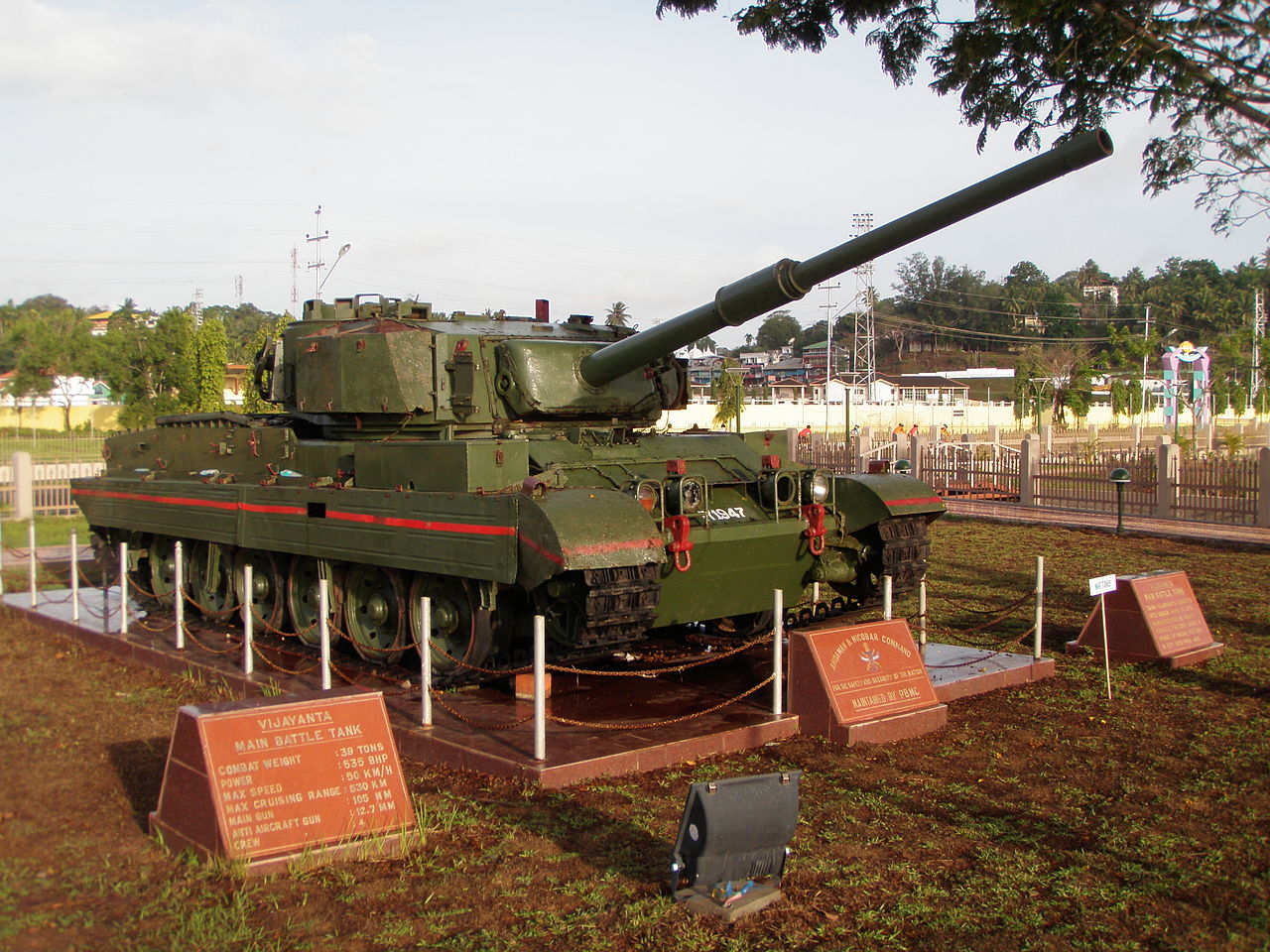
Vijayanta MBT
But that alone was not enough. Fortunately for India, being not aligned in the world of the Cold War meant it could court both sides and court both sides it did because the Soviets were more than happy to sell India some of their own tanks.
The first 300 T-54 tanks were ordered directly from the Soviet Union in 1964 and delivered between 1965 and 1967, followed by more than a thousand T-55 tanks delivered from the Soviet Union, Poland and Czechoslovakia between 1968 and 1974. These would be modernized in the 1990s and would remain in service until 2011.
Even though, while looking at the dates, it’s easy to attribute the cooperation between India and the Soviet Union to the Sino-Soviet split, the cooperation between the two countries was considerably older than that (going back to the early 1950s) and with the Indian government (as well as Nehru himself) being more on the socialist side than anything, it was fairly logical that the Soviets would be interested, especially when they got to export their oil to India as well starting from 1960.
This marked the beginning of a long cooperation that practically lasts to this day as well as certain Indian fondness of former Warsaw Pact technology for its simplicity and ruggedness. This cooperation was often influenced by politics, sometimes even by a lot (such as the Soviet support of Pakistan in order to drive a wedge between it and China, or the Indian condemnation of the Soviet invasion of Czechoslovakia in 1968), but never went away.
The conclusion of this era for the Indian military came in form of the 1971 Indo-Pakistani war and the resulting establishment of the country of Bangladesh as a response to the genocide launched by the Pakistanis and their Islamist militia allies. During this genocide, the Pakistanis murdered up to three million people as well as committed crimes against humanity (such as the systematic rape of several hundred thousand Bangladeshi women and girls) and, by November, attempted a surprise attack against India.
Spoiler alert, it didn’t go well for Pakistan and the Indian military (especially the navy) handed their ass to them on a silver platter, resulting in two important things – the establishment of Bangladesh and the marked increase in India’s military and industrial confidence. The Indian Vijayanta tanks performed up to or above expectations and despite several blunders, the operations in general were quite well executed on the Indian side. The conflict also served as a validation of the decisions and strategies taken over the past decade and would encourage the Indians to continue on their path, which in turn directly led to the establishment of the Arjun program.
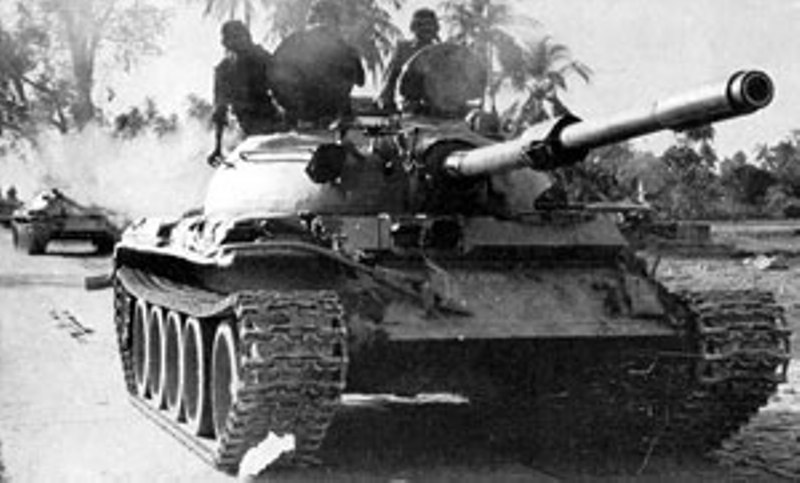
Indian T-55 during the 1971 war
One important thing, however, is to view the results of the 1971 war and the qualities of Indian industry etc. in the right framework. Throughout the war, the quality of Pakistani equipment and troops was very low and the Indians were not all that superior. This wasn’t a conflict between two superpowers using cutting edge tech. This was a conflict between two Third World states using relatively obsolete equipment and poorly-trained troops with bad leadership, tactics and training. The abovementioned Indian confidence was warranted, yes, but its military capability was nowhere near that of the NATO or the Soviet Union. Nevertheless, they embarked on a journey to design a modern Main Battle Tank for the 1990s (which is why it is sometimes referred to as MBT-90).
The roots of the program go back to the 1970-1974 period. The first mention of the program dates to 1970 and actually pre-dates the 1971 war, even though it picked up steam after it. The task to design it fell to the Combat Vehicle Research and Development Establishment (CVRDE) laboratory, founded between 1974 and 1975 in Avadi. What followed was a decade of research with the first prototype of the tank unveiled in 1984. The tank received the name Arjun after a prince and an archer from the ancient Indian epic, Mahabharata.
This might seem like a long time – and geopolitically, it was – but to build a tank from scratch in mere decade is, for a rather underdeveloped country, no small feat. Of course, they did not actually build from scratch. The Avadi plant had a lot of experience from building the Vijayanta and, right off the bat, the Indians apparently decided to use as many off-the-shelf solutions as possible. It seems they started off with Vijayanta and then, over the course of the decade, changed the design depending on modern trends.
The thing is, this time period saw some rapid development of tanks virtually everywhere. The Soviets were, for example, already fielding the T-72 for a while by 1975 while the Indians were largely “stuck” with the Vijayanta production and some older Soviet tech. A decade old by that point and morally even older, the Vijayanta was quite obsolete in the mid-1970s even though some attempts were made to upgrade it (notably its Fire Control System).
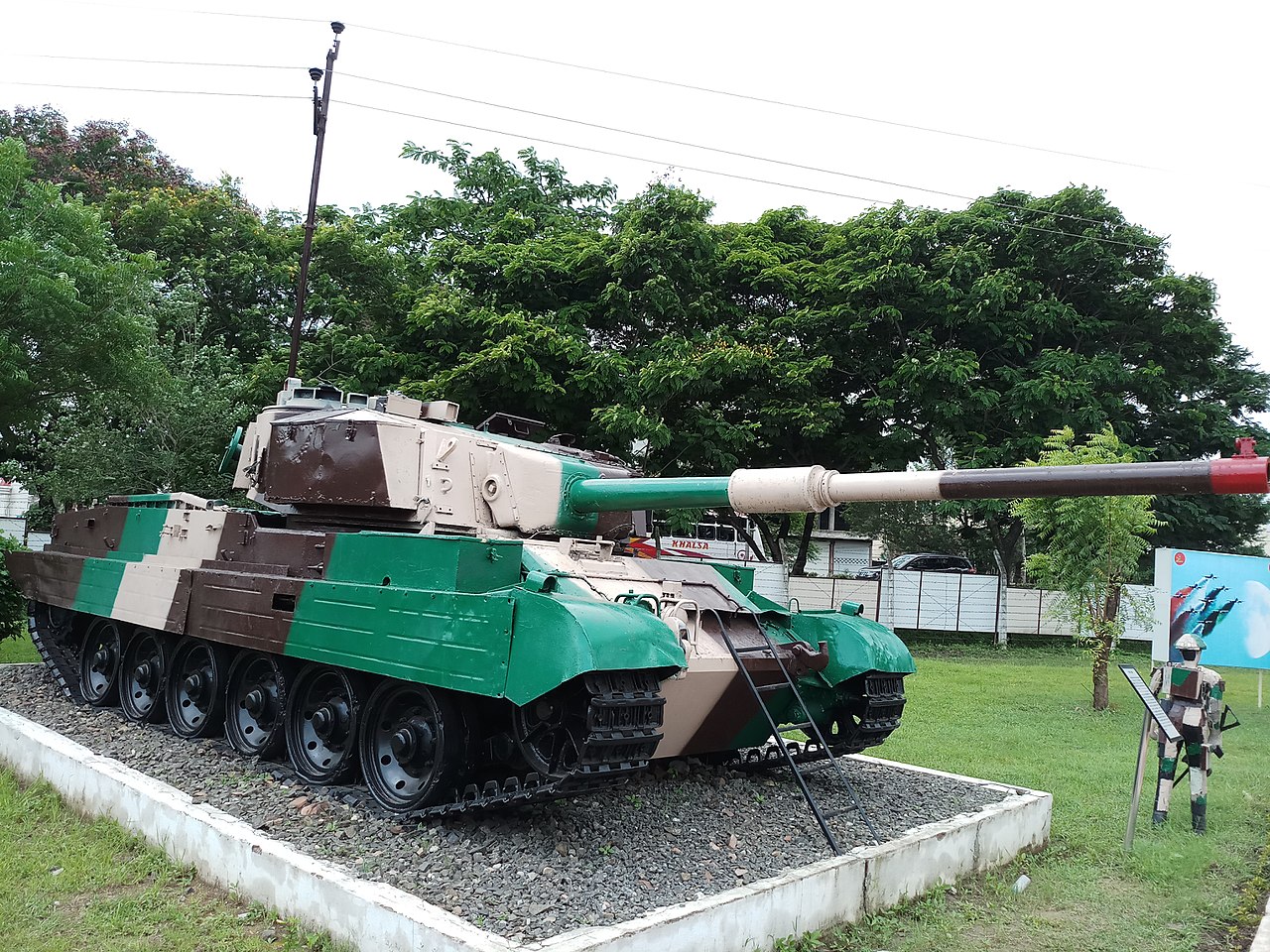
Vijayanta MBT
What the Indian designers faced was a vicious circle. They were well-aware of modern trends and technologies but by the time any such elements could be redesigned for an indigenous Indian MBT and adopted, something new came along already and the process started anew. From the initial Vijayanta-esque design, they likely went through a number of iterations until they were ready to show some results in 1984. By that time, the program did already cost 300 million rupees (roughly 30 million USD back then). That wasn’t actually bad, all things considered – the USA would squander over 300 million USD on the MBT-70 program alone.
However, there’s an old saying: “You get what you pay for.”
And what the Indians got was not great. This was partially due to the Indian experience (we’ll get to that), but also due to the fact they simply lacked the funding to finish such a project in timely manner. The oil crisis of the 1970s wreaked havoc on Indian economy – for example, between 1972 and 1974, the essential goods prices rose by 40 percent. This led to widespread unrest and meant that very little funding would be available for non-critical projects, including military ones – after all, since Pakistan (the main rival) was so soundly defeated in 1971, the idea was that this victory could be repeated at any point.
This notion in turn led to stagnation. Of special note here is the parallel with Israel – the Six-Day War was such a striking success that the Israeli forces grew complacent, allowing corruption to run rampant amongst their ranks. This directly led to the disaster that was the 1973 Yom Kippur War. Only, there was no Yom Kippur War for India because Pakistan was in the same trouble India was, so the corruption lingered on and was allowed to fester.
Another problem was the growing dependence on the communist bloc – by 1961, only 10 percent of all Indian military imports came from the Soviet Union and its satellites. By 1971, it was 90 percent and even though the terms were still technically favorable, they led to some nasty side effects for India. One example would be that even though the Soviets allowed for barter-style military trades the way they would in the Middle East (India would pay for the military tech in goods rather than in cash), they would immediately sell these goods on the free market to the west, so India was effectively competing with its own goods offered by the Soviets for lower prices.
This process was only broken in the late 1970s at a considerable cost to Indian economy, but by 1977, India was able to compete once again on the free marked with its foreign exchange reserves at a much higher level. This also marked the change in Indian military procurement strategy.
Instead of the “get whatever we can” tactic, India started acting more confidently and finally got the “competitive” way of doing things. They’d offer a contract and choose from the best option. With the communism containment doctrine more or less dead, the west would compete with the east for India’s money, which in turn opened some very interesting opportunities. For this article, the most relevant part was the cooperation with West Germany.
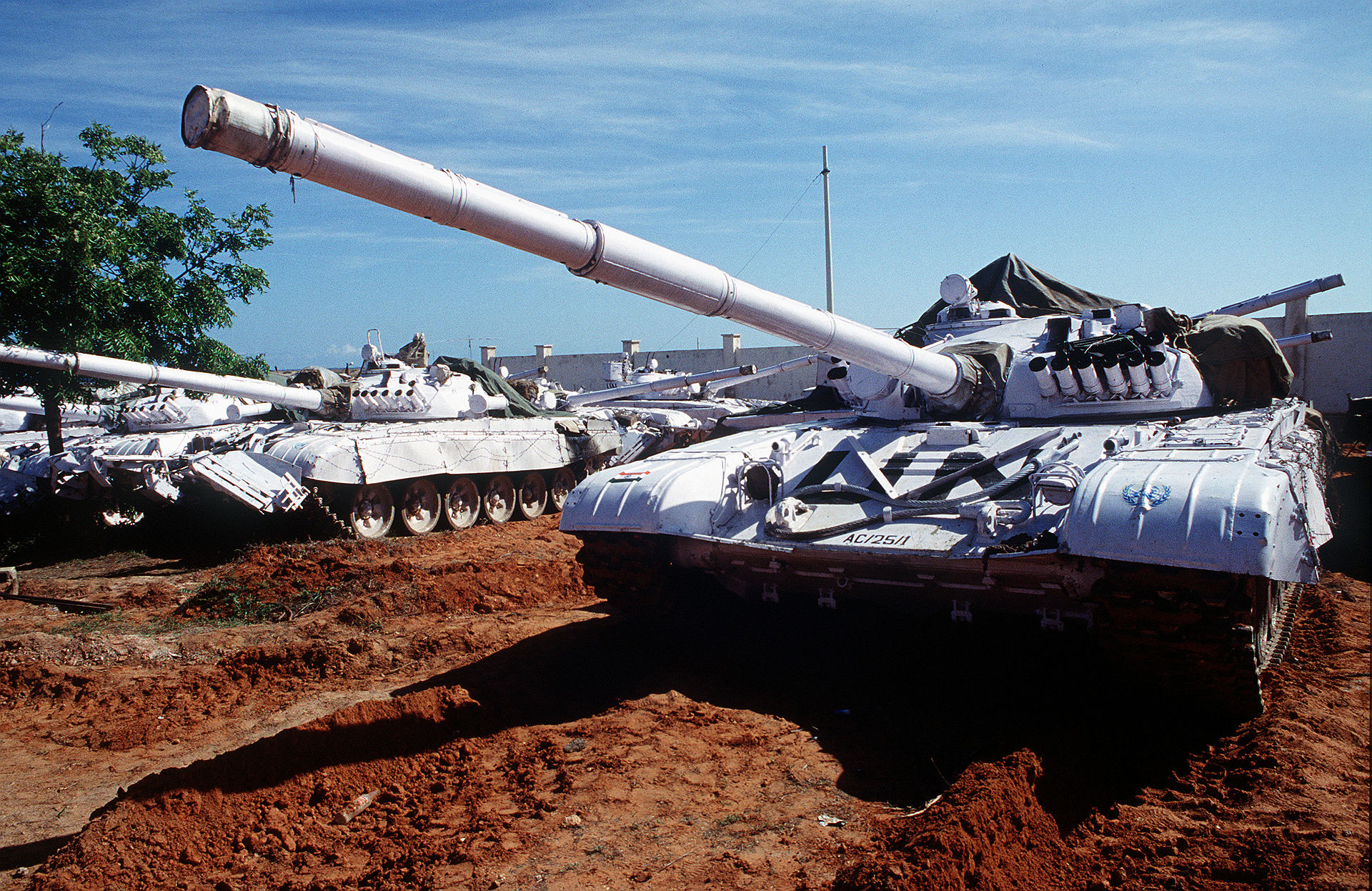
Indian T-72M1 MBT in UN service, Somalia
That is not to say that the Russians would not win the Indian contracts anymore. They did – in fact, the T-72 contract for India became one of the biggest ones and by the time the first Arjun prototype was ready, the T-72 was already chosen as India’s future Main Battle Tank and its production in Avadi was already underway. Politically, the adoption of the T-72 was an incredibly complex move because it happened around the time the Soviets invaded Afghanistan (an action that was condemned world-wide), but was, once again, somewhat forced upon India because the United States (specifically the Reagan administration) started once again to massively support Pakistan as well as radical Islamists (Mujahedeen) in Afghanistan with weapons in order to limit the Soviet influence on the region.
To be continued...
Everybody knows about the successful armored vehicles of history; Sherman, T-34, Abrams... you name it. But, for every such an excellent design, you have dozens, if not hundreds of other vehicles that did not make it or, worse yet, ended up being really terrible. In this series of articles, we’re going to take a look at the most infamous examples, albeit often for different reasons and we are going to be starting with a great (or, not so great, depending how you look at it) example – the Indian Arjun MBT.
Arjun MBT
When looking at the history of failed projects – and not just armored vehicle ones, it’s usually easy to see with the benefit of hindsight where things went wrong and why did they. However, to assess matters correctly, you have to keep one thing in mind – all the decisions that led to a failure were, at the time of their making, usually very logical and justifiable. Let’s take a look at what preceded the entire ordeal.
Even though the development of Arjun started around 1971, we have to start at the beginning – in 1947, when India gained independence from the British Empire. That year marked the beginning of India’s rather interesting approach to international politics and arms. India, just free from the yoke of British domination, became fiercely anti-colonialist, and for obvious reasons. India’s first Prime Minister, Jawaharlal Nehru, also looked somewhat favorably at socialism, aligning India’s interest with the Soviet Union (that ostentatiously boasted anti-colonialism). But only to a degree – he saw full well the fate of the Central and Eastern Europe and had no desire for his country to exchange one master for another.
Another aspect was the war India was immediately forced to fight against another country that emerged from the dissolution of British India – mostly Muslim Pakistan – over the region of Kashmir, which was predominantly Muslim but its ruler was a hereditary Indian (Hindu) Maharaja. The partitioning of India left the fate of Kashmir undecided as it was such a hot potato that it threatened the entire process of peaceful parting of the two major countries. As they often do, this indecisiveness resulted in bloodshed and it is estimated that the split caused the death of roughly half a million people. In the end, India effectively won that war, but many quickly realized that the area was never far from a conflict.
And thus begun several decades of independent Indian politics where India tried to stay as neutral as possible in any conflicts between the United States of America and the Soviet Union, while, at the same time, having to invest heavily into its own military due to the fact that its main rival, Pakistan, begun to receive, starting from 1954-1955, massive amounts of American military aid due to its strategic position and the American notion that it could be a valuable ally in containing communism (unlike openly neutral India).
Sherman Mk.V
This led to an incredibly interesting assortment of weapon systems in Indian service, ranging from British and French tech to India being the single largest buyer of Soviet (and later Russian) arms since the 1980s to this day.
However, being independent during the Cold War came with a price tag. If you’re not a close ally, nobody is selling you the latest weapons technology available, even though private companies are more than happy to offer you off-the-shelf solutions or even develop tech just for you. Just not the really cutting edge. This, of course, was the case for armor acquisitions as well.
After the First Indo-Pakistani War of 1947, the Indian military was left with some aging Sherman and Stuart tanks left there at the end of the Second World War, which wasn’t really all that much and the decision to adopt a new tank, designed specifically for the terrain and weather conditions of India, was taken as early as in the 1950s. The conditions weren’t all that different from other countries, mind you, but there was one special thing an Indian tank had to do, and that was to fight in high altitudes. After all, the region of Kashmir, where a war was the likeliest, is quite mountainous. That is why the tank had to be relatively light and rugged.
During the 1950s, the Indians made several attempts to purchase modern tanks, either by buying existing stock, or to have a new tank designed for them. One of these was the Indien-Panzer, one of the first, if not the first, post-war West German tank designs by Porsche. The project was eventually unsuccessfully closed in 1955.
In the meanwhile, India kept buying:
- Shermans from the United States (200 76mm M4A1 and M4A3 variants in the 1950s)
- AMX-13 Light Tanks from France (164 between 1957 and 1958)
- Centurion tanks from the United Kingdom (220 Mk.3 or Mk.7 variants with an 84mm 20pdr gun between 1956 and 1957)
Together with the older Mk.V (75mm) Shermans, these types would form the backbone of the Indian armored forces well into the 1960s until the arrival of the Vijayanta tank. The older 75mm Shermans would later be upgraded with different guns such as the American 76mm M1A2, the Soviet 76mm D-56T from the PT-76 Light Tank or the French SA50 guns from the AMX-13. It’s worth noting that the numbers differ wildly between sources (for example, L. Kavic in his 1967 book states that India purchased as many as 150 AMX-13 tanks but as little as 30 Shermans), which is why we will be sticking to the publically available SIPRI numbers.
Indian Sherman re-armed with Soviet D-56T gun
These tanks would face some 460 M47 and M48 series Patton tanks, given to Pakistan by the USA between 1955 and 1965. It’s not that the USA did actively hinder India’s attempts to obtain modern military vehicles, but, for the Americans, Pakistan was far more valuable as an ally because, unlike India, it didn’t proclaim to be neutral and was, as a “bonus”, quite weak and unstable politically, which meant that the Americans were able to project their influence there much better than they would be in proud and independent India.
The reasons for this interesting assortment of vehicles can be traced, once again, to 1947, or, more specifically, to the Blackett Report. P.M.S. Blackett was a notable British scientist, who assembled a list of recommendations for India to become more self-sufficient. Despite correctly identifying Pakistan and China as the biggest threat to India as well as the need for security, Blackett actually suggested that India’s resources (little as they were) should not be depleted on major military purchases and should instead be invested into general industry improvement. Otherwise, India would become completely dependent on arms imports, which would eventually become really, really costly.
Instead, he did split the weapon systems into two categories (for a full scale war and for fighting in regional conflicts) and suggested that only obsolete, low quality weapons from military surplus sales would be used for the latter. That way, India would be able to save its resources to gradually build its underdeveloped industry. The second category affected especially the Indian Army, whereas the Indian Air Force would have access to the latest equipment. A rifle is a rifle, he argued, but there is a world of difference between a piston-powered fighter and a fighter jet.
As it often happens with good plans, the Blackett Report was widely applauded, accepted almost in entirety and then its implementation was completely botched. Some of the abovementioned principles and ideas did stick around but, simply put, the Indian military as a whole was a mess between 1947 and 1962.
Pakistani M4A1E6 Sherman, knocked out during the 1965 war
In the 1960s, things started to heat up. The Sino-Indian war of 1962 came first and ended badly for India largely due to the fact that Nehru believed the Chinese to be peaceful as fellow members of the non-aligned movement that came from the 1955 Bandung conference. Unfortunately for him, nobody told the Chinese and, after all, what was another thousand dead soldiers next to the Great Leap Forward death toll of 20 to 40 million people. Pakistan took notice and launched another war over Kashmir in 1965, which India, who also had learned its lesson, won, but it was more of a stalemate than either side would like to admit. As for armored combat, the Indian Centurions fared pretty well against the Pakistani American-made M47s and even the old M4s took their toll on the enemy.
But, in the grand scheme of things, it was a strategic victory of India. The “independence first” approach of its military procurement was well-justified when the United States of America embargoed both sides in 1965 in order to de-escalate the conflict. India was left inconvenienced military-wise, but Pakistan, operating mostly American equipment, was effectively crippled for several years and its military expenditures reached the Indian levels only in 1968-1969, simply because there was nothing for them to buy. As for India, extremely favorable trade conditions with Britain allowed it to purchase British goods rather cheaply (in rupees), which allowed it to invest its reserves into other fields.
The history of the 1960s armor is relatively convoluted with a lot of things happening at once, but the idea of arms independence permeated the entire ordeal. It can be separated into two chapters, important for the later development of the Arjun MBT. The first and the obvious one was the adoption of the Vijayanta MBT. The Vijayanta was a modified Vickers Mk.1 export tank, which in turn was basically a discount Centurion. Despite India’s savings while trading with the British, constantly purchasing modern British equipment was not really an affordable strategy for the Indian military due to the country’s meager foreign exchange reserves and, with the lessons of independence on their mind, the Indians sought one thing that became the foundation of the trades that would follow – technology transfer.
In other words, India was looking at local license production of a modern tank. To that end, the Heavy Vehicle Factory was established in Avadi in 1961 with the goal of building the Vickers export tanks under the name Vijayanta (“Victorious”). The British agreed and even though the first 90 Vijayanta tanks were built in 1963-1964 in Britain, the rest of them were built already in India (the first tanks rolled off the assembly line in 1965) and the production took place until 1986 with roughly 2200 tanks built in total.
The Vijayanta wasn’t the world’s most cutting edge tank, but it was nothing to scoff at. While its armor was quite basic, it had a potent weapon in the form of the famous British 105mm Royal Ordnance L7 cannon that outperformed pretty much anything on the battlefield, including the earlier Pakistani Patton tanks. It was the first major success of the Indian armored vehicle industry – a truly Indian tank the country could be proud of. The tank would serve for decades until finally being retired around 2008.
Vijayanta MBT
But that alone was not enough. Fortunately for India, being not aligned in the world of the Cold War meant it could court both sides and court both sides it did because the Soviets were more than happy to sell India some of their own tanks.
The first 300 T-54 tanks were ordered directly from the Soviet Union in 1964 and delivered between 1965 and 1967, followed by more than a thousand T-55 tanks delivered from the Soviet Union, Poland and Czechoslovakia between 1968 and 1974. These would be modernized in the 1990s and would remain in service until 2011.
Even though, while looking at the dates, it’s easy to attribute the cooperation between India and the Soviet Union to the Sino-Soviet split, the cooperation between the two countries was considerably older than that (going back to the early 1950s) and with the Indian government (as well as Nehru himself) being more on the socialist side than anything, it was fairly logical that the Soviets would be interested, especially when they got to export their oil to India as well starting from 1960.
This marked the beginning of a long cooperation that practically lasts to this day as well as certain Indian fondness of former Warsaw Pact technology for its simplicity and ruggedness. This cooperation was often influenced by politics, sometimes even by a lot (such as the Soviet support of Pakistan in order to drive a wedge between it and China, or the Indian condemnation of the Soviet invasion of Czechoslovakia in 1968), but never went away.
The conclusion of this era for the Indian military came in form of the 1971 Indo-Pakistani war and the resulting establishment of the country of Bangladesh as a response to the genocide launched by the Pakistanis and their Islamist militia allies. During this genocide, the Pakistanis murdered up to three million people as well as committed crimes against humanity (such as the systematic rape of several hundred thousand Bangladeshi women and girls) and, by November, attempted a surprise attack against India.
Spoiler alert, it didn’t go well for Pakistan and the Indian military (especially the navy) handed their ass to them on a silver platter, resulting in two important things – the establishment of Bangladesh and the marked increase in India’s military and industrial confidence. The Indian Vijayanta tanks performed up to or above expectations and despite several blunders, the operations in general were quite well executed on the Indian side. The conflict also served as a validation of the decisions and strategies taken over the past decade and would encourage the Indians to continue on their path, which in turn directly led to the establishment of the Arjun program.
Indian T-55 during the 1971 war
One important thing, however, is to view the results of the 1971 war and the qualities of Indian industry etc. in the right framework. Throughout the war, the quality of Pakistani equipment and troops was very low and the Indians were not all that superior. This wasn’t a conflict between two superpowers using cutting edge tech. This was a conflict between two Third World states using relatively obsolete equipment and poorly-trained troops with bad leadership, tactics and training. The abovementioned Indian confidence was warranted, yes, but its military capability was nowhere near that of the NATO or the Soviet Union. Nevertheless, they embarked on a journey to design a modern Main Battle Tank for the 1990s (which is why it is sometimes referred to as MBT-90).
The roots of the program go back to the 1970-1974 period. The first mention of the program dates to 1970 and actually pre-dates the 1971 war, even though it picked up steam after it. The task to design it fell to the Combat Vehicle Research and Development Establishment (CVRDE) laboratory, founded between 1974 and 1975 in Avadi. What followed was a decade of research with the first prototype of the tank unveiled in 1984. The tank received the name Arjun after a prince and an archer from the ancient Indian epic, Mahabharata.
This might seem like a long time – and geopolitically, it was – but to build a tank from scratch in mere decade is, for a rather underdeveloped country, no small feat. Of course, they did not actually build from scratch. The Avadi plant had a lot of experience from building the Vijayanta and, right off the bat, the Indians apparently decided to use as many off-the-shelf solutions as possible. It seems they started off with Vijayanta and then, over the course of the decade, changed the design depending on modern trends.
The thing is, this time period saw some rapid development of tanks virtually everywhere. The Soviets were, for example, already fielding the T-72 for a while by 1975 while the Indians were largely “stuck” with the Vijayanta production and some older Soviet tech. A decade old by that point and morally even older, the Vijayanta was quite obsolete in the mid-1970s even though some attempts were made to upgrade it (notably its Fire Control System).
Vijayanta MBT
What the Indian designers faced was a vicious circle. They were well-aware of modern trends and technologies but by the time any such elements could be redesigned for an indigenous Indian MBT and adopted, something new came along already and the process started anew. From the initial Vijayanta-esque design, they likely went through a number of iterations until they were ready to show some results in 1984. By that time, the program did already cost 300 million rupees (roughly 30 million USD back then). That wasn’t actually bad, all things considered – the USA would squander over 300 million USD on the MBT-70 program alone.
However, there’s an old saying: “You get what you pay for.”
And what the Indians got was not great. This was partially due to the Indian experience (we’ll get to that), but also due to the fact they simply lacked the funding to finish such a project in timely manner. The oil crisis of the 1970s wreaked havoc on Indian economy – for example, between 1972 and 1974, the essential goods prices rose by 40 percent. This led to widespread unrest and meant that very little funding would be available for non-critical projects, including military ones – after all, since Pakistan (the main rival) was so soundly defeated in 1971, the idea was that this victory could be repeated at any point.
This notion in turn led to stagnation. Of special note here is the parallel with Israel – the Six-Day War was such a striking success that the Israeli forces grew complacent, allowing corruption to run rampant amongst their ranks. This directly led to the disaster that was the 1973 Yom Kippur War. Only, there was no Yom Kippur War for India because Pakistan was in the same trouble India was, so the corruption lingered on and was allowed to fester.
Another problem was the growing dependence on the communist bloc – by 1961, only 10 percent of all Indian military imports came from the Soviet Union and its satellites. By 1971, it was 90 percent and even though the terms were still technically favorable, they led to some nasty side effects for India. One example would be that even though the Soviets allowed for barter-style military trades the way they would in the Middle East (India would pay for the military tech in goods rather than in cash), they would immediately sell these goods on the free market to the west, so India was effectively competing with its own goods offered by the Soviets for lower prices.
This process was only broken in the late 1970s at a considerable cost to Indian economy, but by 1977, India was able to compete once again on the free marked with its foreign exchange reserves at a much higher level. This also marked the change in Indian military procurement strategy.
Instead of the “get whatever we can” tactic, India started acting more confidently and finally got the “competitive” way of doing things. They’d offer a contract and choose from the best option. With the communism containment doctrine more or less dead, the west would compete with the east for India’s money, which in turn opened some very interesting opportunities. For this article, the most relevant part was the cooperation with West Germany.
Indian T-72M1 MBT in UN service, Somalia
That is not to say that the Russians would not win the Indian contracts anymore. They did – in fact, the T-72 contract for India became one of the biggest ones and by the time the first Arjun prototype was ready, the T-72 was already chosen as India’s future Main Battle Tank and its production in Avadi was already underway. Politically, the adoption of the T-72 was an incredibly complex move because it happened around the time the Soviets invaded Afghanistan (an action that was condemned world-wide), but was, once again, somewhat forced upon India because the United States (specifically the Reagan administration) started once again to massively support Pakistan as well as radical Islamists (Mujahedeen) in Afghanistan with weapons in order to limit the Soviet influence on the region.
To be continued...