Armored Failures – Part 1: Arjun (2)
Continued from the previous post.
Seeing the threat of the Americans arming Pakistan with modern aircraft capable of delivering nuclear weapons (the threat of nuclear Pakistan would later indeed materialize) left India little choice but to turn to the Soviets for military equipment. Additionally, the deal included technology transfers and regular updates thereof.
It is therefore no surprise that the plans to build an indigenous MBT were put on a backburner. Between 1974 and 1982, little progress was made and numerous issues were encountered. The biggest problem during this stage was the armor, the engine and the suspension.
Initially (until 1976 or so), the Indians sought to purchase an existing power pack (a combination of engine and transmission) but this quickly turned out to be a bust, which is why the DRDO (Indian military research agency) tried to develop its own engine and suspension. This turned out to be a disaster.
The thing about engines and armor in real life is – it’s not that hard to copy an existing design, or build armor with a specific layout. The really hard part is to get to know the exact metallurgic processes that give each component its desired properties. This is the real know-how that the Indians failed to adopt, leading to a decade of incorrectly cast engine cylinders, cracked camshafts, bad welding techniques and brittle armor plating. One does not easily copy these manufacturing techniques – even with top of the line industry packed with experts, which the Indians did not have. As a result, the indigenous 1500hp unit was incredibly unreliable.
The attempts to build hydraulic suspension failed as well for the same reason – ironically, torsion bars were rejected because of bad experience with those used on the Vijayanta. Incorrect manufacturing process led to the Vijayanta torsion bars being brittle and breaking every now and then and the military hated that.
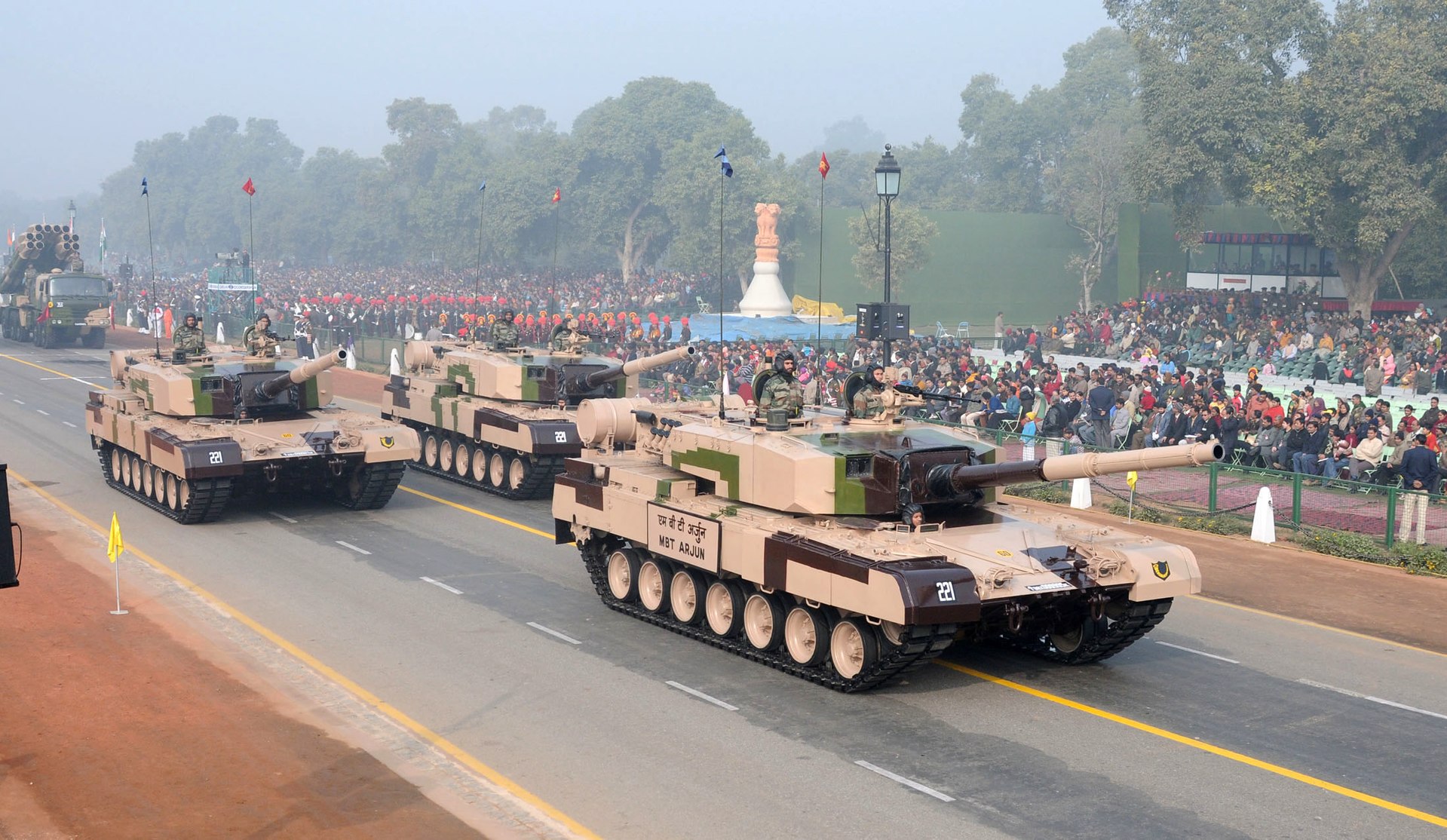
But, despite all these issues, the Arjun did not go away. In fact, Krauss-Maffei helped India design it (despite the levels of India’s cooperation with the Soviets), which was why the publically unveiled tank resembled Leopard 2 visually. After all, the Leopard 2 MBT was one of the tanks competing in the late 1970s and early 1980s against the T-72 (the others being the British Chieftain 800 and the French AMX-40). Once again, the Indians preferred a lighter tank so the Leopard 2 was never really a serious contender and, realistically, neither was the Chieftain.
Arjun Mk.1
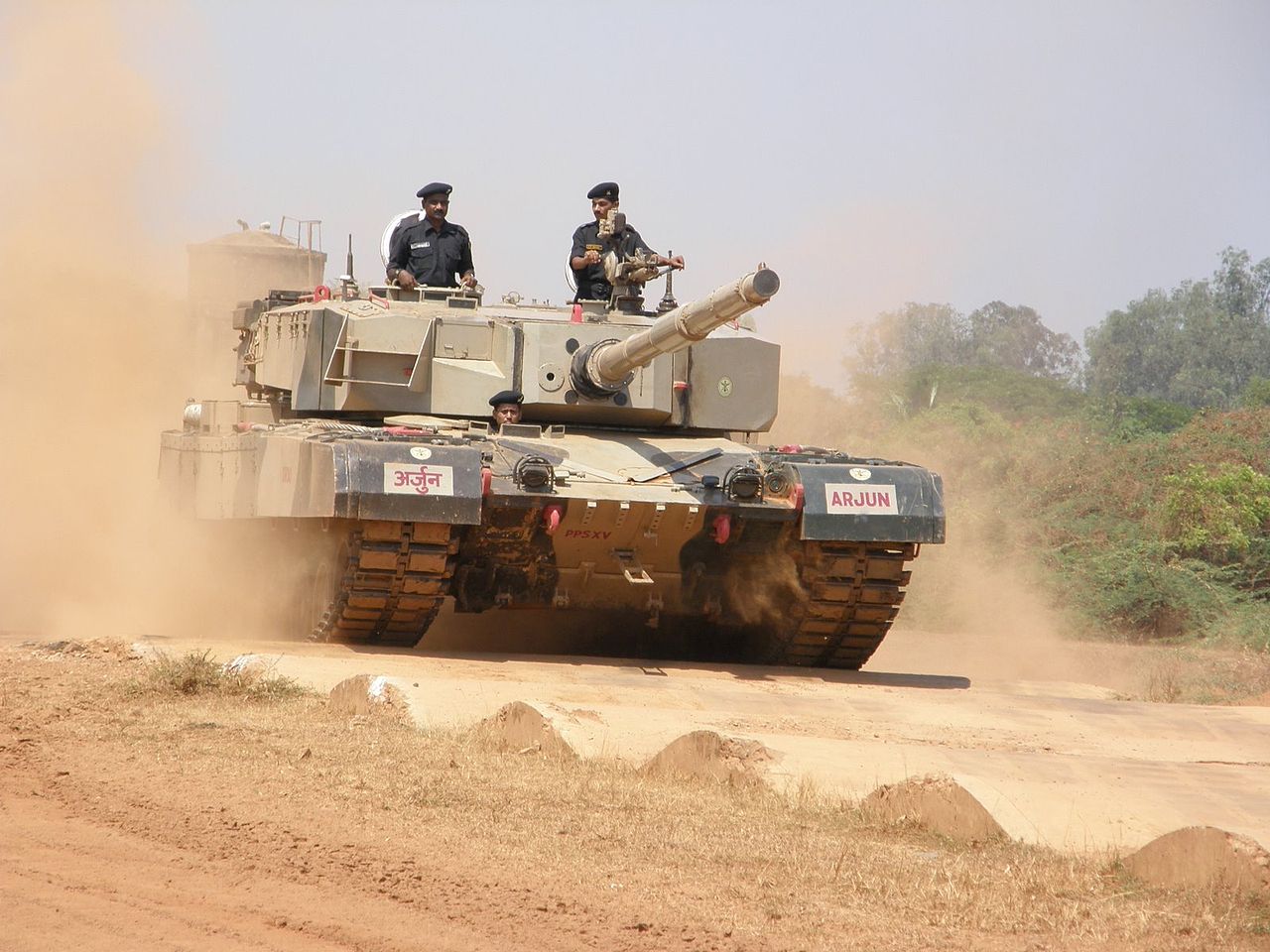
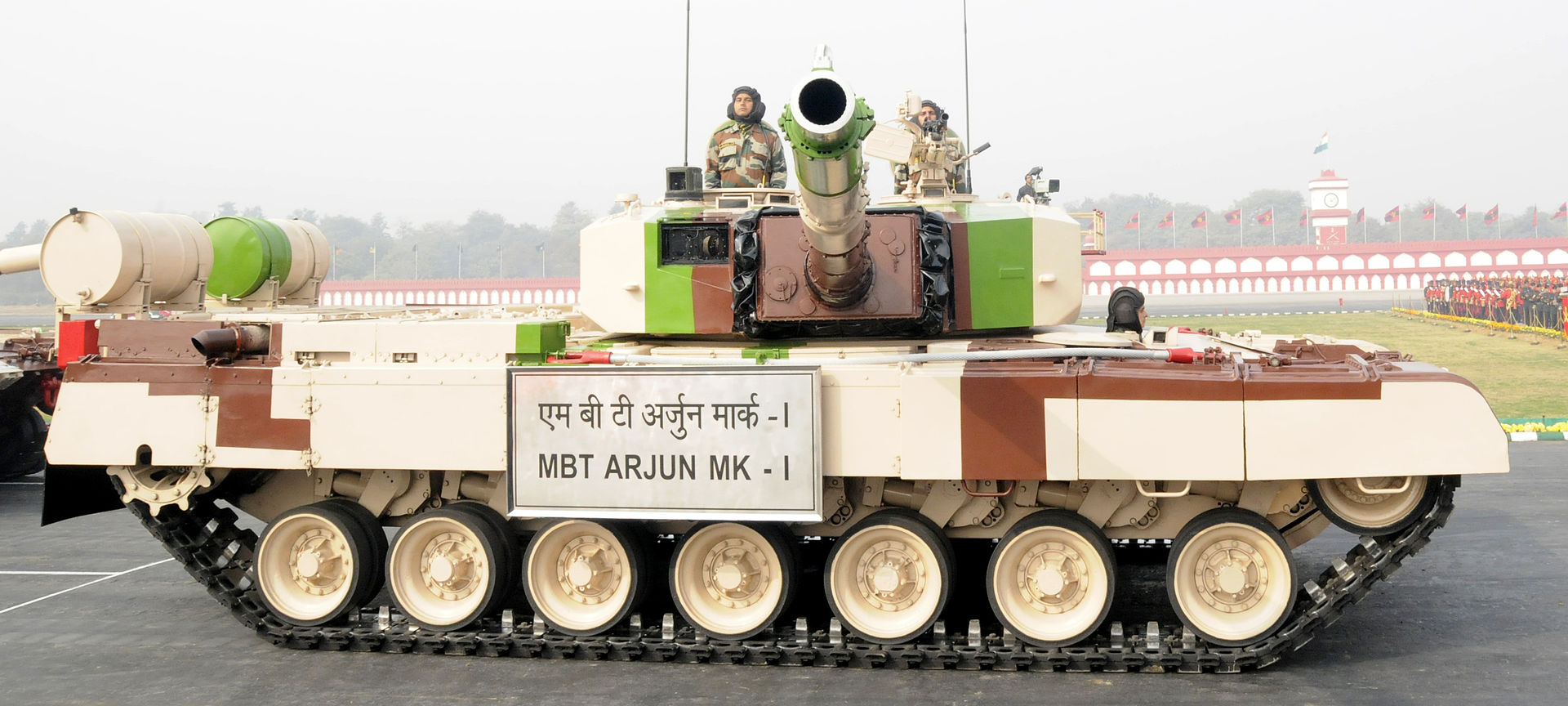
Of note was the blocky composite armor design called Kanchan, allegedly developed indigenously by the Defence Metallurgical Research Laboratory at Hyderabad (the armor was named after a district in that city). The exact composition of this armor is unknown but numerous sources put it in relation with the famous British Chobham armor. The same sources, however, also claim that the turret is so rectangular because this armor is impossible to be produced angled, which is obviously not the case for Chobham. Given Krauss-Maffei’s involvement in designing the Arjun, it’s quite possible that that the early variant of armor instead resembled internally that of the Leopard 2 MBT.
Several other accounts exist, of course, with the most popular being a list of layers of different hardness steels with ceramic inlays, but such a design would seem to be well beyond the capabilities of the 1980s Indian defense industry.
The early six Arjun prototypes weighed some 50-60 tons, had composite armor and were powered by German 1400hp MTU 838 Ka-501 diesel engines. The engines were paired with another German component, a Renk RK 304S automatic transmission, allowing for very decent maximum speed of 72 km/h (average off-road speed was some 40 km/h). The armament consisted mostly of 120mm indigenous rifled cannon. The gun was manually loaded and used two-piece ammunition. It’s worth noting that, contrary to popular belief, this cannon is not in any way related to the Chieftain or Challenger 120mm cannon and was truly developed indigenously. Why the Indians chose this particular solution instead of adopting a NATO standard 120mm smoothbore is a mystery.
Of special importance were the engines. As you might have noticed, these were not the Leopard 2 engines (MTU 873 Ka-501 producing 1500hp). These MTU engines were based on older technology and were derived from the Leopard 1 series. This made them expensive because, unlike the 873 series, these were developed specifically for the Arjun and were never mass-produced. As such, the cost of each engine reached whopping 55 million rupees (at that time, roughly 1.5 million USD). The Indians were, of course, interested in the newer engines as well, but, allegedly, the introduction of the MTU 873 series would require the redesign of the entire hull. It seems, however, that the Indians managed to drive the price down after all because, according to some sources, they imported no fewer than 42 of these engines between 1983 and 1989 for roughly 15 million USD.
Between April 1984 and 1987, ten prototypes were built in total, of which six (later ones, presumably) were given to the Indian Army for testing while the other four remained with the CVRDE.
The testing unveiled a number of critical issues with the tank, specifically:
As you can imagine, addressing core design issues such as these was neither easy nor cheap and by the time at least some were fixed, the cost of the program was 19 times higher than originally intended. What was even worse was the fact that 55 percent of each tank’s cost had to be paid in foreign exchange because 43 percent of all components of this “indigenous” tank were imported. In fact, only the basic hull and turret design were truly indigenous, otherwise:
At this point, it was quite clear that this was too little, too late. The design was now roughly 15 years old. What was even worse, India was plagued by internal strife (the 1984 assassination of Prime Minister Indira Gandhi and the massive Bofors scandal threw even the military in disarray) and the 1980s debt crisis caused additional financial problems for the country that would be made even worse by years of drought and the early 1990s oil price spike due to the Gulf War.
Arjun Mk.1
The T-72s had problems too – specifically, the lack of spare parts that could not be indigenously produced from scratch with imports from the struggling Soviet Union erratic at best. The cheapest option at that point was, once again, to attempt to upgrade the Vijayanta tanks.
By 1991, only 12 tanks (effectively hand-crafted prototypes) were built in total and the project was estimated to have cost around 2.8 billion rupees (approximately 116 million USD), of which 1.8 billion was, after an internal audit from 1989, discovered to have been wasted either on faulty components or corruption. Those were costs India could ill-afford.
Starting from 1987, the CVRDE designers were working on correcting the issues, the worst of which were those connected to the engines. Even with expensive modifications, the German engines performed extremely poorly in hot and dry weather of the Rajasthan desert, which was (based on the 1971 experience) considered to be the most likely place of tank battles with Pakistan. The engines would ingest sand and would work poorly with the Renk transmission. It would also overheat and the suspension was a mess by itself with practically every single part failing quality control (it was estimated that for each Arjun, 19 spare nitrogen cylinders would have to be available at any given time).
Additional problems included:
Despite these issues, the tank was officially put through another round of trials in 1993 and despite the economic issues India was facing at the time the military proclaimed it wanted to have 1.500 of these tanks battle-ready by 2000. This was obviously not a realistic plan. Internally, everyone likely realized what a mess the Arjun program was, but this region of the world was and is to this day all about saving the face. And so another 3 billion rupees were allocated to it. In the meanwhile, India was locally producing the Russian T-72M1 in large quantities, still operating the Vijayanta and waiting for something better to come along.
The years went by with little progress made. Two prototypes with torsion bar suspension were built at some point between 1996 and 1998, but those fared even worse than the hydraulic suspension ones due to the poor manufacturing quality of the torsion bars.
On January 9, 1996, the Arjun was officially unveiled and cleared for mass-production (citing “excellent” results of domestic tests), which was launched on limited scale at Avadi at 3.3 million USD per vehicle (the order for the first 15 vehicles was placed in August of the same year).
Arjun Mk.1
Once again, a plan was announced to have 2000 Arjun vehicles built after “the successful trials of the pre-production vehicles” (note the same pattern as Russia uses – a grand plan with unrealistic numbers and the “post-trial” condition), replacing all the older T-72s in Indian service. Various military analysts at the time were looking somewhat favorably at the design and it seemed that it would finally, after two decades, begin to mature.
By 1997, at least one Arjun tank appeared in public for the first time during the January 27 Republic Day military parade.
By 1998, 32 pre-production (effectively, once again, hand-crafted) Arjun MBTs were built in total. This number does not include 12 initial prototypes or the Arjun Mk.2. The issues with the engine were never completely resolved (despite claims otherwise), nor was it possible to mass-produce it locally (MTU claimed in 2001 to have an exclusive contract for its manufacture). At the same time, the defense budget was shrinking and it was estimated that no serious production would take place until 2002 or even 2004. Ironically, by August 1998, the project also lost a number of key researchers and developers to the foreign private sector. In the meanwhile, India quietly started ordering hundreds of T-90S tanks from Russia.
By 1999, despite the planned acquisition of the Russian T-90 tanks, 425 million USD were allocated once again to the Arjun program in order to build 124 (some sources claim 125) tanks in the Heavy Vehicle Factory in Avadi by 2003. However, at this point, the cancellation of the entire Arjun program was discussed very vocally – with the modernization of the Indian T-72 series and the T-90 production, it was believed that India could simply not afford to support yet another MBT.
At this point, the whole program was turning into a farce and various sources state various things. What can effectively be surmised is this:
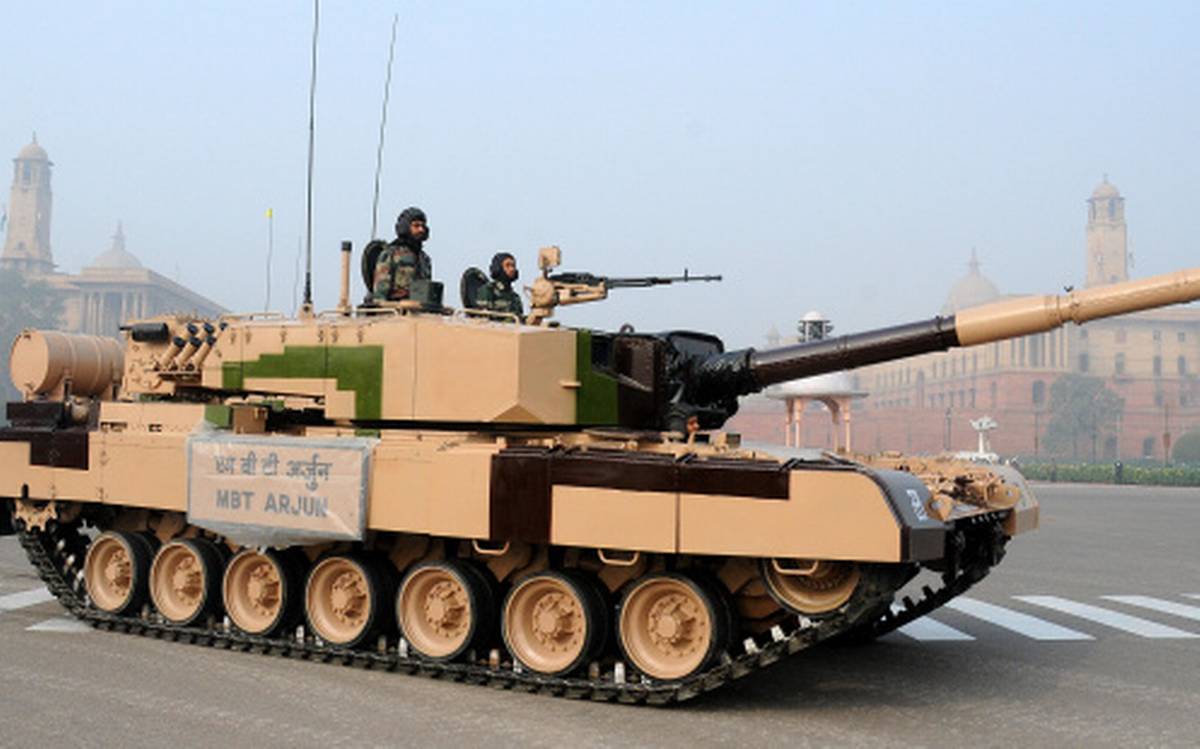
The first of the ordered 124 tanks were delivered by mid-2004 and what the Indians definitely accomplished was arming one full regiment with the Arjun tanks (45 vehicles in total) by 2009. Some sources claim that the whole batch was eventually built while others state only 62 more were produced by 2010. By 2007, the Arjun tanks took place in the Ashwamedha exercise in the Rajasthan desert and it was an absolute shitshow. All the issues that were claimed to be fixed manifested in full, including the reported inaccuracy, suspension problems and the ever-popular overheating. The fun continued in 2008 during another round of exercises where the tanks were so terribly that the Indians were attempting to actually blame the engine issues on sabotage.
Arjun Mk.1
The MTU experts who were presents confirmed that someone tampered with the engines and transmissions, but it was far more likely that any damage was caused by inept maintenance or attempts to “improve” the performance, kind of like when a young adult puts a spoiler wing on his car because “those idiots at the factory have no idea what they are doing.” As it turned out, the Germans did have an idea what they were doing and were pissed. As a direct result, a black box-like device was installed in the engine to record any and all “unauthorized setting changes”.
But the Indian Army had about enough of this mess. The crews hated the tank, the military hated it too and, as a result, a decision was taken in July 2008 not to purchase any more Arjun MBTs. Ever. Another deal with the Russians was signed instead, including some T-90 technology transfer.
This apparently caused some serious political ripples and several “objective comparative trials” were organized in 2010 to prove that the Arjun was “better than the Russian T-90.” How objective have the trials been is anyone’s guess. The reports bear the mark of pro-Arjun bias (for example by calling upon 500 Arjuns to fill the role of first-line assault tanks) even though some issues are still noted, such as the fact that operating 60-ton tanks as a spearhead when no bridges can support them may just not be such a good idea.
But, otherwise, everyone was trying to just make this thing go away. Three years later, by 2013, an internal Indian report stated that most of the Arjuns are not operational due to the lack of spare parts.
There was also the issue what to actually do the legacy of such an incredibly expensive program because 35 years of development with nothing to show for, well, that would just cost a lot of people their careers. And what do you do when you have a giant money sink on your hands? Naturally, you start the development of a Mk.2 version!
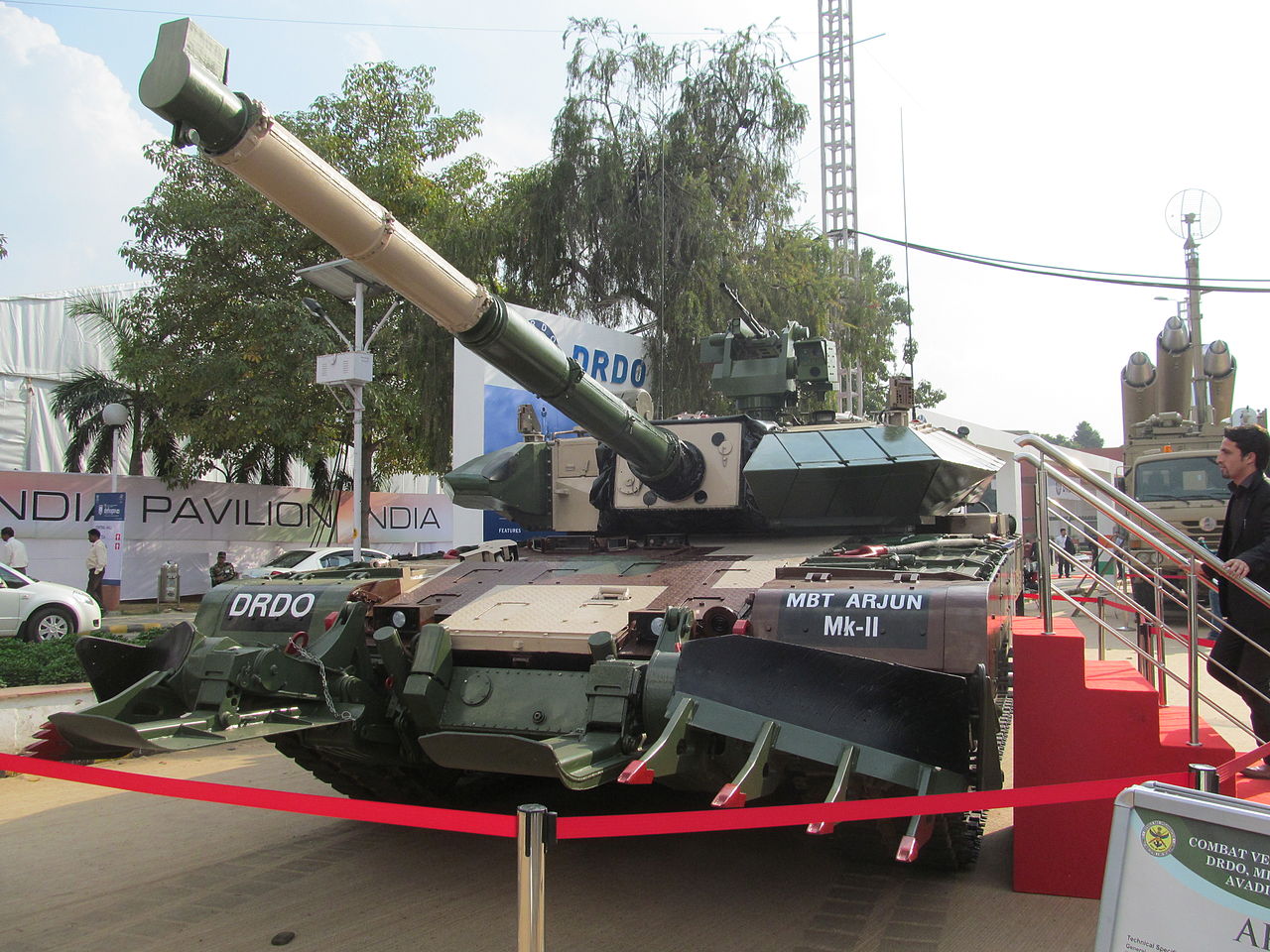
Arjun Mk.2
Fortunately, the Indians were quite sensible here and asked for help. The Arjun Mk.2 was co-developed in cooperation with the Israeli company Elbit and it shows. Around a hundred improvements were made over the original tank and would successfully pass its trials by 2012. You probably won’t hear them say this in public but what actually happened was that the Indians hired the Israelis to rebuild the tank for them and they did that in less than two years.
This version would include:
And that was it. Not much happened since. Another version (Arjun Mk.1A) was also developed and shown to public recently (in 2019), but it’s not really clear whether it’s the same tank or the Mk.1 tank brought up to the Mk.2 standard plus some other minor upgrades (the latter is more likely).
However, it seems that the Arjun is just not finished yet. During a recent interview from January 2020, army chief Manoj Mukund Naravane told the press that Arjun Mk.2 would reach operational status by 2025-2026. It seems the comedy that is the Arjun program is to have yet another act.
What do you think of the article, commanders? Did you like it? Would you like the series to continue? Would you like us to introduce the Arjun, or more like show bobs and Vijayanta? Let us know on our official Discord and, as always:
See you on the battlefield!
Seeing the threat of the Americans arming Pakistan with modern aircraft capable of delivering nuclear weapons (the threat of nuclear Pakistan would later indeed materialize) left India little choice but to turn to the Soviets for military equipment. Additionally, the deal included technology transfers and regular updates thereof.
It is therefore no surprise that the plans to build an indigenous MBT were put on a backburner. Between 1974 and 1982, little progress was made and numerous issues were encountered. The biggest problem during this stage was the armor, the engine and the suspension.
Initially (until 1976 or so), the Indians sought to purchase an existing power pack (a combination of engine and transmission) but this quickly turned out to be a bust, which is why the DRDO (Indian military research agency) tried to develop its own engine and suspension. This turned out to be a disaster.
The thing about engines and armor in real life is – it’s not that hard to copy an existing design, or build armor with a specific layout. The really hard part is to get to know the exact metallurgic processes that give each component its desired properties. This is the real know-how that the Indians failed to adopt, leading to a decade of incorrectly cast engine cylinders, cracked camshafts, bad welding techniques and brittle armor plating. One does not easily copy these manufacturing techniques – even with top of the line industry packed with experts, which the Indians did not have. As a result, the indigenous 1500hp unit was incredibly unreliable.
The attempts to build hydraulic suspension failed as well for the same reason – ironically, torsion bars were rejected because of bad experience with those used on the Vijayanta. Incorrect manufacturing process led to the Vijayanta torsion bars being brittle and breaking every now and then and the military hated that.
But, despite all these issues, the Arjun did not go away. In fact, Krauss-Maffei helped India design it (despite the levels of India’s cooperation with the Soviets), which was why the publically unveiled tank resembled Leopard 2 visually. After all, the Leopard 2 MBT was one of the tanks competing in the late 1970s and early 1980s against the T-72 (the others being the British Chieftain 800 and the French AMX-40). Once again, the Indians preferred a lighter tank so the Leopard 2 was never really a serious contender and, realistically, neither was the Chieftain.
Arjun Mk.1
Of note was the blocky composite armor design called Kanchan, allegedly developed indigenously by the Defence Metallurgical Research Laboratory at Hyderabad (the armor was named after a district in that city). The exact composition of this armor is unknown but numerous sources put it in relation with the famous British Chobham armor. The same sources, however, also claim that the turret is so rectangular because this armor is impossible to be produced angled, which is obviously not the case for Chobham. Given Krauss-Maffei’s involvement in designing the Arjun, it’s quite possible that that the early variant of armor instead resembled internally that of the Leopard 2 MBT.
Several other accounts exist, of course, with the most popular being a list of layers of different hardness steels with ceramic inlays, but such a design would seem to be well beyond the capabilities of the 1980s Indian defense industry.
The early six Arjun prototypes weighed some 50-60 tons, had composite armor and were powered by German 1400hp MTU 838 Ka-501 diesel engines. The engines were paired with another German component, a Renk RK 304S automatic transmission, allowing for very decent maximum speed of 72 km/h (average off-road speed was some 40 km/h). The armament consisted mostly of 120mm indigenous rifled cannon. The gun was manually loaded and used two-piece ammunition. It’s worth noting that, contrary to popular belief, this cannon is not in any way related to the Chieftain or Challenger 120mm cannon and was truly developed indigenously. Why the Indians chose this particular solution instead of adopting a NATO standard 120mm smoothbore is a mystery.
Of special importance were the engines. As you might have noticed, these were not the Leopard 2 engines (MTU 873 Ka-501 producing 1500hp). These MTU engines were based on older technology and were derived from the Leopard 1 series. This made them expensive because, unlike the 873 series, these were developed specifically for the Arjun and were never mass-produced. As such, the cost of each engine reached whopping 55 million rupees (at that time, roughly 1.5 million USD). The Indians were, of course, interested in the newer engines as well, but, allegedly, the introduction of the MTU 873 series would require the redesign of the entire hull. It seems, however, that the Indians managed to drive the price down after all because, according to some sources, they imported no fewer than 42 of these engines between 1983 and 1989 for roughly 15 million USD.
Between April 1984 and 1987, ten prototypes were built in total, of which six (later ones, presumably) were given to the Indian Army for testing while the other four remained with the CVRDE.
The testing unveiled a number of critical issues with the tank, specifically:
- The turret was so poorly designed that, if the driver was driving in an unbuttoned position (which was 99 percent of the time), traversing the turret would make its frontal armor hit his head, leading to serious injury
- It was impossible for the driver to use his escape hatch when the turret was facing forward (this issue was only resolved by redesigning a portion of the turret, which was done so poorly that it resulted in several shell traps)
- The FCS was nowhere near ready (or even fitted on the prototypes)
- Due to poor internal layout, it would take the loader at least 15 seconds to load the gun
- The anti-aircraft machinegun had to be operated by the loader, which meant that in case of an attack that required its use, the main gun would remain inoperable because the gunner would not be able to load it from his position
- Even with the loader fully committed to his task, the tank only had three rounds easy to reach in a ready rack and after spending them, the loading process became even slower (the Indian Army required 12 ready rack rounds but this demand was not met)
- At 60 tons, the tank was far heavier than the army had wanted (40 tons)
- Since it was so heavy, the tracks had to be wider than required by the army in order to maintain its mobility by reducing its ground pressure to acceptable levels, which meant that the tank would not fit on Indian transport trains and could not cross many bridges
- The engines were prone to overheating and their modifications to work in India’s harsh climate rose their unit cost considerably
As you can imagine, addressing core design issues such as these was neither easy nor cheap and by the time at least some were fixed, the cost of the program was 19 times higher than originally intended. What was even worse was the fact that 55 percent of each tank’s cost had to be paid in foreign exchange because 43 percent of all components of this “indigenous” tank were imported. In fact, only the basic hull and turret design were truly indigenous, otherwise:
- Engine and transmission were German
- Fire Control System was German
- Tracks were German (by Diehl)
- Primary gun sights were from the Netherlands
- Hydropneumatic suspension was American
At this point, it was quite clear that this was too little, too late. The design was now roughly 15 years old. What was even worse, India was plagued by internal strife (the 1984 assassination of Prime Minister Indira Gandhi and the massive Bofors scandal threw even the military in disarray) and the 1980s debt crisis caused additional financial problems for the country that would be made even worse by years of drought and the early 1990s oil price spike due to the Gulf War.
Arjun Mk.1
The T-72s had problems too – specifically, the lack of spare parts that could not be indigenously produced from scratch with imports from the struggling Soviet Union erratic at best. The cheapest option at that point was, once again, to attempt to upgrade the Vijayanta tanks.
By 1991, only 12 tanks (effectively hand-crafted prototypes) were built in total and the project was estimated to have cost around 2.8 billion rupees (approximately 116 million USD), of which 1.8 billion was, after an internal audit from 1989, discovered to have been wasted either on faulty components or corruption. Those were costs India could ill-afford.
Starting from 1987, the CVRDE designers were working on correcting the issues, the worst of which were those connected to the engines. Even with expensive modifications, the German engines performed extremely poorly in hot and dry weather of the Rajasthan desert, which was (based on the 1971 experience) considered to be the most likely place of tank battles with Pakistan. The engines would ingest sand and would work poorly with the Renk transmission. It would also overheat and the suspension was a mess by itself with practically every single part failing quality control (it was estimated that for each Arjun, 19 spare nitrogen cylinders would have to be available at any given time).
Additional problems included:
- Increased weight of the tank that severely reduced its mobility
- Unsuitable maintenance equipment
- The 120mm APFSDS round developed it was a failure
- The tank could not hit moving targets thanks to its problematic Fire Control System
- The Fire Control System provided poor readings in high temperatures
- Commander’s scope, MRS and rangefinder were deemed unreliable
Despite these issues, the tank was officially put through another round of trials in 1993 and despite the economic issues India was facing at the time the military proclaimed it wanted to have 1.500 of these tanks battle-ready by 2000. This was obviously not a realistic plan. Internally, everyone likely realized what a mess the Arjun program was, but this region of the world was and is to this day all about saving the face. And so another 3 billion rupees were allocated to it. In the meanwhile, India was locally producing the Russian T-72M1 in large quantities, still operating the Vijayanta and waiting for something better to come along.
The years went by with little progress made. Two prototypes with torsion bar suspension were built at some point between 1996 and 1998, but those fared even worse than the hydraulic suspension ones due to the poor manufacturing quality of the torsion bars.
On January 9, 1996, the Arjun was officially unveiled and cleared for mass-production (citing “excellent” results of domestic tests), which was launched on limited scale at Avadi at 3.3 million USD per vehicle (the order for the first 15 vehicles was placed in August of the same year).
Arjun Mk.1
Once again, a plan was announced to have 2000 Arjun vehicles built after “the successful trials of the pre-production vehicles” (note the same pattern as Russia uses – a grand plan with unrealistic numbers and the “post-trial” condition), replacing all the older T-72s in Indian service. Various military analysts at the time were looking somewhat favorably at the design and it seemed that it would finally, after two decades, begin to mature.
By 1997, at least one Arjun tank appeared in public for the first time during the January 27 Republic Day military parade.
By 1998, 32 pre-production (effectively, once again, hand-crafted) Arjun MBTs were built in total. This number does not include 12 initial prototypes or the Arjun Mk.2. The issues with the engine were never completely resolved (despite claims otherwise), nor was it possible to mass-produce it locally (MTU claimed in 2001 to have an exclusive contract for its manufacture). At the same time, the defense budget was shrinking and it was estimated that no serious production would take place until 2002 or even 2004. Ironically, by August 1998, the project also lost a number of key researchers and developers to the foreign private sector. In the meanwhile, India quietly started ordering hundreds of T-90S tanks from Russia.
By 1999, despite the planned acquisition of the Russian T-90 tanks, 425 million USD were allocated once again to the Arjun program in order to build 124 (some sources claim 125) tanks in the Heavy Vehicle Factory in Avadi by 2003. However, at this point, the cancellation of the entire Arjun program was discussed very vocally – with the modernization of the Indian T-72 series and the T-90 production, it was believed that India could simply not afford to support yet another MBT.
At this point, the whole program was turning into a farce and various sources state various things. What can effectively be surmised is this:
The first of the ordered 124 tanks were delivered by mid-2004 and what the Indians definitely accomplished was arming one full regiment with the Arjun tanks (45 vehicles in total) by 2009. Some sources claim that the whole batch was eventually built while others state only 62 more were produced by 2010. By 2007, the Arjun tanks took place in the Ashwamedha exercise in the Rajasthan desert and it was an absolute shitshow. All the issues that were claimed to be fixed manifested in full, including the reported inaccuracy, suspension problems and the ever-popular overheating. The fun continued in 2008 during another round of exercises where the tanks were so terribly that the Indians were attempting to actually blame the engine issues on sabotage.
Arjun Mk.1
The MTU experts who were presents confirmed that someone tampered with the engines and transmissions, but it was far more likely that any damage was caused by inept maintenance or attempts to “improve” the performance, kind of like when a young adult puts a spoiler wing on his car because “those idiots at the factory have no idea what they are doing.” As it turned out, the Germans did have an idea what they were doing and were pissed. As a direct result, a black box-like device was installed in the engine to record any and all “unauthorized setting changes”.
But the Indian Army had about enough of this mess. The crews hated the tank, the military hated it too and, as a result, a decision was taken in July 2008 not to purchase any more Arjun MBTs. Ever. Another deal with the Russians was signed instead, including some T-90 technology transfer.
This apparently caused some serious political ripples and several “objective comparative trials” were organized in 2010 to prove that the Arjun was “better than the Russian T-90.” How objective have the trials been is anyone’s guess. The reports bear the mark of pro-Arjun bias (for example by calling upon 500 Arjuns to fill the role of first-line assault tanks) even though some issues are still noted, such as the fact that operating 60-ton tanks as a spearhead when no bridges can support them may just not be such a good idea.
But, otherwise, everyone was trying to just make this thing go away. Three years later, by 2013, an internal Indian report stated that most of the Arjuns are not operational due to the lack of spare parts.
There was also the issue what to actually do the legacy of such an incredibly expensive program because 35 years of development with nothing to show for, well, that would just cost a lot of people their careers. And what do you do when you have a giant money sink on your hands? Naturally, you start the development of a Mk.2 version!
Arjun Mk.2
Fortunately, the Indians were quite sensible here and asked for help. The Arjun Mk.2 was co-developed in cooperation with the Israeli company Elbit and it shows. Around a hundred improvements were made over the original tank and would successfully pass its trials by 2012. You probably won’t hear them say this in public but what actually happened was that the Indians hired the Israelis to rebuild the tank for them and they did that in less than two years.
This version would include:
- Improved Kanchan armor
- Improved suspension (including final drive, tracks and sprockets)
- Improved Fire Control System and other devices
- Better ammunition for the main gun
- Safer ammunition racks
- Soft-kill APS (albeit an ad-hoc one, basically a LWR connected to smoke grenade launchers)
- Lower weight (reduced from 60 tons to 55 tons)
And that was it. Not much happened since. Another version (Arjun Mk.1A) was also developed and shown to public recently (in 2019), but it’s not really clear whether it’s the same tank or the Mk.1 tank brought up to the Mk.2 standard plus some other minor upgrades (the latter is more likely).
However, it seems that the Arjun is just not finished yet. During a recent interview from January 2020, army chief Manoj Mukund Naravane told the press that Arjun Mk.2 would reach operational status by 2025-2026. It seems the comedy that is the Arjun program is to have yet another act.
What do you think of the article, commanders? Did you like it? Would you like the series to continue? Would you like us to introduce the Arjun, or more like show bobs and Vijayanta? Let us know on our official Discord and, as always:
See you on the battlefield!