1. Armored Warfare
  2. News

Armored Warfare News

Maintenance - July 2

On the 2nd of July 2020, starting from 8:00 CEST (1st of July, 11 PM PDT), the server will not be available for 5 hours due to the application of Update 0.32.7122


[h2]List of Update 0.32.7122 Changes[/h2]

Battle UI Indicator Fixes

Based on your feedback, we’re introducing a number of adjustments to the recently added overhauled UI indicators, as we promised we would. Specifically:
  • Fixed an issue where vehicle indicator could appear on incorrect places
  • Added new font size options (small and very small)
  • Reduced the indicator font boldness
  • It’s now possible (via a new setting in the Settings panel) to change the color of your or the enemy team’s vehicle indicators in the game
  • Dead AI opponents no longer appear with indicators
  • It’s now possible to switch the health indicator between percentage and actual hitpoints
  • Flyaway hitpoints logic was changed a bit so they don’t merge so much, allowing players to better identify damage from autocannons
  • Many tiny changes to the appearance of these indicators
AI Opponent Aiming Changes

In accordance with the previously released article, we are introducing the following changes:
  • AI ATGMs are now considerably less accurate
  • Changed the AI aiming system in accordance with the article linked above and optimized its performance
  • AI opponents now target unmanned turrets less often
  • Fixed an issue where the AI opponents did not use their Ready Racks correctly
  • Fixed an issue where some AI opponents would not use ATGMs
Global Operations Air Raid Changes

Changed the number of possible Air Raid wildcard spawn points in the Global Operations mode as such:
  • Ghost Field: Reduced by 25%
  • Roughneck: Reduced by 40% along with a small reduction of AC-130 spawns
  • Panama: Reduced by 20%
  • Grindelwald: Reduced by 50%
  • Narrows, Desert Crossing and Barren Divide: no changes
General Changes
  • Mechanized Infantry is now invulnerable for a short period of time after deployment
  • Mechanized Infantry active ability description tooltip now has its characteristics in it (shell type, damage dealt, view range, camouflage and the number of troops in the squad)
  • Fixed an issue where infantry would not deploy properly upon respawn
  • Challenger 2: Armor Inspector model now correctly shows hits that would kill the loader
  • PL-01: Fixed an issue where this vehicle’s ADAPTIV module would not always provide the intended camouflage amount
  • Fixed an issue where the damage dealt to various objects such as pillboxes would show in your UI as blocked damage
  • Fixed an issue where changing the camouflage environment type (for example, from Desert to Woodland) would not lead to the change of the vehicle’s appearance correctly
  • Fixed the mortar crew firing animation
  • Fixed the double flag issue for the following vehicles: XM247, M50 Ontos and WPB Anders
  • Fixed an issue where the doors of an IFV would not close if the Mechanized Infantry deployment was unsuccessful
  • Fixed some issues that led to game crashes
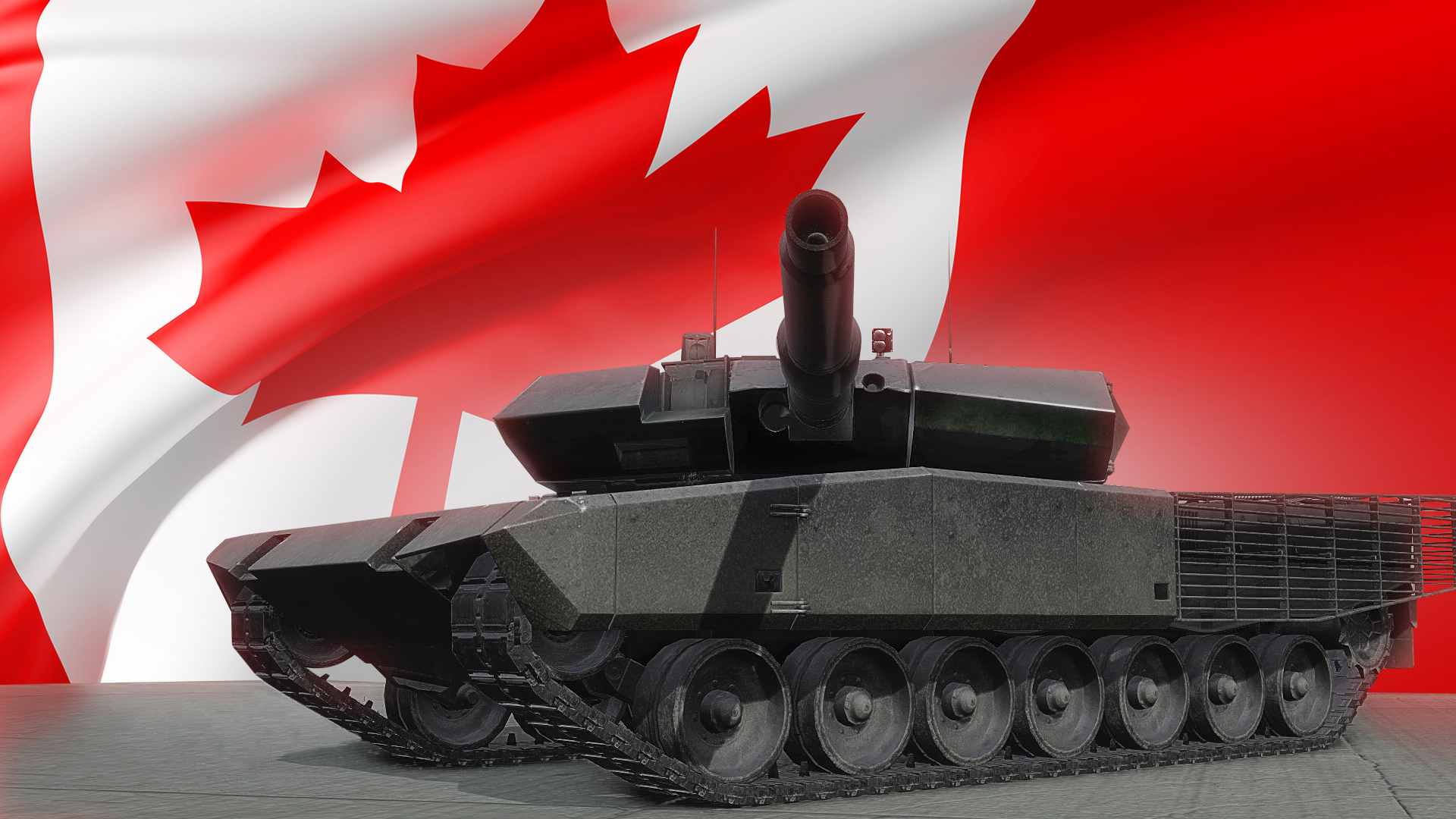
Celebrating Canada Day

Commanders!

Today, we are celebrating Canada Day, which marks the unification of the three separate colonies of Canada, Nova Scotia and New Brunswick into modern-day Canada.


For the occasion, we've prepared 20% bonus to Crew Experience income for the following 24 hours as well as the opportunity to obtain Canadian historical camouflages.


[h2]Canadian Camouflages[/h2]


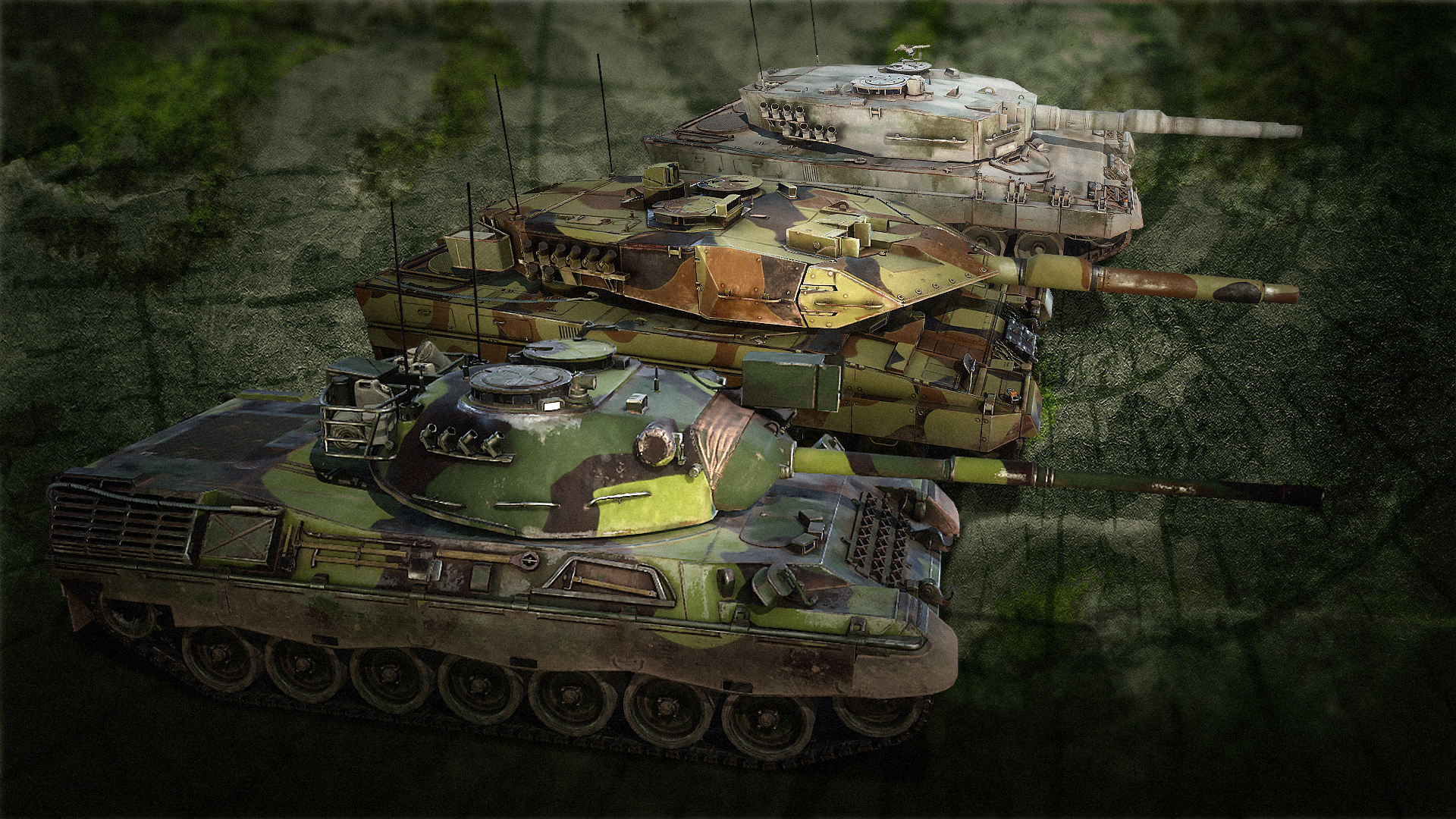
We’ve prepared three historical Canadian camouflages for you that are based on real life patterns. You can read more about them in our dedicated article.


Please note that each of these camouflages can be installed on any vehicle that has the camouflage customization feature available (any vehicle with the exception of vehicles with permanent skins) and that each of these camouflages can be used in all three environments.


[h2]Wartime Canada[/h2]


While often overshadowed in historical publications by its southern neighbor, the military history of Canada is by no means less proud. During the two seminal conflicts of the twentieth century – the First and Second World Wars – Canada lost over a hundred thousand soldiers with many more wounded and also participated in fighting on all major fronts.

Perhaps the most famous action on the European front that involved Canadian troops was the ill-fated Dieppe raid, during which the relatively inexperienced Canadians from the 2nd Canadian Division fought a heroic battle against the Nazi occupants of France, suffering over a thousand casualties.

While the exploits of Canadian troops during the major conflict are well-known, the same cannot be said of indigenous Canadian armor development. Two tanks were developed in Canada during the Second World War, both based on American designs. Before the war, Canada had been largely dependent on British arms and many of its weapons were either imported or modified British designs. This trend continued well into the wartime years – for example the Valentine Mk.VI variant of the famous British infantry tank by Vickers was built exclusively in Canada.


However, with the destruction of the United Kingdom's armored forces in France, Britain was busy rebuilding and was in no position to supply Canada with weapons – in fact, they asked Canada for help in this and Canada obliged. That left them with a gap that needed to be filled.

Modern armor in the early Second World War was hard to come by and with Britain busy fighting for its life, the Canadians had to turn to the United States to provide them with – amongst other things – armored vehicles. They were not very happy with the M3 Medium (known as Grant or Lee) and opted for the development of a medium (or, rather, cruiser) tank of their own.

The result was the vehicle known as Tank, Cruiser, Ram. With over 2000 built, it never fired a shot in anger, but it was extensively used as a training vehicle for Commonwealth troops and some even made it to Britain (although they were never deployed to Europe). While it wasn't the best tank of its class, it represented a solid example of Canadian ingenuity. Another successful Canadian vehicle, the Sexton SPG, was built on the Ram chassis.


There was also the Grizzly, a modified M4A1 Sherman produced in Canada. The reason for this Canadian Sherman production batch was mostly the fear of the United States not being able to produce enough Shermans for their allies as well as themselves. However, once the American war machine picked up steam and thousands of Shermans started rolling from the assembly lines, the need for local Canadian production of the Sherman passed and only two hundred or so Grizzlies were produced. With so few built, the Grizzly didn't have a significant impact on the war effort, but it spawned two interesting designs:
  • Sexton Mk.II (25pdr SPG based on the Grizzly chassis)
  • Skink (quad 20mm AA tank, absolutely murderous when used against infantry)

After the war, a number of remaining Grizzlies was sold to Portugal, where they served until the 1980s.

Canadian forces were very active, especially during the later stages of the war – the Italian and Normandy campaign. There were many exceptional soldiers amongst the Canadians deployed during the Second World War, but one name warrants a mention - Sydney Valpy Radley-Walters. Radley-Walters was a Canadian tanker, who claimed 18 tank kills during his wartime service, making him one of the most successful allied tankers of the Second World War.


[h2]Post-War Armor[/h2]


With the war over, Canada found itself in a rather strange situation. The Canadian vehicles manufactured during the war were mostly left in Europe (which was cheaper than shipping them back overseas) and the forces back home were re-armed by mostly American equipment (including several hundred 76mm M4A2 Sherman tanks).

In the post-war world, separated into two sides by the Iron Curtain, it was clear that the Shermans were quickly becoming obsolete. The Korean War was instrumental in this realization. A replacement had to be found and the Canadians – instead of adopting the American Patton tanks – once again reached out to the British and opted for the Centurion tank.


This decision did not come out of the blue. The obsolescence of the Sherman, as demonstrated by the Korean War, was obvious, but the American Patton tank was not deemed suitable. For one, it didn't fare all that well in Korea, suffering from rushed production that caused a number of teething problems. Secondly, there were doubts about the production capacity of the tank itself. And finally, the Centurion proved itself well in combat.

The first Centurions (Mk.3 variant) were delivered to Canada in 1952 and through a number of upgrades, the Centurion survived in Canadian service until 1979 (they were officially phased out by 1977, but a few were kept as training vehicles for a while after that). The Centurions were well-liked by the Canadians and were considered effective fighting vehicles, but, by the late 1970s, a replacement was needed.


[h2]The Leopard 1 Era[/h2]


Once again, several options were on the table and the Canadians chose a modified German Leopard 1A3 (fitted with a different fire control system). The Leopard 1A3 had a new, sturdier turret, compared to the earlier Leopard 1s, and was quite a formidable vehicle, but, as usual, the reasons behind this decision were (at least partially) political. For one, Canada was trying to gain better access to the west-European market via a treaty and a massive contract for the new Canadian MBT was a useful tool.

Secondly, there was a general reluctance to being bound to the US military industry. In addition, Patton tanks did not fare very well in the 1973 Yom Kippur War, something few potential buyers failed to notice. The vulnerability of these vehicles to Soviet-supplied ATGMs and a tendency to easily catch fire when hit from a frontal angle (caused by flammable hydraulic fluid) resulted in high casualties amongst Israeli tankers and while these issues were eventually fixed, the impact had been made.


Canada ordered 127 of the vehicles (designated Leopard C1) in 1979. Most of them were actually stationed in Europe, where they remained until the withdrawal from Germany. By the 1990s, the Leopard C1 was somewhat obsolete, leading to the eventual upgrade of the C1s to the C2 standard (a total of 66 vehicles were upgraded to C2). This basically included replacing the turret with the more modern Leopard 1A5 variant, additional armor and improved FCS.

Several Canadian Leopard 1s were also improved with the MEXAS (Modular Expandable Armor System) armor kit, developed in the 1990s by IBD Deisenroth (the same German company responsible for the ESPACE kit), creating the Leopard C1 MEXAS variant. Leopard C1s served during the peacekeeping missions in Kosovo and Bosnia, while the MEXAS-uparmored Leopard C2s were sent to Afghanistan.


[h2]Leopard 2 and Beyond[/h2]


By 2006 (the initial deployment to Afghanistan), the Leopard 1 design had been in Canadian service for nearly three decades and it was once again starting to show. Despite the improved protection levels of the C2, the vehicle was not very suitable for urban combat and a replacement was deemed necessary once again.

The German Leopard 2 tanks were the obvious first choice. There were several reasons for this. For one, ties between the Canadian military and the German manufacturers were now well-established with Krauss-Maffei (from 1999 Krauss-Maffei Wegmann) being responsible for the previous Canadian Leopard upgrades. The German Leopard 2s were also quite readily available, affordable and came with full support. They were also not inherently downgraded (something the Americans did and continue doing with Abrams export variants).


Initially, the Germans loaned 20 Leopard 2A6M tanks to Canadian forces in Afghanistan. The 2A6M variant was a 2A6 (120mm L/55) with improved anti-mine protection that consisted of thick armor plate protecting the bottom of the tank as well as some internal adjustments.

The Canadians – happy with the Leopard 2s – eventually decided to purchase a number of these vehicles from the Netherlands. These were Leopard 2A4s, upgraded to 2A4M CAN. Much like the 2A6M, the 2A4M variant features improved anti-mine protection, an essential upgrade for asymmetric warfare. Canada decided to keep the German Leopard 2A6Ms in its stock as well.

Canada is currently operating approximately 80 Leopard 2s and the 66 remaining Leopard C2s. While there are no official plans to replace the C2s just yet, they are generally considered obsolete and are unlikely to be deployed anywhere ever again.

New Loot Crates Now Available

Commanders!

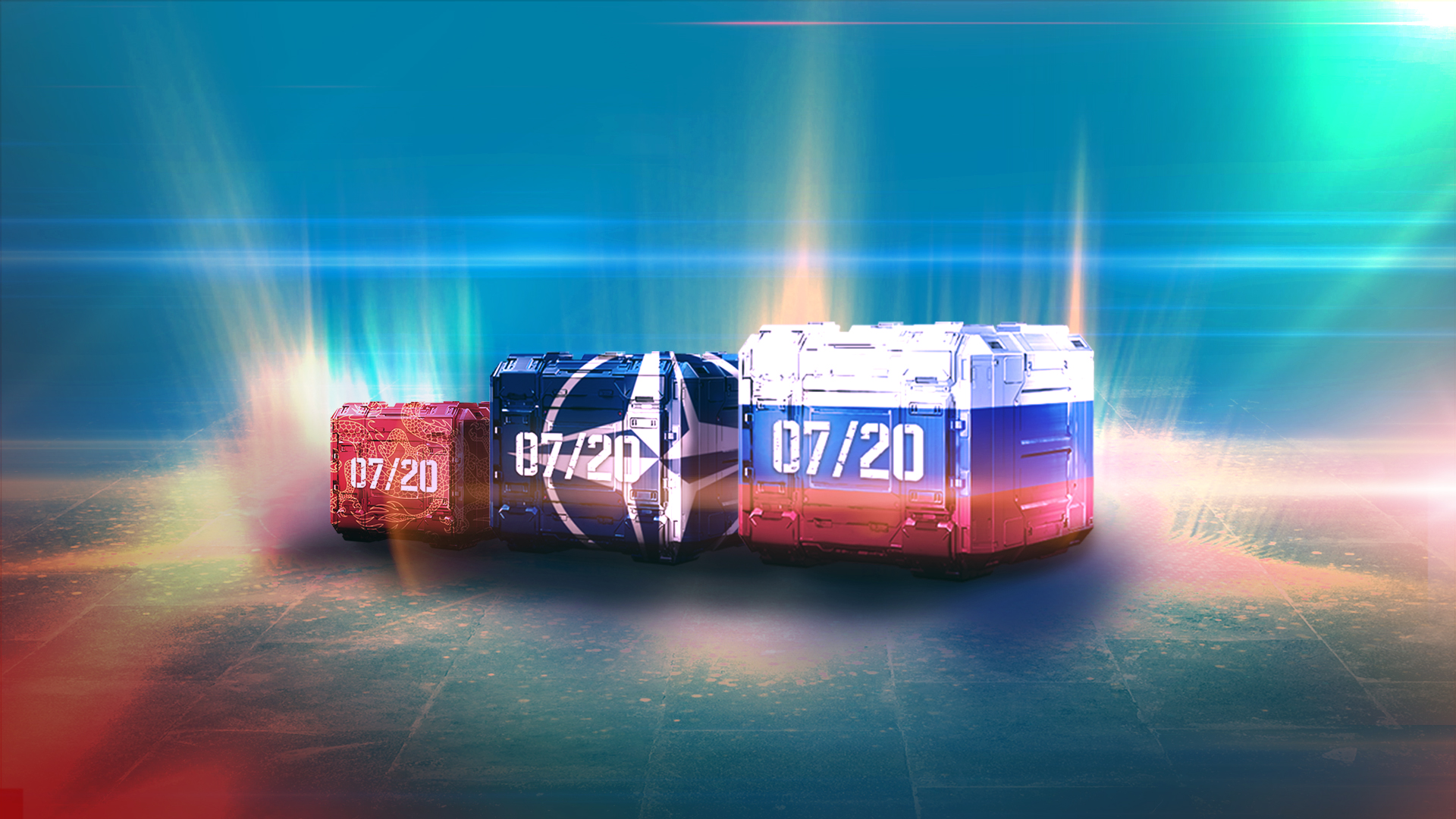
This month, we’re launching another series of special Loot Crates in MY.GAMES Market that offer you a chance to win some of the most coveted vehicles in the game.


These crates are:
  • Asian-themed (with Battle Coins, AFT-10, VT-5, K21, Type 90, WZ-1224, camouflages and other goodies)
  • Eastern-themed (with Battle Coins, Object 490, T-72B3, BMPT Mod.2000, Object 187, Object 279, camouflages and other goodies)
  • Western-themed (with Battle Coins, Altay, Leclerc T40, Leopard Revolution, Marder 2, Chieftain Mk.11, American camouflages and other goodies)

The mechanics are very simple. Each crate allows you to win one of the listed items (or its value in Gold if you have it already). To learn more about what's in a chest simply click on it, this will launch a small pop up window to show you what’s inside. You will find everything from in-game currency packs to consumables and exclusive skins that can only be found in these chests!

Please note:

After opening the crate, you will immediately roll on one of the items that are inside this Loot Crate and will see what you receive before you have to actually pay anything. No more random chances – you immediately see what you get and what you don’t. You can then opt to purchase the item you rolled on for the Loot Crate’s price. Until you do so, you will be unable to buy any other Loot Crate of the same type.


We hope that you will enjoy the offer and, as always:

See you on the battlefield!

Historical Camouflages - USA and France

Commanders!

Today, we’d like to tell you more about two camouflages that will become available for free in July.

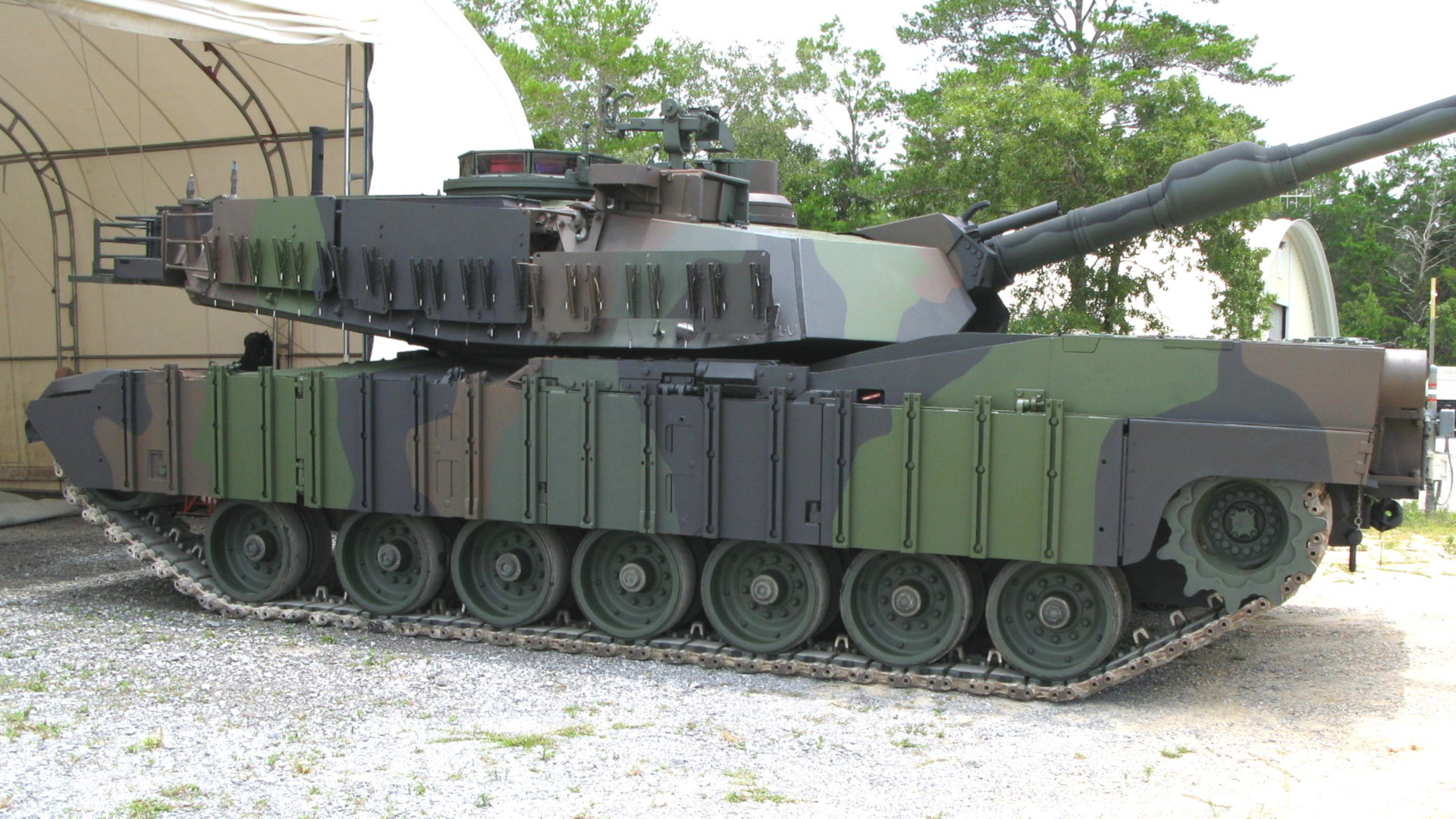
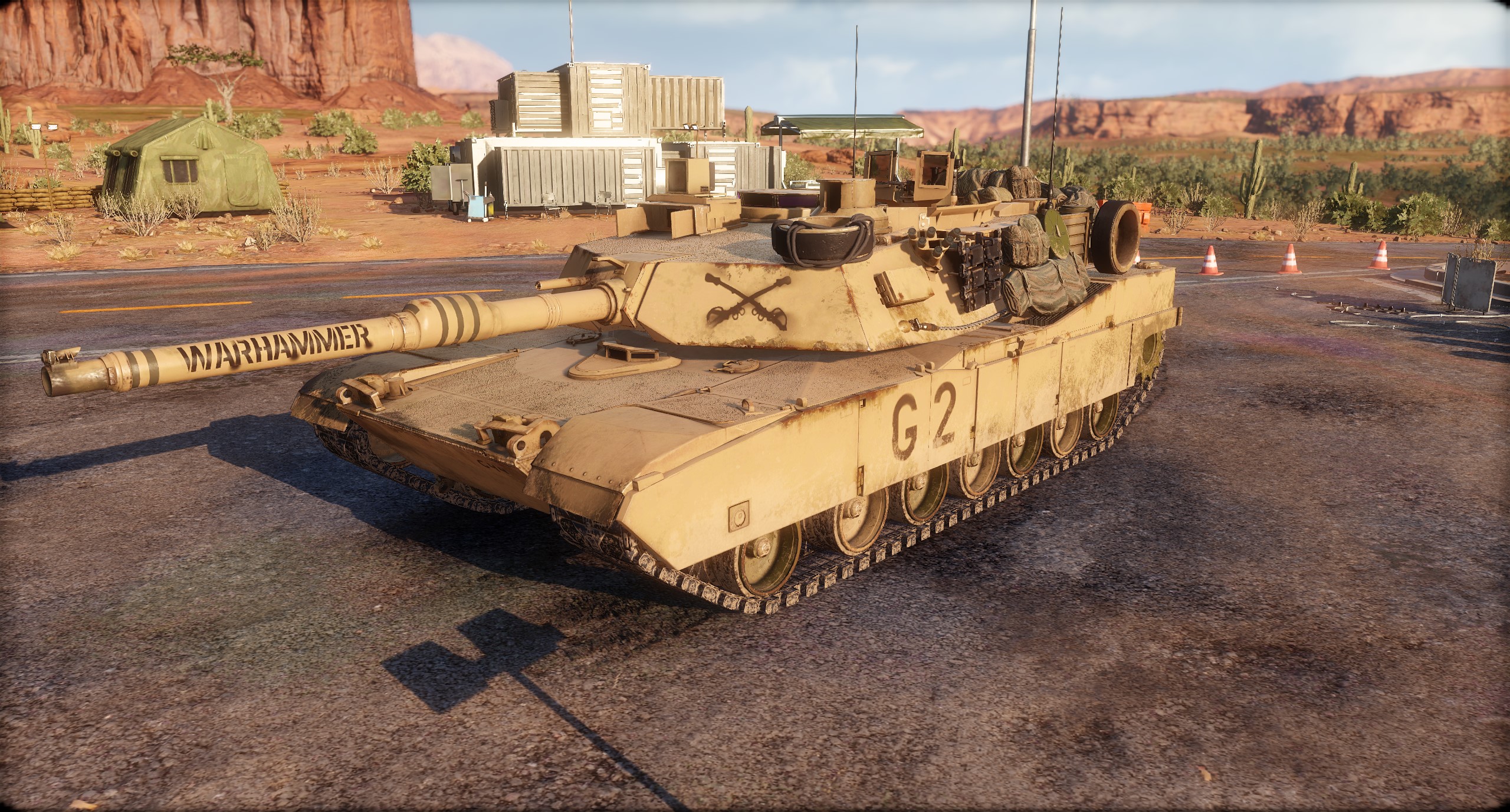
The first one is a brand-new American camouflage called TALON.

A little bit of history first. As you already know, the U.S. Army used a pattern series called MERDC up until the mid-1980s. By 1984, the MERDC set was replaced by a unified NATO camouflage, which was used by the Germans, the French and other members of the NATO. This camo pattern is also referred to as CARC (Chemical Agent Resistant Coating) and consists of brown, green and black stripes. We have it in the game as well by the way, in two variants – French and German (the French used somewhat lighter brown on some occasions).


This is, for all intents and purposes, the NATO camouflage that is used to this day. It was also adopted by newer NATO members such as Poland and the Czech Republic and is easily convertible into a winter pattern by painting wide white stripes over it using a washable paint. Naturally, since the early 2000s (and especially the Iraq war), the need to camouflage vehicles for European conditions was overshadowed by multiple desert environment conflicts, so the American vehicles we typically see these days use a single CARC color called Desert Tan (this is an older color that was used during the Desert Storm operation) a later CARC color called Middle Stone (or Sand), which was in wide use during the Iraq War.


However, with the end of the War on Terror and the American re-focus towards more conventional battlefields (including the European theater of war), the colors green and brown came, once again, into fashion.

Enter the TALON. This new camouflage is essentially similar to the NATO pattern, but, in its forest configuration, has one extra color (lighter green). The pattern itself isn’t really revolutionary though. The real trick behind the TALON coating is that:
  • It’s 75 percent cheaper per gallon than its predecessor
  • Does not contain potentially harmful substances
  • It can therefore be applied even in ad hoc conditions

The TALON camouflage is a part of the Ground Vehicle Coating System program from 2018 to develop a new generation of military coatings (not just for armor) and was first reported on around March 2019 with the initial testing taking place in Florida. Some sources also claim it helps mask the IR signature of a ground vehicle. It was shown on various Abrams tanks (including the M1A2C model, presented to Donald Trump in the Abrams Lima factory) and on the Bradley Fighting Vehicle. The plans are to start converting existing vehicles (especially the Abrams tanks and Strykers) to the TALON pattern and have the first fully converted units available by 2021.


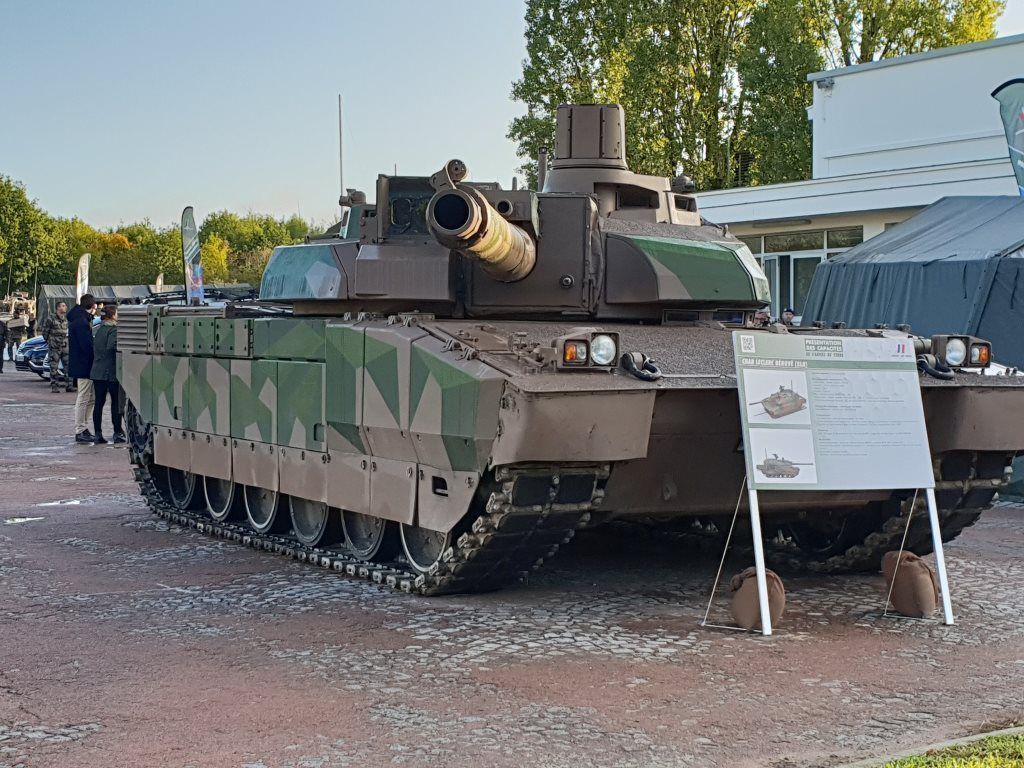
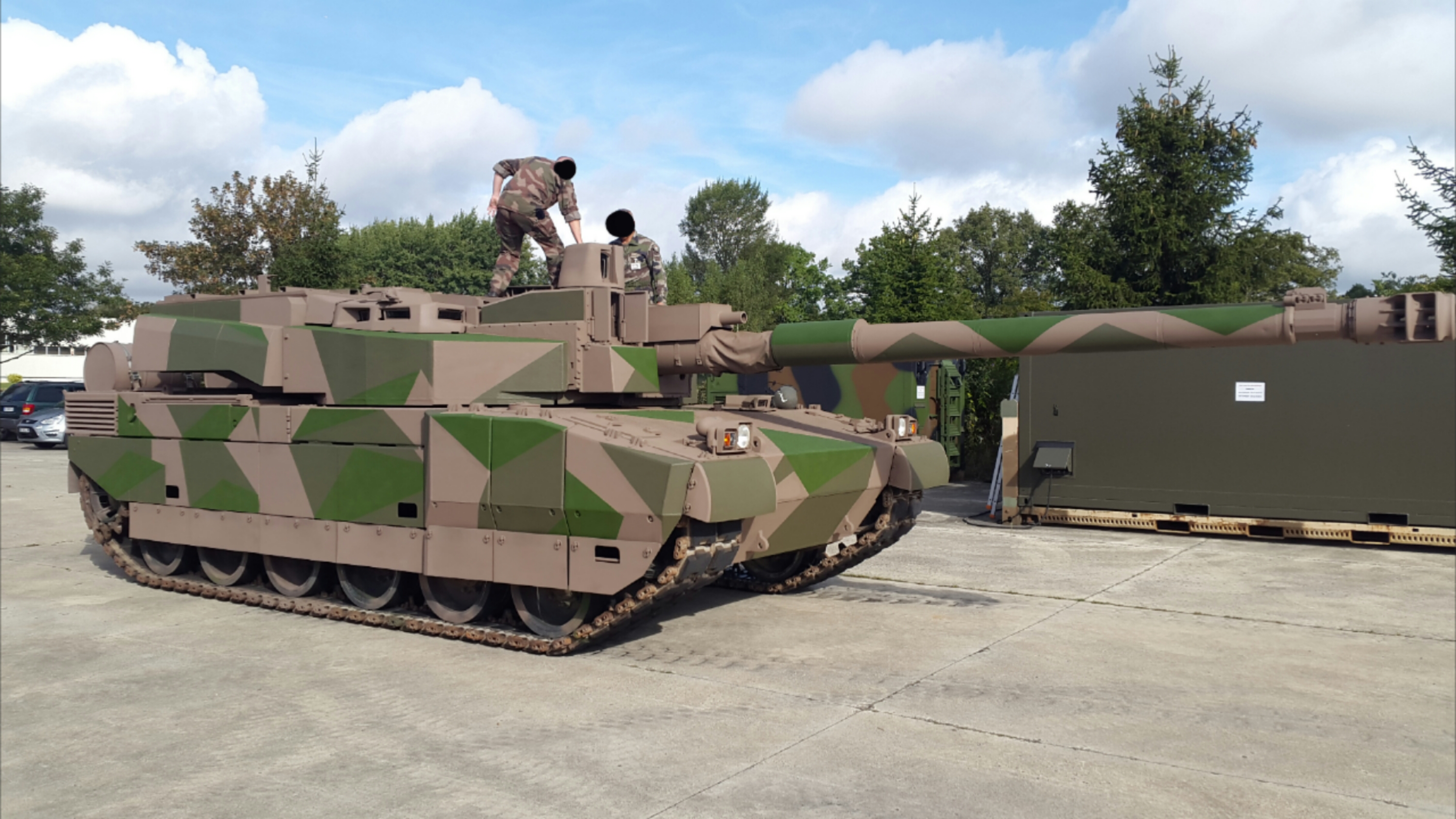
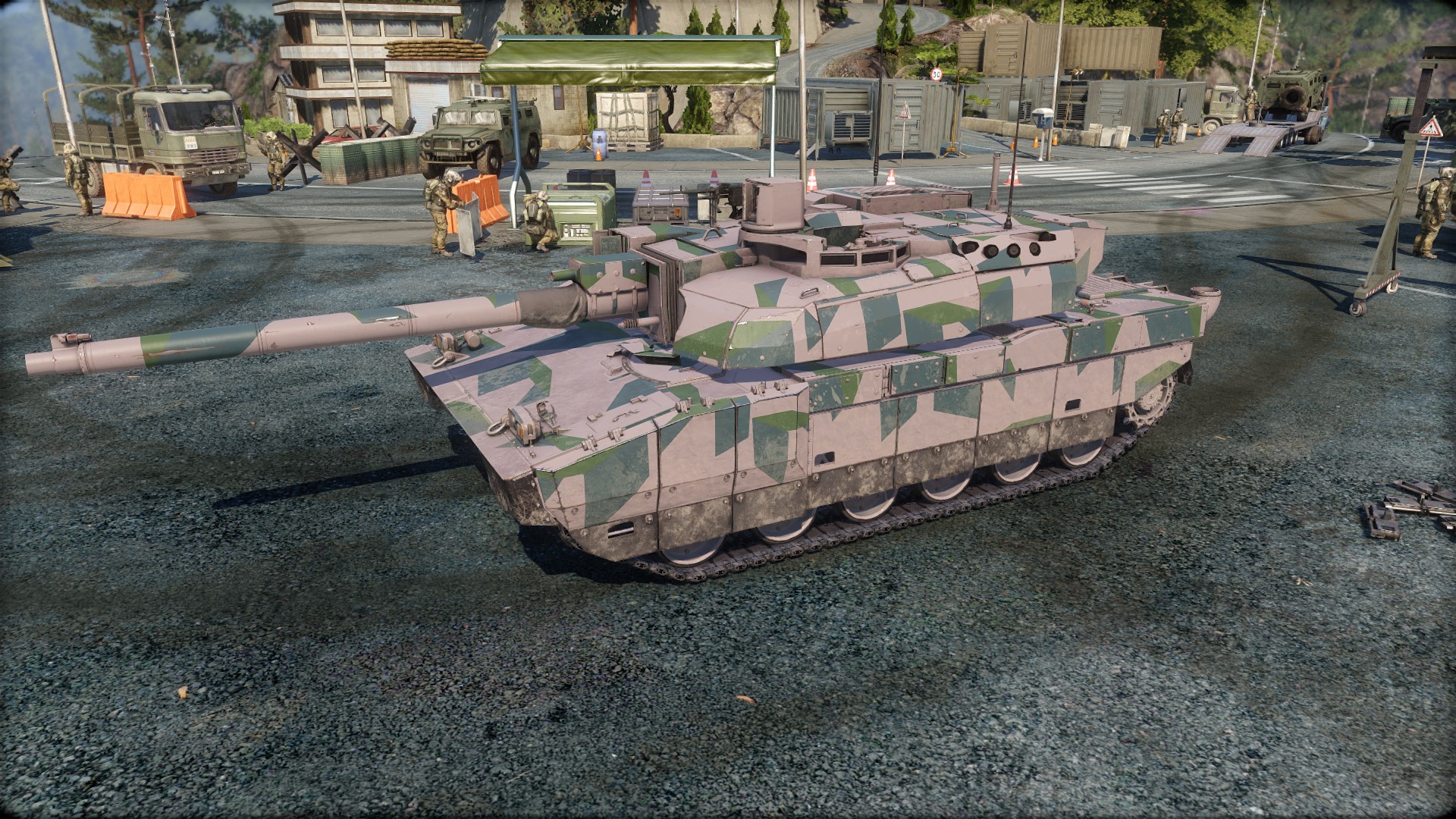
The second camouflage is also relatively-new. It doesn’t have an official name, but we call it Scorpion.


It started appearing on various vehicles of the French Scorpion program, most notably the Leclerc Rénové MBT (also known as Leclerc XLR). The camouflage was actually named Scorpion by a journalist writing about the Leclerc T4 prototype, so the designation is likely not official.


This pattern consists of sharp-edged dark green and light green shapes on light brown background. There were several iterations with an early one appearing in 2015 or so on the leaked Leclerc T4 photos.

With that being said, the history of the pattern is unclear as it seems to be still somewhat experimental. The early pattern was rather simple with the later images showing the distinctive shapes that we tried to emulate, but more variants appeared on multiple vehicles shown to public.


In October 2019, a plan was unveiled to start using this type of camouflage to re-paint over 10 thousand French combat vehicles, following the 33-year use of the standard NATO camouflage. According to some French army officials, this camouflage creates a 3D illusion that makes even a tank very hard to spot at 1000 meters or longer and the AI shape recognition time (an ever more important element of modern fire control systems) increased from roughly 8 seconds to more than a minute. Desert variants were allegedly developed as well, although these have not been unveiled to this day.


It’s worth noting that due to the technical limitations of the Armored Warfare camouflage system, we weren’t able to replicate this pattern perfectly and it looks a bit different from the more recent versions. Simply take “our” Scorpion pattern as one of its iterations.

These camouflages will be usable on all vehicles and for all environments. We do hope you’ll enjoy them and, as always:

See you on the battlefield