1. Armored Warfare
  2. News

Armored Warfare News

Server Maintenance

On the 16th of February 2023, starting from 8:00 CET, the server will not be available for 5 hours due to a planned server maintenance.


Please note that the maintenance can be extended beyond the abovementioned timeframe. We apologize for the inconvenience.

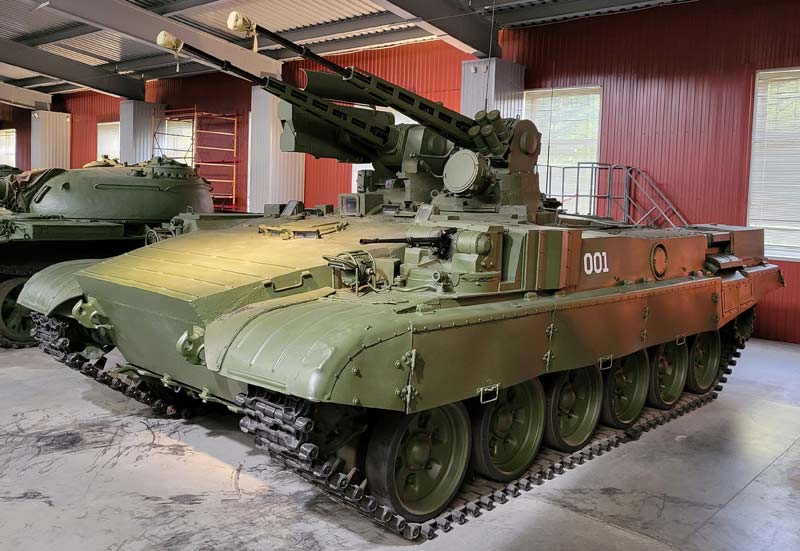
In Development: TOS-1M Buratino

Commanders!

Yes, that’s a playable TOS and yes, it’s the top prize of the Eclipse Battle Path. Now that we hopefully have your attention, let’s talk a bit about the vehicle series and where that 30mm gun on it came from because that’s no ordinary rocket launcher. Without further ado, here’s the history of TOS-1M Buratino.
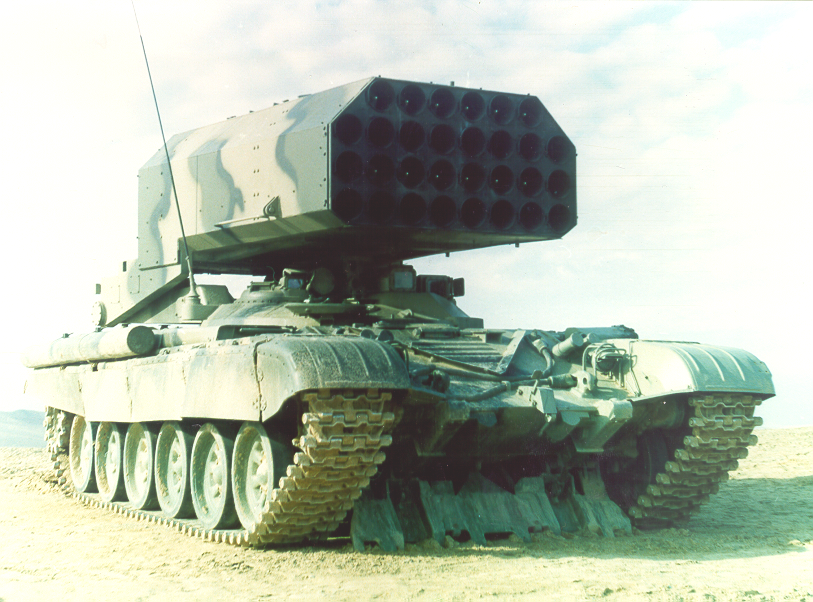


Let’s start with the name TOS, which stands for “heavy flamethrower system” in Russian. This is due to the fact that the Russians consider thermobaric launchers and weaponry in general to be an evolution of flamethrowers much like the Shmel hand-held thermobaric rocket launcher that was developed during the war in Afghanistan.

The history behind the TOS series goes further back though, all the way to the late 1960s. In 1969, V.K. Pikalov became the commander of Soviet chemical troops and what he really wanted was to have a flamethrower artillery system amongst his arms. In the early 1970s, he visited the Tula design bureau responsible for the development of the famous Grad rocket launcher and ordered the development of such a system.

The initial project was ready in the August of 1972 and consisted of a T-72-based rocket launcher with a three-kilometer range, an ammunition truck and new incendiary unguided rockets. The next few years were spent developing incendiary rocket mixtures until the design was more or less realistic and was approved for further, more detailed development in 1976. That’s where the name “Buratino” appeared first – it was a designation for the entire project. The word itself comes from a popular Russian children tale by L.N. Tolstoy, in which Buratino is a wooden boy – essentially a re-telling of the Pinocchio tale. Some sources claim the name was chosen because the protruding rocket fuse resembled Buratino’s nose.
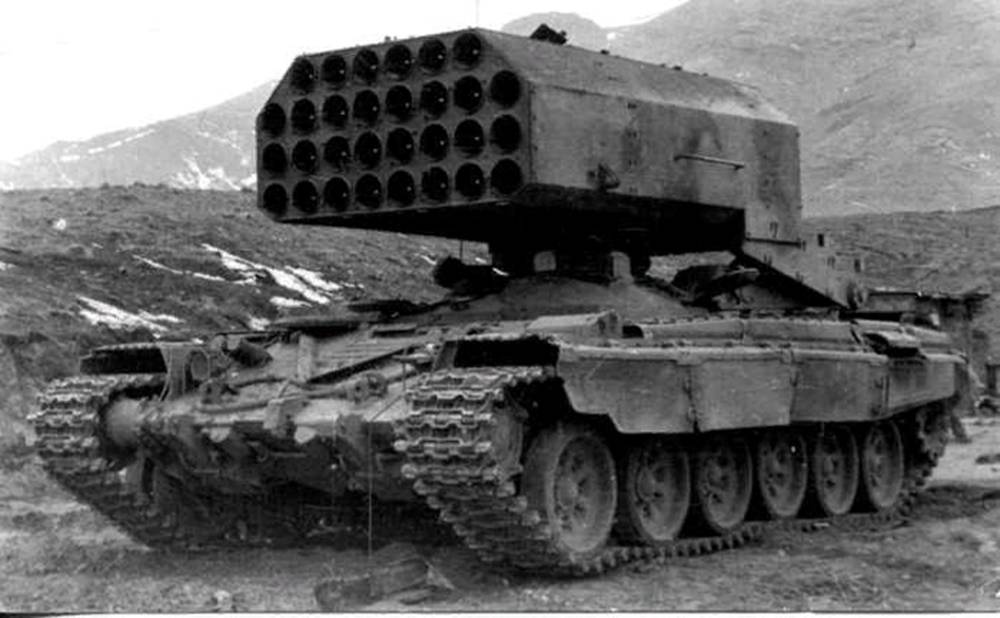


The first two prototypes appeared in 1978 and 1979. These were T-72-based and were built in Omsk. The vehicle passed its trials successfully but wasn’t accepted in service due to its insufficient firepower. The development of a new rocket explosives was therefore launched, resulting in new, thermobaric warheads.

A few words about thermobarics. Unlike a conventional bomb that uses solid explosives with an oxidizer, a thermobaric bomb is filled with fuel that it spreads and ignites in the form of a cloud of aerosol. In other words, the explosion is oxidized by the air, not by a separate oxidizer. Its burning cloud along with pressure changes caused by the explosions deal tremendous damage to any unprotected target, causing severe burns and organ ruptures at considerable distances. This type of weapon is incredibly effective against structures such as buildings, bunkers, trenches and caves, hence its use in Afghanistan (by both the Soviets and the Americans two decades later). However, this weapon type also has significant downsides as it cannot be used in poor weather, high altitudes, under water and the blast wave doesn’t do much against hardened targets such as sealed bunkers.
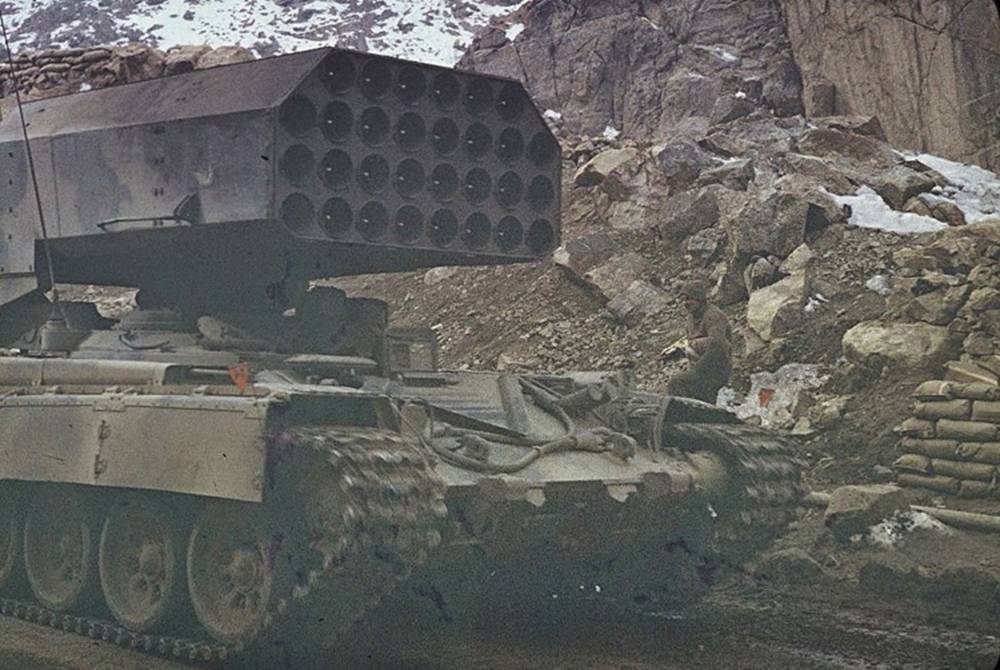


Back to our short history part. The year was 1988 and the war in Afghanistan was not going well for the Soviets. While it could not turn the tides of war in Soviet favor, the performance of the two prototype Buratino rocket launchers in Afghanistan was highly successful. It quickly became possibly the most feared Soviet weapon system due to the fact that its 220mm thermobaric rockets were utterly and completely devastating. The Buratino was a relic of the times when the urban fighting success wasn’t measured by rooms cleared but by city blocks leveled.

The Buratino was officially accepted in service in 1995, although it wasn’t until 1999 when it was first officially shown in public during the Second Chechen War. It’s worth noting that it isn’t the artillery branch that’s operating the TOS vehicles – these systems are operated by Russia’s chemical (NBC protection) troops, likely a throwback to how the entire program started.

Two years later, in 2001, a more famous version of the Buratino appeared – this was the TOS-1A Solntsepyok ("sun’s scorch”). Unlike the Buratino, the TOS-1A was officially accepted in service (in 2003), built in significant numbers and was exported as well. But the TOS-1A is a different machine – let us get back to the Buratino and the Soviet experience in its use.
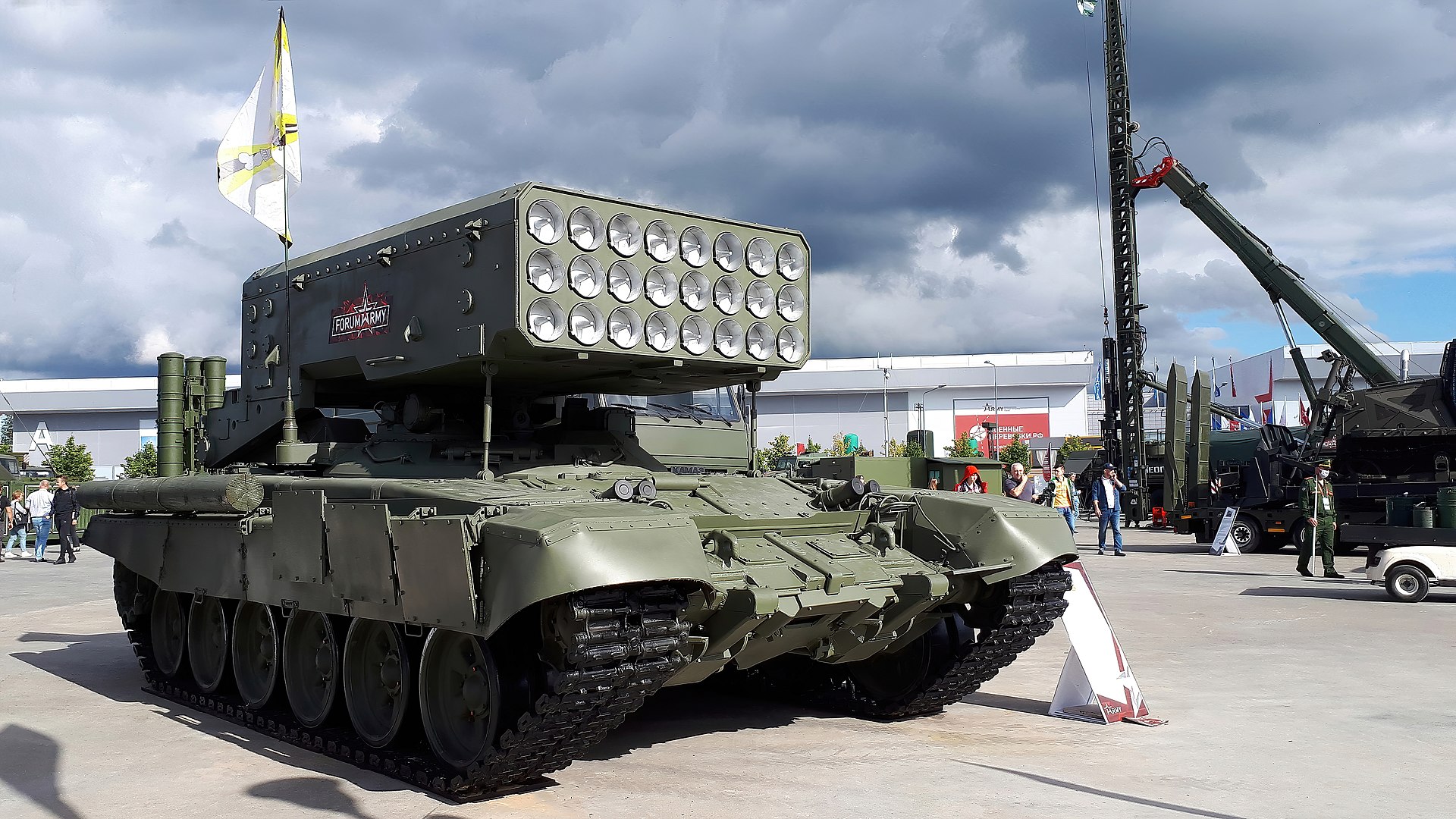


Even during the very first engagements, it was clear that due to its relatively low range of three kilometers or so, the Buratino had a problem as, unlike the other self-propelled artillery pieces in Soviet and later Russian service, it sometimes found itself within the range of enemy retaliation. Additionally, when reloading or deploying to fire, the Buratino was completely defenseless.

As a stopgap measure, the rare Buratinos deployed in Afghanistan had to be escorted by vehicles capable of engaging soft targets at close ranges (or in elevated positions) such as the BMP-2. This, of course, wasn’t ideal and it was deemed necessary for the vehicle to be able to defend itself on its own and by that time, the specialized BMO-T wasn’t developed yet (and wouldn’t have enough firepower even if it had been available at the time).

To address these issues, a project called TOS-1M was developed in 1997 in Omsk – evolution-wise, it falls right between the TOS-1 and the TOS-1A. It’s neither really, but it’s a version of the TOS-1, which is why we decided to keep the name Buratino.
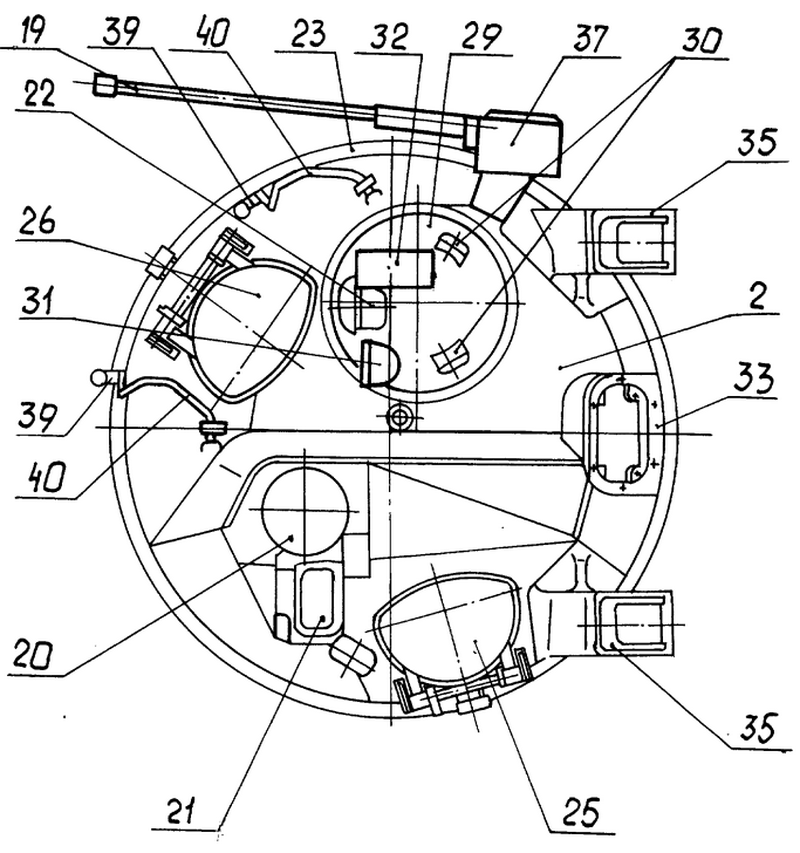


The design introduced the following improvements to the TOS:
  • Additional 30mm autocannon installed on the side of the turret below the launcher (in later iterations, this was removed due to the complications with its installation)
  • Additional thermal imager
  • Improved range from 3km to 5-7km
  • Improved accuracy due to a modernized ballistic computer
  • Improved rocket performance (the original Buratino’s one rocket covered 700 m2 with a whole salvo covering 1 to 1,5 hectare, improved to 900m2 and 2 hectares)
  • Reduced height of the vehicle by reducing the launcher capacity from 30 to 24 rockets
  • Added ability to fire without deploying the outriggers thanks to a new suspension—blocking system
  • Upgraded chassis from the original T-72 platform to a “contemporary tank” with the T-80U being the most likely candidate due to the fact it was produced in Omsk
  • Additional protection in the form of hard-kill APS

The design is described in detail in Patent No. 97107808/20 from 13.05.1997. The vehicle weighed some 44 tons and had a crew of three men (driver, commander and weapon operator). The hull protection was taken from the basic MBT model the TOS is built on (our model uses the T-90 MBT as a basis) while the launcher could resist small arms only (in reality, firing at the launcher results in a rather spectacular explosion, something the TOS-1M was designed to avoid). Additional protection was provided by:
  • 902G Tucha smoke grenade launcher system
  • Argus-KSIZ soft-kill APS
  • T2A2 hard-kill APS

The firepower consisted of 24 massive 220mm thermobaric rockets in a box-like launcher as well as one 30mm 2A42 autocannon mounted on the right side of the turret. The exact way how the weapon was supposed to be installed was not specified – we have come up with a modified helicopter mount that would fit the design.
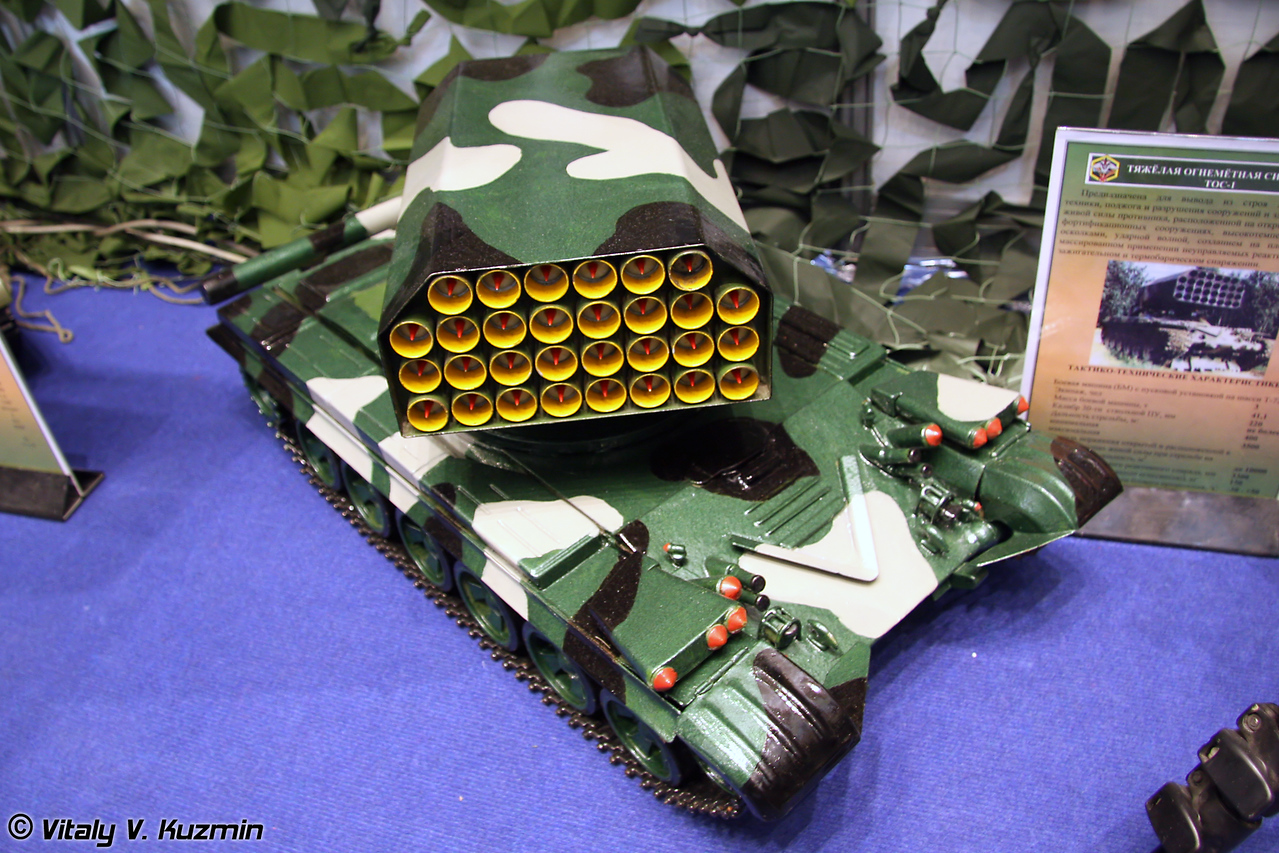


The launcher and the cannon could depress to -3 degrees and elevate to +48 degrees. Two rocket types were used:
  • MO.1.01.04M (thermobaric)
  • MO.1.01.04M.OP (high-explosive incendiary)

The fire control system included:
  • 1D14 rangefinder
  • TKN-3 commander optics
  • Ballistic computer set

An alternative weapons project was also envisaged. Instead of 24 220mm rockets, there was a version with 80 smaller 122mm rockets developed from the Grad MLRS rockets (but not identical). At least one prototype was built and trialed with unknown results. Little else is known about this variant.
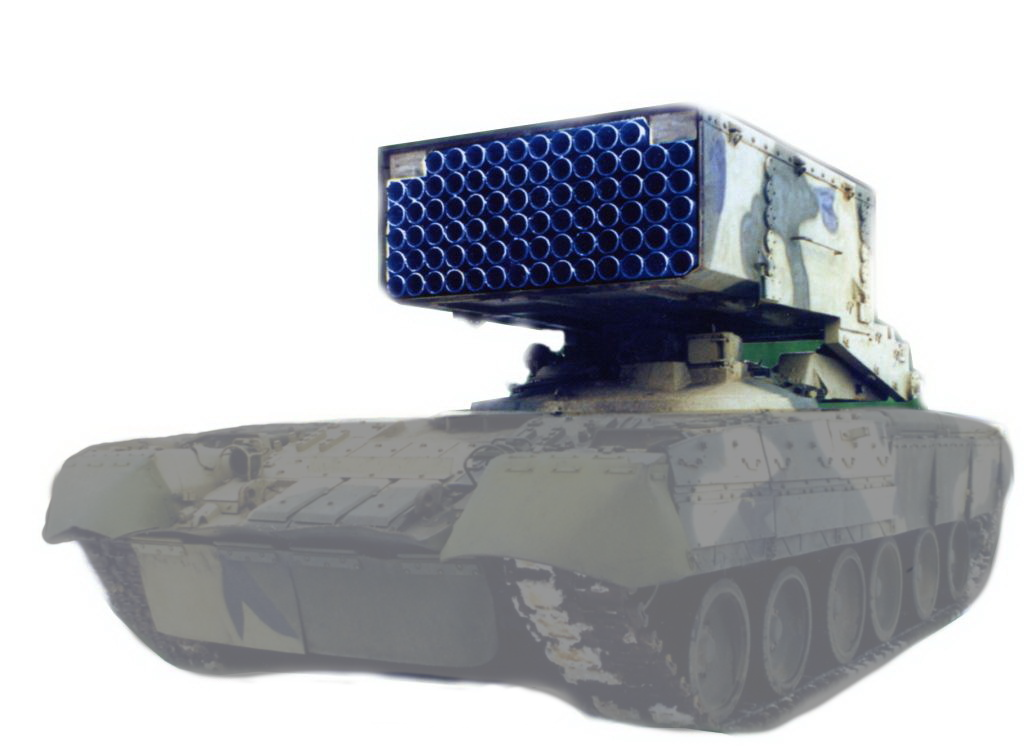


The vehicle was powered by the T-90’s V-84MS diesel producing 840hp. The maximum speed was 60 km/h – at least in “our” configuration (the T-80 variant would naturally have a gas turbine).

As you probably know by now, it wasn’t approved for further development. The most likely reason is that the T-80 series of MBTs fell out of favor after the infamous Battle of Grozny due to their poor performance and vulnerable ammunition. Anything T-80-related would therefore have a hard time getting funding.

Besides, the T-80 chassis was not strong enough on its own and would have to be modified significantly, which constituted another major expense. The T-72-based or T-90-based TOS-1A was developed and produced instead.
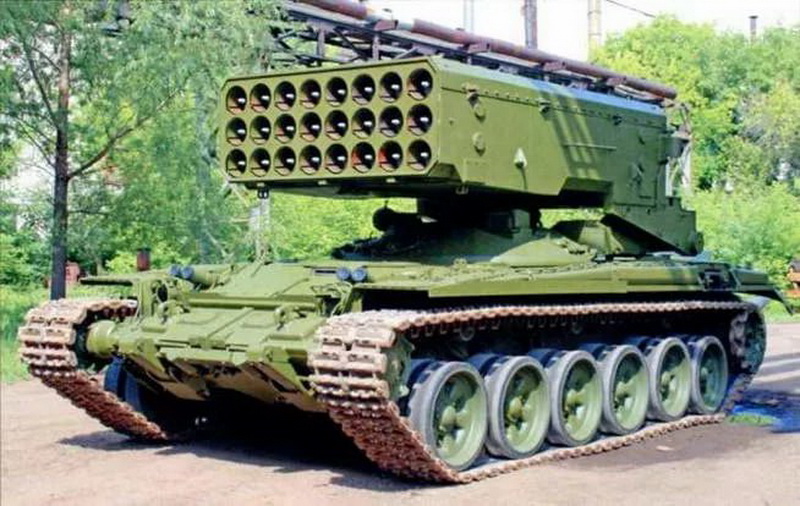


Russia itself has about 50 TOS-1A vehicles in service but it also became a fairly successful export item, no doubt thanks to its terrifying reputation:
  • Kazakhstan bought 3 in 2013-2014, first shown in 2015 during a military parade (these are intended to work with the BMPTs – TOS-1A rockets hit the area and the Terminators mop up the rest)
  • Azerbaijan also bought 18-36 in 2013-2014, these were T-90-based
  • Iraq bought 12 vehicles in 2014
  • Algeria bought 36 in 2017, first unveiled in 2018
  • Syria and Tajikistan also have some according to certain sources and Saudi Arabia might be interested in license-production.

In total, the TOS-1A production seems to have reached approximately 160-200 vehicles between 2003 and this day. The exact number is unknown but according to some sources, the production is actually ongoing (for the Russian Army) next to its supposed replacement, the TOS-2 that is not tank-based but uses an Ural 6x6 truck as its platform of choice. As for the earlier Buratino, it’s unclear how many vehicles were built, possibly only the original two.
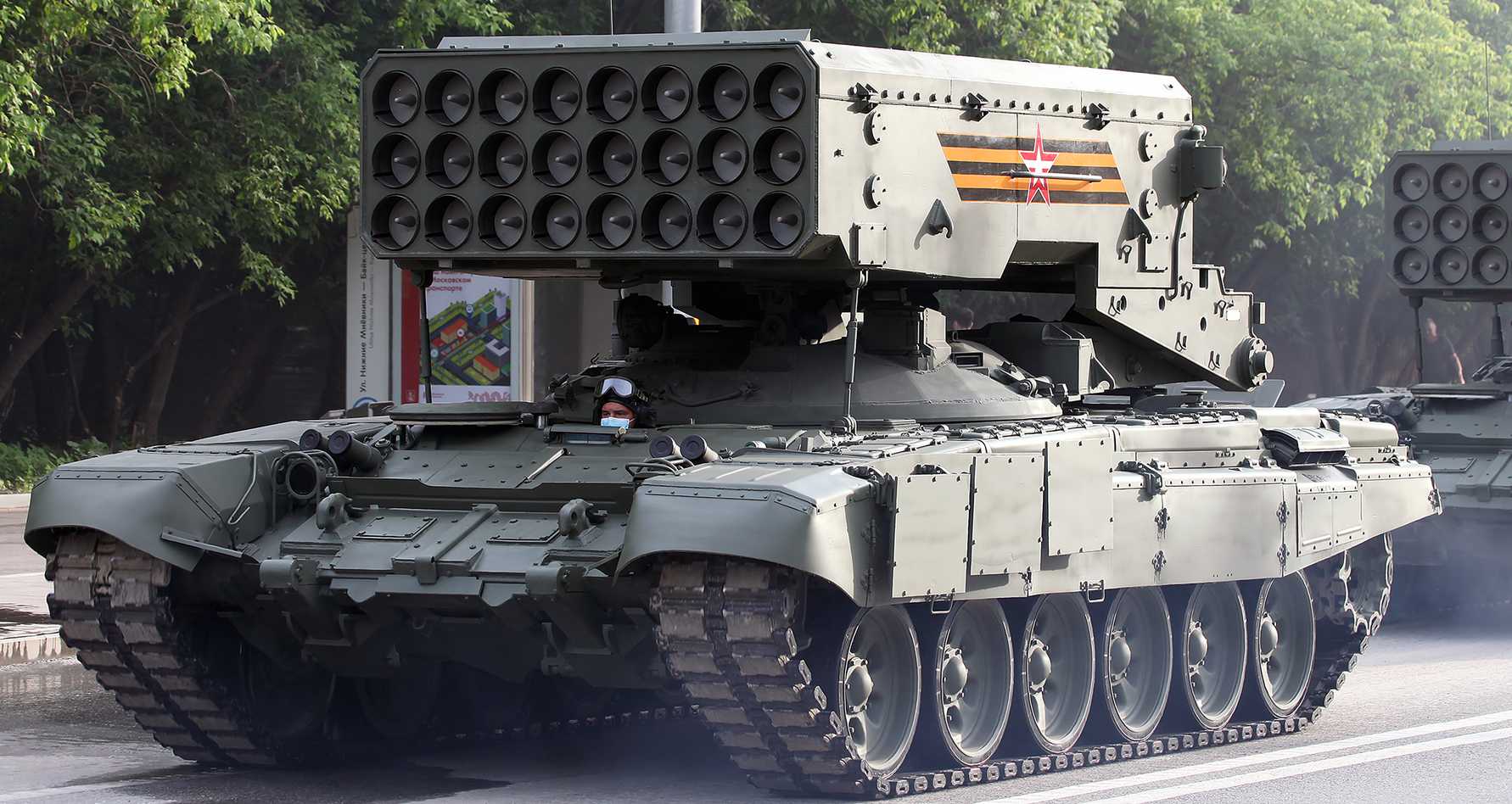


As for their combat use – as stated above, the first operational use for the two prototypes took place between 1988 and 1989 in Afghanistan (some sources claim they were used as early as 1985). It took another decade before they saw combat again – the Second Chechen War highlighted their fearsome firepower. The Iraqis used the TOS successfully in 2014 during their war against the Islamic State. Between 2015 and 2018, the TOS was used in Syria as well and, last but not least, in the Azerbaijan and Armenia conflict in 2016 and 2020 – by the Azerbaijanis. Most recently, the TOS-1A appeared in Ukraine.

It’s worth noting that the weapon system is quite difficult to operate, to reload and is very rare. Due to its notoriety, many large explosions and rocket salvos were attributed to it by journalists but the reality is that most people can’t tell a thermobaric explosion from a normal one and most of the reported “TOS operations” were in fact performed by standard Grad reactive artillery. Nevertheless, wherever the TOS appears, destruction follows in its wake.

In Armored Warfare, the TOS-1M Buratino will be a Tier 10 Premium Tank Destroyer.

As this vehicle is fairly unique, you’re probably wondering how exactly this vehicle will work in the game. Here’s how.


As you might have guessed from the screenshots, the platform is T-90A-based. This is not something fictional – in 2011, the TOS-1A was modernized to use a T-90S chassis and the T-90S really is a T-90A predecessor. The T-90A uses Kontakt-5 armor and you’ll be glad to know those side panels will be working as intended (we’ll fix that for the basic T-90A as well but that is a topic for another time).

The chassis will have both soft-kill APS and hard-kill APS, but both inferior to the Malakhit system of Armata – this is also real part of the TOS-1M system.

The launcher will be treated as an unmanned turret and will have enough armor to protect it against 30mm autocannons. We’ll be using a solution from SBS Pindad where the vehicle does technically not have an ammo rack module as firing at the launcher would obviously immediately set off an explosion, which would be realistic but not very fun to play.

There will be two firepower configurations and both will play very differently.


The stock configuration uses 122mm rockets and is based on the photo of the TOS prototype. This configuration will essentially play like a Tier 10 version of the Tier 6 MT-LB S8 AFV, a favorite vehicle of many players. In real-life, the TOS is rather inaccurate and short-ranged and we’ll be implementing its essence to work exactly like that. The rockets will behave roughly like the ones on the MT-LB S8 – high-explosive warheads, not very accurate at long ranges but excellent at short ones. The rockets will fly directly towards the target, also just like on the MT-LB S8. You’ll have 80 of those in your launcher and 160 in total. However, there will be no partial reload and once your launcher is empty, you’ll have to suffer a very long time before the whole launcher is reloaded again.

During that time, you’ll have to make do with your backup weapon, which is the 30mm 2A42 autocannon. This weapon will work almost exactly like the one of the Object 195 MBT does – a limited rate of fire with 40-round clip of basic APDS and HE ammunition. This weapon will be useful against lighter targets but its limited performance will not allow you to effectively engage heavier enemies.

Both the launcher and the autocannon will feature very limited gun depression (-3 degrees), which will make it even more difficult to use the autocannon effectively. You’ll have to position yourself carefully instead of rushing your enemies.


And then there’s the upgraded configuration with 220mm rockets. Yes, that’s a thing. You’ll be able to unlock this configuration with basic 220mm thermobaric rockets by completing Battle Path missions and tasks (via the Battle Path Workshop). As you can imagine, an impact of a 220mm rocket that’s longer than a tank barrel is absolutely devastating and, indeed, these will offer the highest damage per shot (alpha) in the game as well as decent penetration. How much exactly – that’s something we need to tweak, but getting hit by one of these will hurt a lot. You’ll have 24 of these (one “magazine”) and you’ll be able to launch one every 10 seconds or so.

Additionally, you’ll be able to unlock (via the Battle Path Workshop) even more powerful thermobaric 220mm rockets that trade the ability to cause damage by direct hits (by having reduced penetration) for more splash damage.

Sounds insane? Not quite as there will be numerous drawbacks to the 220mm configuration.
  • Trajectory – unlike the 122mm configuration the 220mm configuration uses Pindad’s high arc of flight
  • Flight velocity – the 220mm rockets will have a very low velocity, making them easier to avoid especially at longer distances
  • Low penetration – the 220mm rockets will not penetrate thick armor and most damage they will cause will be reduced
  • Skills increasing the amount of ammunition carried will not work here as using it will trigger a reload of several minutes, effectively disabling the launcher until the end of combat

In other words, a hit by one of these will deal monstrous damage – but you’ll have to earn it.

As for the rest, well... do you truly care about the rest? No active abilities, no camouflage (a box firing telephone pole-sized rockets into the sky tends to be conspicuous) and the vehicle will be blind as a bat. The mobility will resemble the original T-90A tank, perhaps a bit slower. And that’s about it. Despite these disadvantages, we hope – no, we KNOW – you’ll have a lot of fun with it just like you are with the AVRE. Because this is the TOS – it hardly gets any more awesome than that.

We’ll see you on the battlefield!
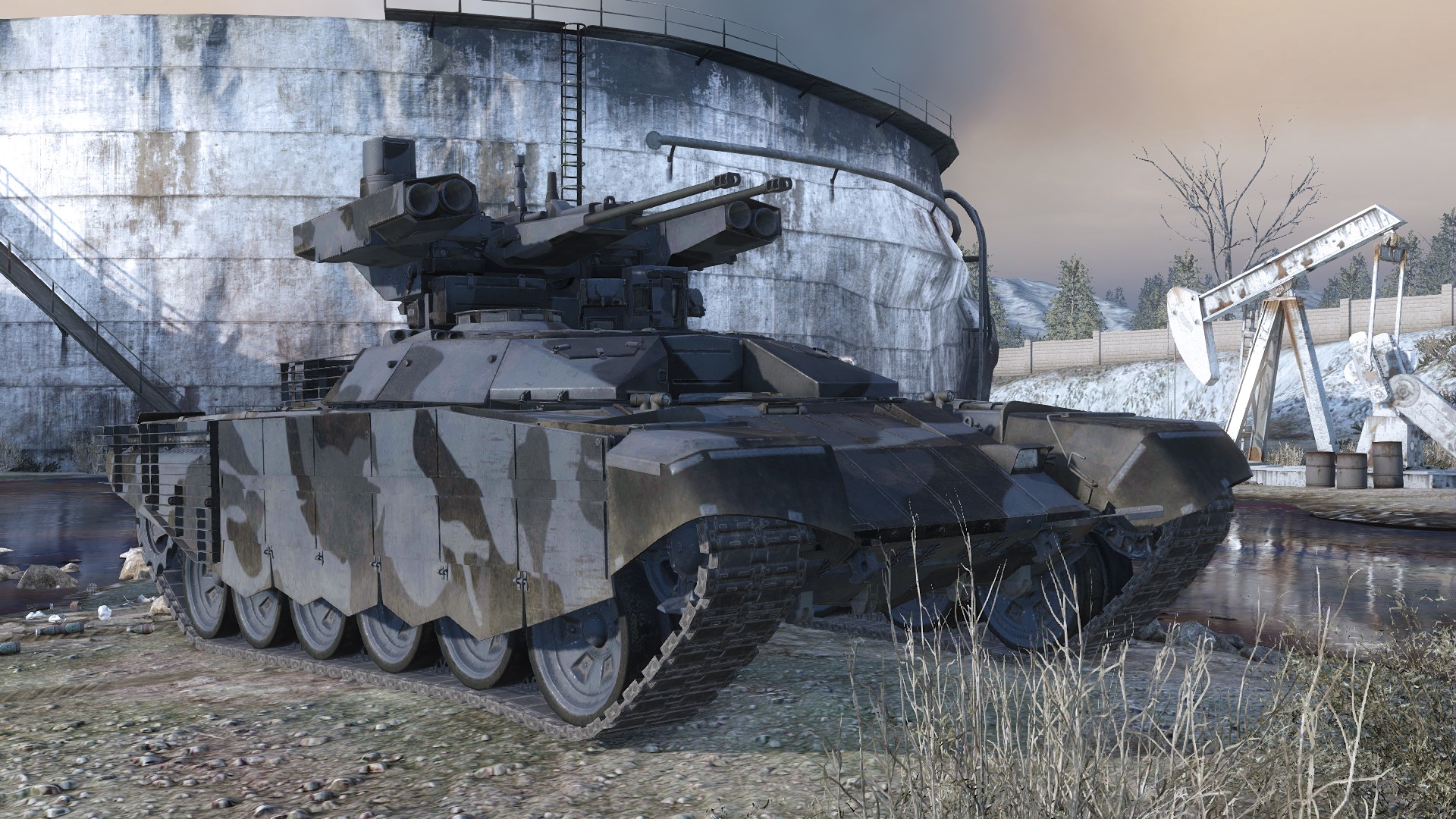
Offer: Middle East

Commanders!

Today we’ve prepared the following items for you:
  • Namer Tier 10 Premium Tank Destroyer
  • M60T skin for the Sabra Mk.2 Main Battle Tank
  • Merkava Mk.2D and Israeli bundle (with an Israeli camouflage and base paint)
  • Syrian camouflage bundle
  • Altay Tier 10 Premium Main Battle Tank
  • Magach 7A Tier 6 Premium Main Battle Tank
  • Sabre Tier 6 Premium Armored Fighting Vehicle
  • Challenger 1 Falcon Tier 8 Premium Main Battle Tank
  • Commander Loot Crate
Between February 9 and February 16, 2023, the following items will be available:

 
[h2]Namer[/h2]
 

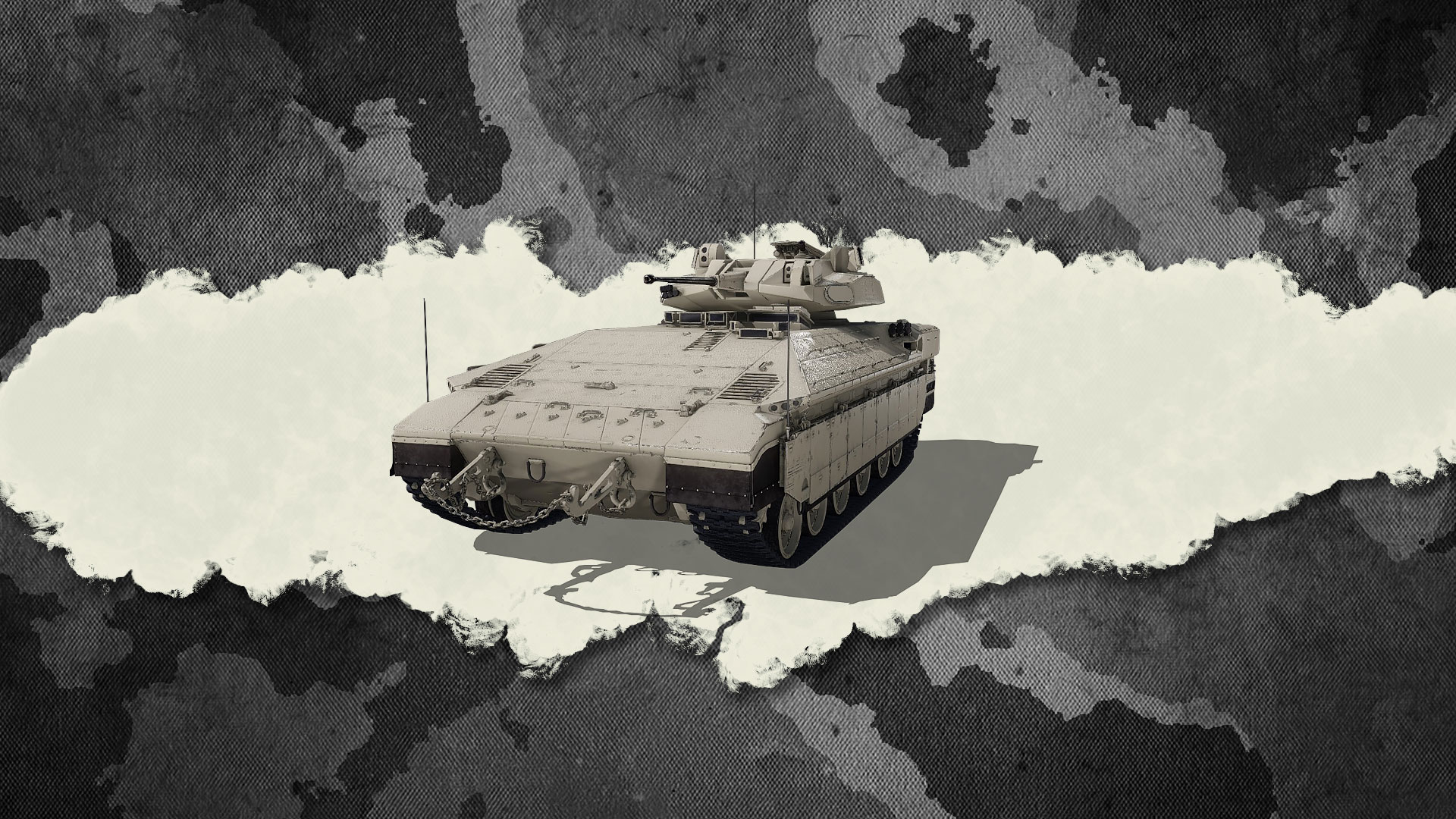
The Namer IFV is an Israeli heavy fighting vehicle version of the Namer platform developed in the early 2000s from the Merkava Main Battle Tank. Israel is a small country and cannot affect high infantry losses, which is why the Namer features extremely high levels of protection. The IFV variant is fitted with a Rafael turret, featuring 30mm autocannon and a Spike missile launcher. You can read more about it in our dedicated article.


In Armored Warfare, the Namer is a Tier 10 Premium Tank Destroyer. As its history suggests, it is a superheavy TD with its protection levels being amongst the highest of its class. It is slow and ponderous but its thick front can deflect even advanced shells while maintaining adequate firepower thanks to its autocannon and ATGM combination. Its MBT-like characteristics make this vehicle quite forgiving for new players, but, as they say, a jack-of-all-trades is a master of none.

The Namer Tier 10 Premium TD is available in our Web Shop via Loot Crates. Collect 100 blueprint pieces from these crates to obtain the vehicle.


[h2]M60T skin for Sabra[/h2]
 

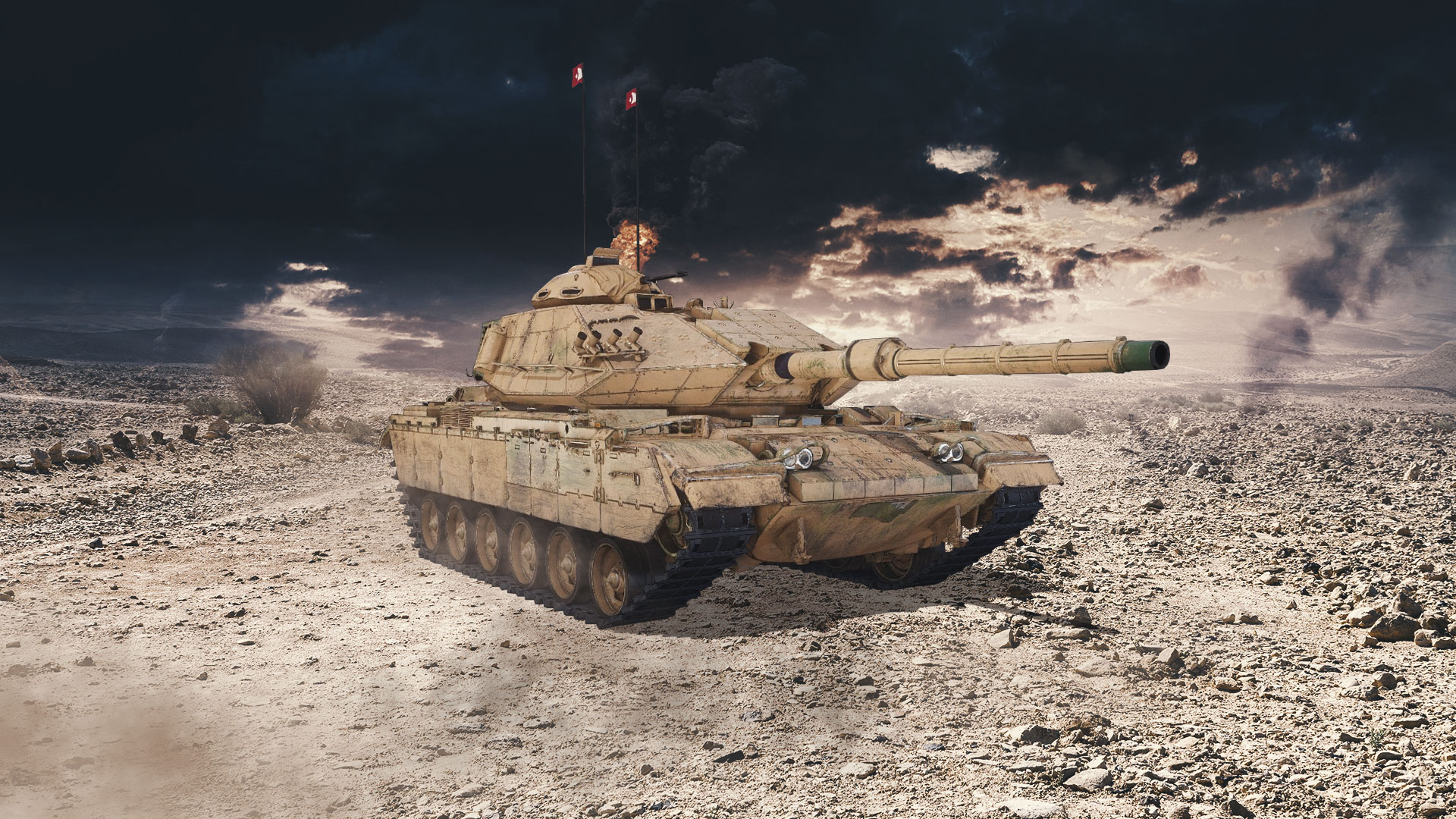
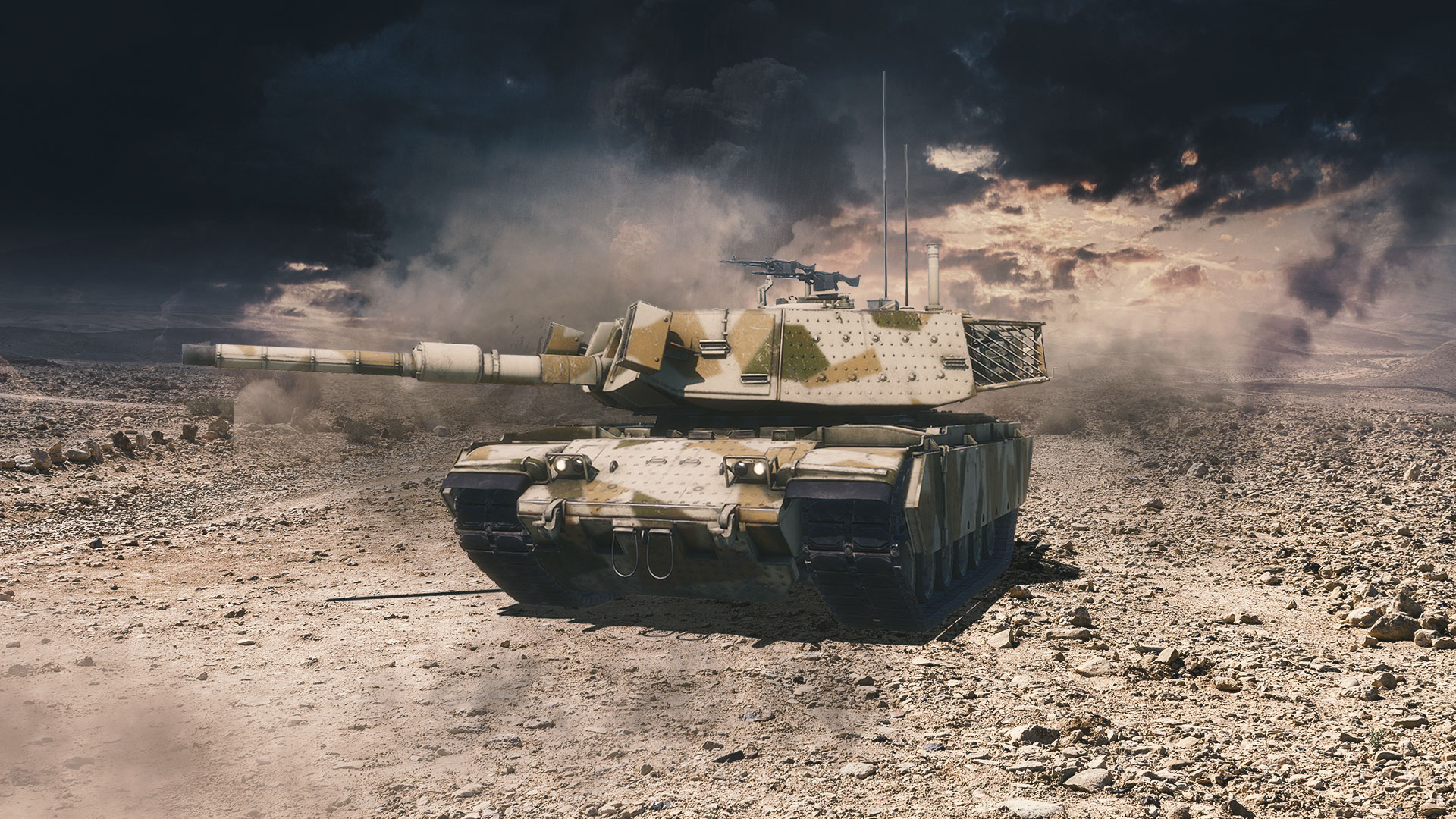
This skin for the Sabra Mk.2 Tier 7 Premium Main Battle Tank is based on the Sabra MBTs that participated in the Turkish incursion into Syria in October 2019 (Operation Peace Spring). It combines a number of real-life elements, turning your Sabra into a Turkish service MBT. You can read more about it in our dedicated article.


The skin is available either as a standalone item or as a part of the M60T bundle, which contains the following items:
  • M60T skin for the Sabra Mk.2 MBT
  • Sabra Mk.2 Tier 7 Premium MBT
  • 500 Gold

That way, you can get this amazing vehicle together with the skin. Alternatively, the Sabra is also available in other bundles without the skin.

Clicking the link below will open the game’s launcher. Please select the Market option on the left and select Armored Warfare to access this offer.


[h2]Merkava Mk.2D and Israeli Bundle[/h2]
 

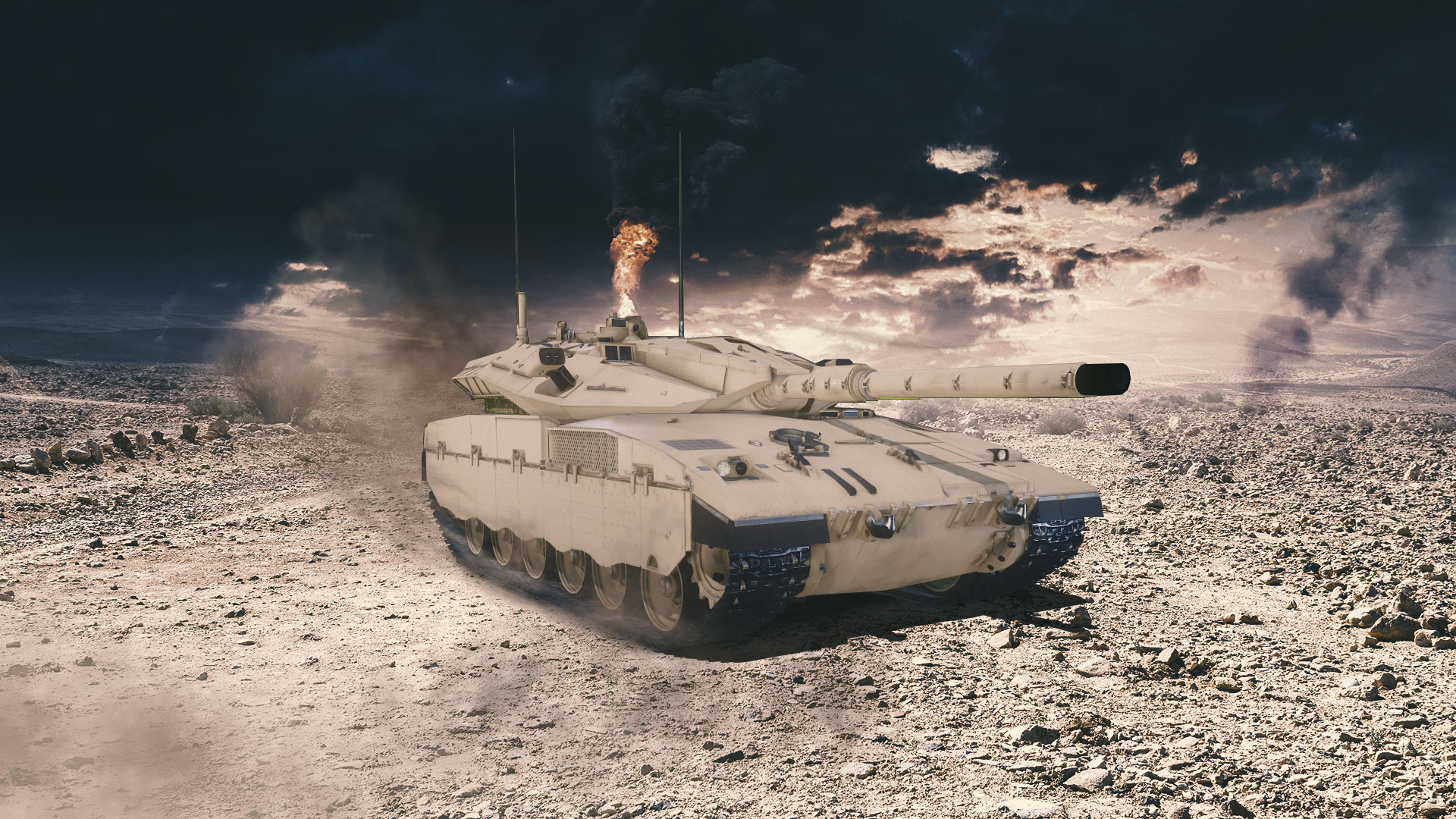
The Merkava IID (also known as Mk.2D) is an advanced version of the standard Mk.2 Merkava, upgraded with a modular “Dor-Dalet” composite armor kit. It’s a tough and unyielding vehicle, featuring a number of battle-proven components such as its 105mm rifled cannon. The first version of the Merkava Mk.2 entered service in 1983 and the last vehicles were phased out in 2016 after thirty long years.


In Armored Warfare, the Merkava IID is a Tier 7 Premium Main Battle Tank. It is not equipped with an explosive reactive armor kit, but is, nevertheless, a very tough customer due to the introduction of the applique armor, allowing it to take a lot of damage. Additionally, the tank is equipped with a Ready Rack mechanism, significantly increasing the rate of fire for the first four shots.


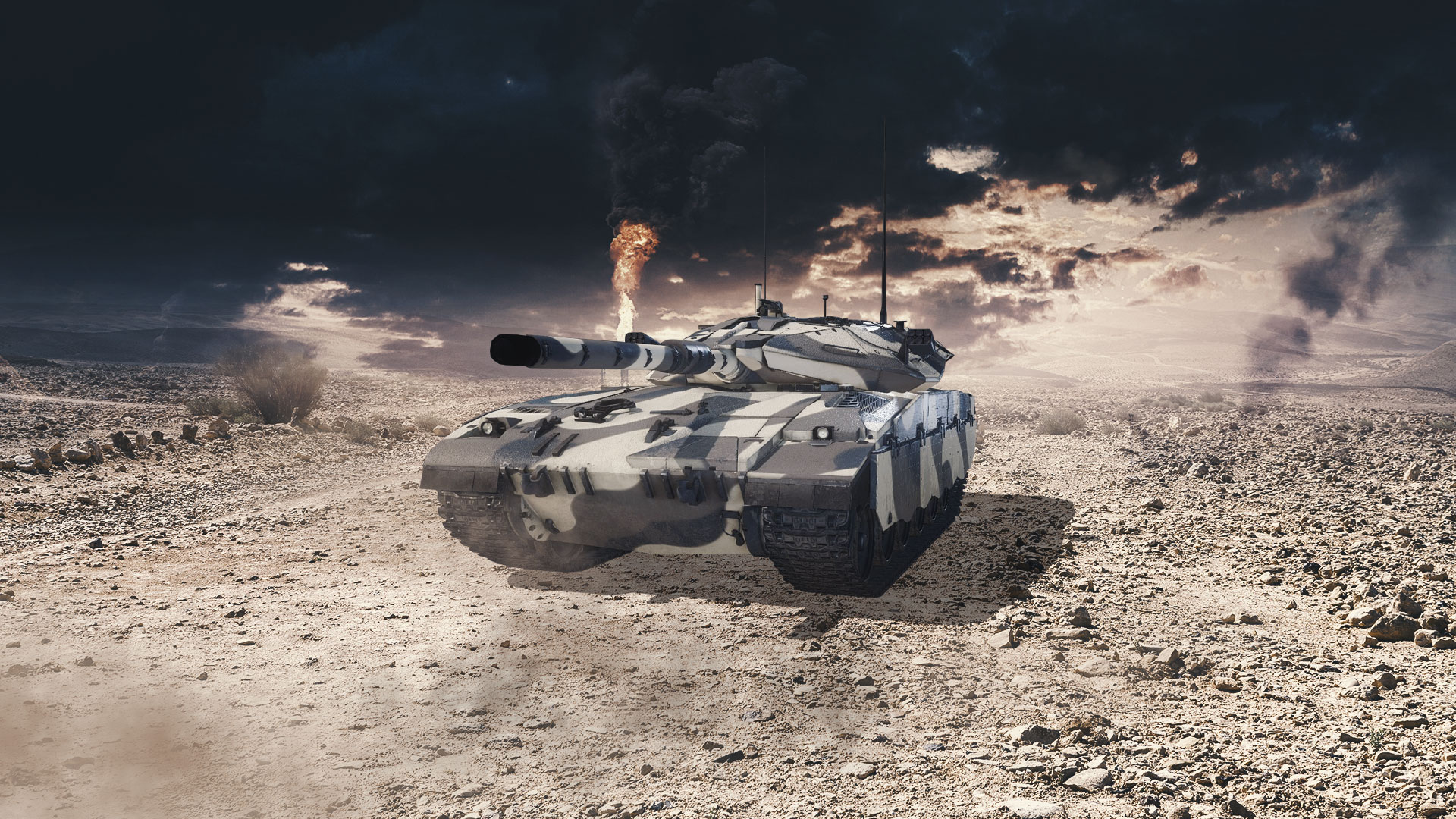
This vehicle is also available as a part of the Israeli bundle, which contains the following items:
  • Merkava Mk.2D Tier 7 Premium MBT
  • Sinai Grey base paint
  • Israeli Experimental camouflage
  • Israeli Flag decal (free bonus)
  • Israeli Flag banner (free bonus)

The Sinai Grey base paint is based on the color commonly used by the Israeli vehicles. You can now apply it to all your Merkava MBTs for maximum realism. The camouflage, on the other hand, is an experimental one and not used in active service. It was developed in the 1980s for a series of trials, but Israel ultimately decided not to adopt it. Still, it’s a piece of history and will fit your Merkava Mk.2 MBT really well. You can read more about both in our dedicated article.

Clicking the link below will open the game’s launcher. Please select the Market option on the left and select Armored Warfare to access this offer.


[h2]Syrian Bundle[/h2]
 

This gorgeous Syrian camouflage was seen in the aftermath of the 1973 Yom Kippur War on a captured Syrian BMP-1 IFV and consists of sand, green and grey stripes. You can read more about it in our dedicated article.


It is available as a part of the Syrian Camouflage bundle, which contains the following items:
  • Syrian camouflage
  • 14 days of Premium Time
  • 2.000 Gold
  • Syrian Flag decal (free bonus)
  • Syrian Flag banner (free bonus)

This camouflage can be installed on any vehicle that has the camouflage customization feature available and can be used in all three environments.

Clicking the link below will open the game’s launcher. Please select the Market option on the left and select Armored Warfare to access this offer.


[h2]Altay[/h2]
 

The Altay is the result of a Turkish program to build a true indigenous MBT. After a decade of development with hundreds of millions of dollars spent, Turkey finally achieved its goal and built a tank that is roughly on par in performance with decades-old Leopard 2 variants while it still uses many foreign components, including some of its most critical systems. Nevertheless, future Altay variants are expected to feature some cutting edge components.

[previewyoutube][/previewyoutube]

In Armored Warfare, the Altay is a Tier 10 Premium Main Battle Tank based on the current prototypes, but also upgraded by various hypothetical aftermarket components of the future to surpass its current capabilities and to match its assigned Tier in power. The basic tank is – gameplay-wise – a mobile sniper, much like the Leopard 2 series, relying on its mobility and the penetration of its shells rather than on its armor. There are two key features to this tank: Adjustable Suspension (tilting forward and to the side) and Hybrid Engine with its distinctive electric sound, giving the vehicle excellent mobility and agility.

The Altay Tier 10 Premium MBT is available in our Web Shop via Loot Crates. Collect 100 blueprint pieces from these crates to obtain the vehicle.


[h2]Magach 7A[/h2]
 

The Magach 7A is an early M60 series American tank, upgraded by the Israelis to meet the requirements of the 1990s battlefield, especially to combat the threat of anti-tank guided missiles that had started to find their way into the hands of various terrorist groups in the late 1980s. The most distinctive upgrade is its box-shaped extra turret armor. While well-protected, the tank was quite lethargic when it came to its mobility due to the use of its old engine, a shortcoming that was only corrected in the final evolution step of the Magach series, the Magach 7C. You can read more about it in a dedicated article.


In Armored Warfare, the Magach 7A is a Tier 6 Premium Main Battle Tank. With its excellent gun accuracy and aiming time values, the Magach 7A is a good sniper for its class and is perfectly suitable for those players, who want to experience long-range combat but who also want to keep some level of protection and survivability instead of completely relying on mobility and camouflage. It’s a rather sluggish vehicle, but more than a match for anything that it encounters on the battlefield.

Clicking the link below will open the game’s launcher. Please select the Market option on the left and select Armored Warfare to access this offer.


[h2]Sabre[/h2]
 

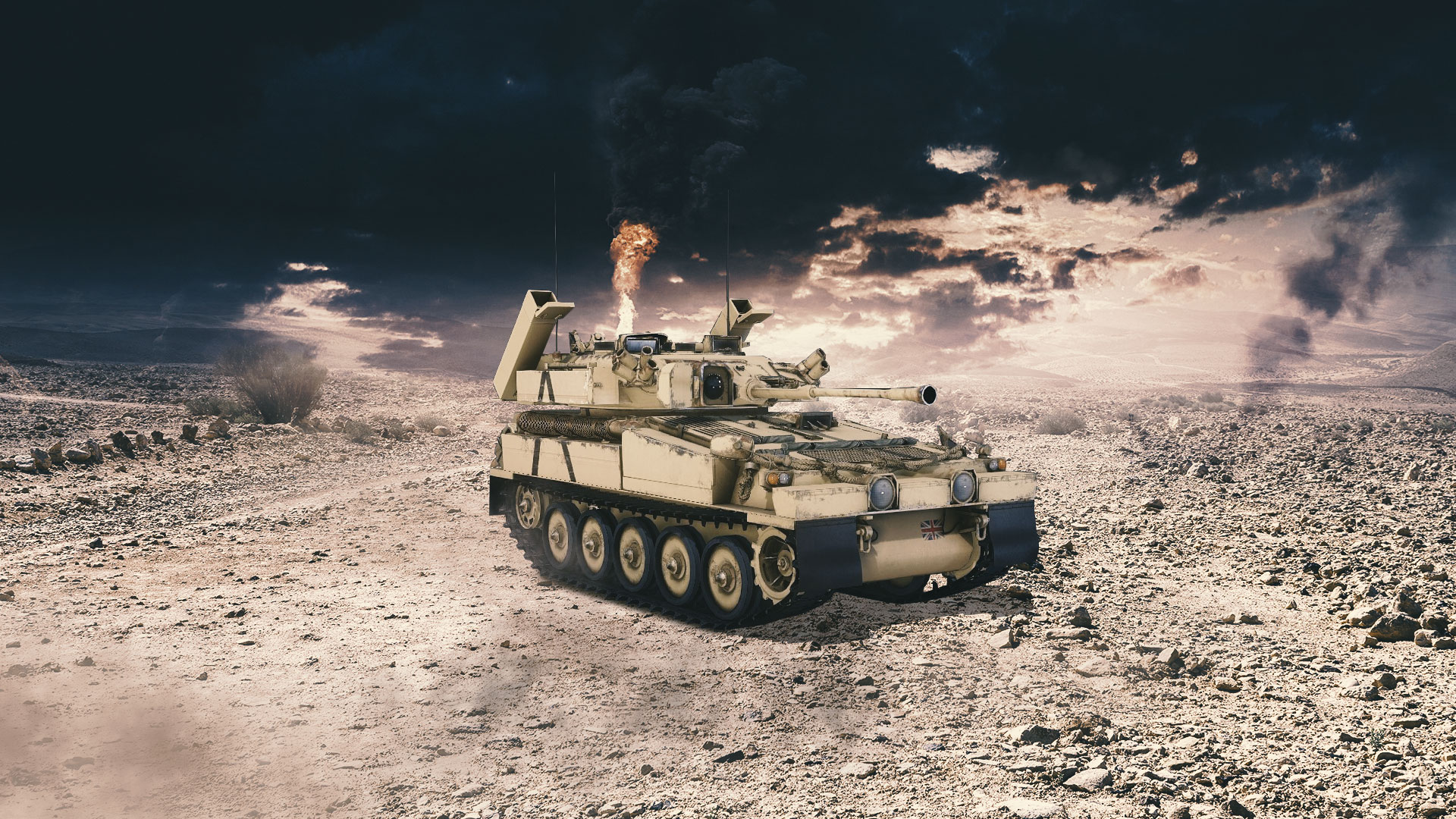
The Sabre is an interesting British recon vehicle, assembled together from older Scorpion hulls and Fox turrets after both parts were brought to zero hour state (completely overhauled) by a company called Alvis. The resulting vehicle from the early 1990s was called Sabre and, considering it was made of decades old components, it worked fairly well as a scouting vehicle, participating in the Iraq War as well as in several peacekeeping missions. You can read more about it in our dedicated article.


In Armored Warfare, the Tier 6 Sabre Premium Armored Fighting Vehicle is one of the deadliest vehicles on the battlefield thanks to its rather unique upward-aimed Swingfire missile launcher that allows it to fire over obstacles or while hidden, for example behind uneven terrain. While being quite difficult to master, this ability makes it a potent ambusher, especially in skilled hands.

Clicking the link below will open the game’s launcher. Please select the Market option on the left and select Armored Warfare to access this offer.


[h2]Challenger 1 Falcon[/h2]
 

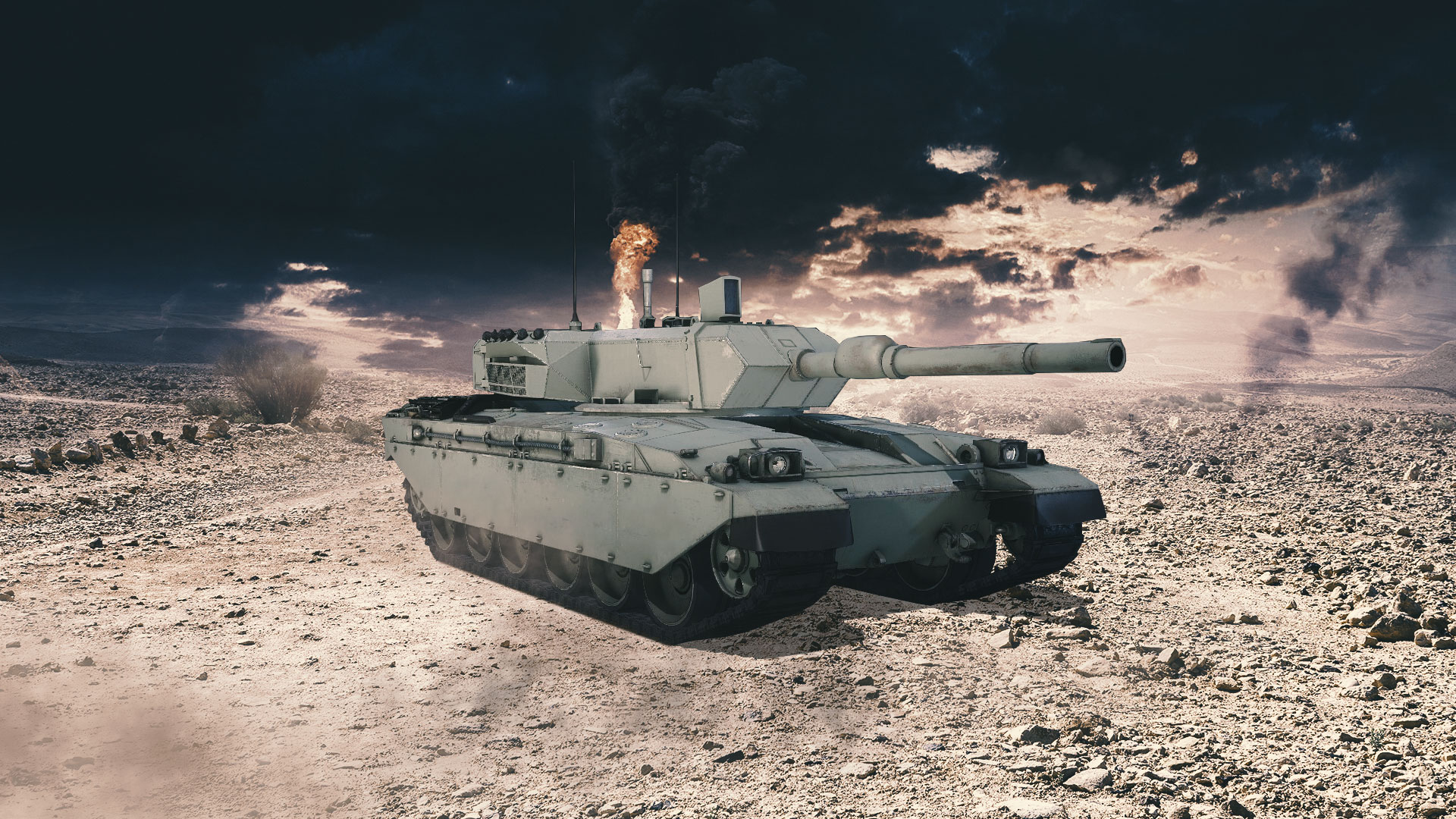
The Falcon is an experimental turret developed in the early 2000s in Jordan as an upgrade to the Jordanian Al-Hussein (Challenger 1) Main Battle Tanks. It's a low profile turret, armed with an automatically loaded Swiss 120mm L/50 RUAG smoothbore gun, capable of firing standard NATO ammunition. The operator controls the turret from inside the vehicle's hull, significantly improving crew protection. A prototype was built and tested, but the design was never mass-produced.


In Armored Warfare, the Challenger 1 Falcon is a Tier 8 Premium Main Battle Tank. The best word to characterize this lumbering behemoth in the game is “tough” – its excellent hull armor shrugs off most shells while the damage its low profile turret takes when it is reduced by 90% thanks to the fact the crew is not located directly in it. Despite being generally very slow and sluggish, the Challenger 1 Falcon can take tremendous punishment and is ideal for the players who prefer the British Main Battle Tank play style.

Clicking the link below will open the game’s launcher. Please select the Market option on the left and select Armored Warfare to access this offer.


[h2]Commander Loot Crate[/h2]
 

This week, we’ve prepared another special offer for you in the form of a brand new Commander Loot Crate, featuring, amongst other things, some of the rarest commanders in the game!


This Loot Crate gives you the opportunity to obtain the following items:
  • Commander Ofelia Kitescu
  • Commander Austin Harper
  • Commander Alexander Cortez
  • Commander Alisa Korhonen
  • Commander Erin O’Connell
  • Commander Jorge Alvarez
  • Commander Joshua Seagrove
  • Commander Fyodor Sokolov
  • Platinum Commander XP Insignia tokens
  • Gold Commander XP Insignia tokens
Clicking the link below will open the game’s launcher. Please select the Market option on the left, select Armored Warfare and then the Chest section to access this offer.


We hope that you will enjoy the offer and, as always:

See you on the battlefield!
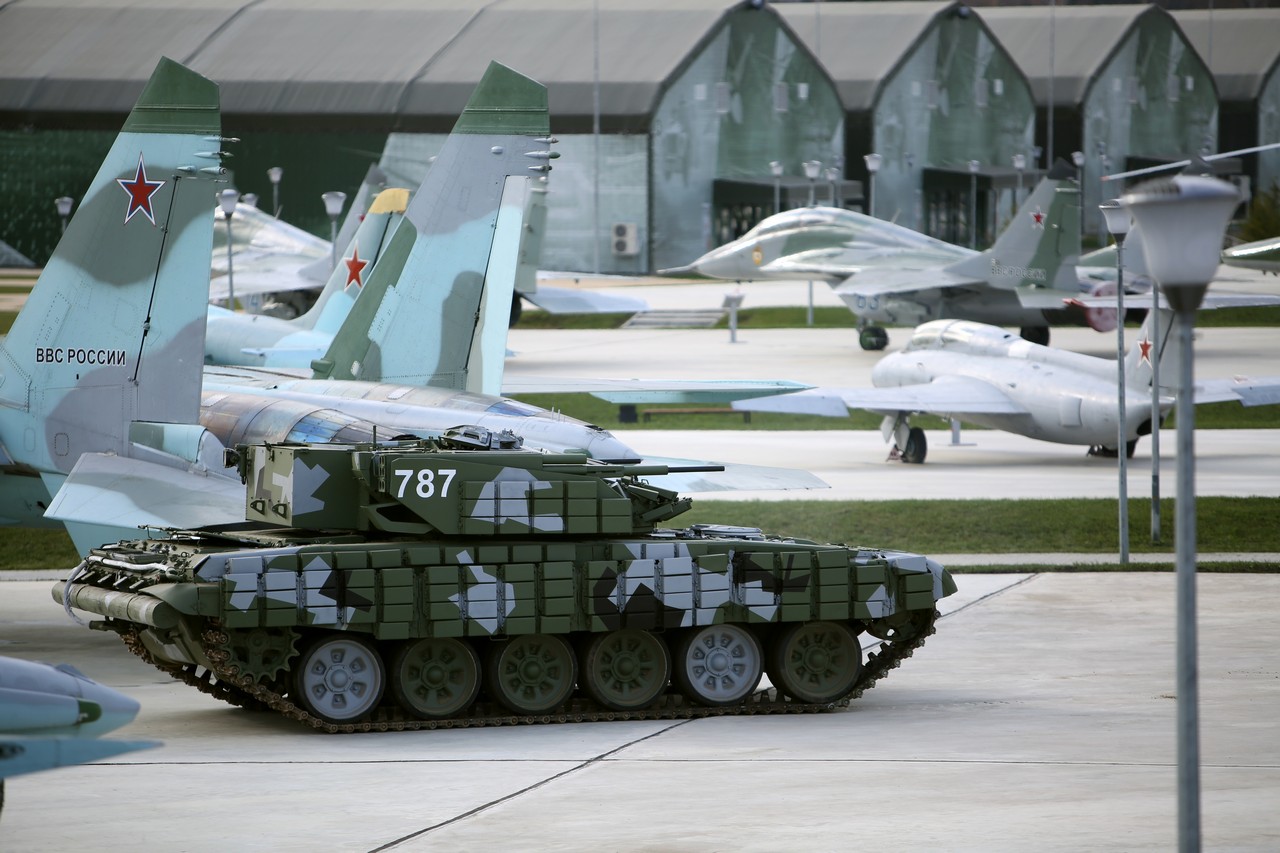
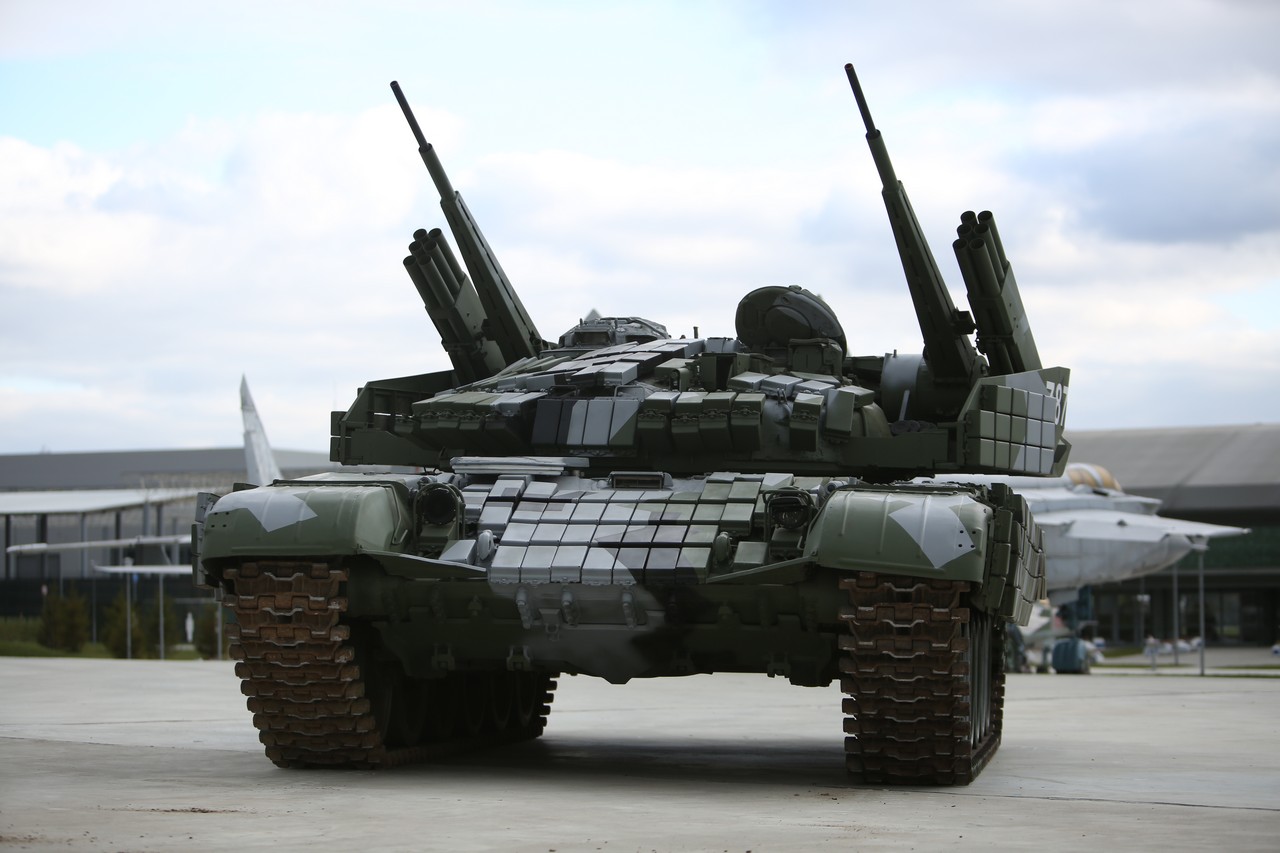
In Development: Object 787 “Gadyuka”

Commanders!

Each Battle Path has a special vehicle you can assemble from blueprints and the Eclipse Battle Path will continue in that tradition, although with somewhat less emphasis on this aspect. Usually we offer a Tier 4-7 vehicle as a level progression one and a Tier 8 vehicle as a blueprint one. This time around, it’ll be the opposite – the Tier 8 Gepard will be a prize obtainable by reaching Level 19 while the blueprint slot will be reserved for Object 787, also known as the “Gadyuka.”


The Gadyuka (“Viper” in Russian) is one of the development steps that led to the creation of the BMPT “Terminator” series that is currently in Russian, Algerian and Kazakh service. But where did this vehicle come from? As usual, let’s take a look at a little bit of history.

The idea of creating a heavily armored dedicated anti-infantry vehicle was not exclusive to the Soviet Union but it was the Soviet industry that started working on it intensively as early as in mid-1980s. The experience if Afghanistan and Chechnya taught the Soviets a painful, yet valuable lesson – even heavily armored vehicles armed with cannons were vulnerable to infantry in urban environment. The massive spread of and major improvements in infantry anti-tank weapons further increased this thread to the point where for a certain time – especially in the west – it was thought that the tank would eventually become obsolete the way airships and armored trains had many decades before. Others however were actively looking for ways to tip the balance of scales in armored vehicle’s favor and one such idea was to create a heavily armored vehicle with anti-infantry armament to accompany the “classic” tanks.

Protecting your armored vehicles from enemy infantry required certain vehicle “features” not available to regular tanks. First and foremost, excellent gun elevation was essential in order to deal with targets above you in hilly or urban environment. This was one of the first things learned by the Soviet troops in Afghanistan – enemy infantry would often be hiding on hilltops where the standard BMP-1 vehicles could not fire, since their elevation was insufficient and Soviet troops were forced to utilize anti-aircraft vehicles (which were well armed but very poorly armored, sometimes vulnerable even to small arms fire) as ground support. This issue was only mitigated by the arrival of the BMP-2.


Second very important requirement was to make the vehicle resistant to infantry weapons, specifically to HEAT launchers such as the famous RPG series. This called not only for thick armor (ideally composite) but also for massive use of explosive reactive armor covering vulnerable parts of the vehicle – in Afghanistan, however, such a technology was not available en masse.

Nevertheless, between 1985 and 1986, the Chelyabinsk Tractor Plant started working on a program to develop a vehicle they called “mountain tank”, producing three distinct projects between 1987 and 1996 they thought suitable for the tanks support role – Object 781, Object 782 and Object 787 (sometimes referred to as Object 745 by certain Russian sources).

The Object 781 and Object 782 projects were introduced in 1987 and were developed in Chelyabinsk under the leadership of V.L.Vershinsky. They were built on heavily modified T-72B hulls with especially the frontal part significantly reworked, but the biggest change by far was the fact that the vehicle sides now housed heavily armored watertight compartments carrying two stabilized 40mm grenade launchers and ammunition as well as other systems such as air filtering, fuel tanks and batteries. This solution significantly increased the side protection of the hull.


Of the two such modified hulls, one (Object 781) was armed with a pair of 30mm 2A72 guns (each in a separate turret and each paired with a 7,62mm machinegun) as well as an anti-tank guided missile system (Konkurs or Kornet) and either a 7,62mm or a 12,7mm machinegun mounted externally near the commander’s hatch.

The second (Object 782) had a low profile two-man turret armed with a low-recoil rifled 100mm 2A70 gun paired with one 30mm 2A72 cannon. The turret was also fitted with an additional 40mm grenade launcher (in addition to the one in the hull).


Both vehicles had large crews – the driver, gunner, commander and two grenade launcher operators plus two troops in support to fire from 7,62mm hull-mounted machineguns. The Object 782 for instance was theoretically capable of firing at 6 different targets at the same time.

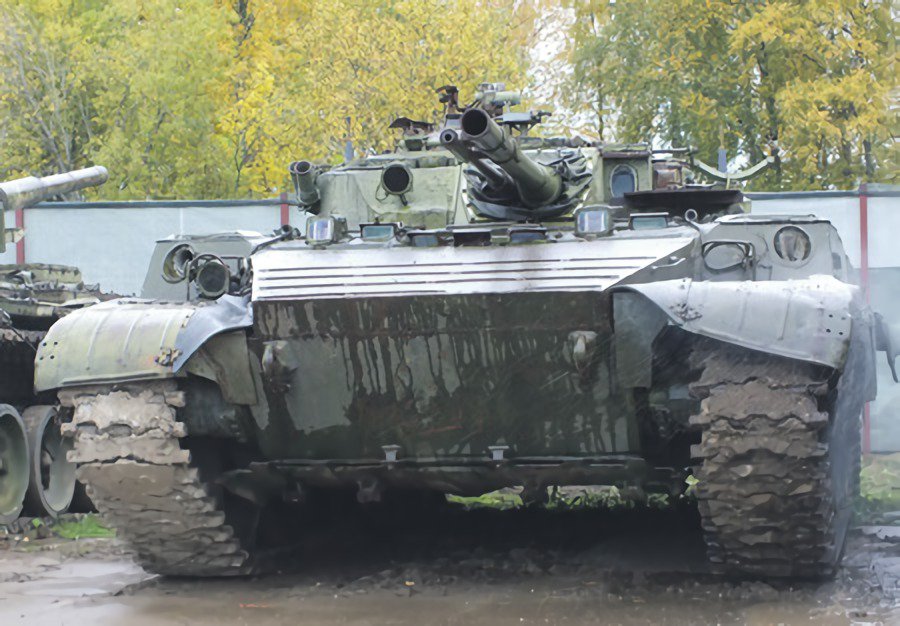
Both vehicles were tested from 1987 onwards in Chelyabinsk. The Object 781 won the initial testing and was selected over Object 782 (the project of which was cancelled, although the prototype exists to this day). The development of Object 781 was rated actually very well and continued at Chelyabinsk until the fall of the Soviet Union in 1991. At that point the project became the victim of the post-break-up chaos and was cancelled as well. Both prototypes eventually ended in the Kubinka museum.

Even though the Object 781 research was cancelled, the war in Chechnya and the disastrous results of the tanks used in city environments re-started the fire support vehicle development. Once again, Chelyabinsk stepped up, developing a completely new vehicle between 1995 and 1996 called Object 787. One prototype was built in 1996.


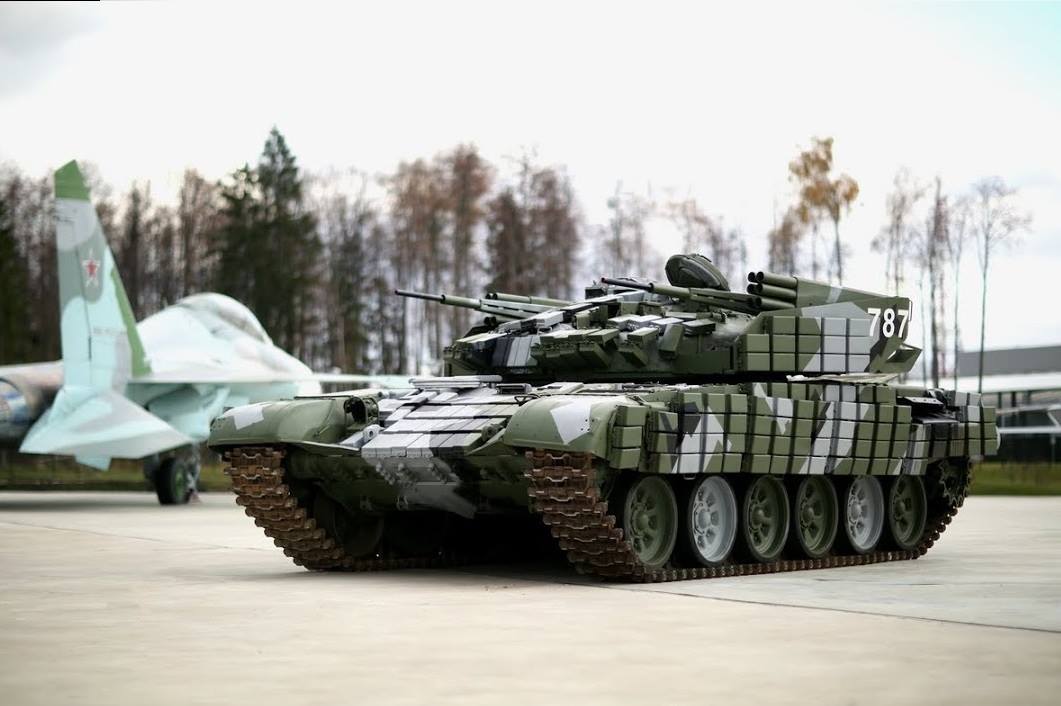
It was basically a T-72AV hull and turret (with the Kontakt-1 reactive armor as the tank designation suggests) but instead of the usual 125mm cannon, the vehicle was armed with a pair of high-elevation 30mm 2A72 guns mounted on the sides of the turret (along with a pair of 12,7mm machineguns). The 30mm guns were also paired with two banks of 80mm S-8 unguided rockets (originally developed for helicopters) to provide additional firepower. The banks had 6 rockets each.

The guns and rockets could elevate to +60 degrees and depress to -8 degrees, allowing the vehicle to easily engage targets on buildings. The optics consisted of:
  • 1A40 main optics
  • TPN-3-49 night optics
  • 1P3-10 anti-aircraft optics
  • TKN-3 commander optics

The vehicle weighed some 47 tons and, just like the original T-72AV, had a crew of three men. The internal layout was similar to the T-72AV and so was the armor, although the Kontakt-1 elements covered more area, especially on the sides. The gun mantlet area was plugged by a welded steel cover and additional ERA elements. It was powered by the 780hp V-46-6 diesel engine with the same mobility as the T-72AV (the maximum speed was 60 km/h).

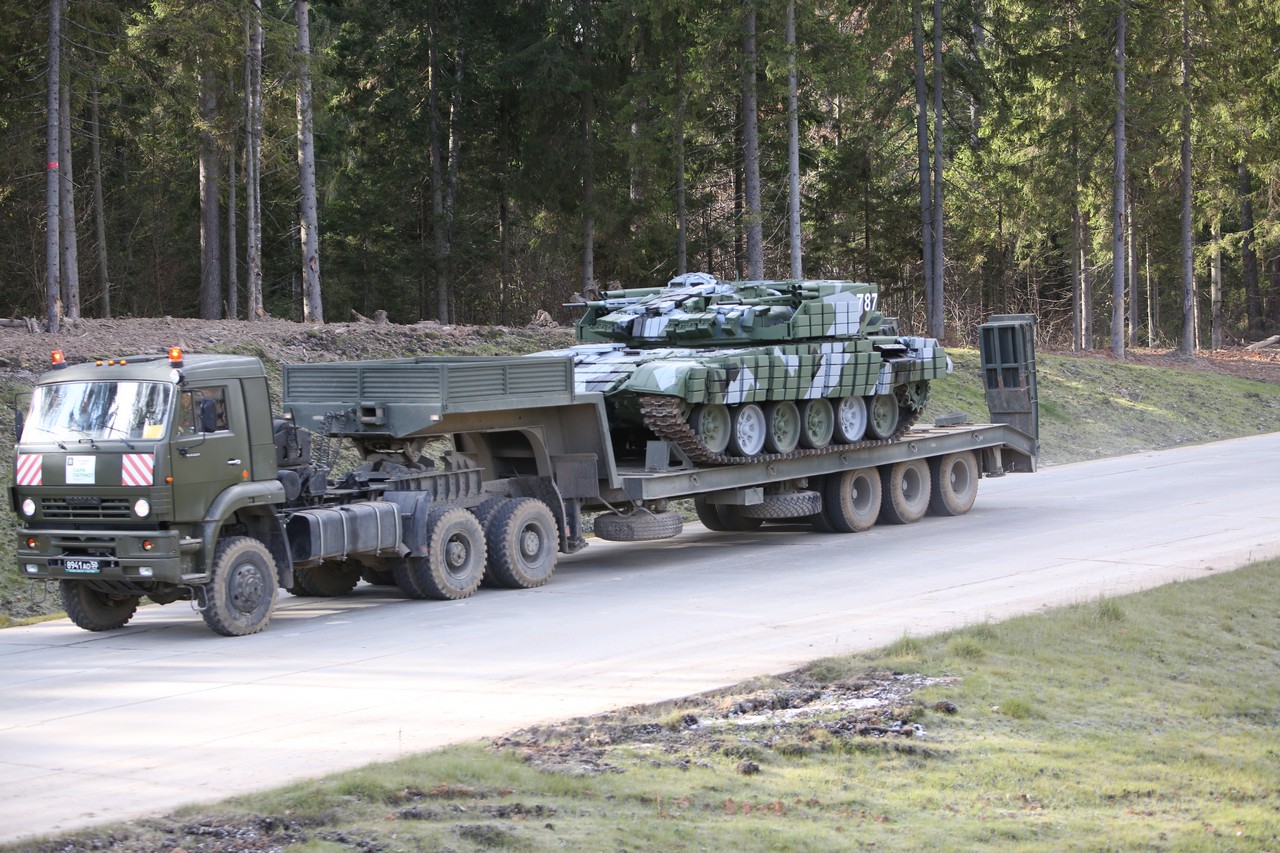
The vehicle was sometimes also referred to under the informal nickname “Gadyuka” – this was, however, never official. The trials that took place between April 4 and April 10, 1997 at Kubinka have shown excellent results, but the Viper too was to be cancelled – for the strangest of reasons.

Initially, many high-positioned Russian officers supported the vehicle (including the chief of GABTU, Colonel-General S.A.Maev, former Marshal of the Soviet Union V.L.Kulikov and the main Ministry of Defense military advisor, Army General M.M.Zaytsev). The military started advertising the vehicle on television and radio, trying to gain as much support for the new vehicle class as possible. This did not sit well with the overseeing institutions, which accused the participants (including the vehicle designers themselves) of “publishing Russia’s military secrets”.


An investigation was held and the entire process resulted in numerous personal changes in the Chelyabinsk Tractor Plant company as well as the cancellation of the Object 787 development. The accused designers were forbidden from pursuing the project further and the only prototype was transferred to Kubinka.

The Object 787 farce did slow the development of this class of vehicle considerably but it did not stop it. The Chelyabinsk Tractor Plant was out of the picture now and stopped developing this type of vehicle altogether, focusing only on actual tractor building. The idea, however, did not die and was intensively discussed between I.N.Rodionov (the Russian minister of defense between 1996 and 1997) and other members of the military. Eventually, Uralvagonzavod from Nizhny Tagil would take over the development and the process would eventually become the BMPT series predecessor, Object 199 “Ramka”.

In Armored Warfare, the Object 787 Gadyuka will be a Tier 6 Premium Tank Destroyer.

Like we mentioned above, it’ll be possible to assemble the Gadyuka from blueprints available for Battle Path mission completion (also a returning feature) as well as from the Battle Path Shop.


The Gadyuka concept is rather simple. It’s a close range brawler – essentially a T-72AV with autocannons and rockets instead of the main gun and one Tier higher. Logically, while the protection stays the same (the Gadyuka doesn’t have an APS, just smoke grenade launchers), the balance will shift towards firepower.

There are two main weapon systems that can be switched between – the two 30mm 2A72 autocannons (which are generic Tier 6-7 30mm guns balance-wise) and two 6-tube 80mm rocket launchers, the very same launchers the MT-LB S8 uses, just without the fancy cylindrical container. Each side of the turret will have one gun-rocket mount with excellent depression and elevation (-8/+60 degrees).

You’ll be able to switch rapidly between firing either both guns or both rocket launchers but beware – both weapon systems will be fairly inaccurate given the fact they are lined to fire in parallel. The mobility will be similar to the T-72AV (which isn’t bad for an MBT or a tracked TD) and the viewrange and camouflage values will basically be MBT-like as well.


By now, it should be clear what the intended playstyle for this vehicle will be one. It’ll be a brutal close-range fighting machine with a lot of short-range burst but poor long-range performance. As such, it’ll be best used in urban areas where an enemy vehicle may appear right in front of you, in which case he’ll get to enjoy a rocket burst followed by the withering fire of two 30mm autocannons. In other words, an Armored Warfare equivalent of a shotgun blast.

We hope that you’ll enjoy the Gadyuka and, as always:

See you on the battlefield!
Server Maintenance

On the 9th of February 2023, starting from 8:00 CET, the server will not be available for 2 hours due to a planned server maintenance.


Please note that the maintenance can be extended beyond the abovementioned timeframe. We apologize for the inconvenience.