Meet the team behind ROUTINE
[p]Hey all,[/p][p][/p][p]This is Aaron, Jemma, and Pete from Lunar Software, developers of ROUTINE. As we are getting very near the release date, we thought it would be quite nice to chat a bit more about different aspects of development related to ROUTINE.[/p][p]So we sat down with Karen Hernández, Community Manager for ROUTINE at Raw Fury, and answered a few questions.[/p][p][/p][p]![]() [/p][h3]
[/p][h3]
Aaron Foster - Lead Art and Design[/h3][p][/p][p]1. How do you balance your roles as lead artist and designer during development?
[/p][p]Because ROUTINE is an experience-driven horror game, there were a lot of parallels with art and design. One of my first goals was to create a world that felt believable, so that the player feels like they are truly there. And if I managed to pull that off, they should hopefully be more susceptible to the subtleties of our design.[/p][p]We want players to pay attention to everything they come across, so the art needs to make sure it doesn’t draw attention away from what is truly important. However, as an artist, I still needed to push the world in visually appealing ways.[/p][p]This was an extremely fun process that worked well for ROUTINE; however, I can't imagine it would work for everything, and there were moments when I wished I were two people, as it became way too heavy at times.[/p][p][/p][p]2. How did you develop the visual language of ROUTINE, particularly its retro-futuristic package?
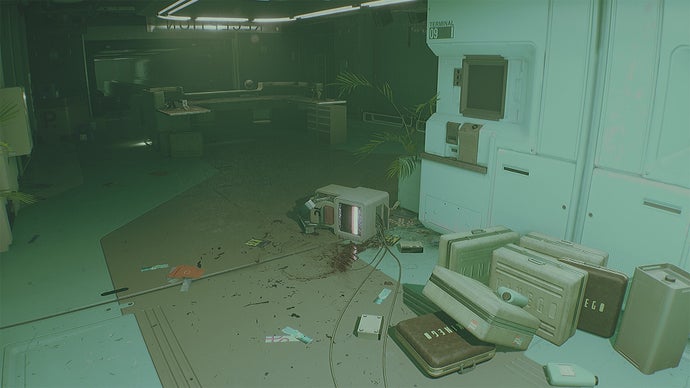
[/p][p]I grew up through the 80s and 90s. I digested every VHS I could get my hands on, recorded songs from the radio onto cassette, and played games on my CRT. It was great, but as technology progressed, I felt like it lost a bit of that character.[/p][p]The switch from analogue to digital made everything more convenient and clean. It was wonderful and quick! But again, it felt like it lost some of its soul and texture.[/p][p]So early on, when I started ROUTINE, the main focus was to create a believable world that felt lived in, a world that was science fiction but still relatable, like you had been there before.[/p][p]The media I consumed growing up had this, most likely due to their reliance on physical sets. The worlds felt solid and real; there was always a level of grime and weathering that existed in them.[/p][p]And I guess subconsciously, this stuck with me and eventually became part of me as an artist, which ultimately gave birth to the art direction of ROUTINE.[/p][p][/p][p]3. Is there a part of ROUTINE you are most proud of that you worked on?
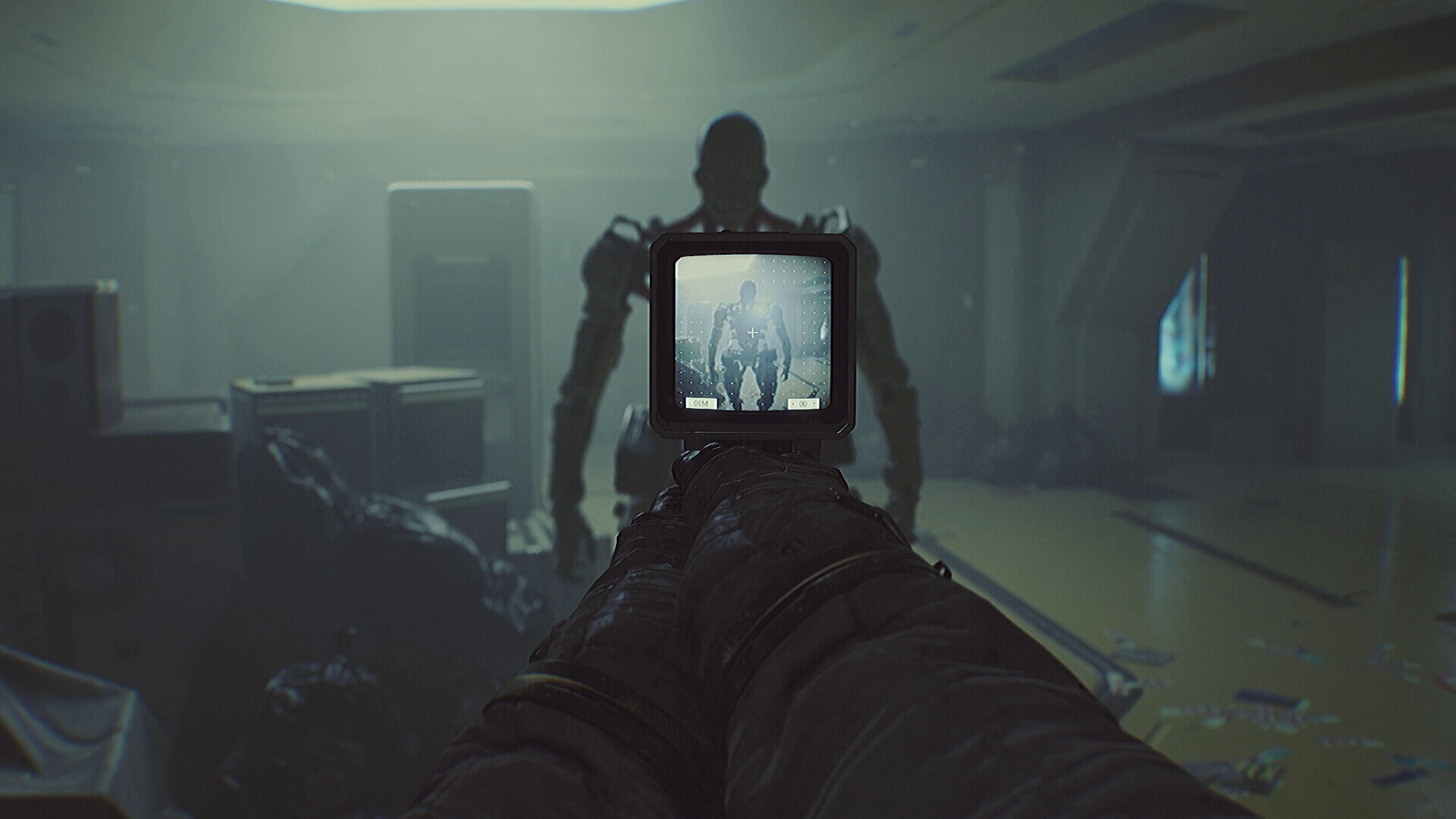
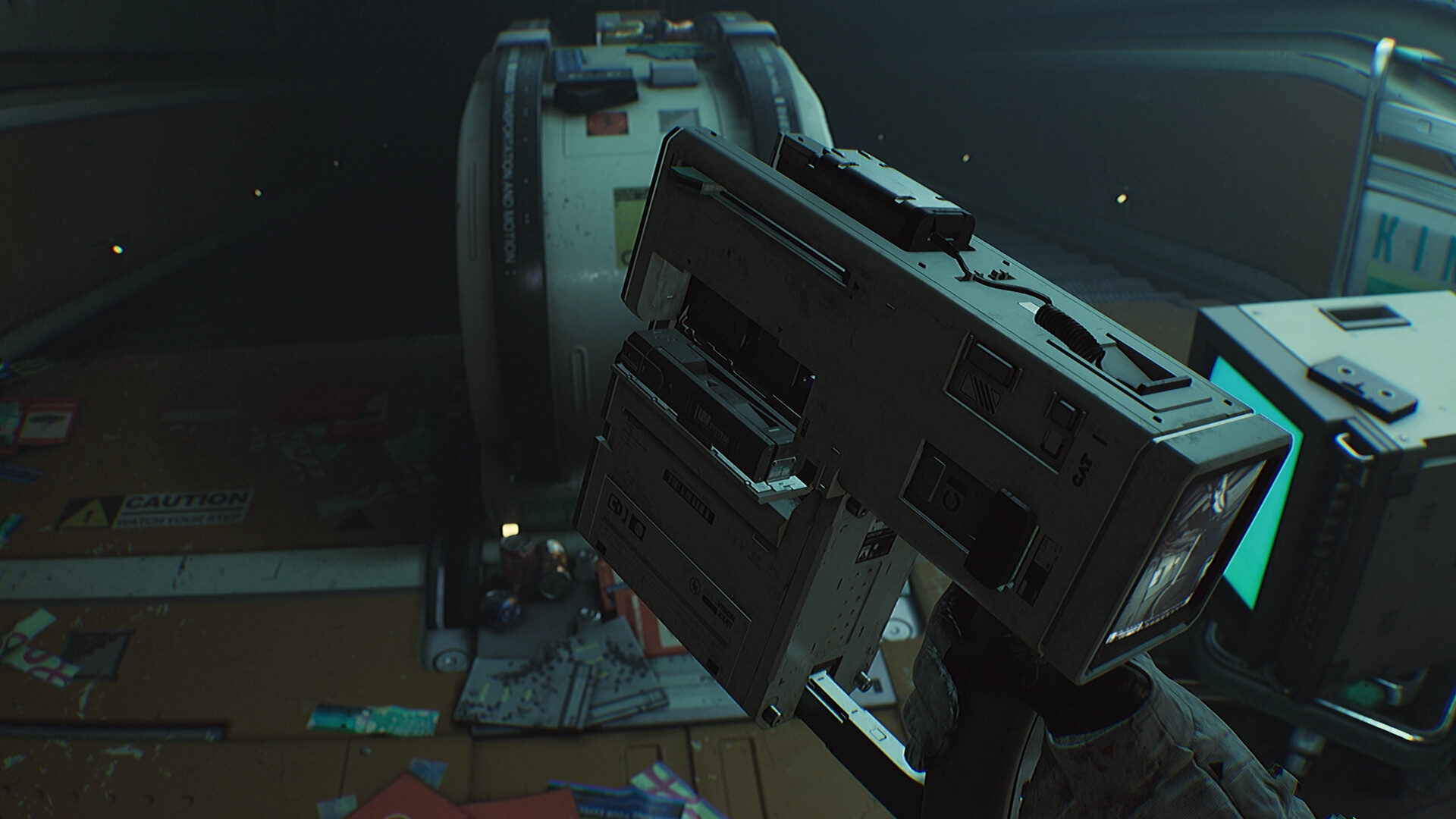
[/p][p]A short answer, but I am proud of the entire visual and design package of ROUTINE. [/p][p][/p][p]4. Favourite movie and game?[/p][p][/p][p]Akira and Shenmue, of course![/p][p][/p][p]![]() [/p][p][/p][h3]Jemma Hughes - Assistant Lead Art and Design[/h3][p][/p][p]1. What has been your favorite area, prop, character, or sequence to work on, and why?[/p][p][/p][p]Ahhh, there's been a few things! But I would have to say the C.A.T. is probably the one I'm most proud of. Aaron and I both worked on this asset; he did the core design, direction, and animations while I handled the 3D model and textures.[/p][p]I think we often talk about how important it was for us to upgrade the C.A.T. mechanically, but the visuals also needed love, too. There was a lot to figure out with the C.A.T. this time around, as its functionality got a massive overhaul. However, we wanted to make sure we never lost that chunky shape that we loved so much.[/p][p]The C.A.T. is made up of multiple textures and a lot more model complexity than what we had previously, so combining all of that and making sure it all worked together properly was a real challenge at the time for me. [/p][p]Texturing dirty, grimy plastic never gets old (I love it) in ROUTINE, and the C.A.T. is full of it, which I really enjoyed. It's also really stressful and impactful working on an asset that is so important, like the C.A.T., as it almost feels like our main character with how much you see it.[/p][p]An honorary mention I would like to throw out there is the IC! (The four-legged robot friend you see walking around sometimes) In his original version, he was extremely simple with most of the details on him being texture only, this time around, I got to give the model more love too.[/p][p][/p][p]2. Are there any new skills or new knowledge you picked up during the development of ROUTINE that you feel were impactful?[/p][p][/p][p] It's often necessary when a dev team is small to wear multiple hats during development. And as time went on, we faced different challenges. During that period, we were lucky to work with more people outside of the core dev team who contributed to the project, which made production more and more important. So I would say that learning more about the management and production side of things became a big part of my workload, which I am excited to apply this new skillset to future projects.[/p][p][/p][p]3. Is there a part of the design that was either rewarding or challenging to work on?[/p][p][/p][p]MMM! So in ROUTINE, we don’t have any waypoints or on-screen UI to guide the player. This was extremely challenging throughout development. [/p][p]So we benefited a lot from watching many, many hours of playtesters navigate our game. This led us to constantly re-adjust the level design to better guide the player or push a certain goal.[/p][p]Applying these changes to push areas we care about more was a lot of fun; sometimes it could be as subtle as moving a note closer to a terminal, other times it could be adjusting the lighting in a space to subconsciously influence the player's point of interest.[/p][p]It's definitely an area I would love to work on again, as it's instantly rewarding when you see players resonate with the changes you make.[/p][p][/p][p]4. Favourite movie and game?[/p][p][/p][p]The Dark Crystal and Baldur's Gate 2.[/p][p][/p][p]
[/p][p][/p][h3]Jemma Hughes - Assistant Lead Art and Design[/h3][p][/p][p]1. What has been your favorite area, prop, character, or sequence to work on, and why?[/p][p][/p][p]Ahhh, there's been a few things! But I would have to say the C.A.T. is probably the one I'm most proud of. Aaron and I both worked on this asset; he did the core design, direction, and animations while I handled the 3D model and textures.[/p][p]I think we often talk about how important it was for us to upgrade the C.A.T. mechanically, but the visuals also needed love, too. There was a lot to figure out with the C.A.T. this time around, as its functionality got a massive overhaul. However, we wanted to make sure we never lost that chunky shape that we loved so much.[/p][p]The C.A.T. is made up of multiple textures and a lot more model complexity than what we had previously, so combining all of that and making sure it all worked together properly was a real challenge at the time for me. [/p][p]Texturing dirty, grimy plastic never gets old (I love it) in ROUTINE, and the C.A.T. is full of it, which I really enjoyed. It's also really stressful and impactful working on an asset that is so important, like the C.A.T., as it almost feels like our main character with how much you see it.[/p][p]An honorary mention I would like to throw out there is the IC! (The four-legged robot friend you see walking around sometimes) In his original version, he was extremely simple with most of the details on him being texture only, this time around, I got to give the model more love too.[/p][p][/p][p]2. Are there any new skills or new knowledge you picked up during the development of ROUTINE that you feel were impactful?[/p][p][/p][p] It's often necessary when a dev team is small to wear multiple hats during development. And as time went on, we faced different challenges. During that period, we were lucky to work with more people outside of the core dev team who contributed to the project, which made production more and more important. So I would say that learning more about the management and production side of things became a big part of my workload, which I am excited to apply this new skillset to future projects.[/p][p][/p][p]3. Is there a part of the design that was either rewarding or challenging to work on?[/p][p][/p][p]MMM! So in ROUTINE, we don’t have any waypoints or on-screen UI to guide the player. This was extremely challenging throughout development. [/p][p]So we benefited a lot from watching many, many hours of playtesters navigate our game. This led us to constantly re-adjust the level design to better guide the player or push a certain goal.[/p][p]Applying these changes to push areas we care about more was a lot of fun; sometimes it could be as subtle as moving a note closer to a terminal, other times it could be adjusting the lighting in a space to subconsciously influence the player's point of interest.[/p][p]It's definitely an area I would love to work on again, as it's instantly rewarding when you see players resonate with the changes you make.[/p][p][/p][p]4. Favourite movie and game?[/p][p][/p][p]The Dark Crystal and Baldur's Gate 2.[/p][p][/p][p]![]() [/p][p][/p][h3]Pete Dissler - Programmer and Designer[/h3][p][/p][p]1. What has been the most interesting programming challenge you’ve faced while developing Routine?[/p][p][/p][p]It was probably the in-world User Interface. It's a big part of how information is gathered and received in Routine, and it's not something we could fully map out from day one. So the system had to be designed to be flexible to change. Under the hood, it actually works quite similarly to how you would expect an operating system to work; the terminals can go into a boot phase, log in, and so on. Each terminal can have a set of applications and data that it can access on its hard drives; there are startup scripts and even some "bugs". We sometimes joke that I’m not a gameplay programmer but a UI programmer.[/p][p][/p][p]2. How do you approach problem-solving when technical issues arise during development?[/p][p][/p][p]The first step is to always find a way to consistently reproduce the problem on my machine. Most of the time, I am able to do that myself, but sometimes I have to recruit Jemma to help![/p][p]Once I can reproduce it, finding the underlying issue in code is straight forward task. A blessing of having been the primary programmer for Routine is that you know every system pretty well, so fixing things can be pretty quick.[/p][p][/p][p]3. How do you collaborate with the rest of the team to ensure gameplay and design work seamlessly together?[/p][p][/p][p]We have a lot of very long discussions on features, and the length of these usually correlates with how much work it will be for me to implement. We then go through multiple iterations until the feature works and is of a quality we are all happy with. Early on in the project, Aaron & Jemma could pretty much just ask for anything, and I would find a way to make it work, but as Routine has gotten closer to the finish line, I have begun to reel in their requests or flat out deny them. Sorry guys.[/p][p][/p][p]4. Favourite movie and game?[/p][p] [/p][p]It's probably Interstellar. I've watched the docking scene a few too many times! Bloodborne may be my favourite single-player game ever, with the music, atmosphere, and gameplay. It was my first souls-like game, and I couldn’t put it down for weeks. For multiplayer games, I'm a big Counter-Strike fan, and I enjoy clicking heads.[/p][p][/p][p]- Lunar Software [/p]
[/p][p][/p][h3]Pete Dissler - Programmer and Designer[/h3][p][/p][p]1. What has been the most interesting programming challenge you’ve faced while developing Routine?[/p][p][/p][p]It was probably the in-world User Interface. It's a big part of how information is gathered and received in Routine, and it's not something we could fully map out from day one. So the system had to be designed to be flexible to change. Under the hood, it actually works quite similarly to how you would expect an operating system to work; the terminals can go into a boot phase, log in, and so on. Each terminal can have a set of applications and data that it can access on its hard drives; there are startup scripts and even some "bugs". We sometimes joke that I’m not a gameplay programmer but a UI programmer.[/p][p][/p][p]2. How do you approach problem-solving when technical issues arise during development?[/p][p][/p][p]The first step is to always find a way to consistently reproduce the problem on my machine. Most of the time, I am able to do that myself, but sometimes I have to recruit Jemma to help![/p][p]Once I can reproduce it, finding the underlying issue in code is straight forward task. A blessing of having been the primary programmer for Routine is that you know every system pretty well, so fixing things can be pretty quick.[/p][p][/p][p]3. How do you collaborate with the rest of the team to ensure gameplay and design work seamlessly together?[/p][p][/p][p]We have a lot of very long discussions on features, and the length of these usually correlates with how much work it will be for me to implement. We then go through multiple iterations until the feature works and is of a quality we are all happy with. Early on in the project, Aaron & Jemma could pretty much just ask for anything, and I would find a way to make it work, but as Routine has gotten closer to the finish line, I have begun to reel in their requests or flat out deny them. Sorry guys.[/p][p][/p][p]4. Favourite movie and game?[/p][p] [/p][p]It's probably Interstellar. I've watched the docking scene a few too many times! Bloodborne may be my favourite single-player game ever, with the music, atmosphere, and gameplay. It was my first souls-like game, and I couldn’t put it down for weeks. For multiplayer games, I'm a big Counter-Strike fan, and I enjoy clicking heads.[/p][p][/p][p]- Lunar Software [/p]
Aaron Foster - Lead Art and Design[/h3][p][/p][p]1. How do you balance your roles as lead artist and designer during development?
[/p][p]Because ROUTINE is an experience-driven horror game, there were a lot of parallels with art and design. One of my first goals was to create a world that felt believable, so that the player feels like they are truly there. And if I managed to pull that off, they should hopefully be more susceptible to the subtleties of our design.[/p][p]We want players to pay attention to everything they come across, so the art needs to make sure it doesn’t draw attention away from what is truly important. However, as an artist, I still needed to push the world in visually appealing ways.[/p][p]This was an extremely fun process that worked well for ROUTINE; however, I can't imagine it would work for everything, and there were moments when I wished I were two people, as it became way too heavy at times.[/p][p][/p][p]2. How did you develop the visual language of ROUTINE, particularly its retro-futuristic package?
[/p][p]I grew up through the 80s and 90s. I digested every VHS I could get my hands on, recorded songs from the radio onto cassette, and played games on my CRT. It was great, but as technology progressed, I felt like it lost a bit of that character.[/p][p]The switch from analogue to digital made everything more convenient and clean. It was wonderful and quick! But again, it felt like it lost some of its soul and texture.[/p][p]So early on, when I started ROUTINE, the main focus was to create a believable world that felt lived in, a world that was science fiction but still relatable, like you had been there before.[/p][p]The media I consumed growing up had this, most likely due to their reliance on physical sets. The worlds felt solid and real; there was always a level of grime and weathering that existed in them.[/p][p]And I guess subconsciously, this stuck with me and eventually became part of me as an artist, which ultimately gave birth to the art direction of ROUTINE.[/p][p][/p][p]3. Is there a part of ROUTINE you are most proud of that you worked on?
[/p][p]A short answer, but I am proud of the entire visual and design package of ROUTINE. [/p][p][/p][p]4. Favourite movie and game?[/p][p][/p][p]Akira and Shenmue, of course![/p][p][/p][p]